
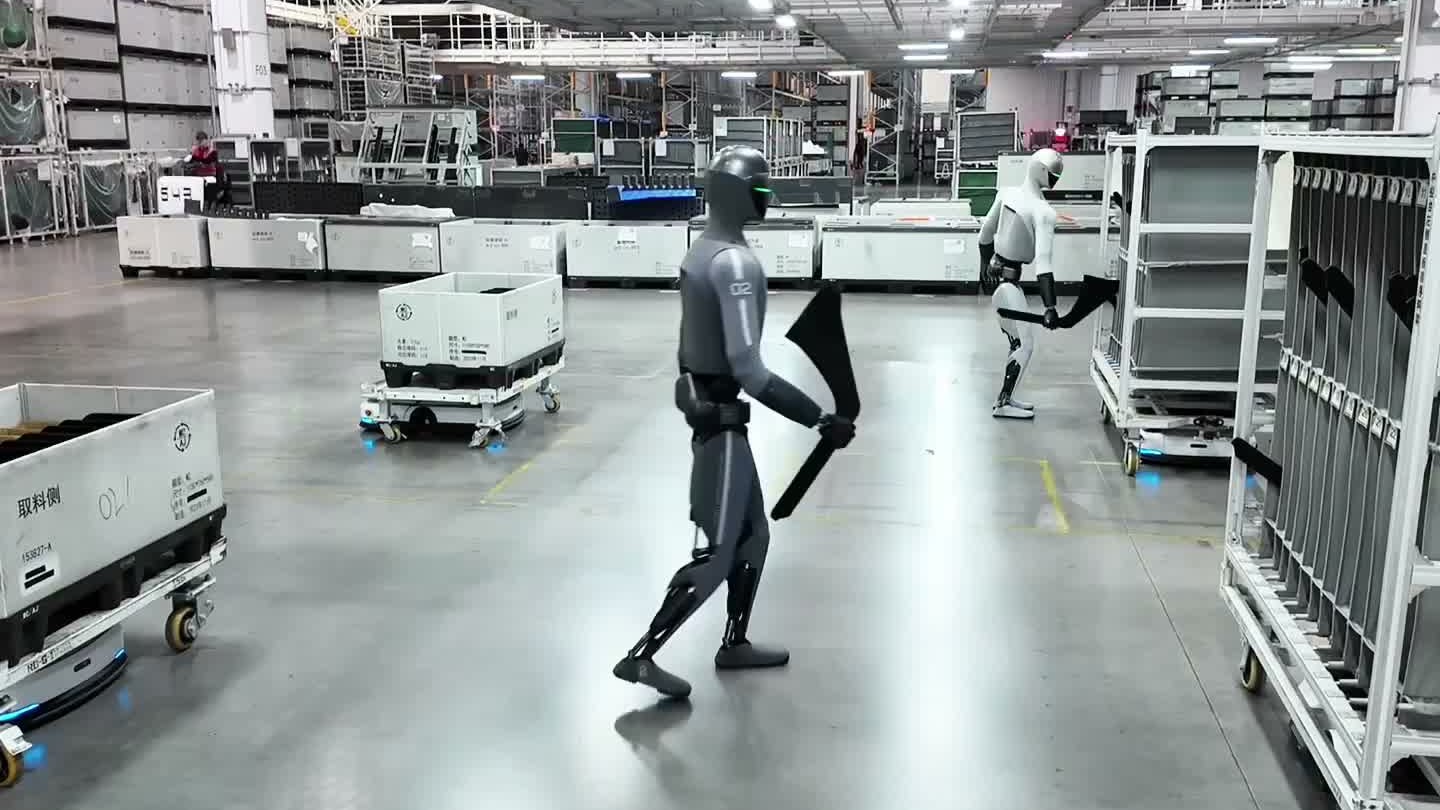
Two full-size humanoid robots worked a full production shift at Xiaomi’s car factory in Beijing, sorting centre console side covers for eight hours and five minutes. Xiaomi published the run itself, and by the company’s account the pair met the station’s full-day production demand.
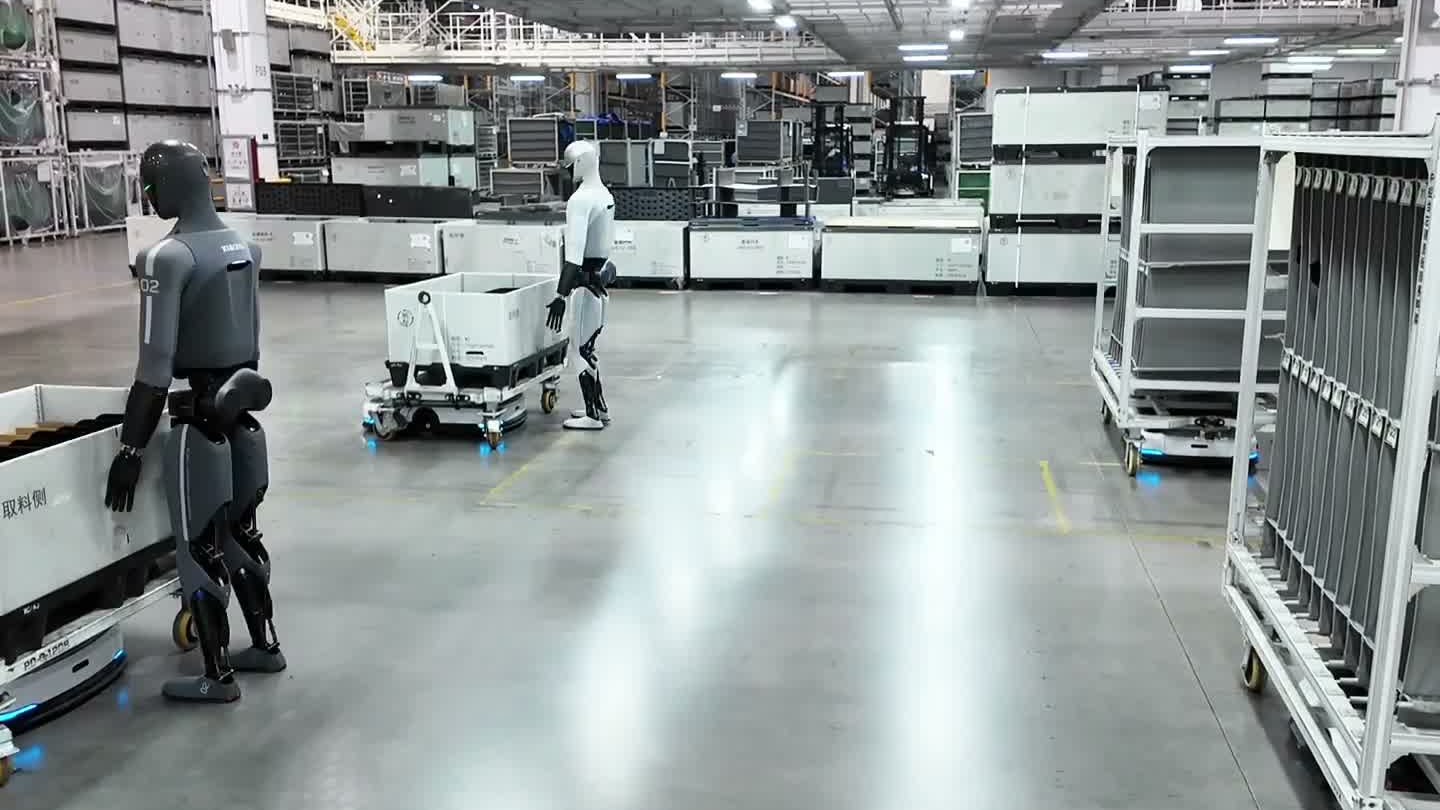
The two machines split the work in different shells, one grey and one white in the published footage, each carrying covers from cart to rack in both hands. Bipedal legs handle the walking between racks, and the station sits in final assembly, where trim parts meet the cars they belong to.
Xiaomi humanoid shift, November 3
- Two full-size humanoids at one sorting station
- 8 hours 5 minutes of stable operation
- Xiaomi Auto Factory, Beijing
Xiaomi’s official post, with the shift footage
The job is sequencing, not assembly, and each cover goes to the rack position its car requires.
The station sorts console covers in sequence

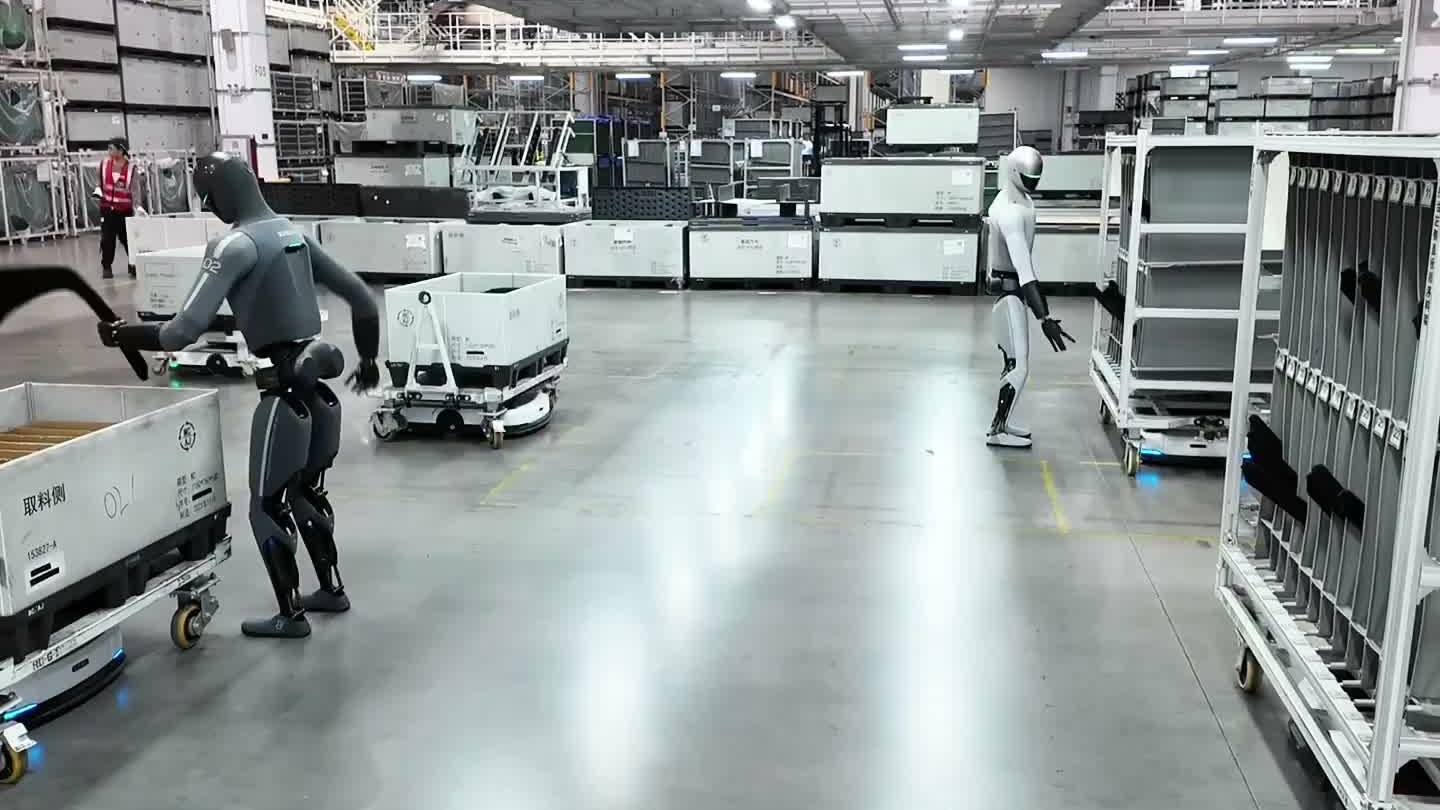
Centre console side covers are plastic trim panels, and the station’s work is sorting them in the exact order the line builds cars, so the right cover reaches the right car at the pace the line sets. Xiaomi says the robots detect anomalies as they work, catching a misplaced or missing part and correcting the error, and that they coordinate with the line’s production system while they do it.
An anomaly at this station is a cover in the wrong slot or a gap in the sequence, and catching one early keeps the error off a finished car. The correction happens at the rack, before the part travels further down the line.
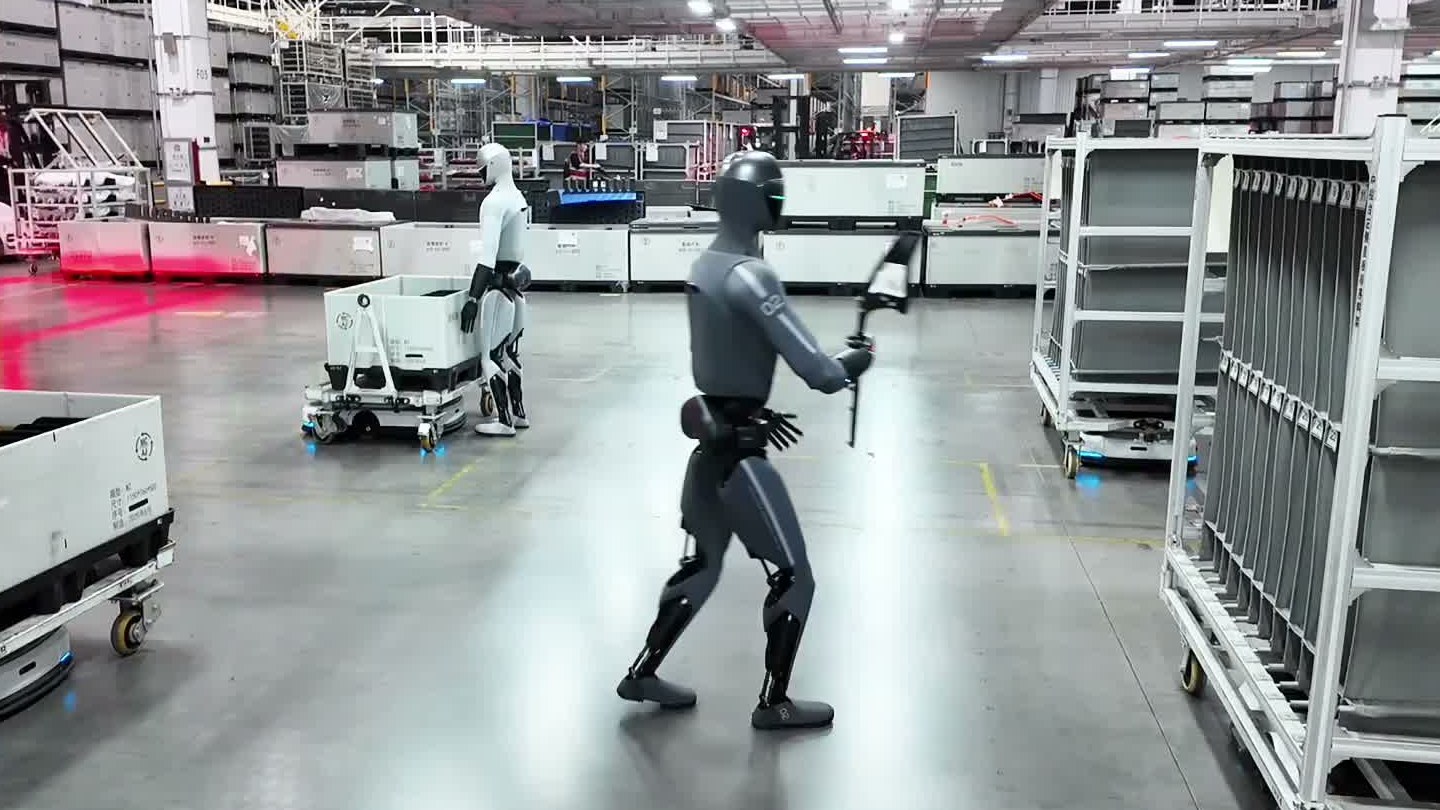
The published footage runs at 100 times real speed, with one early stretch at five times, so the grace in the video is editing rather than motion. At real speed the work is slow and deliberate: a carry, a placement, a walk back for the next panel. The grace is editing.
Slow is the exercise.
Two charging breaks inside the shift
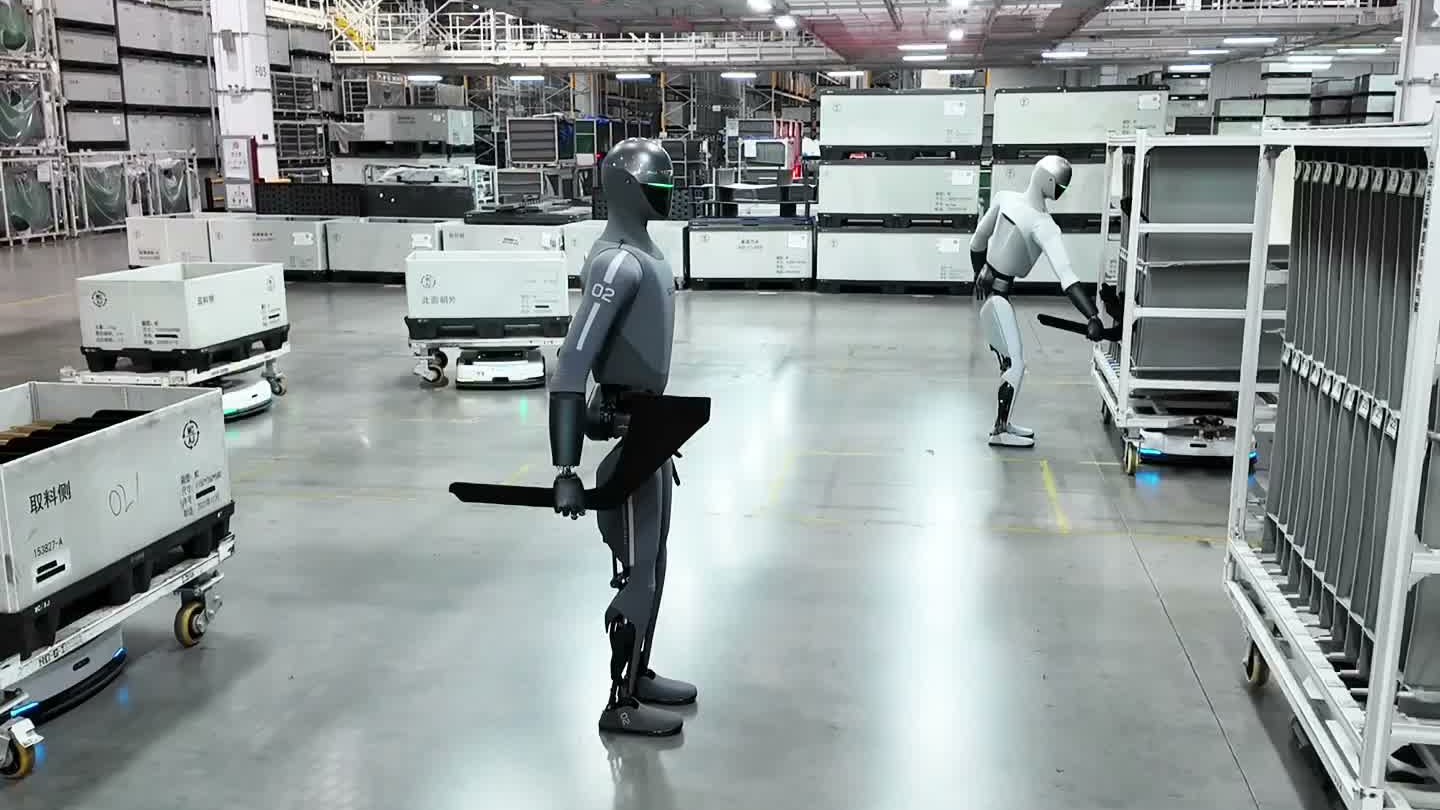
The clock on Xiaomi’s own footage tells the shift’s shape: eight hours and five minutes of stable operation, interrupted by two charging breaks at three hours two minutes and six hours three minutes of cumulative work. The robots returned to the station after each break and finished the day’s demand. Xiaomi hasn’t published how the machines charge, or how long a break lasts.
Xiaomi also hasn’t published a parts count, an intervention count, or a success rate for the run; those numbers stay unpublished. Xiaomi is silent on all three.
Two breaks across eight hours puts charging inside the shift, a pattern closer to a worker’s day than to a demonstration loop. The breaks also mark the current limit of the machines, since a full day still needs the plugs.
Three trials built toward eight hours
The shift caps a year of public trials from the same program, which began with a three-hour run installing self-tapping nuts at a 90.2 percent success rate in March. By July the same task reached 98 percent, and the November shift traded the single task for a full station inside a working factory day. Xiaomi’s robotics account ties the program to its Xiaomi-Robotics-1 model work. Each trial ran in public.
Xiaomi-Robotics-1
- Xiaomi’s vision-language-action robotics model work
- The program behind the factory trials
- March and July 2026 trials preceded the shift
From Xiaomi’s official account
The Beijing plant builds Xiaomi’s cars, and the humanoids worked its floor alongside carts, racks and human staff rather than inside a demonstration cell. That setting is the substance of the claim, because a sorting station counts when the line around it keeps moving.
Xiaomi staged the run at a named station in final assembly, not in a laboratory, and said so in its own statement. That choice of venue separates the announcement from a demonstration video. Venue is the message.
Racks of grey bins line the floor in the footage, automated carriers slide between them, and the humanoids walk the same lanes as the carts. Nothing about the setting is staged for the cameras, which is why the footage persuades where a laboratory video wouldn’t. The robots share the floor with the ordinary machinery of a car plant, and the shift runs inside that ordinary day.
A shift is not a deployment
Xiaomi sells no version of this robot, publishes no price for it, and has announced no plan to staff stations with humanoids beyond trials like this one. What the shift proves is narrower and still significant: two machines held a real station, in sequence, for a full working day, by the maker’s own report.
A deployment claim would need the numbers Xiaomi withheld: panels per hour, interventions per shift, and a cost figure set beside a human wage for the same station. Until those arrive, the shift stands as a durability result rather than an economics result.
Watch the next disclosure rather than this one if you run a factory, because parts sorted, interventions and cost per shift decide whether this becomes equipment or stays a programme. Skip the excitement if you follow robots for the home, since nothing in the run speaks to domestic work at all, or to a buying decision.
The design story is restraint: two plainly shelled machines, visor faces, no theatrics, walking a trim part across a factory floor at human pace. Xiaomi let the clock in the corner of the footage make the claim, and the clock is the most persuasive part. The restraint is the design, and it suits factory work better than any launch event could. No theatrics anywhere.