
Design Comes First
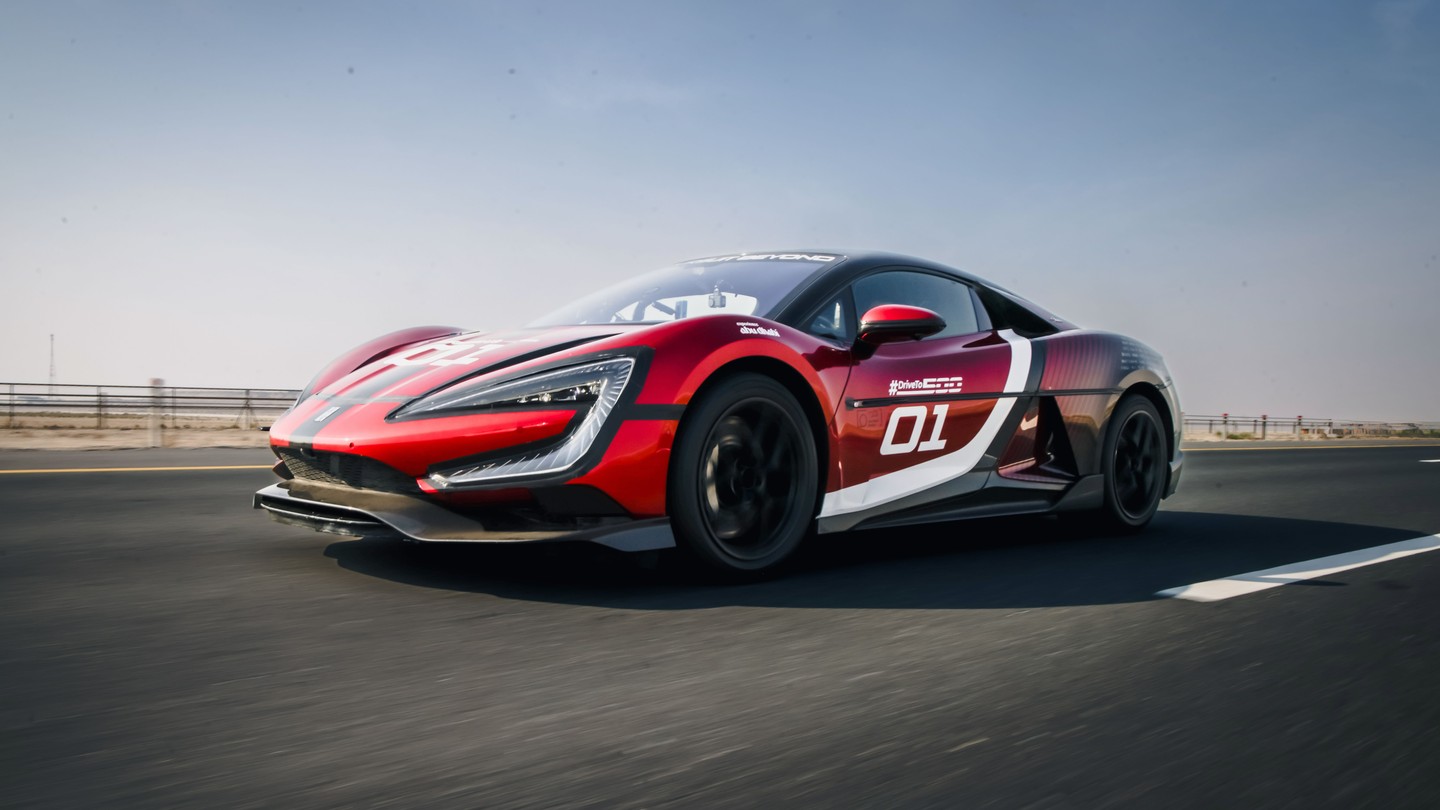
Yangwang U9 Xtreme looks fast before it moves, with a low nose cutting into the air and a long tail pulling the eye rearward. Carbon surfaces stay dark and tight. Wolfgang Egger, a former design chief at Alfa Romeo, Audi, and Lamborghini, shaped the standard U9, and this version keeps that low supercar stance.
Every edge is hardened for airflow, cooling, and downforce at speed.
A swan neck rear wing rises above the tail, an enlarged front splitter works the nose, and a two channel hood, rear diffuser, and carbon roof finish the set.

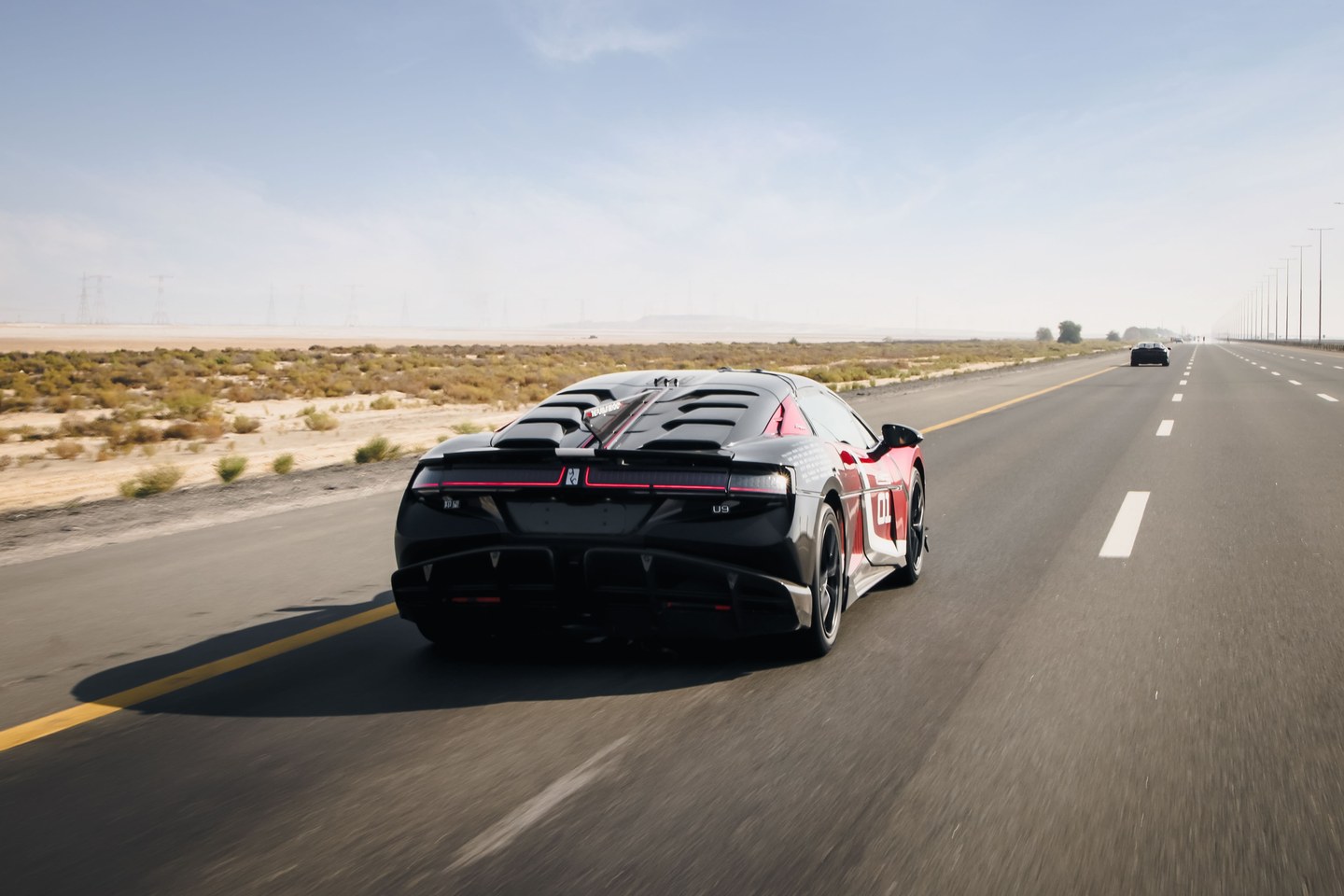
Design serves stability at extreme speed.
That single purpose gives the shape its beauty and its menace, and it narrows the car into a specialized tool, a record machine first and a road car second.
A Body Controlled Corner By Corner
DiSus-X controls each corner on its own, using dual valve dampers that adjust each wheel independently, and BYD quotes up to 50 kN of active force delivered in 120 ms, enough pace to answer the road before the body settles.
Control extends past damping.
This system can hold zero roll through a corner, or lean the body inward by up to 2.43 degrees at 0.3 g, turning posture into a handling input.
Carbon forms the passenger cell, in what BYD calls the largest carbon tub on a production car, built from aerospace grade T700 fiber.
Titanium calipers squeeze carbon ceramic rotors, and GitiSport semi slick tires carry a rating past 500 km/h.
| Item | Figure |
|---|---|
| Motors | Four, one per wheel |
| Output per motor | 555 kW |
| Combined output | 2,220 kW, 3,019 PS, 2,977 hp |
| Motor speed | Up to 30,000 rpm |
| Architecture | 1,200 V |
| Battery | LFP Blade Battery, 30C discharge |
| Power to weight | 1,217 PS per tonne |
| Brakes | Carbon ceramic rotors |
| Production | 30 units, bespoke |
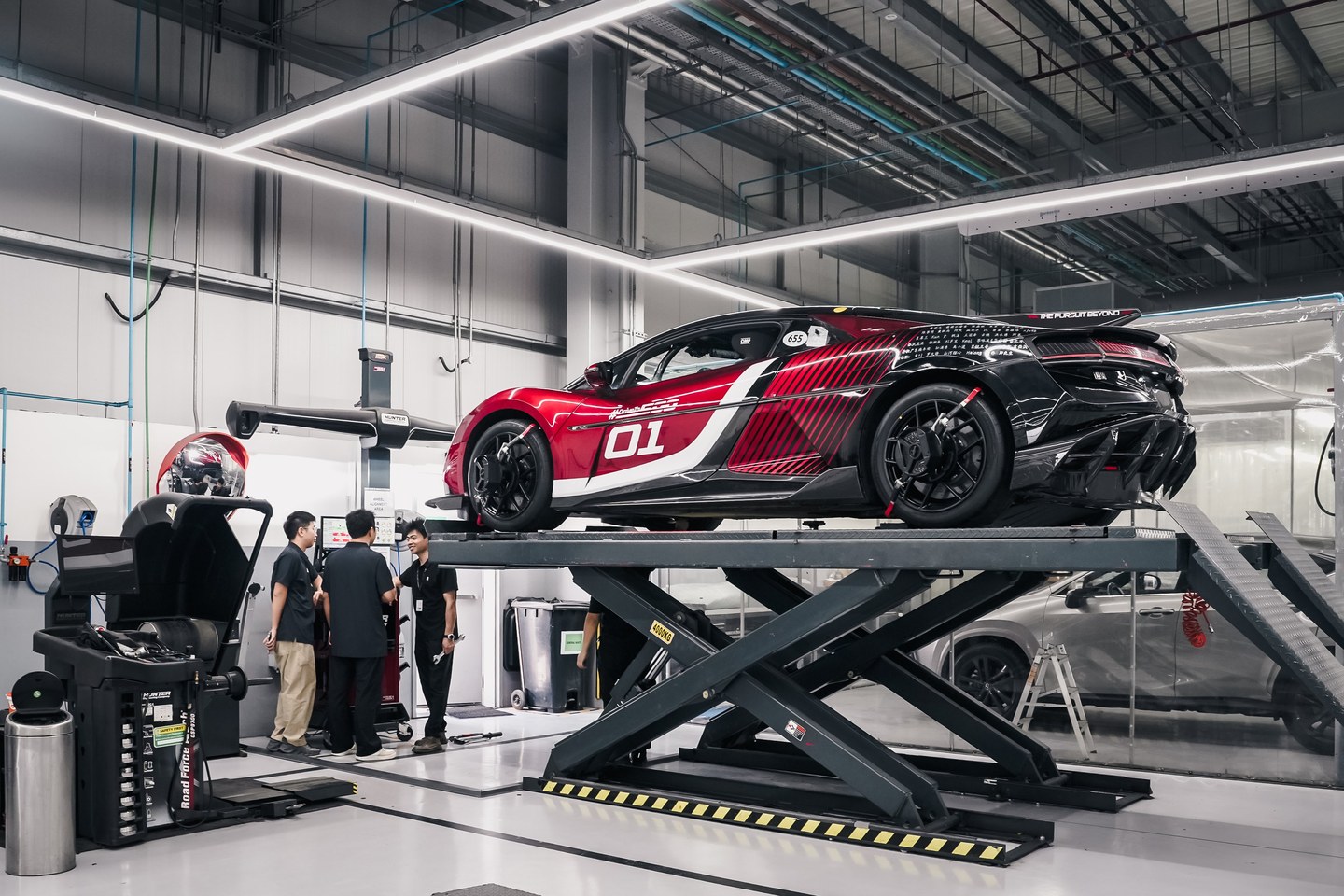
Four motors drive one wheel each, with torque vectoring adjusting each wheel more than 100 times per second. Combined output more than doubles the standard U9. Back to back runs build heat in the motors and battery. Voltage answers that pressure: a 1,200 V architecture supporting up to 1,000 A cuts heat generation by up to 67 percent versus 800 V at equal output.
Even at 20 percent charge, the battery still delivers 1,800 kW.
The Run In Abu Dhabi
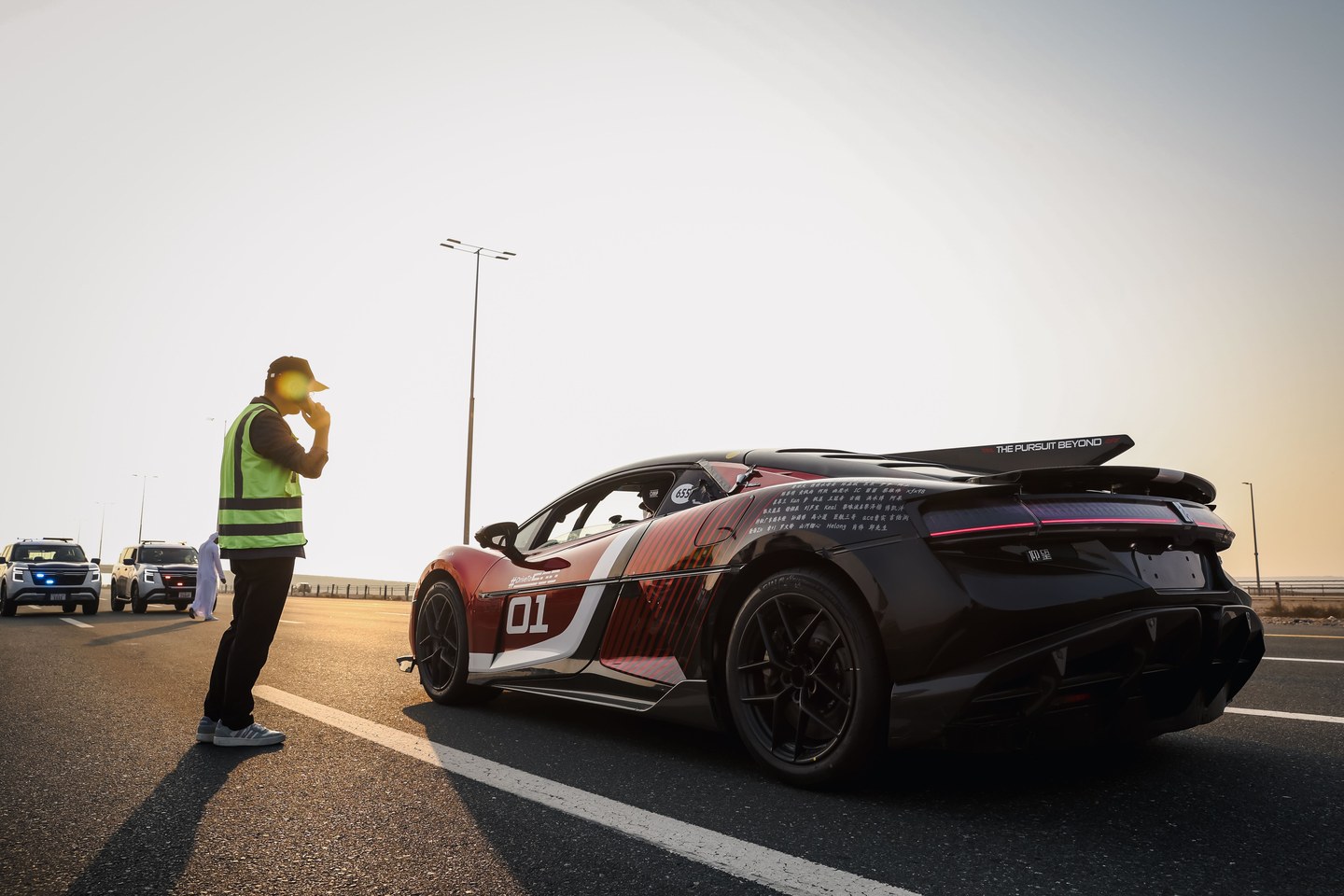
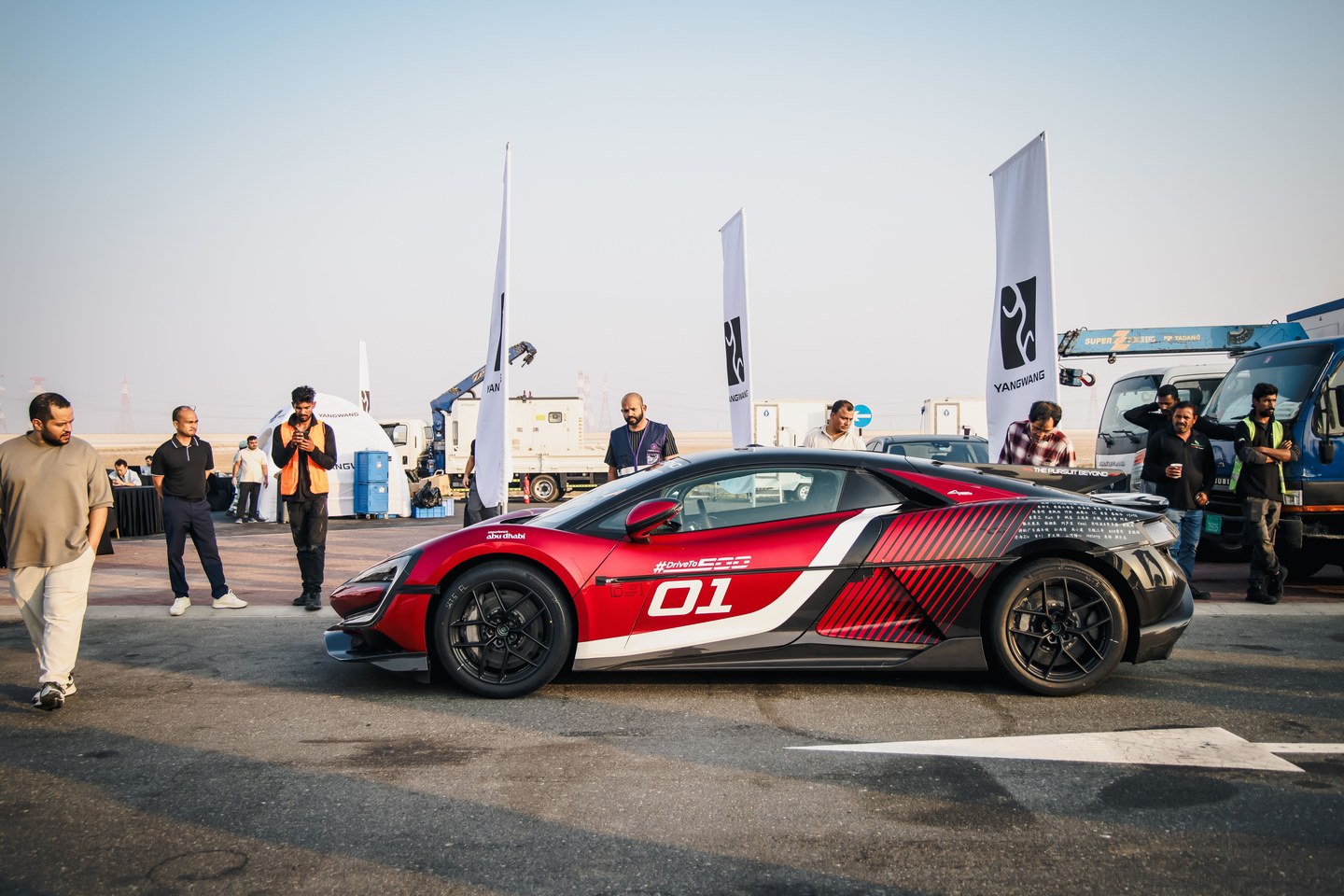
Speed took over on a closed public road in Al Dhafra, Abu Dhabi, where crews shut a 10 km section of the E11 highway.
Its longest straight stretched 7 km. Marc Basseng drove.
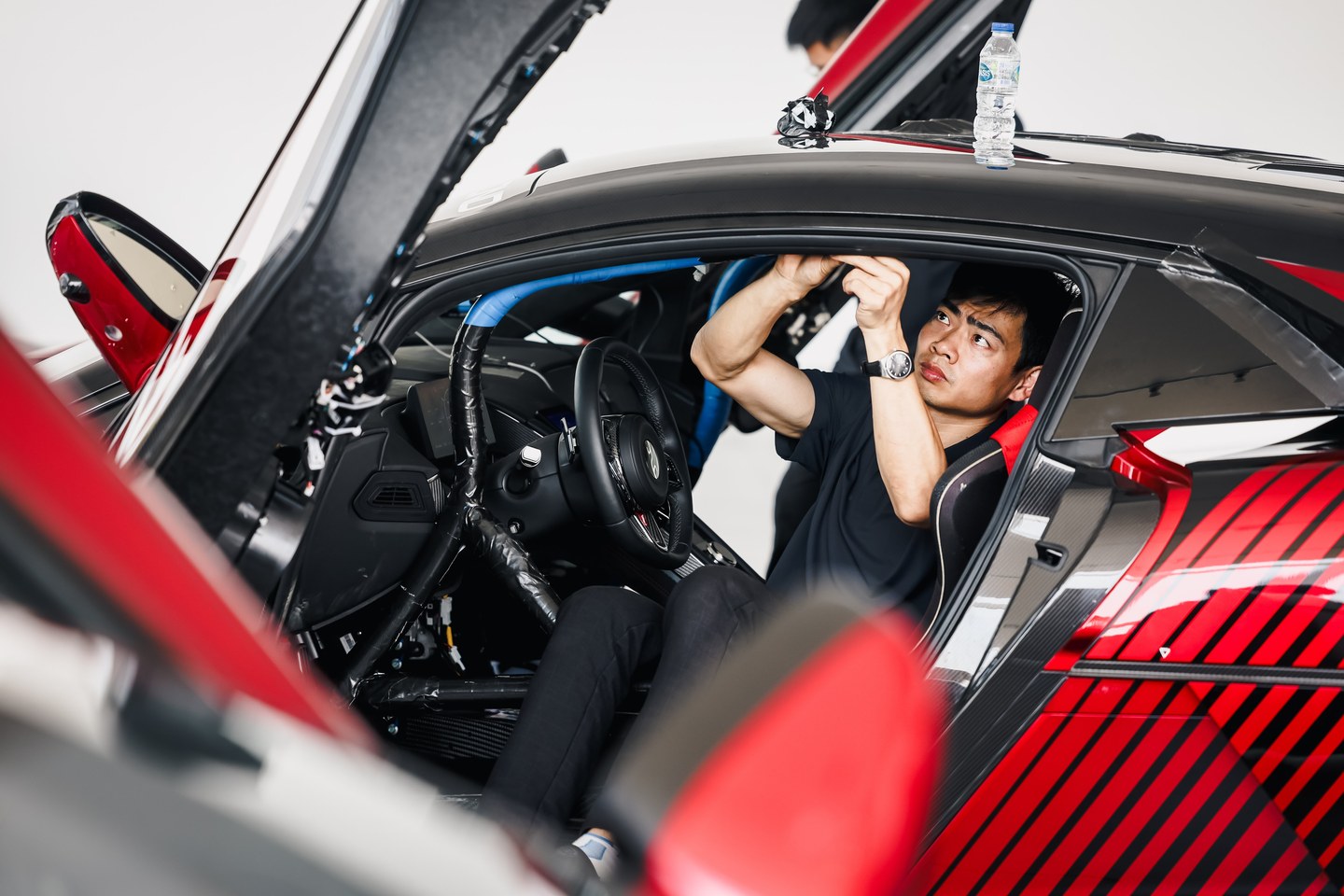
Two runs a day earlier peaked at 490 km/h, so overnight work added rear wing angle for more rear downforce and reprofiled suspension software for more rebound damping. Tire pressures got fine tuned. Battery and motor temperature prep changed too.
Run two settled it. Speed climbed to 503.17 km/h, or 312.65 mph, and no production car had crossed 500 km/h before that pass.
Guinness verified the number two ways, reading the onboard speedometer against a calibrated VBOX system while an FIA representative reviewed the data. Two titles came from that single direction run, one for production cars and one for electric production cars. BYD claimed four records in a social post. Documentation supports two.
Two Titles And One Standing Benchmark
A single direction run isn’t a two way average. Wind and grade get no return pass to balance the number.
SSC still owns that harder test. Its Tuatara averaged 455.3 km/h, or 282.9 mph, across two directions in 2021, and that benchmark stands untouched by anything Basseng did in Abu Dhabi.
Bugatti set the one way mark this car had to pass, at 490.484 km/h in a Chiron Super Sport 300+ back in 2019. Basseng cleared it at Papenburg in September 2025, at 496.22 km/h, then extended the gap in Abu Dhabi, under scrutiny Papenburg lacked.
This same specification lapped the Nurburgring in 6:59.157, the first production EV under seven minutes there.
Design After The Number
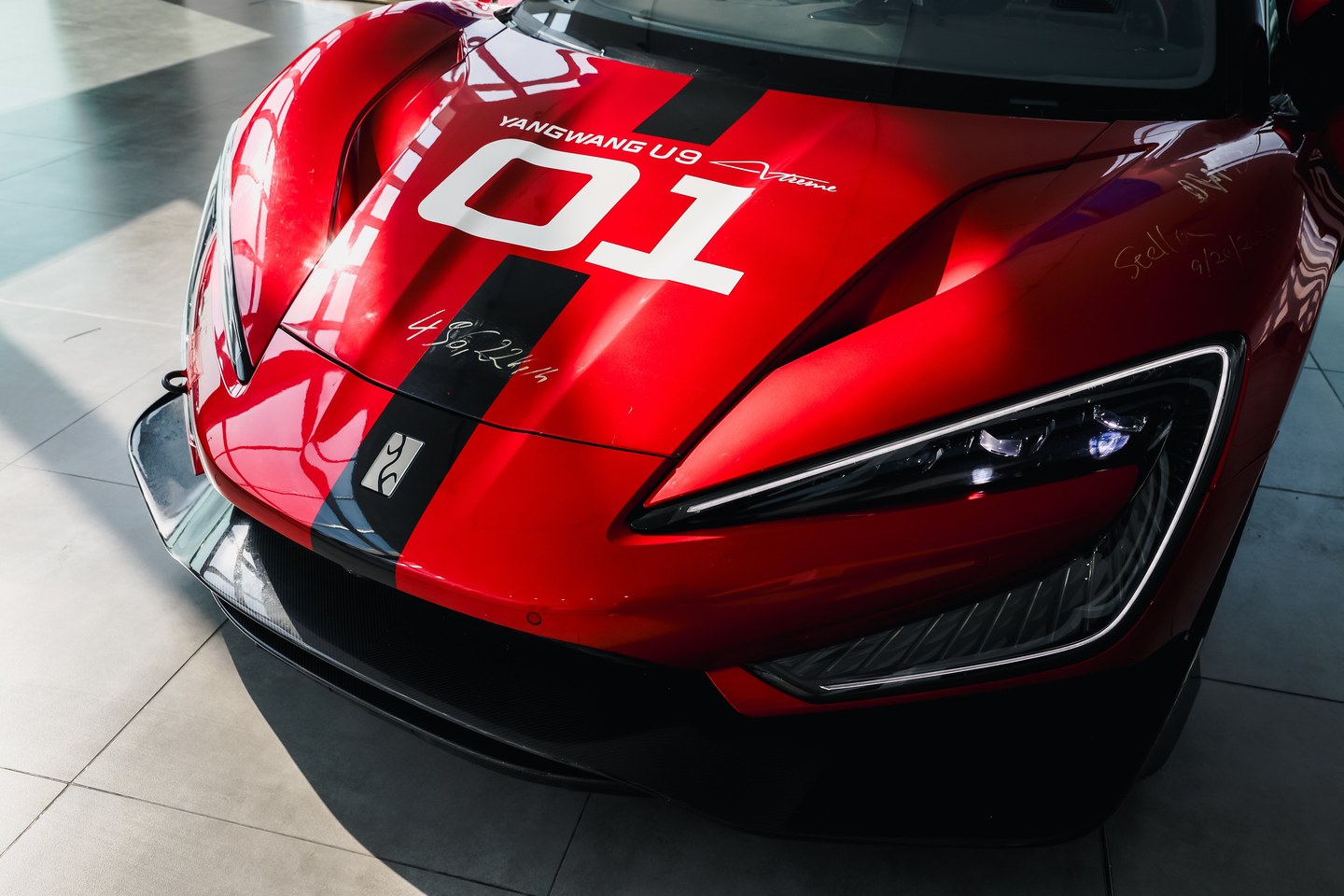
Celebration put the shape back in front, at BYD’s Celebration of Speed in Burj Park, Dubai, below the 828 m Burj Khalifa. About 3,000 guests attended, a light show ran on the tower, and executive vice president Stella Li spoke from the stage, with seven cars on display.
Low carbon bodywork looks sharper at night, and parked still, the wing, splitter, and diffuser look like sculpture first and equipment second.
Production keeps that sculpture rare, with only 30 cars to be built, each bespoke for its buyer, and early customers already approving specifications on the way to contracts. The car doesn’t carry a published list price. One disclosed sale was reported at more than $2.76 million.
Yangwang is BYD’s ultra luxury brand, sitting above Denza and Fangchengbao in a group that sold 4.6 million new energy vehicles in 2025. Inside that group, Yangwang runs as a low volume technology flagship.
Editor’s take
The record gets argued over, then beaten, then argued over again. That’s what records are for. The shape is the part that stays: a wing and splitter that look like sculpture first and equipment second, thirty bespoke cars, and a number that makes people stop and look at the design instead of past it. The speed bought the attention. The design is what the attention lands on.