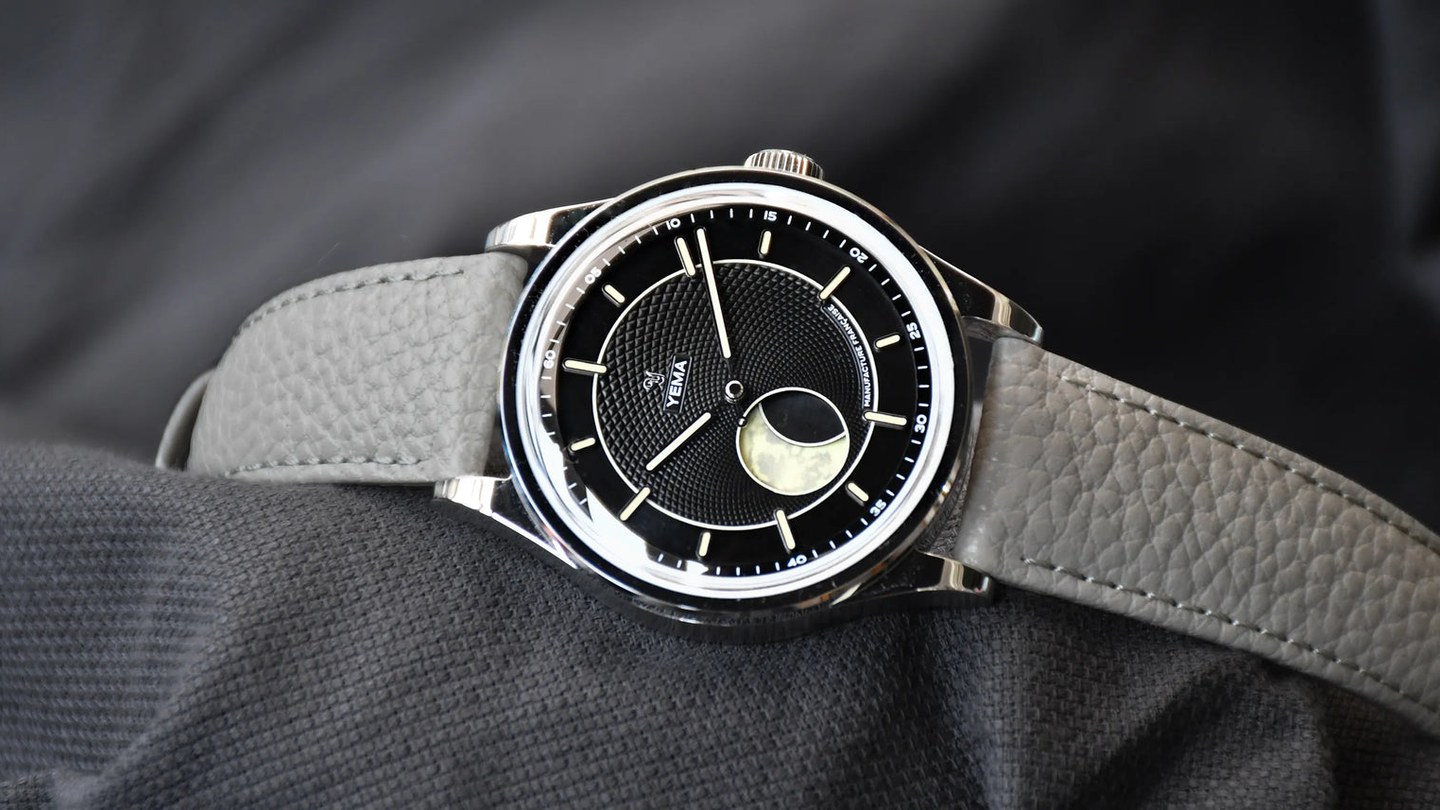
Yema is the Morteau brand most of us know for divers and chronographs, so its first moonphase arriving as a slim dress watch is a genuine change of direction. The Senans Grande Lune opens a new collection, and it does the one thing moonphases almost never do. It makes the moon the biggest thing on the dial.
Senans takes its name from the Royal Saltworks of Arc-et-Senans, Claude-Nicolas Ledoux’s semicircular saltworks a short drive from Yema’s workshops, and the curve of that semicircle is echoed in the lunar aperture. As someone who reads buildings as closely as watches, I like that the reference is structural. It isn’t a name stamped on a caseback.
Orders open on November 11 at 10 a.m. Eastern, only at yema.com.
Price runs $2,765 on the grained leather strap and $2,877 on the steel mesh, each of the three dial colors capped at 200 pieces, with shipping from the first week of December.
A moon made of lume

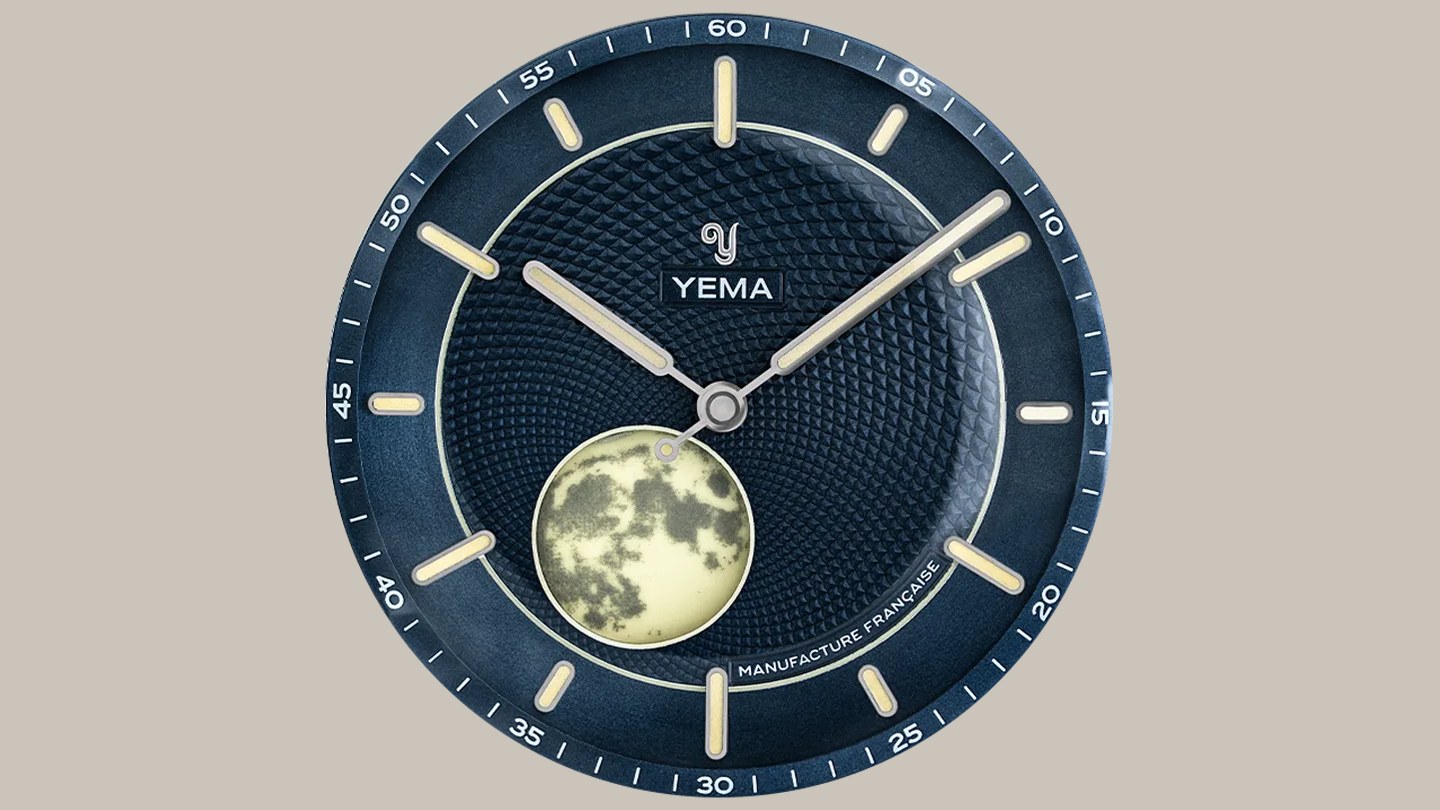
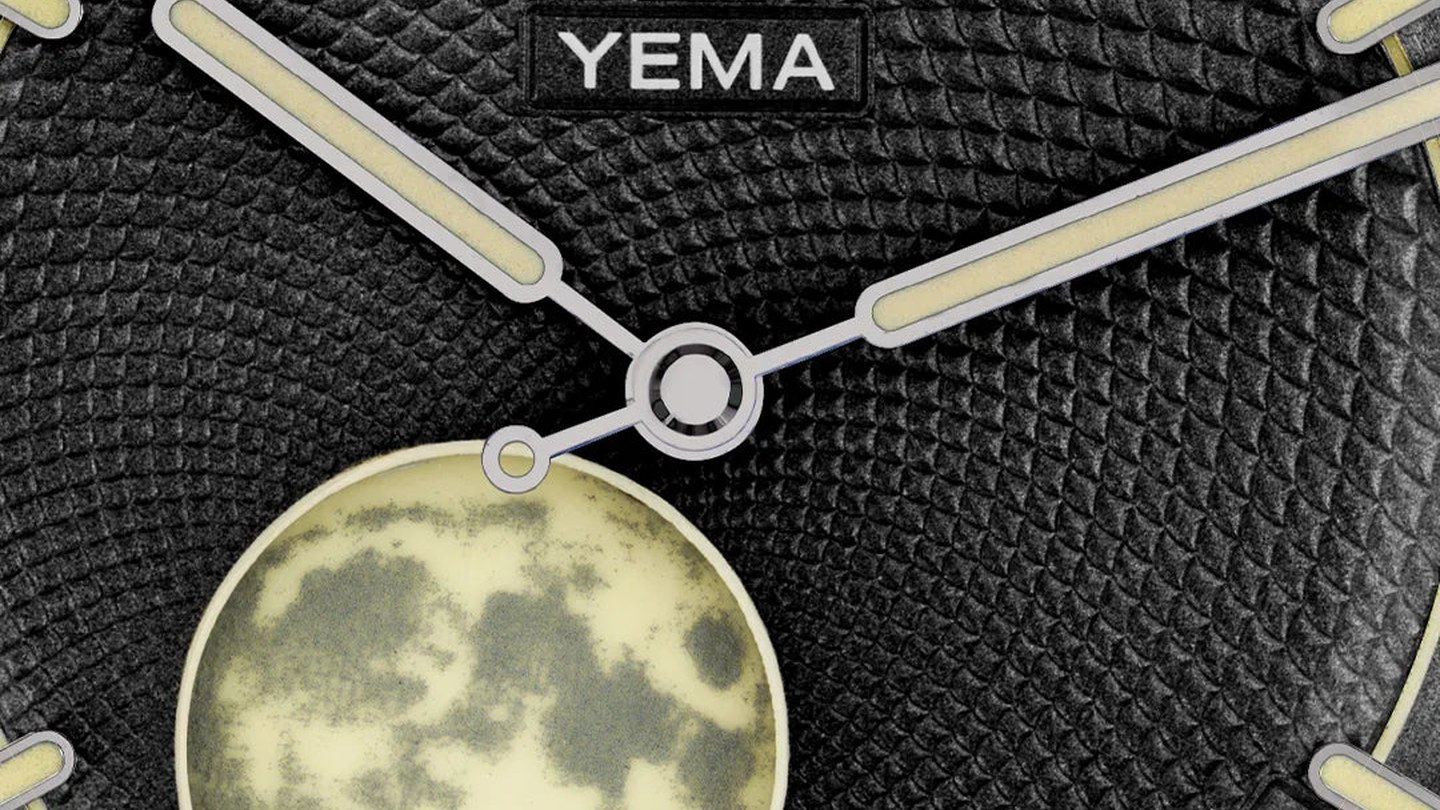
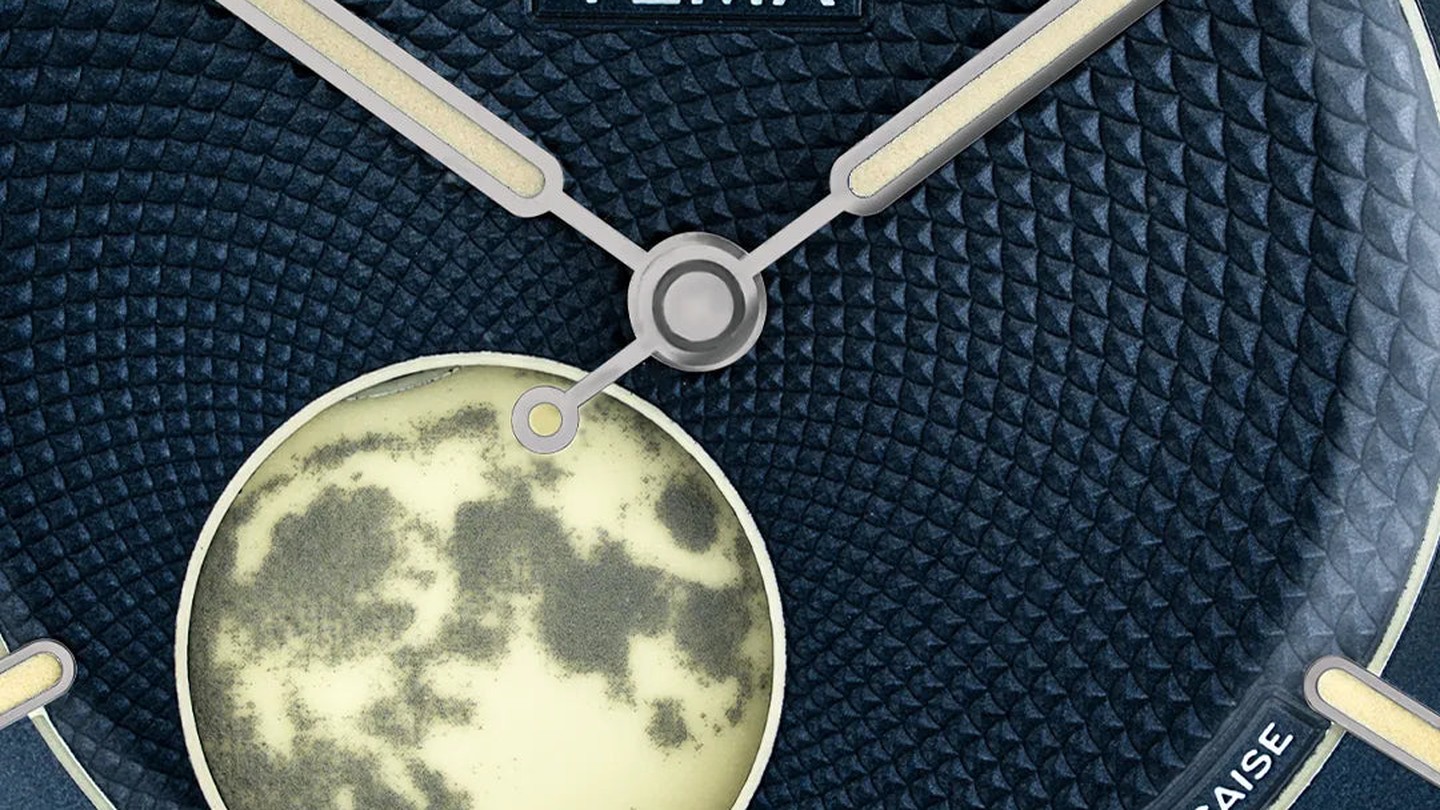
The moon itself is a solid three-dimensional block of Grade X Super-LumiNova, made with Globolight technology, and its surface is cratered like the real thing. By day it’s a pale, textured disc sitting low on the dial at 7 o’clock. In the dark it glows with a soft, warm light, closer to actual moonlight than to the green glare lume usually throws.
A rotating bilobe slides across it to draw the phases, and the moon sets quickly through the crown, so you’re not spinning hands through weeks to line it up. Concentric lume rings circle the guilloché center, and the hands and markers carry the same Grade X treatment. Everything on the dial is built to be read twice, once in daylight and once at night.
That center is a barleycorn guilloché worked from Fibonacci geometry, the spiral you find in sunflowers and pine cones.
It catches light in slow spirals when the wrist turns. Most moonphase dials treat the center as empty space around a small aperture. This one gives the center its own texture, and lets the moon sit off to one side, big enough to unbalance the layout in a way that works.
Black, the dramatic one
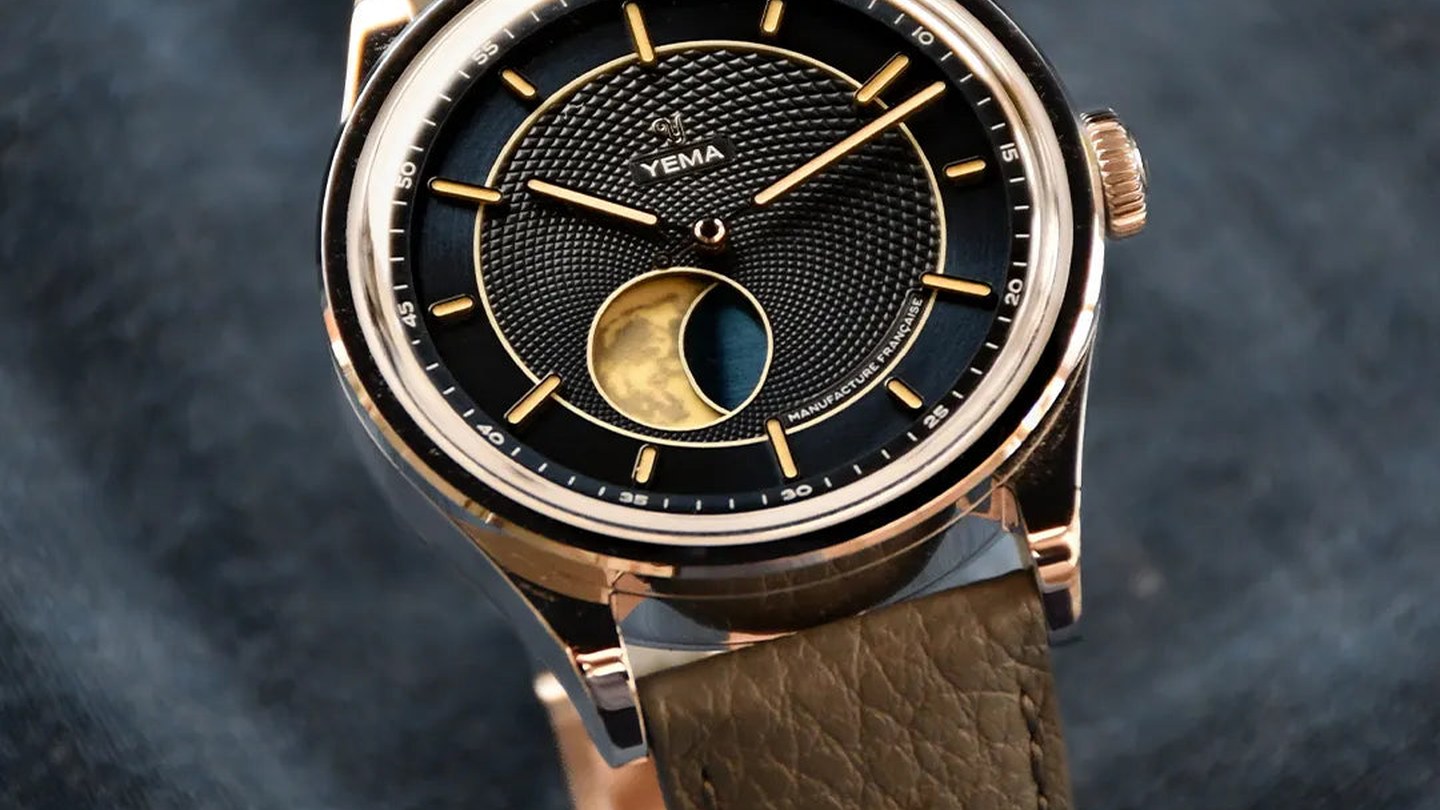
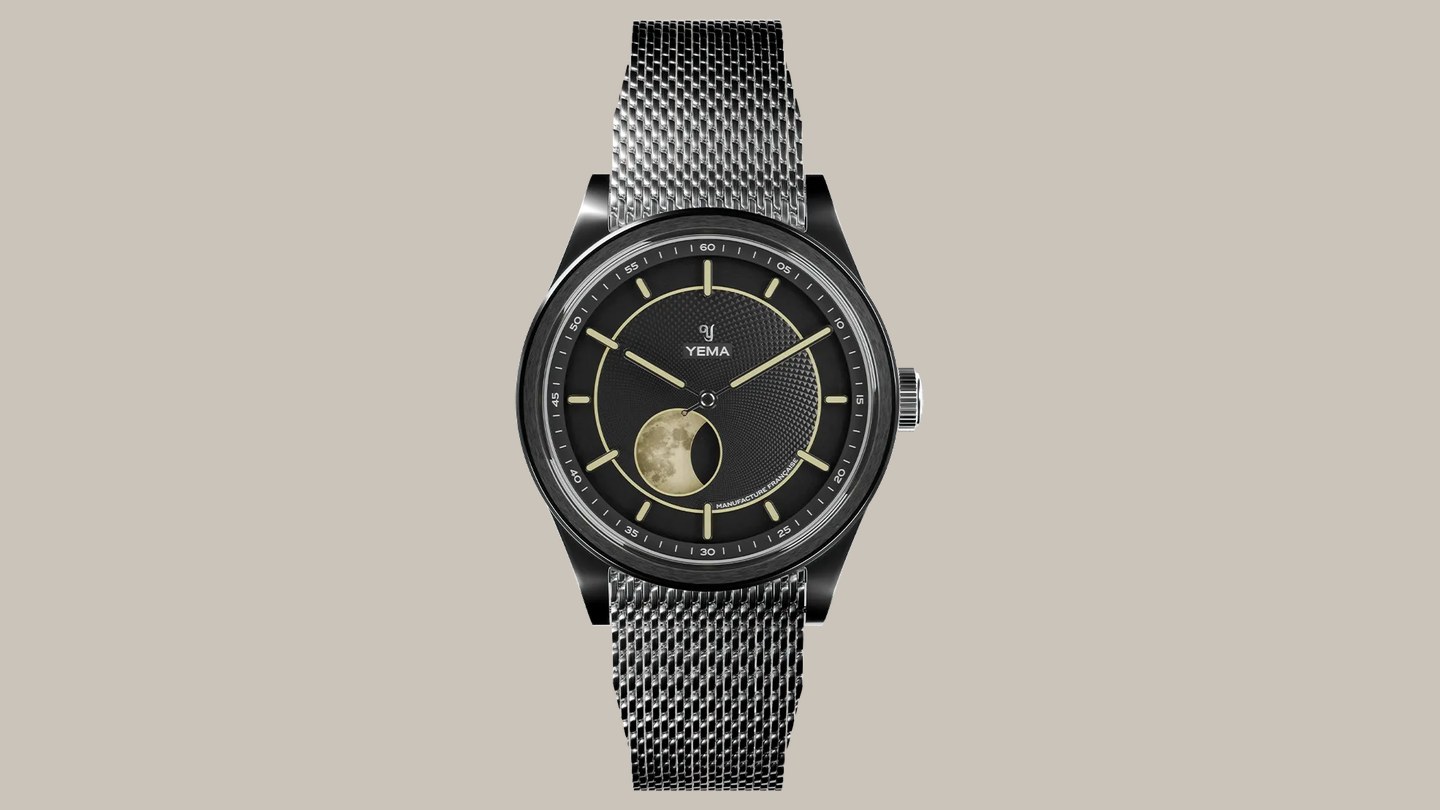
On the black dial the moon reads like it hangs in a night sky, which is the obvious idea executed properly. Markers and hands take a warm gilt tone against the black, and the guilloché goes nearly invisible until light rakes across it.
This is reference 77.26.22.06.SNL.L8 on leather, and it’s the one I would order. Dressy from across the room, strange up close. That’s a good combination.
Blue, the easy wearer
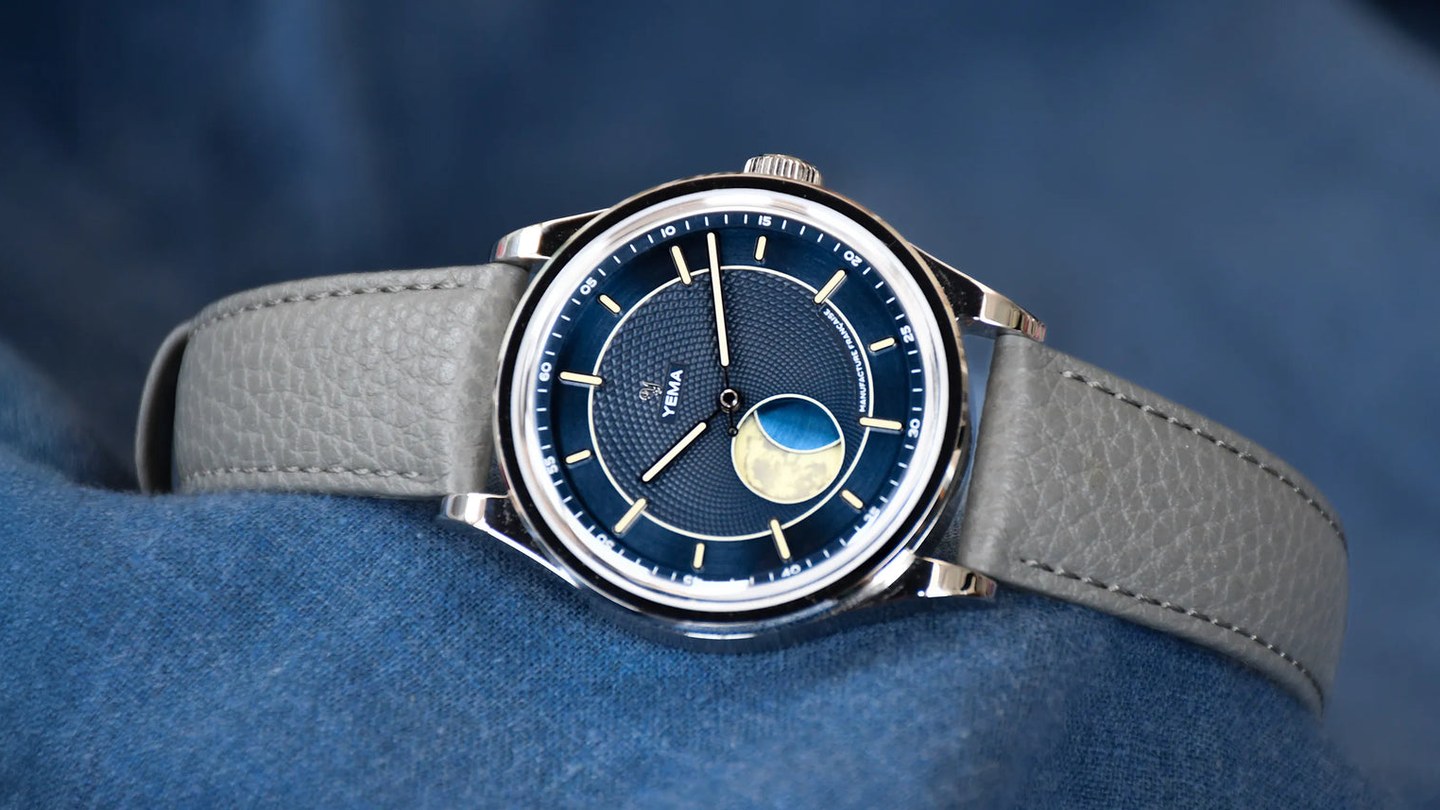
Blue behaves like an everyday watch. The moon sits paler against the deep blue, and the gray grained leather keeps it casual.
Overall it feels less like formal wear, more like something you’d keep on for a Tuesday. If black is the evening watch, blue is the one still on your wrist the next morning.
Champagne, the dress watch proper
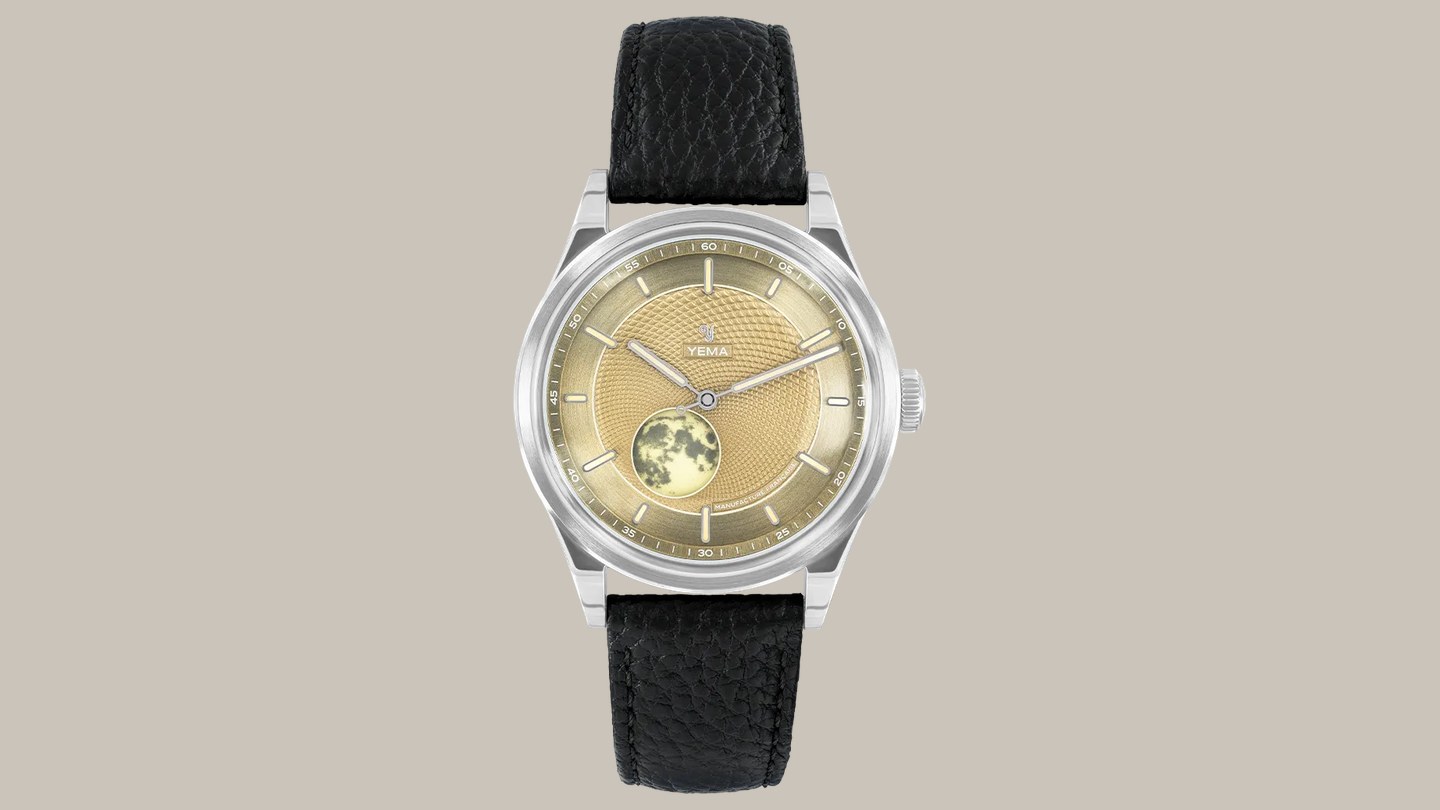
Champagne is the traditionalist’s pick, a warm gold-toned dial with the moon in a paler shade still, paired with black leather in Yema’s photos. It leans hardest into the 1940s dress-watch proportions the case is quoting, stepped bezel and all.
Of the three, this is the one that disappears under a cuff and then gets asked about at dinner.
The CMM.22, and why the case stays thin
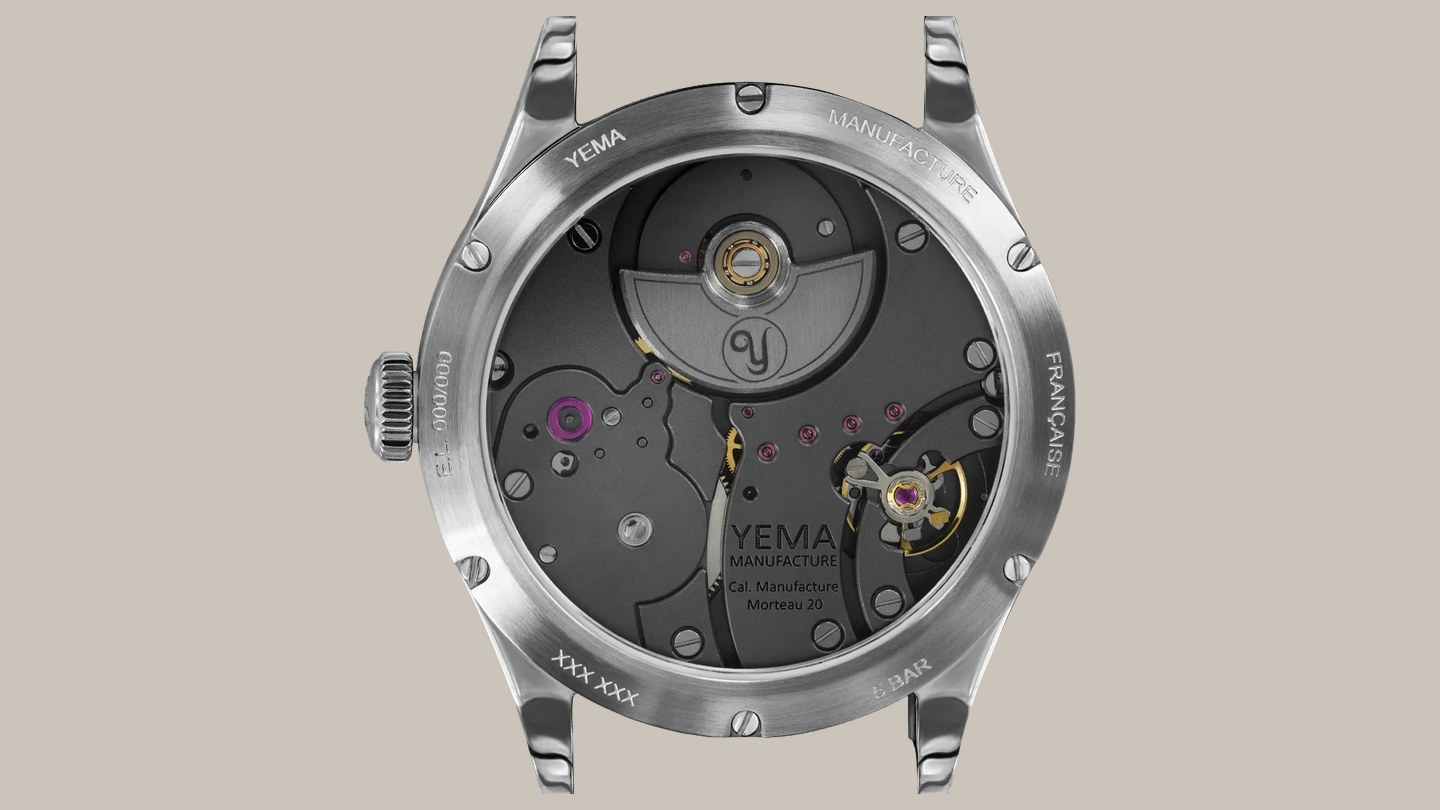
Underneath sits the real engineering story. Yema builds the CMM.22 in Morteau on its CMM.20 micro-rotor architecture, which is 3.7mm thick on its own. The moonphase mechanism adds just 0.83mm, bringing the caliber to 4.7mm, and that’s how a watch with an oversized lunar display ends up in a case only 8.7mm thick.
It runs at 28,800 vibrations per hour with a 70-hour reserve, so it comes off on Friday night and it’s still running on Monday morning. Through the sapphire back, the caliber wears a deep anthracite finish Yema calls Anthradec, with polished screw heads and the tungsten micro-rotor turning over it. Your number out of the 200 sits engraved back there too.
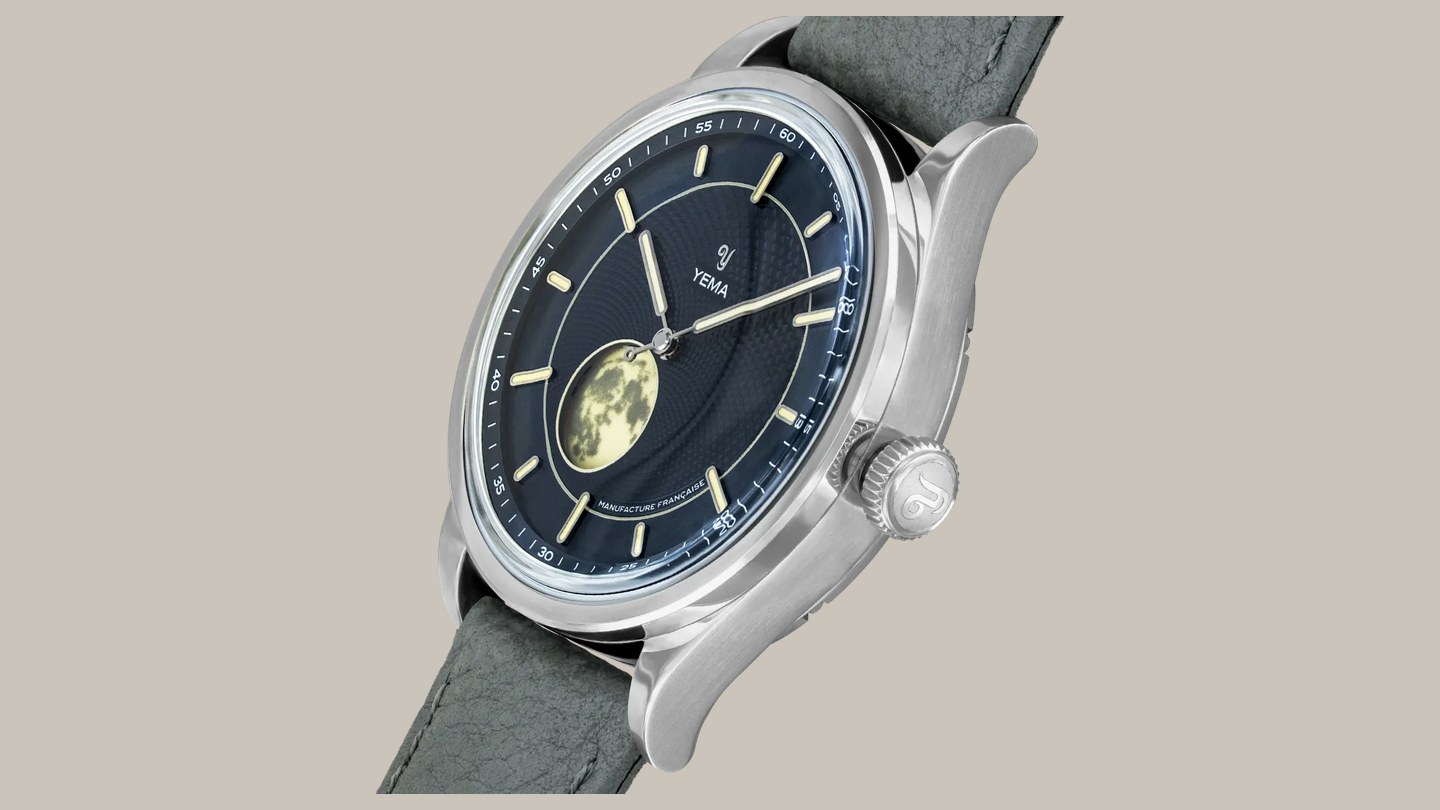
Case dimensions run 38.5mm across and 46mm from lug to lug, in 316L steel, under a 1.20mm double-domed sapphire. Water resistance is 50 meters, which is dress-watch territory, and all this watch is pretending to be.
Leather or mesh, and the arithmetic
Yema says the grained leather’s pebbled surface echoes the lunar surface, and for once the marketing line survives a look at the photos.
Mesh means an integrated Milanese bracelet with curved end pieces, a quick-release system, and a sliding clasp for fine adjustment. Swapping between the two needs no tools.
Mesh adds $112 to the leather price, $2,877 against $2,765, which is fair money for a fitted bracelet. Three colors at 200 pieces each means 600 watches in total, and a five-year international warranty stands behind them. The one catch is the calendar. Orders open tomorrow and the run is small, so buying one is a 10 a.m. appointment, not a browse.
Editor’s take
Moonphases are usually the complication you show people with a loupe. Yema built one you can read from the doorway, and powered it with its own thin micro-rotor caliber instead of a bought-in module, at a price the Swiss charge for far less ambition.
A moon made of light, in a French dress watch under $2,800 on leather. If Senans is the direction, I want to see where the collection goes next.