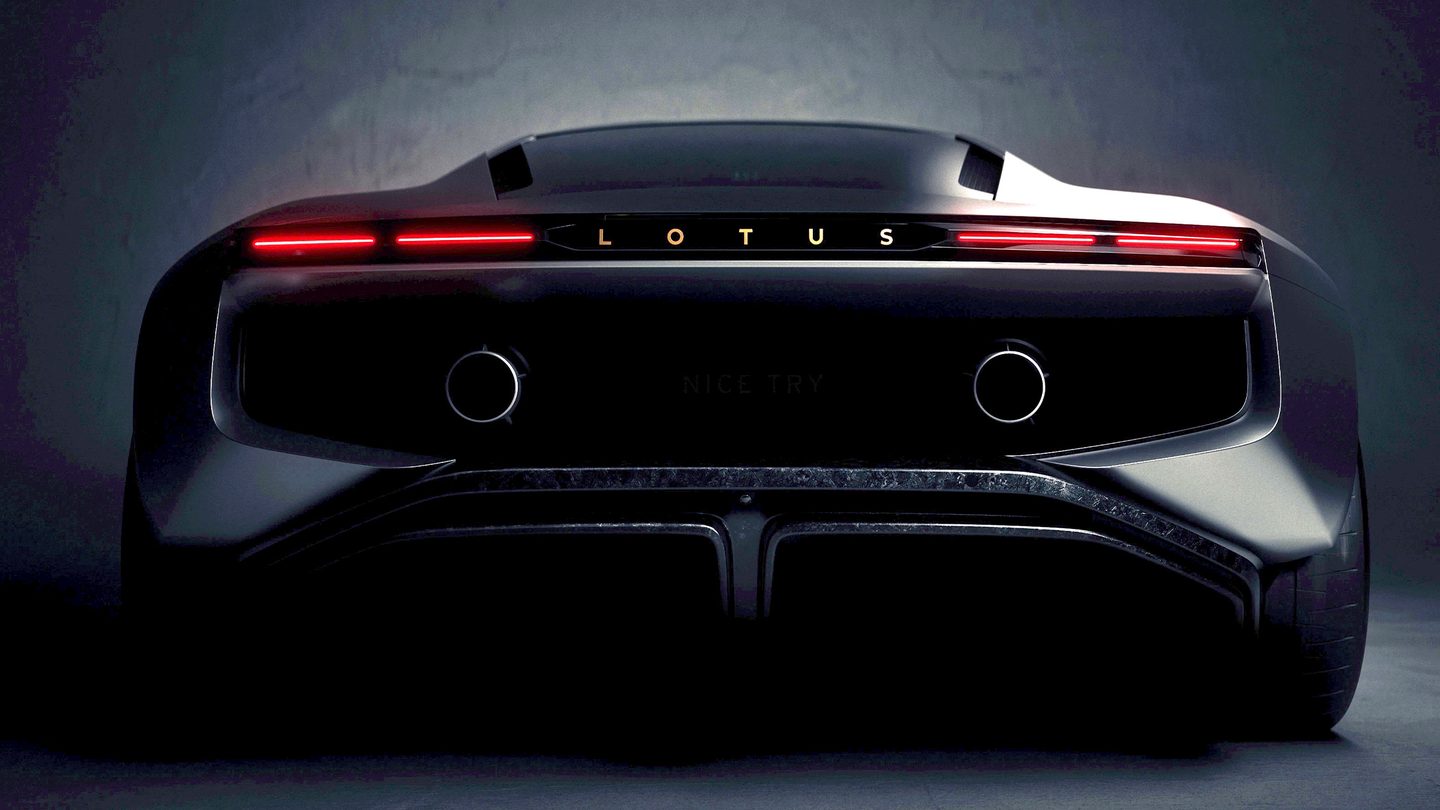
One photograph is all Lotus has released of the Type 135, its next supercar, and the photograph shows the car from behind. This is just gorgeous.
Just the back of the car.
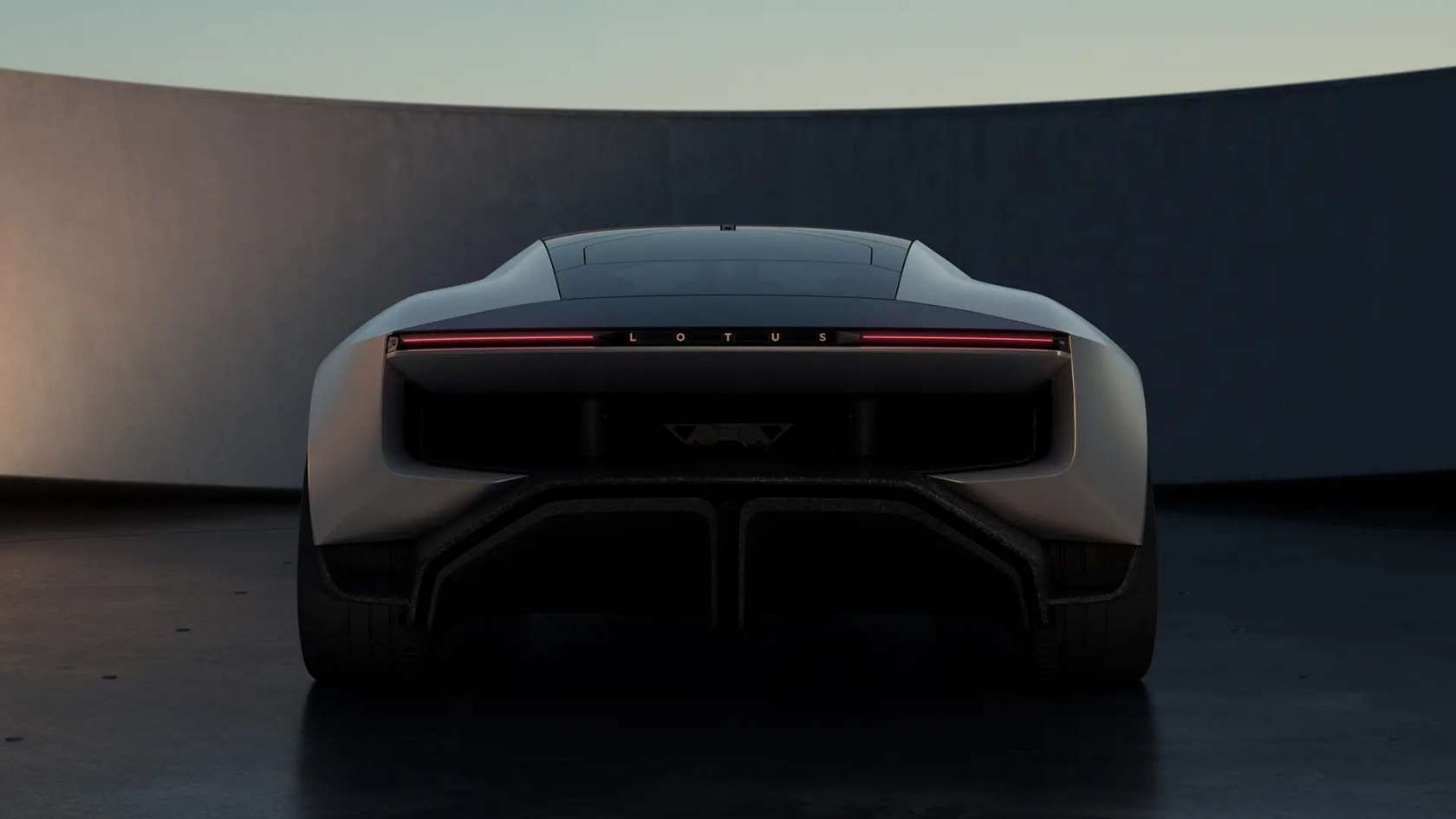
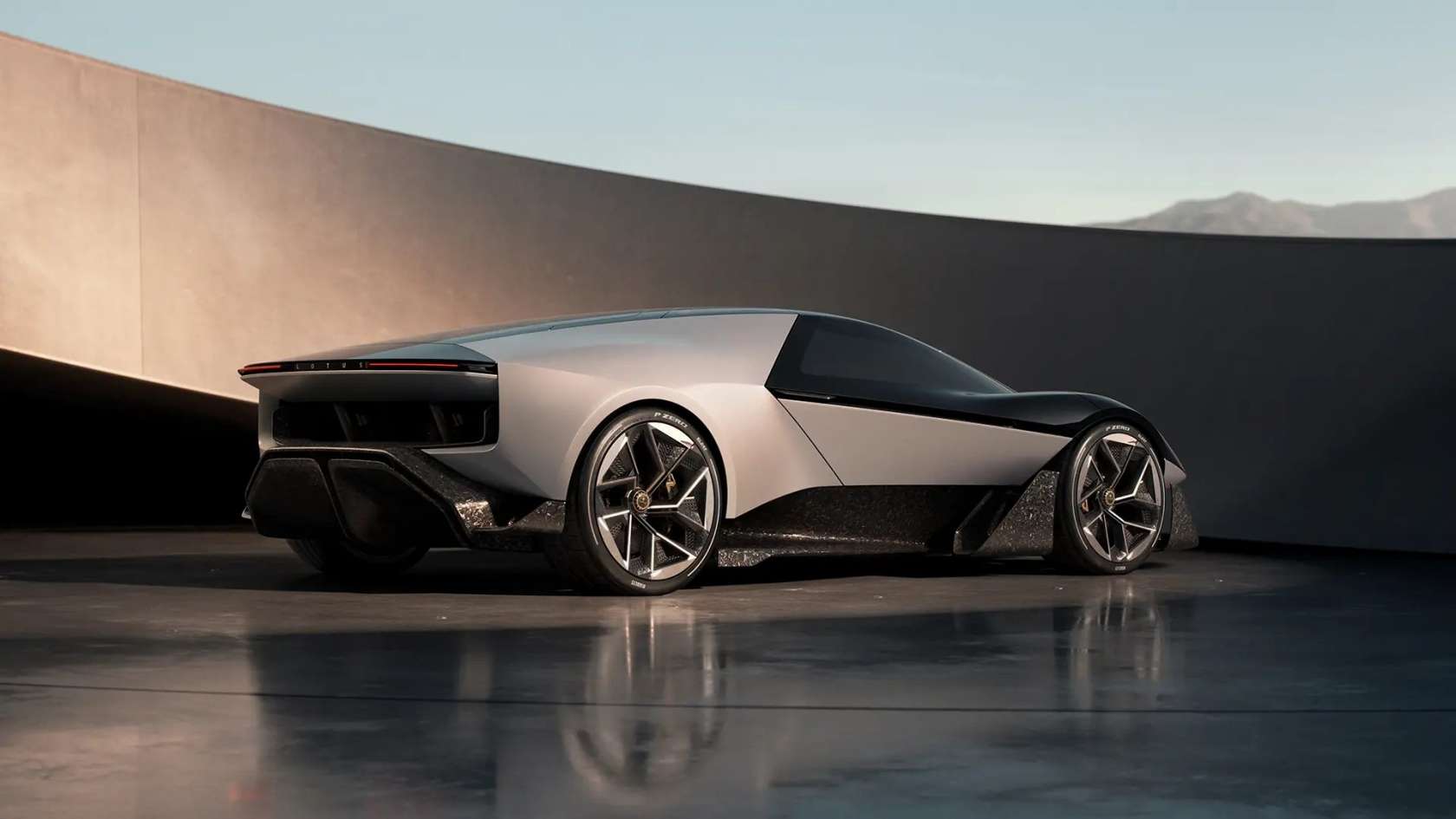
The rear is wide and low and almost entirely graphic: a thin red light bar runs the full width of the car, the name sits in spaced gold letters at the center of it, and below that sits one vast black panel holding two round exhausts and nothing else competing for your eye. No shouting badges. No chrome confetti. Just proportion and restraint, executed at full width.
A light bar, gold letters, and a hidden joke
The light bar does the signing. Two red segments per side flank an elongated black panel, and inside that panel the five letters of LOTUS stand spaced apart in gold, lit like jewelry in a case. Under the bar the bodywork steps out into a clean horizontal shelf before dropping into the black panel, so the whole rear reads in three calm horizontal layers.

Then there is the joke. Brighten the photograph and the black panel answers back: between the exhausts, in faint lettering, Lotus has written NICE TRY for anyone who went digging in the shadows for details it has not released yet. A supercar with a sense of humor about its own secrecy says good things about the culture that designed it.
The name is the badge. Nothing else back there is asking for attention.
The wedge, grown up
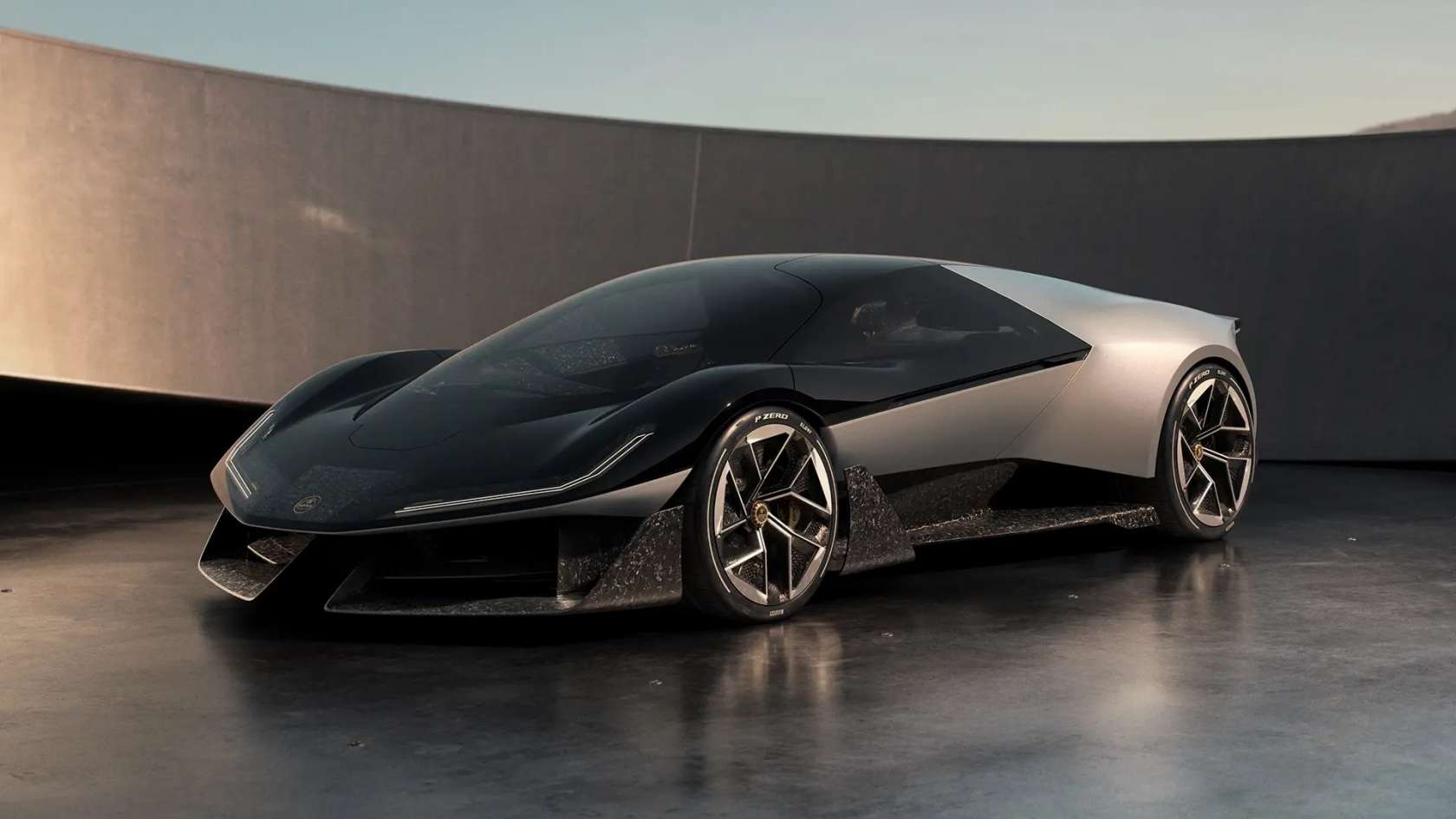
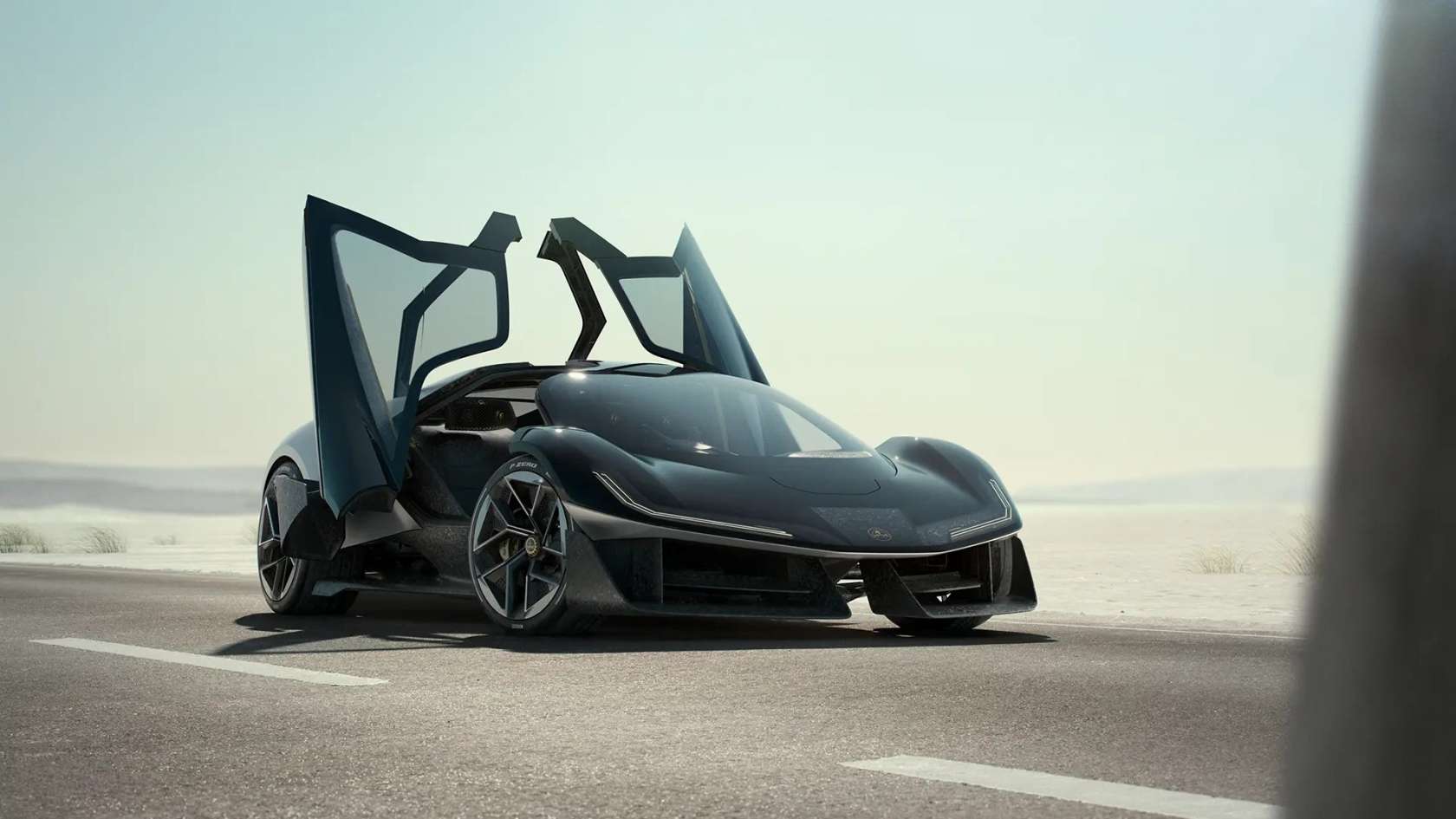
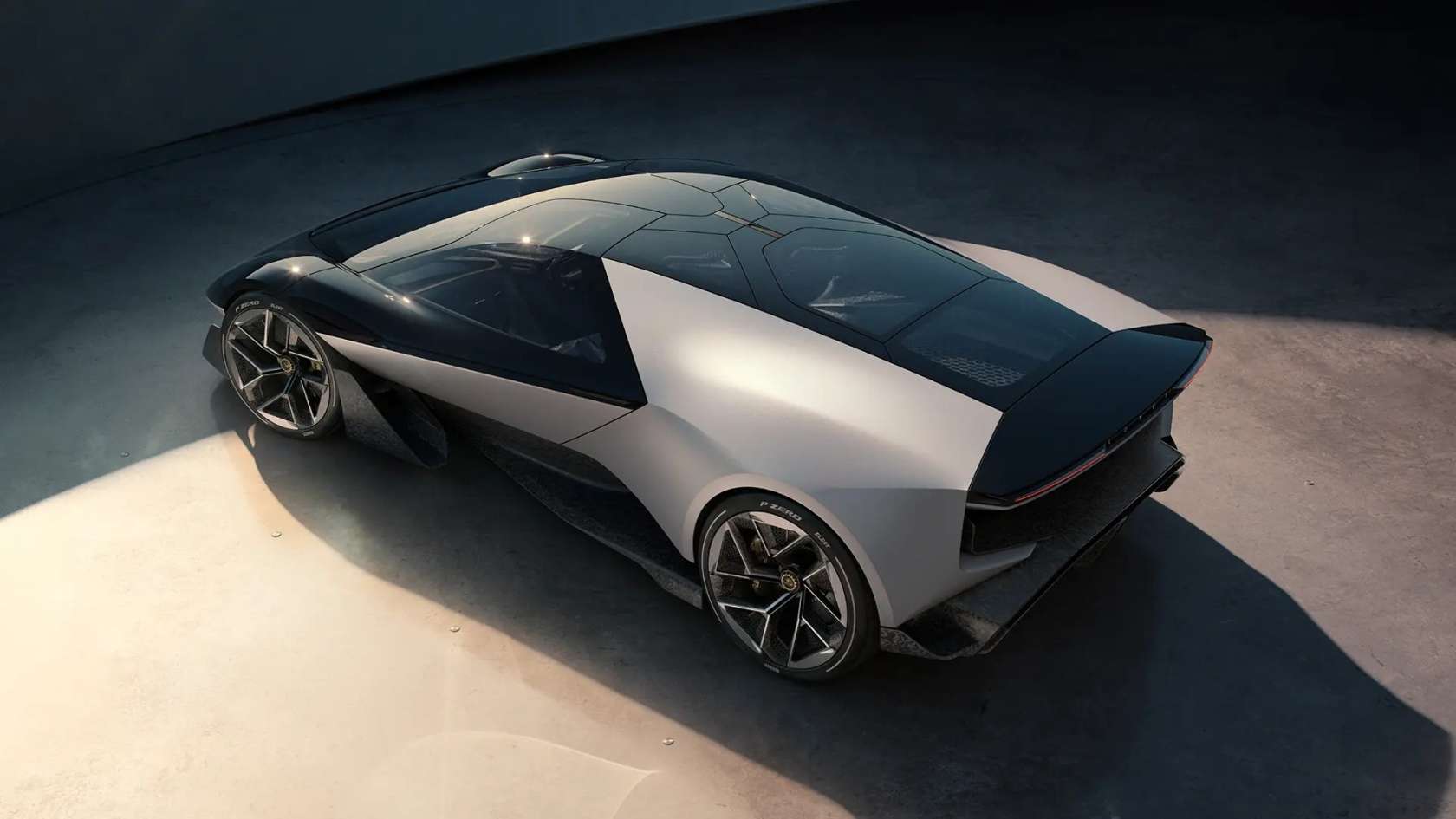
Up top, the deck slopes down from a glass canopy, with a small vent set into each side of it, and the haunches swell out over rear tires that look ready to argue with the road. The stance is pure mid-engine: cabin forward, mass behind, everything pulled tight over the rear axle.
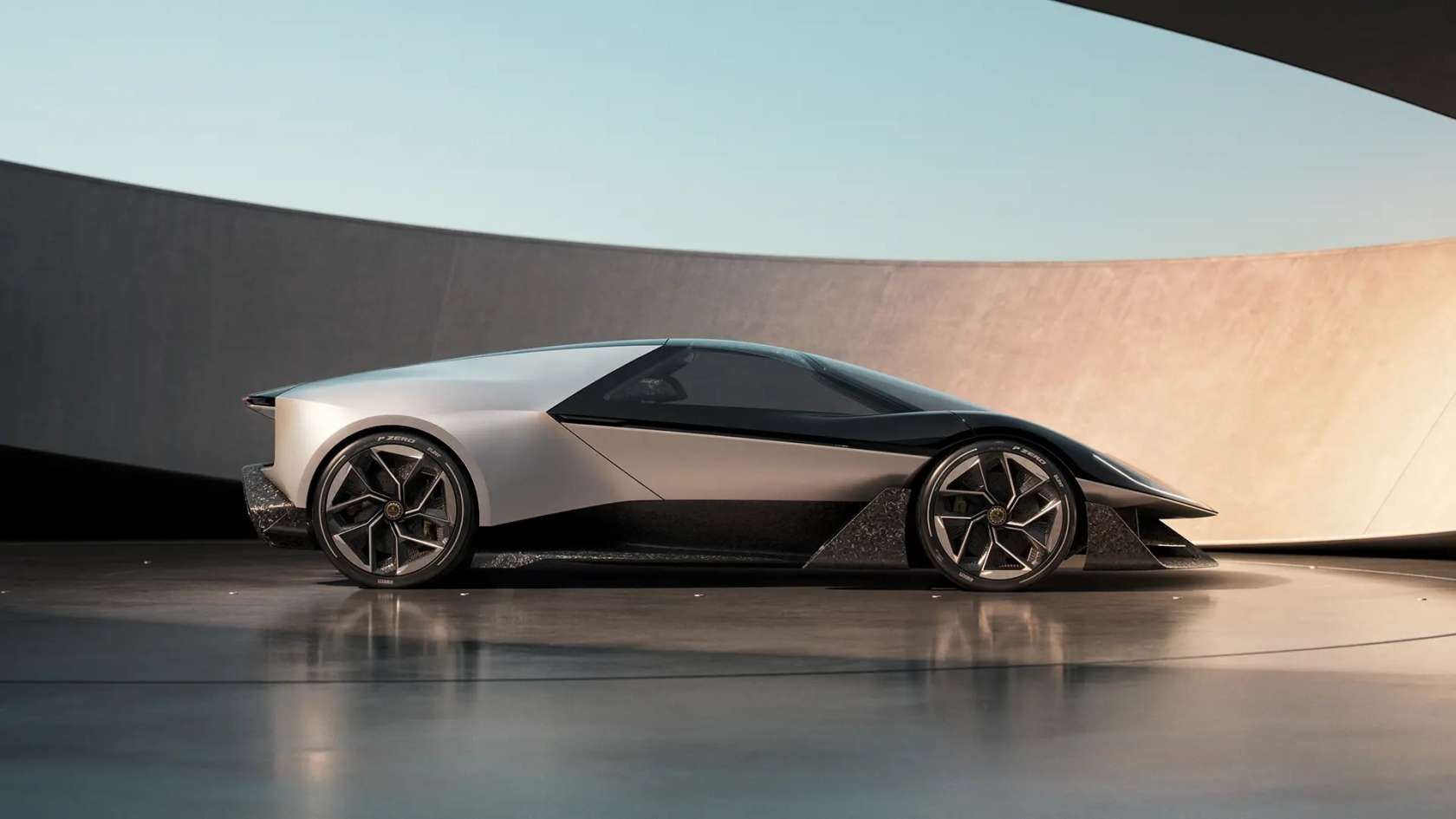
The Esprit name carries weight here. Giorgetto Giugiaro’s original Esprit defined the wedge era with a straightedge, all creases and flat planes, a car that looked folded from a single sheet. This one keeps the lineage’s low, wide, cab-back silhouette and trades the straightedge for surfacing that moves like muscle under skin, and its light signature and material play arrive from a newer source, Lotus’s Theory 1 concept, filtered toward a production car.
Lotus, for the record, still calls this car only the Type 135. The Esprit name surfaced in the filename of the company’s own teaser image, and Lotus has since called it an internal project name, which is as close to a wink as a filename gets. Whichever badge the car wears at its reveal, the silhouette has already made the argument.
A V8 under the deck
The hardware justifies the hips. Behind the cabin sits a new 4.0-liter twin-turbo V8 from Horse Powertrain, the Geely and Renault joint venture, its turbochargers tucked between the cylinder banks in a hot-vee layout.
On its own the engine makes more than 670 horsepower and 590 lb-ft of torque at a claimed 200 kilograms, figures Horse backs by calling the W40 one of the most power-dense V8s available. It is also a homecoming: the first V8 in a Lotus road car since the Esprit V8 bowed out in 2004, and the first V8 Horse has ever built.
An electric motor lives inside the new eight-speed dual-clutch gearbox, which is rated for up to 774 lb-ft, and combined hybrid output is reported past 1,000 horsepower. The hybrid is a regular one rather than a plug-in, a deliberate choice that keeps the battery small and the mass where Lotus wants it.
The target weight underlines it: 1.5 tonnes for the V8 car.
An entry version pairs a V6 hybrid, also developed by Horse, with the same layout and a lower output Lotus has not confirmed. We ran the engine announcement in full earlier today, and the numbers reward a look.
Back to the back
Everything below the black panel is business. A band of forged-carbon-look trim runs the width of the car, and beneath it the diffuser opens into two large channels split by a single vertical fin at the center, the kind of hardware that usually hides under a race car. It is the one loud element at the rear, and it is loud in the way functional hardware is allowed to be.
What we cannot show you is the rest. Lotus has not released the front of the car, and nothing of the cabin exists in public yet: no seats, no screens, no steering wheel to judge. Supercar interiors live or die on restraint as much as rear ends do, and restraint is plainly the house style right now.
So the first impression stands. A returning name, a V8 where the electric silence was supposed to be, and a rear end drawn with this much confidence. If the front of the Type 135 carries half the conviction of the back, Ferrari’s 849 Testarossa has a real problem on its hands.