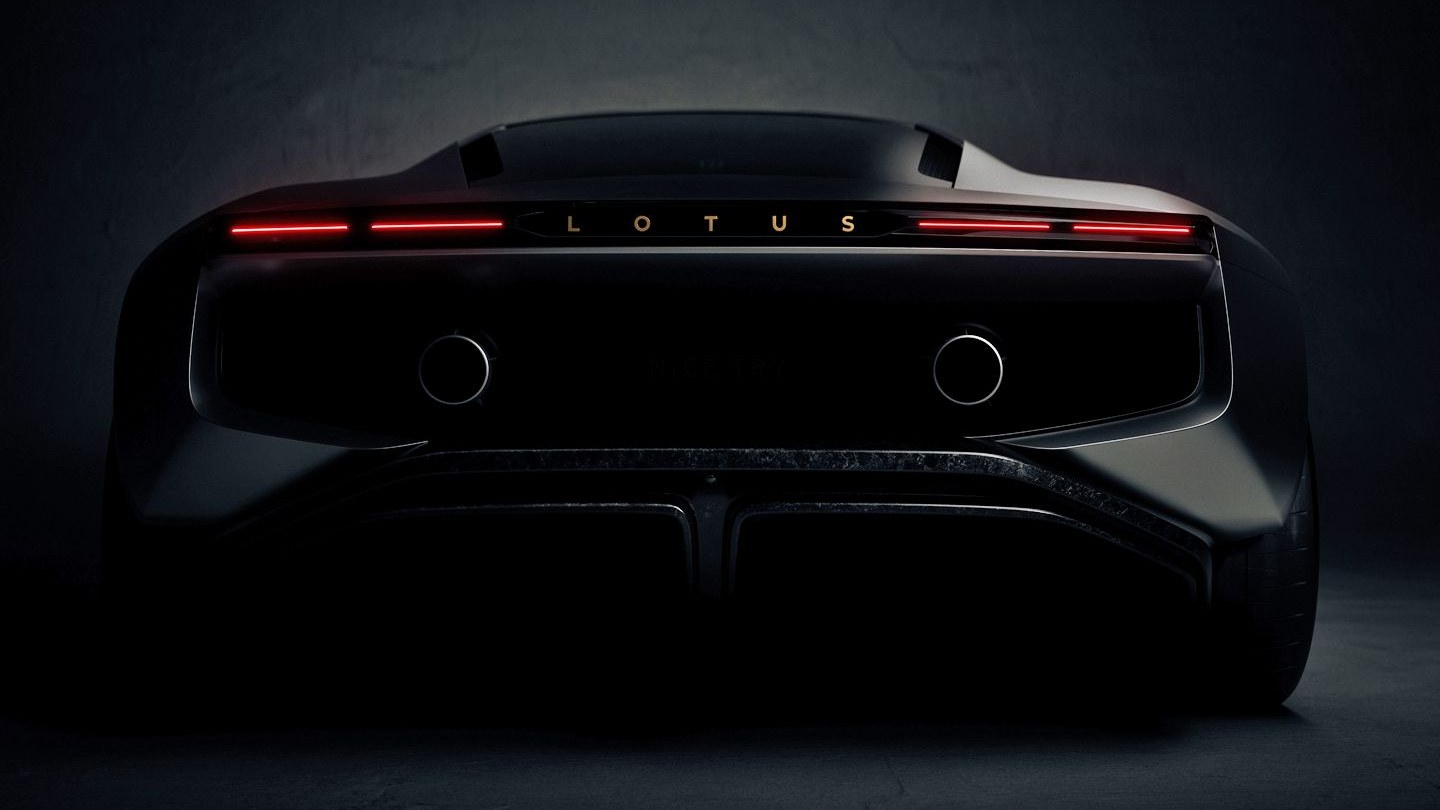
Lotus’s first supercar finally has an engine, and it isn’t one Lotus built. The Type 135 will run the HORSE W40, a 4.0-liter twin-turbo V8 from Horse Powertrain, the powertrain venture owned jointly by Geely and Renault.
On its own, before any hybrid help arrives, the W40 makes more than 670 hp and 590 lb ft of torque. It weighs 441 pounds. Together, those numbers are the story: power density Lotus can package tight, in a car targeted to weigh under 1.5 tons all-in.
Lotus has sold sports cars for decades without ever building a supercar. The gap sat between the Emira and the electric Evija, and it stayed empty for want of an engine Lotus could call its own.
Horse is no skunkworks. The company employs more than 19,000 people across 18 plants and five R&D centers, and its 25 customers include Renault Group, Geely Auto, Volvo Cars, Nissan and Mitsubishi. This is a volume supplier’s first V8, and it debuts in a Lotus. Volume is the point of the company: it exists to build powertrains at a scale no single carmaker would fund alone.
The turbos live in the vee
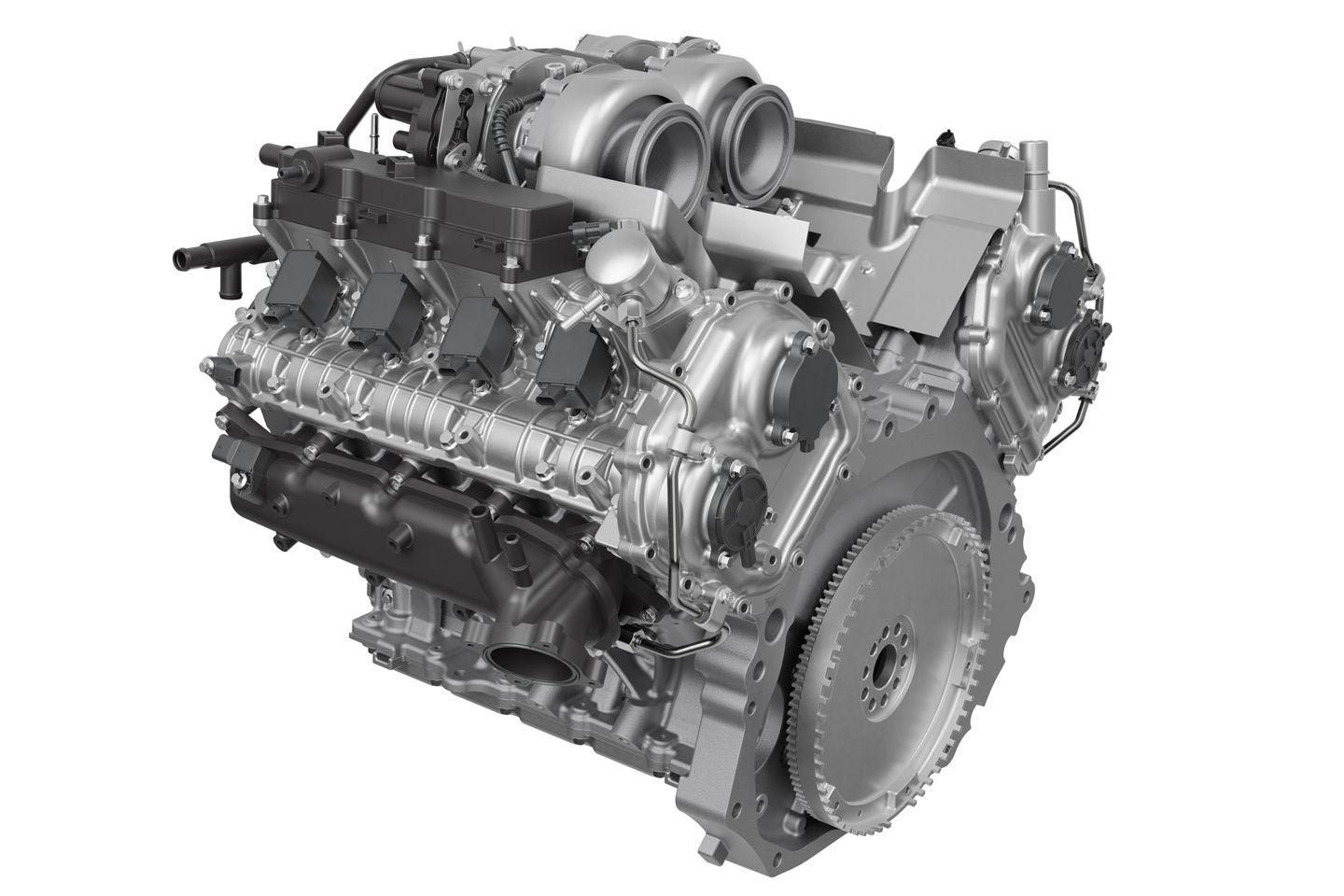
Horse calls the layout a hot vee. Both turbochargers sit top-mounted between the cylinder banks rather than outboard, so exhaust gas reaches them over a short path and the intake tract shrinks to match. The unit is designed for longitudinal installation, the arrangement a mid-engined car needs, and it stays narrow where an outboard-turbo V8 grows wide.
The short paths pay twice. Exhaust energy arrives at the turbines with less distance to bleed off, which is where a turbo engine’s response is won, and the plumbing stays off the flanks, where a mid-engined car needs its room for bodywork and cooling. The hottest hardware sits high and central, clear of the flanks.
Direct fuel injection and extensive lightweighting carry the rest of the brief, and the delivery runs both ways. Horse tuned the engine for strong low-end torque alongside peak power, the spread a hybrid system wants, since the electric side can fill in wherever the combustion side runs thin. It also means the engine’s best work happens where the driver spends most of a road drive, not only at the redline.
The brief was density, and the engine is the proof.
Density first, everything else second.
The gearbox is half the powertrain
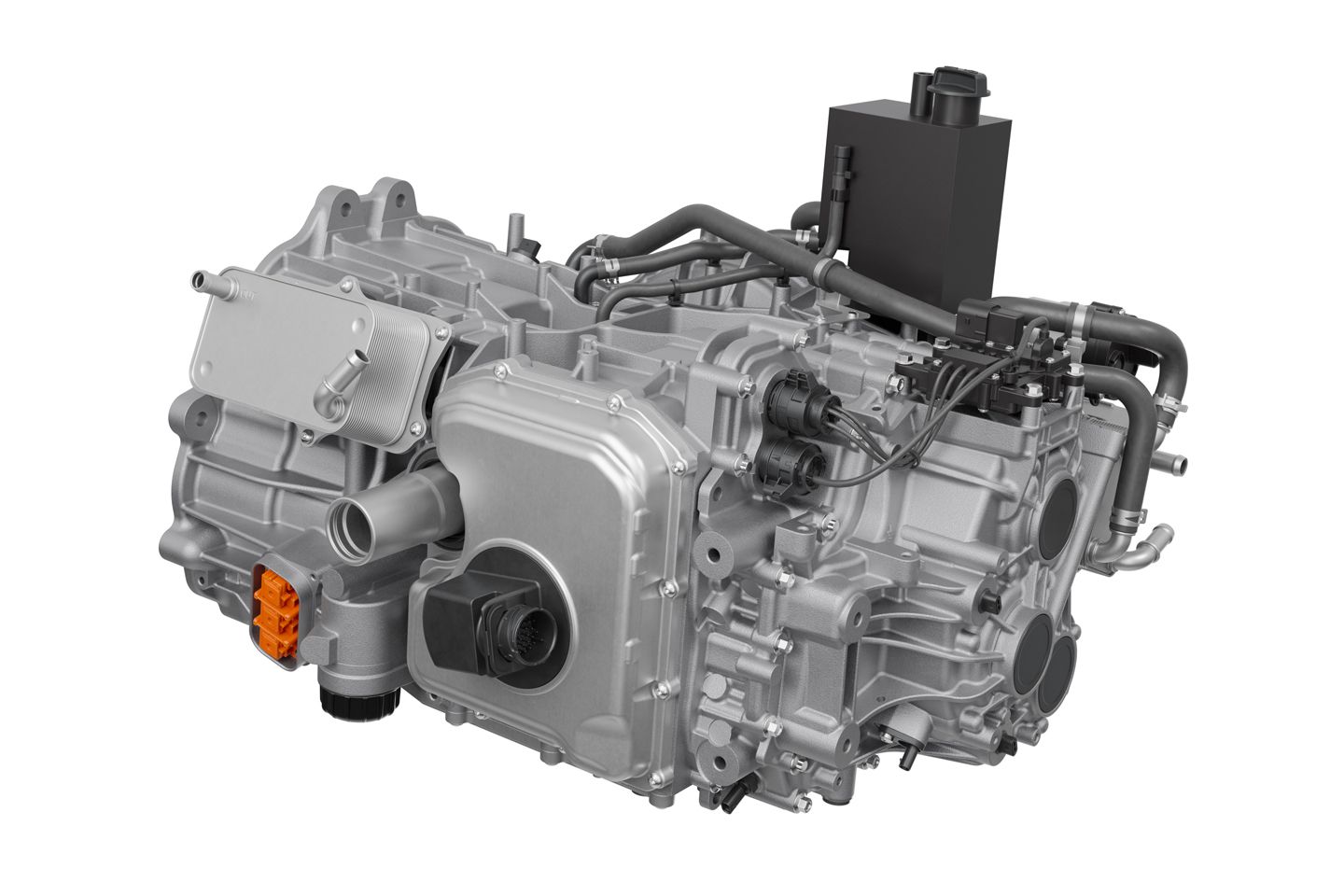
The W40 was designed from the outset to integrate with the HORSE 8LDCT, an eight-speed dual-clutch built for hybrid duty. It’s a wet-clutch unit with its silicon carbide control system and power module built in, plus a variable-displacement mechanical pump. The torque ceiling is 1,050 Nm, or 774 lb ft, far beyond the engine’s own 590 lb ft peak.
Pre-fill takes under 50 milliseconds, and shift response under 20. Those numbers used to belong to racing gearboxes. In a hybrid they aren’t vanity: every handoff between engine and motor rides on those clutches, and a slow one would show up in the driver’s seat.
Integration is the theme of the whole design. Control electronics that normally live in a separate box sit inside the case, and every bracket that design deletes is weight the Type 135 never has to carry.
Designed as a set, aimed at one car
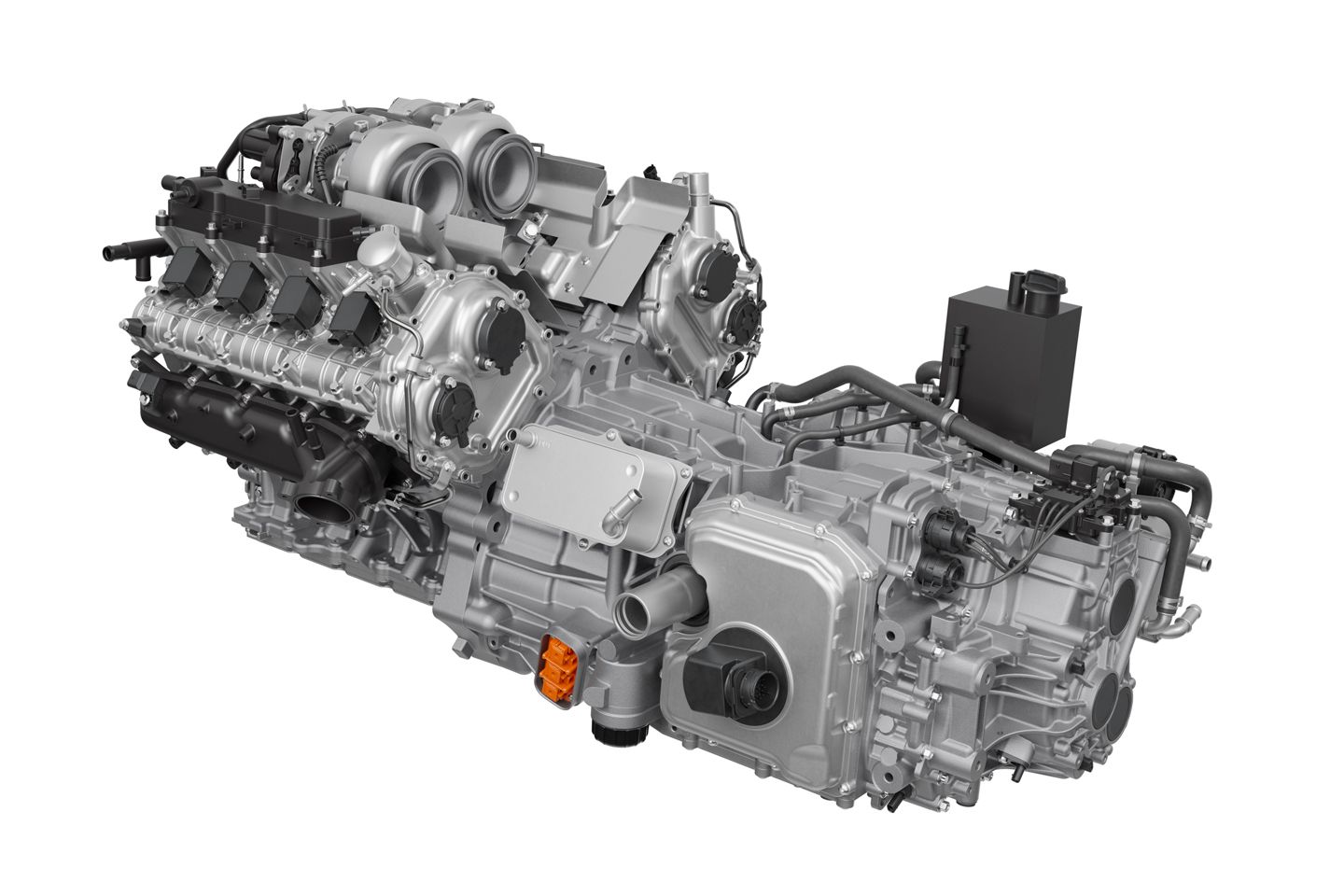
Engine and gearbox make their world debut as an integrated set in the Type 135, and the quotes from both companies describe the same division of labor. Horse brings the density. Lotus brings the chassis. The division couldn’t be cleaner, and it plays to what each company already does at scale.
Matias Giannini, Horse’s CEO, called the W40 ‘one of the most power-dense V8s in automotive history’ and the Lotus program ‘a historic contribution to the world-renowned Lotus brand.’ Strong words for a supplier, though a first V8 built for a first supercar is allowed some ceremony, and both companies know the pairing makes the headline.
It’s a homecoming of a kind, too. Lotus’s last V8 was its own design, the twin-turbo unit in the Esprit. That engine left production in 2004, which makes this the first eight-cylinder in a mid-engined Lotus in 22 years.
For the car itself, the targets are public: more than 1,000 hp from the hybrid system, a curb weight under 1.5 tons, a V6 hybrid variant alongside the V8, and a 2028 debut. The production name isn’t confirmed, whatever the Esprit talk says.
Feng has acknowledged the weight target is hard to hold with an 800-volt architecture, a hybrid system, a V8 and electric motors all aboard: it ‘just is not easy.’ The target stands anyway. Lotus published it next to the engine numbers, where the finished car will be measured against it.
Feng Qingfeng, Lotus’s CEO, put the partnership in terms of the two things his company has always sold. Horse’s hardware brings ‘exceptional power and torque density,’ and Lotus answers with ‘lightweight engineering and chassis dynamics,’ aimed at ‘the precise, engaging driving experience that defines Lotus.’ That’s the deal, stated plainly from both sides. The aim, in his words, is ‘a new generation of supercar performance.’
The car is still hidden. Its engine isn’t.
And the engine is the brief made metal: light, dense, turbos in the vee, built to sit in the middle of something small. If the car is drawn to the same brief, Lotus’s first supercar will look like a Lotus.