Something changed in Audi’s approach to the midsize sedan. You can feel it before you press the start button. The 2026 A6 TFSI isn’t simply a new generation of a familiar nameplate. It’s Audi’s declaration that splitting the lineup into three tiers was costing more than it earned.
I drove the Prestige trim with Audi Exclusive appointments across roughly 60 miles of Southern California desert highway and canyon roads from Rancho Mirage during a press event at The Ritz-Carlton. A departing flight kept me from getting seat time in the Sport Plus configuration, but one car was more than enough to understand what Audi is doing here. The ninth-generation A6 consolidates the old 45 (four-cylinder), 55 (six-cylinder), and S6 into a single offering built on Audi’s new Premium Platform Combustion. One engine. One platform. Every technology they’ve got. That’s a confident bet, and after a morning behind the wheel, it’s looking like the right one.

One powertrain to replace three
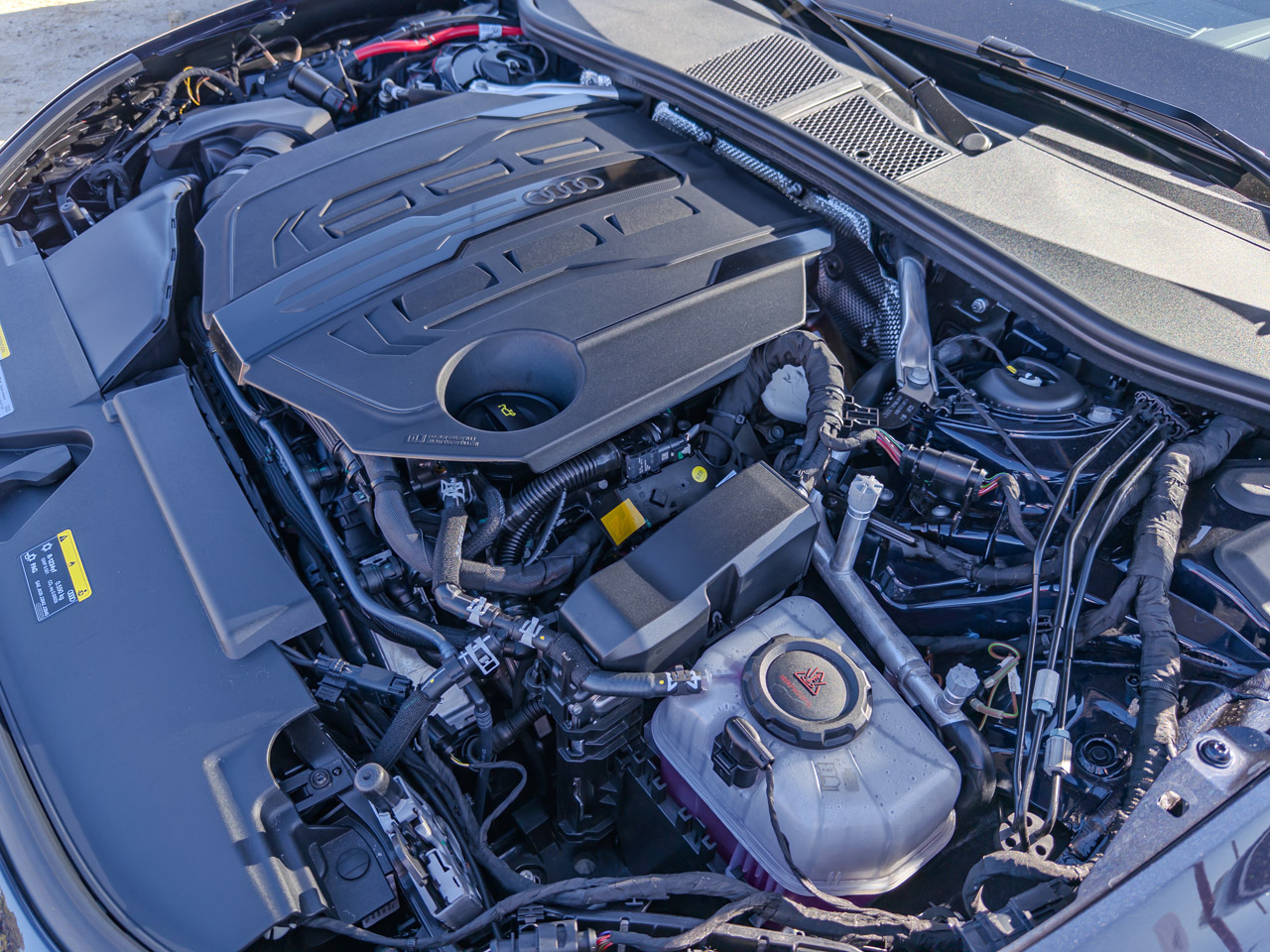
The numbers are clean. A 3.0-liter turbocharged V6 produces 362 horsepower and 406 lb-ft of torque, paired exclusively with a seven-speed dual-clutch transmission and Quattro all-wheel drive. Audi estimates 0-60 in 4.5 seconds. At 4,300 pounds, that’s serious mass moving quickly, and the V6 never feels like it’s working hard to do it.

What matters more than the headline figures is what sits behind them. For the first time ever, Audi is putting the sport rear differential into an A-model car through the Sport Plus package. That hardware lived exclusively in S and RS models until now. On tighter canyon sections outside Palm Springs, the difference is tangible. The rear end rotates with a precision the old A6 simply didn’t have, and it transforms how the car handles mid-corner corrections at speed. You feel the outside rear wheel pulling you through the turn rather than the front end pushing you wide.
Progressive steering adds another layer that most buyers won’t see on a spec sheet but will notice within the first mile. This isn’t the speed-variable assist system found in most competitors. Audi uses a variable tooth spacing rack, which means the steering ratio itself changes mechanically as you add lock. At highway speeds, the wheel feels calm and composed. Through tighter corners, it sharpens without the artificial weighting that electronic systems tend to introduce. It’s the kind of engineering detail that doesn’t photograph well but changes the car’s personality completely.
Design language: subtle confidence, then a twist at the back
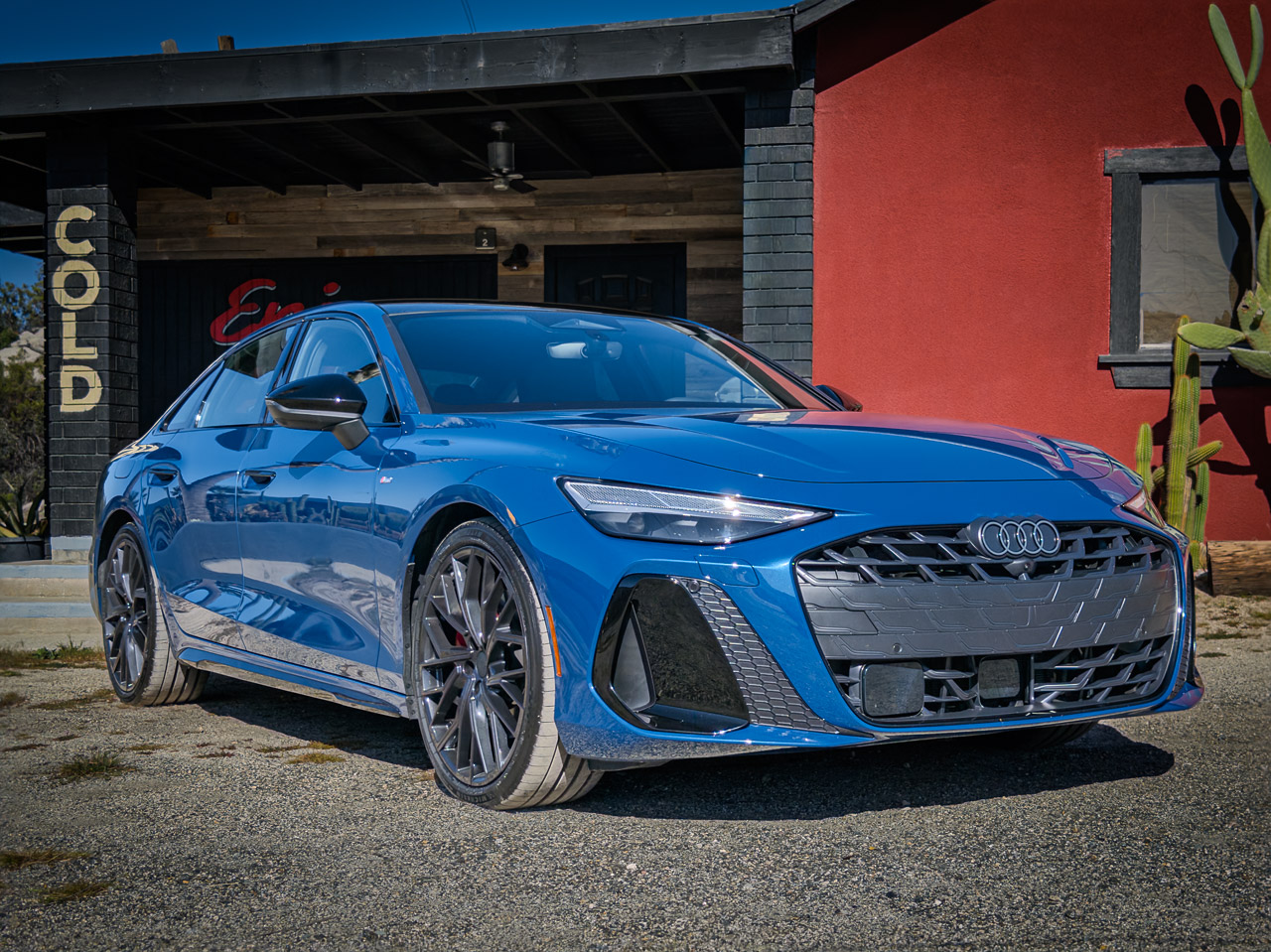
The ninth-generation A6 takes an evolutionary approach up front, sharing DNA with the smaller A5 but scaling up the Singleframe grille so it stretches down to the chin. Headlight edges are sharper than before, and flush door handles clean up the profile. The roofline carries the same graceful arc that’s defined the A6 since the second generation, with minimal surface detailing along the body. In person, the proportions read wider and more planted than photos suggest, helped by a 2.4-inch increase in overall length and a 1.3-inch longer wheelbase.

It’s at the rear where Audi takes a risk. What appear to be high-mounted brake lights are actually the communication light bar, a technology element I’ll get into below. The actual taillights are small, fang-like units pushed out to the far corners, using second-generation digital OLED technology with 198 segments per side and eight driver-selectable light signatures. It’s an unconventional brake-light signature for a sedan this size, and it will polarize. But at dusk, when the OLED signatures come alive with their constant micro-animations, the rear end has a visual depth that no competitor in this segment can match.

The Sport Plus package adds visual aggression: blacked-out Audi badges, gloss-black mirror caps and door handles, 21-inch black alloy wheels, red brake calipers, and a deleted model badge on the trunk for a cleaner look. The Audi Exclusive treatment goes in the opposite direction, refined rather than aggressive, with 20-inch wheels and a visual emphasis on material quality over motorsport cues.
Two configurations, two completely different cars
Audi set up two Prestige-trim configurations for the press route. The first wore Audi Exclusive appointments in Glacier White, riding on adaptive air suspension with 20-inch wheels, stickered at $83,490. The second carried the S Line and Sport Plus packages in Daytona Gray, fitted with a fixed sport steel suspension lowered 20 millimeters, 21-inch summer tires, the sport rear differential, and all-wheel steering, at $79,400.


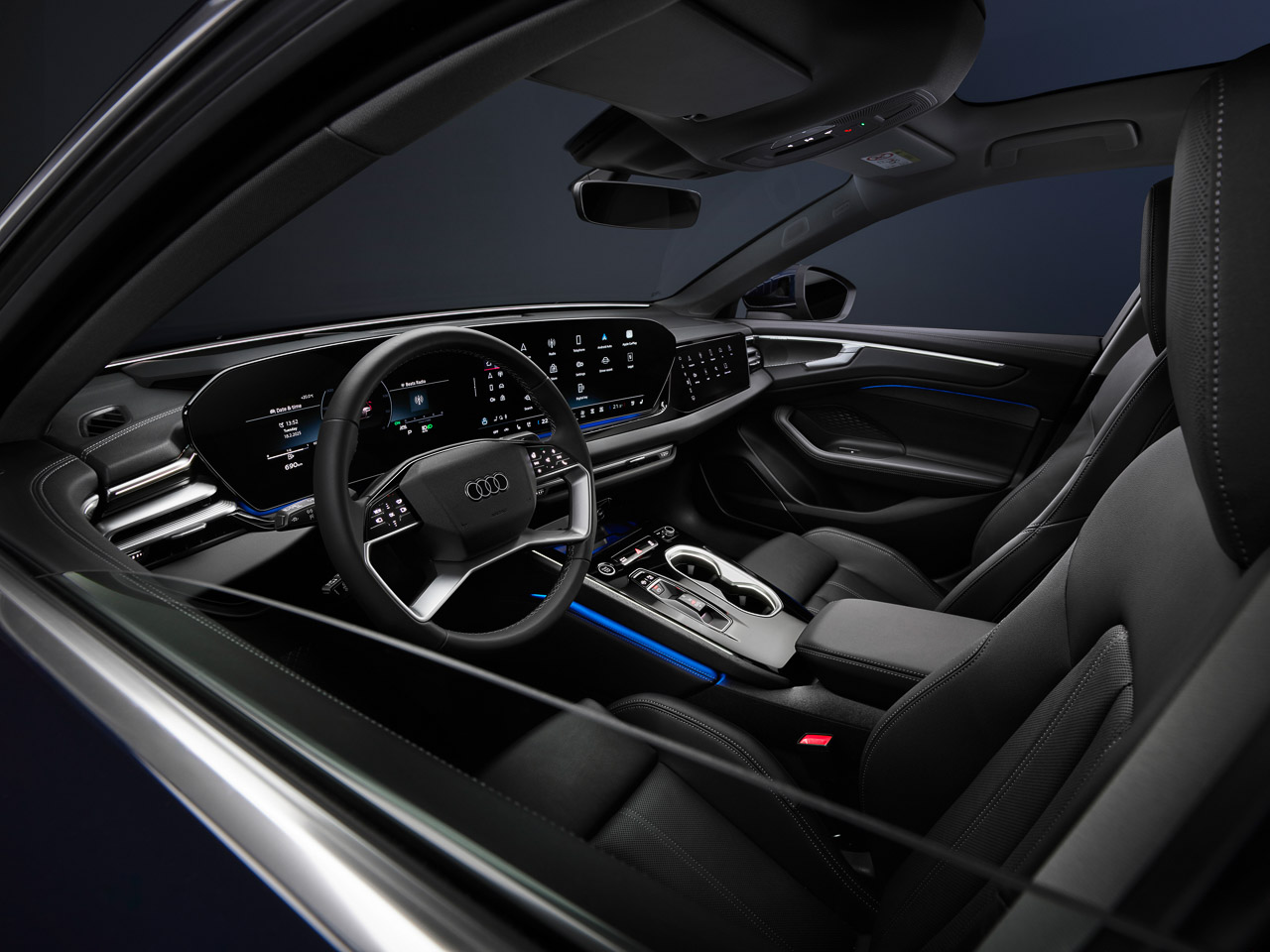
I spent the morning in the Audi Exclusive car, and this is where the two-tone interior stopped me. Audi’s White and Hot Blue bi-color cabin, accented with gold and tan details across the seats, door panels, and real wood inlays, is unlike anything I’ve seen from Audi at this price point. They normally reserve Exclusive treatments for RS models. The fact that it’s available here, on an A-model sedan, signals where Audi sees the A6 sitting in the luxury hierarchy. Stepping inside felt less like entering a midsize sedan and more like boarding a first-class cabin.
The Prestige configuration with air suspension rides with a refined, almost dismissive calm over broken pavement. In Comfort mode, the electronically controlled dampers and height-adjustable air springs absorb everything without drama. Acoustic laminated front glass and foam-filled tires keep the cabin remarkably isolated from road noise at freeway speeds. Headrest-integrated speakers route navigation prompts and phone audio directly to the driver without disturbing passengers. Slightly unnerving at first, but a welcome detail once you stop looking over your shoulder. A directional ambient light bar below the windshield doubles as a turn signal indicator, pulsing in the direction of your turn. You could cross the entire Coachella Valley without adjusting a single setting and never feel like the car was asking you to.

The Sport Plus car, based on a walkaround and cabin time between drives, presents a completely different character. The fixed sport steel suspension sits 20 millimeters lower, and Audi says you notice the difference immediately in how the car responds to directional changes. Where the air suspension isolates, the sport setup is designed to connect. More road texture, more information through the seat and wheel. The sport rear differential and all-wheel steering work in concert through corners. The rear wheels turn up to five degrees opposite the fronts at low speed for parking-lot agility, then up to two degrees in phase at highway speeds for stability. Based on how the Prestige car’s rear axle already behaved through canyon sweepers, the addition of the sport diff and all-wheel steering should make this the closest thing to an S6 currently in the lineup.
Both wear the same 362 hp powertrain, but they feel like they belong to different segments entirely. That range of personality from a single platform is exactly what the consolidation strategy was designed to prove.
I also spotted a Midnight Green Metallic press car in the lot that looked like it belonged in a different price bracket altogether. Audi’s color palette for this generation — Astari Blue, Firmament Blue, the green — is notably stronger than the last.
Three layers of lighting technology, and why they matter
Audi has been the industry leader in automotive lighting since it pioneered LED headlights, and the 2026 A6 represents the most advanced lighting system the brand has ever put into a US-market production car. There are three distinct systems at work, and understanding them separately is important because they serve fundamentally different purposes.

Layer one: Digital Matrix LED headlights. Available on Premium Plus and standard on Prestige, these are adaptive, high-resolution headlights with configurable daytime running light signatures. The system can shape the beam pattern in real time to avoid blinding oncoming traffic while maintaining maximum illumination everywhere else. You can also select from multiple DRL patterns through the MMI system, giving the front end a different visual identity depending on your preference.
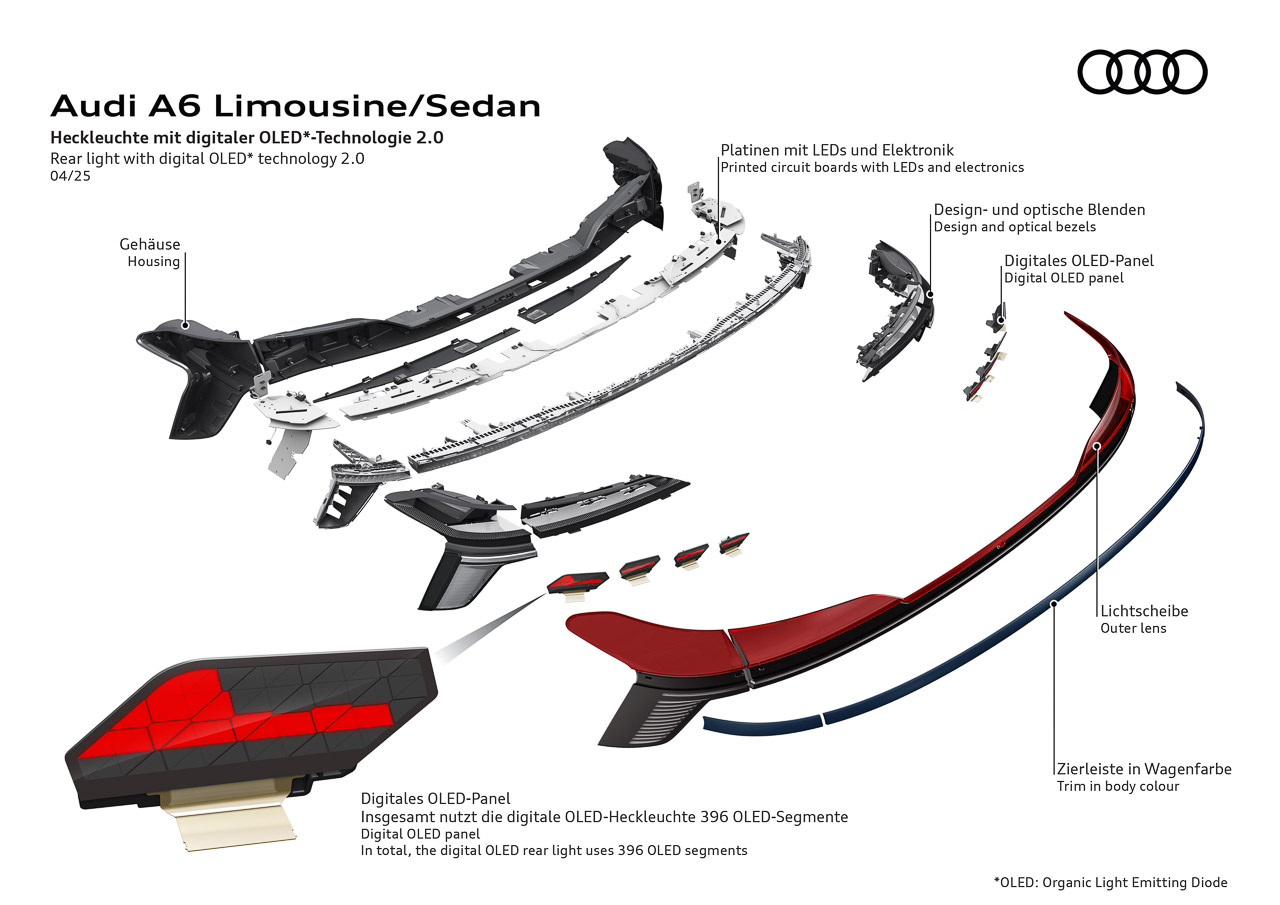
Layer two: Second-generation digital OLED taillights. Each rear light unit contains 198 individually addressable OLED segments that generate a new image several times per second using a dedicated software algorithm. This creates the micro-animation effect that makes the taillights appear alive. A constant, subtle movement that’s visible in person but nearly impossible to capture in a photograph. Eight selectable light signatures let you customize the rear appearance, and the system is exclusive to the Prestige trim. On lower trims, you still get LED taillights, but without the digital OLED animation or selectable signatures.
Layer three: Communication lighting. This is the headline technology and the one that requires the most explanation, because it’s genuinely new to the US market. The high-mounted light bar that spans the rear of the A6, the element that many people mistake for a brake light at first glance, is actually a dedicated communication system. It uses the OLED segments to display contextual information to other road users:
- Emergency call: If you dial emergency services, hazard triangle symbols appear in the light bar, warning approaching traffic before they can see the vehicle itself.
- Proximity warning: If a vehicle approaches too quickly while you’re stopped, the light bar flares to full brightness as a rear collision warning.
- Autonomous parking: When the auto-park system is engaged, an “A” pattern displays to signal bystanders that the car is operating without a driver.
- Selectable DRL signatures: The same light bar displays customizable running light patterns during normal driving, functioning as an aesthetic element.
The communication lighting concept originated in the A6 e-tron, where it runs across 450 OLED segments on ten panels. The gas-powered A6 uses a slightly smaller implementation, but the functional capability is identical. What makes this significant is that Audi is treating exterior lighting as a two-way interface between the car and its environment, rather than just an illumination tool. At dusk on the quieter desert roads outside Palm Springs, the effect is striking enough that other drivers visibly react. During the day, it’s more subtle, but the hazard and proximity warning functions work regardless of ambient light.
No other manufacturer in this segment offers anything comparable. BMW’s 5 Series and Mercedes’ E-Class use conventional LED lighting with no communication capability.
The cockpit, the roof, and the details that add up
Audi’s Digital Stage cockpit uses a curved OLED display architecture: an 11.9-inch driver display and 14.5-inch center touchscreen that flow together as a single visual plane. On the Prestige trim, a 10.9-inch passenger display adds independent navigation, media streaming (including YouTube), and AirConsole gaming with Bluetooth headphone support, so the passenger can watch content without disturbing the driver. The screens are bright enough to read in direct Palm Springs sunlight, and the interface responds without the lag that plagues some competitors’ infotainment systems.

The HVAC shortcuts in the lower panel are customizable. Hold down the recirculate button and a menu pops up, letting you drag different functions into the quick-access row. It’s a small detail that turns a potential frustration point into something intuitive. The one weak spot is the piano-black center console trim, which shows fingerprints immediately and feels like the one material choice that doesn’t match the rest of the cabin’s quality.
Then there’s the electrochromic panoramic roof, which Audi markets as Digital Curtain. Six individually controlled segments use polymer-dispersed liquid crystal technology to turn opaque at the touch of a button, mimicking a physical sunshade without the bulk. You can darken individual zones. Driving west into a Palm Springs sunset, I darkened the front two panels while keeping the rear open for passengers. It also adds noticeably more headroom up front compared to a conventional sunroof mechanism. The only caveat: replacing this variable-opacity glass won’t be cheap if something goes wrong.

Eleven airbags are standard across the lineup, including a center interaction airbag between the front occupants. Adaptive cruise control comes on every trim. The Level 2 lane-centering system (adaptive cruise assist) is available starting at Premium Plus, along with the head-up display, a brand first for the A6 that can now be used to adjust vehicle and infotainment settings directly from the projected display.
A mid-model year update is already in the pipeline
Audi confirmed during the press briefing that several meaningful changes are coming before the model year closes out. The haptic touch surfaces on the center console will be replaced with physical rollers. An integrated dash cam will become standard. The infotainment UI shifts to a gray color palette. And maps will return to the driver’s cockpit display, which is where most owners have been asking for them since the current interface launched.
These aren’t cosmetic tweaks. The roller controls alone address the single biggest complaint about modern Audi interiors. If you’re cross-shopping the A6 right now, waiting a few months could get you a noticeably improved car at the same price point. That’s unusual transparency from a manufacturer about near-term changes, and it’s worth factoring into any purchase timeline.
Where the 2026 Audi A6 sits in the market
Pricing starts at $64,100 for the Premium trim. That slots the A6 between the BMW 530i at roughly $58,000 and the 540i at $67,700. It also lands between the Mercedes-Benz E 350 at approximately $58,000 and the E 450 at $72,300.

The positioning is deliberate and aggressive. At $64,100, you’re getting a turbocharged V6 sedan with Quattro AWD and access to the sport rear differential through the Sport Plus package. The BMW 530i at a lower price runs a four-cylinder. The Mercedes E 350 at a similar price also runs a four-cylinder. To get six-cylinder power from either competitor, you’re spending $67,000 or more, and neither offers a sport differential at any price.
Three trim levels (Premium, Premium Plus, Prestige) and four model lines (Advanced Line, S Line, Sport Plus, Audi Exclusive) provide enough range to cover everything from conservative executive sedan to near-S6 levels of performance. EPA ratings of 20 city, 29 highway, and 23 combined are competitive for a six-cylinder sedan carrying this much equipment.
First impressions from the desert
After a one-way drive through roughly 60 miles of some of the most varied terrain Southern California can throw at a sedan, the 2026 Audi A6 TFSI makes a compelling case for consolidation. Killing the four-cylinder model and absorbing the S6’s sport differential into a single platform gives Audi a cleaner story and a better car than any of the three models it replaced.

The progressive steering is the quiet highlight of the whole package. It doesn’t show up in a competitive comparison chart, but it changes how the car communicates with you every time you turn the wheel. The communication lighting is impressive in person. The electrochromic roof is genuinely functional. And the mid-model year update signals that Audi is listening to the complaints that have dogged their interior design for years.
At $64,100 to start, the A6 forces BMW and Mercedes to justify their pricing tiers in ways they haven’t had to before. That’s the real story coming out of Palm Springs. Audi didn’t just redesign a sedan. They restructured the competitive argument for this entire segment.
I’ll reserve final judgment for a full week with the car in real-world conditions. But after this first drive, the 2026 A6 has moved from “worth watching” to “worth scheduling a test drive.”