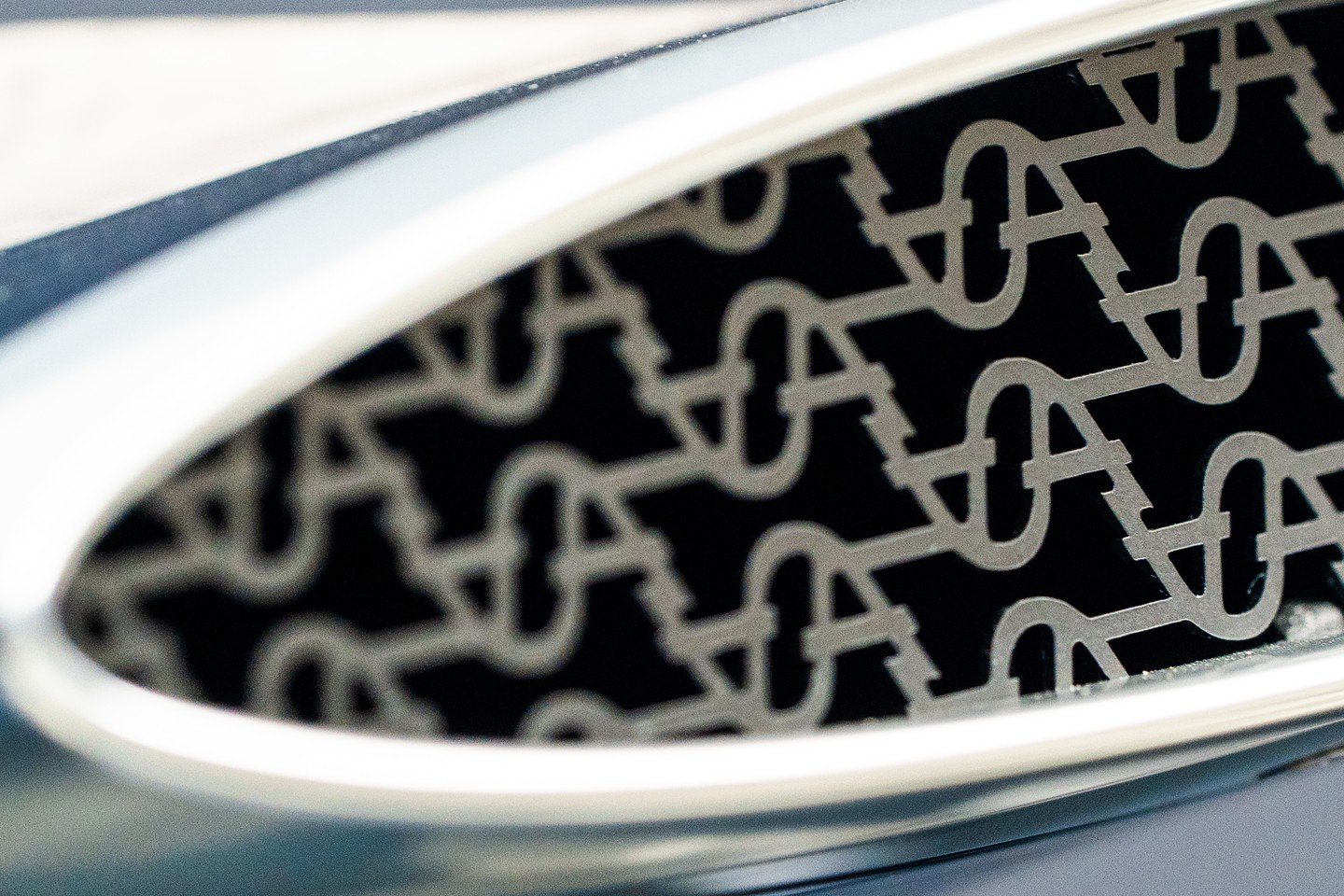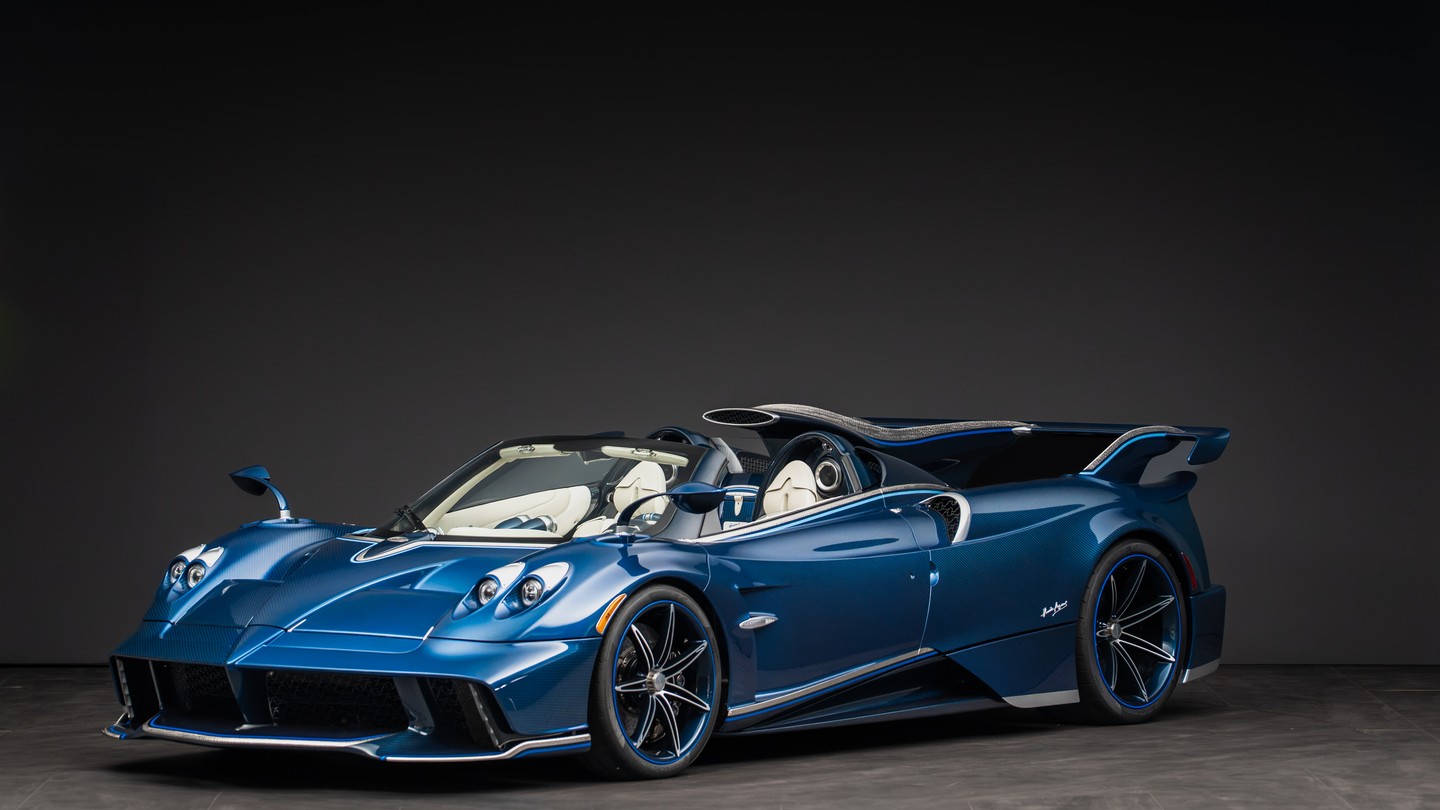
Blue carbon shows through the paint.
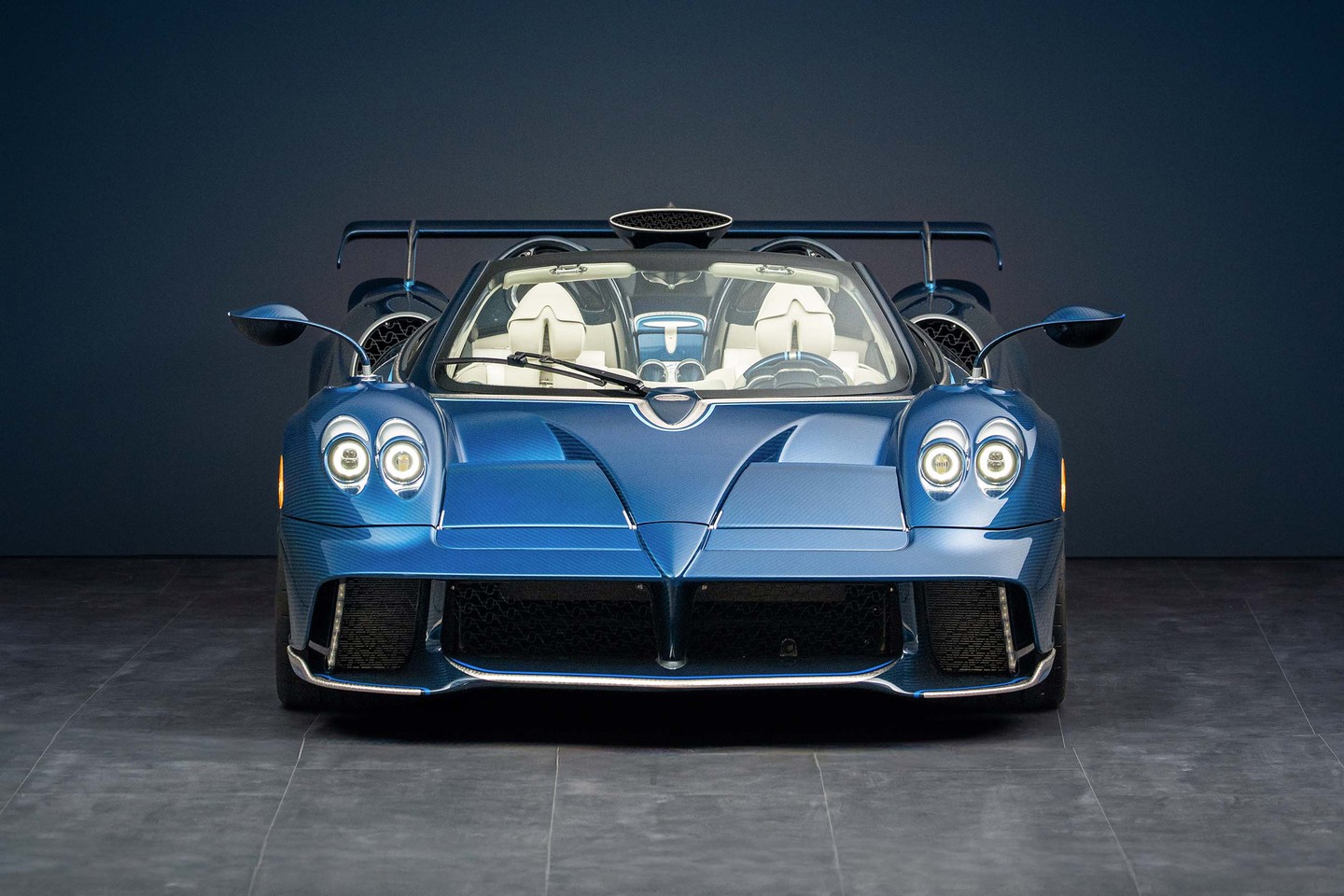
That’s the first decision you notice. Pagani Huayra 70 Anima wears exposed blue-tinted carbon fiber under two custom blues, and the weave stays visible instead of hiding under a solid coat.
It reads differently in sun and in shade. Up close, the surface has depth.
This is a one-off. It’s also the third and final car in the Huayra 70 trilogy, built for Horacio Pagani’s 70th birthday through the Grandi Complicazioni bespoke program.
One client commissioned it. Pagani spent more than a year building it with that client, and there won’t be a second one.
Paint you can read up close
Custom Metallic Light Blue carries the lighter panels, Custom Inky Blue the darker ones, and the contrast is sharp without shouting.
Both colors are infused with real diamond dust. Not glitter, and no bass-boat sparkle.
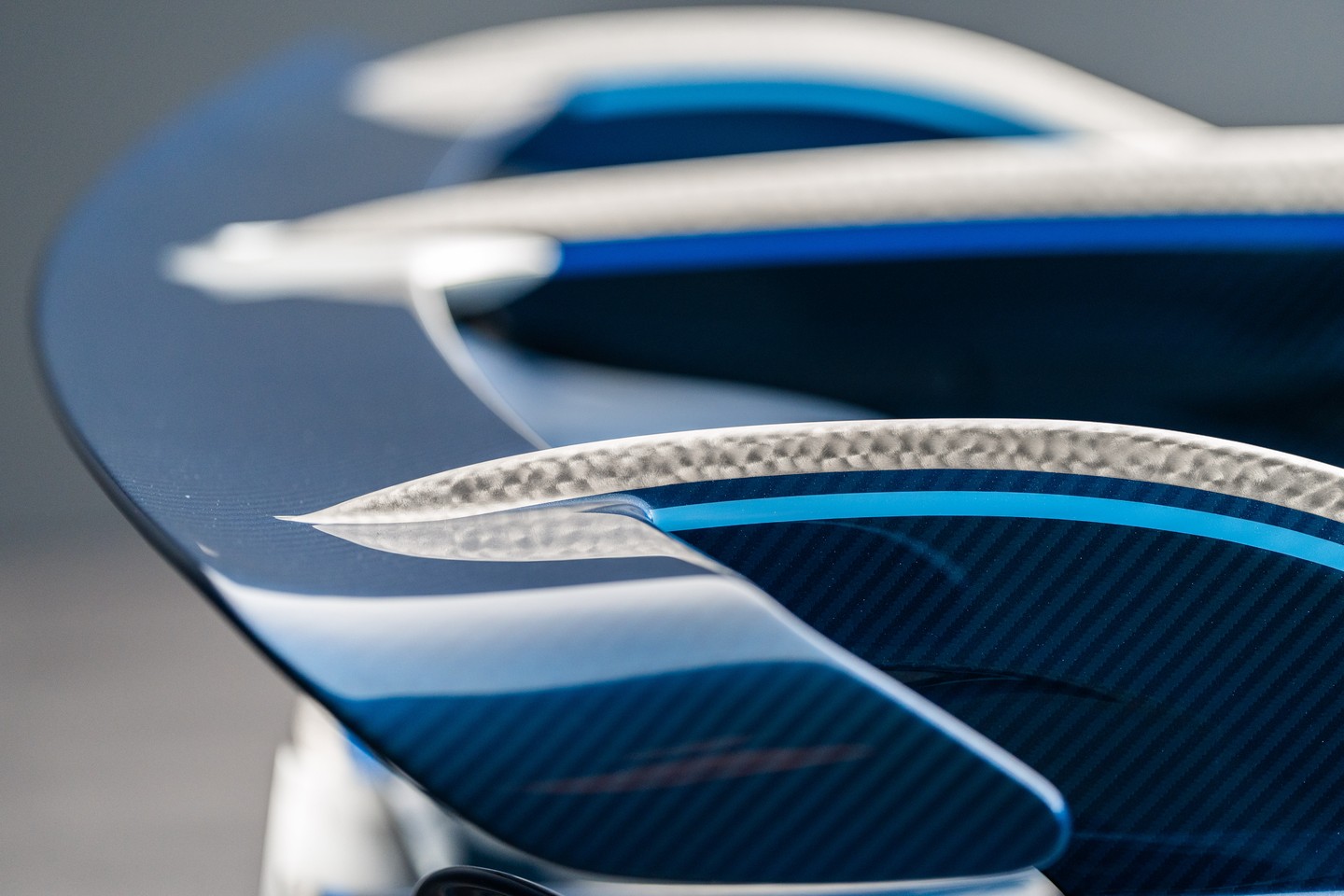
Diamond dust changes how light moves across the car. A fender catches a hard edge of light, then softens as the curve falls away.
A hand-applied platinum-leaf stripe runs through the finish. You can follow it like a seam on a tailored jacket.
Pagani’s Italian names are Azzurro Metallizzato Custom and Blu Inchiostrato Custom, and a secondary stripe alternates light blue and blue.
Pagani could’ve painted over the carbon and called it done. Leaving the weave exposed makes the finish harder to execute and harder to fake.
Six pipes in white ceramic
From the rear, the same story shows up in a different material.
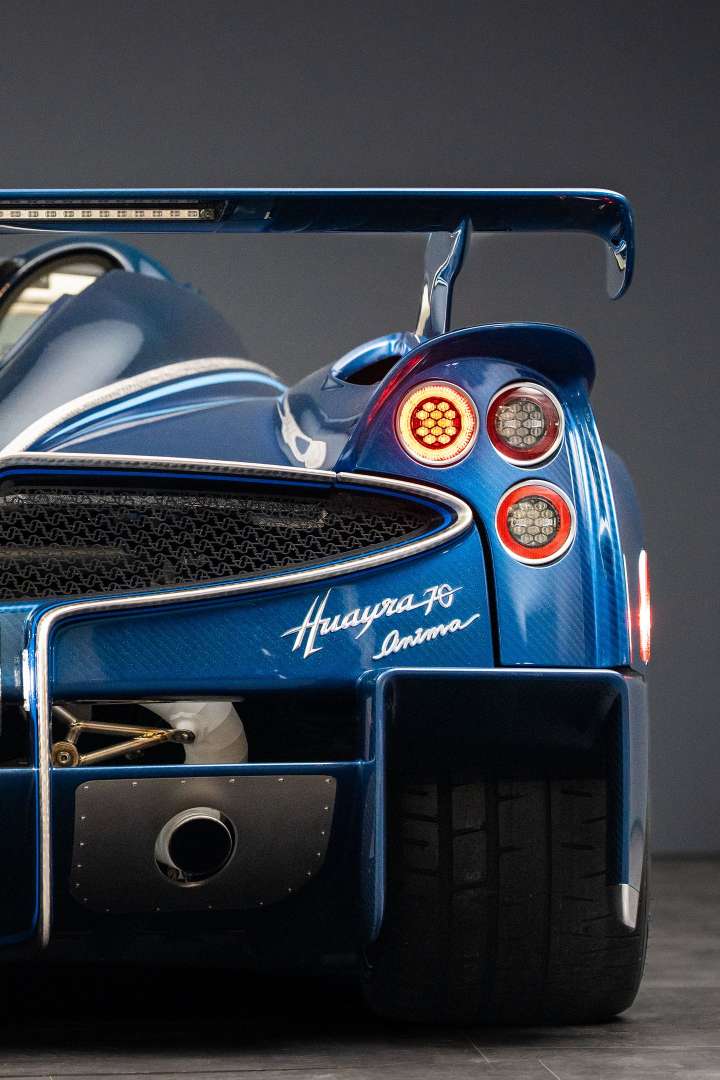
Six exhaust outlets wear a white ceramic coating. Six is a lot, and the Anima doesn’t try to hide them.
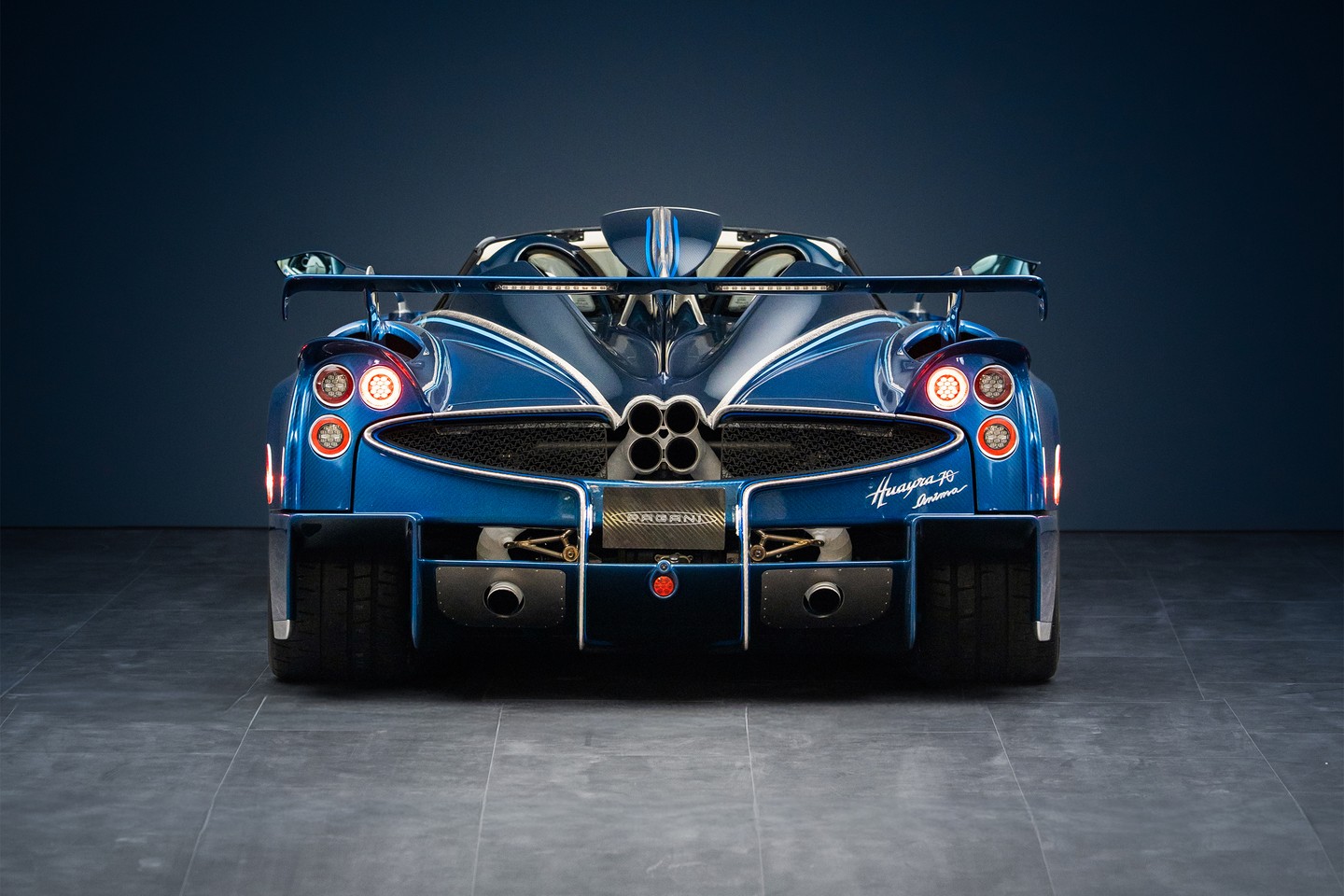
Pagani frames the rear with diamond-cut wheels in Inky Blue, a Las Vegas Blue perimeter and chrome brake calipers. Solid-milled aluminum parts carry a silver anodized finish.
White ceramic against dark blue carbon is a stark break. Your eye goes straight there, then works back to the bodywork around it.
Ceramic handles heat, though the color is the point on a car like this. A dark tip would disappear. These don’t.
A cabin in milk leather and blue carbon
Open the door and the palette flips to light.
Milk-colored leather covers the cabin. It’s warm, pale, and a risk on a car that will actually be driven, which is exactly why it works here.
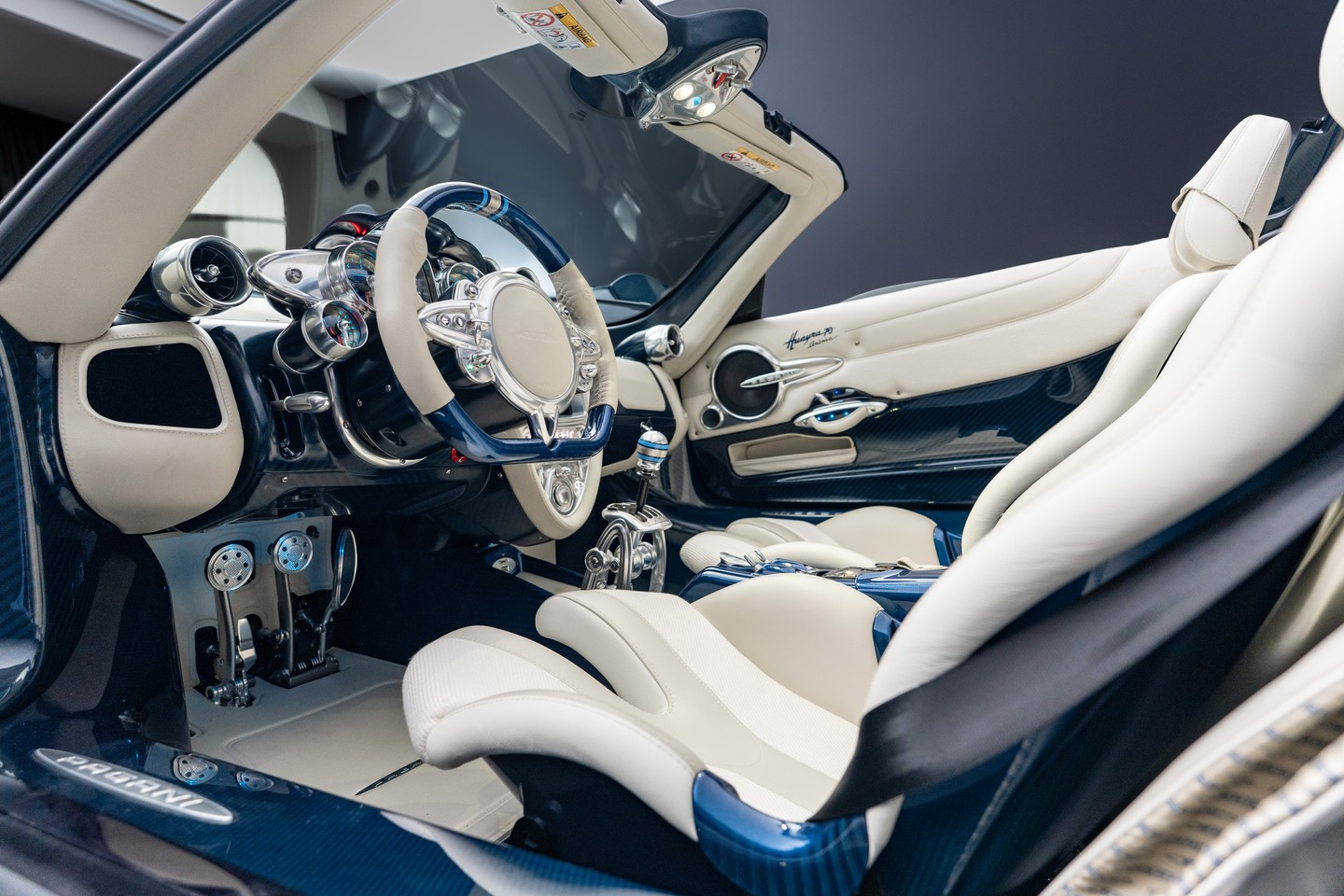
Inky Blue carbon trims the interior and ties the cabin back to the exterior. Machined aluminum adds a colder, harder edge next to the soft leather.
Diamond dust returns on the steering wheel and the gear knob. You touch the two controls you use most, and both carry the same finish as the paint.
Beige leather joins the milk-colored leather, with exclusive Loro Piana fabric. Graphic details take inspiration from the flags of Argentina and Las Vegas.
That detail could have stayed on the body. Moving it to the driver’s hands makes the theme physical instead of purely visual.
A V12 and three pedals
Under the rear deck sits a Mercedes-AMG 6.0-liter twin-turbo V12. No electric assistance. Rear-wheel drive only.
Pagani pairs it with a seven-speed Xtrac manual gearbox. Exposed shift linkage lets you see the mechanism move as you work through the gears.
Three pedals. A clutch you operate yourself. In a one-off hypercar built in 2026, that’s a deliberate rejection of the easy path.
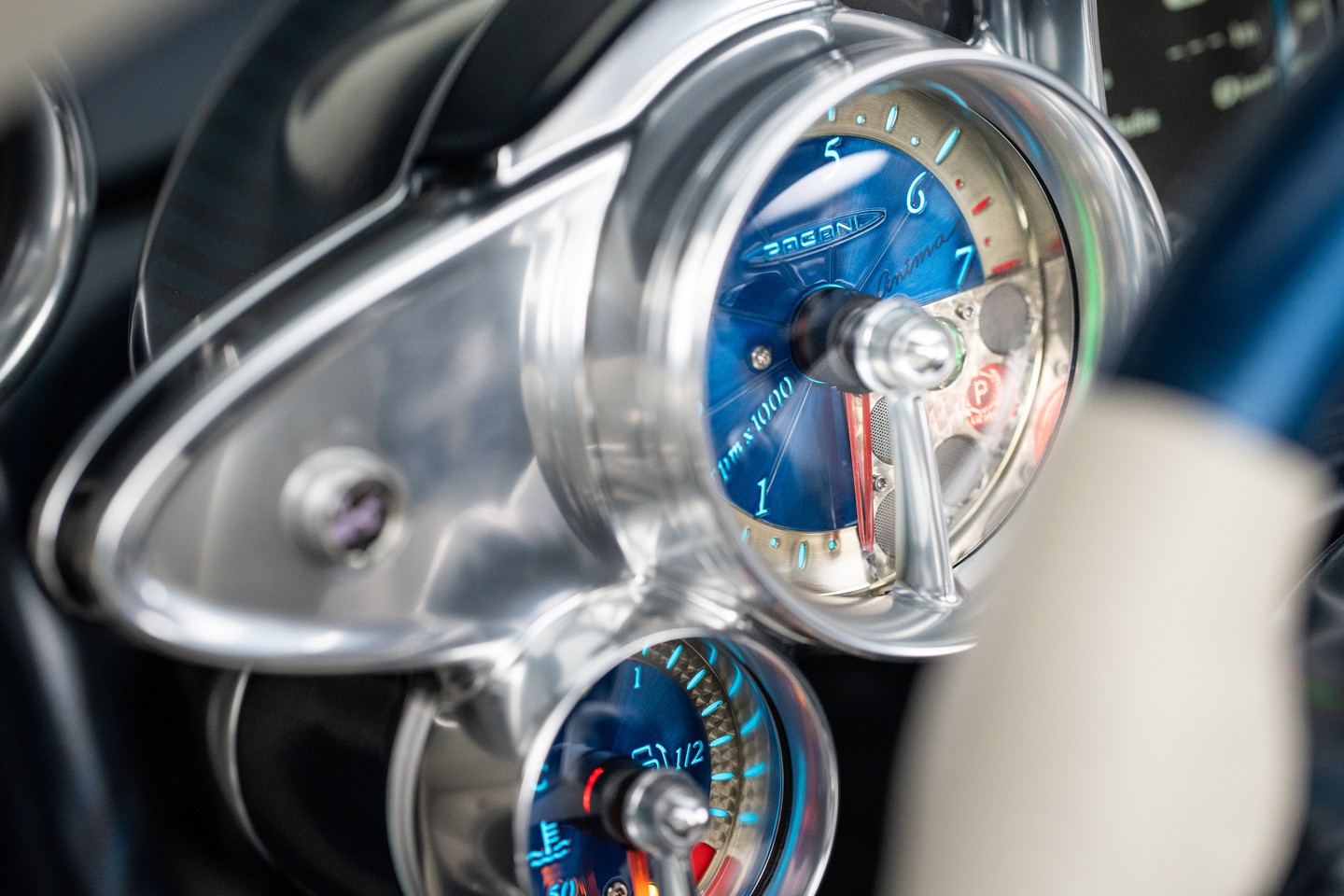
An electromechanical self-locking differential helps put the power down. It needs to, because a twin-turbo V12 in a rear-drive car will test rear grip quickly.
Top speed is 350 km/h, electronically limited, per Pagani’s technical sheet citation. That converts to 217 mph, and no 0-62 figure has been published.
Power needs a careful note. Pagani has not officially confirmed output for this car.
Coverage attributes 635 kW, about 852 hp, and 1,100 Nm of torque to the technical sheet. Treat those as unconfirmed until Pagani confirms them directly.
Even without a confirmed number, the character is clear. This setup favors involvement over outright shift speed, and feel over dual-clutch instant swaps.
A manual asks more from the driver on every mile. That’s the appeal, and it’s also the trade-off.
Built for one person, not a production line
Grandi Complicazioni is Pagani’s bespoke program for commissions like this one, collaborative and slow, built around a single client’s choices.
Trilogy framing gives the car its place. Two Huayra 70 cars came first and marked the birthday. This one closes the set.
Pagani’s designers accompanied the client for over a year on the customization journey. It began with a childhood dream of building a car with Horacio Pagani.
It debuted at the Concours at Wynn Las Vegas. A concours lawn suits it. The finish rewards the kind of close looking those events invite.
Back to the surface
Spend time with the Anima and the engine isn’t the lasting image. The surface is.
Most hypercars chase a number first and a finish second. This one reverses that order without giving up the V12 or the manual drivers actually want.
Blue carbon does both jobs at once: structure showing through decoration, and decoration that would look thin without the structure underneath.
That’s why the diamond dust works. On a plain painted panel, the same dust is a stunt. Over exposed carbon, with platinum laid by hand, it’s craft.
There’s no price to weigh against it. Pagani hasn’t disclosed one, and a one-off commission like this never headed for a public order book.
If you want a Huayra with a confirmed spec sheet and a car you can actually pursue, a standard production model is the route. This one was built for someone else, start to finish.
What it leaves behind is a standard for the next bespoke Pagani. Match this finish, match this restraint, then add a clutch pedal on top.
| Item | Specification |
|---|---|
| Car | Pagani Huayra 70 Anima |
| Engine | Mercedes-AMG twin-turbo V12 |
| Drivetrain | Rear-wheel drive |
| Gearbox | Seven-speed manual |
| Top speed | 350 km/h (217 mph), electronically limited |
| Anima edition | Third of three Huayra 70 cars |