

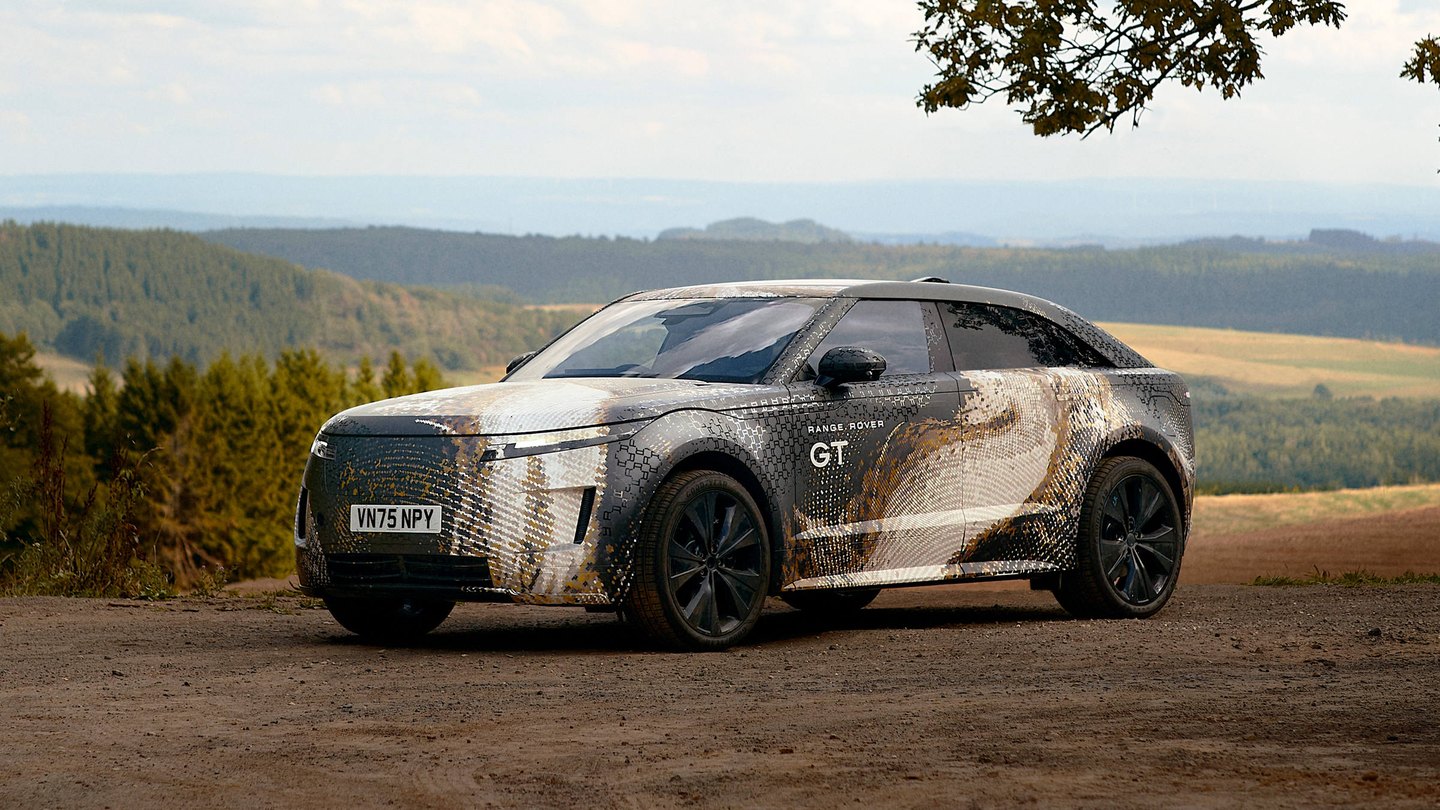
Even wrapped in camouflage, the shape gives it away. The Range Rover GT sits low, stretches long, and tapers at the back like a coupe. That’s deliberate. It’s the most car-like machine Range Rover has ever built, and the first one designed around a battery instead of an engine.
Range Rover showed the car in July as the fifth member of the family. The gold camouflage on the prototypes comes straight from the map: contours of the hills around Gaydon, where the design and engineering teams work.
A silhouette that breaks the family rule
Every Range Rover until now has stood tall and upright, a box with good posture. The GT trades that stance for Range Rover’s sleek silhouette and coupé proportions: a body closer in length to the Range Rover Sport, but far lower, its fastback roofline running unbroken into the tail.
Nothing in the family has ever worn a shape like it.
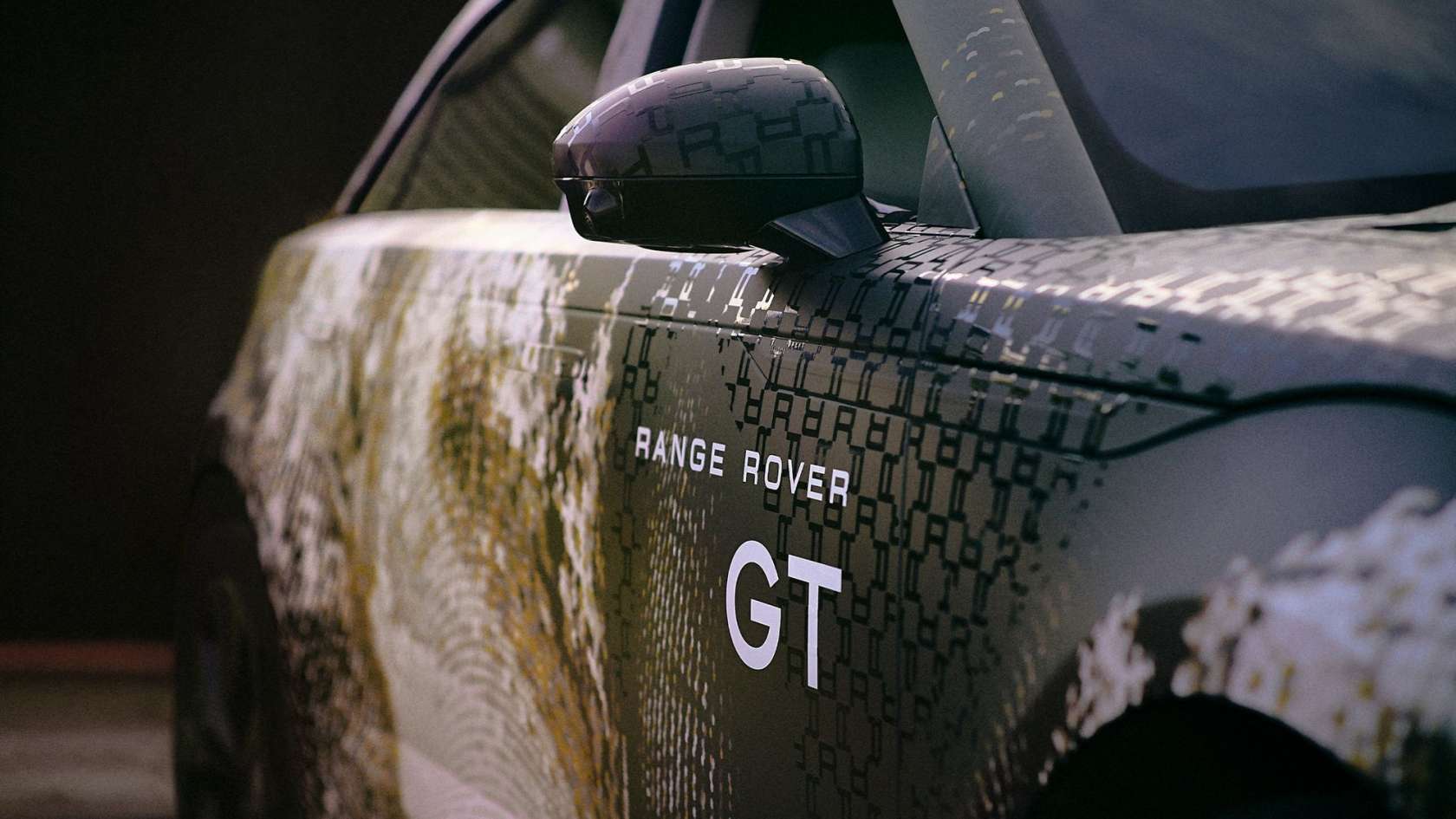
Gerry McGovern’s design team drew the car around a battery pack instead of an engine bay, and it shows. No tall nose feeding a radiator. No upright glasshouse clearing a tunnel underneath.
Two nameplates out, one GT in
The Evoque wrote this playbook in 2011, selling on design first and everything else second. The Velar doubled down six years later. Both are done.
In July, the GT arrived as an addition, the family growing to five. By November the other shoe had dropped. Range Rover’s managing director confirmed the Evoque and Velar end production in 2027, and neither gets a next generation.
Last year’s US sales explain the confidence. The Evoque sold 5,747. The Velar sold 7,648. Together that’s about 13,400 cars, against 24,863 for the big Range Rover, the expensive one, all on its own.
So both entry points close at once.
In their place comes one electric GT that’ll cost more than either of them. That’s the gamble under the design, and it’s a big one.
Built to cross countries, not climb over them
Under the skin sits EMA, Range Rover’s new Electrified Modular Architecture, and the GT is the first all-electric car the brand has built on it. Production starts in 2027 on the same Halewood lines that build today’s Evoque and Velar. Electric comes first; a full hybrid joins later in the car’s life. The same architecture carries the next wave of Land Rovers after this one.
A flat floor and a battery carried low give the GT the lowest center of gravity of any Range Rover so far, and its slippery body makes it the most aerodynamic Range Rover yet. Adjustable air suspension comes standard, and JLR claims the finished car will be its quietest yet.
Capability still anchors the pitch. Limpert promises all-terrain ability no conventional GT can match, paired with the long-distance refinement the badge demands. The promise is easy to print. The prototypes are out proving it. That breadth of ability, comfort at speed and composure off it, is the whole Range Rover proposition in one car.
The testing backs the brief. In October, prototypes drove from England through Brussels, where engineers tuned the ride over the city’s rough streets, and on to the Nürburgring for final sign-off runs. That’s a grand tourer’s itinerary, not a mud course.
The flat floor pays off inside, too. No tunnel, no stepped footwells, one level surface running from the dash to the tailgate. That’s how a car sitting this low still promises limousine legroom for the people in back.
What’s missing is every number. Battery size, range, charging speed, power: none published, none promised. For now, the design carries the story alone.
The cabin is where the gamble shows
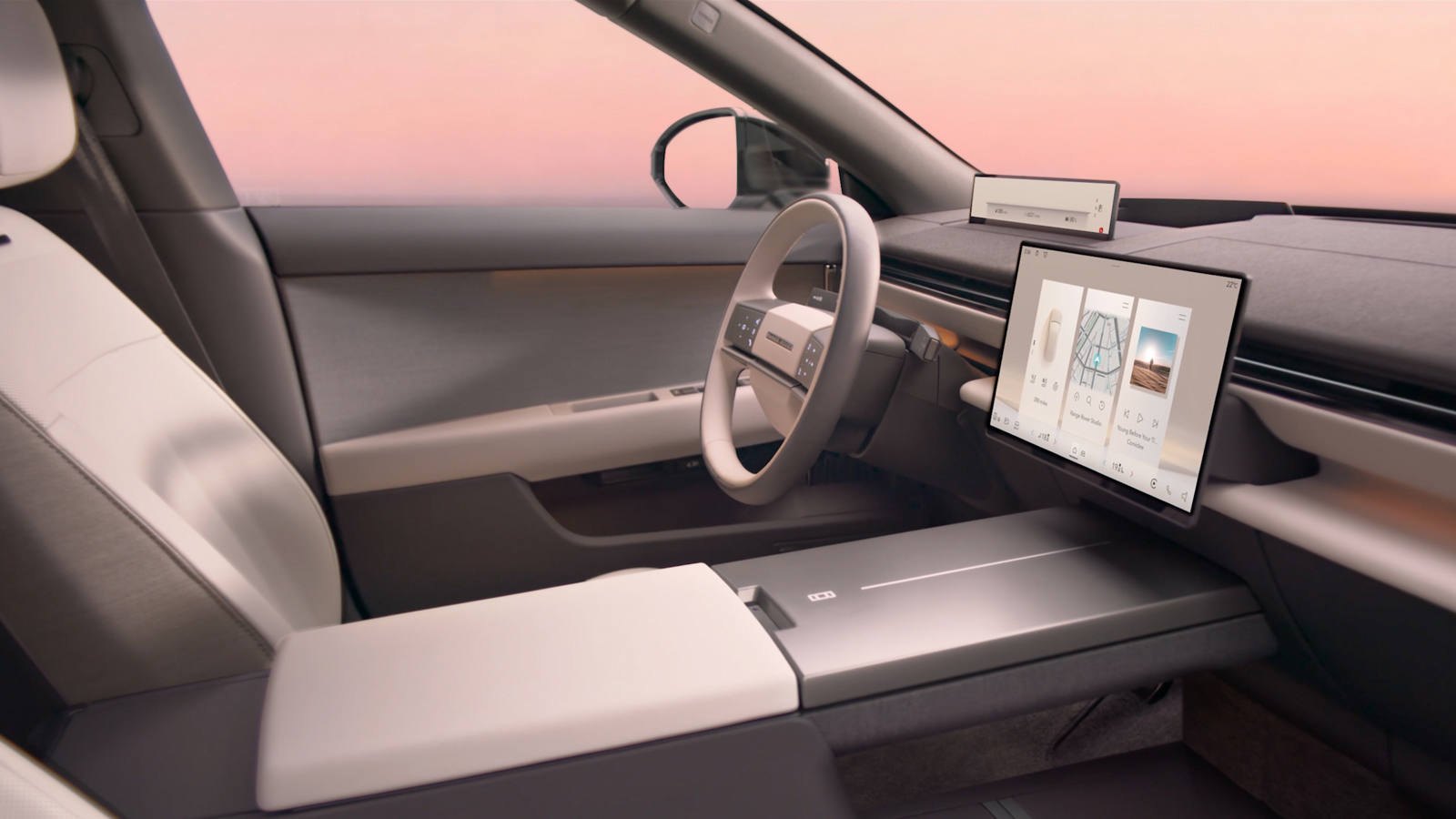
Range Rover has shown the whole interior already, and it looks less like a Range Rover cabin than a sibling of the new Jaguar Type 01’s. One big screen. A slim driver display where the instrument cluster used to live. Almost nothing else competing for your eyes.
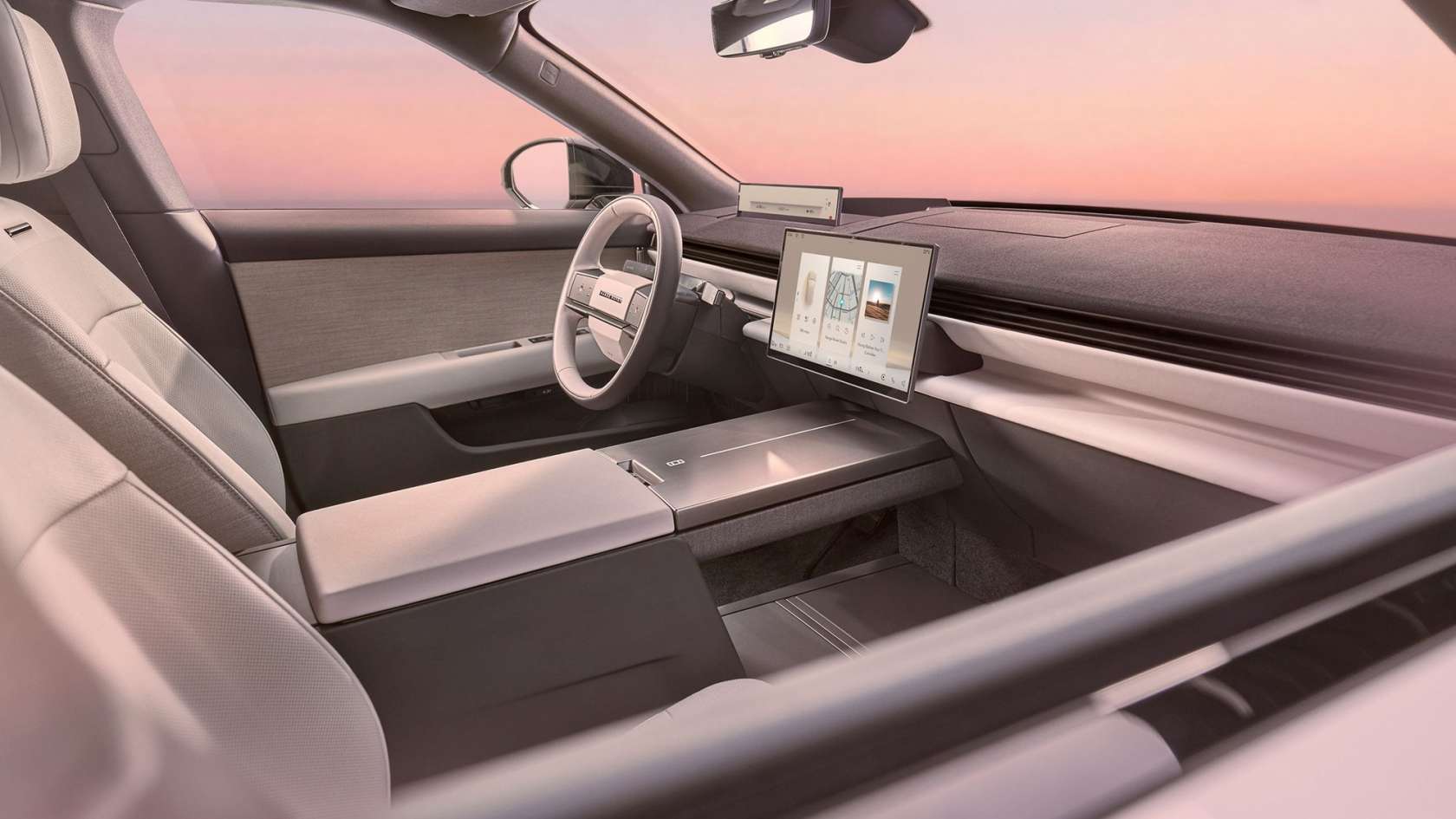
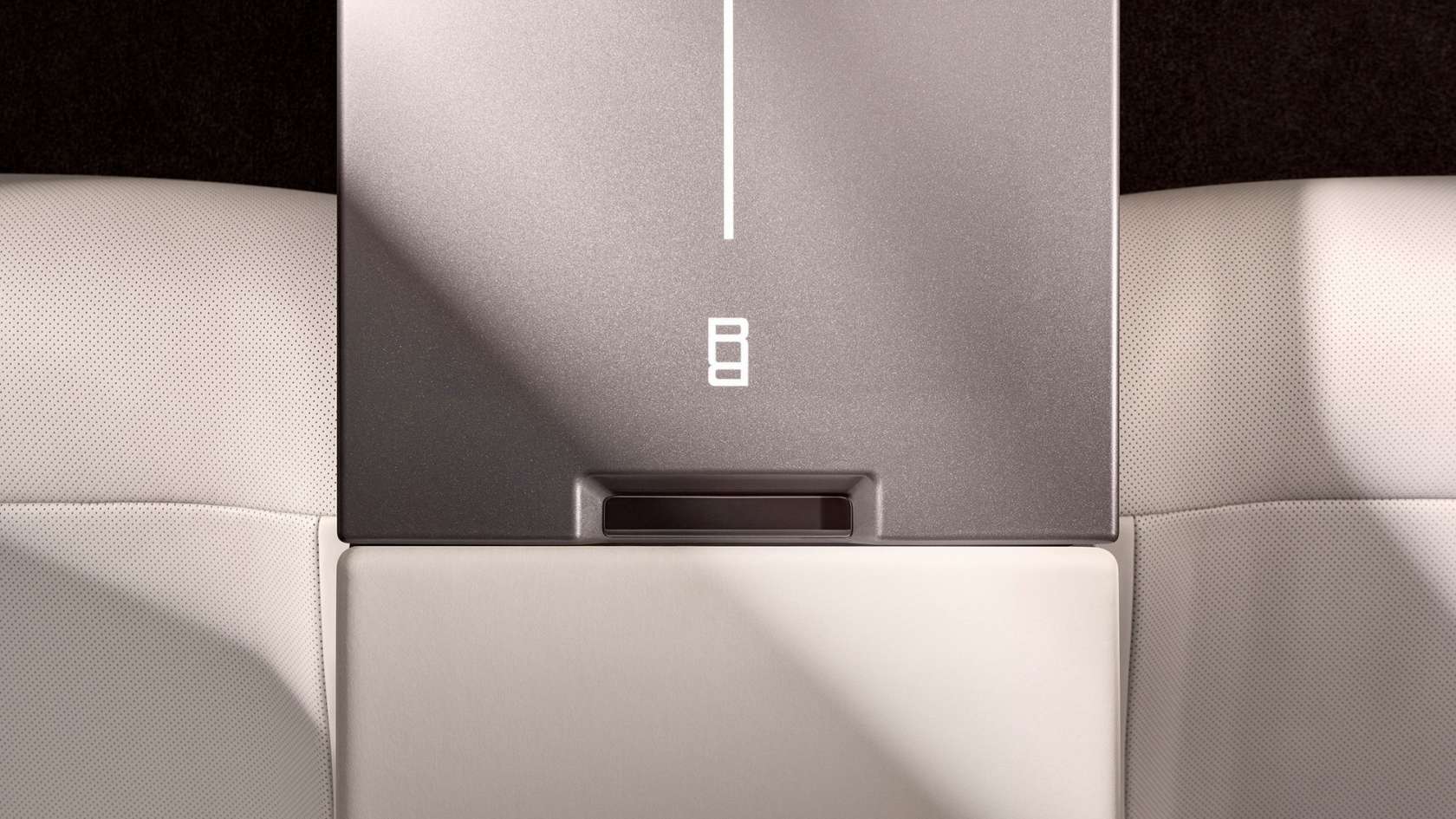
A concealed vent runs the full width of the dash, one clean horizontal line. The dashboard is wrapped in a woven textile in a single sweep, the speakers hidden inside the fabric. Seating is a 2+2 as standard, a long console dividing the rear chairs, with a bench available if you want five across.
In everything shown so far, the old shorthand for luxury, wood and leather, has vanished.
In their place sit pale textiles, matte surfaces, and technology that stays hidden until it’s called, most of it run by voice, which is why the dash can stay this empty.
Range Rover calls the cabin a sanctuary of calm, promises class-leading legroom in the second row despite the sloping roof, and bills the GT as the most technologically sophisticated Range Rover in its history.
It’s a beautiful room. It’s also a long way from the car an Evoque buyer thought they’d replace.

Editor’s take
Here’s my read. Range Rover counted 13,400 US sales a year from its two cheapest cars, counted nearly 25,000 from its most expensive one, and decided the future sits at the top of the range. The GT is that decision drawn in metal: one low electric grand tourer where two upright SUVs used to be.
My money says the shape wins the argument in the showroom. Range Rovers sell on presence as much as capability, and nothing else in the family has presence like this.
The shape has to carry the argument, because nothing else can yet. There’s no price, no range figure, no on-sale date, just a silhouette and a cabin. Both are genuinely striking. Whether striking is enough to replace a brand’s entry point, we’ll learn when the numbers land later this year.


