

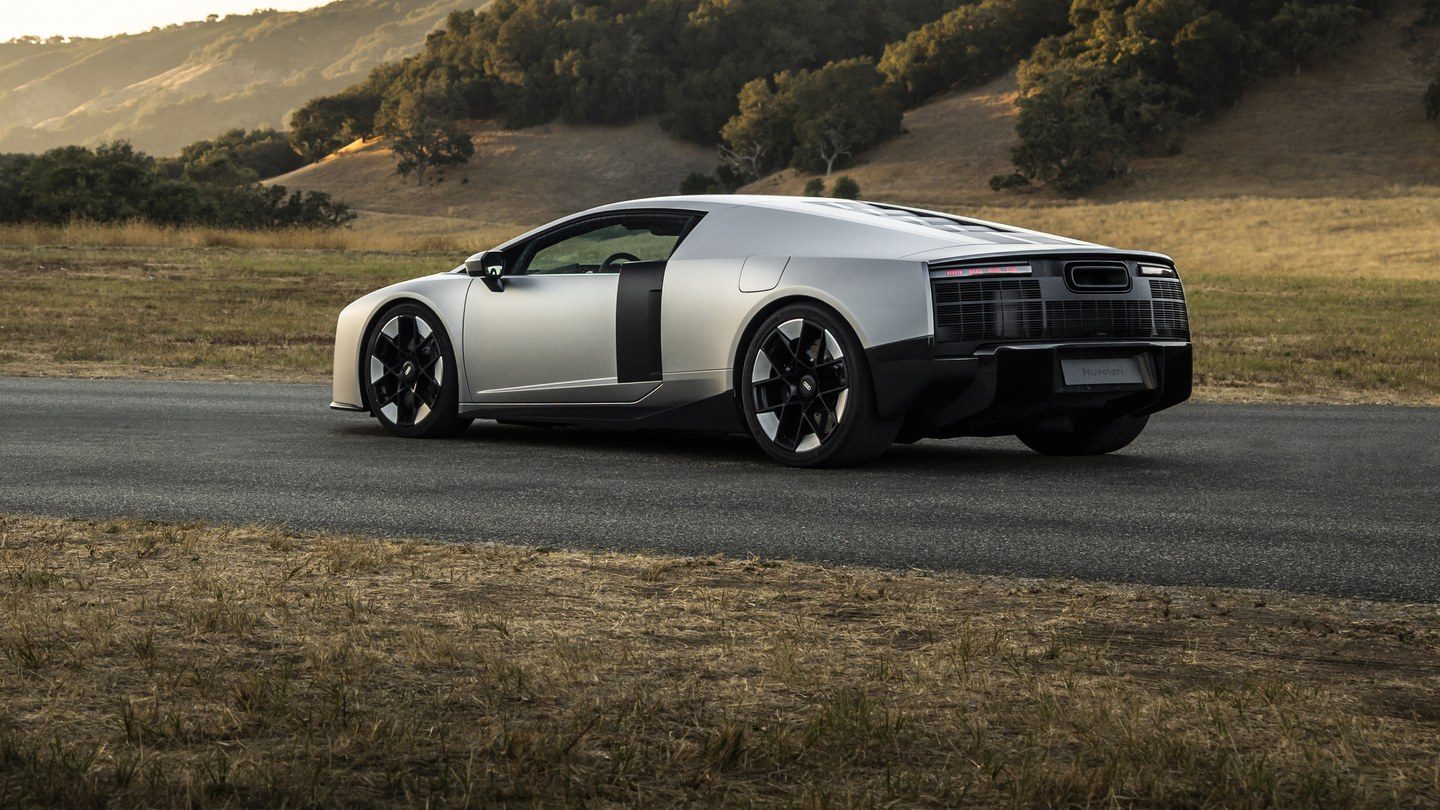
Audi has put the American number on its supercar. The Nuvolari starts at $700,000 in the United States, before destination and taxes, and just 182 of the 499 cars Audi will build are coming here. Orders are open now at authorized dealers, for a limited time, and the first American cars arrive in the first half of 2028.
The price makes it the most expensive production car Audi has ever sold, by a wide margin. The last R8 started at $158,600 in its final year, 2023. This one costs as much as four of those, with change, and Audi keeps insisting it isn’t an R8 successor at all.
The driving is already on the record. MotorTrend, Evo and Hagerty drove pre-production cars at Jarama, and our first-drive roundup pulled their verdicts together. What nobody had was the American number.
Milled from single pieces of aluminum
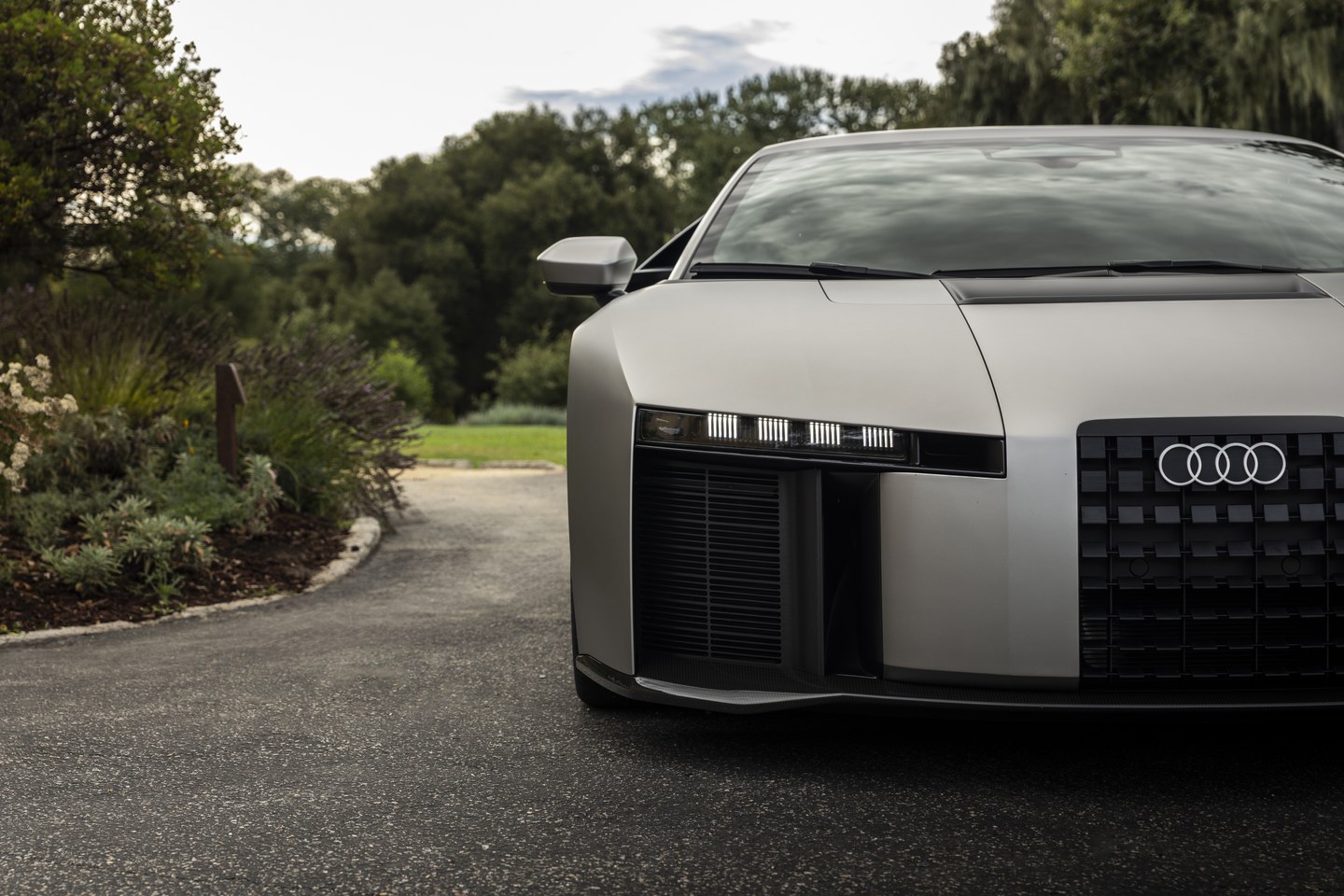
Start with the face, because the face is where the money shows. The active-shutter grille, the lower air intakes, the rear diffuser panel and even the four-rings badge are each milled from a single piece of aluminum. Nothing on the surface is a casting pretending to be machined. The parts look machined from a single block, not assembled from pieces. It’s the kind of detail that vanishes at ten paces and dominates at one.
Under that metal sits a full carbon skin. Almost every exterior panel is carbon-fiber-reinforced polymer, laid up by hand and cured in an autoclave, over Audi’s Space Frame.
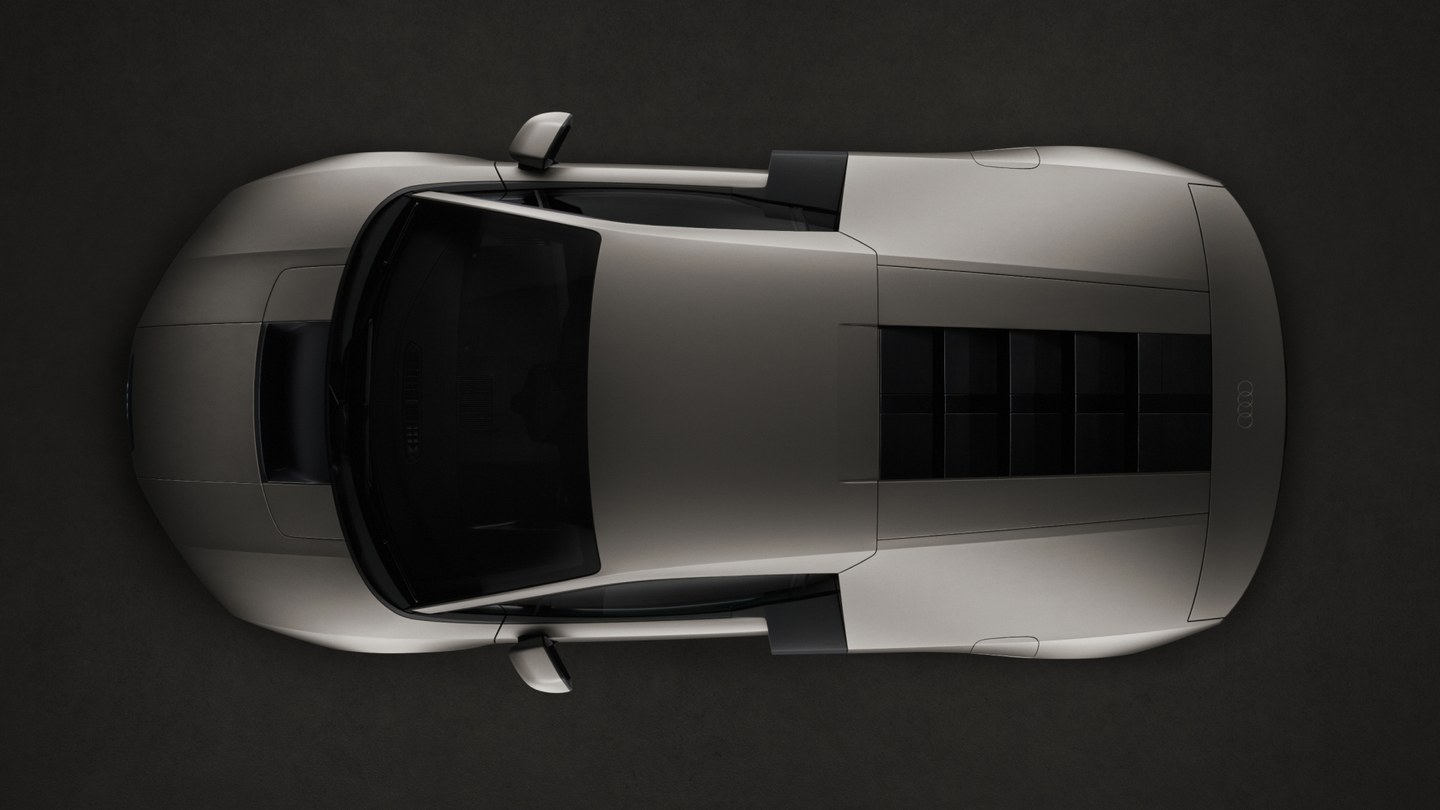
Buyers can skip the paint entirely. Exposed carbon is on the options list, and the solid-metal rings sit flush inside the deployable rear wing, set into the carbon rather than stuck on top of it.
It’s the first production model under the design philosophy Audi calls Radical Next, the one the Concept C show car previewed. The vertical frame at the nose, the monolithic mid-engine volume, the Titanium paint shared with the Concept C and the Formula 1 car. The production car kept all of it.
The openings work for a living. The vertical frame elements guide air through a concealed S-duct for front downforce, the intakes feed the brakes and the hybrid hardware, and nothing on the body is there for decoration alone. Even the panel gaps around the deployable wing earn their place.
987 horsepower and a front axle that thinks
The powertrain pairs a 4.0-liter twin-turbo V8 with three axial-flux electric motors. The V8 alone makes 789 horsepower and 538 lb-ft of torque, and it revs to 10,000 rpm. Combined output is 987 horsepower, 80 more than the Lamborghini Temerario makes from the same basic V8 architecture. It’s also the most powerful powertrain Audi has ever put in a production car.
The sprint to 62 mph takes 2.6 seconds, and 124 mph takes 6.8.
Top speed runs past 217 mph.
A third motor sits between the V8 and the gearbox, and a 7.3 kWh battery feeds the system. There’s a fully electric mode for short, quiet running in town. The headline figures carry a condition, though: the battery needs charge above 80 percent and warmth above 28 degrees before the car gives everything.
Two of the motors sit on the front axle, and they run the car’s brain. Audi calls the system quattro predictive ride. Sensors feed a live model of the car’s state, and the drive units, brakes and aerodynamics react before grip runs out, not after. In its highest setting, the deployable rear wing makes over 400 kg of downforce. A DRS button on the wheel drops it flat on the straights.
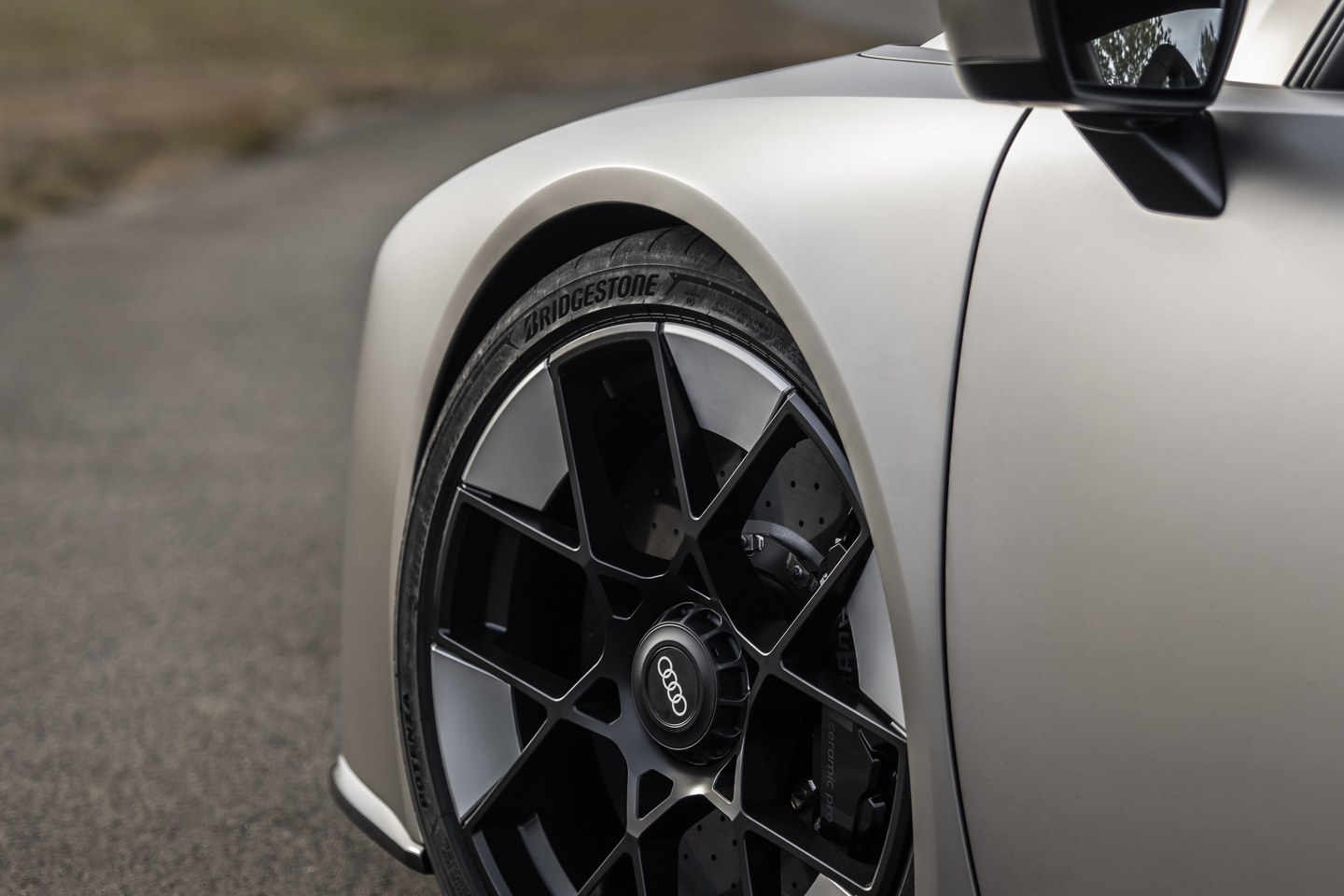
The brakes match the brief. Ceramic Pro discs, ten-piston calipers up front, brake-by-wire, and electric deceleration strong enough to handle most stops on its own. The forged center-lock wheels are a first for a production Audi.
182 cars and one order window
America’s 182 cars are more than a third of the entire run, which tells you where Audi expects the money to be. European deliveries start in the first half of 2027. American cars follow a year later, in the first half of 2028, and every one is spoken for through a dealer order rather than a configurator.
Every car is left-hand drive, and every car is built to order. There are no dealer-lot Nuvolaris, and there never will be.
Audi of America says build slots are still available. That won’t stay true for long.
The cabin keeps the same discipline
Inside, the material rule holds. Every piece of switchgear is solid alloy, the vents and the frame of the central display are anodized aluminum, and the seats sit on exposed carbon structure. The front of the cabin stays dark, for concentration. Behind the seats, a lighter tone Audi calls Shadow Dune takes over.
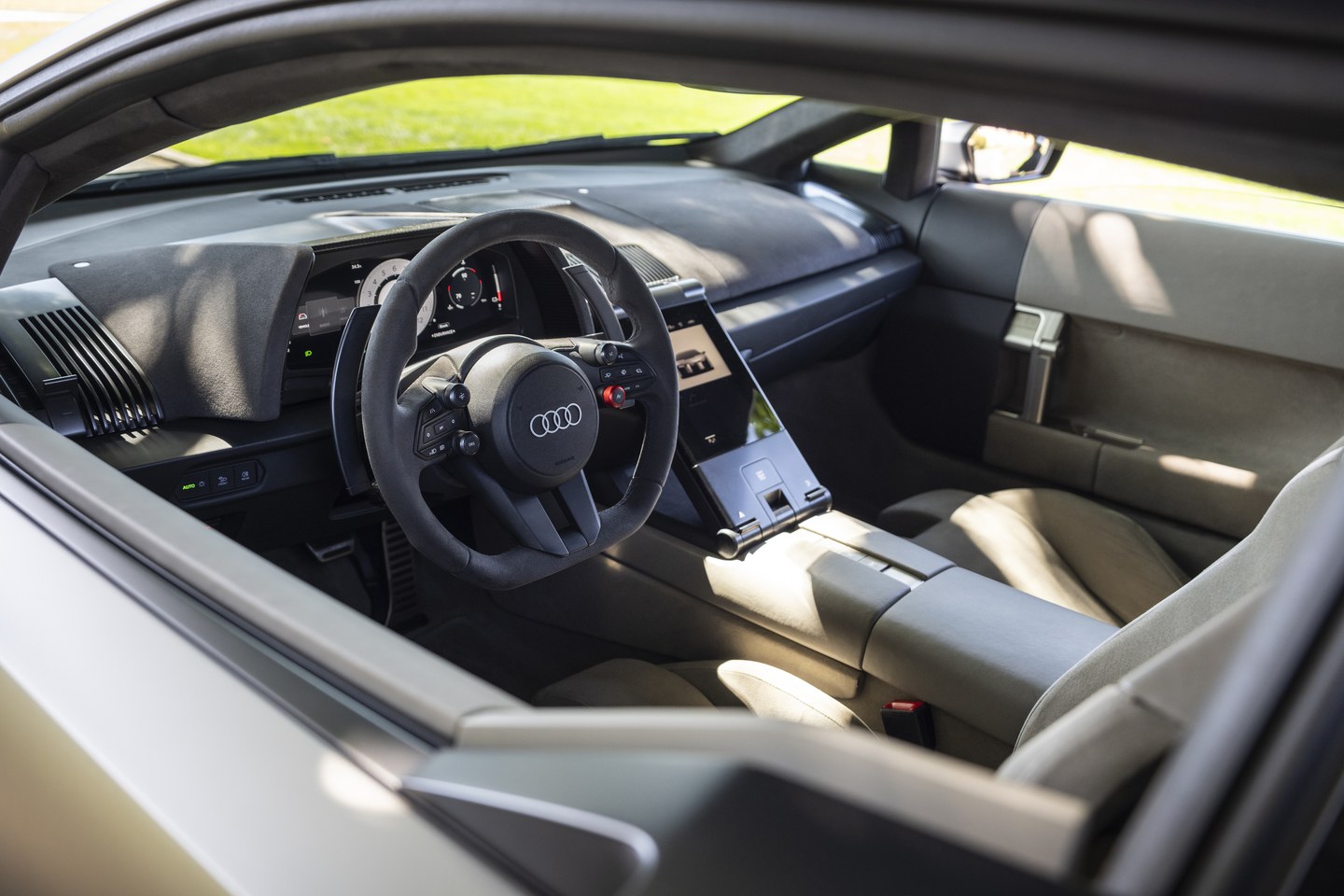
Even the display colors carry a reference. The HMI accents nod to the Auto Union Type C, the 1930s record car from the era of Tazio Nuvolari, the driver this car is named for.
That’s the pattern the $700,000 buys. Not a faster R8, and not a Lamborghini in Audi clothes, but a small run of cars built like objects and priced like them too. The order book decides how long the remaining American slots last.


