
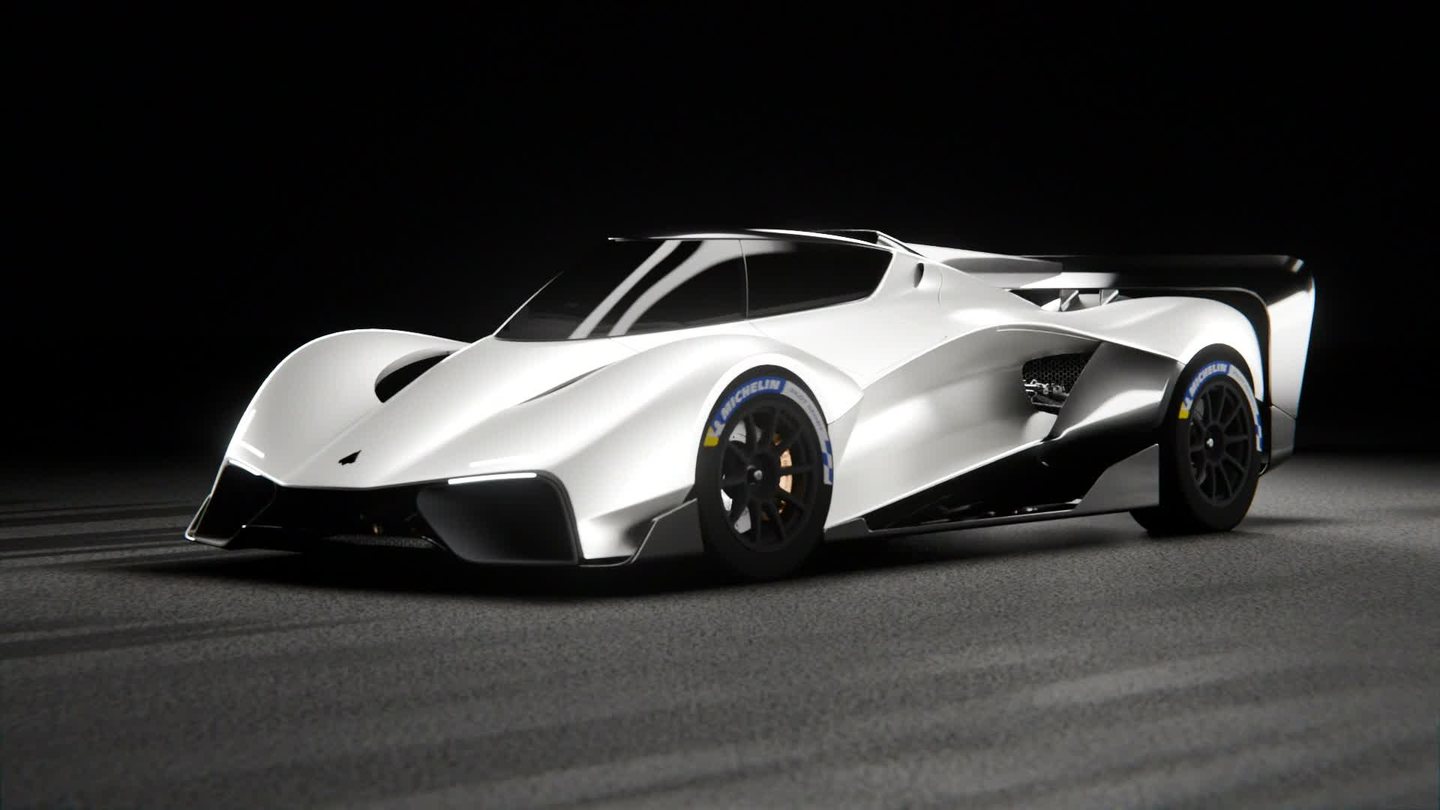
The Sanrivatti ONE starts with a posture, not a powertrain. Its driver lies supported and head-forward under a single-piece canopy, placed centrally and farther forward than a conventional hypercar allows, legs trailing behind like a rider on a superbike.
The show car made its world debut at the maker’s headquarters in the Netherlands. Every panel on it exists because of that posture. It is the maker’s debut car.
A diving falcon gave it the silhouette
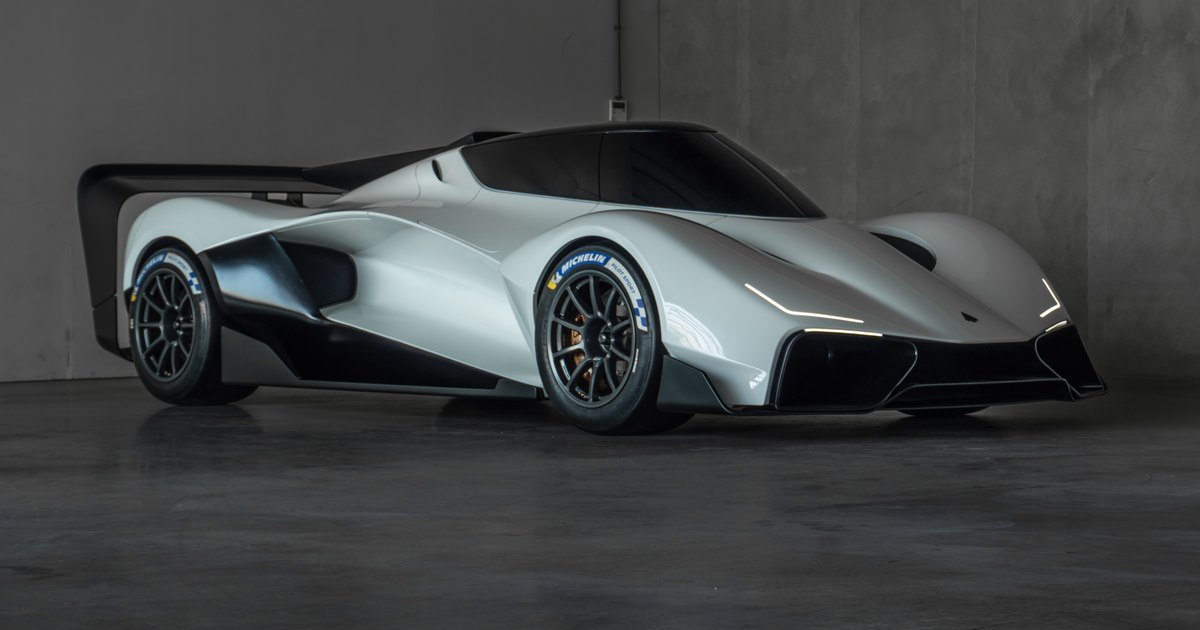
Designer Robin van Tilborg drew the car from two references that rarely share a page, a peregrine falcon in a high-speed dive and the precision of a modern fighter aircraft. He let the driver’s position dictate where every volume landed.
“The peregrine falcon was a powerful influence because its form is defined by purpose,” Rivero said. “In a dive, every part of its body contributes to the movement, and we wanted that same combination of elegance, precision and aggression in the ONE.”
A continuous signature line sweeps along the flank and traces the falcon’s dive toward its prey, while broad front shoulders taper around a narrower waist in a coke-bottle plan view.
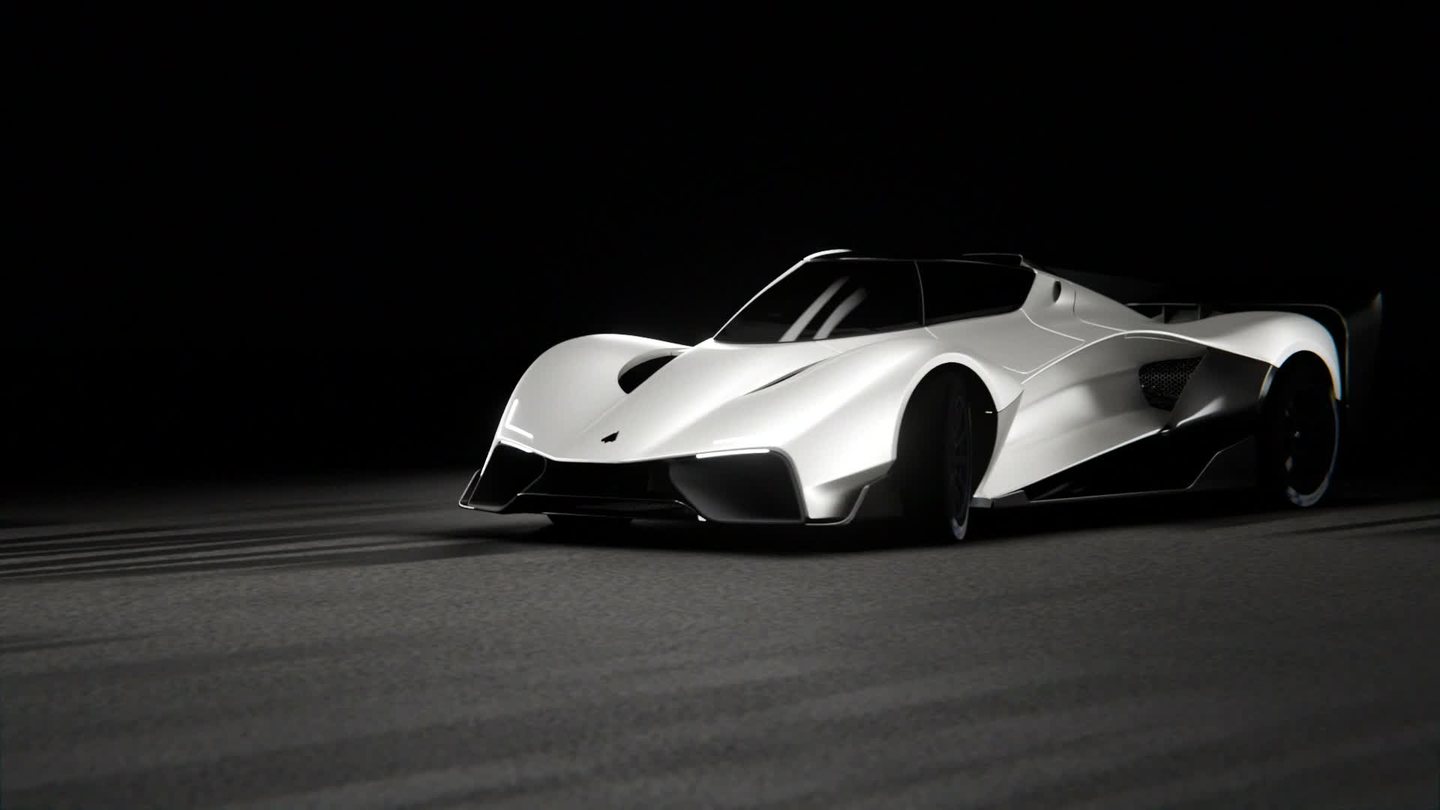
Two jet-inspired intakes pierce the nose and feed air tunnels that pass through the car, cutting open volumes into the body instead of stacking mass on top of it. Slim headlights and matching rear light graphics follow the same signature lines, so the lighting forms part of the drawing rather than trim applied afterward.
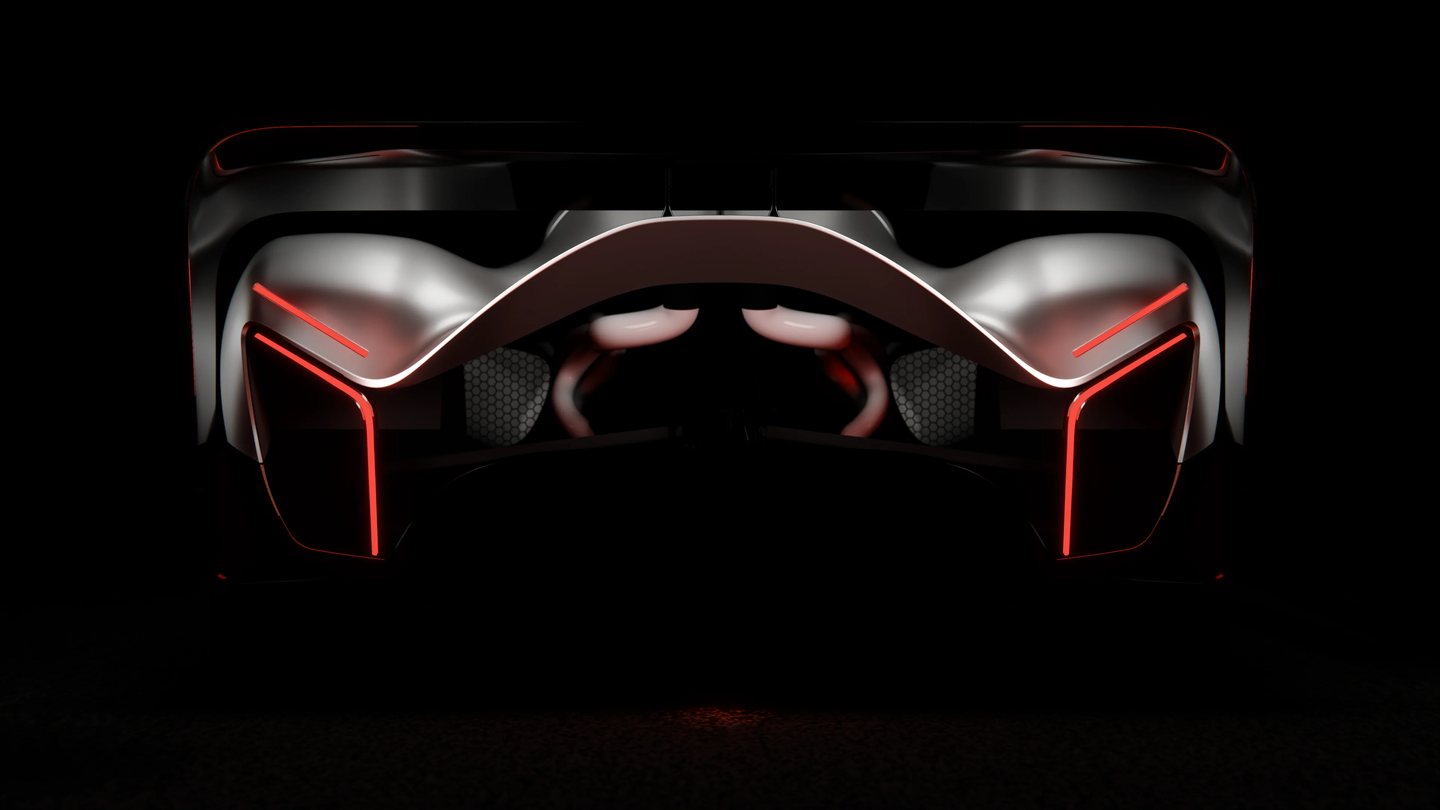
“Fighter aircraft shaped the canopy, front intakes and the relationship between fluid surfaces and sharp edges,” Rivero said. “But our task was never just to make a dramatic-looking car. The architecture and every line needed to have a reason to exist.”
Not one line is decoration.
Head first, the way a rider takes a corner
The Apex Position puts the driver in a supported, head-forward posture, positioned more centrally and farther forward, no longer reclined behind the front axle the way every conventional hypercar arranges its seat.
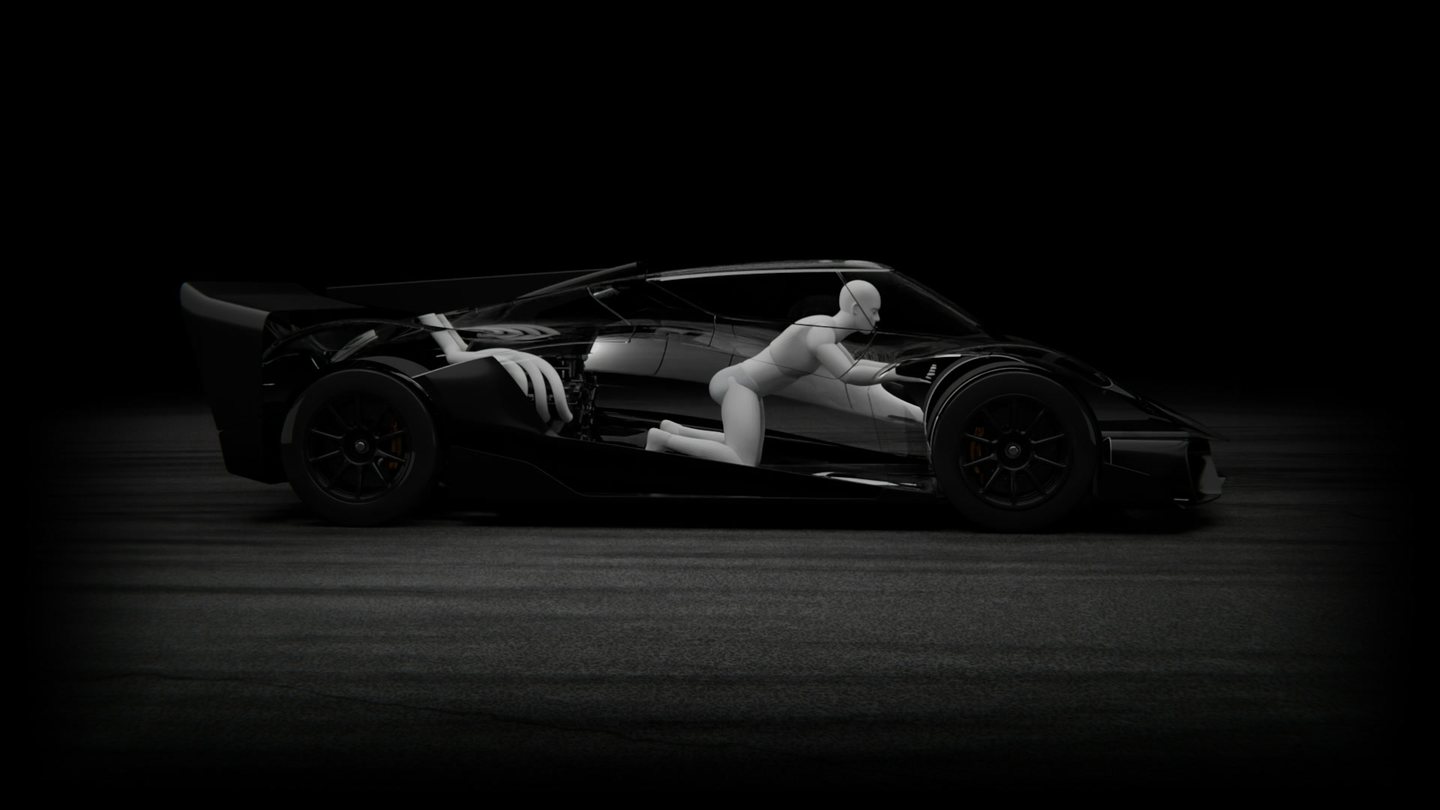
You straddle the car instead of sinking into it.
Sanrivatti tested the layout in simulation at Silverstone’s third corner and measured an average of 3.2 times more visible racing surface than ten benchmark hypercars and track cars placed at the same point. The vertical field of view reached 28 degrees against 15.5 degrees for the benchmark car, and the maker is developing body-support and control technology to let the driver move naturally with the car while staying secured.
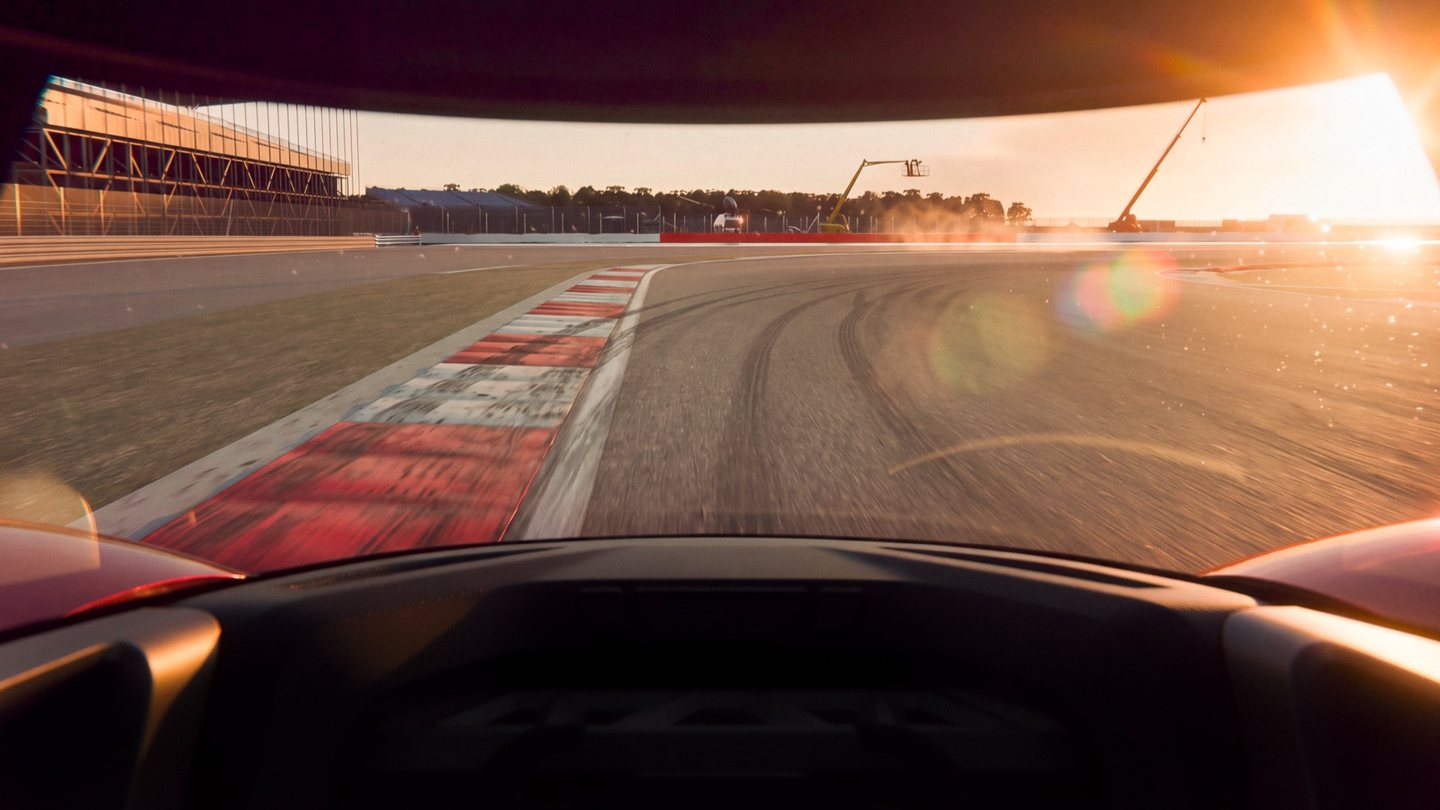
The gain is sightlines and connection, the kind a rider gets over a front wheel, though the evidence so far lives in a simulator rather than on a stopwatch. The maker says so itself: the figures measure visible track surface, not lap times. The support systems that have to make the posture work lap after lap are still in development.
The program behind the posture is real hardware as well as software. A working proof-of-concept and dedicated digital and physical simulators are already running, and their findings are feeding the car’s structural, aerodynamic and ergonomic architecture before parts get committed to metal.
Behind the driver sits a naturally aspirated 5.5-liter Judd V10 targeting 800 hp at 9,000 rpm and 700 Nm, driving the rear wheels through a six-speed Hewland sequential gearbox.
Judd’s managing director framed the choice around response rather than numbers. “A naturally aspirated V10 is about far more than the headline power figure,” said John W Judd of Judd Engines. “Of equal importance is the way an engine responds, builds through its rev range and connects the driver’s inputs to the performance of the car.”
The running gear is proposed rather than final: a carbon-fiber monocoque, double-wishbone pushrod suspension, AP Racing carbon-carbon brakes, Braid forged magnesium wheels and Michelin slicks, around a 1,100 kg target dry weight.
The shape still has to become a car
At the back, open bodywork vents engine heat while a large wing rises from the diffuser and a smaller lip spoiler spans the rear shoulders, finishing a silhouette that stays muscular and technical without leaning on ornament.
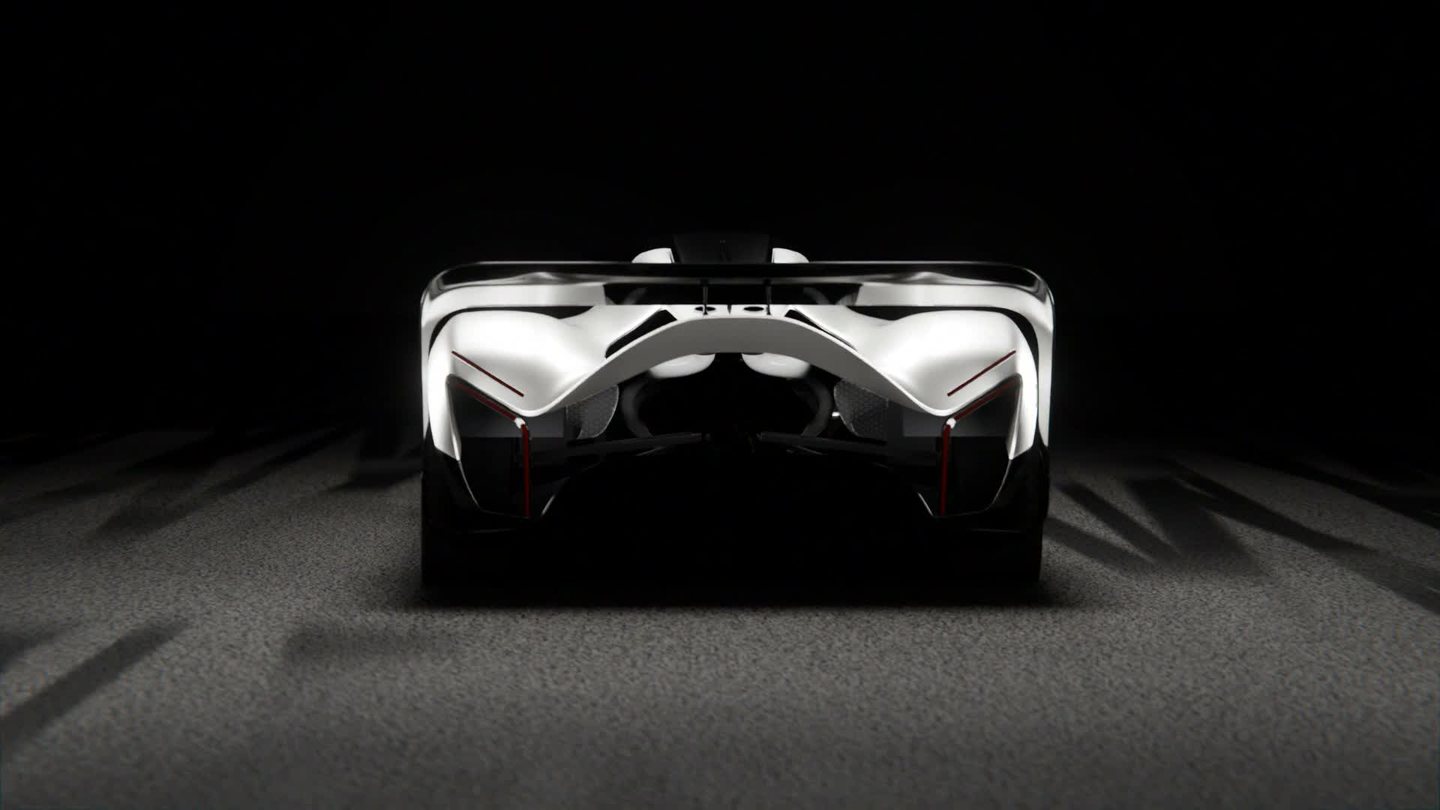
It looks finished, and it isn’t: the ONE exists today as a show car and a working proof-of-concept for the driving position, and Sanrivatti is building toward a bespoke running prototype and track testing from there. Its own release calls the 800 hp output, the 1,100 kg weight and the 205 mph top speed provisional development targets rather than validated results, and no price, production number or delivery date has been announced.
The team carries weight, too: Paul Arkesden, the maker’s executive director of technology partnerships, spent three decades in high-performance engineering, with senior roles at Singer Vehicle Design and McLaren Special Operations and a hand in the McLaren P1 program.
Register interest if the driving position itself is the prize and you can wait for an unfinished program to prove itself, because no other car asks this of its driver. Skip it if you want validated numbers and a delivery date, and buy a finished track car from an established maker instead.