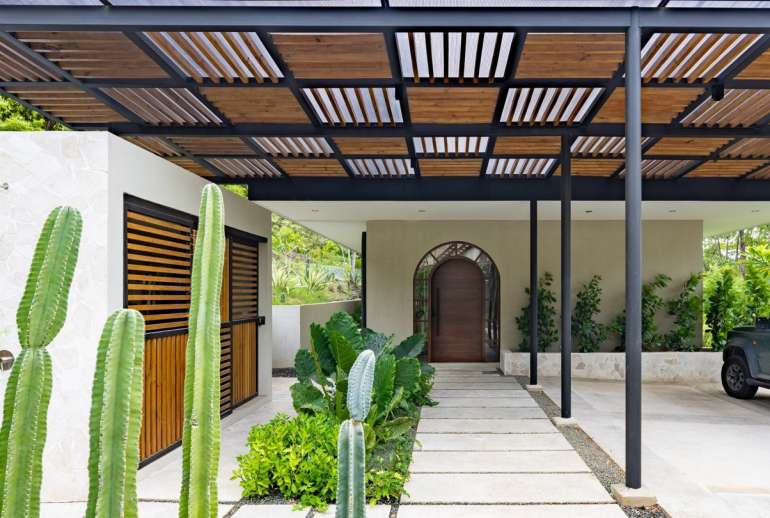

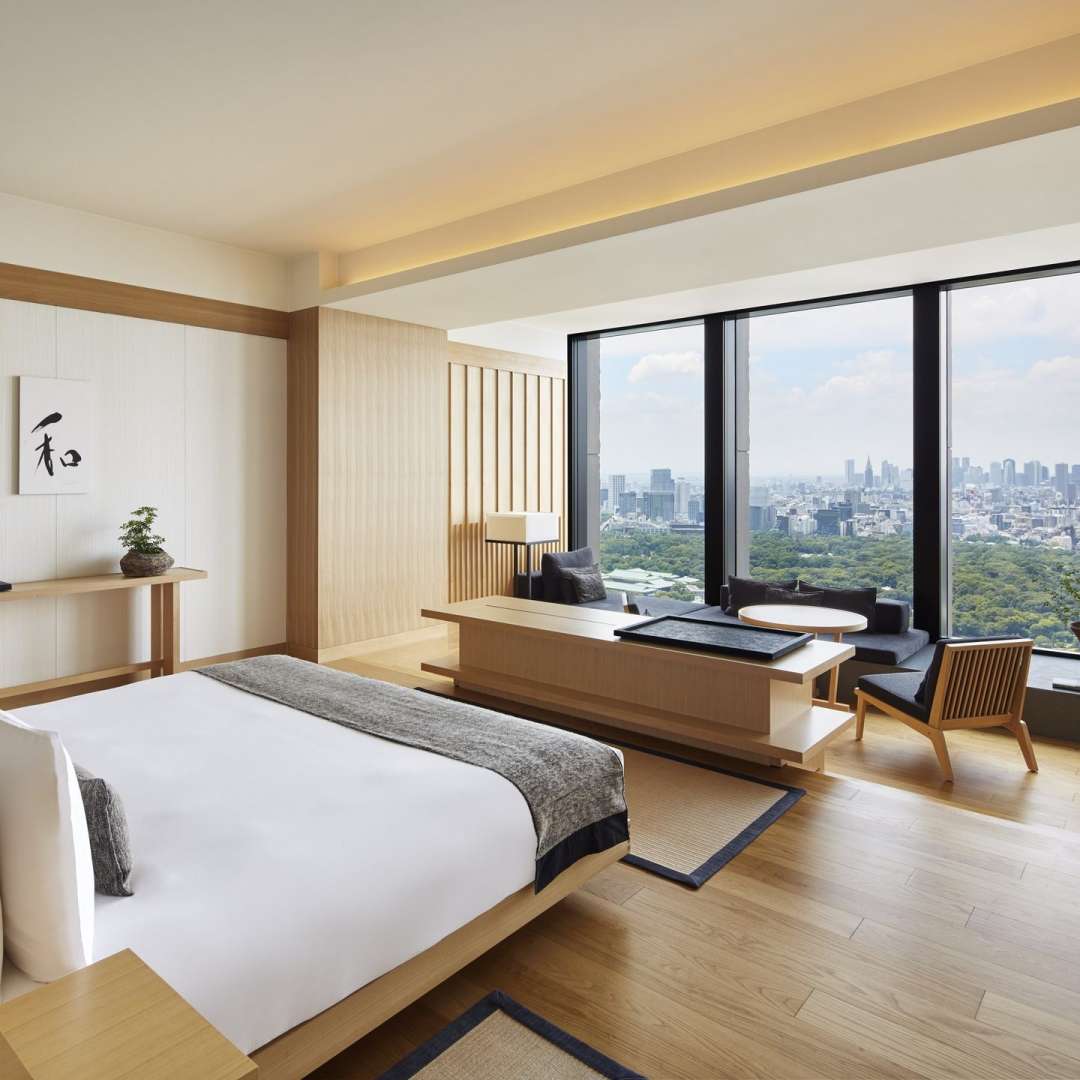
Aman Tokyo starts where the city stops, on the top floors of Otemachi Tower, with the Imperial Palace Gardens below and the whole financial district spread out beneath the glass. The hotel runs on a bathing ritual and a view, and everything else arranges itself around those two facts.
This was Aman’s first urban hotel, and the brief seems to have been a ryokan lifted into a skyscraper, with the Imperial Palace Gardens as its front yard. It still sets the template. The interiors work in wood, stone, granite and washi paper, with ikebana displays and engawa-style platforms setting a rhythm that owes nothing to the office towers around it or to the hotel chains that fill them. The lobby alone is among the largest in the city, a tall, calm volume that resets the pace on arrival.
The practical position is as strong as the atmosphere: Otemachi Tower connects directly to the five-line Otemachi subway station, Tokyo Station sits close by for the bullet train network, and Haneda Airport is a 40-minute drive. Business address, resort temperament, and no transfer friction in either direction for the guest who lands at Haneda and is in the furo within the hour.
Arrival sets the pattern, and the lift ride ends in a lobby that behaves like a courtyard in the sky. It’s tall and washed in filtered light, with ikebana arrangements marking the seasons. Staff move at walking pace, voices stay low, and the check-in formalities take minutes rather than a queue at a desk.
Rooms that begin where most suites end
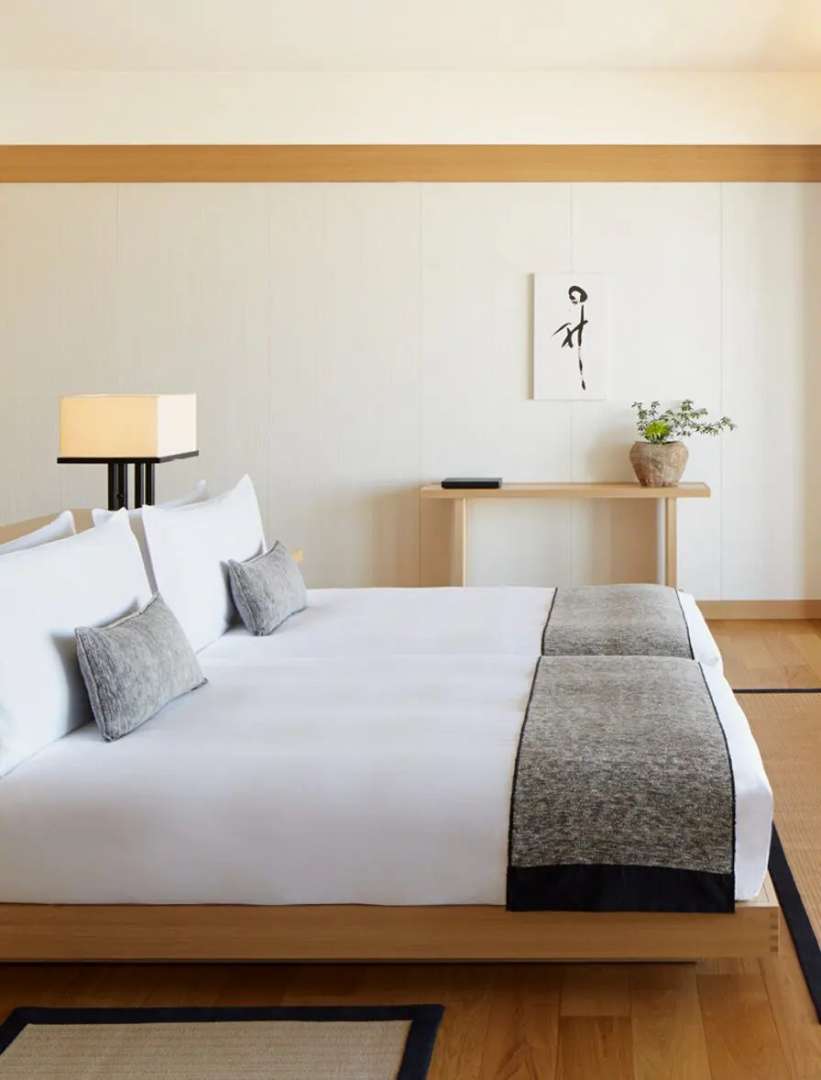
The 84 rooms and suites occupy the tower’s top floors, and the sizing is the first luxury. Entry Deluxe Rooms start at 71 square meters, a floor plan most Tokyo hotels reserve for their upper suite tiers. Space is the luxury here. Deluxe Suites match that 71 square meters facing west into the sunset, Tokyo Suites run to 77 square meters facing east, and Premier Rooms open the plan to 80 square meters.
Every room carries a furo, the deep-soaking tub that turns the bathroom into the stay’s daily ritual. The tubs sit beside floor-to-ceiling glass, so the soak comes with the skyline. Shoji-style screens slide to divide or open the space, keeping the room one calm volume rather than a chain of compartments, and the palace gardens fill the frame on the garden side.
Garden View Suites sit on the 38th floor, the hotel’s highest, at the same 71 square meters with premium garden views. The size discipline holds across the whole inventory, which means the entry booking already buys the space and the ritual. Higher tiers buy position, outlook and separation, not elbow room that should have been standard. Most Tokyo luxury hotels run that split in reverse, charging the premium for the space itself.
The signature suites trade in outlook
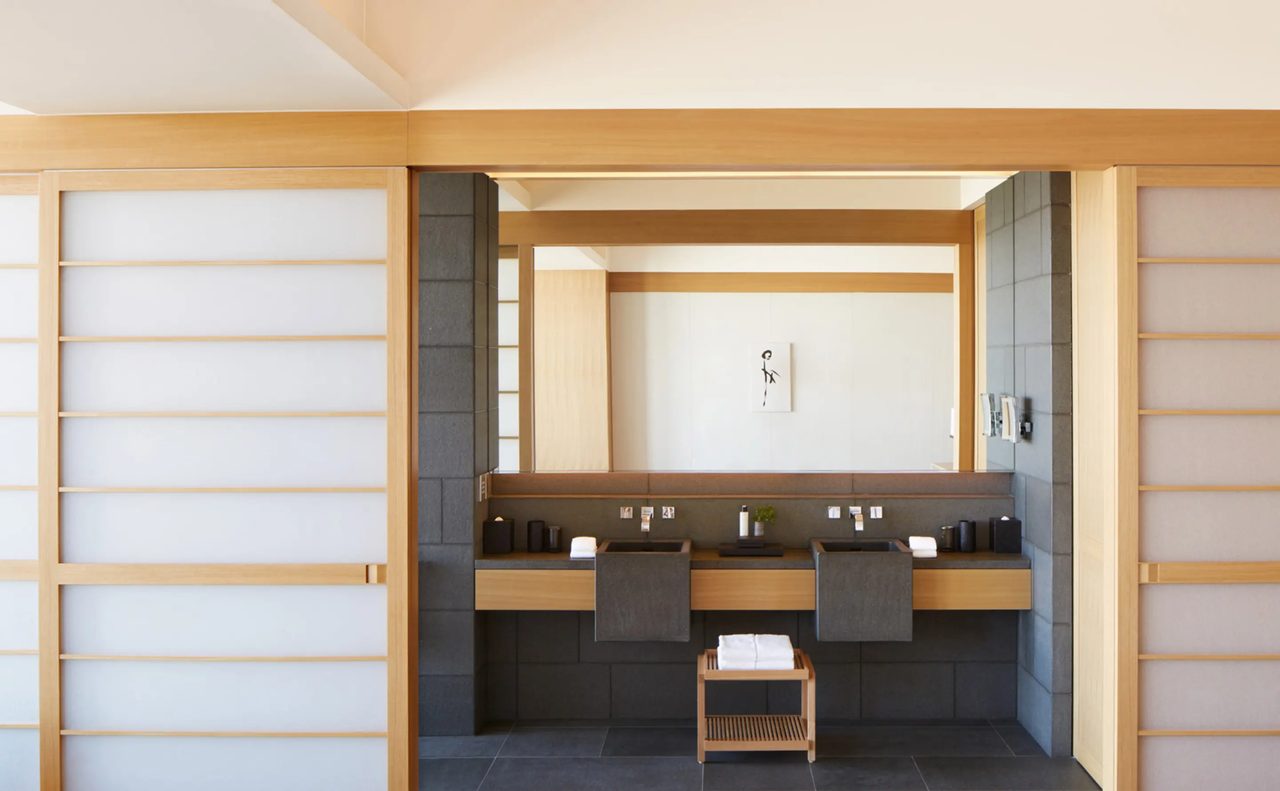
City Suites face northeast at 121 square meters, bathed in morning light over the city grid, and Grand Suites reach 141 square meters with open-plan living space and long skyline views. Panorama Suites take the corners for up to 139 square meters, wrapping the view around two faces of the building, and the corners earn their premium.
The Aman Suite tops the inventory at 157 square meters. It’s the hotel’s largest, with dining and lounge space scaled for a residence rather than a stopover. From the upper floors the Imperial Palace Gardens read as a green sea in the middle of the city, and Mount Fuji appears on the horizon on clear days. The view isn’t a backdrop here, since the rooms are oriented to make it the program.
The neighborhood rewards a slow morning. The palace gardens open early and sit minutes from the tower’s door, while Marunouchi’s arcades and Tokyo Station’s restaurant floors handle the practical side of a stay. The hotel stays the calm center of that map, a place guests return to between engagements rather than a base they tolerate, and mornings belong to the gardens.
The spa is a second hotel below the rooms
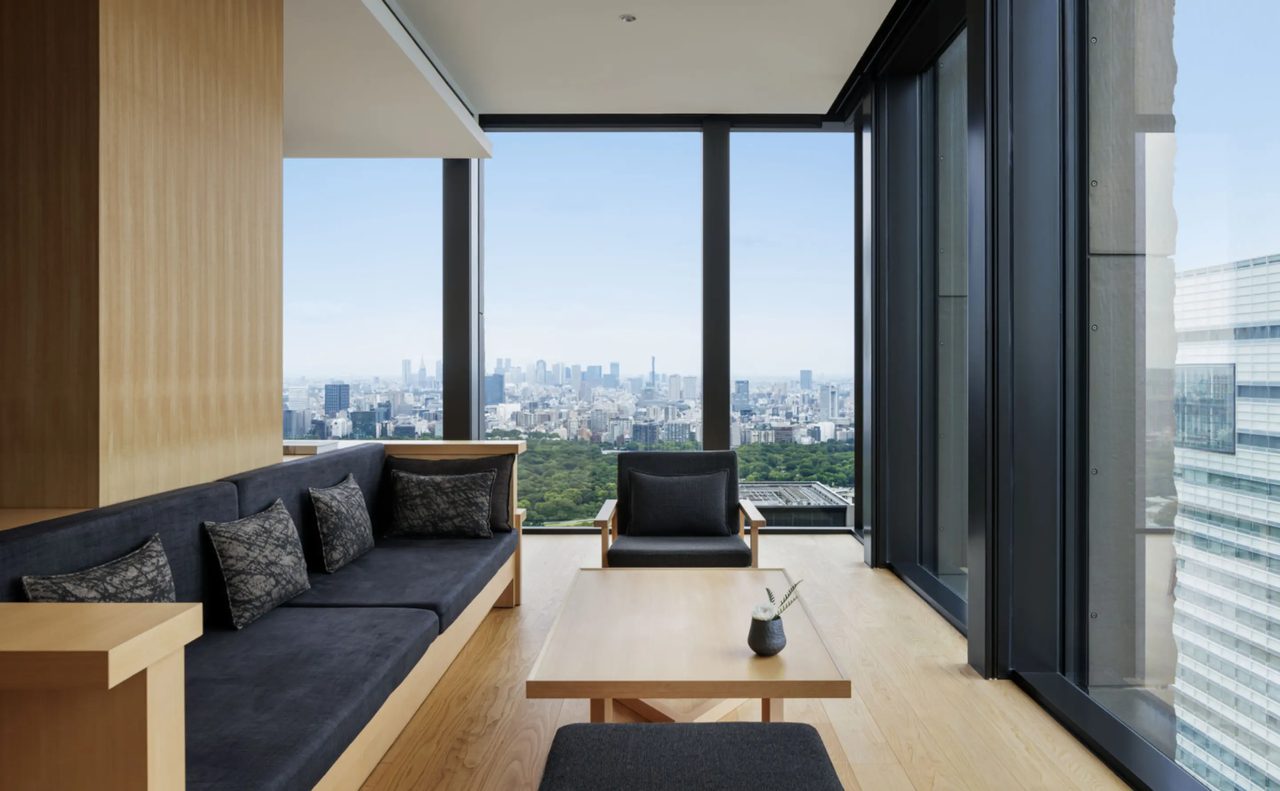
Aman Spa spreads 2,500 square meters across levels 33 and 34, and its 30-meter pool runs along the building’s edge, long enough for real laps and calm enough for the ritual soak culture the rooms establish. It’s a resort floor, not an amenity corner. Treatment rooms, relaxation spaces and the bathing circuit complete a floor plan that most city hotels would rent out as offices.
Dining and the lounge continue the same register, global venues built from the room’s materials and light rather than themed concepts. The whole property holds a single note from lobby to pool deck. For a city stay measured in days rather than hours, that consistency is the actual product being sold. No themes, no noise.
Service runs at the same register as the design, unhurried and exact. Requests land once and stay landed, from a bath drawn at a set hour to a car waiting at the tower door. The hotel’s scale helps, since 84 rooms against a full tower of offices keeps the staff-to-guest ratio firmly on the side of calm.
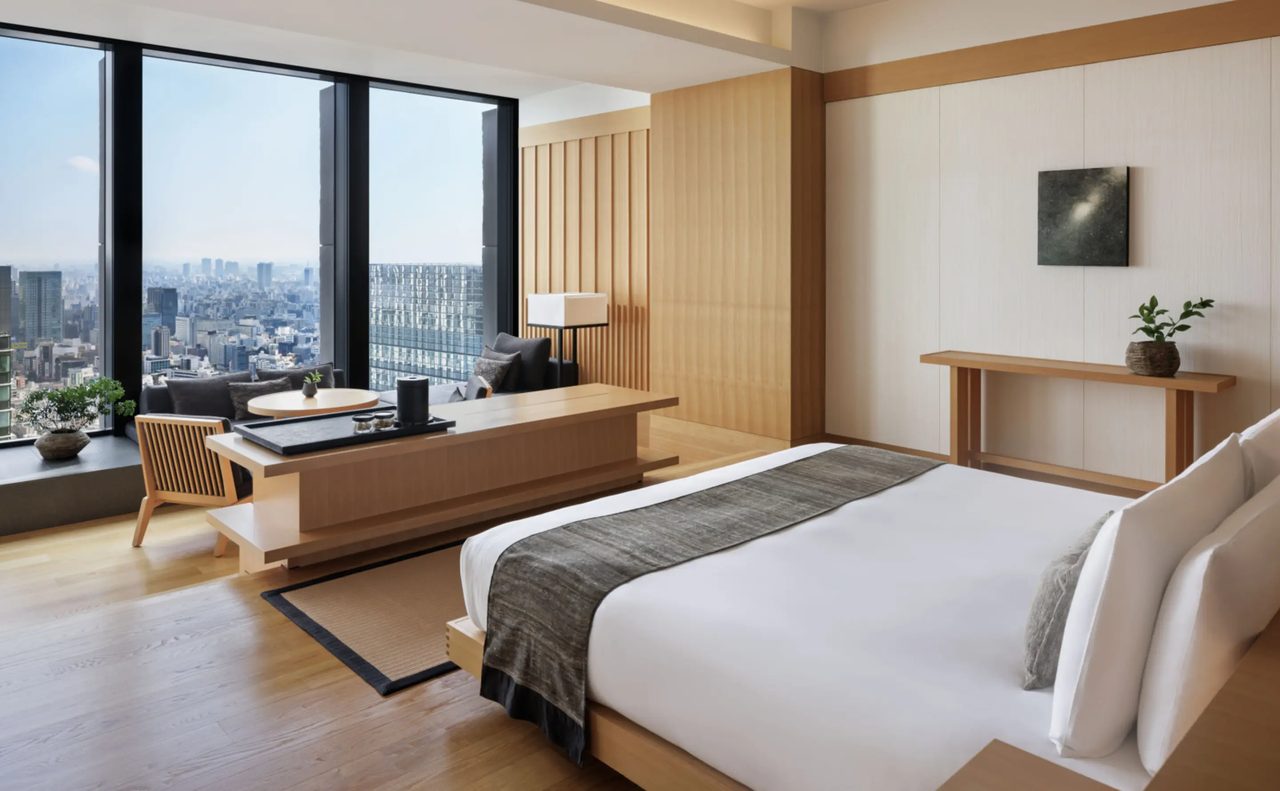
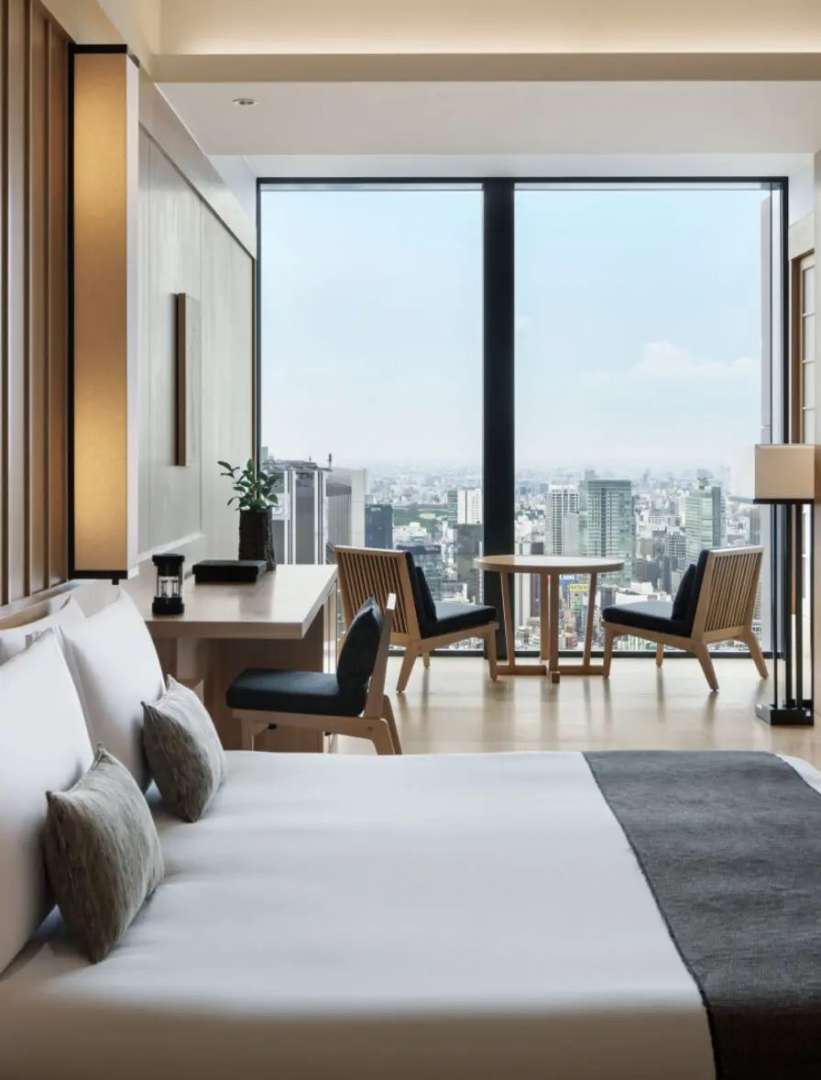
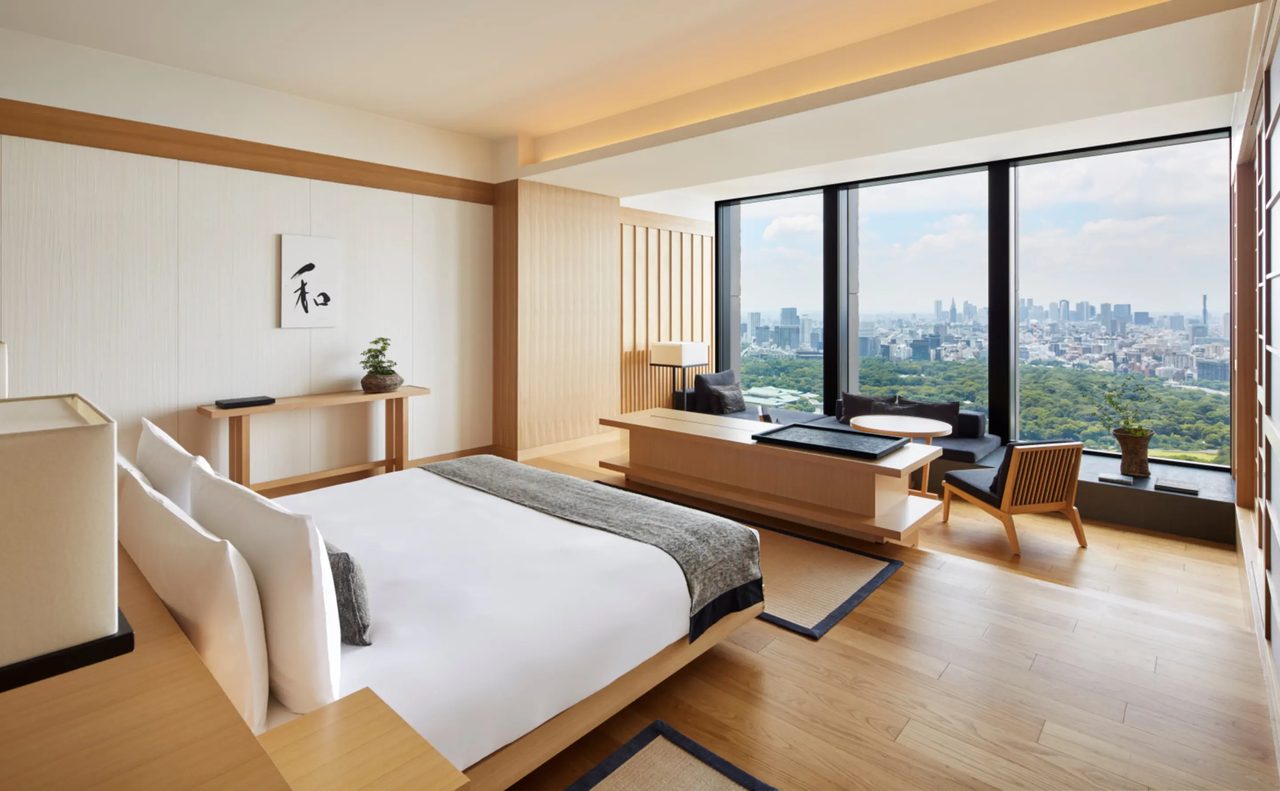
Rates move with the calendar. They are quoted at booking on Aman’s site, where the room tiers lay out in full. The Deluxe Room at 71 square meters is the smart entry, since the space, the furo and the view arrive intact at the first tier. Book the garden side if the palace outlook counts, and give the spa a full morning, because the pool floor and the bathing circuit reward the time twice over.