

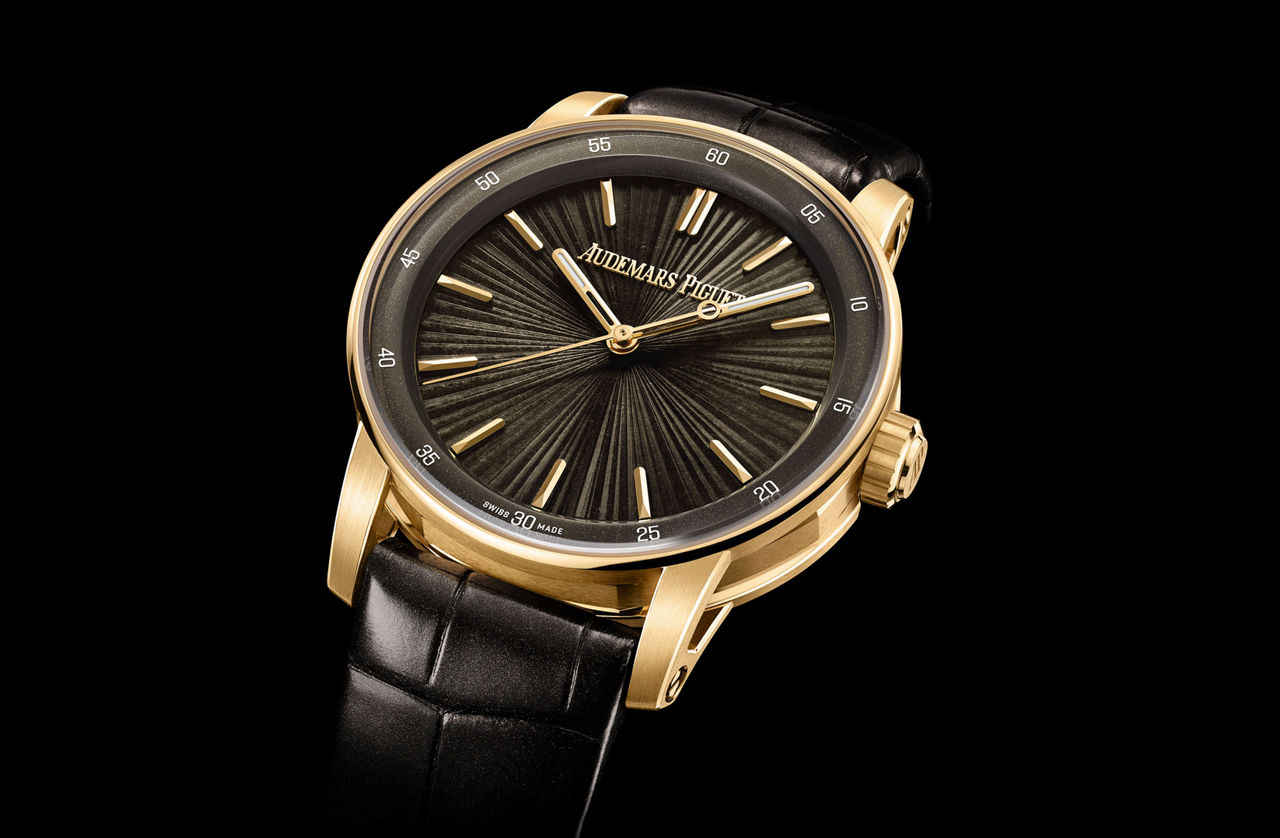
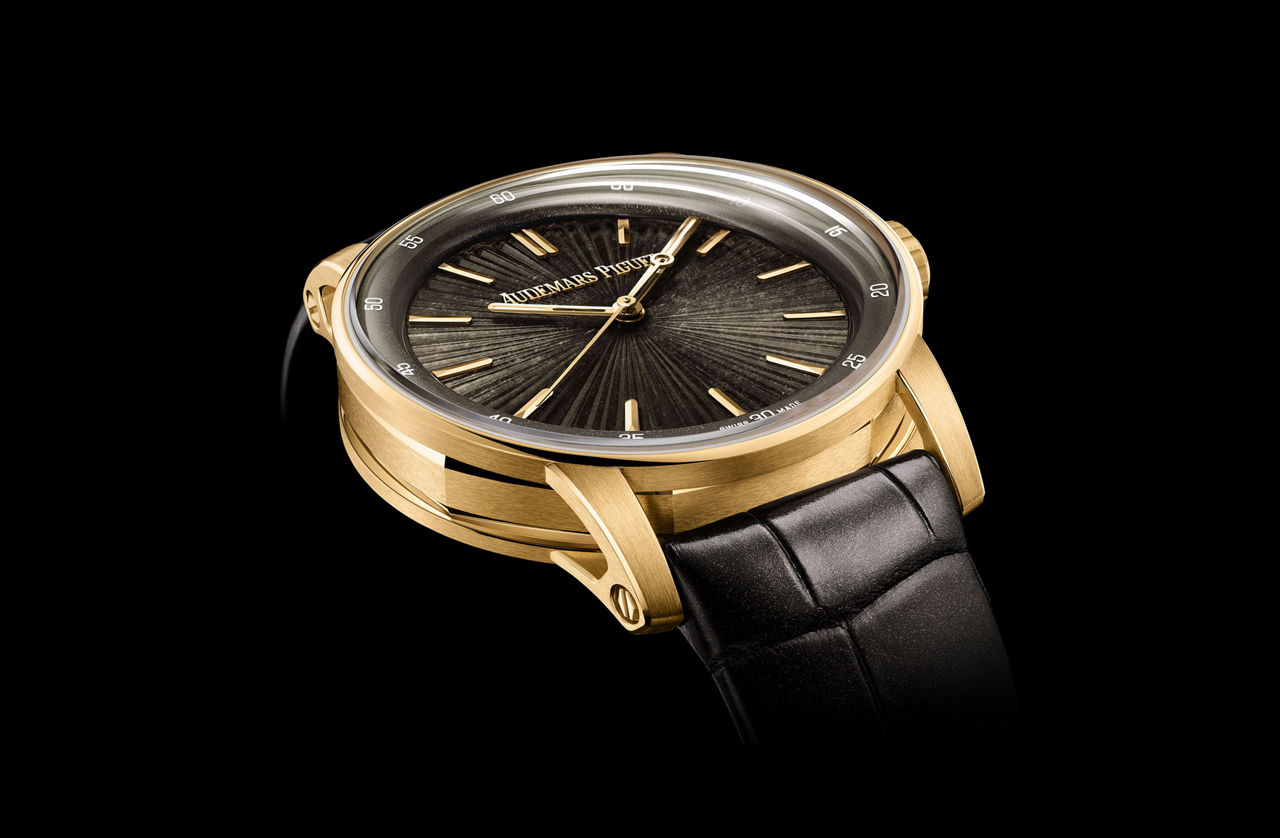
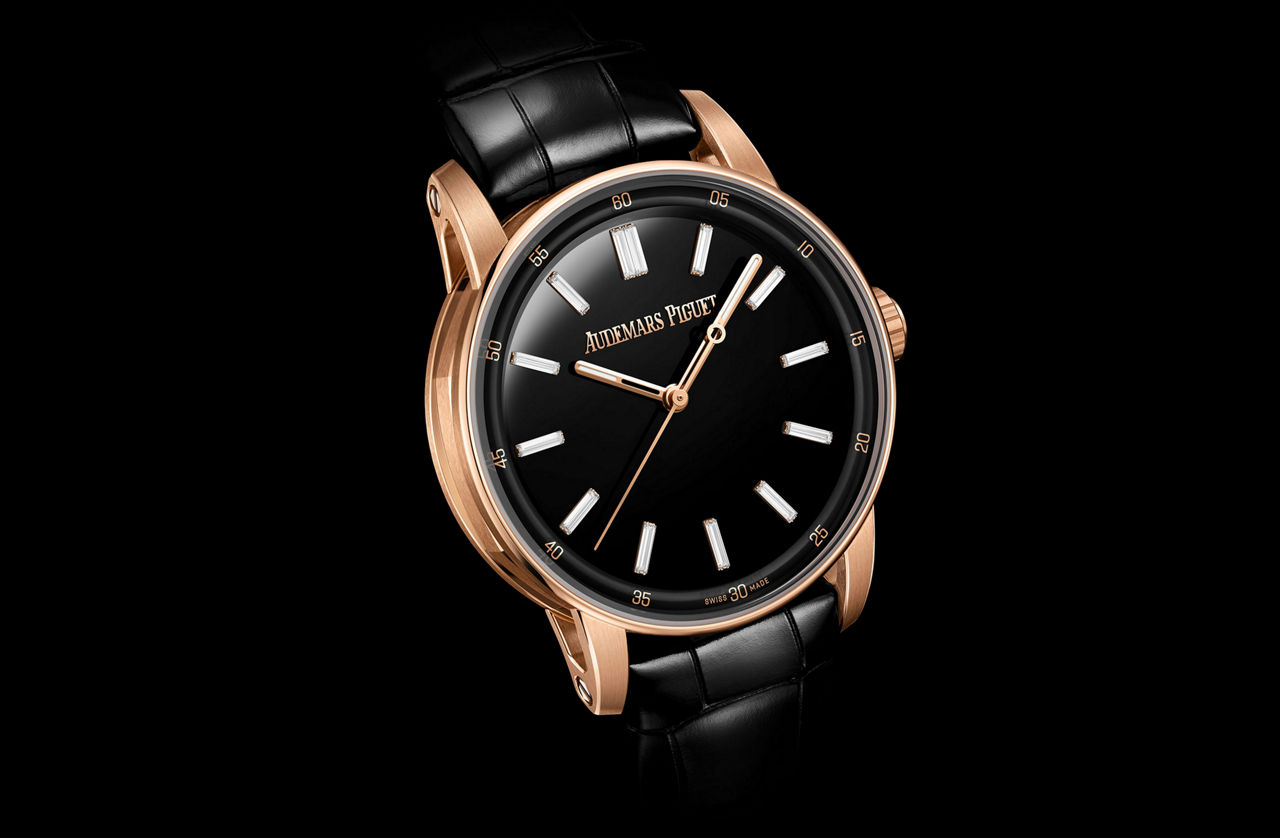
Two new Code 11.59 references shrink the collection to 38 mm and hand the dial over to geology. One pairs an 18-carat yellow gold case with gold obsidian, volcanic glass shot through with gold-toned minerals. The other sets mirror-polished black onyx in 18-carat pink gold, its hour markers swapped for baguette-cut diamonds.
No two dials leave Le Brassus alike. The inclusions sit where the lava left them, so the pattern on your wrist exists exactly once.
Volcanic glass, cut thin
Obsidian forms when lava cools too fast to crystallize, and the gold sheen in this variety comes from mineral inclusions trapped inside the glass. Audemars Piguet slices the stone thin, then engraves a sunburst pattern into the surface, so the dark dial throws gold light back in rays when your wrist turns. A shimmering brown inner bezel frames it, with pink gold hour markers and yellow gold hands filled with luminescent material. No two sunbursts land alike either.
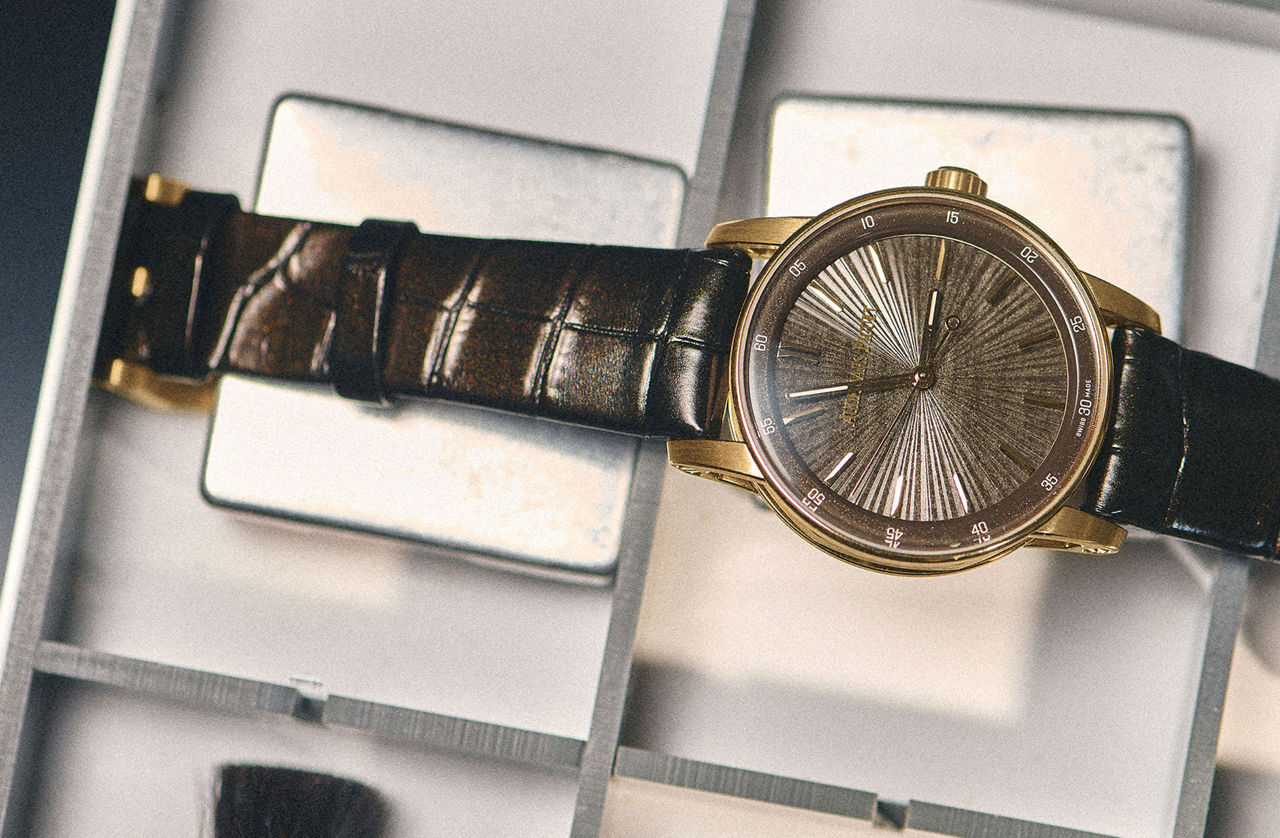
At arm’s length the obsidian reads almost black, a dress dial with nothing to say. Then light moves across it and the gold wakes up in rays. It’s the quieter watch in photographs and the livelier one in the room, and the gap between those two is the whole appeal.
Onyx, polished to a mirror
The onyx takes the opposite route. Audemars Piguet polishes the stone to a mirror finish and leaves it empty, a black surface with depth instead of pattern. Thirteen baguette-cut diamonds stand in for hour markers, about 0.37 carats in total, and a black inner bezel keeps the edge as dark as the center. Pink gold hands carry the only warm color on the dial.
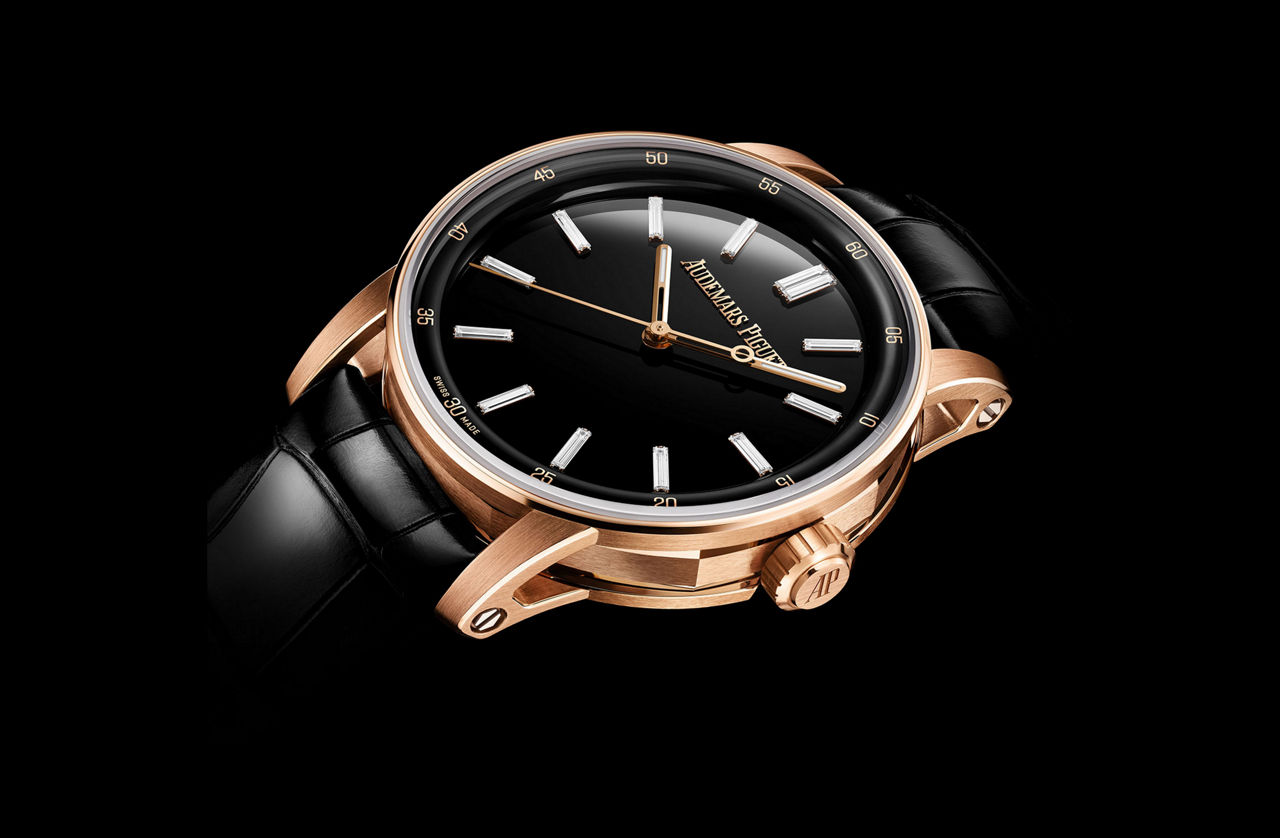
Neither dial carries a date; the stone gets the full circle.
One case, one caliber
Both cases measure 38 mm across and 9.6 mm thick, with a double-curved sapphire crystal up front and a sapphire back, sealed to 30 meters. Thirty meters settles how these get worn: carefully, and dry.
Inside both sits Calibre 5909, a selfwinding movement 3.9 mm thick with 174 parts and 29 jewels, beating at 4 Hz and running 60 hours off a full wind. It shows through the sapphire back. Each watch rides on a black alligator strap, shimmering on the yellow gold reference and shiny on the pink gold, closed by a pin buckle in matching gold.
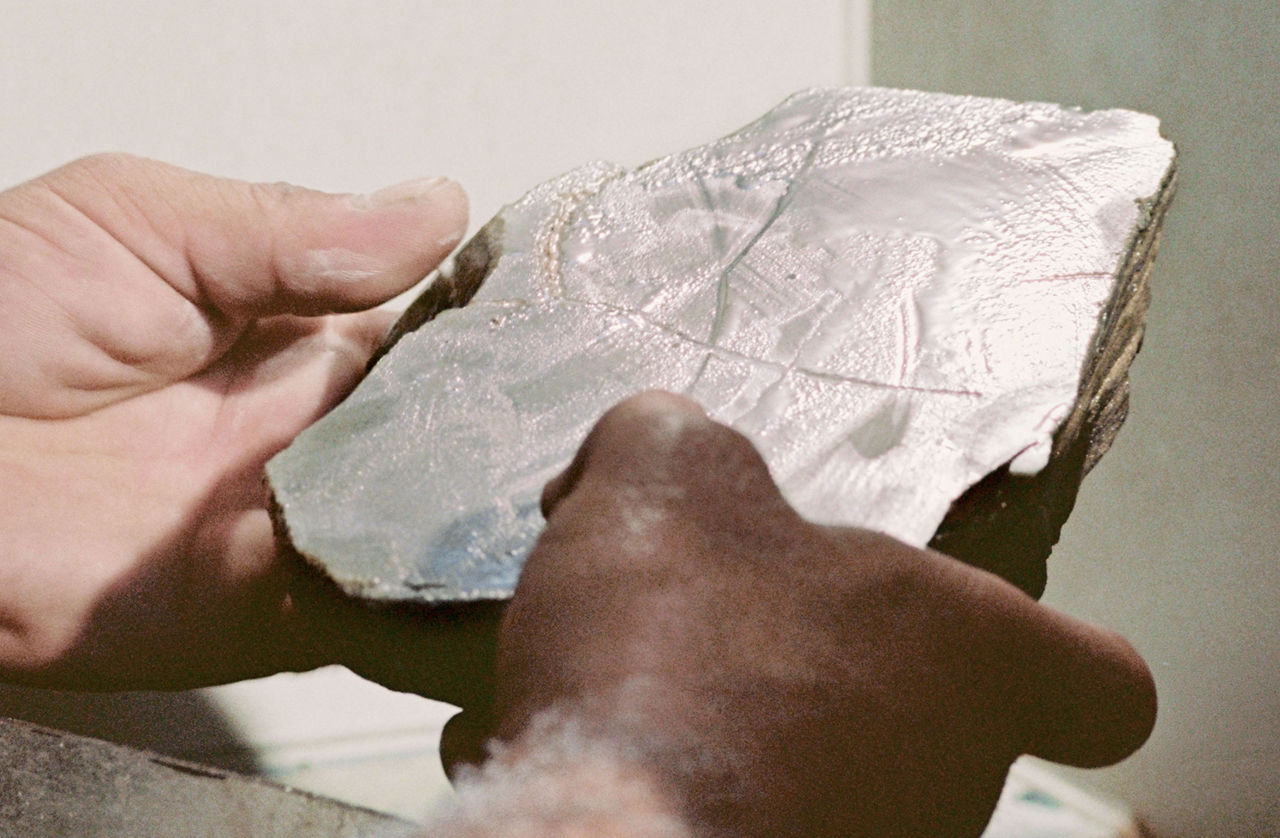
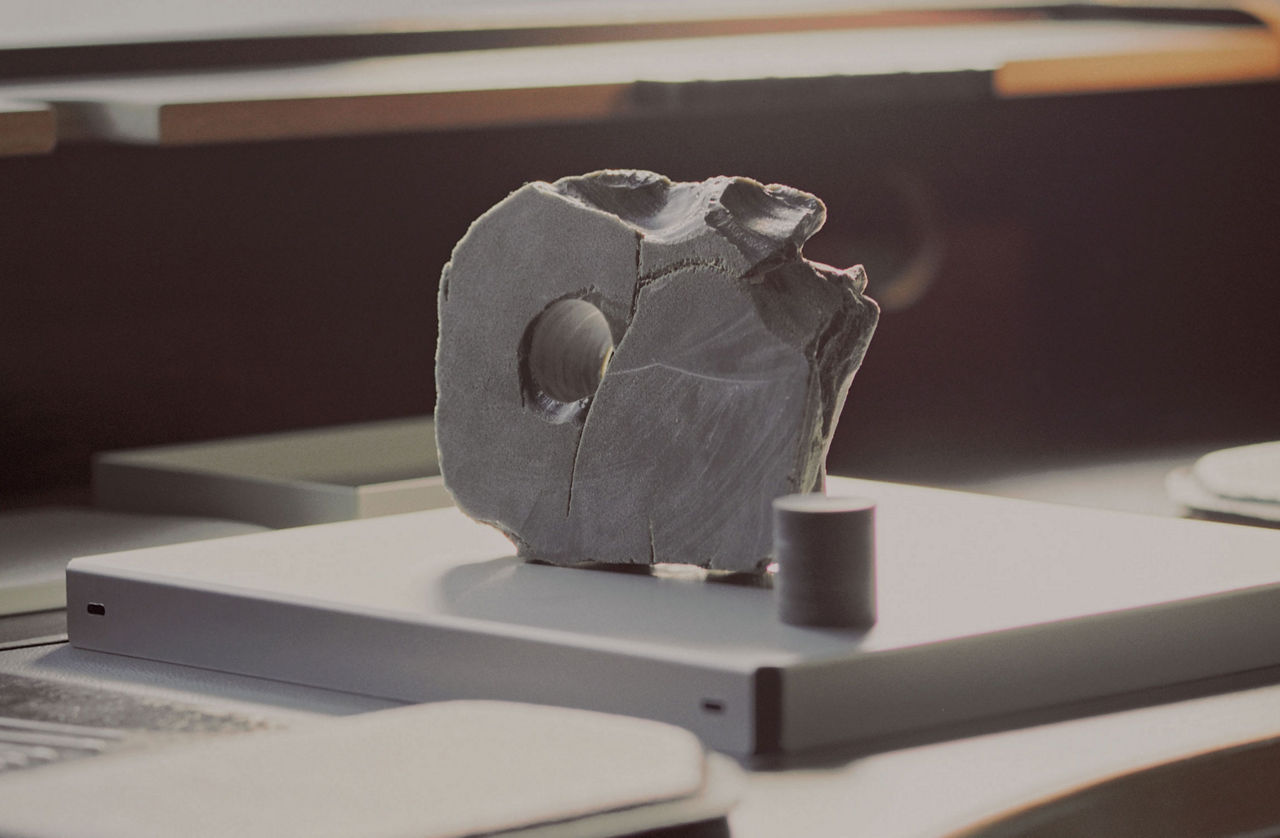
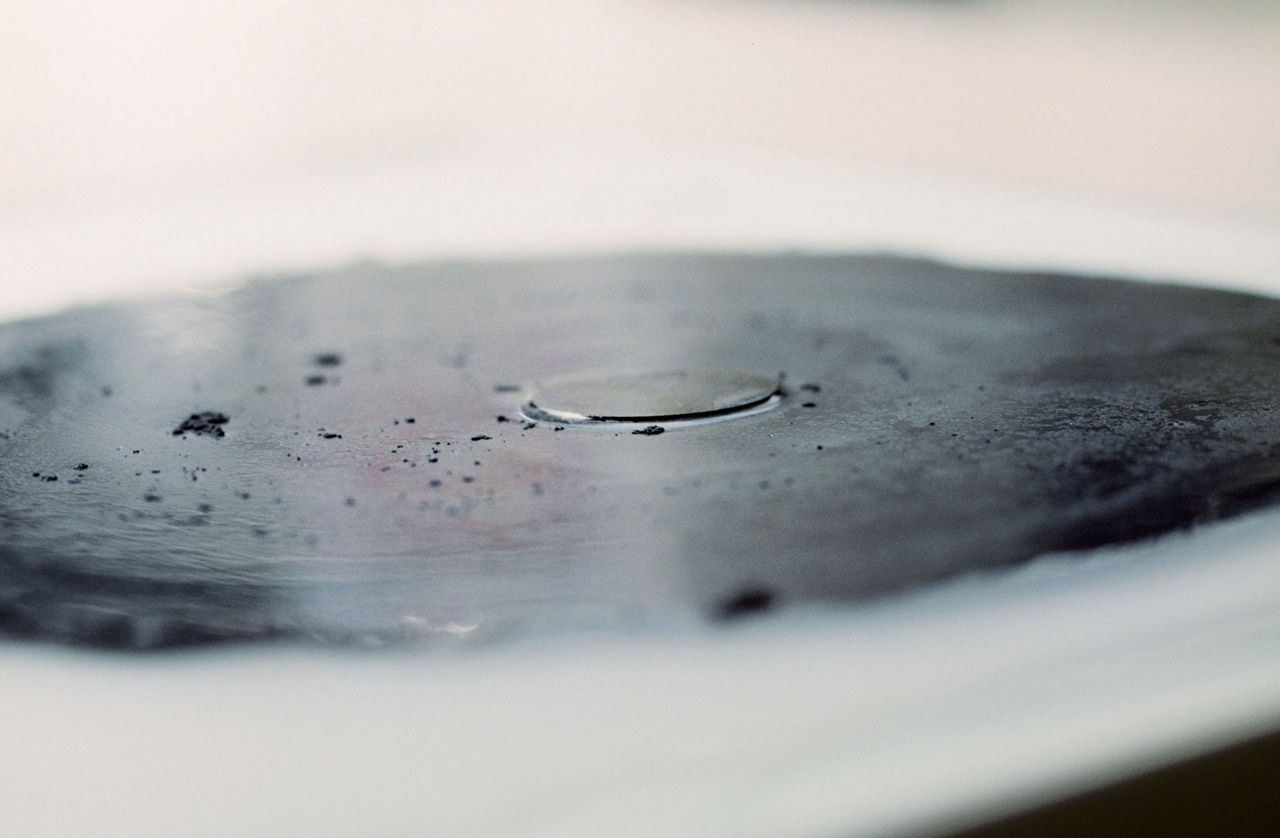
Stone dials begin as rough blocks, and every cut after that is a chance to crack one. Audemars Piguet describes both stones as formed over millennia and demanding exceptional expertise to transform into dials, which tells you the yield is low. Plenty of blanks never make it to a case.
The obsidian reference, 77410BA.OO.A604CR.01, is priced at $57,500. The onyx reference, 77410OR.OO.A001CR.01, is $68,500, the $11,000 step buying the mirror polish, the diamonds and the pink gold. Both sell through Audemars Piguet boutiques, by appointment. Both carry the five-year warranty Audemars Piguet extends through its boutique network.
Editor’s take
I keep coming back to the obsidian. The onyx is beautiful the way a still lake is beautiful, and it’ll look the same in every light you ever wear it in. Obsidian changes its mind all day. Gold hides in the glass until your wrist moves, then it arrives all at once, rays fanned out under the crystal. If the budget stops at one, the volcanic glass keeps handing you a new dial. I would take the shifting stone.


