
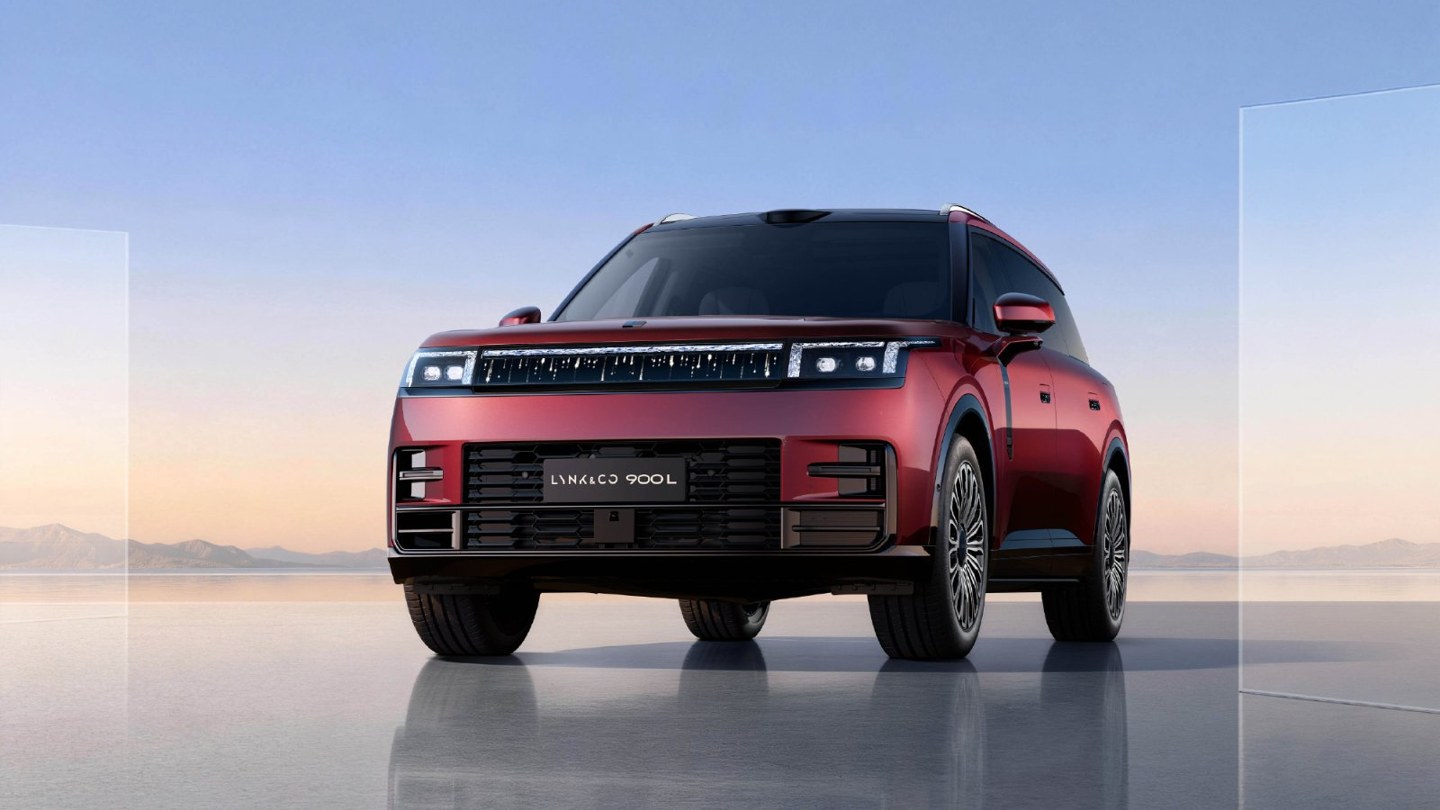
Upright, flat sided and riding high on a long wheelbase, this flagship makes its first impression from across a parking lot, long before any badge comes into view, and that first impression leans on scale, stance and a roofline that runs level from nose to tail without dipping.
Lynk & Co showed the 900L in China on November 10, adding a seven seat version to a flagship line that already counts five and six seat models, the six seater having arrived in April 2025 and the five seater in April 2026, and the new car stretches the formula in length, in seating and in sheer visual presence for buyers who want the extra row.
It will look familiar to some eyes, and that familiarity sits in deliberate territory, because the tall tail, the level shoulder line, the floating roof and the upright nose follow a template that buyers in this class already trust, the template set by the Range Rover school of luxury SUV design, where presence comes from proportion and surface rather than from decoration, sharp creases or oversized vents cut into the bodywork.
Large luxury SUVs have settled into a shared uniform of upright profiles, clean sides and dark glass, and the 900L wears that uniform with its own lighting signature across the nose, black detailing around the arches and a deep Mellow Wine Red finish created for the launch, a color that changes character as light moves across those big flat panels.
A silhouette that invites a second look
Start from the side, where flat panels run the length of the body with very little sculpting to interrupt them.
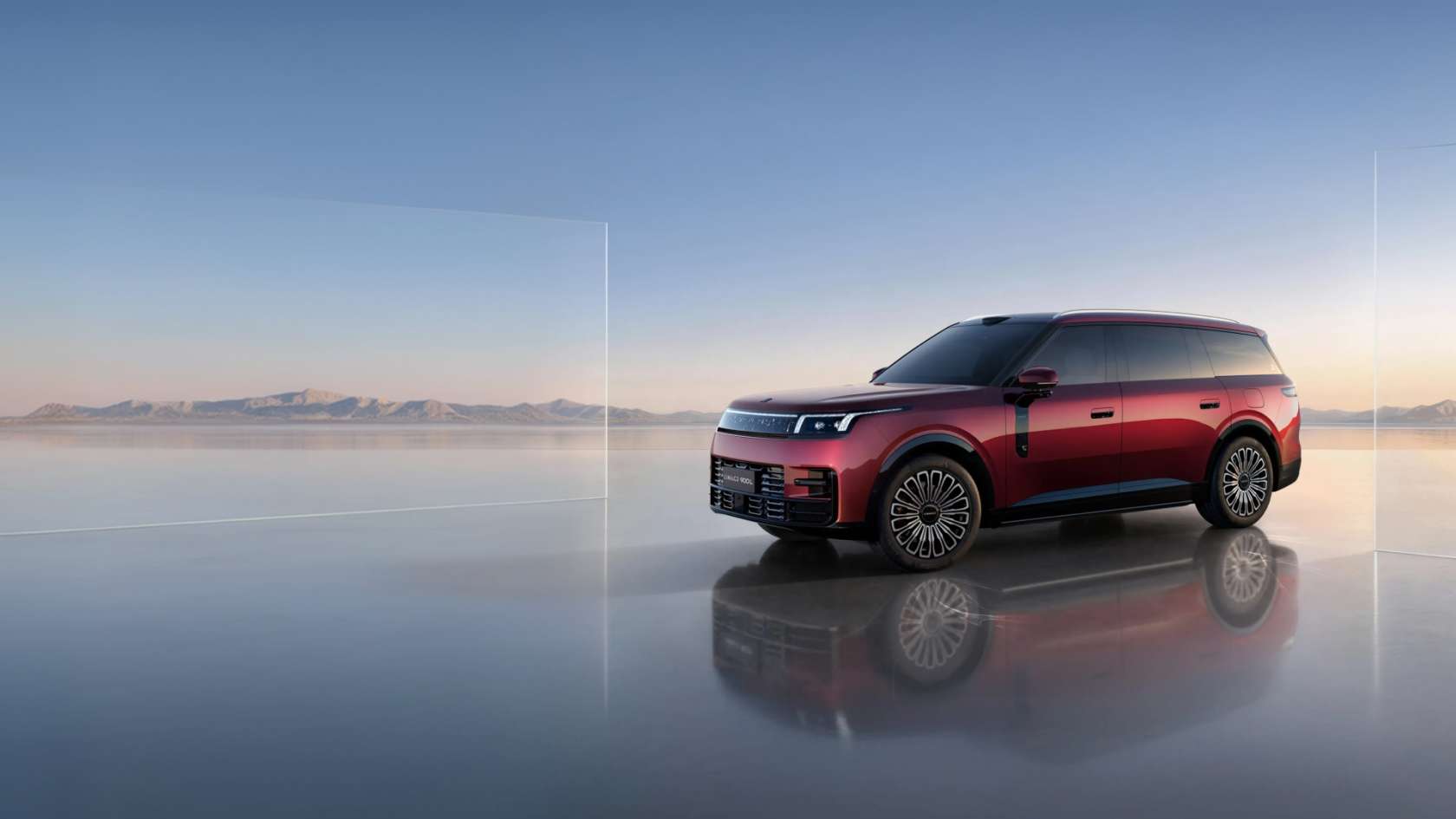
The glasshouse sits dark and level, and high gloss black pillars separate the side glass from the roof so the top of the car appears to float above the bodywork, while black wheel arches frame 21 inch multi spoke wheels, leaving the flank almost bare of ornament.
The proportions carry the effect, because a 3,170 mm wheelbase pushes the wheels toward the corners while short overhangs keep a 5,280 mm body from looking soft in the middle, and a vertical trim accent on the front door cut line adds one sharp detail to an otherwise calm flank, a single vertical stroke on a surface that otherwise refuses decoration of any kind.
Compare that calm with the busy surfacing on many large SUVs and the intent comes clear, since Lynk & Co built this flagship on its SPA Evo+ large hybrid architecture and chose restraint at full size, letting scale and stance do the work.
Seven seats, rotating chairs and plug-in hybrid hardware
Inside, the layout runs two plus two plus three, two individual second row chairs ahead of a three seat rear bench, in a cabin that uses the extra length for people rather than for luggage, with the middle row treated as the main event and the third row sized for passengers instead of occasional use on short trips.
At the debut presentation those middle chairs were shown rotating through 180 degrees on rails with 550 mm of travel, so the second row can turn to face the passengers behind it when the car is parked, and the chairs recline with heated leg rests and powered armrests, while rear passengers get a folding entertainment screen and a heated and cooled storage compartment between the seats.
A 30 inch 6K central display anchors the dashboard, backed by a separate instrument display and a head up display.
Audio comes from a 31 speaker Harman Kardon system, and together with the rotating chairs that equipment list builds the cabin around the middle row rather than treating it as a corridor to the back.
Underneath sits a plug-in hybrid system built around a 2.0 litre turbocharged petrol engine coded BHE20-EFZ, rated at 160 kW, or 215 hp, on its own, with two electric motors alongside it and a listed top speed of 225 km/h, and Lynk & Co has not published a combined system output.
The regulatory filing lists three curb weights, 2,880 kg, 2,965 kg and 3,045 kg, and it does not tie each weight to a specific battery or equipment configuration, so the spread hints at meaningful differences in hardware between the lightest and heaviest versions submitted for approval in China ahead of the planned market launch.
Approach and departure angles sit at 20 degrees each, an optional towing device is rated for braked trailers up to 2,000 kg, the battery uses ternary lithium cells supplied by the joint venture between CATL and Geely, and a LiDAR unit sits at the front of the roof, though the maker has not yet detailed which driver assistance functions that roof sensor will support in production form.
Pricing stays off the sheet for now, ahead of a planned Chinese market launch late in 2026.
Light at both ends, and a name still open
Walk around to the front again, where the face is new and the lighting does the identifying.
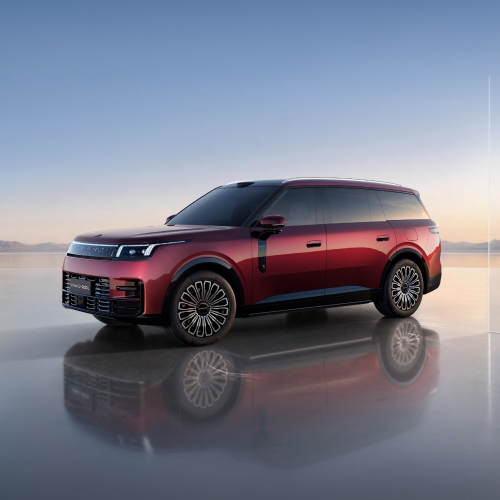
Semi hidden door handles sit flush with the panels, and a wider integrated lighting assembly pulls the main headlights into one horizontal unit, larger lower air intakes sit below it, and the brand gate shaped daytime running light signature carried over from the standard 900 returns in a cleaner, flatter form, so the nose stays recognizably Lynk & Co in a flatter form.
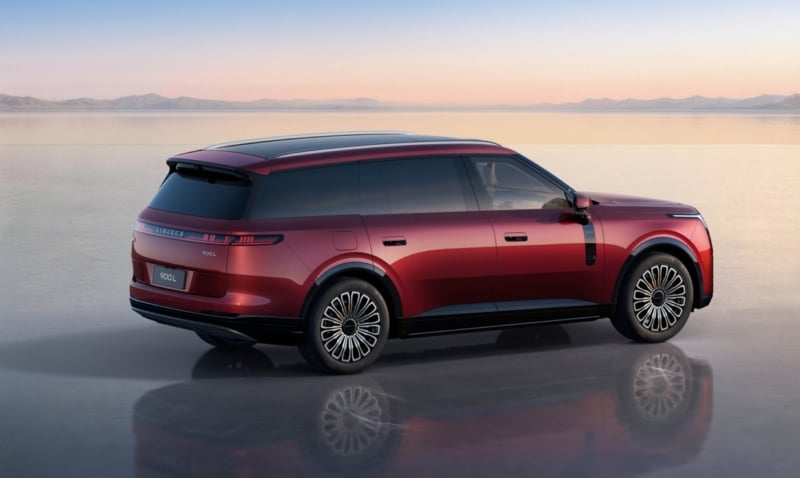
At the rear, a full width light bar carries an illuminated Lynk & Co logo at its center above chrome bumper trim.
So the car signs itself in light at both ends, front and back, and color does similar work, since Mellow Wine Red shifts the big flat sides between burgundy and bright red as light moves across them, with four exterior colors and three interior schemes listed for the car in total, each of them working on the same flat surfaces and dark glass.
Then there is the name itself, or rather the search for one, since Lynk & Co is running a public campaign asking people to suggest names for the new flagship, and few launch cars arrive still open to renaming, with the public invited in before the badge, the price and the final trim list have settled into place.
A familiar luxury silhouette, stretched over seven seats and hybrid hardware, with its final identity settled in public.
The design does the talking until a name, a price and a full specification follow later this year, and on the evidence of these flat panels, that floating roof and light at both ends, the talking starts from a position of real confidence for a flagship that wants to be recognized from a long way off.