

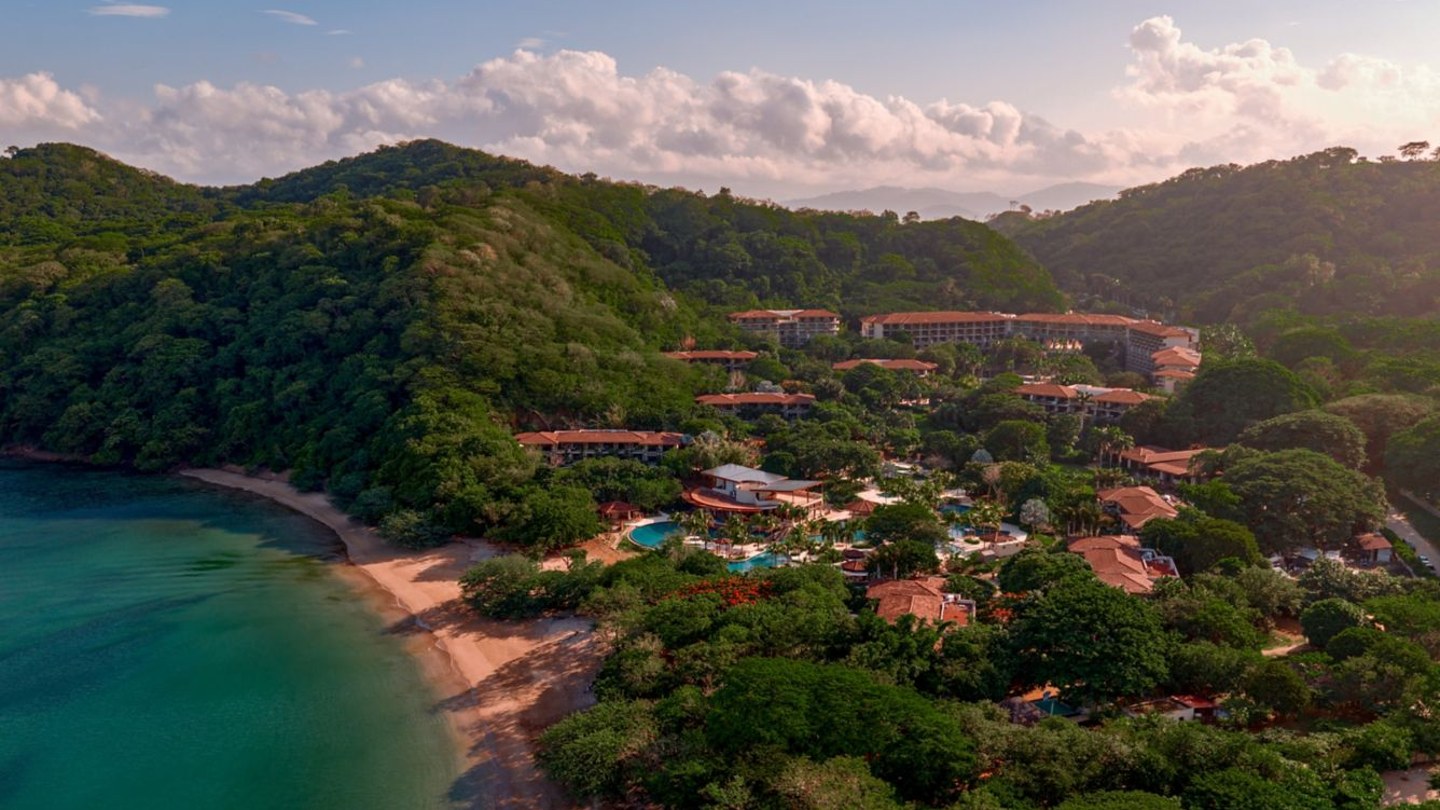
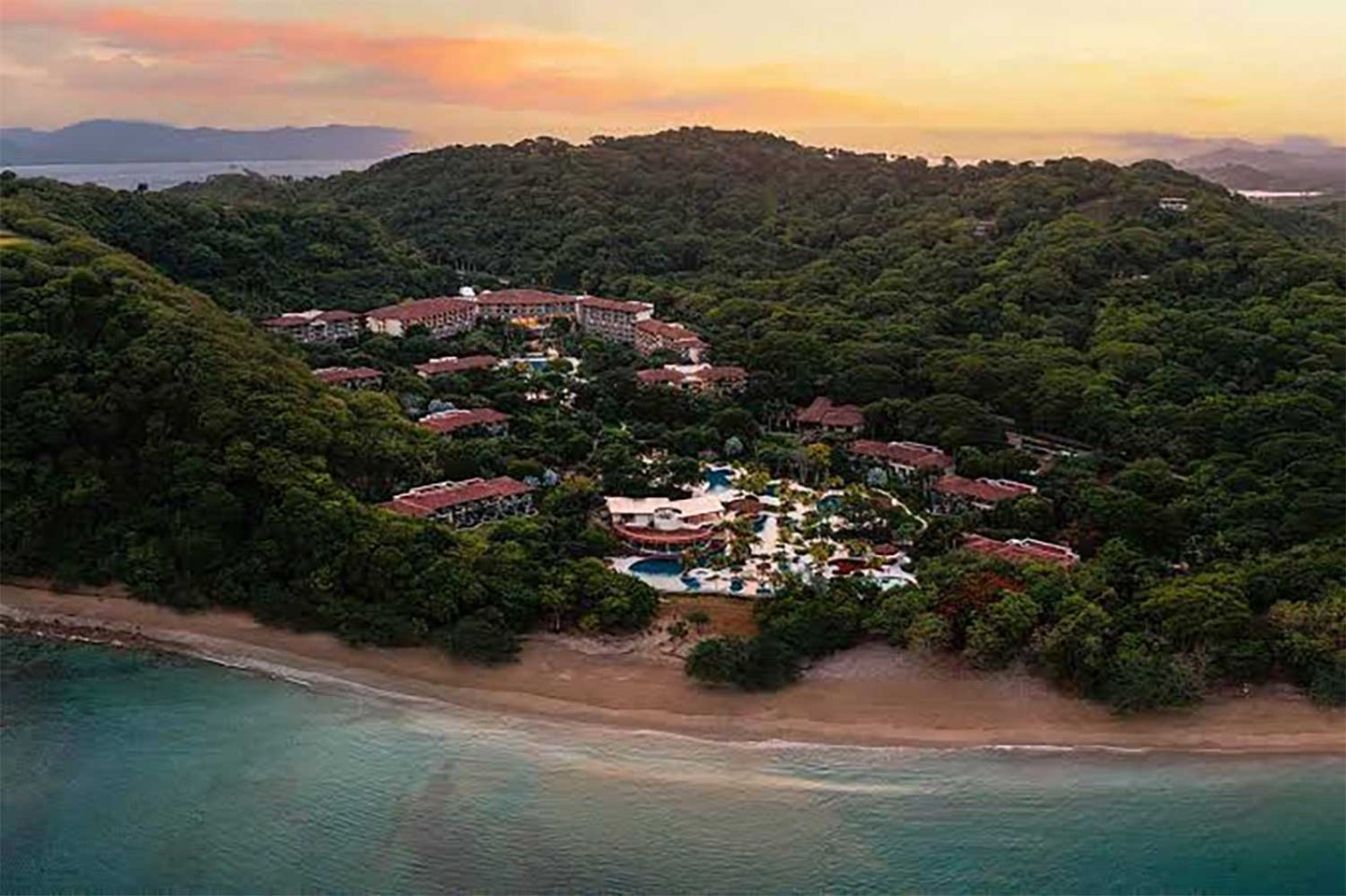
The bay keeps its own hours. The resort above Playa de El Jobo has learned to keep them too. Forest runs down to the sand, and the buildings sit inside the green.
It’s Costa Rica’s northern Pacific coast, dry Guanacaste hills folding into a crescent of sand, and nothing about the place shouts. This is JW Marriott Costa Elena Resort and Spa, which opened in October as the first all-inclusive resort the brand has ever run, anywhere in the world.
It holds 415 rooms, 15 restaurants and bars, and 17 pools, and rates start at $900 per person, per night. I keep the current Lonely Planet Costa Rica in my carry-on for coast trips like this one, because Guanacaste rewards a little homework and punishes a lazy itinerary. The surprise isn’t the scale, though, it’s the story the whole place is built around.
A creation legend runs the design
The design answers to Sibú, the figure of creation and harmony in the traditions of the Bribri and Cabécar peoples. Architecture firm Phiba by DCM led the work, building alongside local architects, artists and artisans rather than importing a finished idea and stamping it onto the hillside. Walnut makes the point first. Its handcrafted oculus, the piece the designers call the aura of Sibú, hangs over the arrival like a held breath.
Rooms lean residential, with terraces, generous floor plans and separate living areas in the Presidential Suites. A set of Mindful Rooms and Suites goes quieter still, designed from the first sketch as sanctuaries for rest, reflection and the kind of sleep you write home about.
Some ground-floor suites open straight into semi-private swim-out pools. Art curated for the property keeps pulling the coast indoors, in local materials and handcrafted work. You keep meeting the landscape twice: once through the window, and once on the wall.
Open-air passages and framed views do the quiet work, so the architecture keeps stepping back and letting the headland finish the rooms. Even the event spaces, 9,000 square feet of them, face the water and the trees.
Fifteen kitchens, one root beer stand
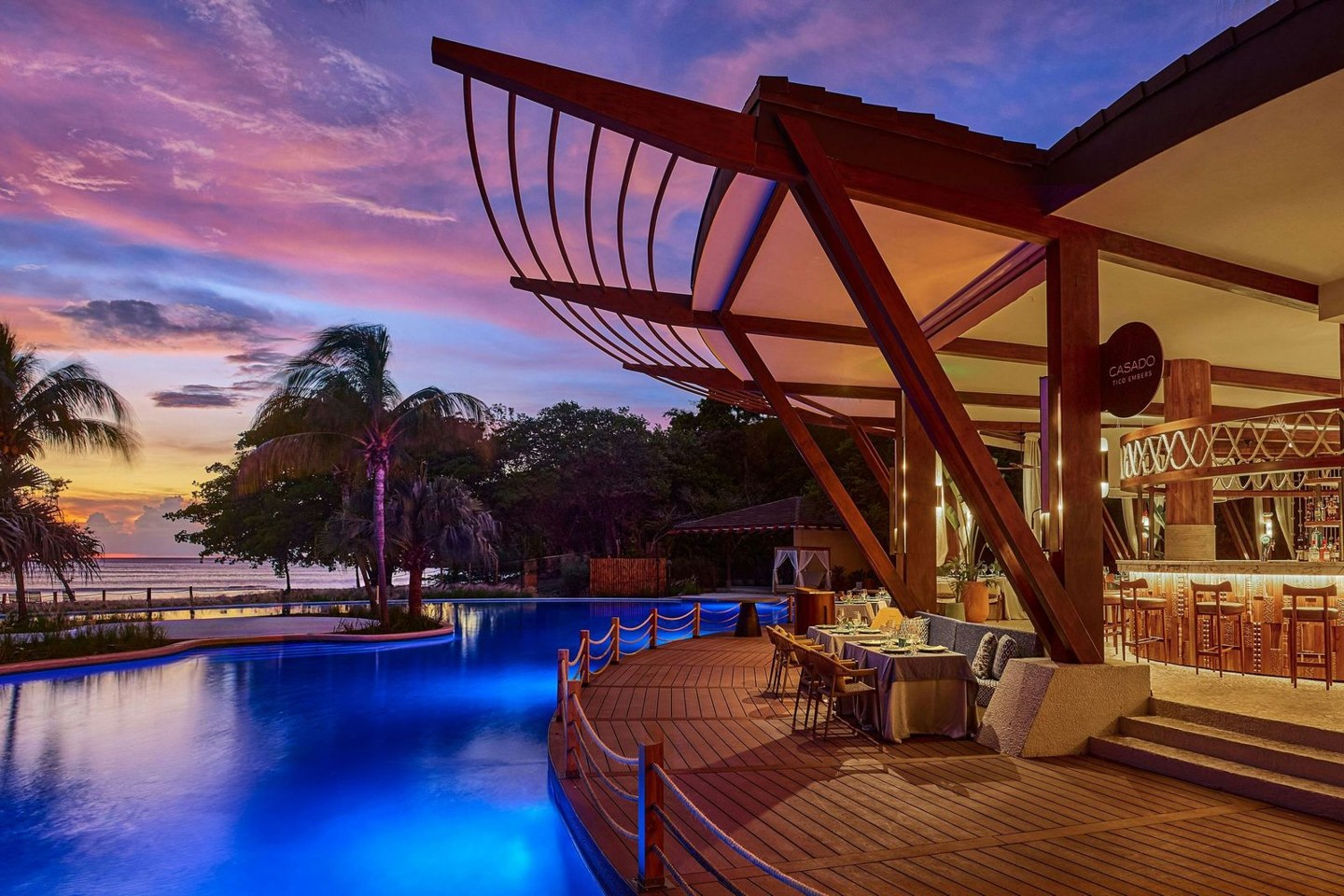
Fifteen venues is a lot of kitchens for one bay. Leal, the culinary hub, roasts its own coffee and runs a seven-course tasting journey built province by province across Costa Rica. Casado cooks over wood fire on the deck above the pool, balancing the catch against the coals.
Puerto Limón carries the Afro-Caribbean flavors of the country’s other coast across the mountains. Santos works Mexican techniques, nixtamalization and wood-fire roasting, with local ingredients. Namuyaki runs chef-led teppanyaki while Boga stays raw and coastal, and Borbón builds its cocktails on botanicals. Nobody goes hungry, or bored.
Then there’s LaGloria, a root beer stand. It honors J. Willard Marriott’s first business, a nine-seat stand that opened in Washington, D.C. in 1927, and it pours artisanal root beer, craft sodas and comfort food. The JW Garden feeds the rest, sending herbs, edible flowers and produce from the property’s own beds into menus and cocktails.
Mornings belong to Mercado Central, which riffs on Costa Rica’s traditional markets, and to JW Market for coffee and provisions. The through-line is local sourcing, repeated until it stops sounding like a slogan.
A house for doing nothing, a club for everything else
The wellness building covers 16,000 square feet, and its best room isn’t in the building at all. The Mindfulness House, a first for the brand, stands beside untouched forest in the shade of a native Guanacaste tree, open to the air and the birdsong. Inside the spa, treatments run on volcanic clay and native cacao, with a four-element ritual drawn from Sibú’s guardians of earth, water, fire and air, and a sound bath timed to the sunset.
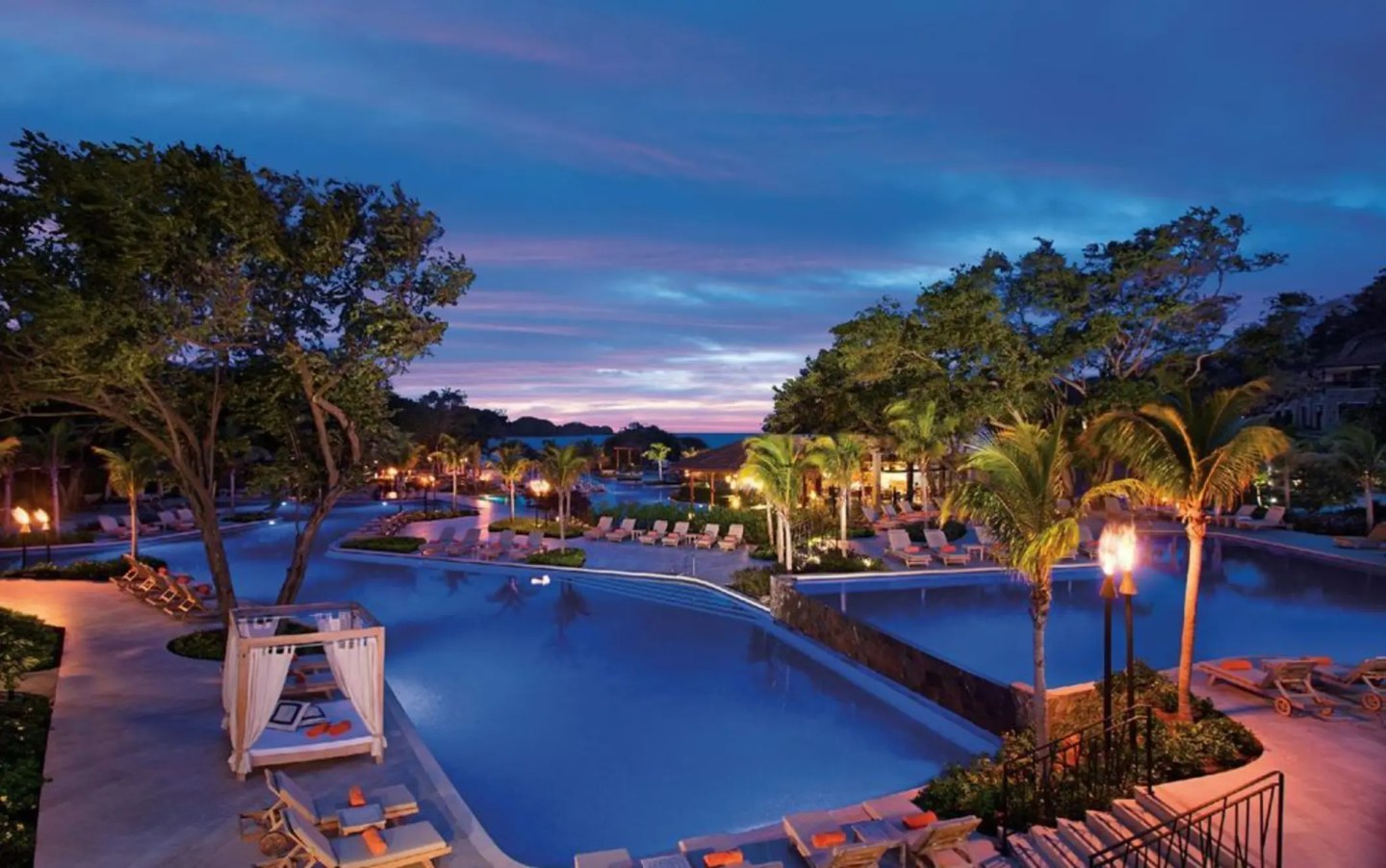
The thinking borrows from the Nicoya Peninsula, one of the world’s Blue Zones, where longevity is a local habit, not a marketing line. Seventeen pools stitch the grounds together, forming the largest poolscape in Costa Rica and ending at an oceanfront infinity edge, and a weekly night market brings artisans, music and street food in from the surrounding towns.
Beyond the fence, the concierge books sunset hikes and guided kayaking along the coast. Yacht charters, deep-sea fishing and dives fill the rest of the board. The resort works as a base camp with better towels.
Families get their own club, with nature walks, children’s yoga, story time and movie nights, so the quiet corners stay quiet. The programming treats kids as guests, not logistics.
Guests who want a smaller resort inside this one book the Griffin Club, the brand’s resort-within-a-resort, with its own arrival lounge, a lounge that never closes, a dedicated pool and a private stretch of beach. A companion service handles the unpacking, the laundry and the turndown, and club guests jump the line for dining reservations and cabanas. It’s a lot of service, aimed at people who want the all-inclusive ease without the all-inclusive crowd.
At $900 a person, the rate only makes sense because of everything it swallows: meals, drinks, taxes, service charges and gratuities all disappear into the one number. Costa Elena is for the traveler who wants Guanacaste’s wild edge with the logistics already solved, and for JW loyalists, it’s the first time the brand lets them stop signing checks at dinner.