

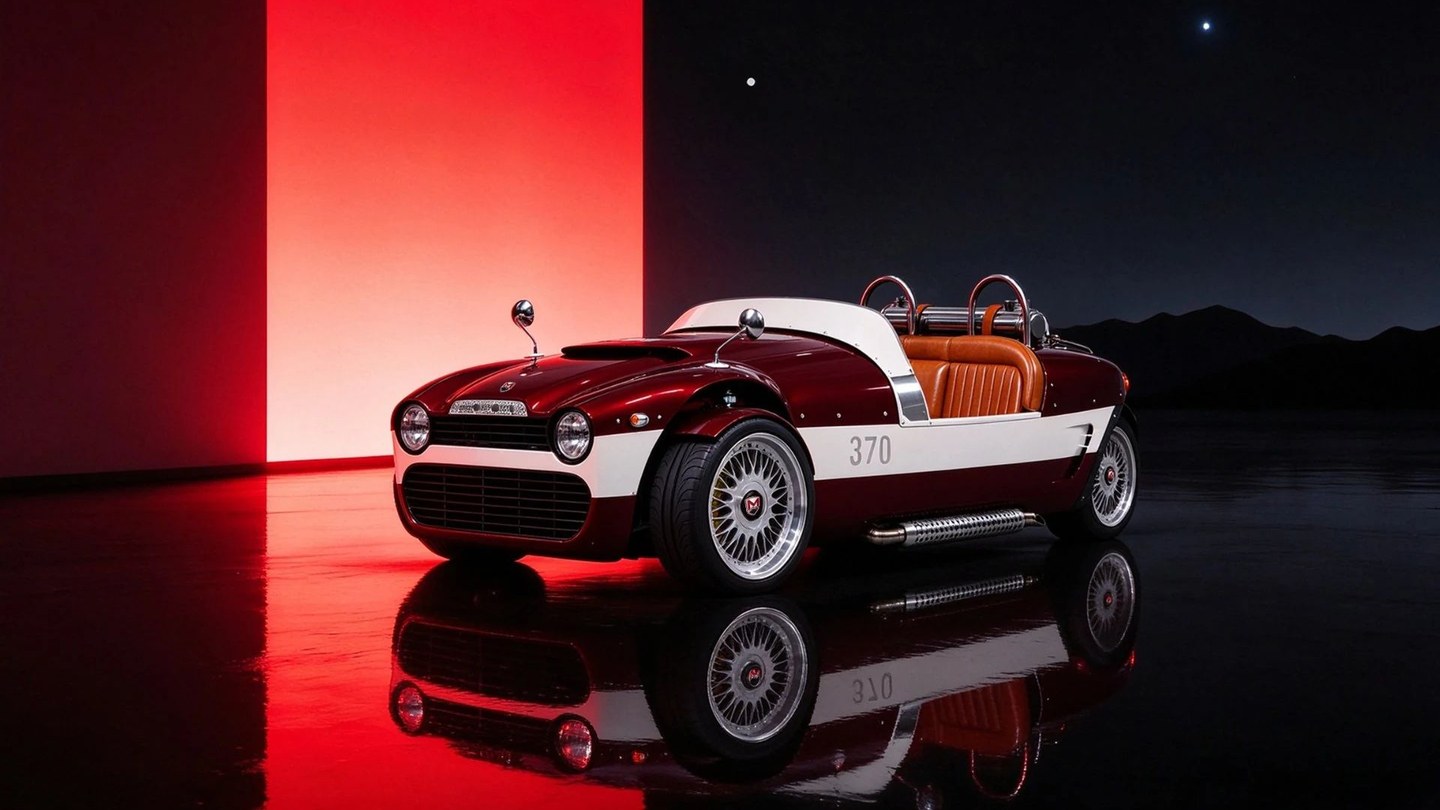
Two wheels in front, one behind, and a roof nowhere in the plan. MTPEAK’s One-All rolled into EICMA in Milan shaped like a sixties roadster that took a wrong turn into a motorcycle show: long hood, round lamps, an open cockpit and a single rear wheel doing all the driving. It’s the first car from a brand almost nobody in the industry could have named a month ago.
Behind the badge sits GuangYu Industrial, a Shenzhen engineering group with roughly thirty years of precision manufacturing behind it. The One-All isn’t a kit car or a styling exercise over borrowed hardware. It’s a ground-up machine, aimed at the top of the three-wheeler market. The debut came at the 83rd EICMA in Milan, Hall 24, in the middle of the world’s biggest motorcycle show.
The retro shape is doing real work
Plenty of retro design is costume. This one’s proportions carry the argument. At 134 inches long and 45 inches tall, the One-All lands within a few millimeters of Japan’s kei-car length limit, so the whole car looks like a scaled-down roadster rather than a shrunken sports car.
The two-tone burgundy and white paint splits the body at the beltline, rivets run exposed along the carbon panels, and the flank carries a single graphic: 370, the car’s power-to-weight figure, worn like a racing number.
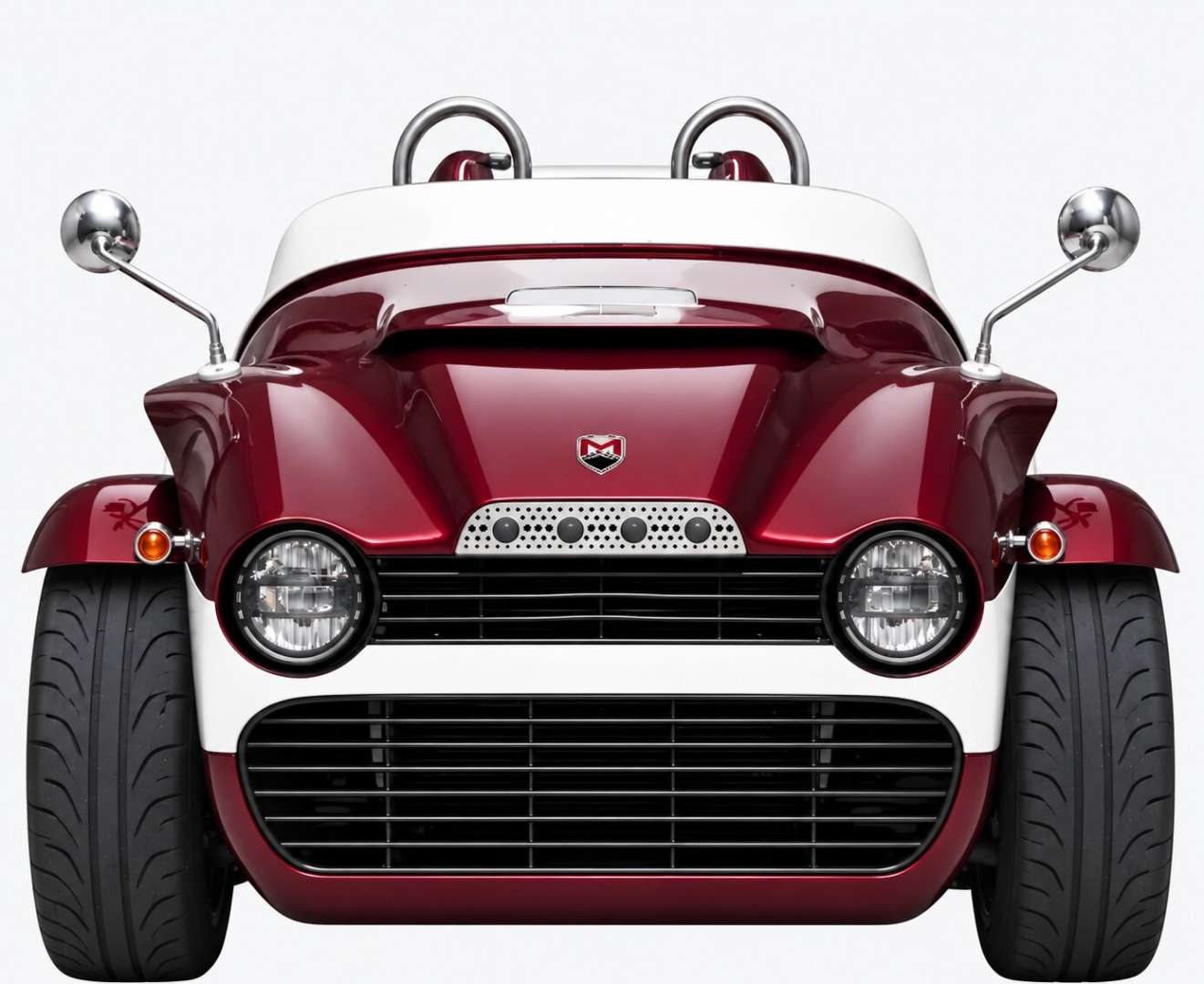
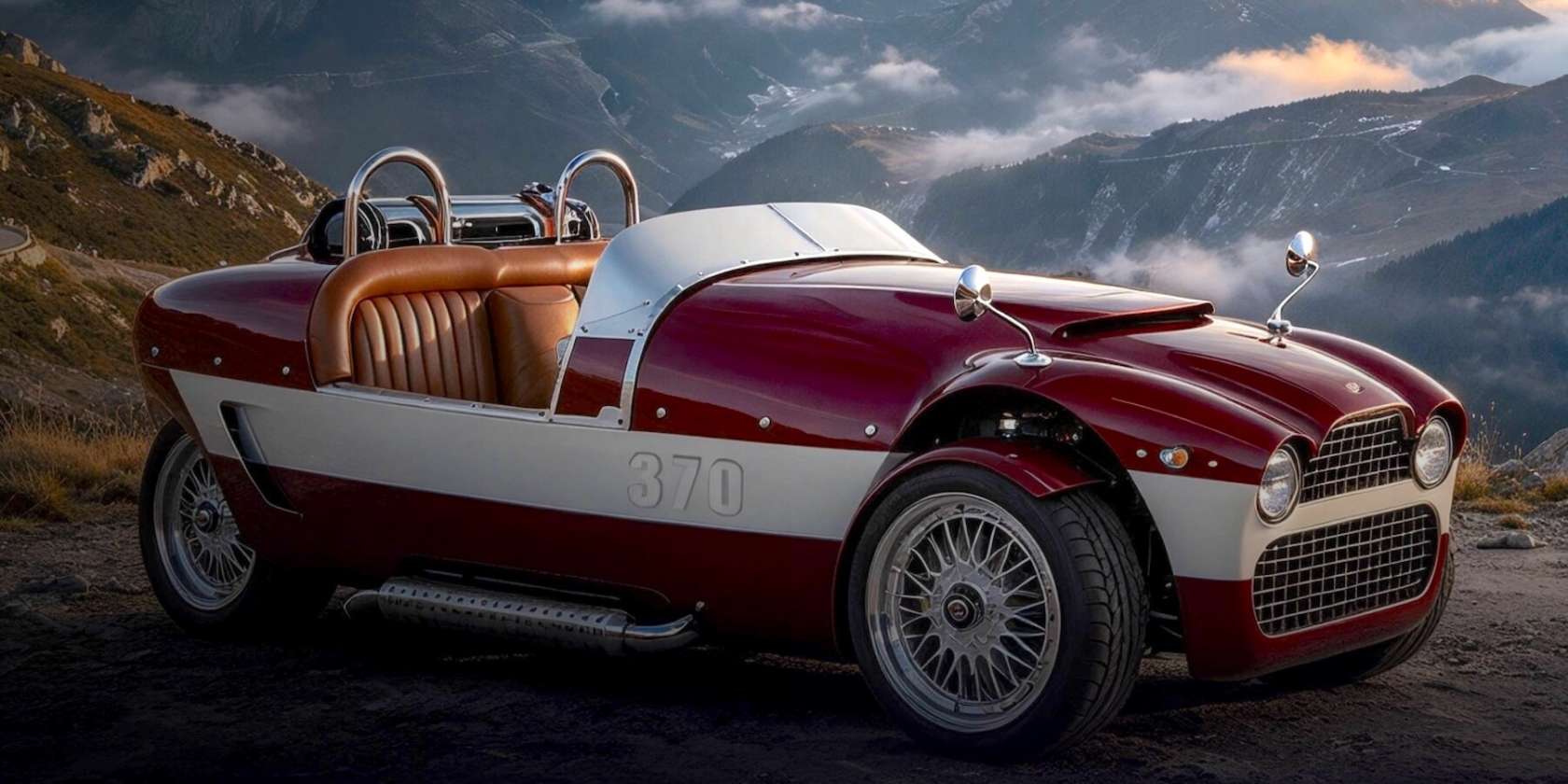
Details keep the period faith. Stalk-mounted chrome mirrors. A mesh grille. Perforated brightwork above the lamps and a drilled heat shield over the side exhaust, all of it nodding at speedboats and sixties racers. The nostalgia is only a surface, though: the body is carbon fiber throughout, shaped over a chromoly steel semi-cage, and the structure underneath follows modern race-shop practice.
One driven wheel, and it’s a foot wide
Mid-mounted behind the seats, a 2.0-liter turbocharged four-cylinder does the work. MTPEAK’s published spec sheet puts output at 165 kW, or 221 horsepower, with 385 Nm of torque (284 lb-ft), sent through a nine-speed automatic with reverse to that single rear wheel.
The rear tire is a 305/35 R18, a full twelve inches across, and that one contact patch handles everything: launch, drive, and a share of the cornering load.
One wheel does the driving. All three do the stopping.
The headline figure is the ratio. At 370 horsepower per metric ton, the One-All sits in genuine supercar territory: a Ferrari Enzo works out near 360 per ton, a Lamborghini Aventador around 370. MTPEAK also lists a top speed of 180 km/h, or 112 mph. What the company hasn’t published is a weight or an acceleration figure, and the ratio shouldn’t be reverse-engineered into either. The simpler read is the right one: the hardware list is serious, and the stopwatch numbers wait for a test.
Chassis hardware backs the claim. Double wishbones with twin dampers hold the front end, ventilated carbon-ceramic discs sit at all three corners, electronic stability control watches the proceedings, and MTPEAK claims a 50:50 weight distribution. The chromoly semi-cage underneath is built like a roll structure rather than a ladder frame, and GuangYu develops and tunes the whole package under its own roof. On paper, that’s the recipe of a track toy, not a novelty. Whether one driven wheel can cash the check the spec sheet writes is the question the whole car hangs on, and it’s a fair one.
The cockpit keeps the analog faith
Climb in and the design argument completes itself. Tan leather with vertical pleats covers the seats, twin chrome roll hoops rise behind them, and the windscreen stands nearly upright in the old style. There’s no roof and no weather gear, and no attempt to civilize the experience into a coupe’s.
Morgan’s three-wheelers are the obvious spiritual neighbors, though where Morgan leans on heritage, MTPEAK leans on manufacturing depth: CNC machining, stamping, welding and carbon-fiber fabrication all happen in-house at GuangYu. Polaris works the opposite end of the street, selling the Slingshot by the thousand as open-air transport for anyone with a license. MTPEAK will build a hundred One-Alls, total, each one specified by its owner.
It’s also why the car exists at all. Low-volume builders usually live or die on bought-in parts and borrowed capacity. GuangYu machines, stamps, welds and lays up carbon in-house, so the One-All’s supply chain is the same factory it was designed in. That vertical habit is rare in the car business at any size, and unheard of at a hundred units.
That’s the business model: a launch run capped at 100 cars worldwide, a bespoke program for each, and production scheduled to begin in 2027. MTPEAK hasn’t named a price, saying only that the final figure depends on how each car is tailored. Reported market context puts bespoke trikes in serious territory anyway: Morgan’s Super 3 starts at $54,000 and Campagna’s T-REX RR at $65,000, and a carbon-bodied car built a hundred at a time won’t undercut either. In the US, three-wheelers are classed as motorcycles federally, and most states let you drive one on a standard car license.
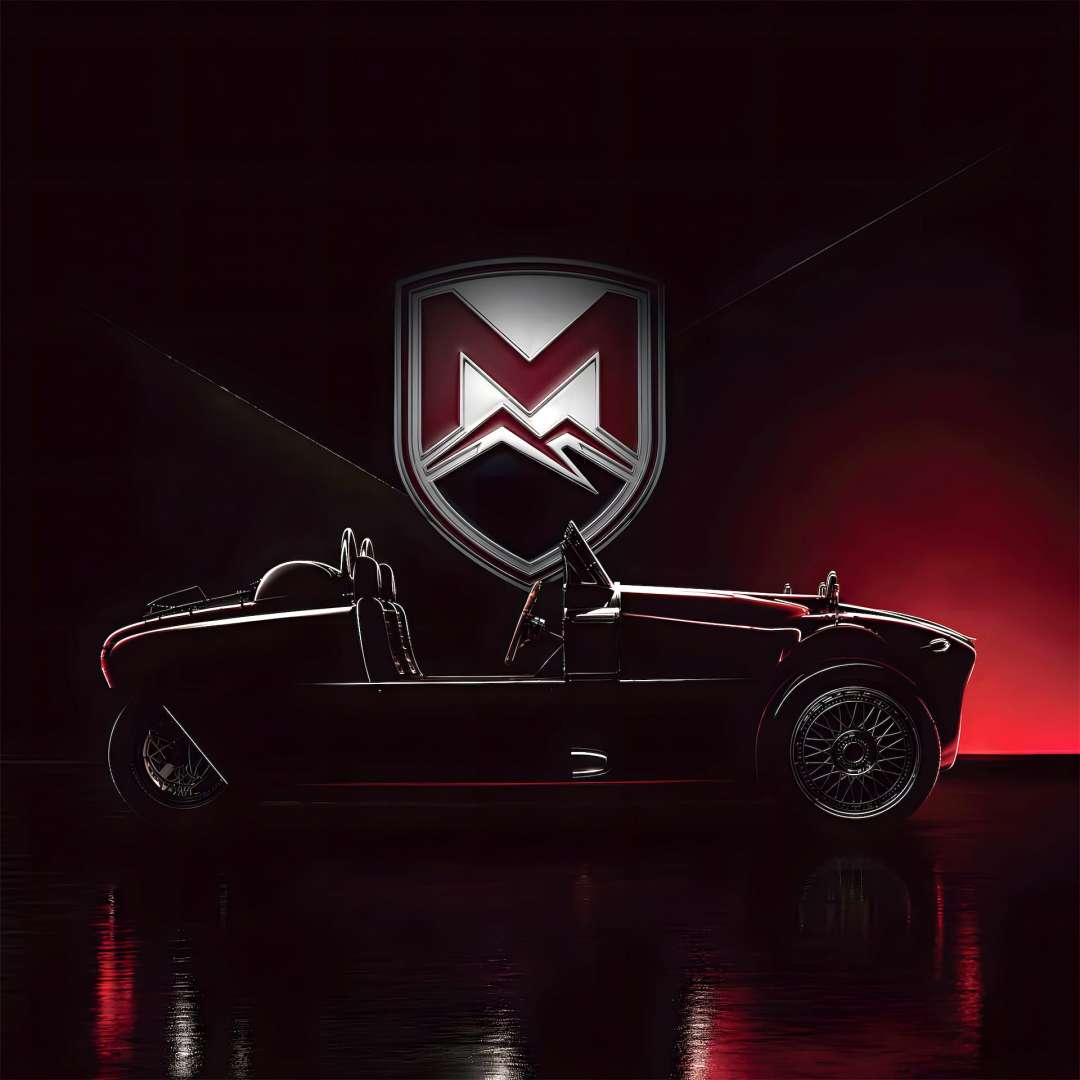
Three-wheelers usually ask you to forgive something: the dynamics, the build, the company behind it. The One-All’s pitch is that there’s nothing to forgive, that a three-wheeler can be engineered like a sports car and finished like a collectible. The missing wheel is the point, and the price, when it lands, will decide whether a hundred buyers agree that less really was more.


