
Scout Motors CEO Scott Keogh has finally put a horsepower number on the Traveler Harvester: 800. The figure arrives with 1,000 lb-ft of torque and 500 miles of range from the range-extended powertrain.
It’s the first horsepower figure Scout has attached to either truck, and it completes a set of numbers the company has released in pieces: torque, sprint time and range were already on the record. The gas engine never drives the wheels.
Until now, Scout had published torque, range and a sprint time, but no horsepower, and the missing figure left the spec sheet looking unfinished. Scout Motors is the Volkswagen Group’s American revival of the Scout name, formed in 2022 to build rugged electric trucks in the United States.
The shape still answers to 1961
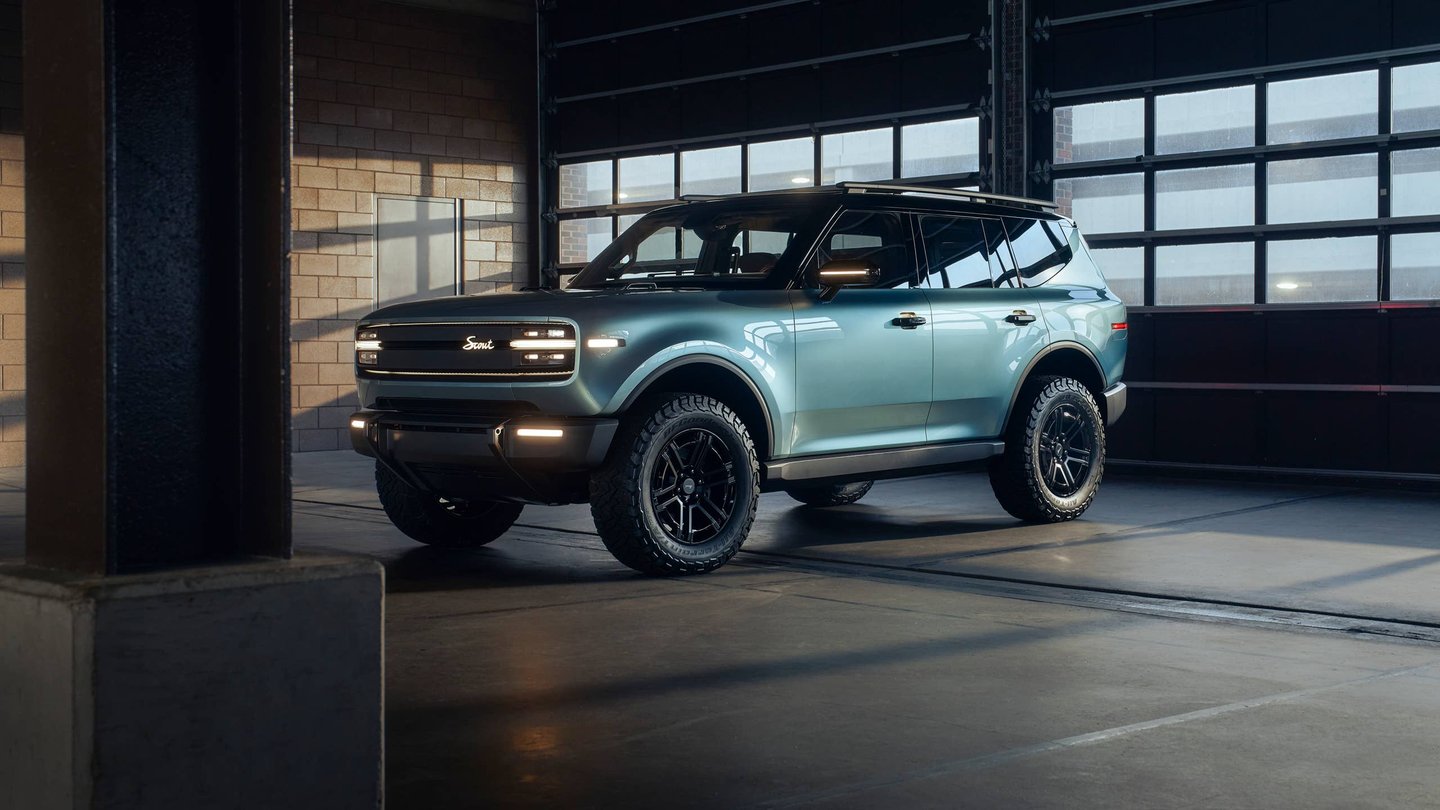
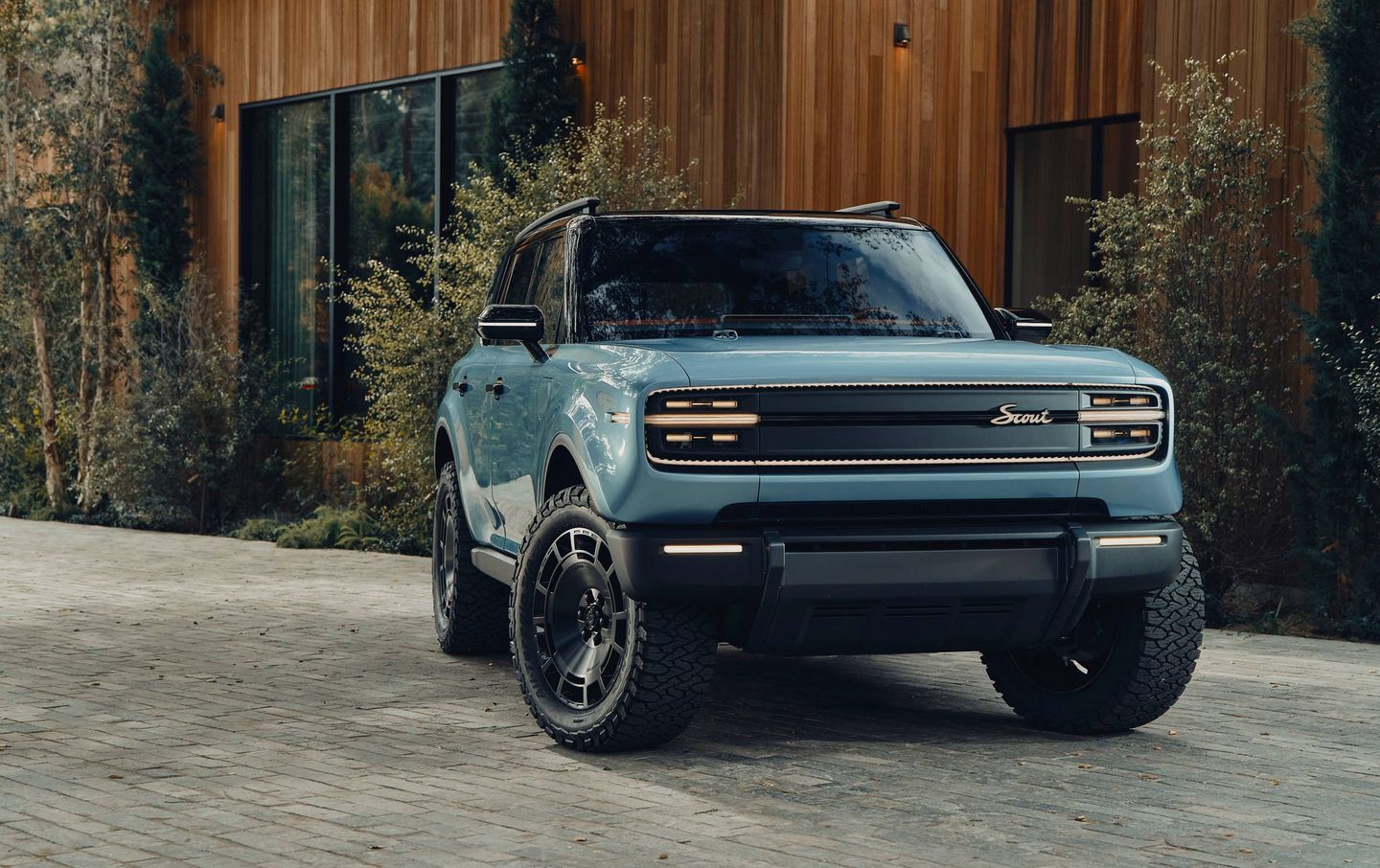
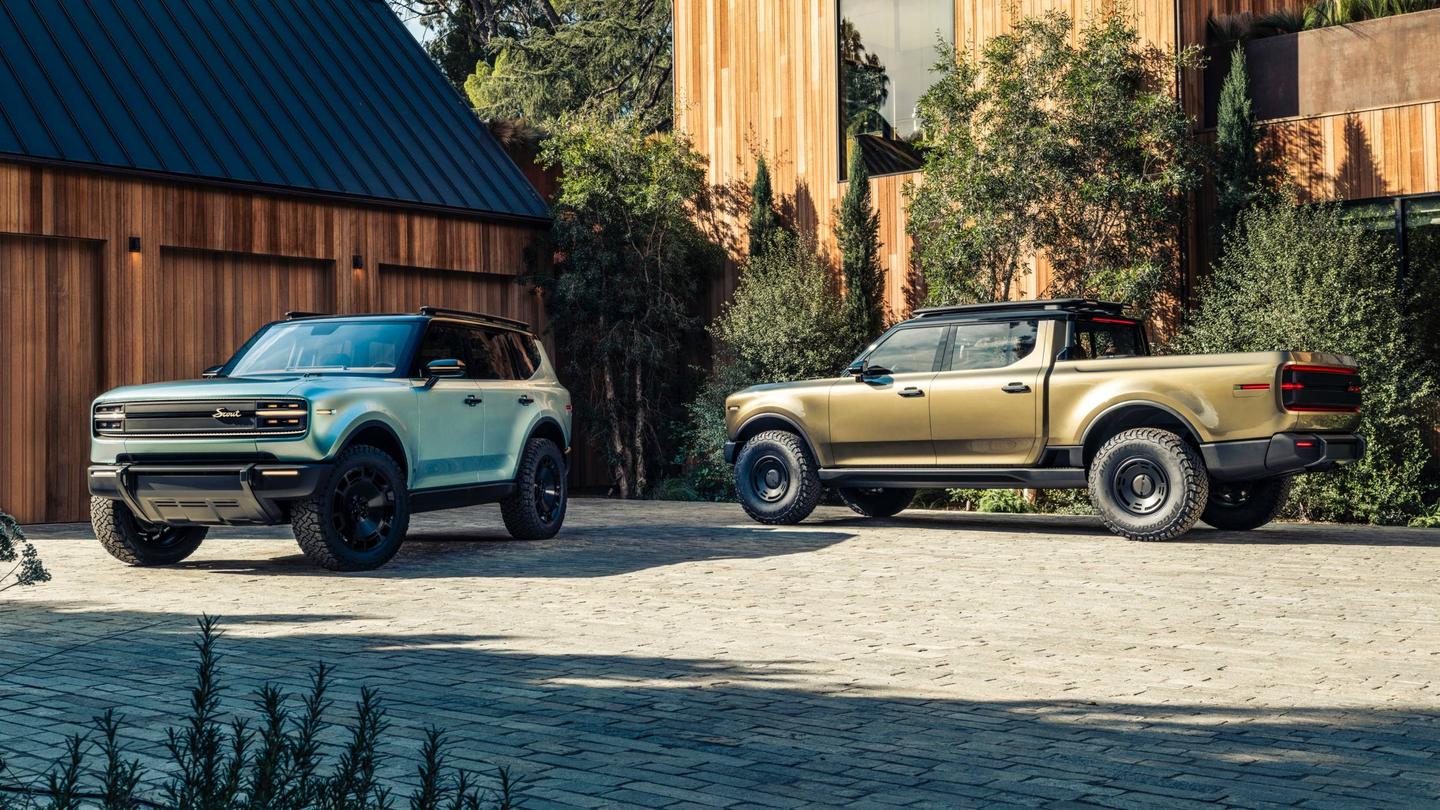
The Traveler’s silhouette comes straight from the original Scout, the International Harvester utility that ran from 1961 to 1980, with the same upright glasshouse, flat sides and short overhangs redrawn at modern scale.
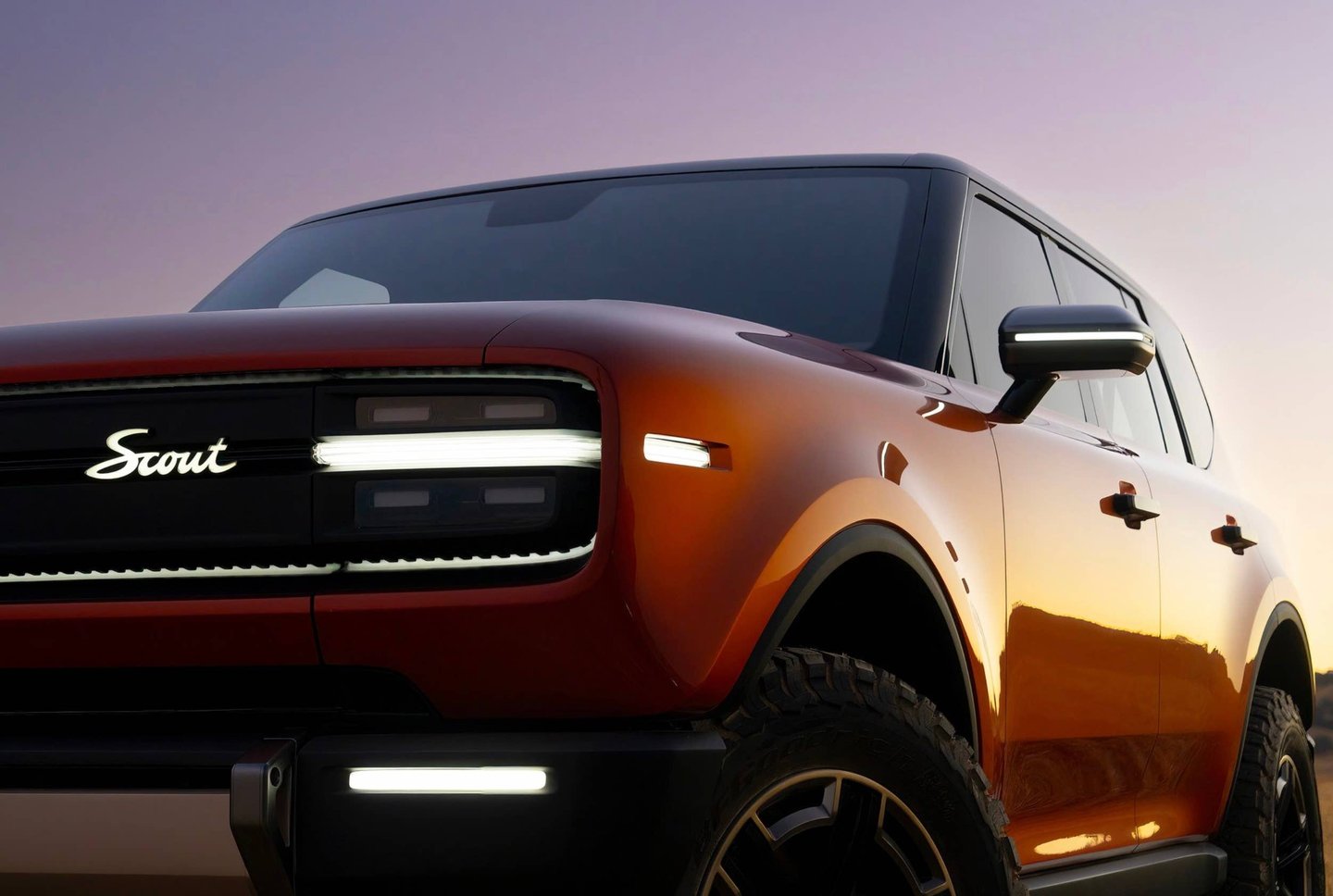
The face is a full-width black band with the Scout script lit in the middle and stacked light bars at each corner, set over a blunt bumper and a flat hood. The body rides on a body-on-frame platform, not a unibody. Scout describes the brief as keeping everything that made the original iconic and adding contemporary detail, and the proportions show it: tall glass, a vertical tail, short overhangs and tires pushed to the corners.
Scout offers the Traveler as a daily driver that heads off-course on Saturday, and the styling walks that line: finished enough for a school run, blunt enough for a trailhead. Nothing on the body apologizes for the size. The Traveler is a full-size SUV on a truck frame, drawn with the glass upright and the corners squared, and it wears that footprint openly.
A four-cylinder generator does the long miles
The Harvester powertrain pairs the electric motors with a naturally aspirated four-cylinder gasoline engine drawn from the Volkswagen Group portfolio, mounted at the rear and retuned to run as a generator. Scout hasn’t named the exact engine yet. The Harvester name reaches back to International Harvester, the farm-equipment company that built the original Scout, and Scout sells the gasoline hardware as a range tool rather than a powertrain in its own right.
“The specs of having something that’s 1,000 pound feet of torque, 800 horsepower, 500 miles of range, is a pretty phenomenal solution, and I think that’s why people are jumping there,” Keogh said.
Those are sports-car numbers in a truck frame.
Keogh puts electric-only running at about 150 miles before the engine starts, and total range at 500 miles, against a projected 350 miles for the pure electric Traveler. The sprint figure Scout published earlier still stands at about 3.5 seconds to 60 mph. Front and rear locking differentials and four-wheel drive carry the off-road side of the brief.
That split defines the Harvester: electric running for the daily miles, gasoline reach for the long ones, and no route planning around chargers in between.
The trade runs in both directions. The generator buys refueling at any gas station and 500 miles of reach, and it costs the simplicity of a battery-only truck, with an engine to service and fuel to carry.
Buyers have already voted for the setup. Scout counts more than 200,000 reservations across the Traveler and Terra pickup, and the range-extender models take the bulk of them.
The disclosure came as validation vehicles started working through the new South Carolina assembly line, a plant Scout built for these trucks outside Columbia.
Real knobs, an opening roof and seats in the front trunk
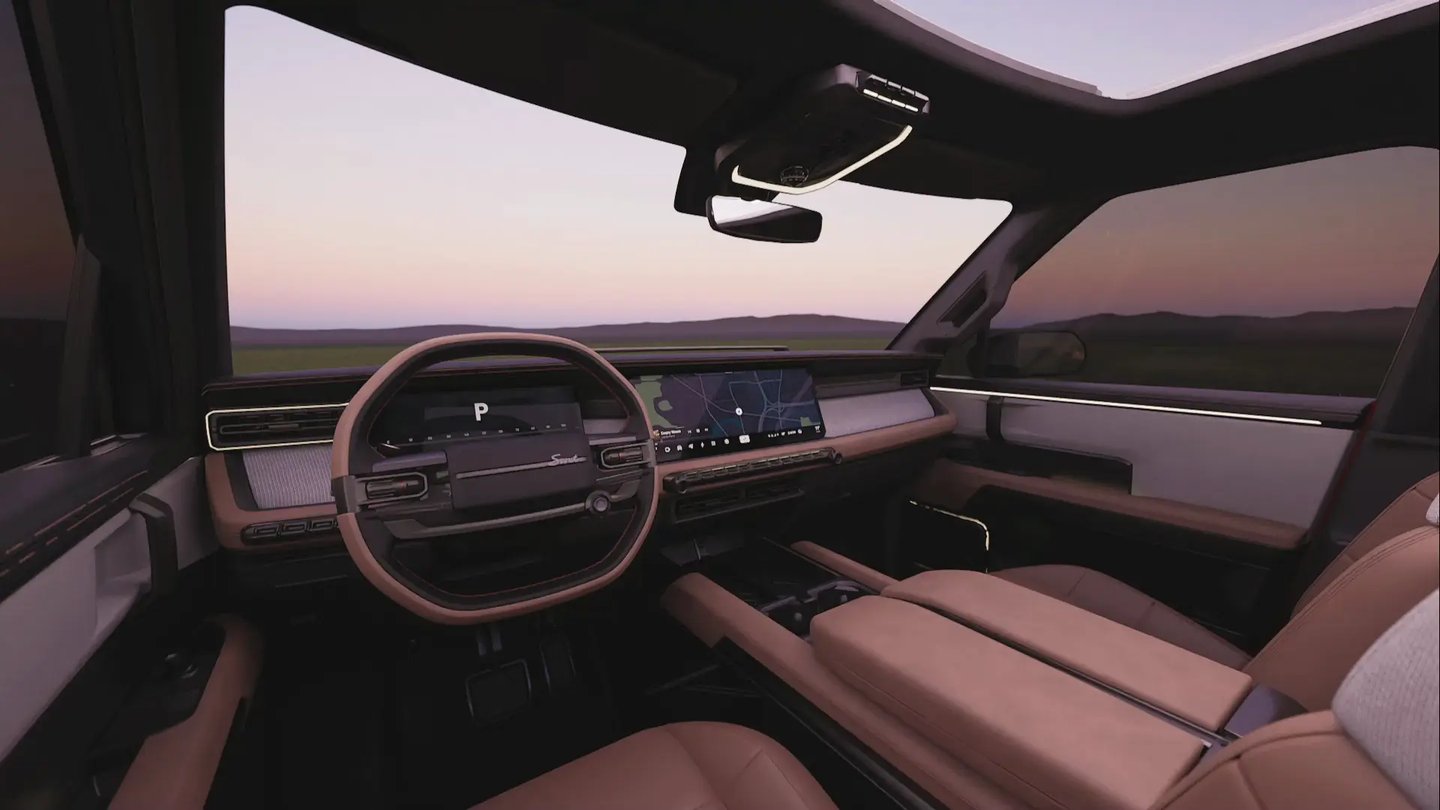
The cabin keeps real knobs and real buttons for its controls, a deliberate throwback Scout calls out by name, and the front trunk converts into seating at a campsite or tailgate. Scout kept the controls physical.
A retractable Cabana roof opens the cabin to the sky, a swing-out carrier moves the spare tire out of the cargo space, and the bench layout seats up to six. Cargo space runs generous behind the second row, with storage options spread around the cabin. A spare rides outside so the cargo floor stays flat and usable. The bench seat is a deliberate reach back to the original truck’s front bench.
Charging runs through a NACS port, with CCS stations reachable on an adapter, so the Traveler plugs into the same network as most new electric trucks in the United States.
Scout’s heritage pitch could have stopped at the badge, but the cabin and the hardware keep pulling the same thread: mechanical controls, a frame underneath, room for six people and their gear, and a roof that opens to the sky. The result is one vehicle, not a tribute act.
The cabin screen runs Scout’s Community UX, which lets the front passenger take over the display while the driver drives, and both trucks are engineered in Detroit and built in South Carolina. The Volkswagen Group’s manufacturing operation stands behind the plant.