

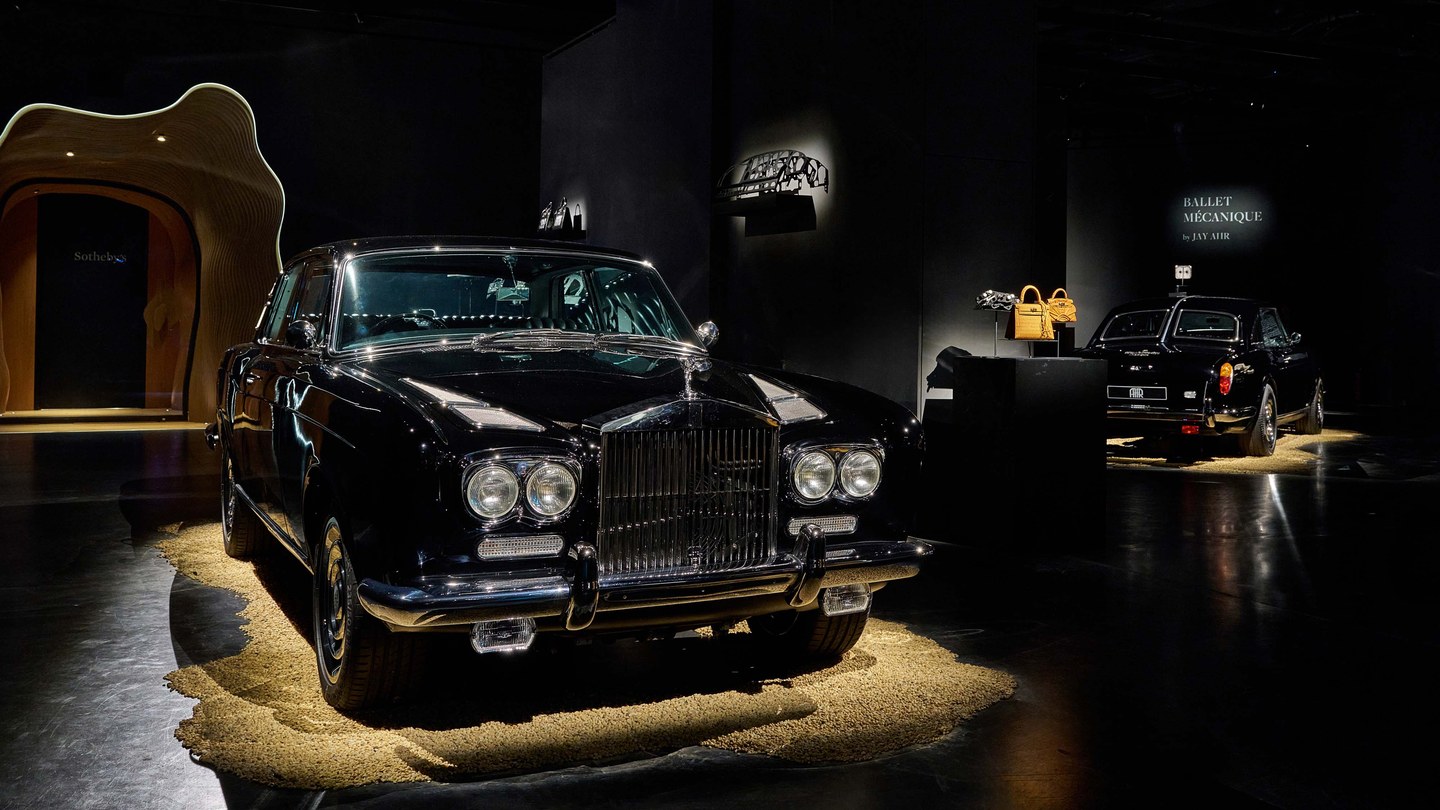
A Jay Ahr Corniche starts as a complete car and ends up as a catalog. More than 70,000 individual components come out of each Corniche Coupé before one goes back in.
Three of them are in Hong Kong through November 26. Ballet Mécanique, at Sotheby’s Maison in Landmark Chater, is the first major exhibition of Ahr’s automotive work, and the Corniches carry it.
The question the show answers is a real one. A Corniche was always a formal, handsome car. What happens when you rebuild it piece by piece, betting that the original design language was right and only the execution needs redoing?
The discipline is the whole ballgame. Ahr reshapes the car using its own design language: a split rear window, metal shark gills along the flanks, and a body that sits lower and sportier than anything Crewe shipped, so the result looks like a version Rolls-Royce could have built in a braver year.
That’s harder than it sounds. Restomods usually cheat with modern styling cues and call it contrast. Here the cockpit and body get remade end to end using only design features from the Corniche’s own period, so the car argues with itself and wins.
One car, a year of work
Each transformation takes over a year. Ahr built a dedicated workshop for the process, an atelier mécanique with master mechanics, engineers, artisans, and designers under one roof.
The car gets stripped to individual components. Each part is studied, catalogued, and then either restored, rebuilt, or replaced. The screws alone get counted, catalogued, and restored as a set.
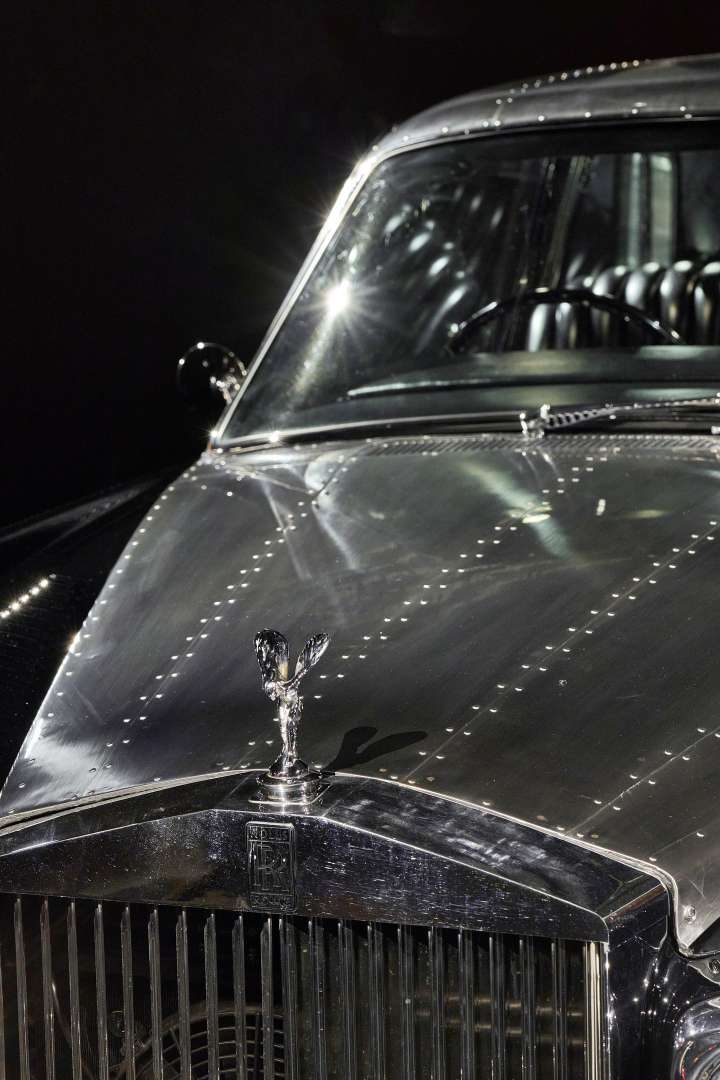
The collection behind the show runs to 72 Corniches. Sotheby’s brought three to Hong Kong.
Mechanical this time
Earlier Ahr transformations were aesthetic. These are the first with a mechanical transformation alongside the visual one, and the engine is where the argument gets interesting.
Sotheby’s lays out the fork plainly: each car either keeps its original engine, restored to pristine mechanical order, or takes a (re)engineered replacement built to the same brief, period-correct on the outside, modern where it counts.
What Sotheby’s doesn’t publish is an output figure, and none is printed here. That’s a limit worth stating, not a gap to fill with a guess.
The structural claim stands without it, though. A 1970s grand tourer rebuilt component by component, with a drivetrain you can specify two ways, is a different object from a restored original.
Coachbuilding used to mean a body on somebody else’s chassis. Ahr inverts the job: the chassis, the engine, and the body all get remade in one workshop, under one design language, over a year per car.
The room makes the argument
Ahr’s studio opened in Paris in 2005 with Jonathan Riss, and the duo’s practice is the through-line here: take an established design object and transform it from the inside out, with the new version still legible as the old one.
The exhibition borrows its name from Fernand Léger’s 1924 film Ballet Mécanique, a machine ballet in which pistons, wheels, and kitchen objects move to a mechanical score.
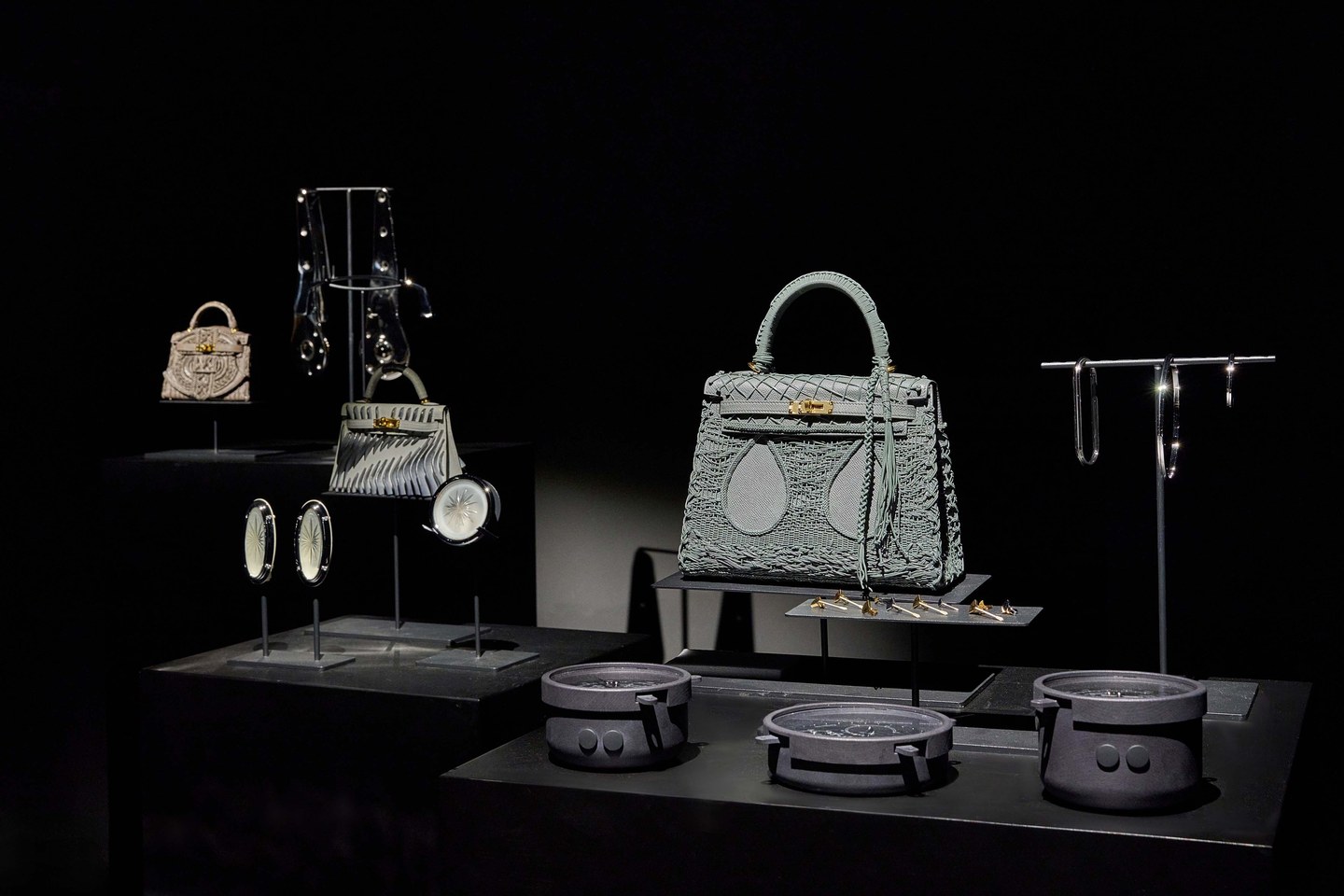
Around the cars sit more than 50 transformed objects. Vintage Hermès bags carry embroidery and appliqué, with one Kelly rebuilt from enamel and brass after a Ming dynasty vase in the Guimet Museum, and another series rebuilds the basket bag in woven leather cord after Japanese bamboo weaving.
A transformed Hermès Kelly bag stands as the clearest object in the room, a 1976 Decades piece in almost the same palette as the cars, and it proves the point the cars make at scale: heritage objects carry their own instruction manual, and transformation is a way of reading it aloud.
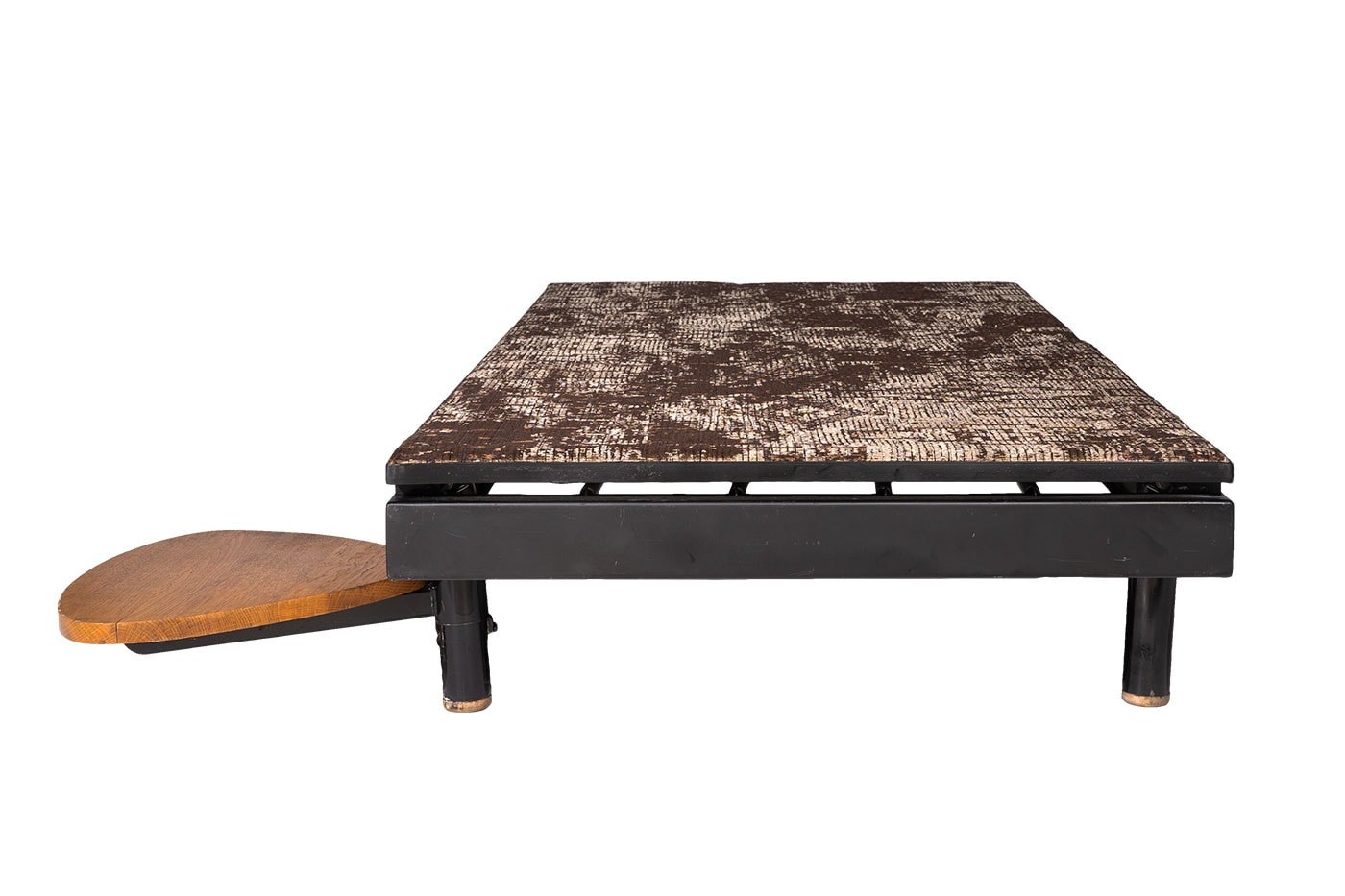
The Prouvé SCAL bed stands in as the other anchor: a 1950s industrial bed Ahr transformed into a sculptural object, and its presence next to a Corniche makes the project’s scope plain. A bed gets the same treatment as a car, and the same level of respect.
Nothing in the exhibition carries a printed price, and no figure for the cars is in any case public. The selling part works the way these rooms work: you ask, and the number comes back in a conversation.
Editor’s take
A Corniche is a formal object, all restraint and good manners, and Ahr’s workshop loosens the tie without touching the suit. The embroidery pulls one way, the mechanical rebuild pulls the other, and the car holds both without blinking. Three of them in one Hong Kong room, until November 26, make that point better than any single car could on its own.


