

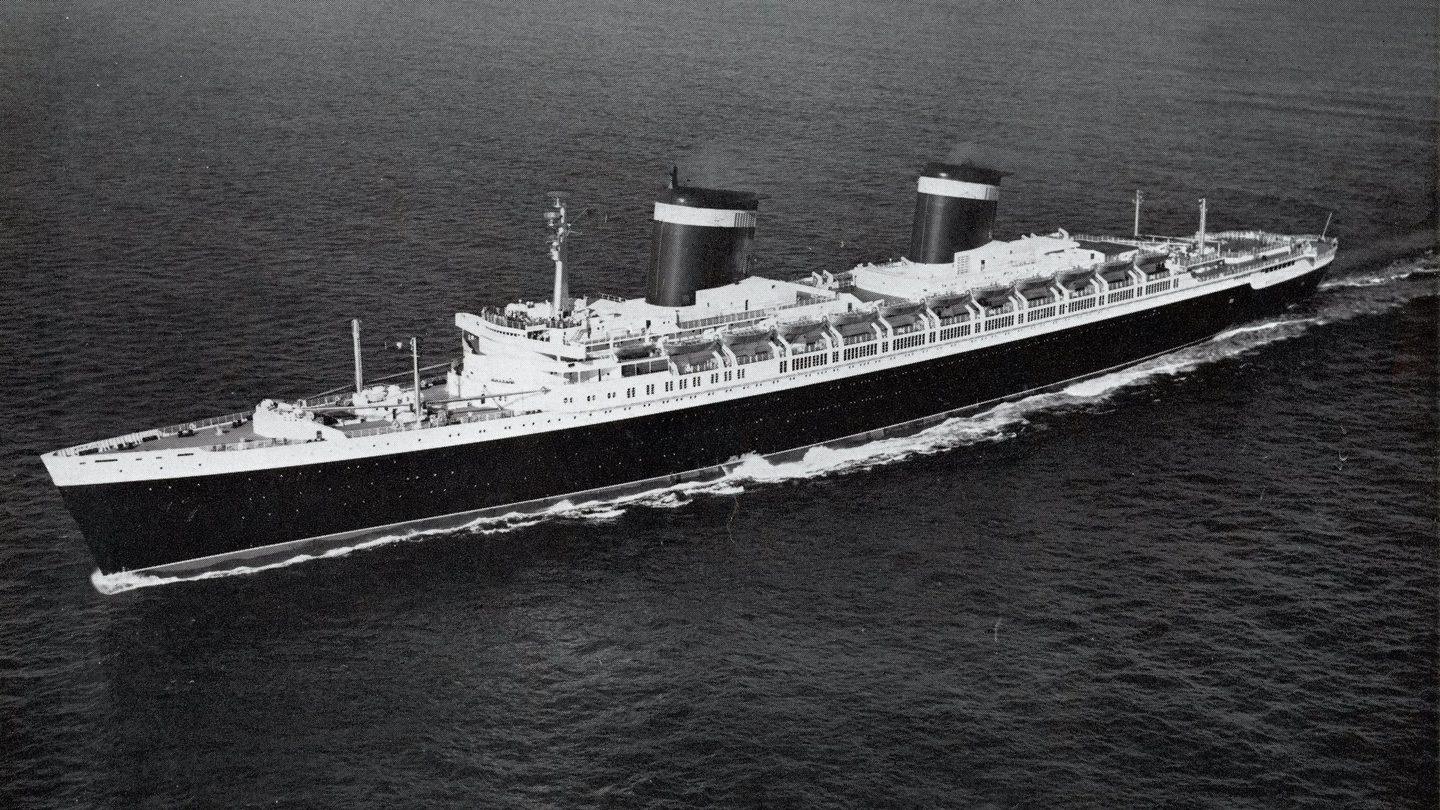
I keep coming back to the sheer nerve of it. A 990-foot ocean liner, built to outrun every passenger ship on the Atlantic, now sits upright on the Gulf floor, and divers can swim her upper decks.
She went down on Veterans Day, and she went down slowly, on purpose, in front of everyone who still loves her.
For years I’d filed her under lost causes, a rusting silhouette at a dock with a devoted fan club and no real future.
That filing was wrong.
Her future just turned out to be underwater, upright, and open to visitors with tanks on their backs, swimming decks that once crossed an ocean in three days.
She fought the sinking for hours
Okaloosa County moved the deployment up a day, from November 12 to November 11, because heavy winds and unsafe conditions were forecast for the original date. The sendoff ceremony planned for that afternoon was canceled, and the work went ahead without the speeches.
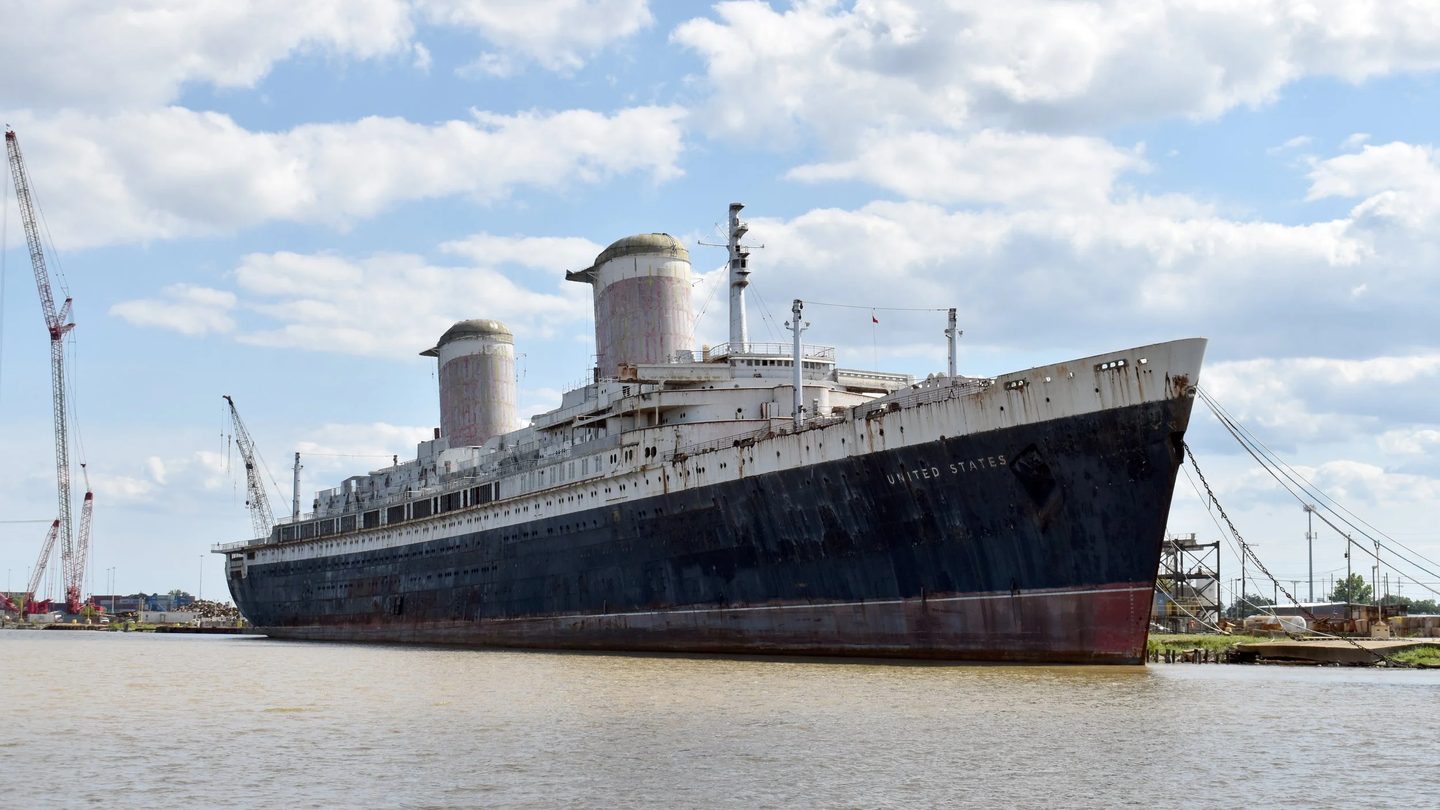
Tugs had brought her out of Mobile, Alabama, on the morning of November 9, ending a preparation stay that followed her long tow south from Philadelphia, where she’d sat for nearly three decades.
No speeches, no band, no fuss.
Crews sank her the slow way. Valves opened, seawater moved through the ship’s own intake pipes into her tanks, and no explosives were used at any point in the operation.
She’d been designed to be unsinkable, and she spent her final afternoon testing that reputation, staying afloat for seven hours and nineteen minutes after flooding began before she finally slipped under just before 10 p.m. Eastern.
Seven hours. For a farewell.
County crews kept filling additional tanks to steady her, because an upright landing was the job that counted, and a liner settling on her side would’ve given divers a wall instead of a ship with decks to swim.
The patience paid off in full. Sonar and a remotely operated vehicle checked her position afterward and confirmed she’d landed upright, within feet of her target spot, and the first divers down proved it.
The record she set in 1952 never moved
Ask anyone who sailed her and you’ll hear about the speed first, before the dining rooms, before the movie stars, before anything else about life on board.
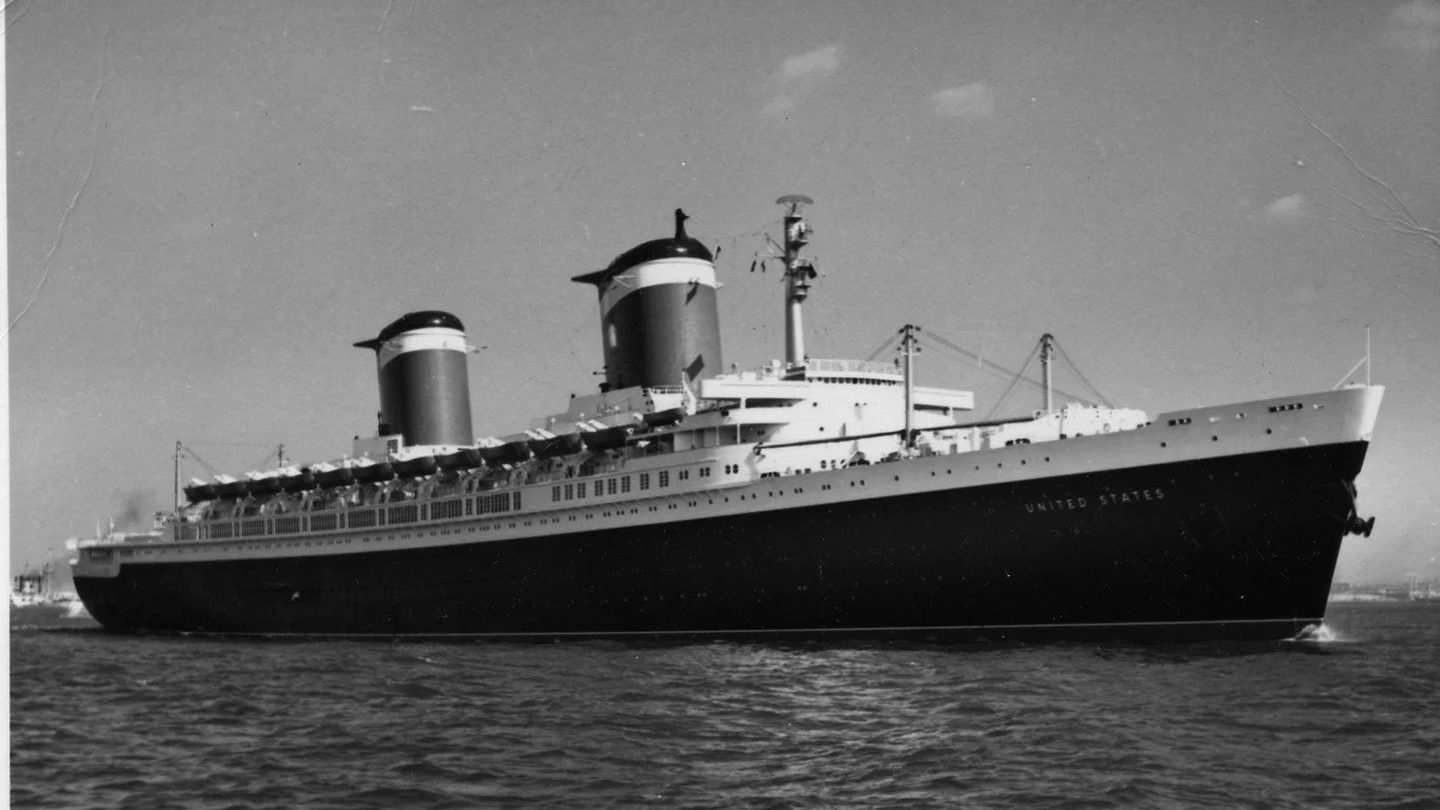
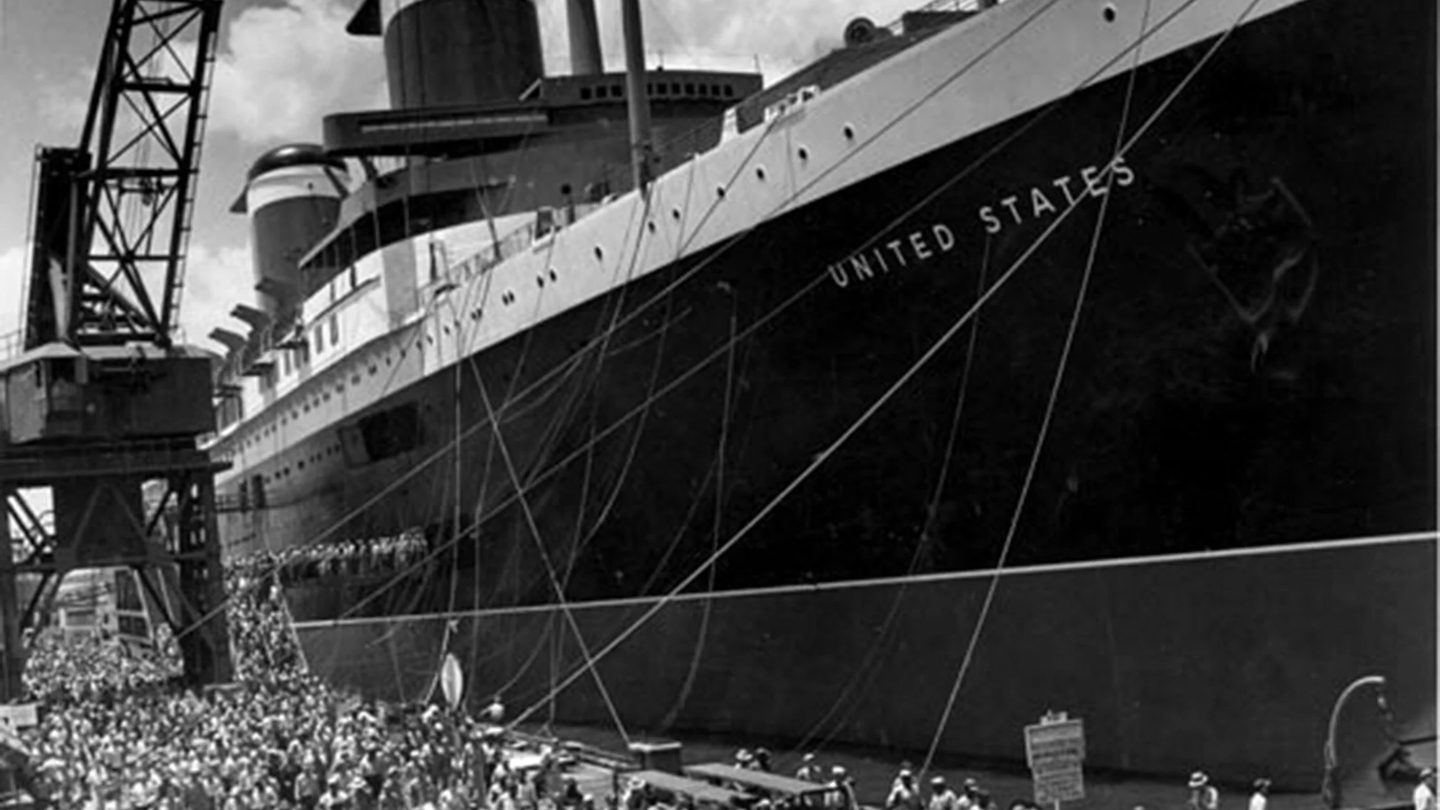
She debuted in 1952 and smashed the transatlantic speed record on her maiden voyage, crossing in three days, ten hours and forty minutes at an average of 35.59 knots, and she took the westbound record on the way home too.
Records in shipping usually fall within a generation, as engines improve and hulls get slipperier with every design cycle that follows the last one. Hers never fell, and the county’s own deployment release still calls her the fastest ocean liner, with the record set in 1952, standing today. We don’t build ambitions like hers anymore, because she was drawn to win a race that airlines were already ending.
She left service in 1969. Jets had taken her passengers, and the fastest hull on the Atlantic spent the next five decades tied up, passed between owners, and waiting for somebody with a plan and the money to match it.
Thousands of hands built her in a dry dock
Her keel went down on February 8, 1950, at Newport News in Virginia, and she became the first major liner built in a dry dock.
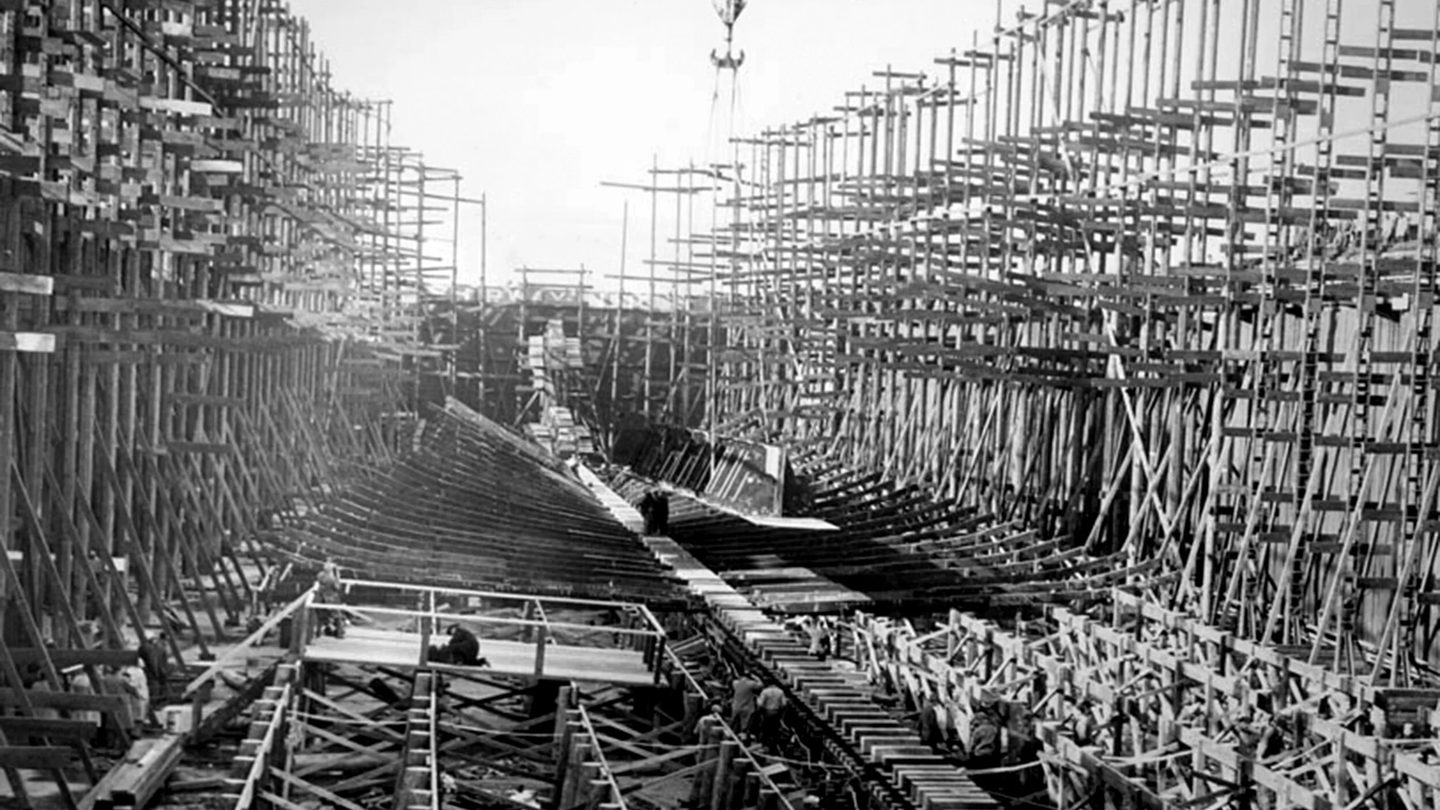
Designer William Francis Gibbs had chased this ship for decades. He wanted the fastest liner afloat, built to Navy standards, with strict compartmentalization against flooding and two engine rooms, so one could keep her moving if the other failed.
More than 3,100 shipyard workers took her from keel laying to delivery in two years and three months, and her parts and components came from every state in the nation.
Her superstructure was built entirely in aluminum to keep her weight down. Lightness was speed, and speed was the mission she’d been drawn for from the first sketch.
Then come those funnels.
At 65 feet, they’re the tallest ever installed on a ship, as tall as a six-story building. They’re raked backward so the whole ship looks fast even standing still at a pier, red, white and blue against any sky.
Her funnels stay on land while divers take the decks
Here’s the part I love most about this ending. Her two funnels came off before the tow, and they’ll anchor the Conservancy’s land-based museum in Okaloosa County, telling her story to people who’ll never put on a dive tank. They’ll never feel Gulf water at 60 feet, and they still deserve their hour with the fastest liner America ever sent to sea.
The Conservancy spent years trying to save her as a floating attraction, and it partnered with the county that bought her in 2024. You can call that a compromise. I’d call it the first plan that actually floated, even if the ship herself no longer does.
Down below, the numbers give divers a ship split in two. She rests in about 180 feet of water, with her uppermost deck about 60 feet down.
The bottom is technical territory. The sand, the lower hull, and the full 990 feet of her reward divers with the training and gas planning a 180-foot site demands.
That split is the gift of this site.
She joins more than 580 artificial reef sites around Destin-Fort Walton Beach, at coordinates 30° 07.148′ N, 86° 46.755′ W, and she dwarfs every one of them by a margin that isn’t close.
Researchers will watch what happens next, season after season, as the reef stops being a shipwreck story and starts being an ecosystem with a famous address. Teams from Woods Hole Oceanographic Institution, Dauphin Island Sea Lab and Louisiana State University will monitor the biological, physical and chemical changes as marine life moves in and claims the steel.
The county says the project was fully funded by tourism revenue and partner contributions, and the return it’s buying is a reef that gives the local fishery a home and the dive calendar a headline.
So here’s my call, and I’ll stand by it. If you dive, go, start with her upper decks, and work down only as your training truly allows. If you don’t dive, go anyway, and stand in front of those funnels at the museum.
Look up.
Either way, you’re visiting the fastest liner ever launched, and she’s still setting records, down on the bottom of the Gulf.


