

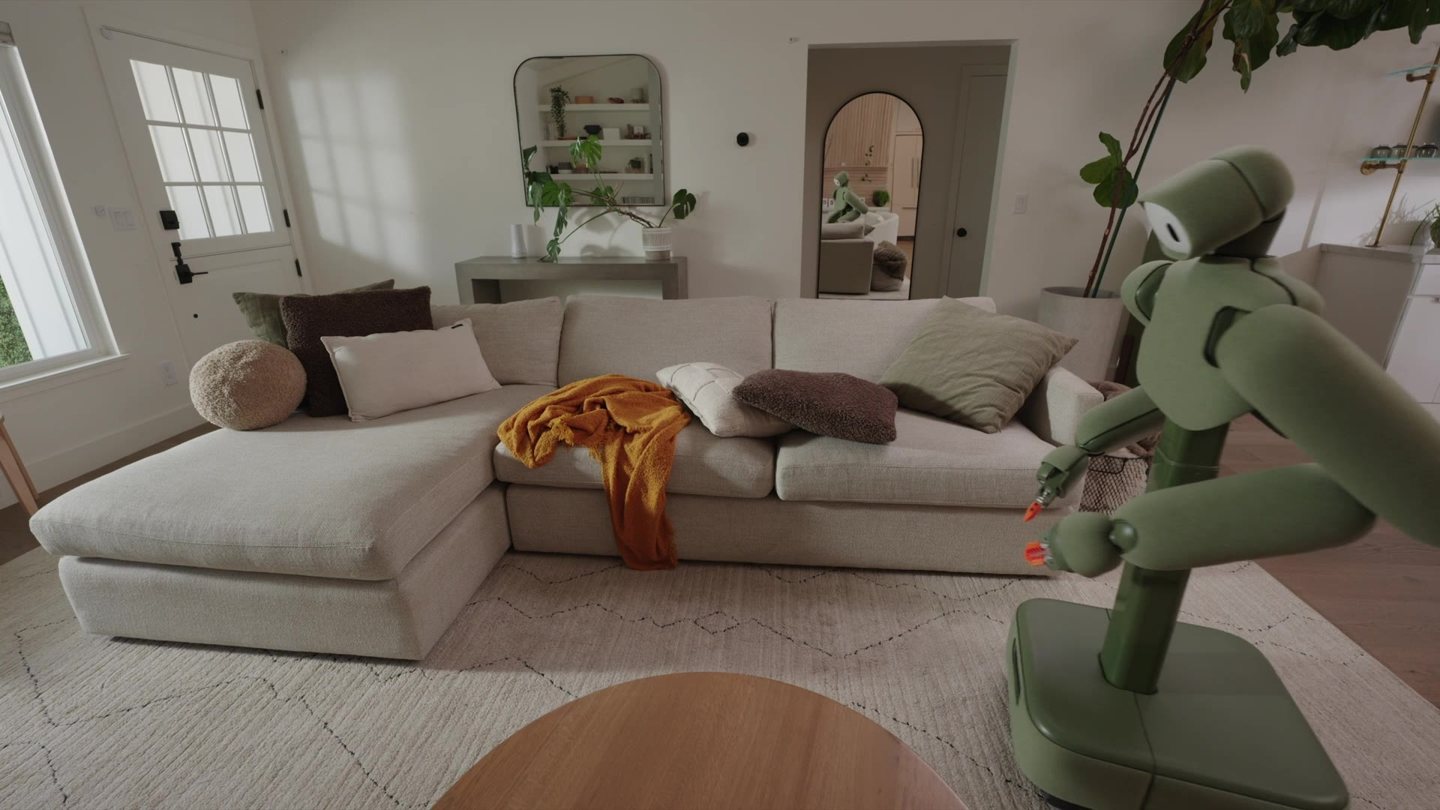
Soft fabric shells wrap a solid frame on Isaac 1, Weave Robotics’ mobile home robot. It’s a wheeled machine that rises to human height for laundry and tidying work, then folds down to three feet when the day’s tasks end.
Weave designed and built the robot in San Francisco, its own actuators, remote actuation system and safety systems included, and priced it at $7,999 upfront or $449 a month on subscription, with first shipments listed for fall 2026 in California and broader United States availability following through 2027.
Designed to look settled, not parked
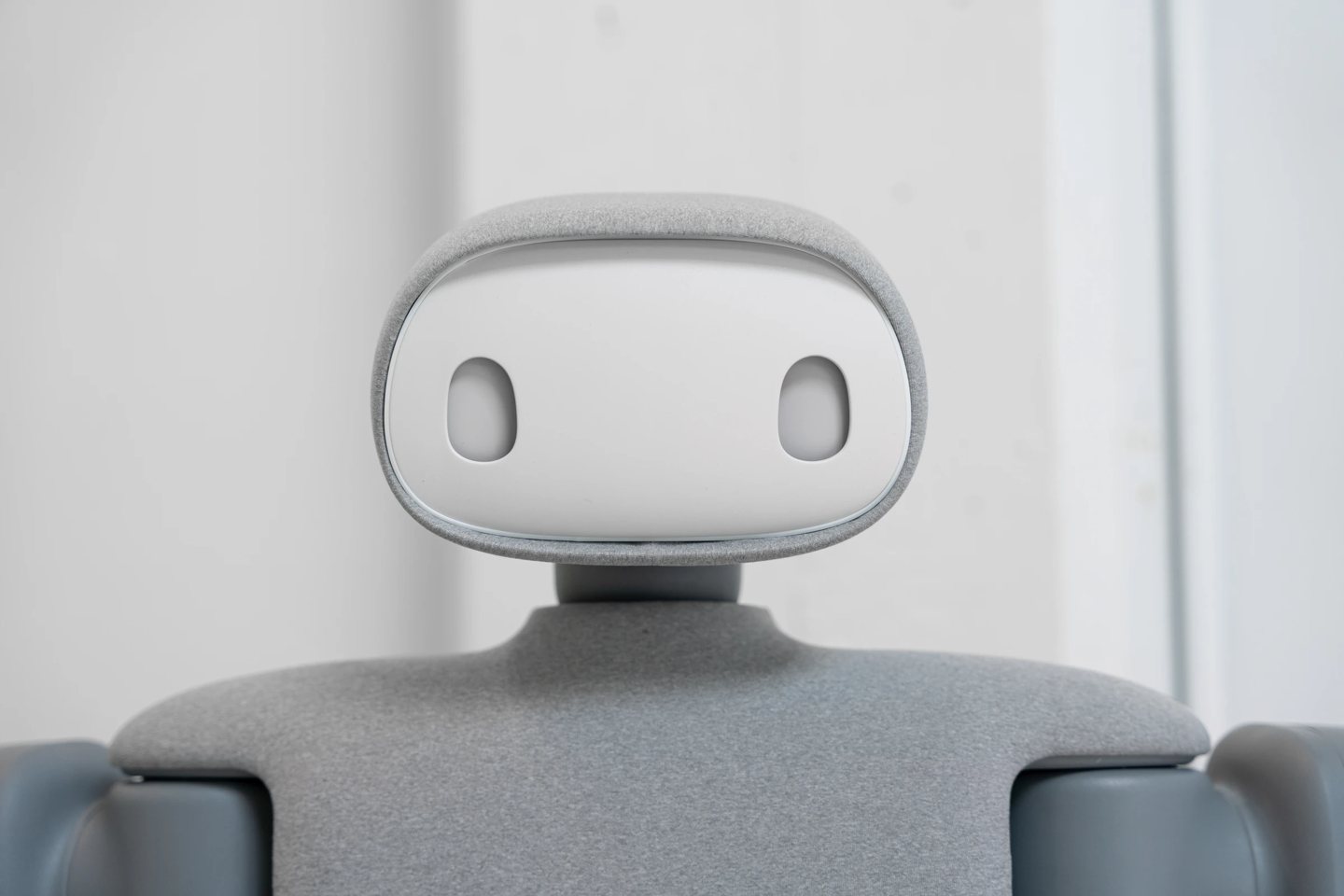
Shells come off and swap, so the robot’s fabric panels can change with the room, and the soft exterior works as passive safety anywhere the machine meets furniture or people.

Engineering stayed in-house to a degree rivals rarely attempt, since Weave designed its own actuators, its remote actuation system and its safety systems alongside the robot itself, betting that a home machine needs every layer built for domestic rooms rather than adapted from factory equipment.
Sage leads the maker’s own presentation of the shells, a soft green that sits comfortably against plants, linen and pale wood.
Height solves the storage problem at home.
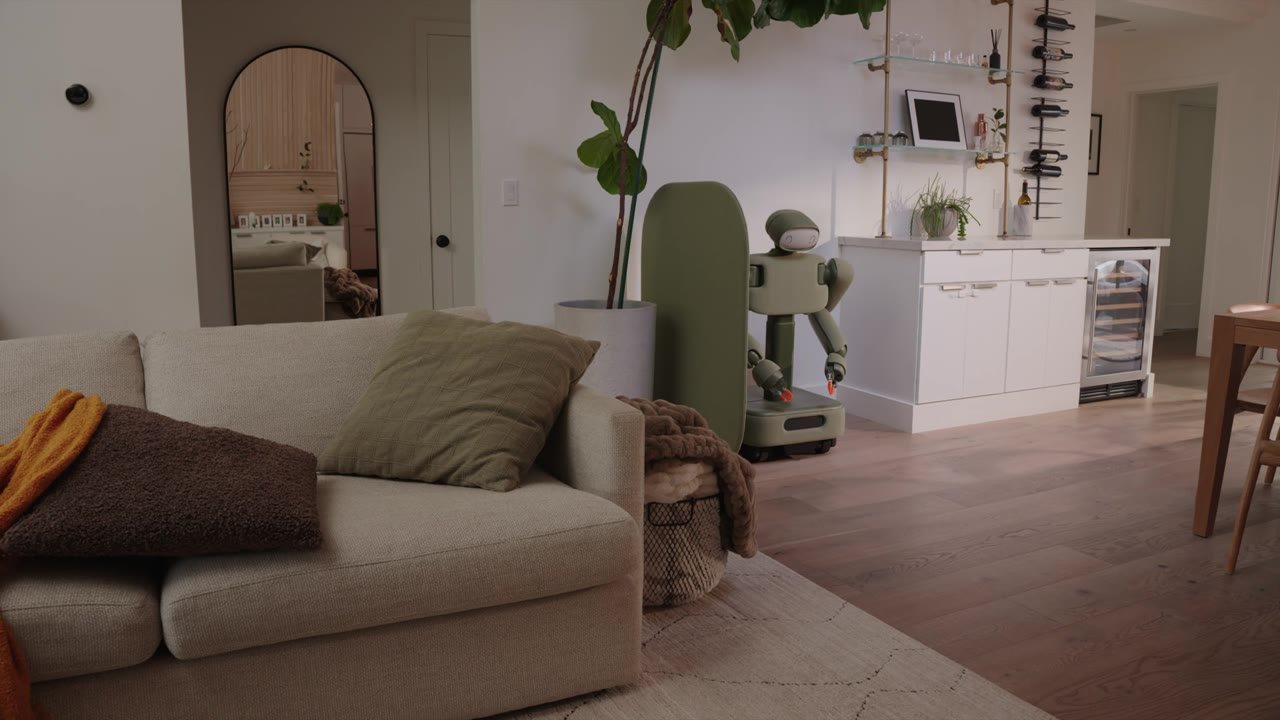
Collapsible torso mechanics let Isaac 1 extend to five feet nine inches for shelves, hampers and wardrobe rails, then settle at three feet, out of sight and out of mind in Weave’s phrase, tucked behind furniture rather than standing on display in a hallway between jobs.
Wheeled base keeps the machine passively stable as it works, a deliberate trade against walking legs, and privacy is designed into the hardware, with physical cues that make clear when Isaac 1 is working and when it’s idle, so a glance across the room reads the robot’s state. The result is a machine that passes for furniture first and equipment second, which is precisely the disguise a home robot needs.
Footprint measures 20.5 by 22 inches, vertical reach runs 80 inches and horizontal reach 38 inches, dimensions that fit the robot through domestic doorways and up to standard shelving without asking the house to change around it, and the whole machine carries 21 degrees of freedom across neck, arms, hands, torso and base.
Laundry flow and the daily reset
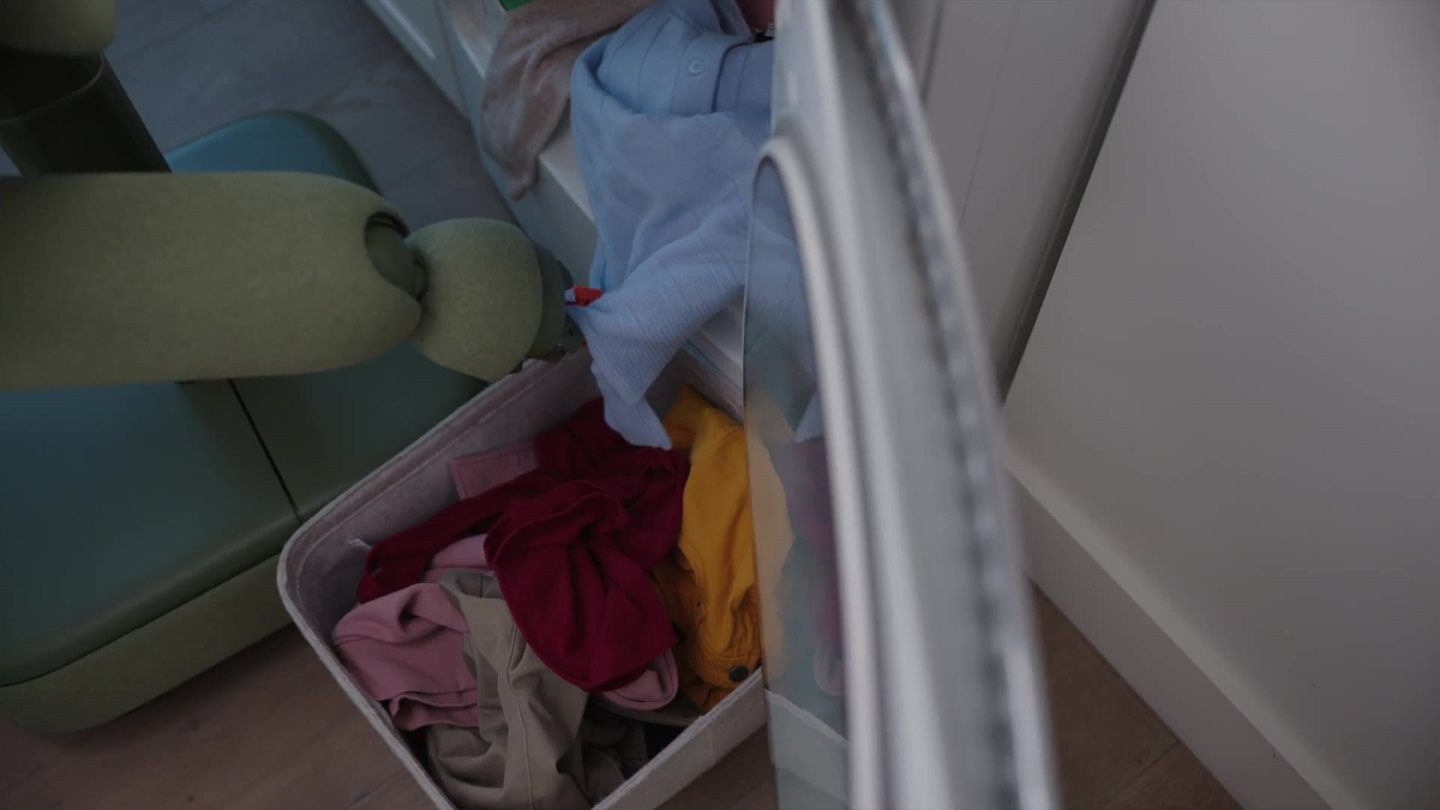
Laundry Flow covers the basket cycle in Weave’s description, finding and picking up dirty clothes, handling loaded hampers, folding garments and putting them away, with loading and unloading a washer and dryer possible in some homes depending on the layout of the laundry space.
Daily Reset handles the rest of the visible mess, room by room.
Beds get made, pillows and blankets get fixed, and toys, shoes and general clutter return to their places, the two routines defining what the robot sells at launch, narrow on purpose, since Weave built its name on a stationary laundry folder already working in California homes and businesses.
Autonomy is the default, with teleoperation stepping in when a task stalls, so a remote operator finishes jobs the robot can’t complete alone.
Control runs through a companion app, on demand or at a scheduled time, from home or away, and Weave states the robot works within those windows, while battery life is listed at eight hours with a two hour charge time in the maker’s specification table. Battery life is listed at eight hours with a two hour charge time in the maker’s specification table, figures that cover a full day of scheduled routines between charges.
Preorder terms and the real trade
Ordering takes a $250 deposit that Weave describes as fully refundable at any time until the robot ships, securing a place in line ahead of California deliveries, and buyers get a demonstration, in person at a Weave location or over a video call, before taking delivery of the machine.
Subscription changes the maths of ownership completely.
Deposits stay refundable until shipment, which keeps the early order a reservation rather than a wager on unfinished hardware.
Timing carries risk either way, since early buyers fund a production ramp while later buyers inherit the lessons, and Weave’s fall 2026 California start, widening through 2027, tells households outside the state exactly how long their wait could run.
At $449 a month, a year of Isaac 1 costs $5,388 without equity building in the machine, while the $7,999 upfront route suits households certain the laundry and tidying routines earn their floor space every week, and an optional premium membership adds a further monthly layer for those who want it.
Tradeoff sits in the assistance model, since a robot that calls a remote operator when stuck finishes more tasks, though that help means a person may see into the home through its cameras.
Buy Isaac 1 at $7,999 if laundry and daily tidying are the two chores worth automating first and California timing fits the household, and wait if walking legs or a long delivery record outweigh an early place in line for a machine still proving itself in real homes. Early adopters are buying the routine, not the robot, and the routine is the part that has to work every day.


