

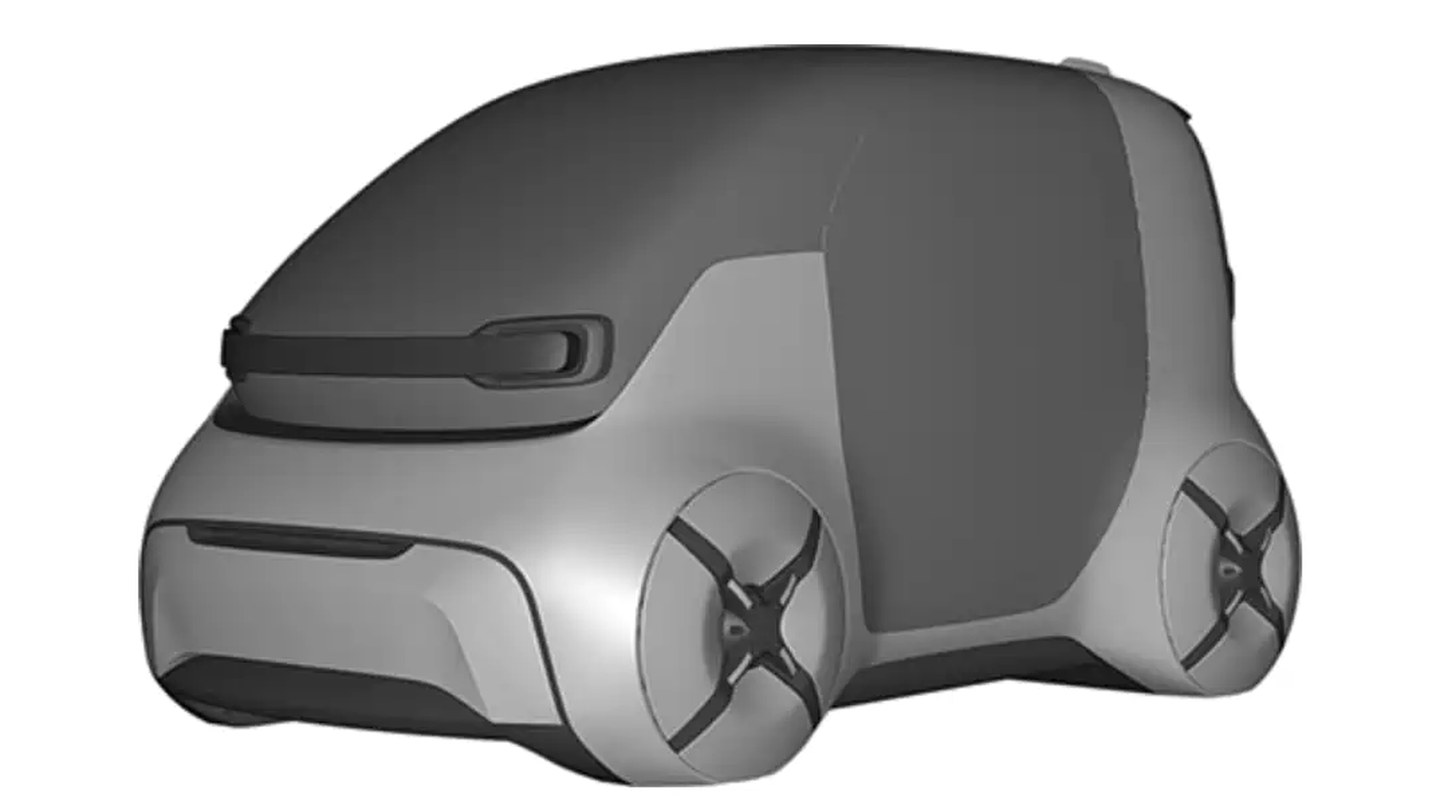
China’s patent office published the drawings today: a rounded one-box two-door, a smiling face at both ends, and Wolfgang Egger’s name at the top of the designer list. It’s the smallest shape BYD has ever put its name to, a microcar sitting a full class below the Seagull, and it exists only as lines on paper at the China National Intellectual Property Administration, published for anyone to read.
There’s no name on it, no powertrain, no dimensions, no price, and no production promise attached to it either.
The application was filed in December 2025 and published on November 10. A design patent protects how a car looks rather than how it works, which is why the document runs to drawings and stops there: no engineering, no specifications, nothing to drive.
One box, drawn in profile
The silhouette does the heavy lifting. One rounded volume runs from nose to tail with a short front overhang, a low waistline, and the tail cut nearly vertical. There’s no hood to speak of and no trunk either; the glass starts where a hood would end. The wheels sit pushed out toward the corners, each one fully enclosed behind a smooth cover with an X worked into its face, more plug cap than wheel, drawn tight to the body.
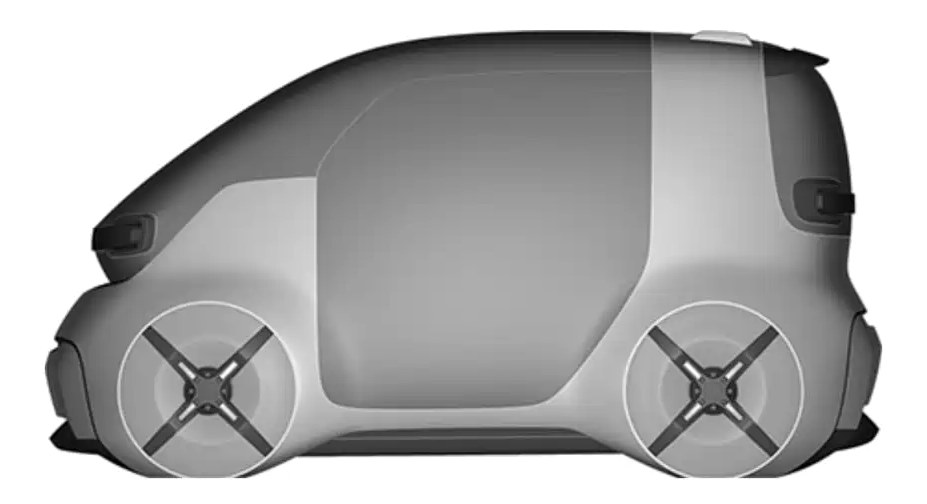
Each side gets one large door, and its opening is drawn as a single D-shaped outline that dominates the flank. The handle sits flush, the windows are frameless, and the beltline rises behind them into a dark glasshouse that reads almost like a helmet visor in profile.
A triangular cutout pierces the rear side window up by the C-pillar. The charging port sits on the right flank, and a small sensor pod rides on the roof.
It sits low, too. The ground clearance is minimal, the sill tucked close to the road, and the whole stance is urban rather than adventurous. Nothing in the proportions pretends it wants to leave the city.
The back answers the front
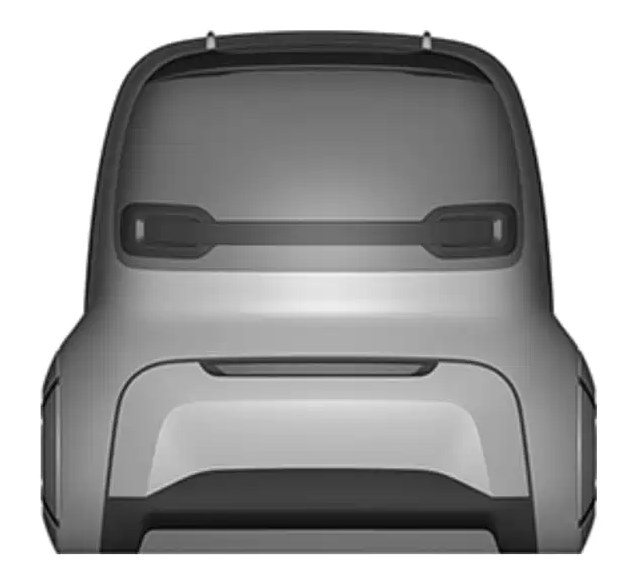
Walk around it and the rear repeats the nose almost line for line. A full-width dark trim panel spans the tail, carrying a small through-light and the same oval lamp shape that finishes the front strip, set over a large lower air intake and a simple, tall bumper.
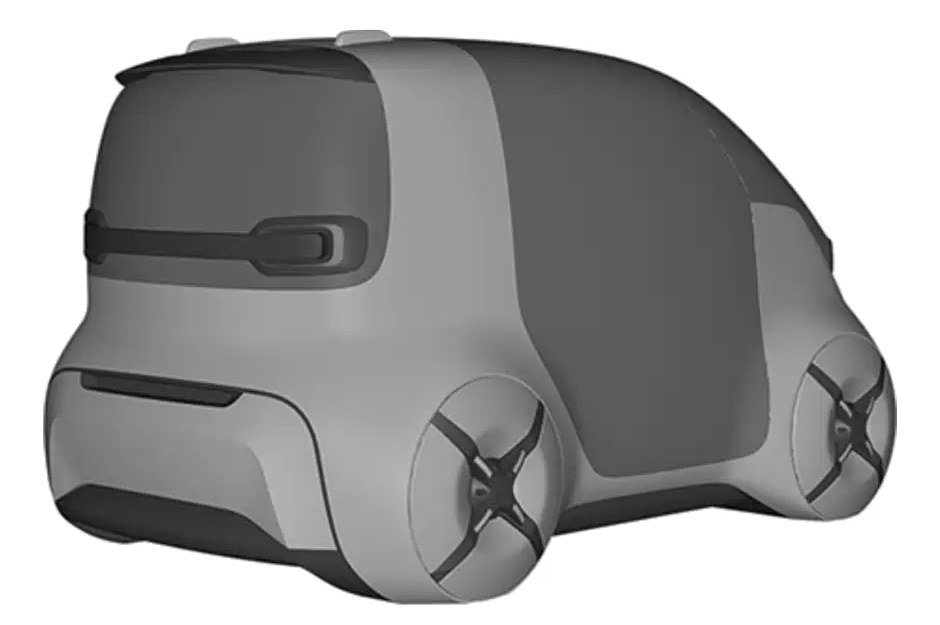
Up front, the lighting runs as one slim horizontal strip across nearly the full width of the nose, an oval lamp at each end. The face is closed off and built in two layers above that tall front bumper, and the symmetry between the two ends is deliberate: a smiling face at the front, another at the back. There’s no grille badge, no chrome, nothing else competing for the eye.
The closed face changes the styling math on a car this size. With no grille opening to work around, the light strip does the talking.
Glass from windscreen to tailgate
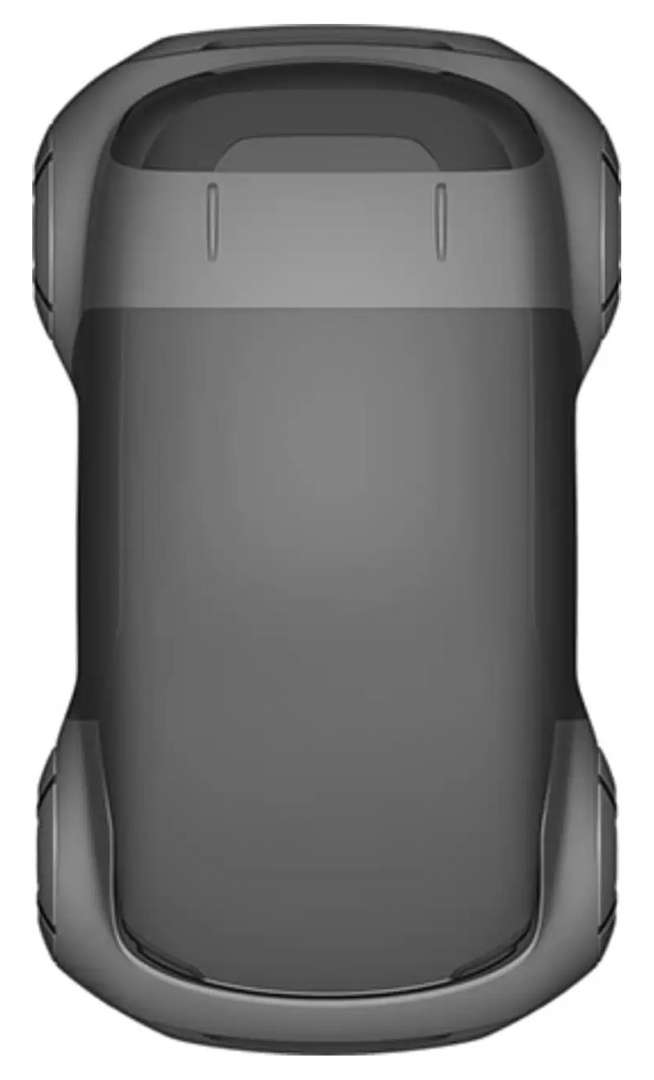
From directly above, the upper body becomes one near-continuous sheet of glass running from the windscreen to the tailgate, with no visible break at the pillars. It’s the view that makes the little car look least like a toy and most like a piece of industrial design, a tinted bubble set into a rounded body.
Inside, the filing goes quiet. The drawings show a steering wheel and pedals, and that’s the extent of it.
No cabin design, no screen, no seats worth describing exist in this document. Whatever BYD imagines for the interior either isn’t ready yet or isn’t something the company wants protected, and either way the patent shows no interior design at all.
Egger’s résumé is what lifts this out of the patent-office pile. He ran design at Alfa Romeo, then headed Audi Group design with Lamborghini under the same roof, before joining BYD in 2017 and leading the teams behind the Seagull hatchback and the Han sedan. The man behind Dragon Face and Ocean Aesthetics has now put his name on the smallest canvas BYD has ever filed.
BYD has never sold a microcar. The Seagull, its smallest car, launched in April 2023 at about $9,600 and sold 28,633 units in China this October, clear of Wuling’s Bingo at 21,020 and Changan’s Lumin at 17,098. This design sits a class below it, in a segment BYD has watched rivals feed on. One co-designer, Zhao Binggen, runs BYD’s Dynasty Research Institute, a hint at where the shape would live in the range.
A design patent is a promise to nobody. It protects the shape if BYD builds it, costs little if it never does, and plenty of filings like it die in the drawer.
What this one proves is narrower and still interesting. The world’s largest EV maker, fresh off its 19 millionth NEV, is spending its chief designer’s time on a two-door smaller than anything it sells. If the shape ever gets a name, a motor, and a price, it’ll be worth meeting in person someday.


