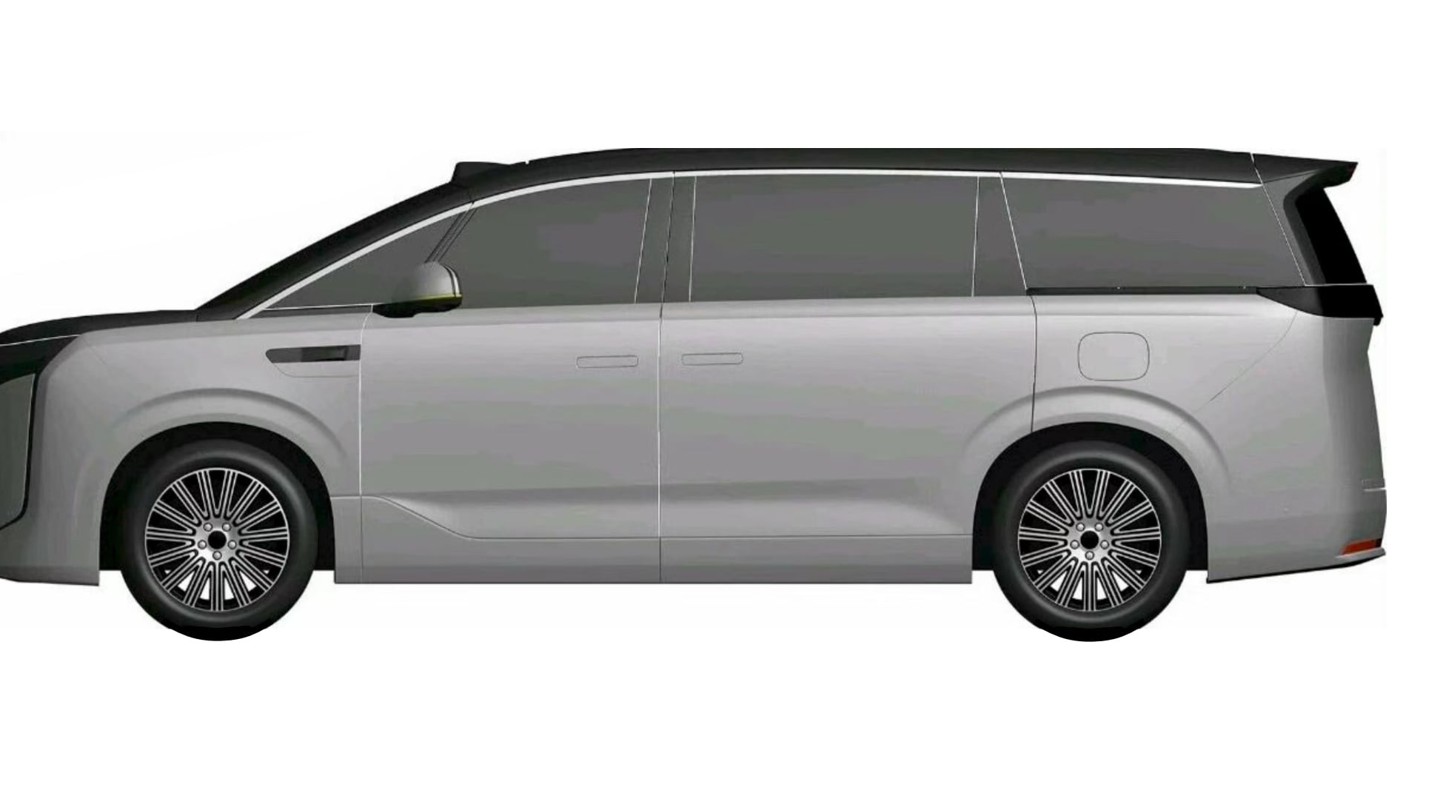
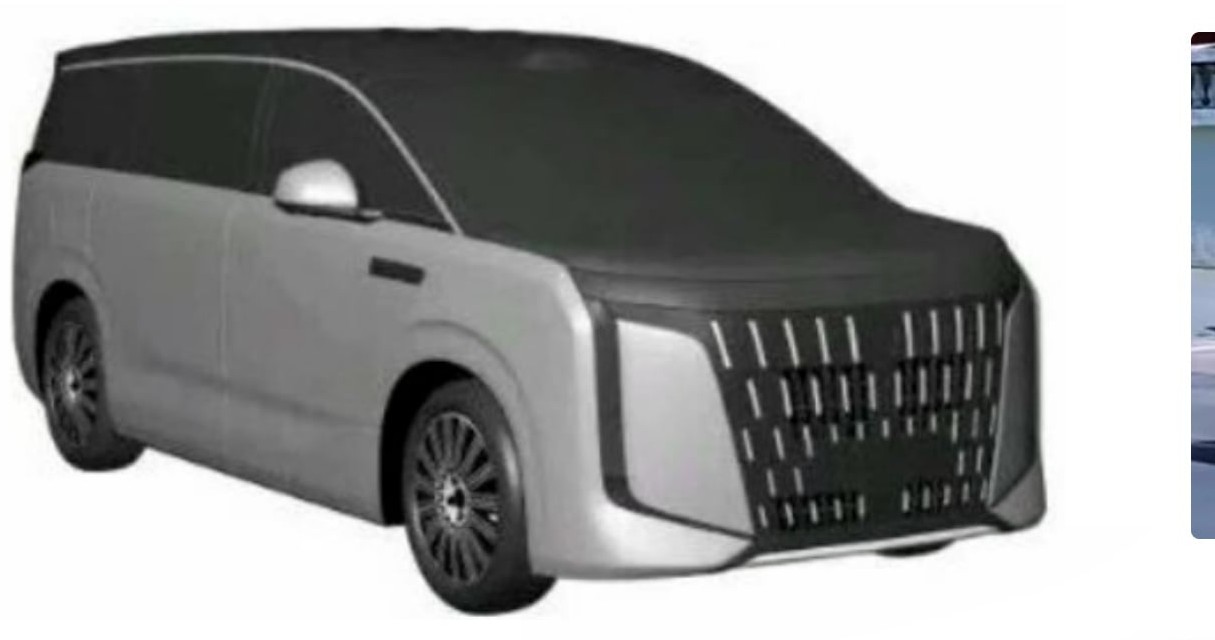
The Denza D9 is already a big van, 5,250 mm long on a 3,110 mm wheelbase, and BYD is making a longer one. A design patent published by China’s National Intellectual Property Administration on November 10 lays out a stretched D9 in full, front three-quarter, side profile and all, with BYD design chief Wolfgang Egger named among its creators.
Denza is BYD’s premium marque, founded in 2010 and built on the idea that a Chinese van could out-luxe the Japanese and German names that owned the chauffeur business. The D9 is the car that proved the point.
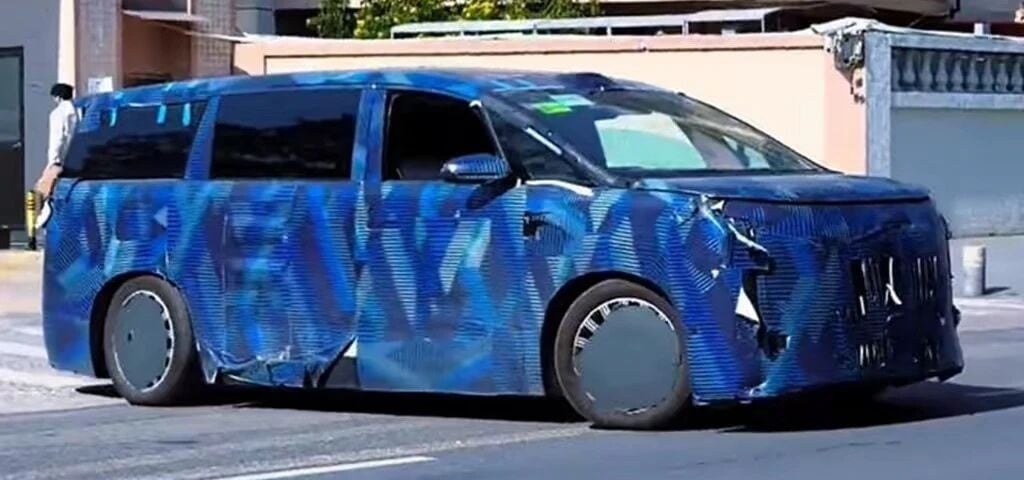
Prototypes of the long car have been running since early 2026 in BYD’s blue swirl camouflage, so the patent reads less like a tease and more like a design freeze. The shape is locked. Almost everything else is still unpublished.
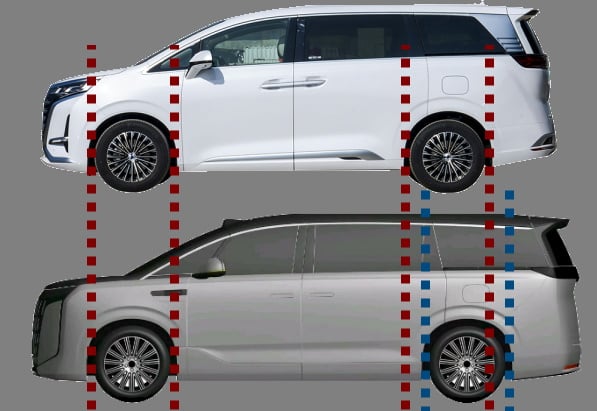
The stretch lives behind the middle doors
Read the side profile first. The nose is the current car’s nose, tall and blunt, wearing the same deep grille of vertical chrome slats. The front door and the sliding door behind it look carried over untouched.
The growth sits aft of the B-pillar. The rear side glass runs longer, the third-row window is a much bigger pane than the standard car’s, and the rear overhang stretches to match, so the van’s long, level roofline simply keeps going.
Small details line up between the drawings and the test cars. A roof-mounted LiDAR pod sits above the windshield. Cameras ride on the front fenders. The wheels are two-tone with 15 spokes, and they show up in both the patent art and the spy photos.
A longer floor for the seats that sell the car
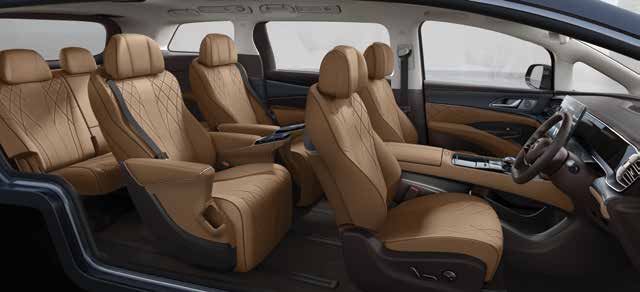
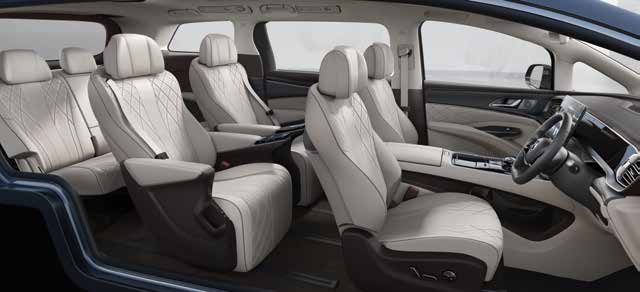
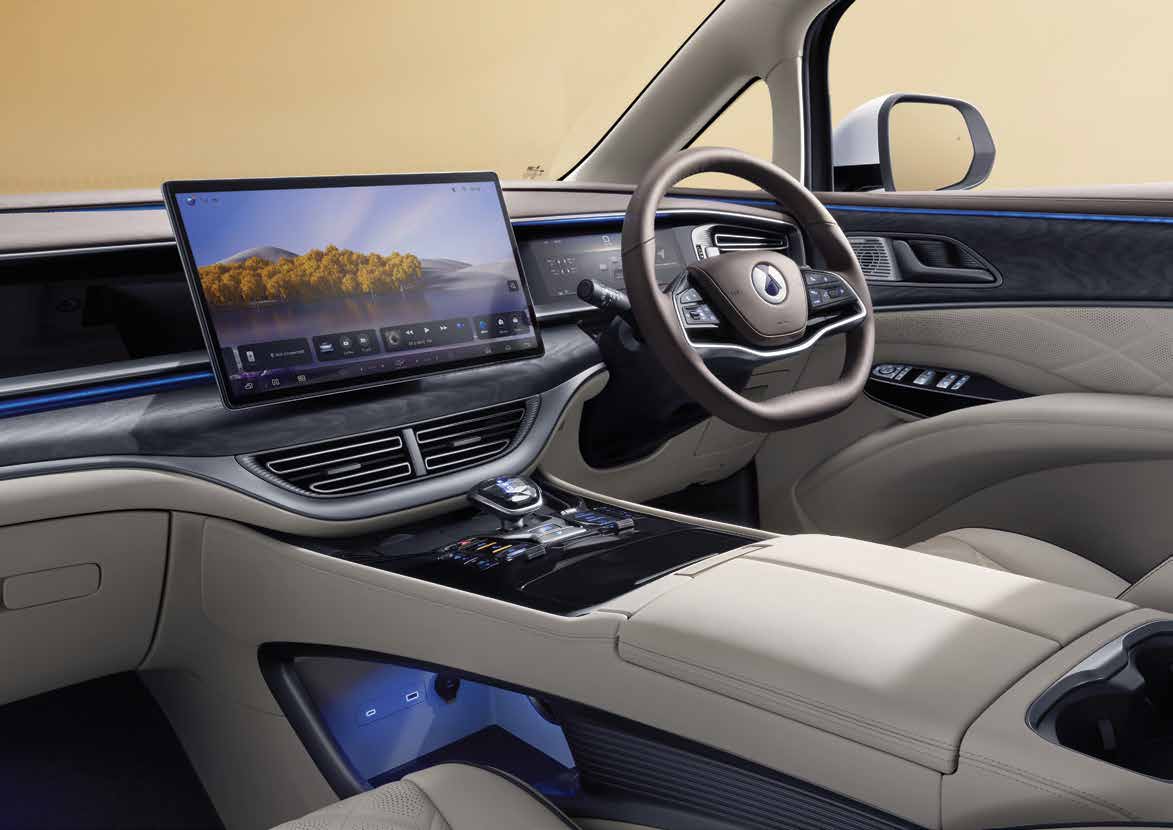
Nobody buys a D9 for the driver’s seat. The standard car, refreshed in April, can be specced with up to 10 screens, counting armrest displays in the second row, headrest screens and a ceiling screen for the third.
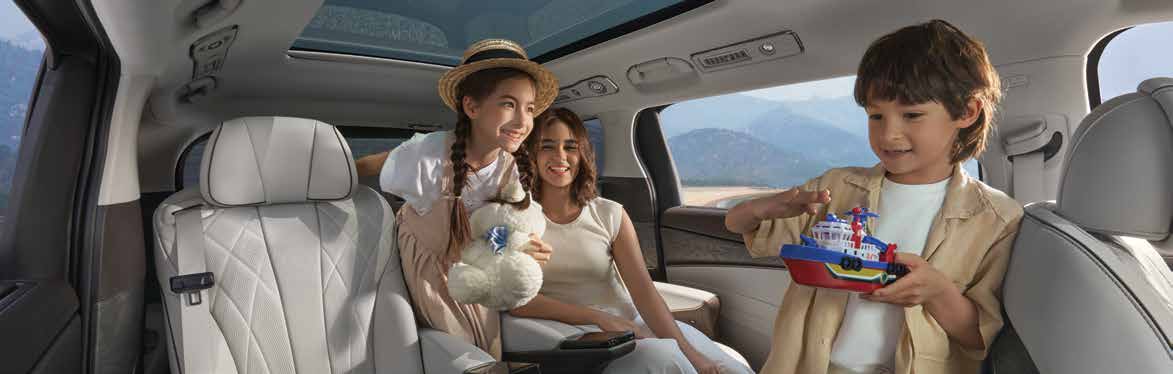
Every seat gets heat, ventilation and power adjustment. The second row offers a 16-point massage chair Denza calls Zero Pressure Cloud Velvet, the kind of seat that turns a school run into a chauffeured ride. There’s a fridge between the front seats. There’s a panoramic roof over all three rows.
The refreshed car layers software over the furniture. Denza sells the cabin as an AI cockpit, and the screen count climbs fast once the options start: second-row armrest displays, headrest displays, a rear ceiling screen for films and calls.
A longer wheelbase buys those chairs room to recline without stealing the third row’s knees. Denza hasn’t shown the long car’s cabin, so its layout and seat count are unconfirmed, but the stretch points one way. This is a rear-seat car getting more rear seat.
What carries over, and what stays unfiled
Under the floor, expect the refreshed D9’s hardware, because a wheelbase variant rarely reengineers the expensive parts. The electric D9 runs a 115 kWh LFP Blade pack, and front-drive cars get a 340 kW motor with a claimed 800 km of CLTC range.
All-wheel drive adds a 70 kW rear motor for 410 kW in total, and gives back some range at 750 km. The plug-in hybrid pairs a 1.5-litre turbo four with two motors and all-wheel drive, and its larger 66.5 kWh pack is good for 401 km on electricity alone. A smaller 58.5 kWh pack opens the hybrid range at 350 km.
The hybrid’s engine is a 115 kW 1.5-litre turbo four. It works with a 200 kW front motor and a 45 kW rear motor, so every plug-in D9 is all-wheel drive, and both battery sizes sit on BYD’s Heyuan hybrid platform. Electric drive does most of the work.
Both ends of the lineup support BYD’s Flash Charging. The chassis runs DiSus-C, a dual-valve active suspension BYD says cuts motion sickness and holds the van steady in crosswinds. Assisted driving is DiPilot 300, sold as God’s Eye B, reading the road through the roof LiDAR, three mmWave radars and twelve ultrasonic sensors.
The long car has no filing of its own yet. There’s no MIIT declaration with its dimensions, no powertrain sheet, no price and no launch date. The standard D9 sells in China between 329,800 and 469,800 yuan, about $49,400 to $70,400, and a longer flagship is expected to sit at the top of that ladder or above it.
A design freeze with Egger’s name on it
Design patents land when a shape stops changing. Filing this one in November, with camouflaged cars already a year into testing, points to pilot production next and a reveal built around space rather than styling.
The D9 doesn’t need the help commercially. Denza delivered 5,056 of them in China in September alone, in a segment where the Zeekr 009 and XPeng X9 chase the same chauffeured families and executives.
A long-wheelbase flagship is still the obvious next rung. In this corner of the market the buyer often rides in row two, the car works as a rolling office and lounge, and length is the luxury feature every passenger can feel.
The next document to watch is the MIIT declaration. That’s where the real numbers live, wheelbase first, and it’s where the long D9 stops being a drawing.