

Small hatchbacks rarely get to pick a mood. Most get one trim walk and one cabin color. This one now comes in two personalities, and the split starts with design.
Meet the Geely Xingyuan STAR Ace and STAR Chill.
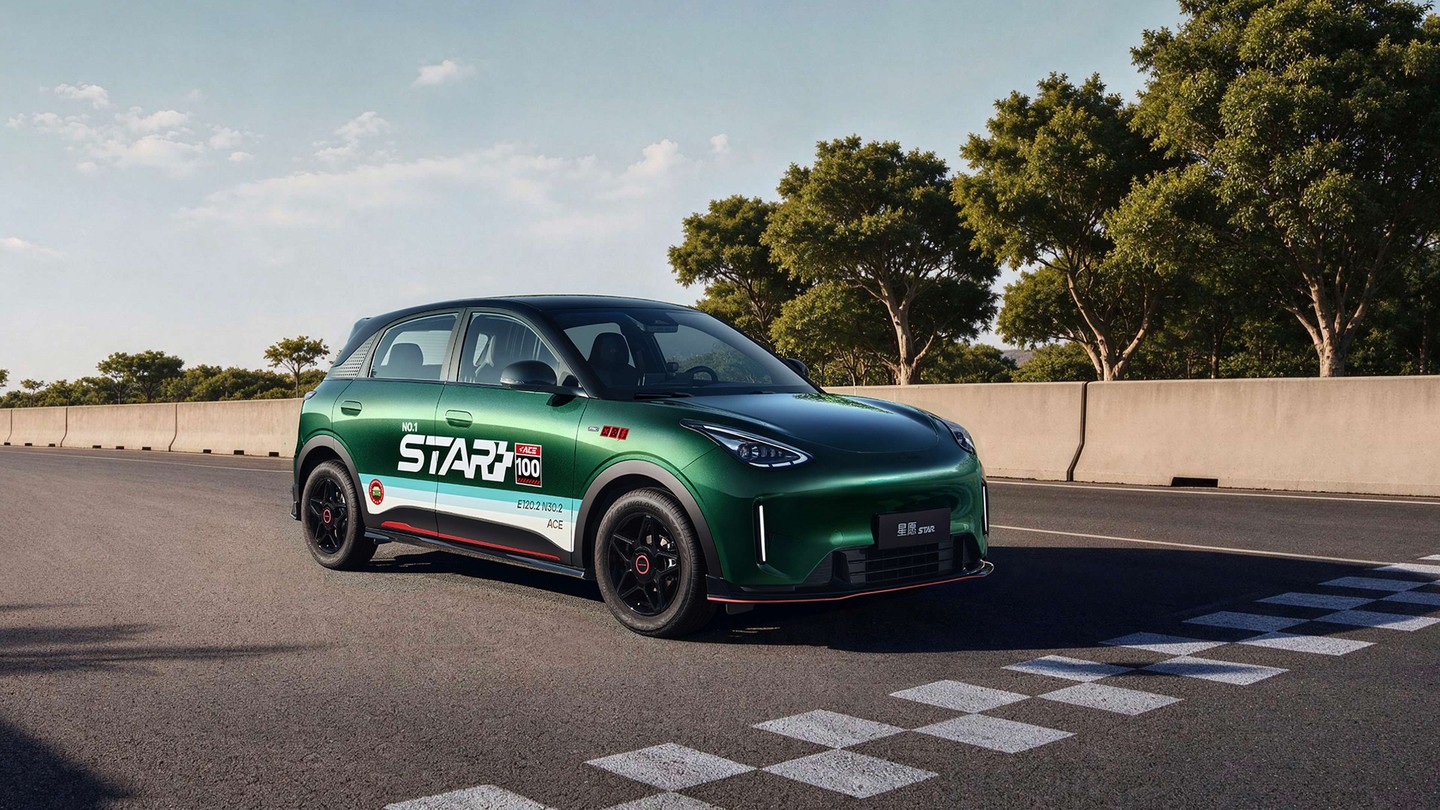
Geely built the STAR Ace for drivers who want the car to look restless. STAR Chill goes the other way, built to look calm.
It’s the same body, same hardware underneath. Two answers to different questions.
A million buyers have chosen it in China, the country’s best-selling car. Overseas, it wears another name, the Geely EX2, in more than 30 markets.
Ace Goes Dark and Chill Goes Pale
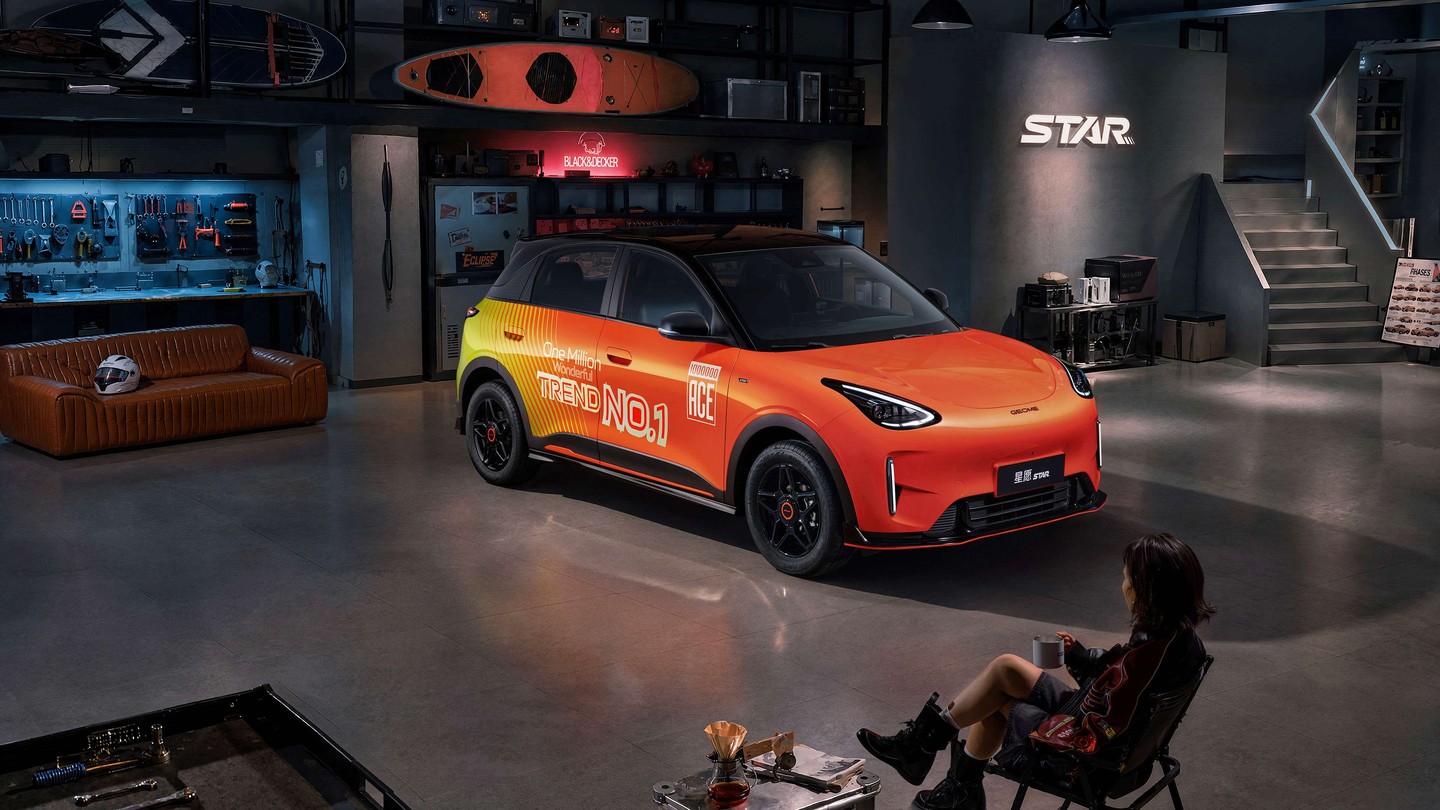
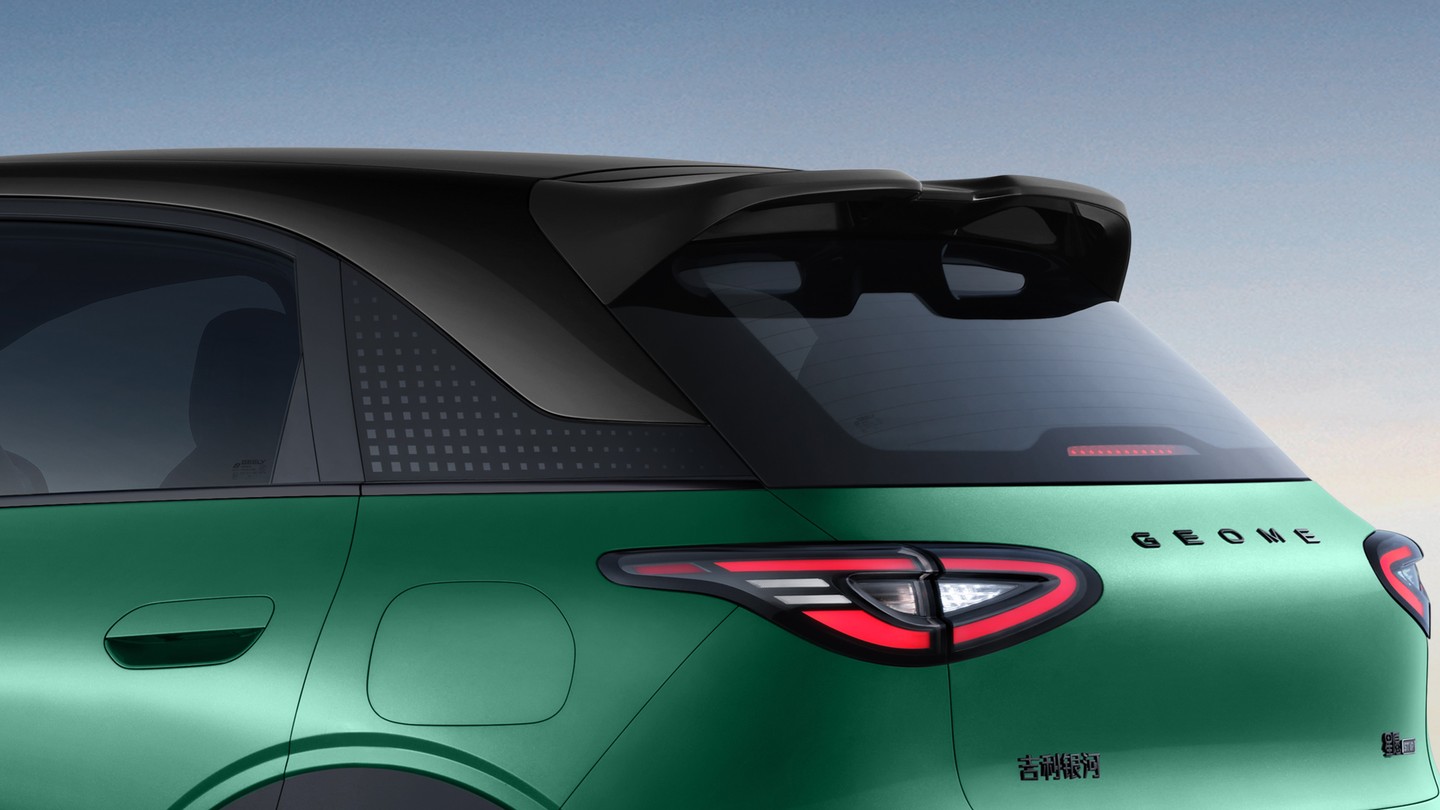
Carefree Green, Pepsi Orange, and Flowing Silver carry the Ace outside.
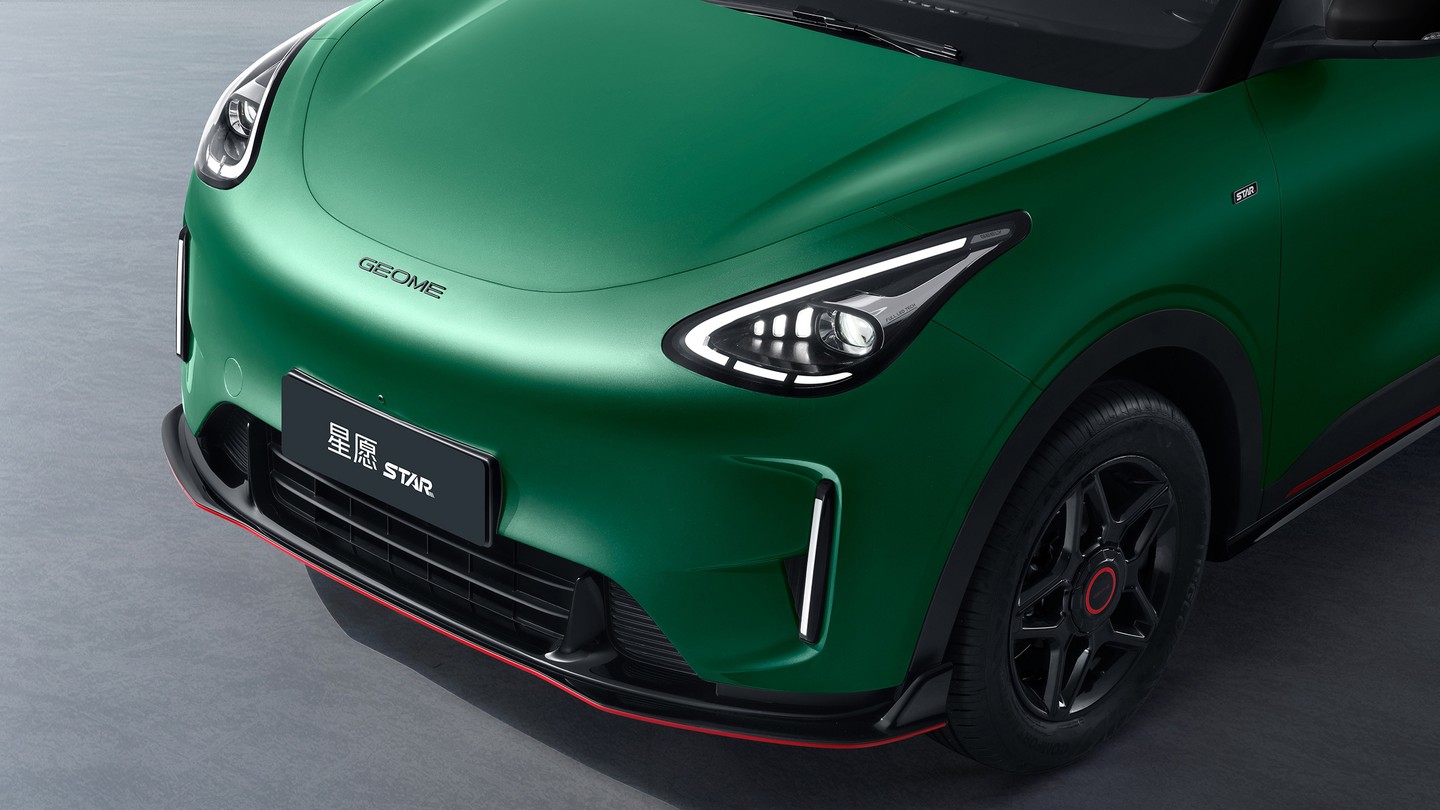
A blacked-out sport badge and a STAR exclusive badge sharpen the look. Inside, the same idea carries through.
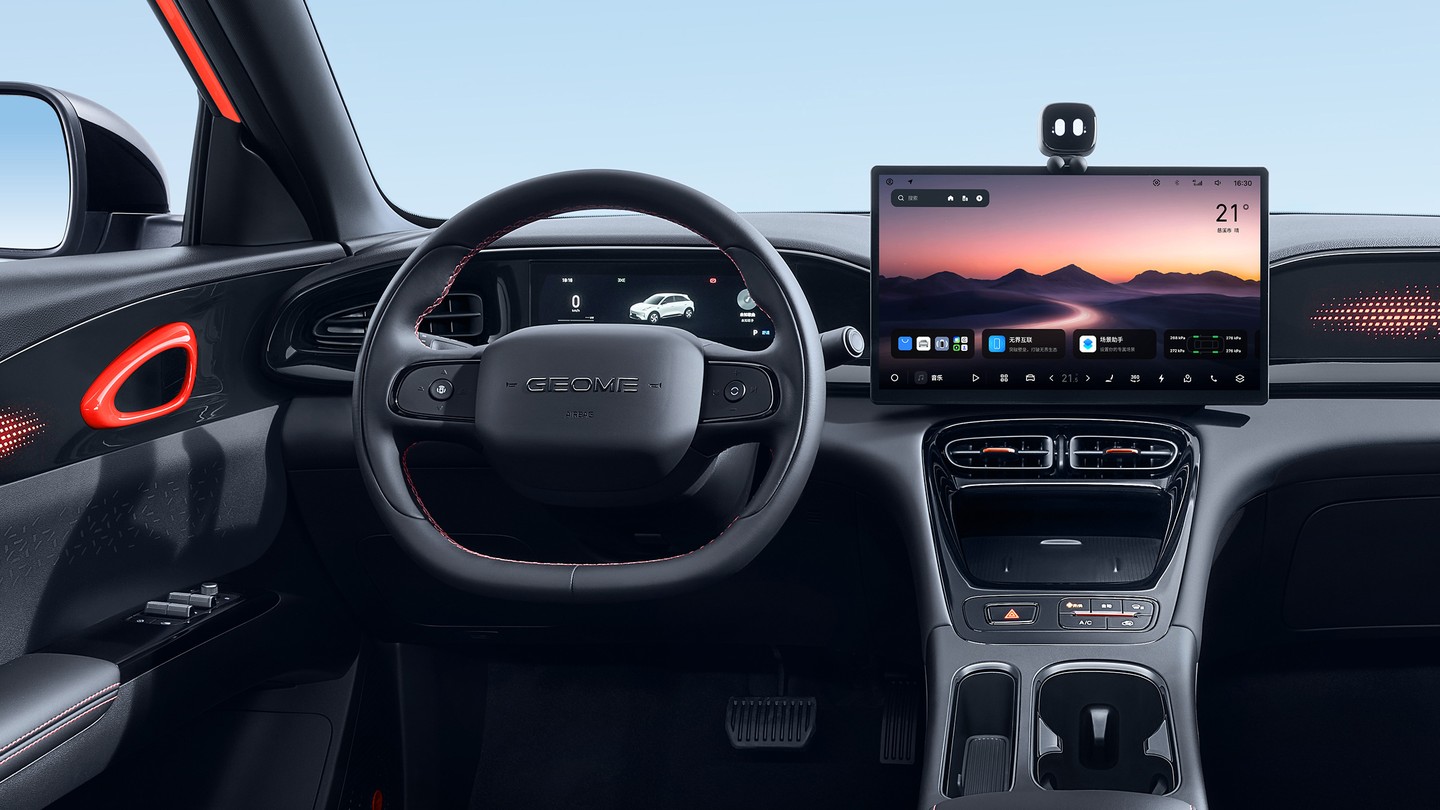
Open the door and the theme tightens. An obsidian-black sport interior wraps the cabin, lit by ambient lighting in 256 colors.
Chill takes the opposite road. Its body color is a milky salt beige, soft and warm rather than bright. At the front, an AGS active grille shutter closes it up.
Inside, Mu Guang Mi, sunlit beige, opens the cabin up. It calms the driver and lifts the mood at the same time.
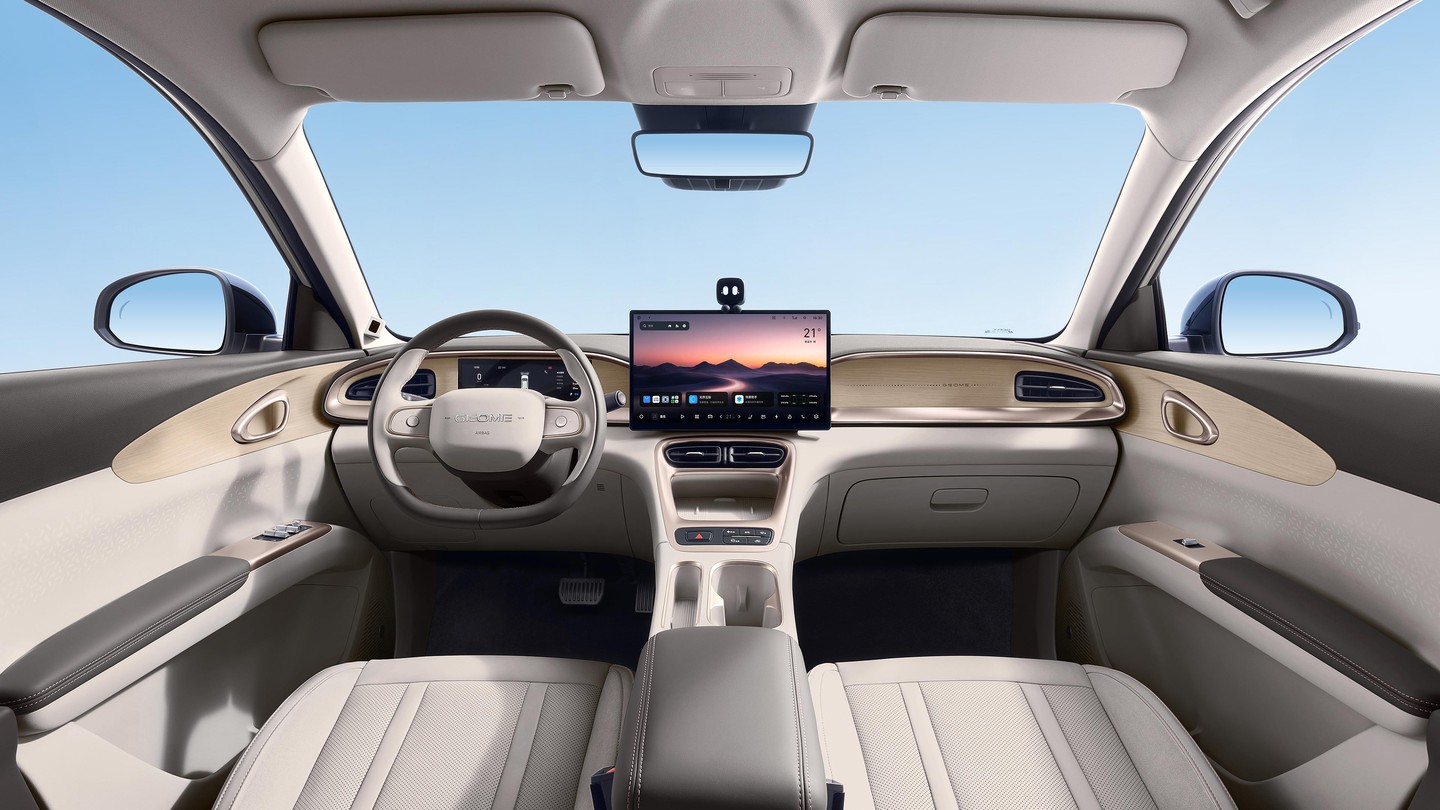
Neither edition changes the basic shape, and neither needs to. At 4,135 mm long and 1,805 mm wide, with a 2,650 mm wheelbase, this is a small car that still fits four adults and a week’s groceries without asking anyone to fold themselves in half.
Two Editions, Side by Side
| Detail | STAR Ace | STAR Chill |
|---|---|---|
| Character | Sport | Calm |
| Body colors | Carefree Green, Pepsi Orange, Flowing Silver | Milky salt beige |
| Interior | Obsidian black sport | Mu Guang Mi sunlit beige |
| Exterior kit | Sport wheels, rear spoiler, blacked-out badges | AGS active grille shutter |
| Comfort focus | 256-color ambient lighting | Parking-comfort package, sentry mode |
| Guidance price | $13,670 | $13,670 |
Both editions sit near the top of the range, and both cost the same, $13,670. Prices don’t rise for the sporty one, or fall for the calm one.
Rear-Wheel Drive in a Budget Hatch
Rear-wheel drive is where this story leaves the trim sheet behind.
Most small EVs pull with the front wheels. This one pushes with the rear, and that changes how it feels on a wet roundabout or a tight ramp.
Multi-link hardware costs more to make than a torsion beam, but what the segment usually hides quietly in the component breakdown is here presented as a lesson in where a small car can hide its engineering. It also lets each rear wheel react on its own. Power comes from an 85 kW rear motor.
A 47.14 kWh battery in an energy-dense pack gives up to 340 km of CLTC range, around 211 miles. On a fast charger it goes from 30 to 80 percent in 18 minutes and then keeps moving to the next destination.
CATL cells and a liquid-cooled thermal loop manage heat, and an 11-year warranty on the cell pack sits behind it.
An 11-in-1 intelligent electric drive cuts weight and complexity, with compact housing, a coolant loop, and efficiency. A turning circle of 4.8 meters helps in tight streets.
Assisted Driving, Well Above the Price
Qianli Haohan H1 is the driver-assist system, occupying the entry-level hardware option. It’s a robot that is smart enough to watch the road.
Memory parking gets the car into a tight space with little driver input, letting it reproduce a learned route into your garage. That it claims to handle private parking, curb parking, and vertical parking gets the headline, because that’s the part you usually only find in cars several times the price.
Flyme Auto 2 runs the cockpit, built on Meizu’s phone-first product line. It’s fast, clean, and familiar to a phone user.
BYD’s Seagull is the nearest comparison at this price, and it doesn’t earn marks here. There, the same money buys a smaller car with less useful space and about a tenth as much driver assistance when you call it counts.
A Million Cars in 24 Months
Volume gives this story its other spine. The Xingyuan passed one million vehicles in 24 months.
Geely calls it the fastest ramp to one million, reaching it in 24 months.
The verified part is when it officially passed one million on July 25, 2026.
Durability made the export case. A UK lab tested a Xingyuan at 6,200 hours, and no water or sand breached anything. That story turned into an export story.
Back to the Cabin, Where the Theater Lives
EVA seats with their own soft pocket cover the front seats. They feel like cushions, and they look like cushions, sometimes more than seats.
It comes standard in the STAR Ace and STAR Chill, and it’s one of the best things to have in this segment.
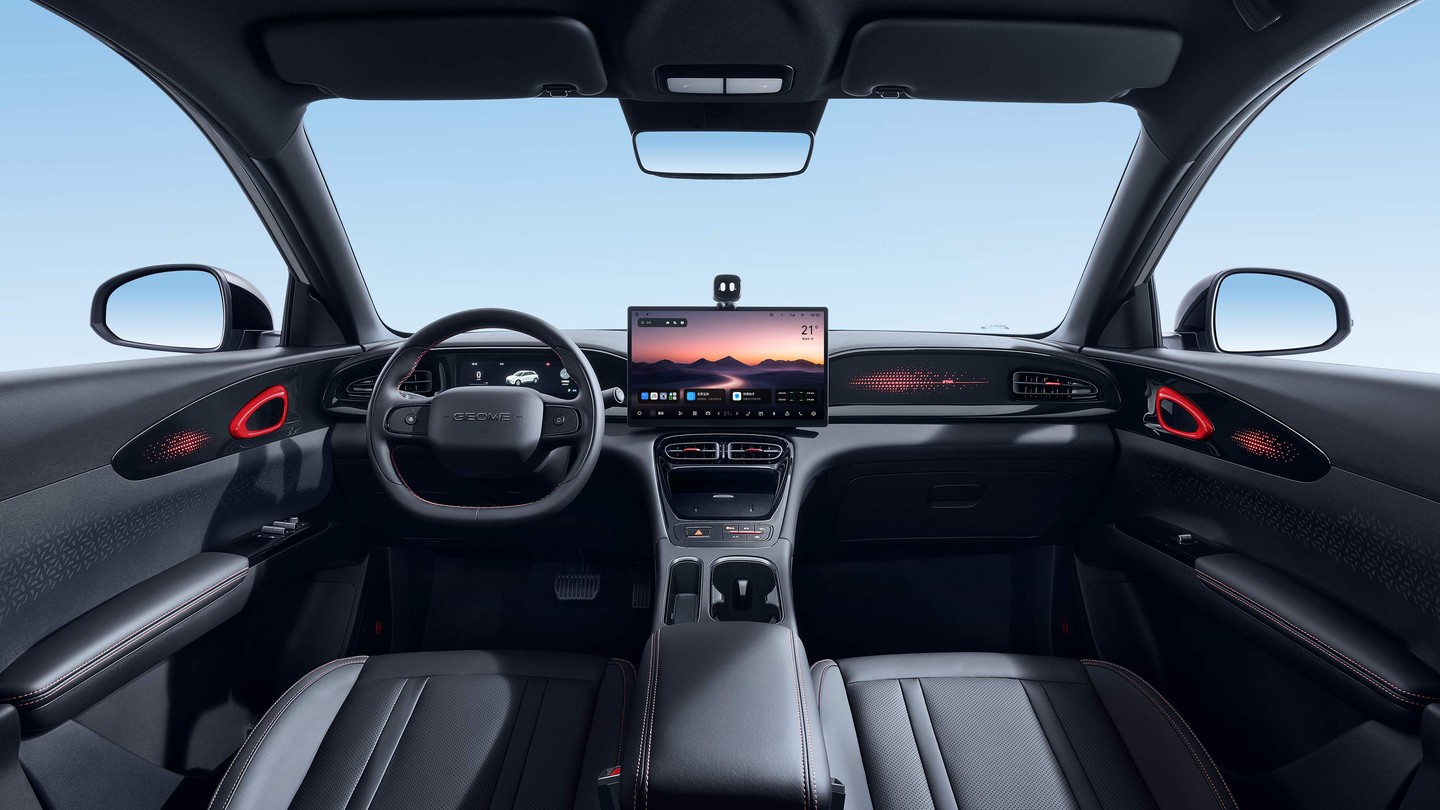
Storage gets useful as well. Doors morph into pockets, the center carries a fast-charging wireless pad, and a pull-out tray delivers a phone-sized spot for a coffee cup.
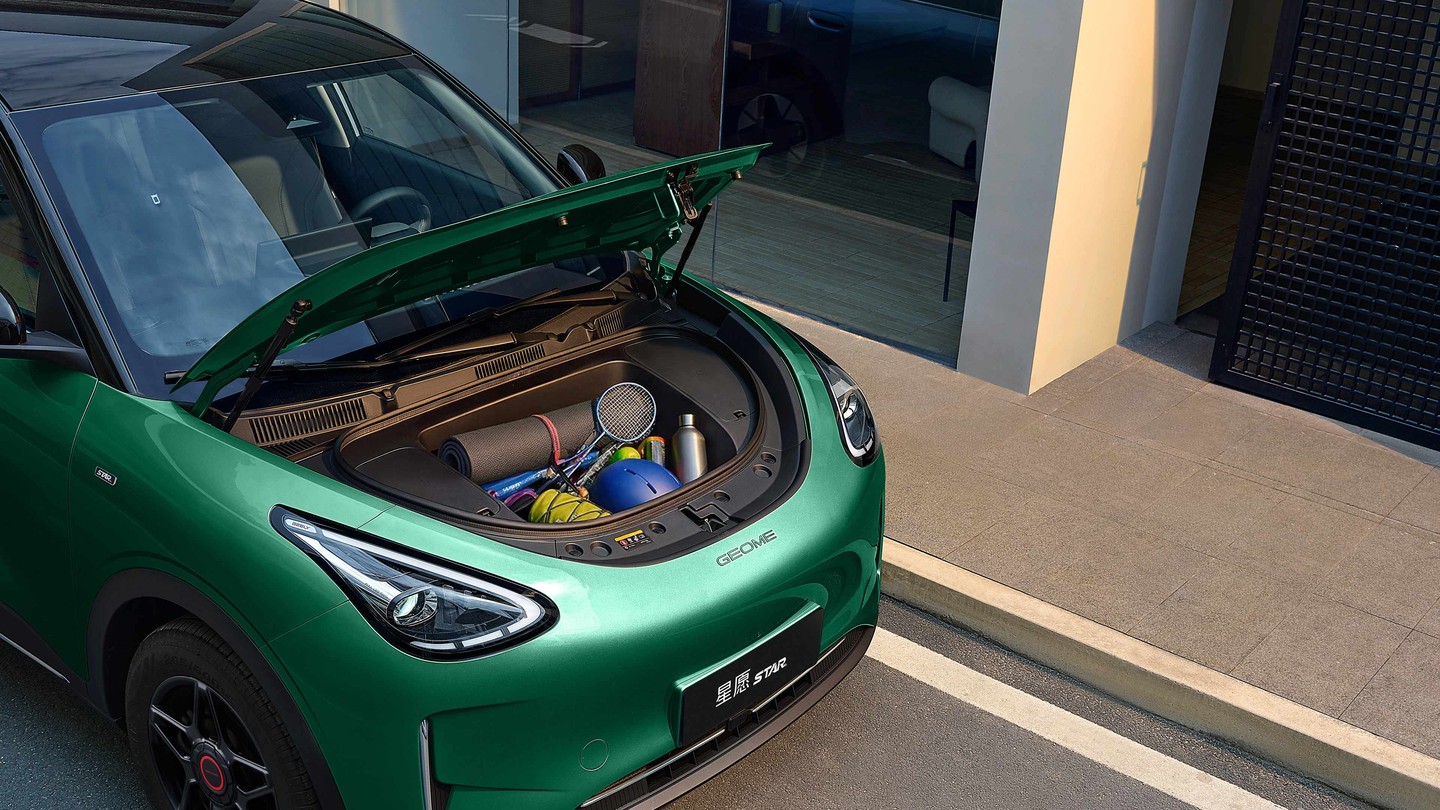
Knock-to-open sounds like a gimmick until groceries fill both arms.
With both arms full, that knock is the smartest feature in the car.
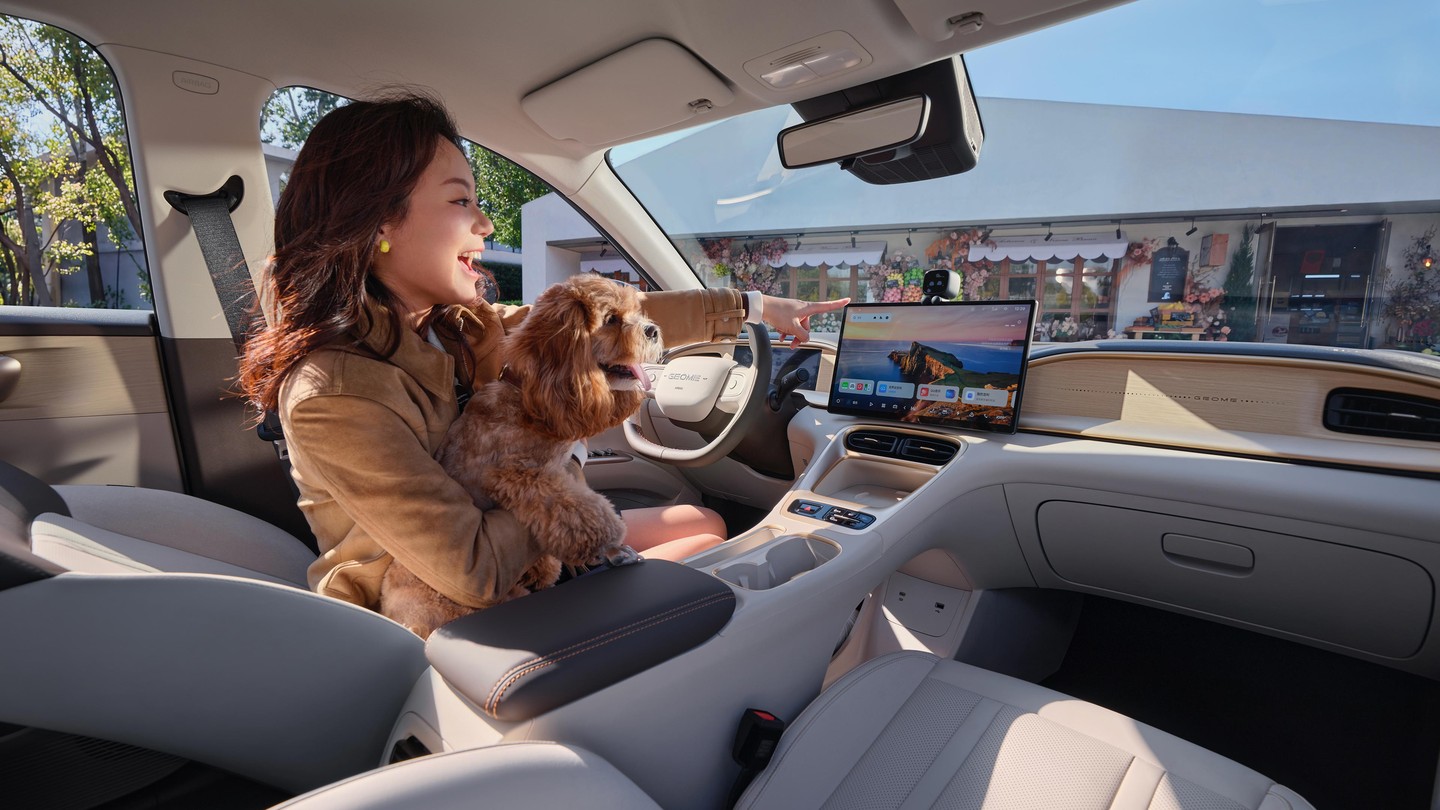
Design closes the gap between its looks and its price. The interior moves away from artificial softness toward a clean, thoughtful design, with real texture and a sense of control.
Which One Gets the Garage Spot
Drivers who want the car to stand out should pick the Ace, especially in Carefree Green or Pepsi Orange, for the spoiler.
The spoiler sits above the tailgate and makes the car look longer than it is, leaving a signature in motion.
For tight city streets, the Chill’s standard AGS active grille shutter closes it up, adding to a sense of calm.
Skip both for fun and buy the base trim for the same engine and the same driver-assist system, occupying the entry-level hardware option, but with the theatre stripped out of it. The car still changes lanes and parks itself, only the language of the body misses.
But at $13,670, skip the theatre only if you genuinely don’t care, because the plan through it keeps taking us to the same conclusion: the cheapest way to make your neighbors think you drive something special is to buy this.


