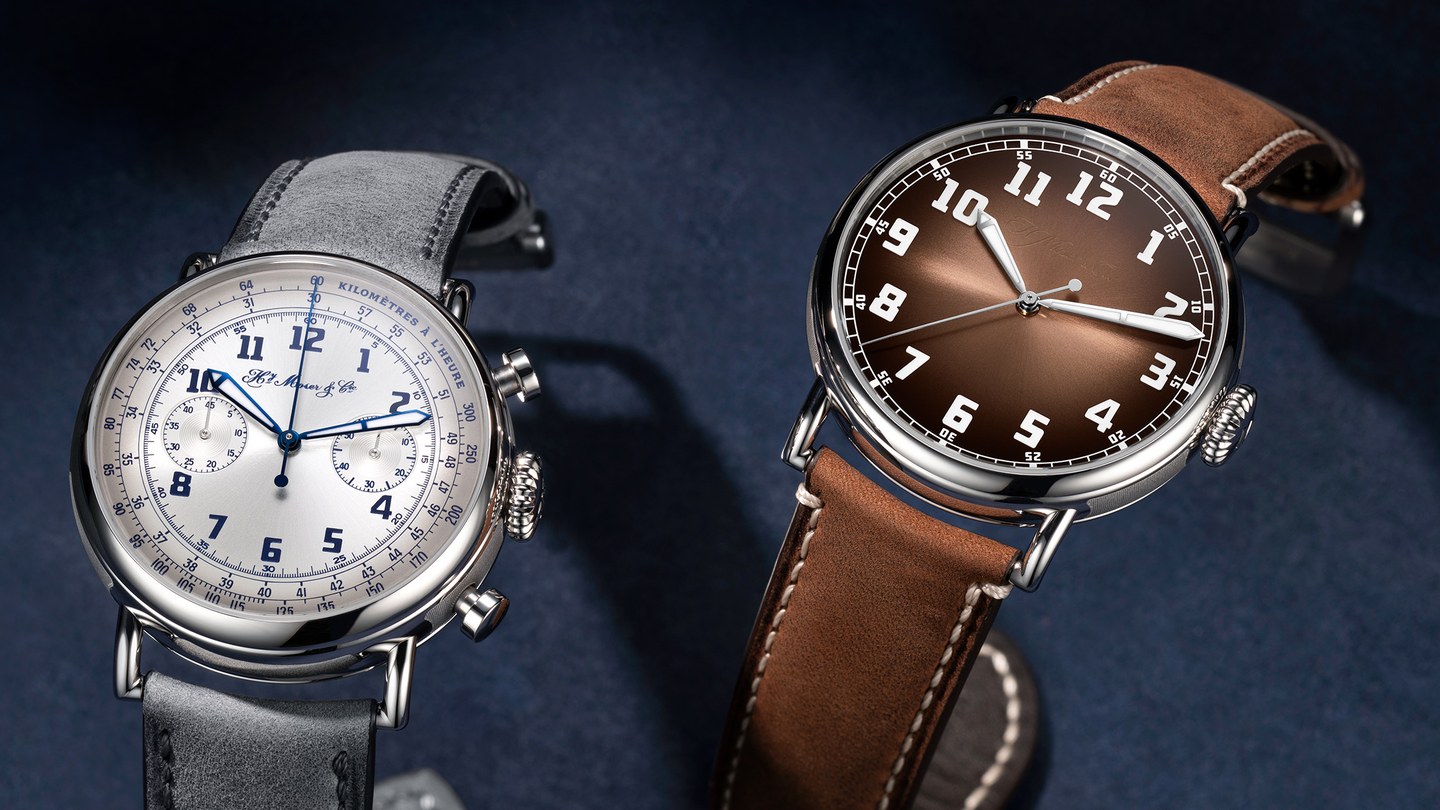
H. Moser & Cie. builds the Heritage collection out of its own archive, and the two newest watches pull from different shelves of it. One is a chronograph in white fumé, the first chronograph the line has carried. The other is a three-hand watch in espresso brown. Both are steel, both measure 42 mm across, and both are limited editions.
Prices are set at $34,100 for the chronograph and $18,300 for the Centre Seconds. Both watches are available to reserve through Moser boutiques and authorized dealers now.
The Meylan family owns the manufacture outright, and Moser has built its reputation refusing to follow the industry’s script, from concept dials carrying no logo at all to a protest watch cased in Swiss cheese composite. Independence shows in the production numbers too.
Moser manufactures its own hairsprings through Precision Engineering AG, the sister company next door in Neuhausen am Rheinfall, and both movements in this pair carry the Straumann hairspring that shop produces. It is the kind of vertical integration most brands at this price talk about and few actually own. The pair shows what that control buys: two very different dials over one shared case architecture.
Heritage Chronograph White Fumé, ref. 8220-1200
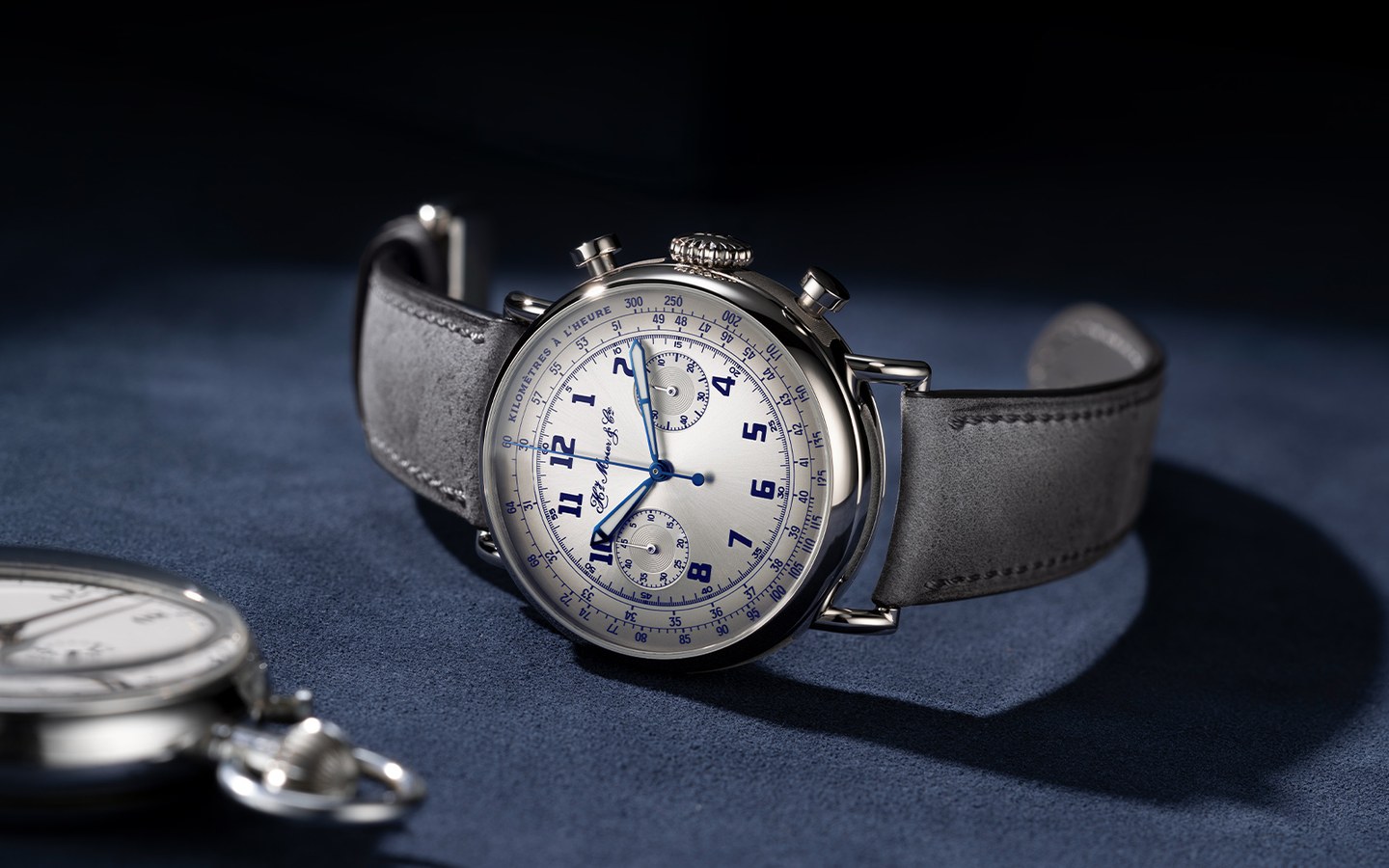
The white fumé dial fades from a bright centre toward a silvered edge, and every printed element on it is blue. The 1947 version of the Moser logo sits under twelve, drawn the way the company signed its instruments in the forties. Two registers balance at 3 and 9, one counting 45 minutes of elapsed time, the other running the seconds, and a tachymeter scale rings the edge, marked in kilomètres à l’heure.
Moser printed that scale on the chronographs it built for explorers in the mid-twentieth century, and the density is deliberate. This is a house that built its name on dials with almost nothing on them. Blued hands carry Super-LumiNova, so the busiest Moser in years still reads at a glance in the dark.
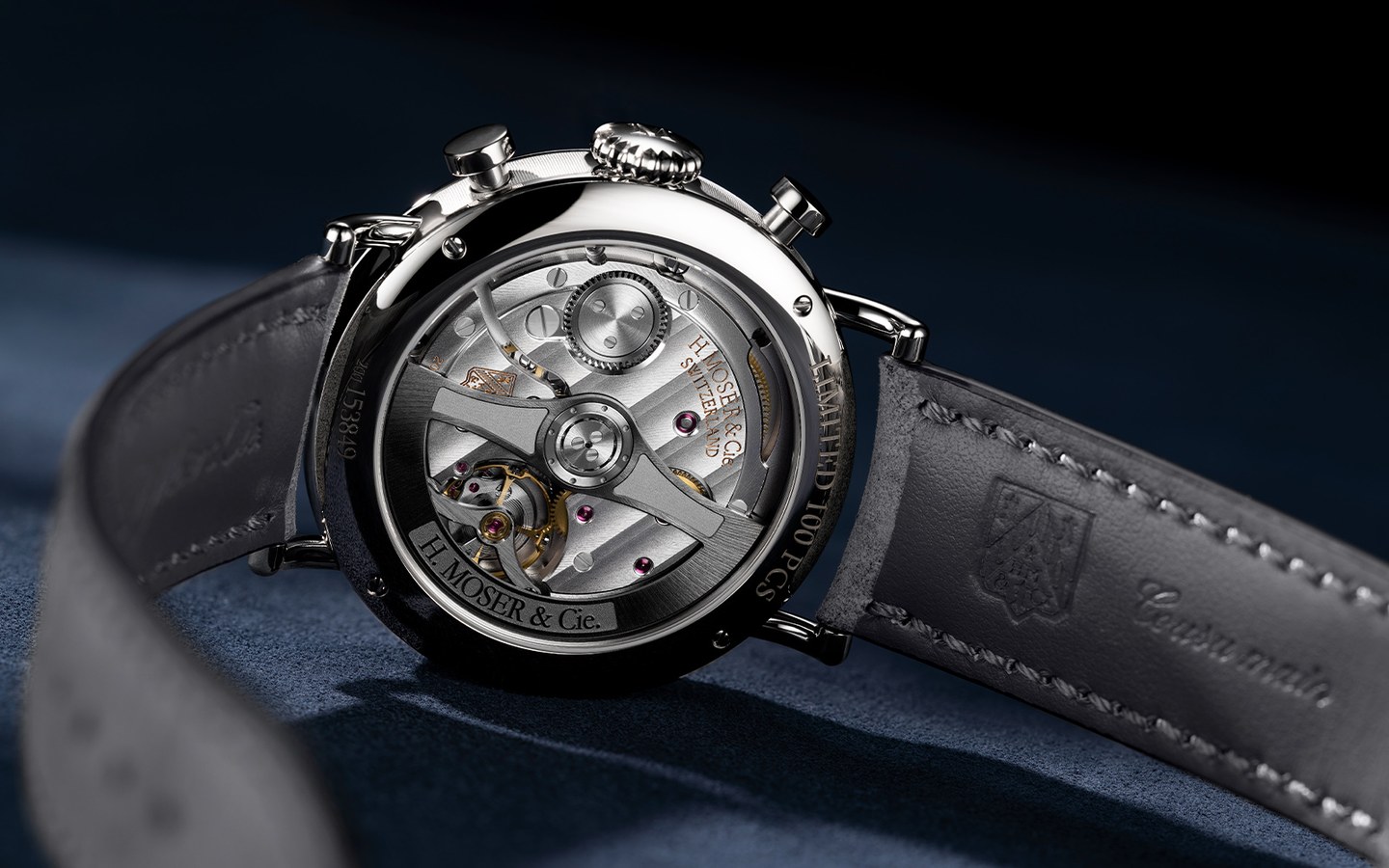
The case keeps the Heritage shape, a round pocket-watch profile on wire lugs, with pump pushers and a notched onion crown engraved with the M. It stands 13.8 mm tall, the cost of the movement inside: the HMC 220 pairs Moser’s automatic base calibre with a Dubois Dépraz chronograph module, 51 jewels beating at 21,600 vibrations an hour, and a 72-hour reserve. The grey kudu strap is hand-stitched in matching thread.
What makes the busyness work is contrast. Blue print on a white ground is the oldest instrument-dial recipe there is, and Moser executes it at full saturation rather than fading it into tastefulness. The registers are sized to be read, not to decorate. The numerals stand at full height. Nothing on this dial apologizes for being measured, and that confidence is what separates a quotation from a costume.
Turn it over. The caseback rim carries the edition size in plain engraving: LIMITED 100 PCS.
Heritage Centre Seconds Espresso Fumé, ref. 8200-1207
The second watch works the other end of the archive: the first wristwatches, pocket watches given wire lugs.
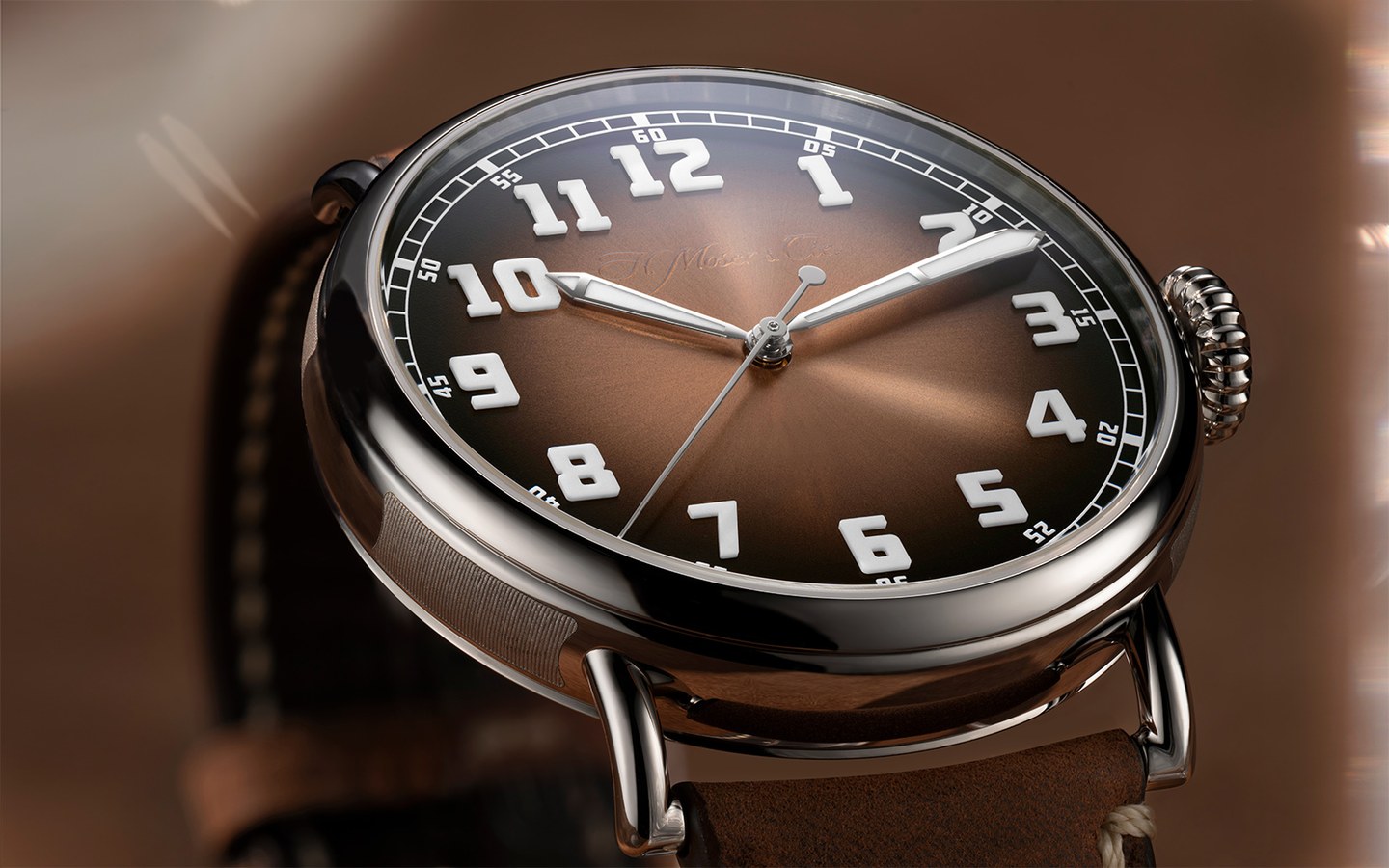
Espresso fumé darkens from a warm centre toward a near-black rim, and the dial keeps that era’s plain confidence. Oversized appliqué numerals in Globolight ceramic stand proud of the surface. A white railway minute track runs the edge.
Globolight is a ceramic shot through with Super-LumiNova, so the numerals themselves hold the light instead of wearing a coat of it. On a dial this empty, they carry the whole night shift.
Sword-shaped hands carry Super-LumiNova, and the slim centre seconds hand is the only complication on the watch. Inside sits the HMC 200, Moser’s automatic three-hand calibre, with the same 72-hour reserve and a sapphire back to watch it work through. The case slims to 11.1 mm. The strap is brown kudu leather.
No date window. No decoration past the signature script. Nothing to hide behind.
Two hundred pieces will be made. At $18,300 it costs a little over half the chronograph’s price, and of the two, it is the one that wears its century-old source material most openly.
One archive, two temperatures
Heritage is the collection Moser built to argue with itself. The manufacture dates to 1828, and the line quotes specific periods rather than a general vintage mood. The chronograph reaches for the mid-twentieth century, when a tachymeter scale was a working tool. The Centre Seconds reaches further back, to the converted pocket watches of the early 1900s. Same wire lugs, same onion crown, same 42 mm of steel. The argument stays inside one silhouette.
Water resistance is 3 ATM on both, which settles the question of what these are for. They are dress instruments, built to be looked at and wound and worn with a cuff, not taken swimming. Production discipline is the shared trait underneath: Moser turns out a few thousand watches a year across every collection it makes.
Most heritage lines sell nostalgia by the yard. This pair sells something narrower: two specific decades, quoted precisely, in steel, with the edition sizes engraved where an owner will actually see them. The white chronograph is the collector’s piece, busy and blue and rare. The espresso watch is the one I would wear.