

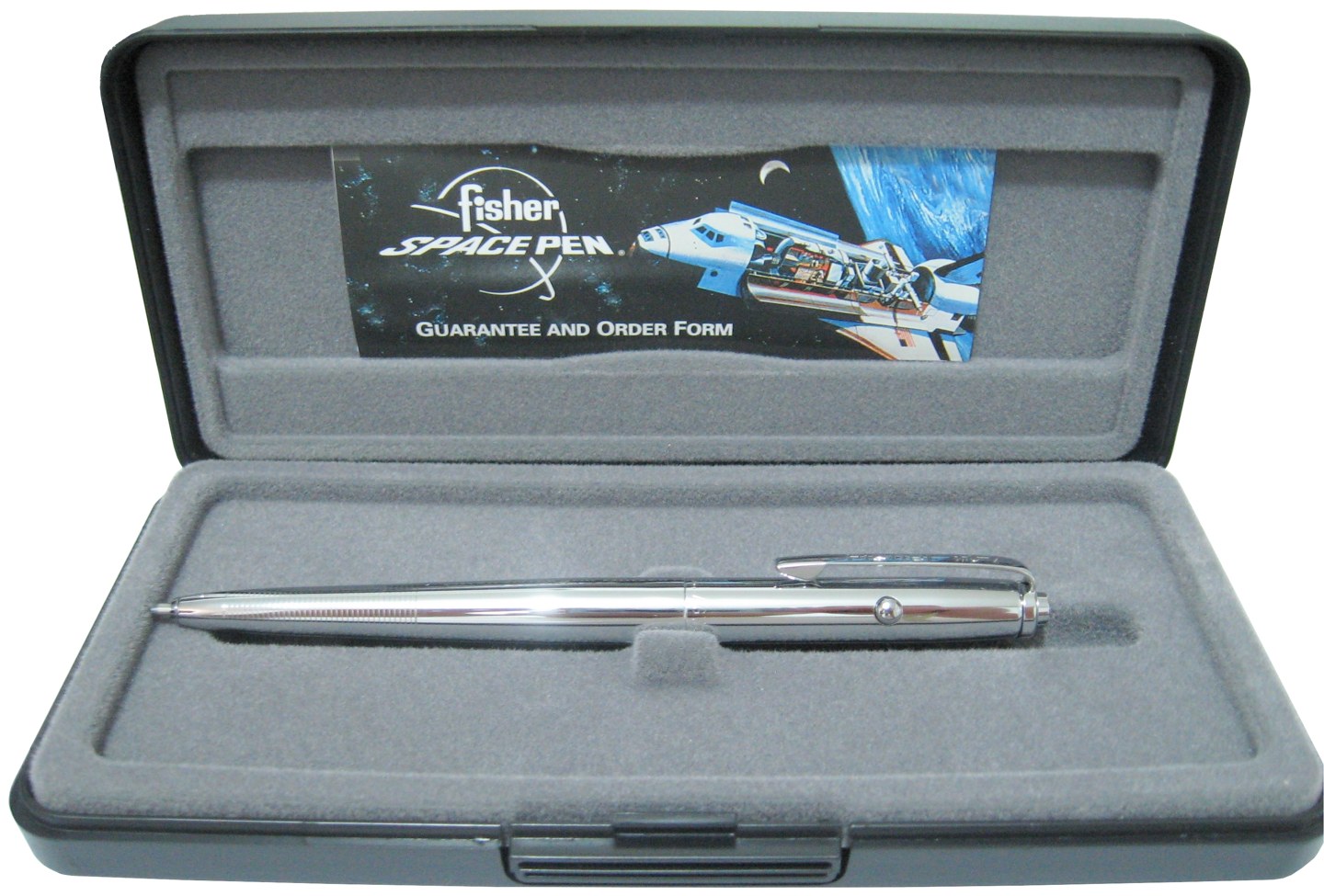
The most famous pen ever flown cost NASA nothing to develop. Paul Fisher spent roughly a million dollars of his own money building a ballpoint that could write in weightlessness, then sold the finished pens to the agency for a few dollars each.
Private money, public orbit
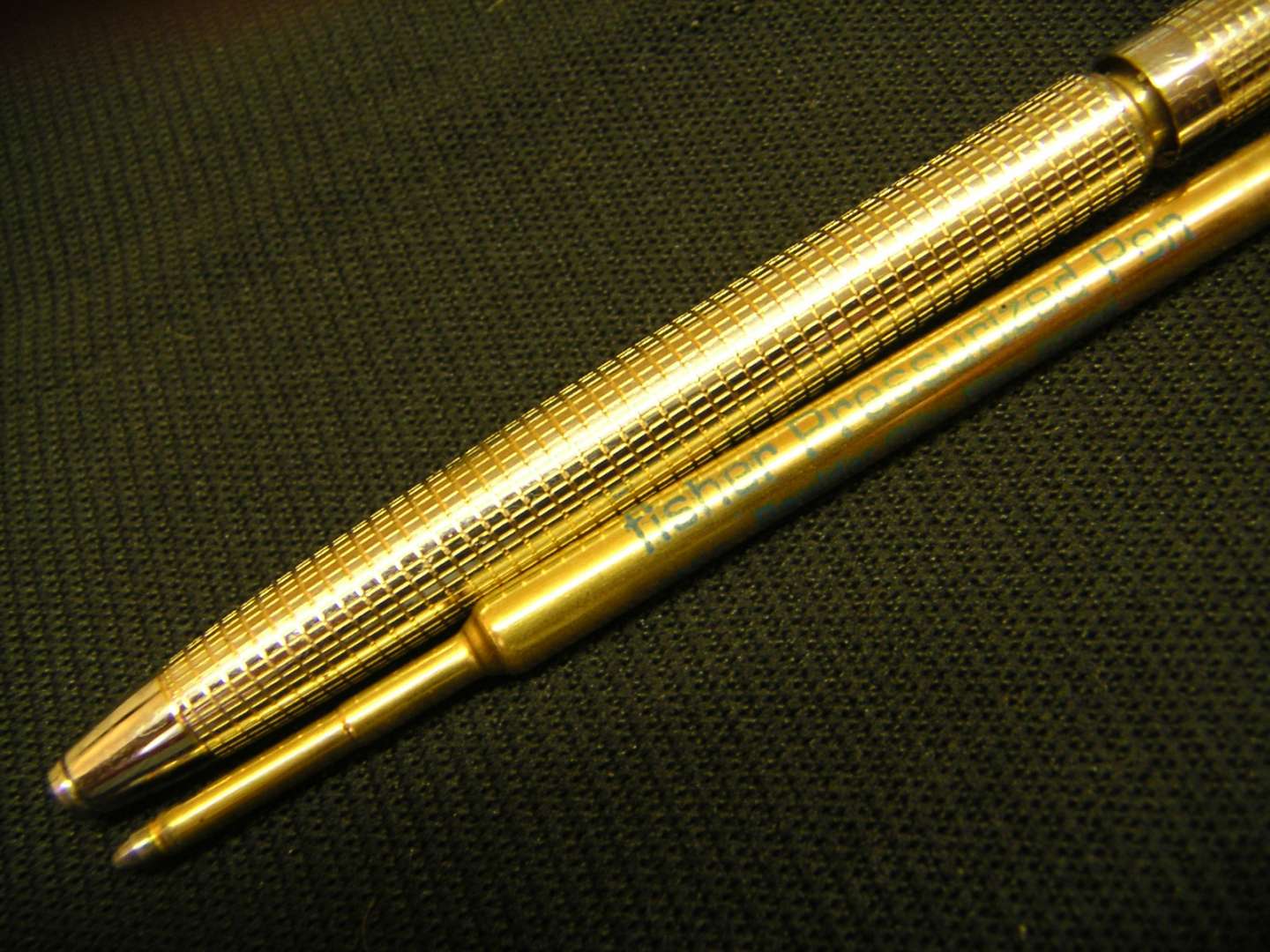
Fisher ran a pen company in California, and he had spent years chasing a cartridge that sealed its ink away from air. His AG7 put thixotropic ink inside a sealed tube, pressurized with nitrogen, feeding a tungsten carbide ball laying a line at any angle. He patented the design before NASA bought a single pen, and the agency still put the cartridge through heat, cold, pure oxygen and vacuum before clearing it.
Fisher founded his pen company in 1948, after years working around the ballpoint trade in California. The pressurized cartridge grew out of a simpler frustration, since ordinary refills leaked, skipped and dried out in normal desk use. Spaceflight gave that private obsession a customer with the hardest writing conditions on any manifest. He was, by the standards of the space program, an outsider with a product, looking for a problem big enough to prove it in public.
The cartridge passed every run NASA threw at it. The design that flew in 1968 is, in its working parts, the design Fisher still sells.
The pencil stayed aboard as a backup. The pen took the writing work.
Thixotropic ink sits thick inside the cartridge and thins only under the pressure of the ball at the page. That behavior, paired with nitrogen pressure behind the ink column, explains a pen that writes upside down, underwater and across a greasy fingerprint without skipping. It also writes through the cold of an unheated cargo hold and the heat of a sunlit flight deck, across the full window Fisher rates for the cartridge.
Nine days into Apollo 7
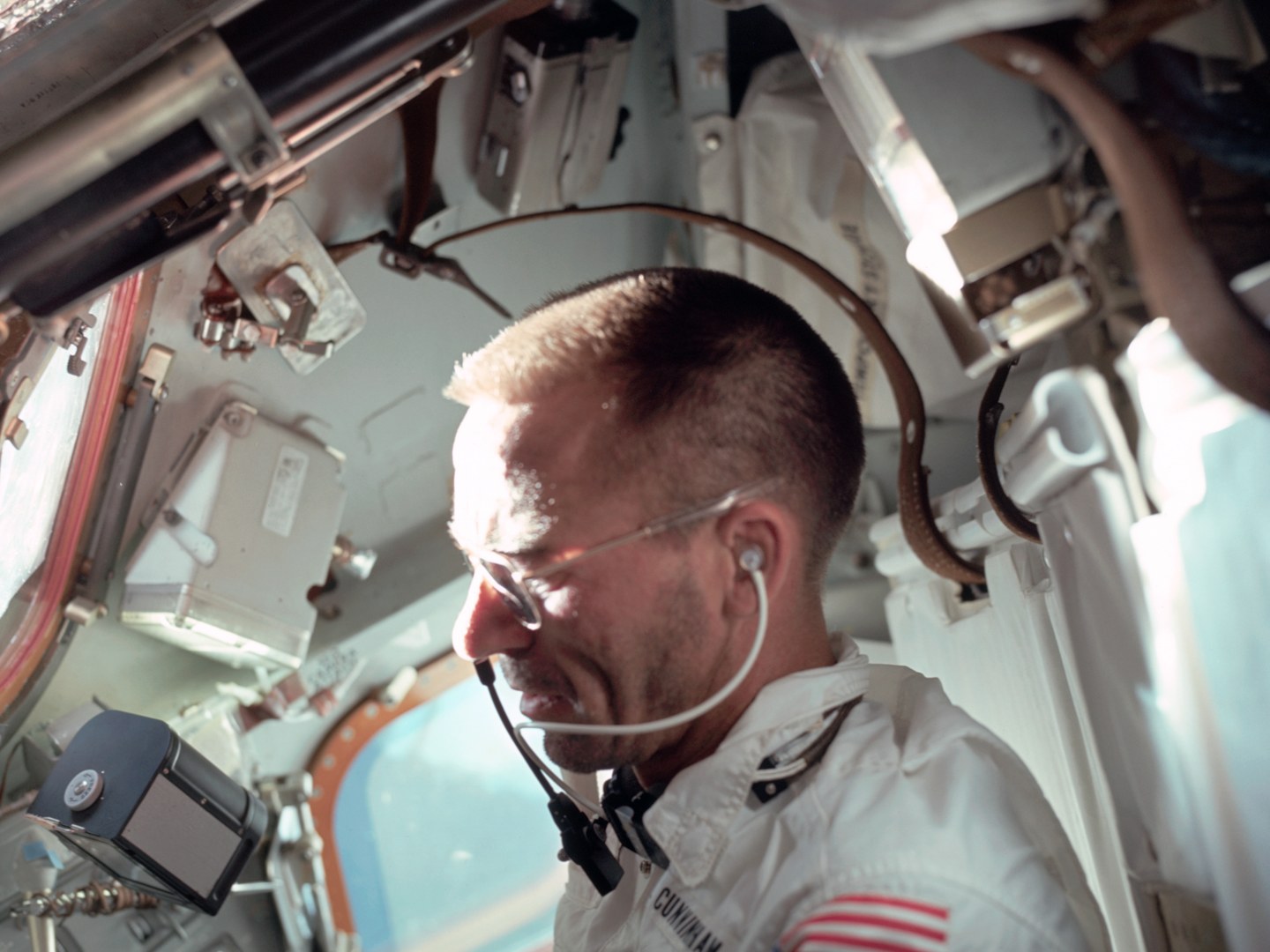
Apollo 7 lifted off in October 1968 as the first crewed flight of the Apollo program, and the pen rode along as cabin equipment. On the ninth day, lunar module pilot Walter Cunningham sat writing with one while the camera caught him at work. Commander Walter Schirra floated a pen in front of a television audience during a live transmission from orbit.
Schirra understood television better than any astronaut of his class, and the floating pen played as a small magic trick on live TV. Under the joke sat a sales demonstration no advertisement could have bought, staged inside a spacecraft on the government’s own broadcast.
The old joke says the Americans spent millions while Soviet crews carried pencils. Both halves collapse on the record, since Fisher funded the work himself and Soviet crews bought his pens too. Pencils shed graphite dust and broken tips, and neither program wanted either floating through a cabin.
The Smithsonian keeps an AG-7 identical to the pens carried aboard Apollo flights 7 through 11. Museum storage is a strange afterlife for a tool built to be used hard, in gloves.
The Bullet became the souvenir
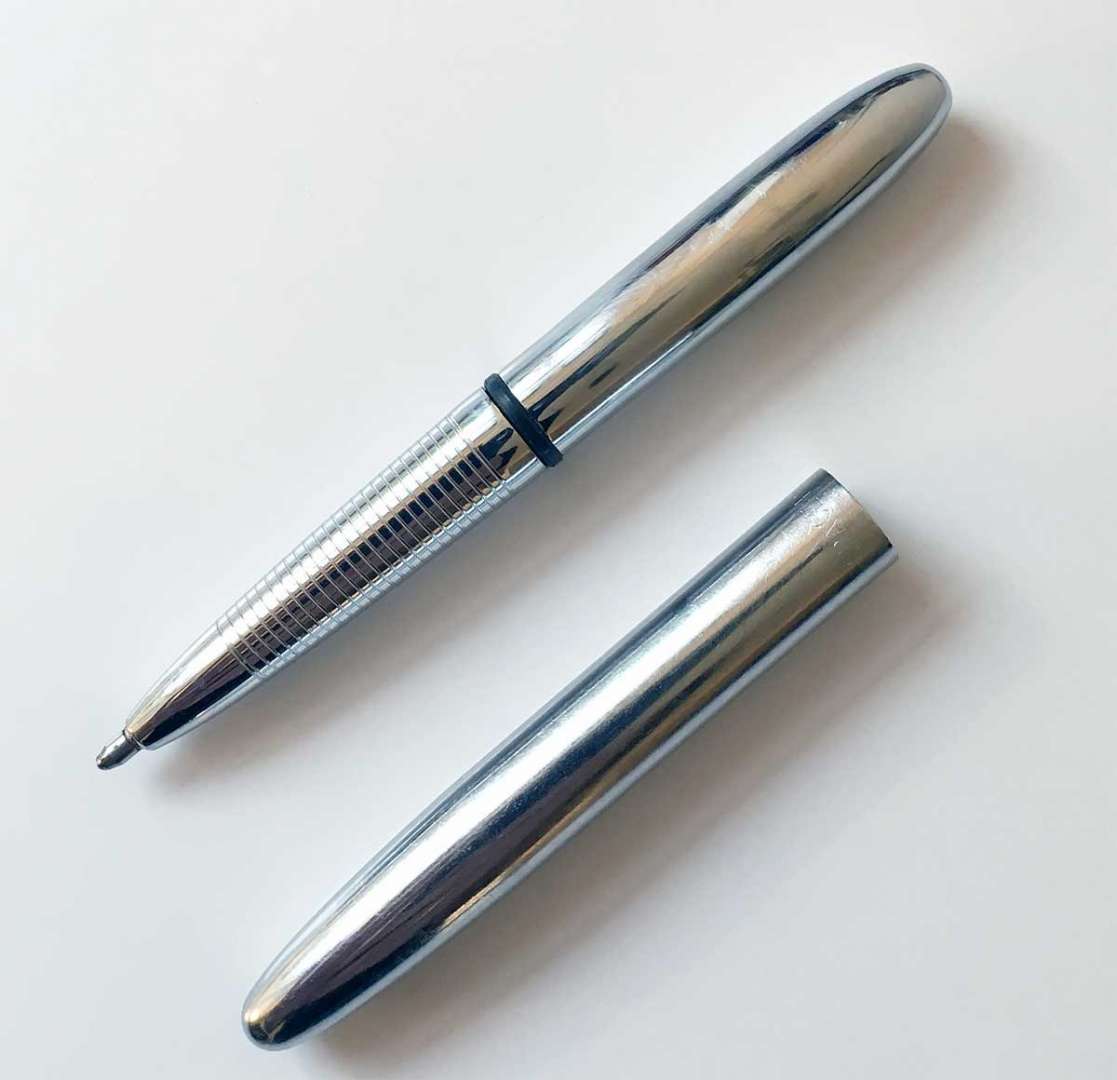
The AG7 still flies, and the same cartridge has ridden every crewed NASA mission since Apollo 7. Down here, the shape people collect is the Bullet, the pocket model Fisher shaped like its namesake. MoMA took the Bullet into its permanent collection, which turned a piece of cabin equipment into a design object.
Closed, the Bullet measures 3.77 inches. Posted, the cap brings it to 5.35 inches, a full-size barrel that writes at any angle, underwater and across grease, inside a rated window from -30 to 250 degrees Fahrenheit.
The AG7 remains the working version, a click pen in the pattern the astronauts carried, while the Bullet is the one that travels in pockets and gift boxes. Both feed from the same pressurized refill, and the refill outlasts ordinary ballpoint cartridges by a wide margin because the ink moves only when the ball rolls. That single shared part is the design, and everything around it is packaging for a different kind of carry.
The lacquered brass Bullet in its gift box sells at $44.10 on Amazon, with no strikethrough theatre around the number, because the pen was never a discount story. It stays the rare souvenir that still does its original job. Our sister coverage at The Gadgeteer traced the cartridge and its flight record in full this week.
Buy the Bullet as a working object first and a souvenir second, since the charm fades fast on any pen that skips. This one does not skip, and the brass body takes pocket wear as patina rather than damage. The cap is the one losable part, and Fisher has sold the same shape long enough that refills stay easy to find.
Photographs: the AG-7 in its presentation case by Cpg100, via Wikimedia Commons under CC BY-SA 3.0, and the Bullet via Wikimedia Commons under CC BY-SA 4.0. The Apollo 7 photograph is NASA work in the public domain.