

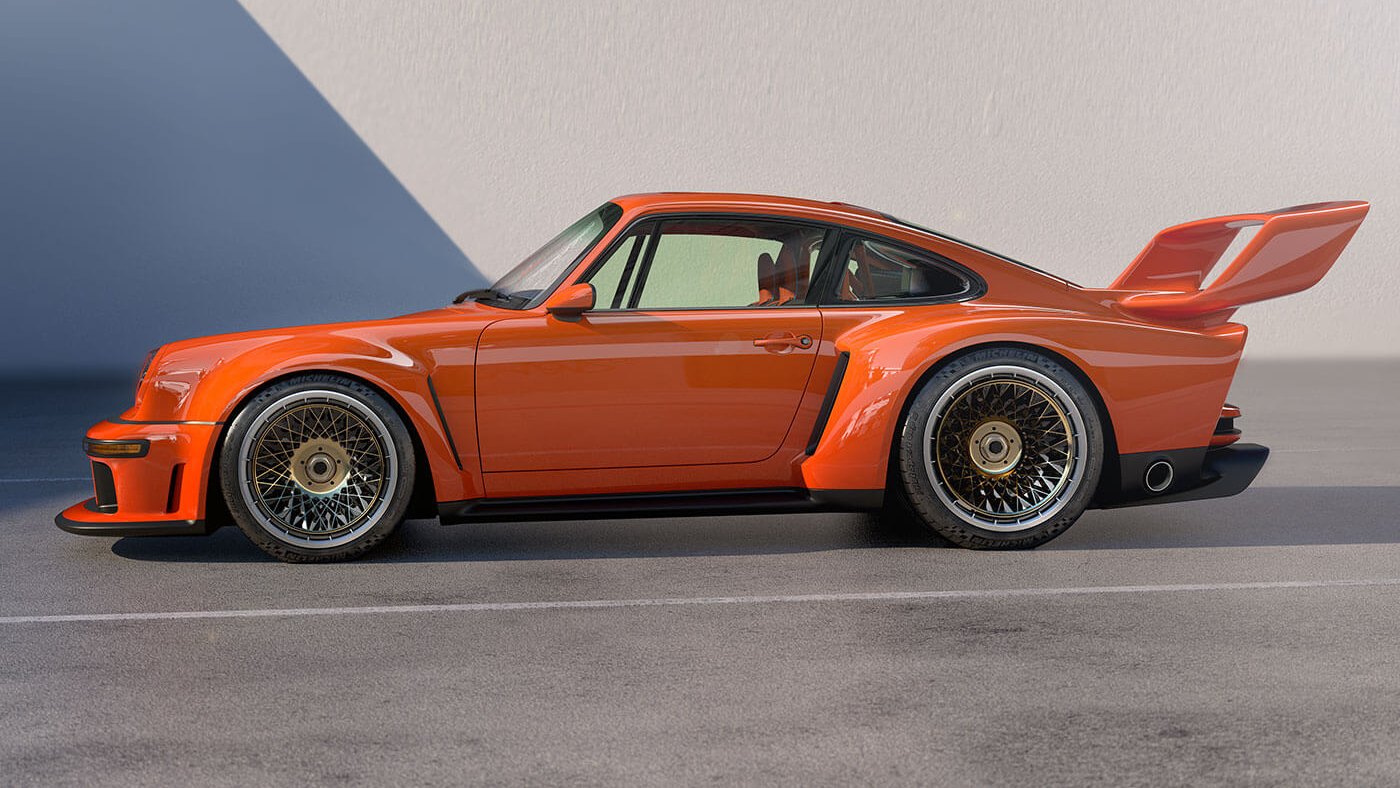
Light Poppy is a red-orange with the saturation turned all the way up, a color Singer has put on everything it touches here. The latest finished DLS Turbo commission wears it on its carbon bodywork, on its magnesium wheels, and across nearly every surface of its cabin, and Singer showed the car this week in a short film on its own channel.
Each commission starts with an owner’s Type 964, sent in for a personalized restoration. The donor car is stripped back to its bare steel monocoque, the shell strengthened, and the carbon bodywork built over it, so the finished car shares an identity and little else with the 911 that arrived. That process is the point of the exercise.
Production is capped at 99 restorations, each one specified with its owner, and no two have landed alike so far.
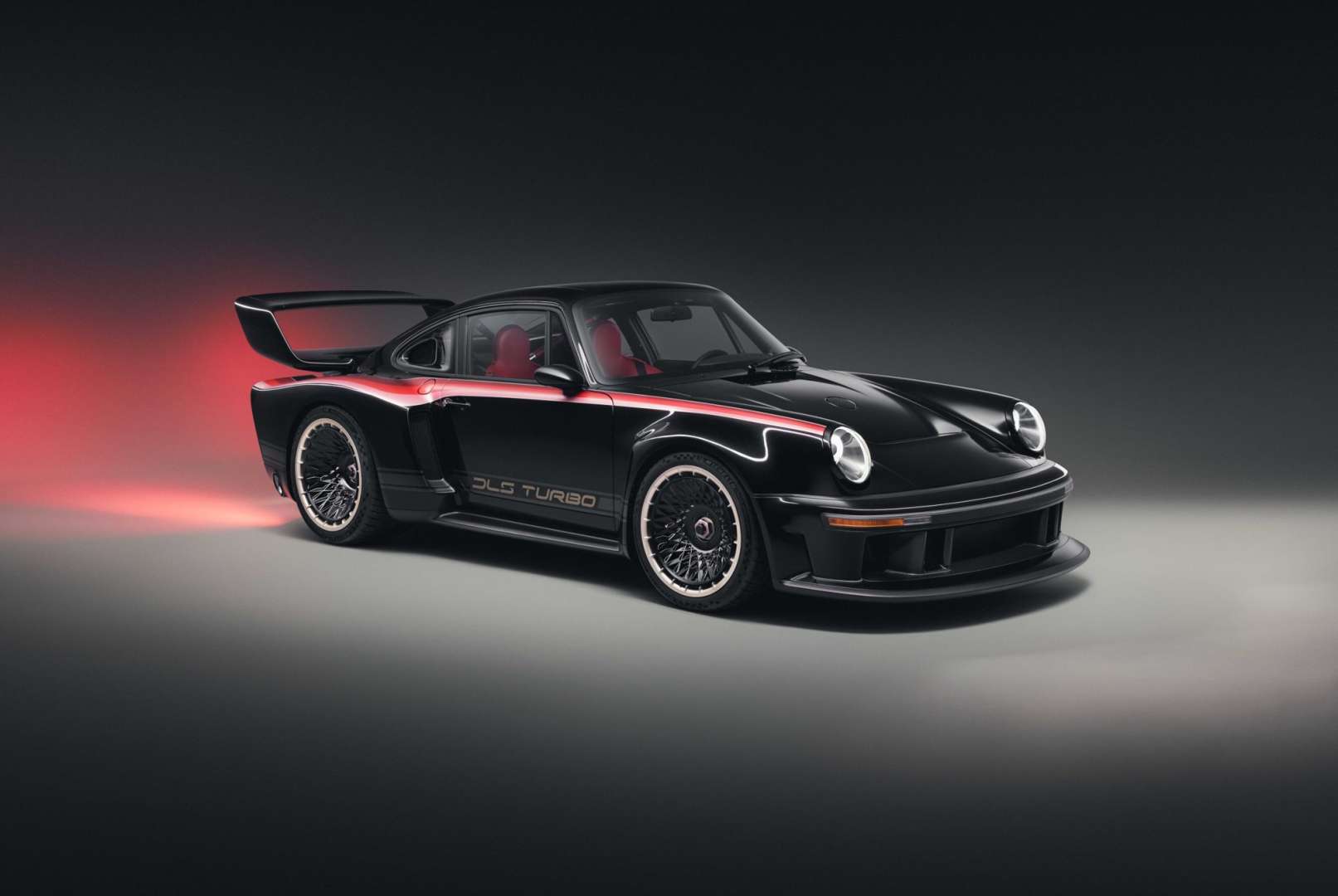
Singer presented the DLS Turbo services in 2023 as a celebration of the 934/5 endurance racers of the 1970s, the bewinged Group 5 silhouette racers. The first customer car, a Fantasia Blue commission its owner named Sorcerer, was delivered in January, finished in blue over Champagne wheels. Light Poppy takes the same program in the opposite direction. The DLS badge traces back to Singer’s lightweighting study work on the air-cooled 911, built on knowledge born in Formula 1.
The track bodywork, worn loud
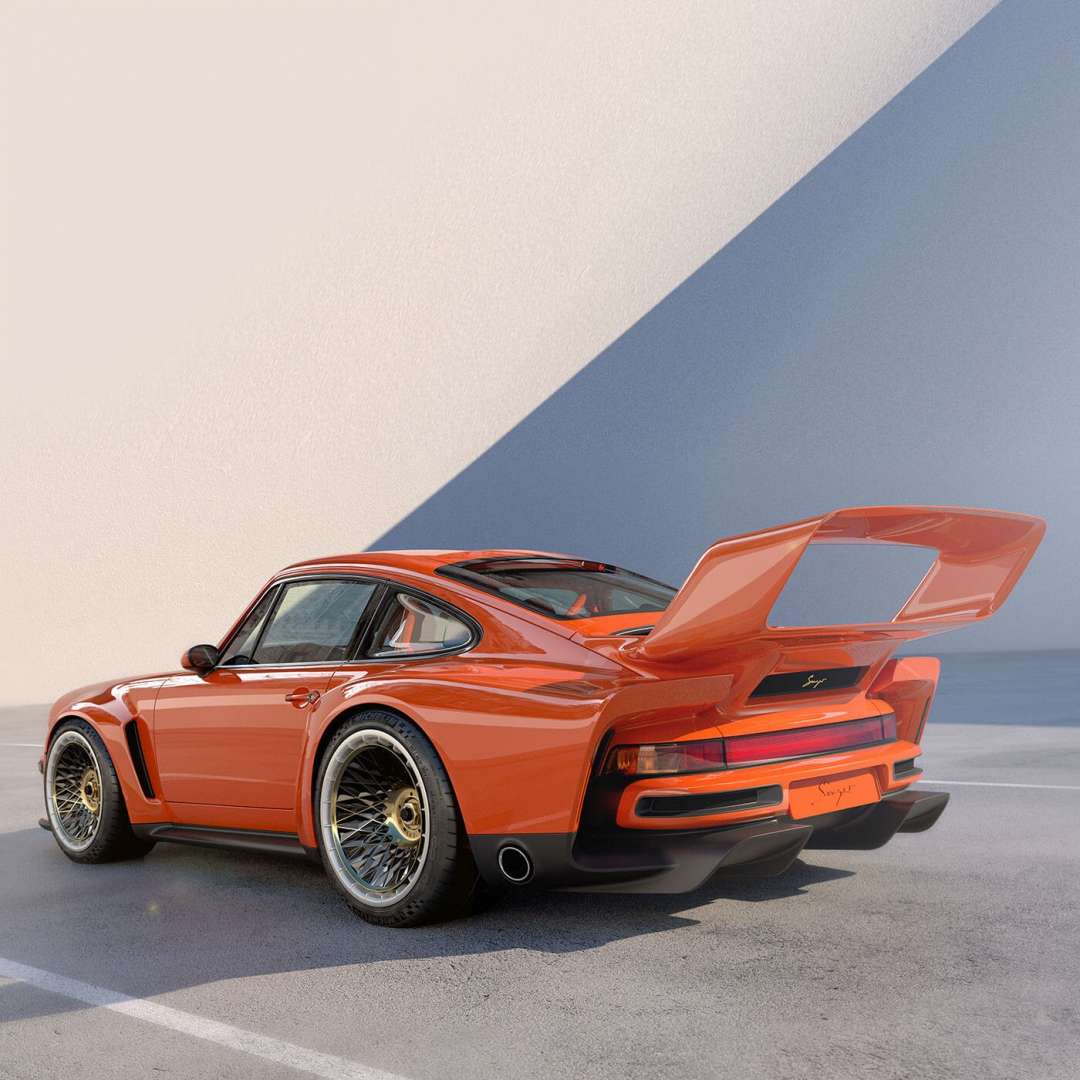
Owners choose between road and track bodywork sets, and this car runs the track set. Carbon fiber forms the wider fenders, the deep front fascia, and a rear wing built on an architectural scale, all sprayed in the same red-orange.
From the side, the proportions stay pure 964, short deck and upright glass, while the width is all new.
The wheels carry the color too. Forged magnesium center-locks in a Y-spoke design wear a Light Poppy finish, and the commission includes a second set with turbofan covers, a wheel treatment exclusive to the DLS Turbo. Behind them sit CCM-R carbon-ceramic discs with calipers finished in Champagne, Singer’s established contrast metal for the program.
A flat-six that revs to 9,000
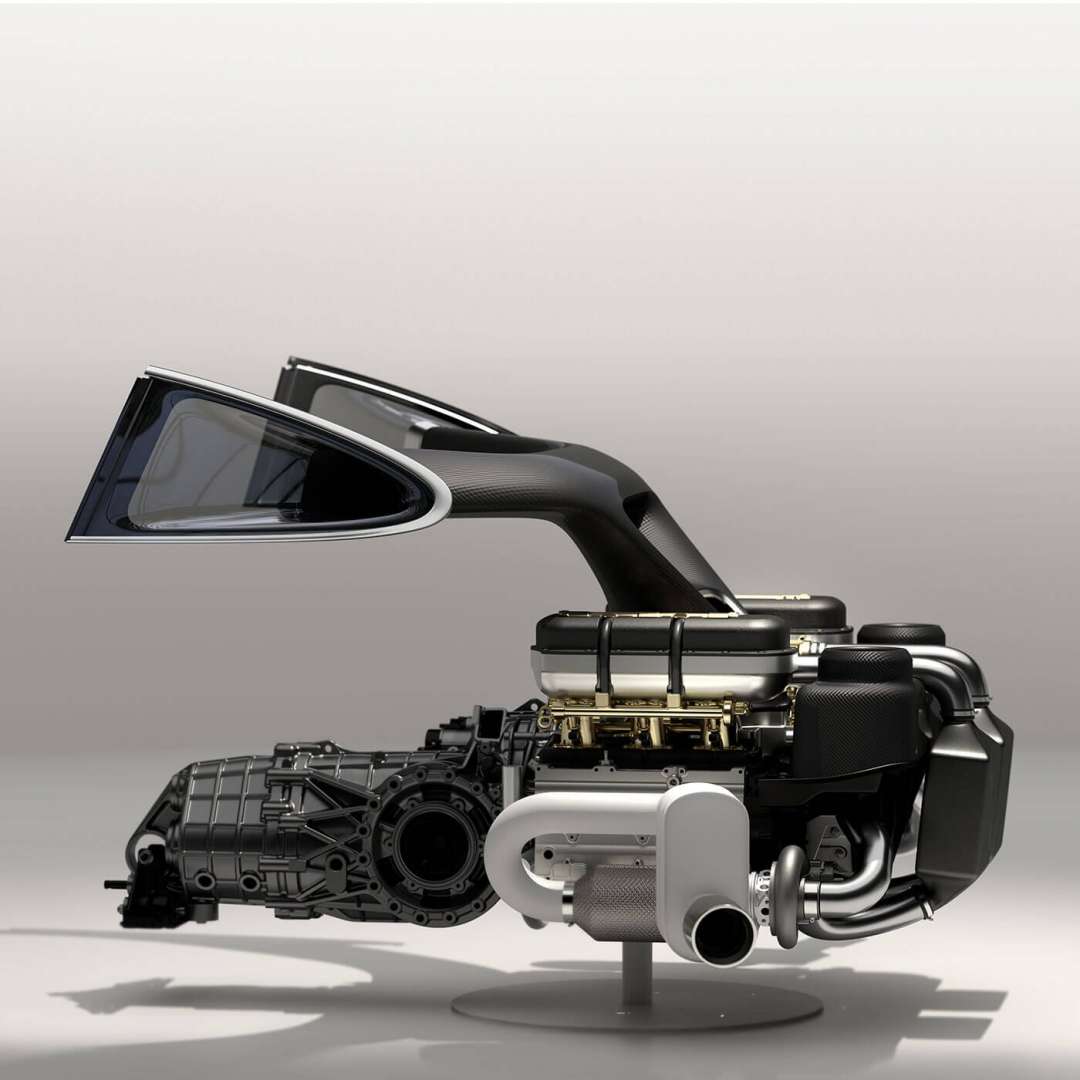
Under the rear deck sits the engine Singer developed through its DLS work and then turbocharged, a 3.8-liter flat-six with four valves per cylinder. A pair of variable-geometry turbochargers with electric wastegates feeds it, sized for response as much as output, and the whole unit was designed to rev like a naturally aspirated engine.
Cooling mixes eras: water-cooled heads, air-cooled cylinders, an electric fan moving the air, a first for a Singer engine, and air-to-water intercooling for the turbo charge, fed through intakes cut into the rear quarters.
Output is 710 horsepower and 553 lb-ft of torque, delivered to the rear wheels through a six-speed manual, and the redline sits at 9,000 rpm, territory no production 911 Turbo has ever worked in. An Inconel and titanium exhaust exits at the side, low behind the rear wheel, and the hardware is identical to Sorcerer’s underneath the paint. Singer carries out the DLS Turbo restorations at its UK facility.
That makes Light Poppy an early car in the run of 99, surfacing ten months after the first delivery, and finished cars appear one at a time because each one is a full rebuild wearing a one-off specification.
No road test exists for a one-off commission, and none is coming. What the specification promises is a 964’s footprint with roughly double the output of the 964 Turbo that inspired it, a manual gearbox, and rear-wheel drive. Nothing about that recipe is subtle.
The cabin takes the color just as far
Open the door and the red-orange keeps going. Light Poppy leather covers the seats, the dash pads, the door cards, and the rear cross brace, leather wrapped over the beam that spans the cabin where a 964 normally carries trim and a parcel shelf. Exposed carbon fiber carries the console, the dash structure, and the seat shells between the color.
Gauge housings are bespoke anodized pieces, and the five-dial cluster keeps its classic layout.
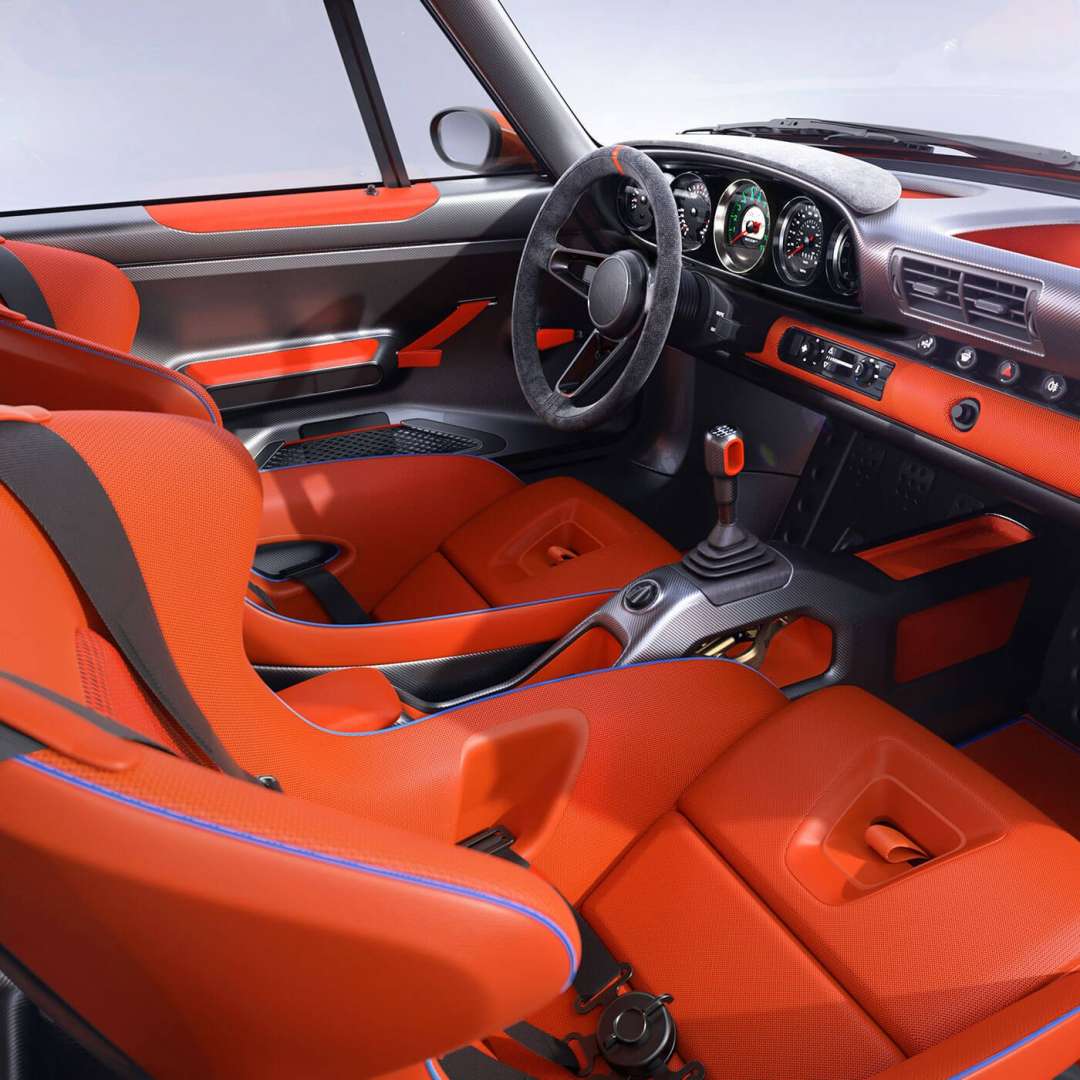
The shifter stands tall on the open console, its knob carrying a small orange insert, and four-point harnesses in black webbing run over the seat shoulders, the one dark note in the cabin.
Editor’s take
Ninety-nine commissions means ninety-nine arguments about what a 964 can become, and this one argues through color discipline. Sorcerer went blue and Champagne. Light Poppy picks one loud note and holds it across paint, wheels, leather, and trim until the restraint underneath the volume shows. The usual restomod punctuation, a black roof or bare carbon, never shows up.
Champagne calipers and gold wheel centers are the only breaks, and both read as hardware rather than decoration. That restraint is the tell.
Singer has never published a price for any of it. The company’s standing line is that pricing depends on each owner’s requests, and a program like this one sells time and attention more than specification. On the evidence of this car, the attention is the product.


