

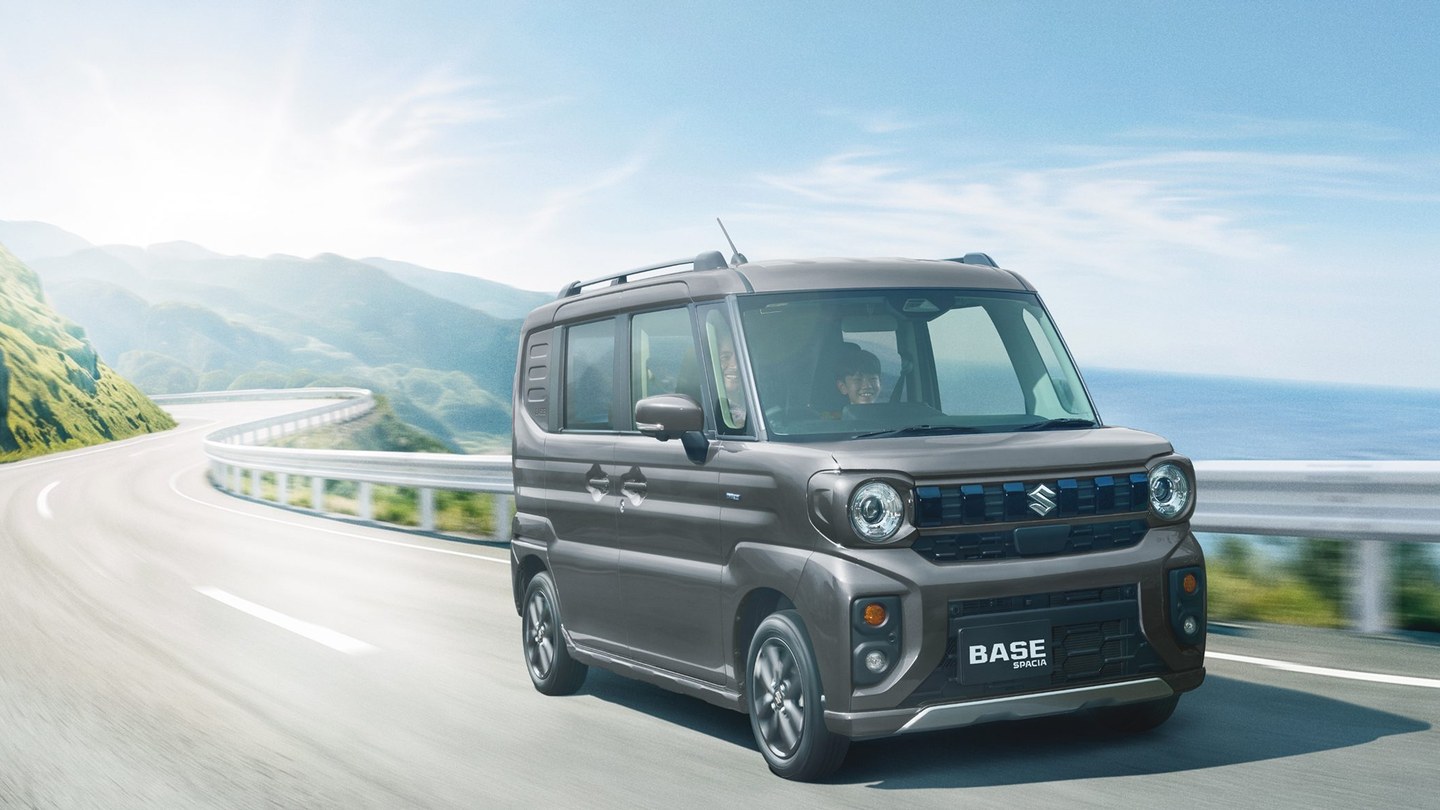
Suzuki took the rear seat out of its kei work van and gave the space to cargo, boards and sleep. The new Spacia Base seats two, and everything behind them is one flat, reconfigurable room.
Suzuki Spacia Base
Price to be announced
- Seats
- Two, with cargo behind
- Cargo system
- Multi Board, seven layouts
- Powertrain
- R06A turbo, mild hybrid
- On sale
- Winter 2026, Japan
Two seats, then a room
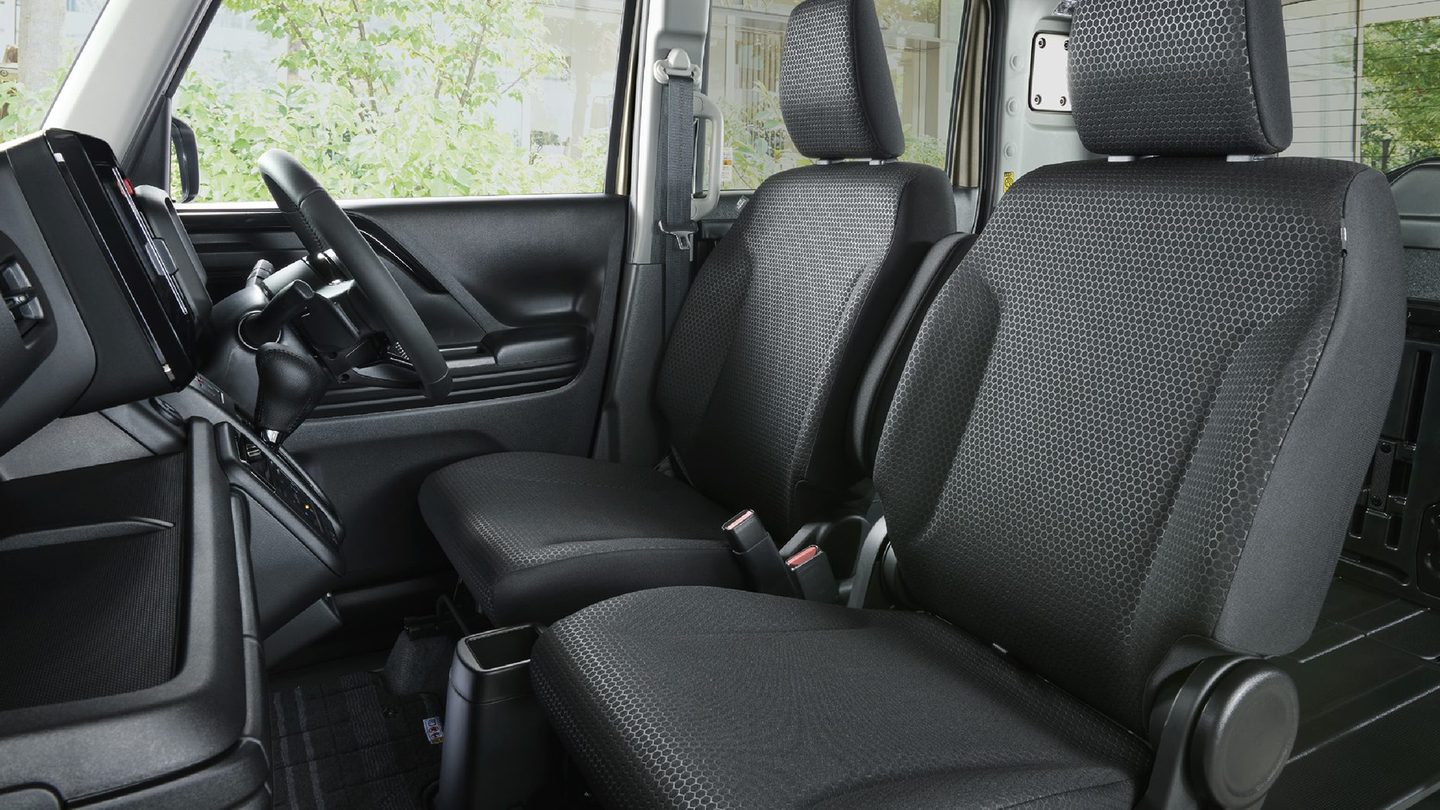
The change starts with subtraction, because the passenger version of this van carried four people and the Base now stops at the two front chairs. Everything aft of those chairs is cargo floor.
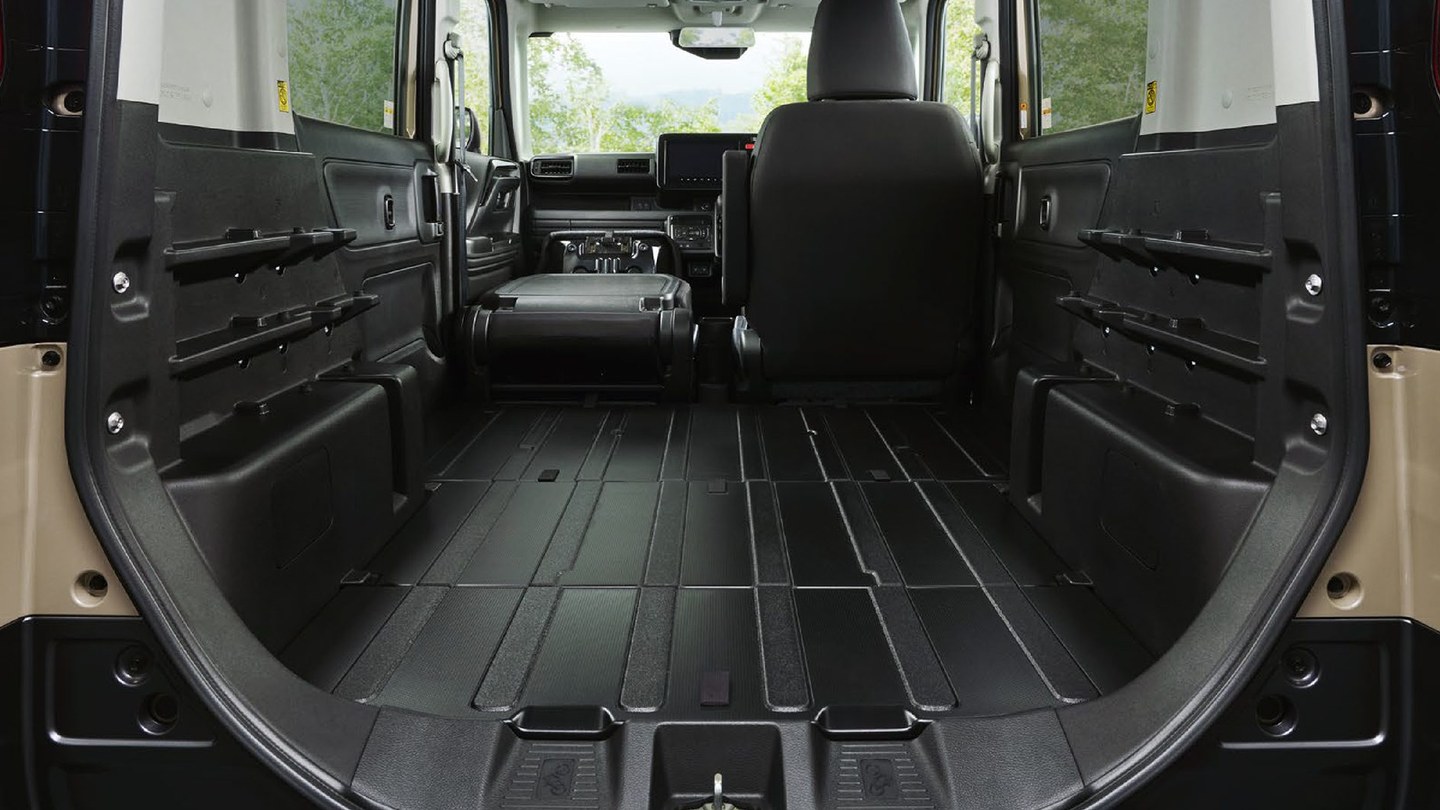
Wall rails and headroom do the rest, pitched at people who work from the van all week and sleep in it on Friday nights.
That trade has a cost, and it lands on anyone who occasionally needs to carry a third or fourth person, because no rear bench folds back up when you need one. The payoff is a floor that stays flat and unobstructed from the front seats to the rear hatch, with nothing to unbolt before loading anything.
Both rear doors slide, so the cargo opening stays usable in a tight parking bay, and the tall roof keeps the space workable for loading bikes and boards upright. Long loads run straight down the middle, and nothing needs a wheel removed or a diagonal angle to fit, which is the difference between a cargo area and a storage compartment with seats deleted. Two chairs, one room behind them.
Seven rooms from two boards
Suzuki calls the system Multi Board, and the idea is furniture rather than storage.
Two boards and the cargo walls combine into seven distinct layouts for work, hauling and sleeping, and each one starts from the same flat floor. Fold the front passenger backrest forward and set one board behind it, and the van sleeps one person on a single flat platform.
Join both boards, recline both backrests, and it sleeps two adults with room to spare.
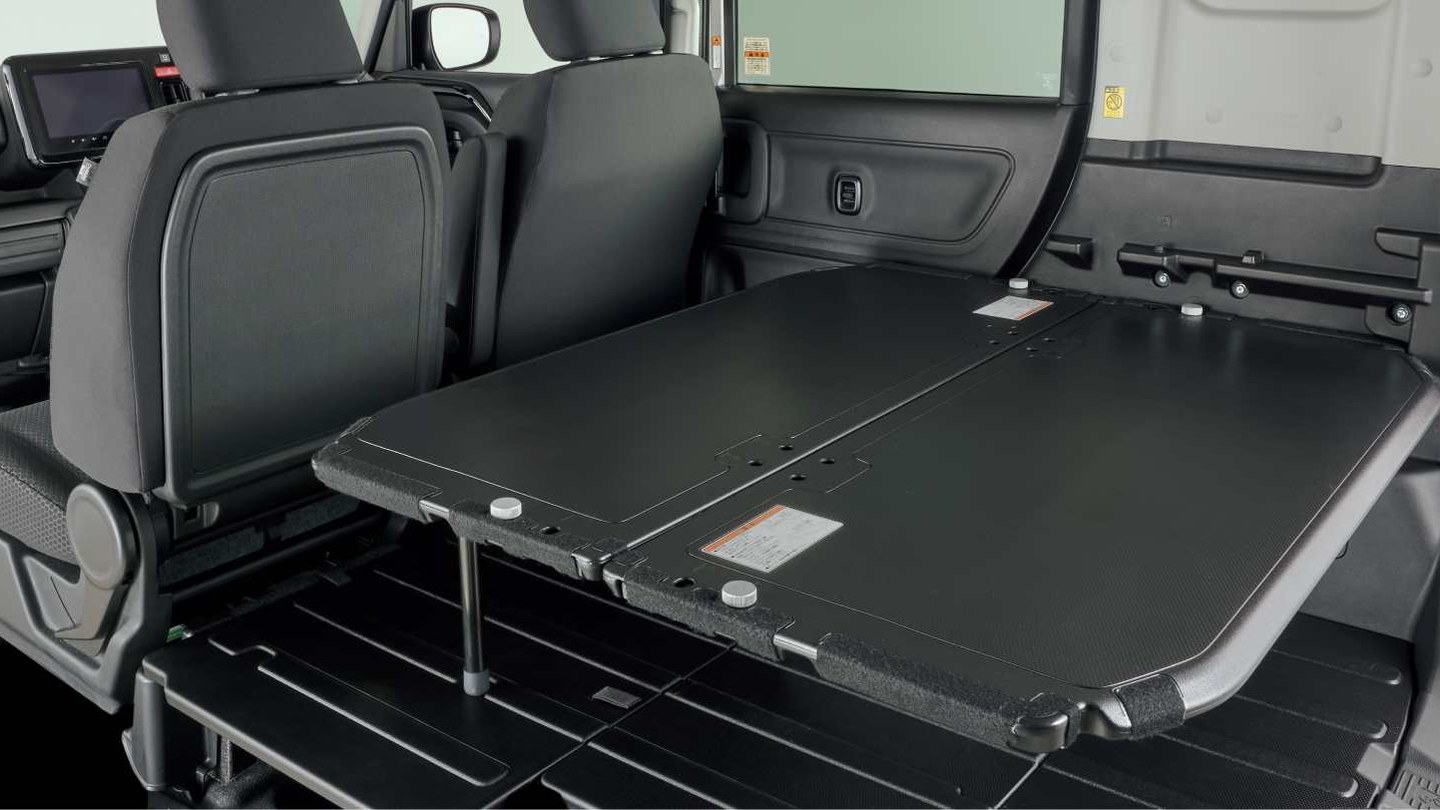
The other five modes stay practical. A board on the cargo wall becomes a side table or a workbench, and the two boards joined together make one large table for staging gear.
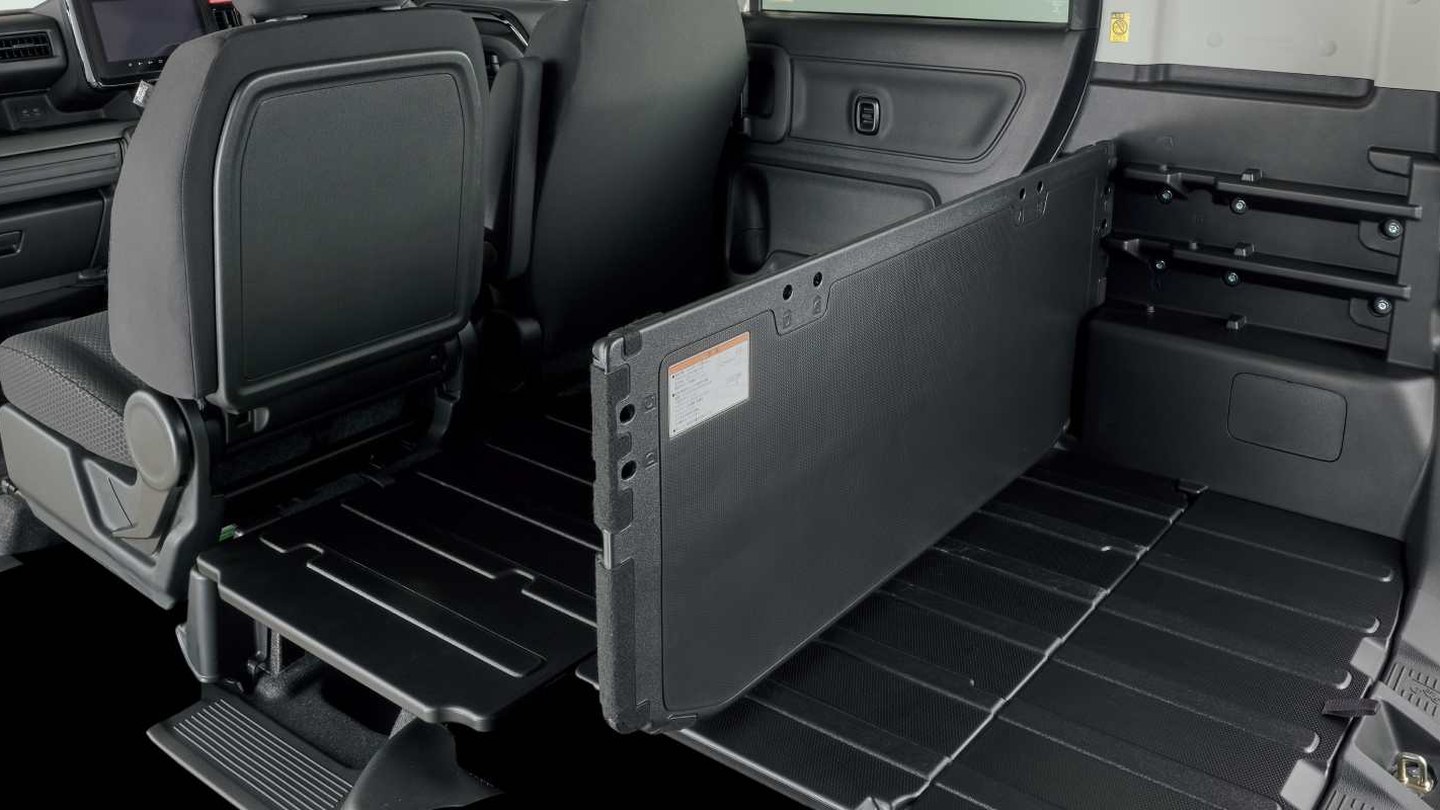
A divider wall splits the space front to back, which Suzuki illustrates with a pet fenced into its own section, and a second split adds an upper level for sorted loads. The last mode is the simplest, a deck board over everything for one flat floor.
A turbo does the heavy lifting
Power is the R06A turbo engine paired with a mild hybrid system, and Suzuki says the pairing keeps acceleration comfortable even with the cargo area loaded to the roof.
The hybrid half recovers energy under braking and stores it in a dedicated battery, a small loop that runs every time the van slows for a corner or a light. That stored charge then spends itself as motor assistance when the van pulls away again, trimming fuel use without adding a plug, a charge port or a new habit.
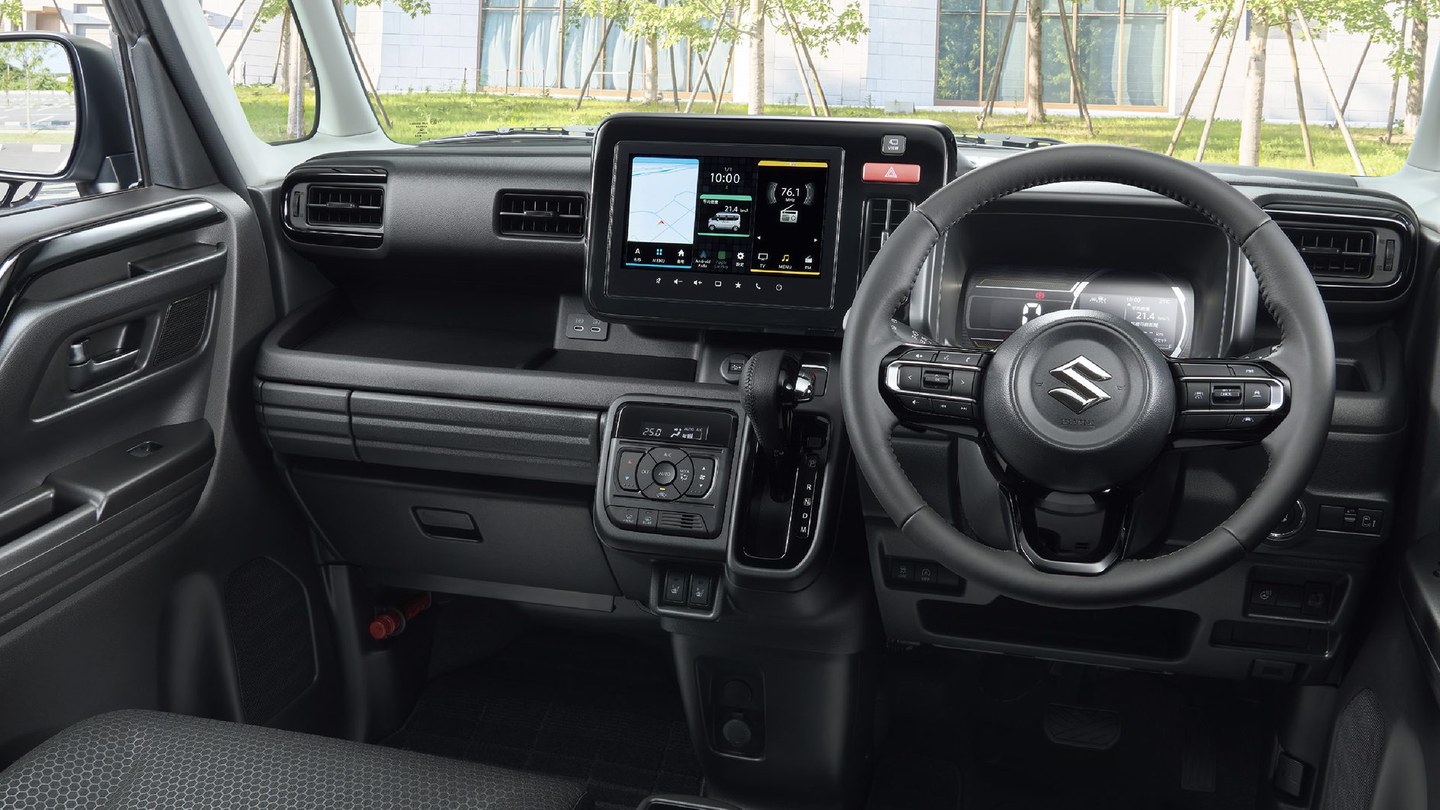
The safety kit is current, with adaptive cruise control that follows traffic at all speeds and holds the van at a stop, plus Dual Sensor Brake Support II watching for pedestrians and cyclists at intersections. Small engine, grown-up assistance.
The face does the selling. Round headlights, an upright grille and a squared silhouette give it more Jimny character than delivery-van anonymity from the front three-quarter, and the roof rails and silver bumper trim finish it like outdoor gear rather than office equipment.
Colors run Dry Sand Khaki Metallic, Denim Blue Metallic, Soft Beige Metallic, Steel Silver Metallic and Mineral Gray Metallic.
Buy it when it lands if your weekends run on trailheads and your weekdays run on deliveries, and you want the bed to come from the factory rather than a conversion shop. Suzuki hasn’t set the price or the exact on-sale date yet, and the kei class keeps it in Japan regardless. Suzuki also notes the published specification is still under development, so details can shift before the winter debut.