

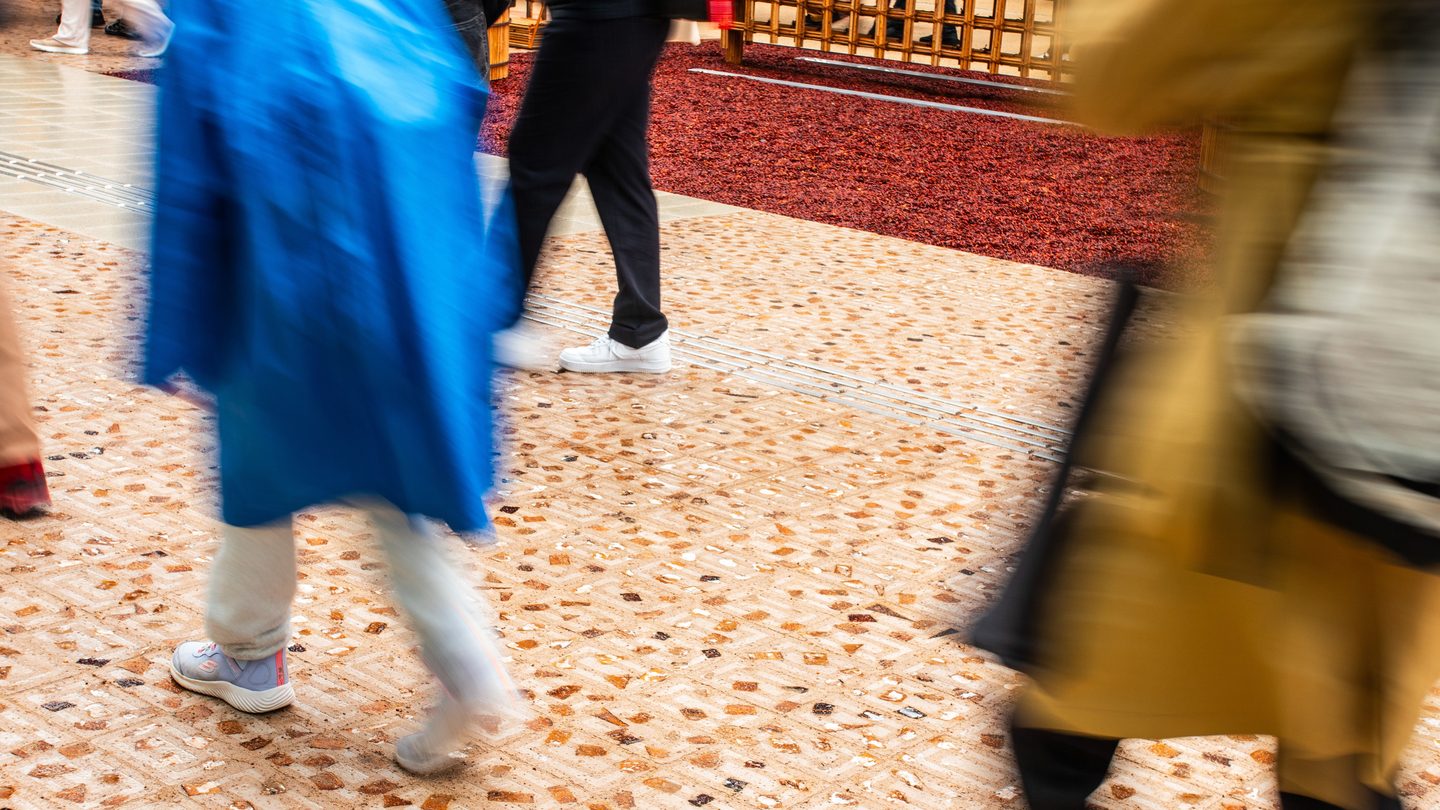
Datecrete starts as the part of the date nobody eats. Datecrete Studio & Lab, a UAE practice run by urban planner Sara Farha and chemical engineer Khaled Shalkha, grinds discarded date pits into a building material with no cement and no resin in it.
The material took a special prize at the Seoul Design Award 2026, and the feedstock explains the jury’s interest. Date pits pile up as a byproduct of the date industry across the Middle East and North Africa, and they’re dense with mineral and carbon content, closer in composition to wood than to stone.
Datecrete Studio & Lab
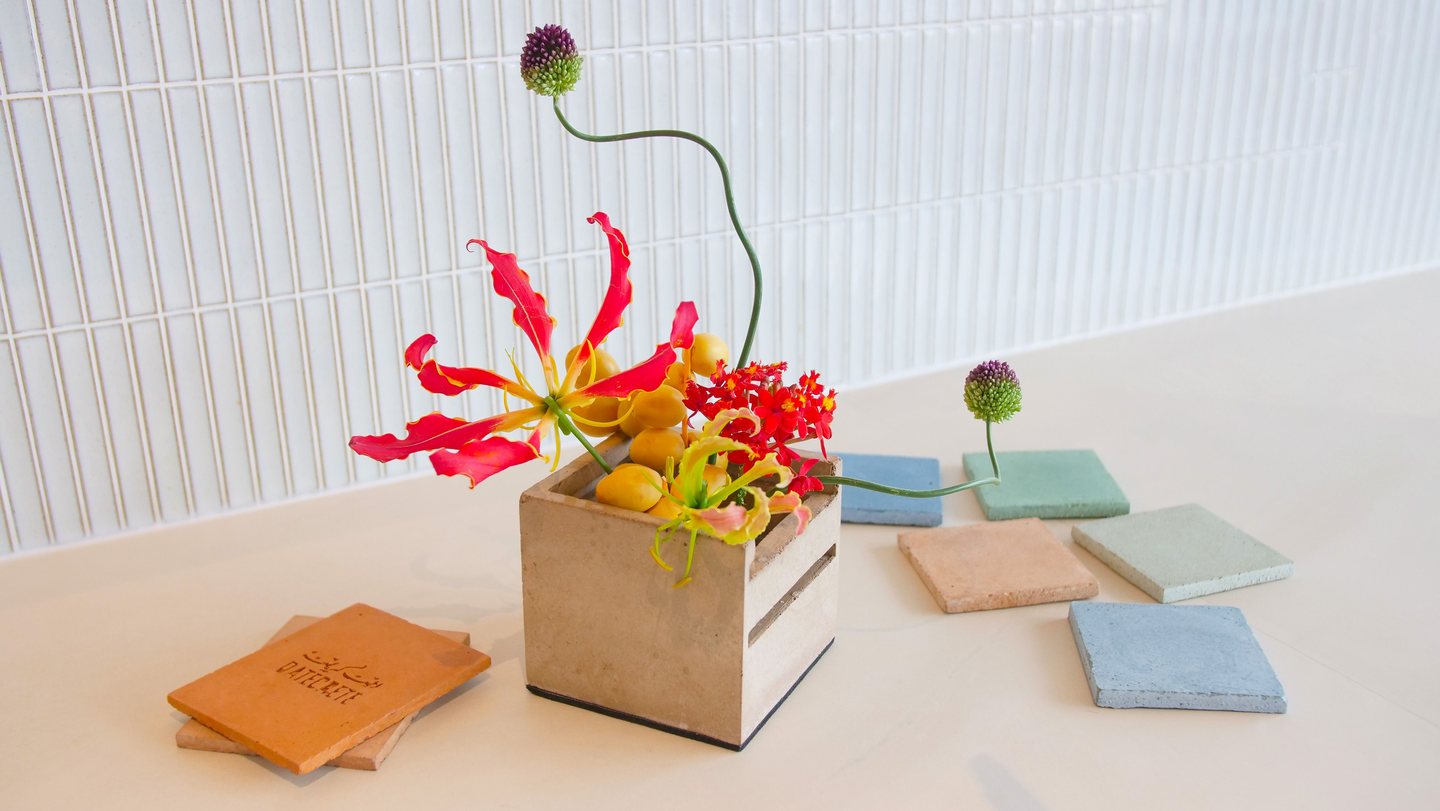
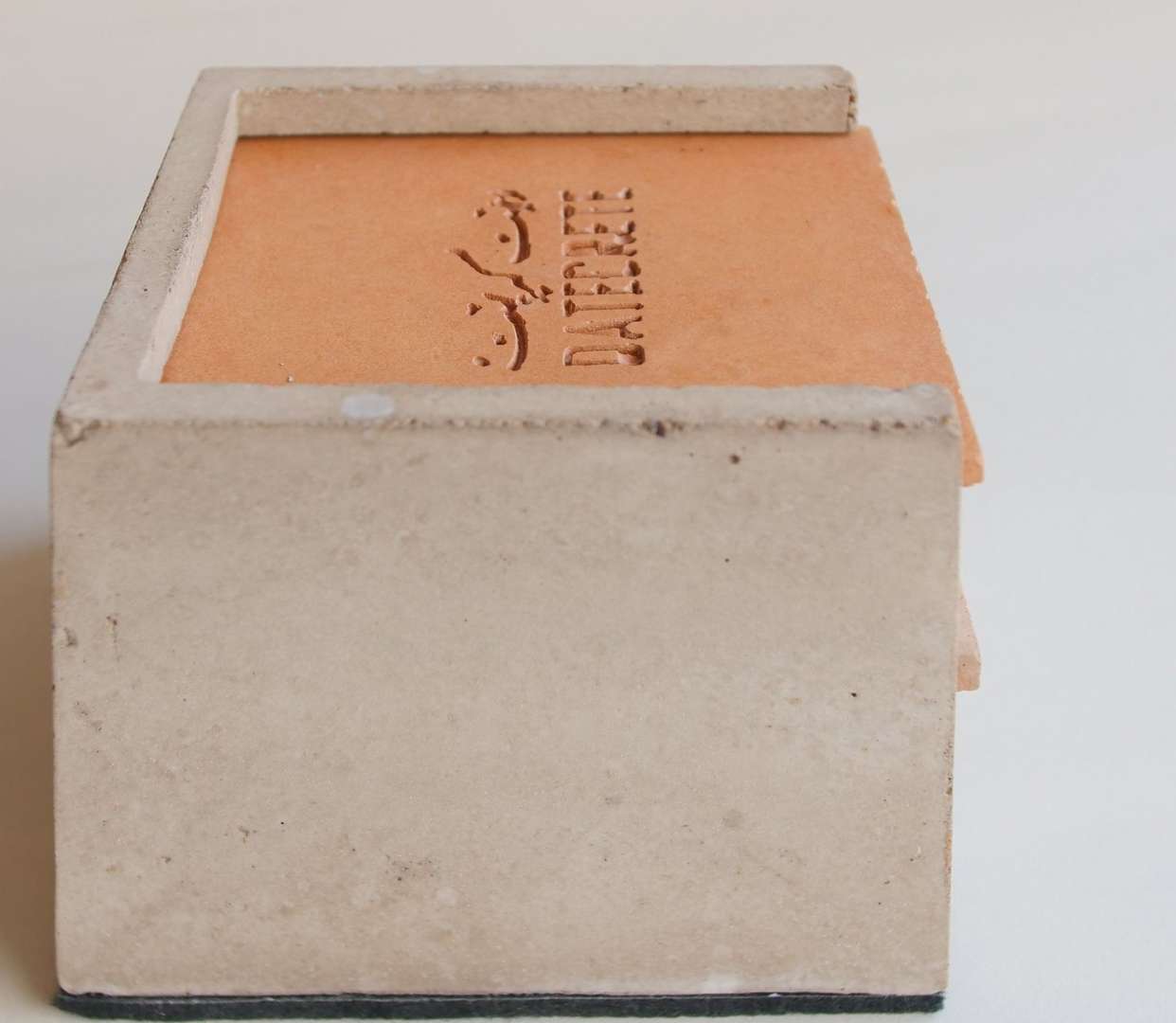
Datecrete Sample Box
Price: $65
Thirteen textures and finishes across a two-level interior, in a box cast from Datecrete itself with two sliding lids.
First the pits get roasted, then they get ground
The process starts at date processing factories near the studio, where the pits arrive as waste and leave as raw material. Each batch is dried and roasted, then ground down to a powder fine enough to cast.
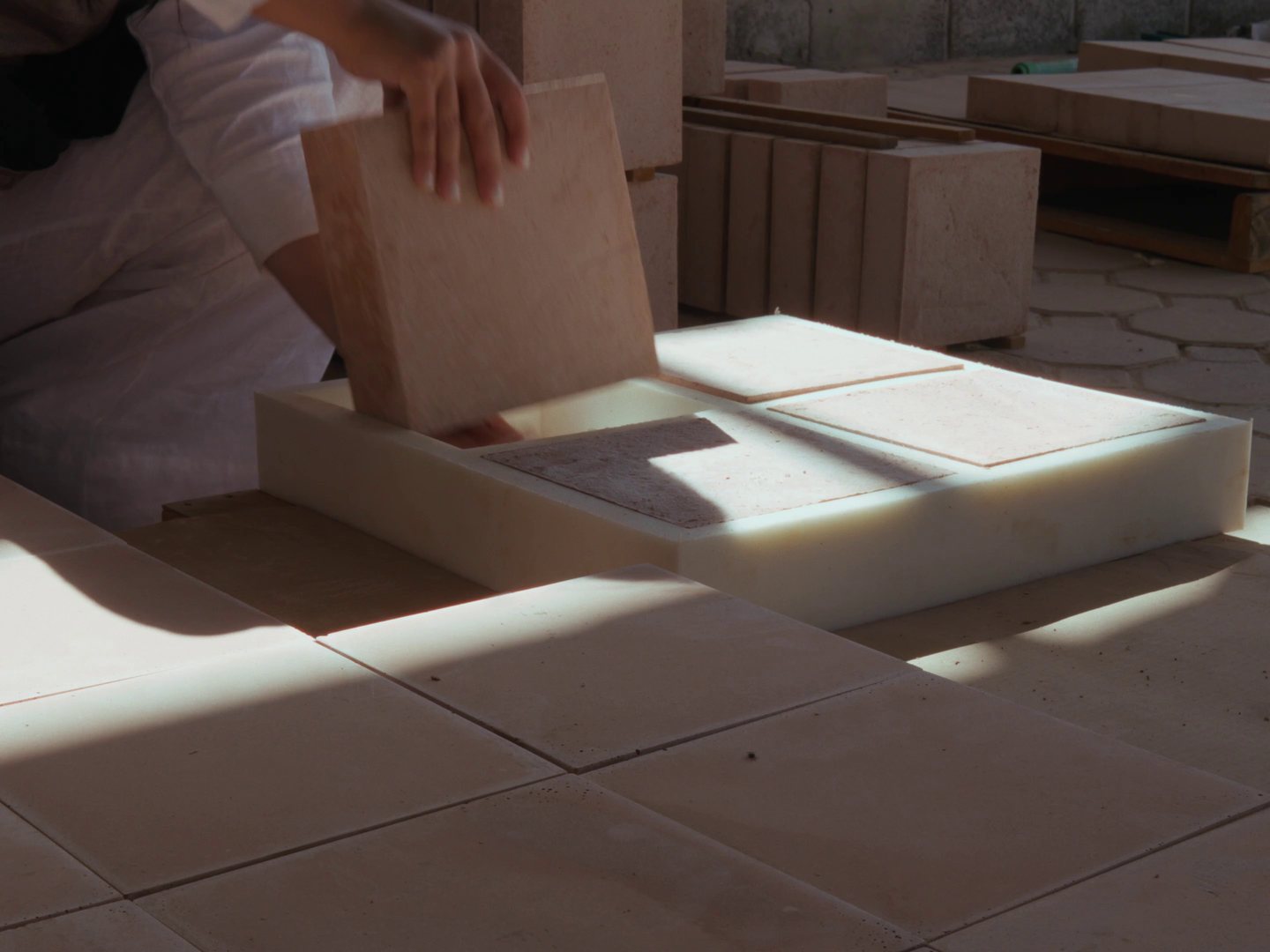
That powder meets a natural binder and goes into molds, where it cures under controlled conditions before it’s finished and sealed. No cement kiln, no resin chemistry, and no synthetic glue holds the finished piece together, since the pit’s own cellulose and lignin do the structural work. It’s a short supply chain.
The test sheet runs long
The studio publishes its lab numbers in the open, and they read like a specifier’s checklist rather than a brochure. Fire testing under ASTM E84 puts the material in Class A, with a flame spread of 0 and a smoke index of 20. Abrasion testing wore 797.3 milligrams off a sample across 1,000 revolutions under ASTM D4060.
Compressive strength lands at 23.8 N/mm², and a 500-hour ultraviolet run left sample surfaces without cracking, chalking, flaking or any shift in color. The sheet also lists a density of 1650 kilograms per cubic meter, slip resistance of 60 BPN dry and 41 wet, and a stain index of nil after testing. Those are checkable numbers.
What comes out of the molds
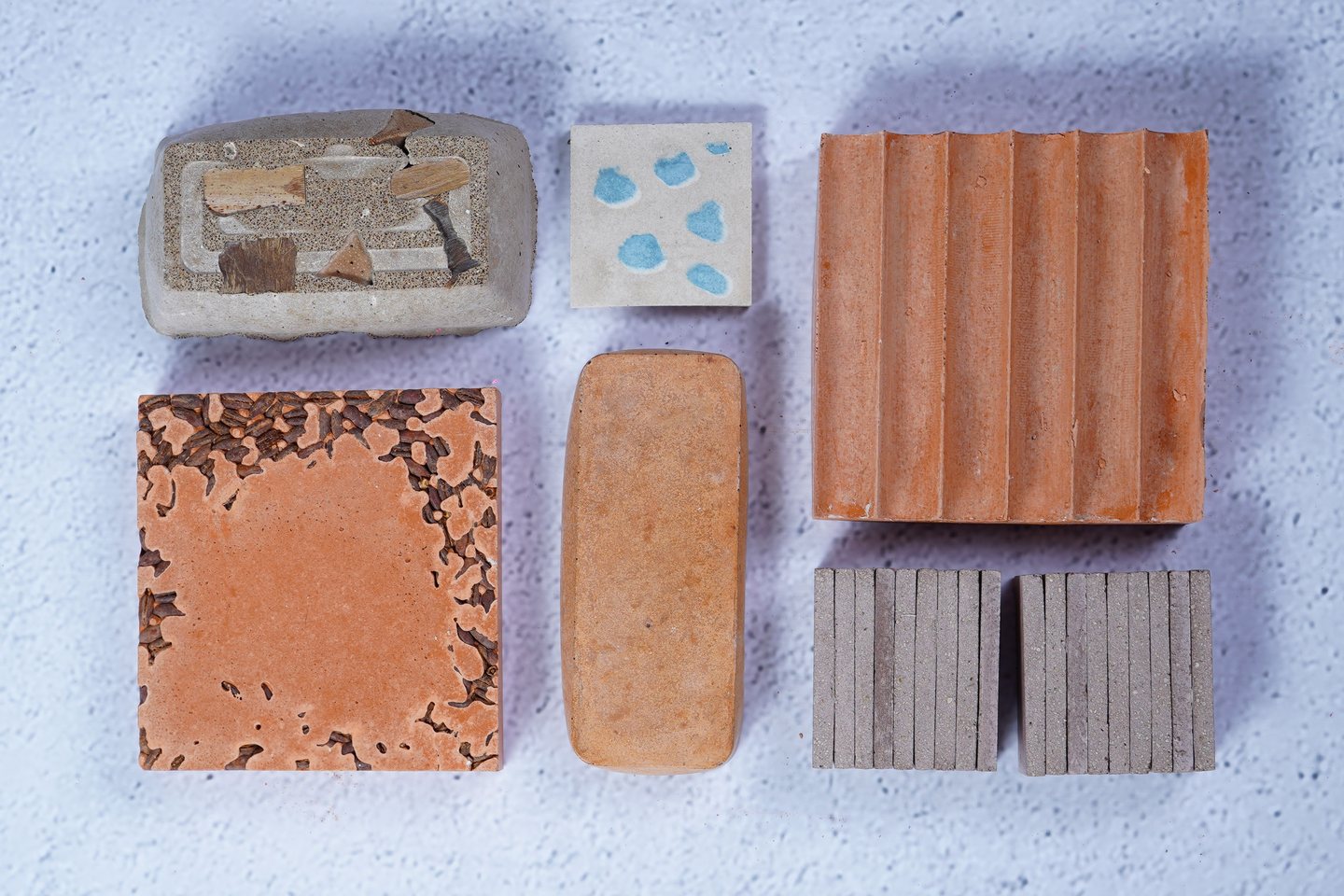
Datecrete leaves the studio as tiles, panels and furniture, and the same casting route takes on sculptural forms and custom profiles built to a client’s drawings. Every run can be tuned for texture, color and pattern, and each piece ships in a matte or glossy finish.
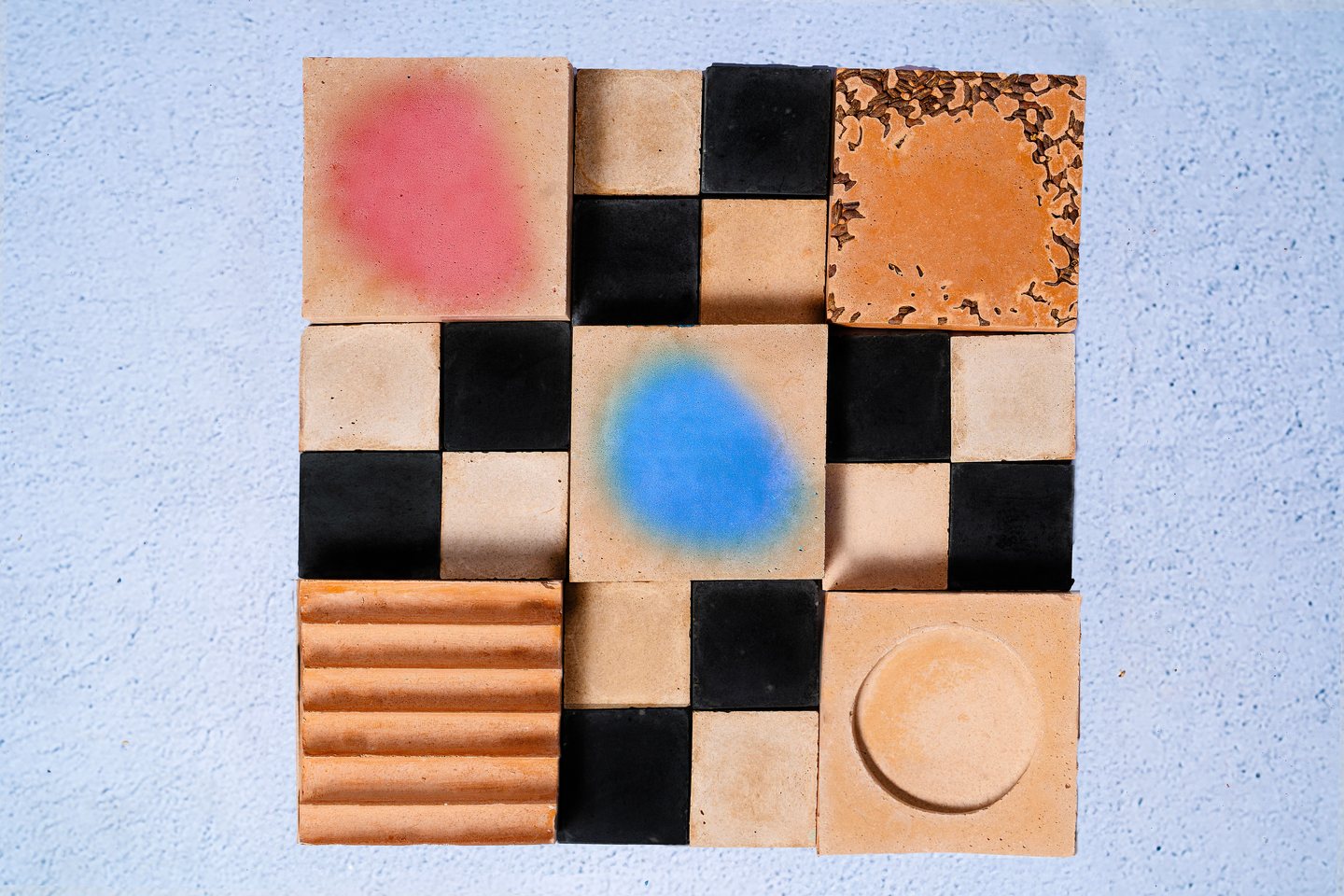
The palette runs warm.
Thirteen finishes arrive in one box
Specifiers don’t have to take the range on faith, because the studio sells a sample box with room for thirteen textures and finishes across a two-level interior. The box itself is cast from Datecrete, with two sliding lids, so the packaging carries the same proof as the samples inside it.
The gap in the story is time, since a material that entered research in 2022 can’t show a specifier a fifty-year-old floor, though a published test sheet is how a young material earns its first commissions.
Order the box if you’re specifying surfaces for a project that can carry a warm, mineral palette and you want the test data in hand before the first meeting.
At $65 it’s a cheap way to find out, and passing on it means specifying the same cement-based tile you’ve already used a dozen times.


