

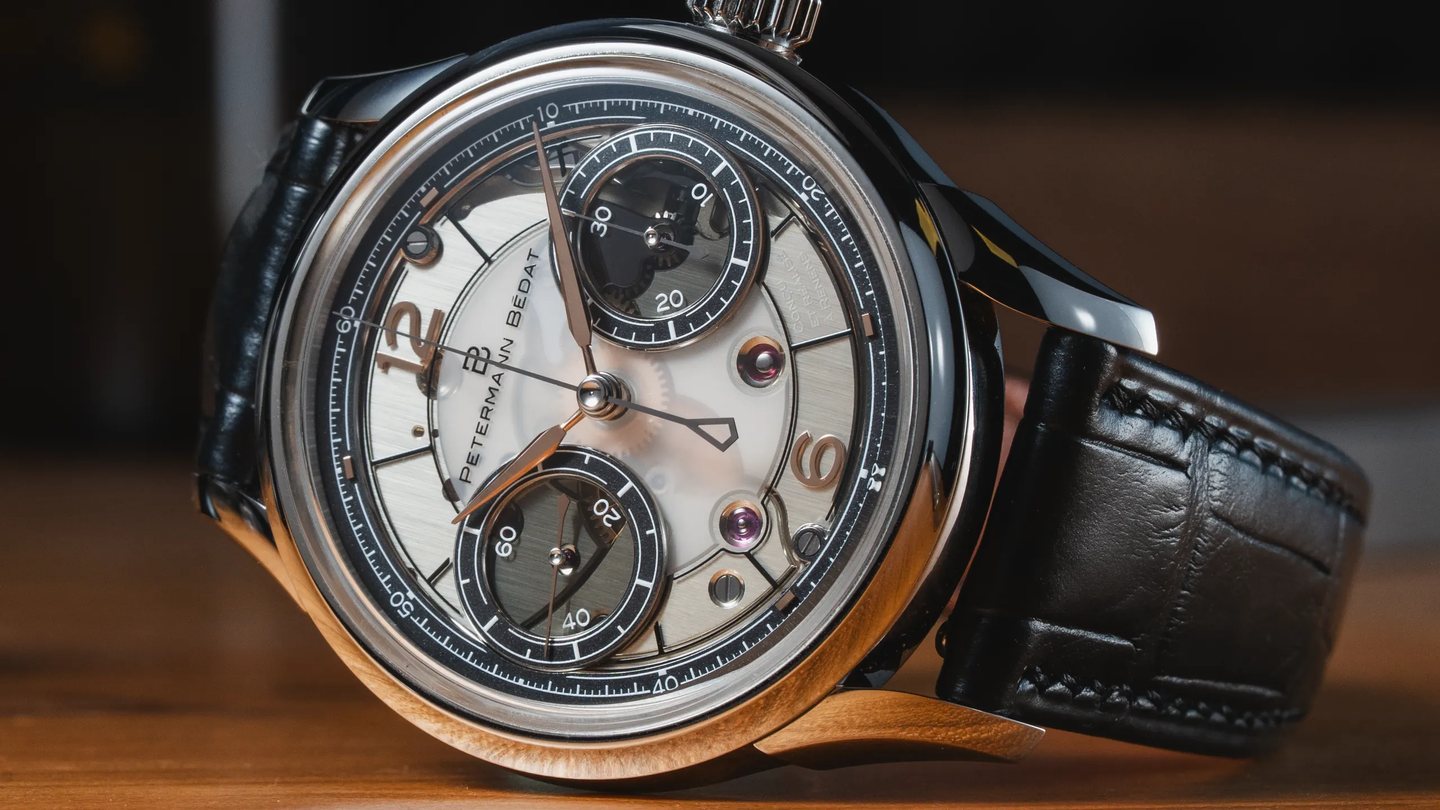
Gaël Petermann and Florian Bédat built their name on complicated watches, a dead-beat seconds first and then a split-seconds chronograph with a jumping minute counter. The Reference 2914 is their new reading of that chronograph, and the move is subtraction. The split-seconds mechanism is gone. What’s left is a straight monopusher chronograph in a 36.5mm platinum case, smaller and calmer than the watch it descends from.
Less complication, cut down to the complication itself. That’s the whole idea here.
It’s also the pair’s most wearable watch. The two watchmakers run their workshop in Renens, near Lausanne, and they’ve spent years restoring vintage pieces alongside building their own, and that bench time shapes the 2914 more than any single spec does. Complicated watches from the middle of the last century housed serious mechanics in cases under 37mm. The 2914 takes its dimensions straight from that era, then spends its budget on finishing instead of diameter.
Platinum, sized like the watches they restore
The case is platinum, 36.5mm across and 9.9mm thick, rising to 11.6mm over the box sapphire crystal. Lug to lug it spans 45.8mm, with 18mm between the soldered lugs. Those are dress-watch numbers on a chronograph, and every one of them was chosen on purpose.
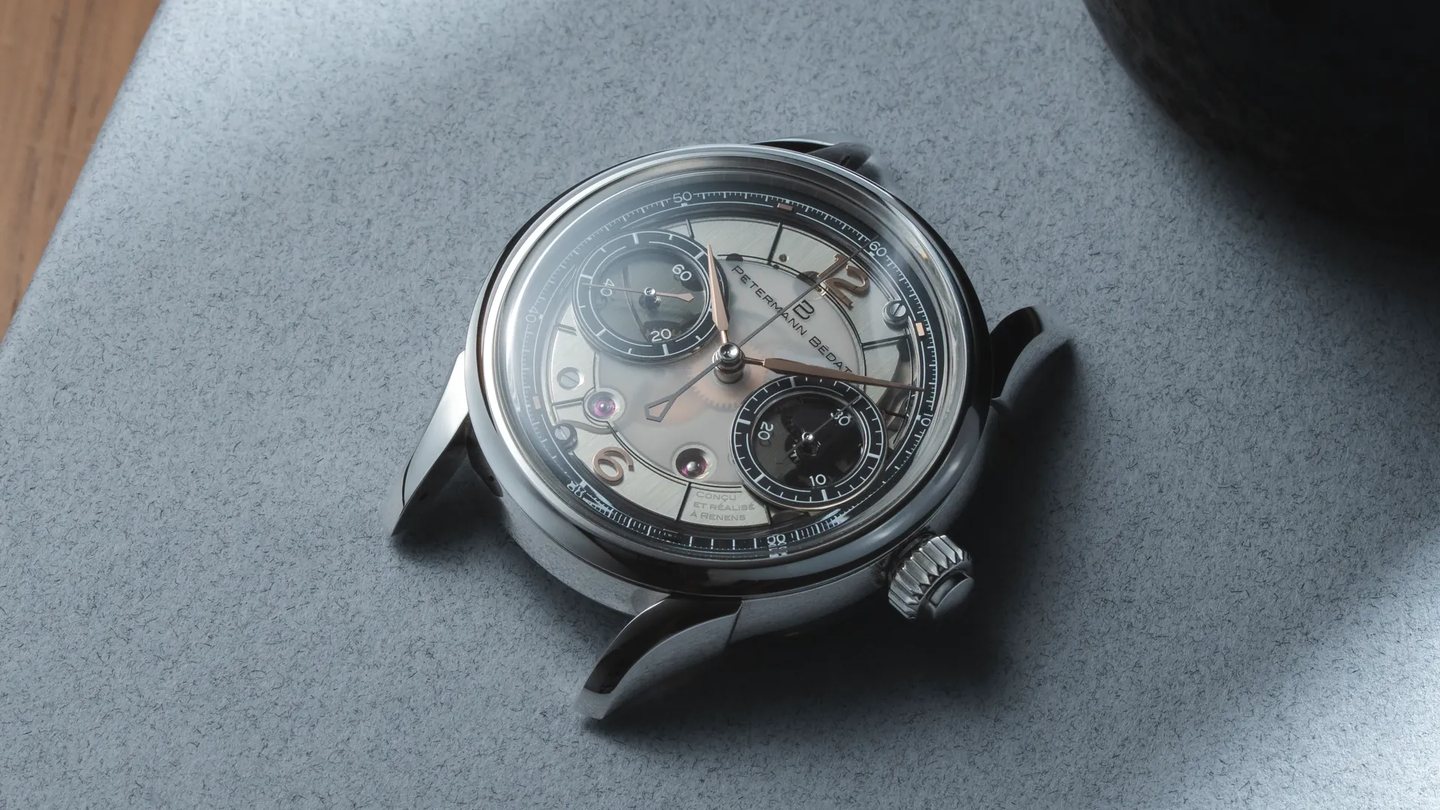
The 2941 wore the same complication family at 38.6mm and 13.7mm thick. This one shrinks it by two millimeters across and nearly four in height, and keeps the density.
Platinum does quiet work here. The metal’s weight gives a small case real presence, so the watch wears heavier than its footprint suggests. The lugs are soldered rather than milled as part of the case band, the crystal is a raised box sapphire with an anti-reflective coat, and a single pusher set into the crown starts, stops, and resets the chronograph. Nothing on the case is decoration. Every line is structure or proportion.
The dial stays open
Petermann Bédat’s semi-open dial has been part of the house since its first creation, and the 2914 reworks the construction that arrived with the 2941, holding the registers clear while the movement shows through. The plates open over the movement without turning the watch into a skeleton, and the pattern the first watch set governs this one.
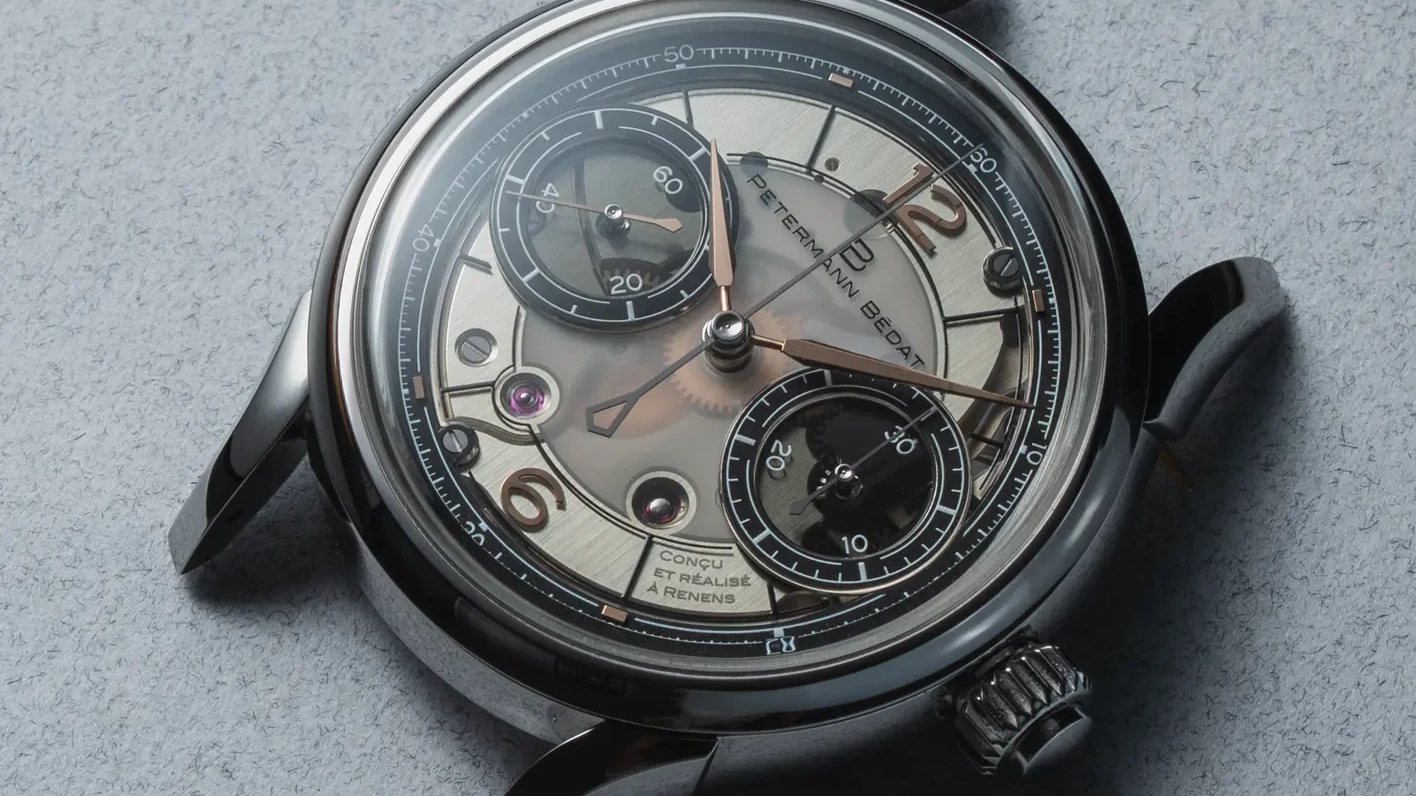
Comblémine builds the dial plates in stainless steel and sapphire, and solid gold appliques sit integrated into the sapphire itself. The 30-minute counter rides at twelve and small seconds at six, both registers sunk into the open platework around the applied gold 12 and 6. Hands are finished by hand, in gold and stainless steel. There’s no luminous material anywhere on it. Legibility comes from contrast, polish, and the black register tracks instead.
The registers read black against the pale plates beneath the sapphire, and the layout holds the balance the house has kept since its first watch. Open, but never busy.
Calibre 234 trades the split seconds for reserve and thinness
Start with what stayed. The minute counter still jumps.
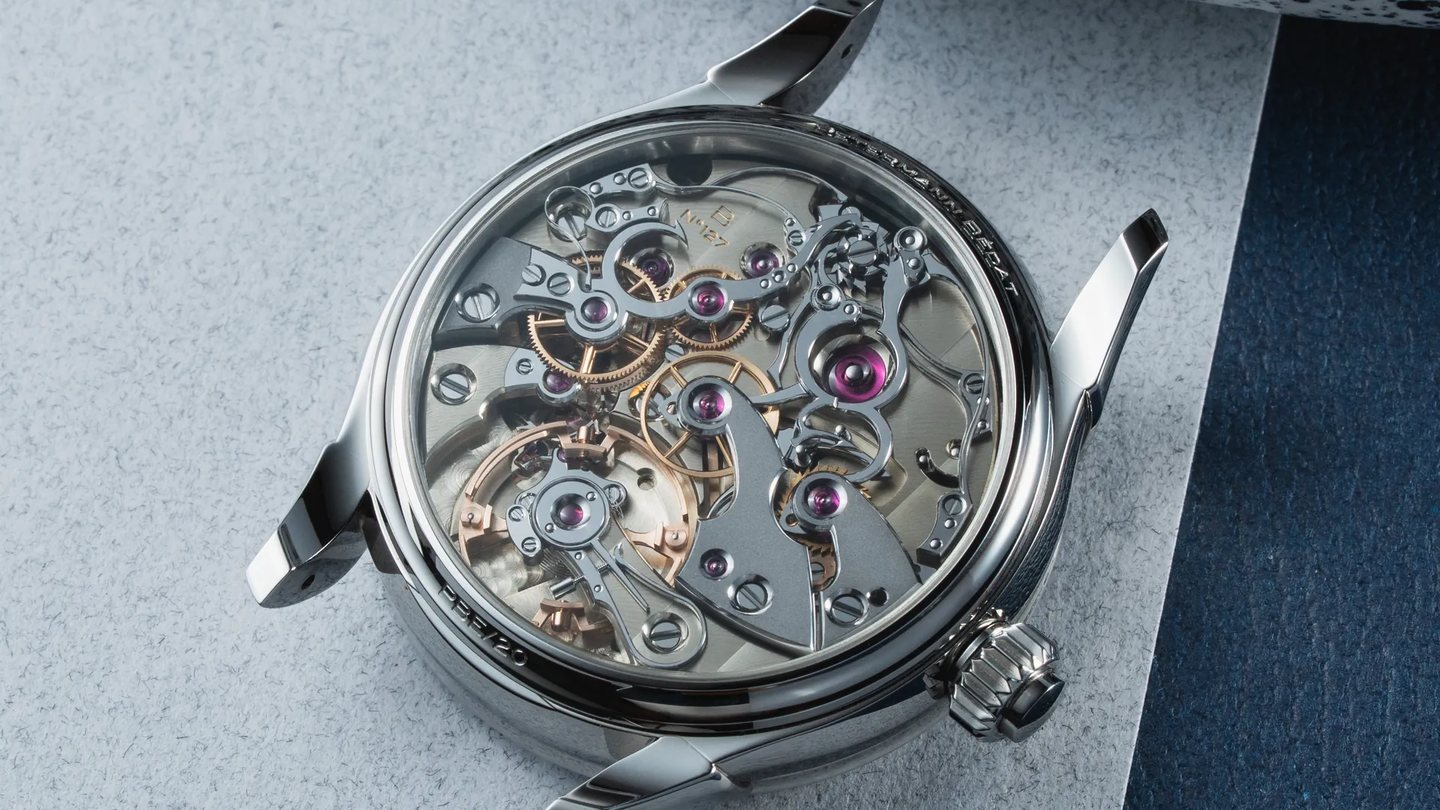
The in-house calibre 234 is a manual-wind movement, 30mm across, built around a monopusher chronograph with an instantaneous minute counter, so each elapsed minute lands exactly on its marker instead of creeping toward it. Plates and bridges are German silver and the parts stainless steel, and the going train was redesigned with hand-bevelled solid gold wheels to improve reliability.
Against the calibre 202 in the 2941, the trade is plain. The older movement packed 339 components and a rattrapante mechanism into its 30mm and ran 42 hours. The 234 answers with 56 hours of reserve, a balance beating at 18,000 vph on a Breguet overcoil spring, 21 jewels throughout, and a case 3.8mm thinner than the split-seconds wore. Slower beat, longer legs, less to go wrong.
Every surface finished by hand
The decoration is a syllabus for traditional finishing. Côtes de Genève cross the bridges, each stripe edged with hand-polished chamfers. The main plate carries sun graining and perlage. Steel parts are bevelled, polished, and black polished, all by hand, and black-polished steel has been a signature of the house from the start.
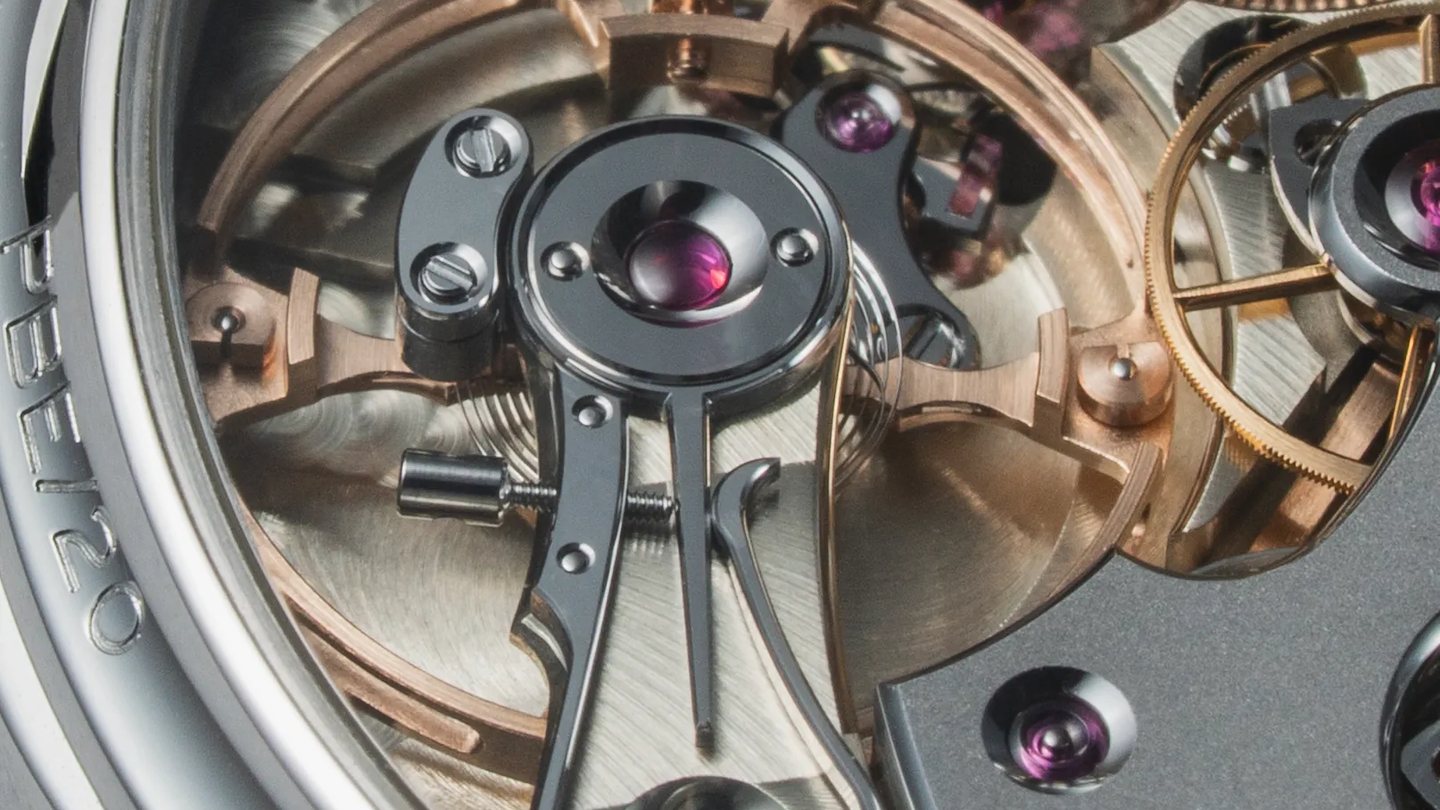
The wheels get circular graining with hand-bevelled, polished arms. The barrel and ratchet wheel carry snail graining. The balance is circular grained. None of it hides; the open dial and the caseback put most of it on view.
Petermann and Bédat met at watchmaking school in Geneva in 2007 and worked side by side in Switzerland and Germany before setting up in Renens. The workshop still runs at the pace the handwork sets. Twenty pieces is what that pace produces, and at this level of finish a series that small isn’t scarcity marketing. It’s arithmetic.
Twenty pieces, and that’s the run
The Reference 2914 costs $216,900 before tax, on a black alligator strap with a platinum buckle. The first series is twenty pieces in platinum, and each watch is numbered. Collectors who went after the 2941’s ten pieces know how this allocation ends.
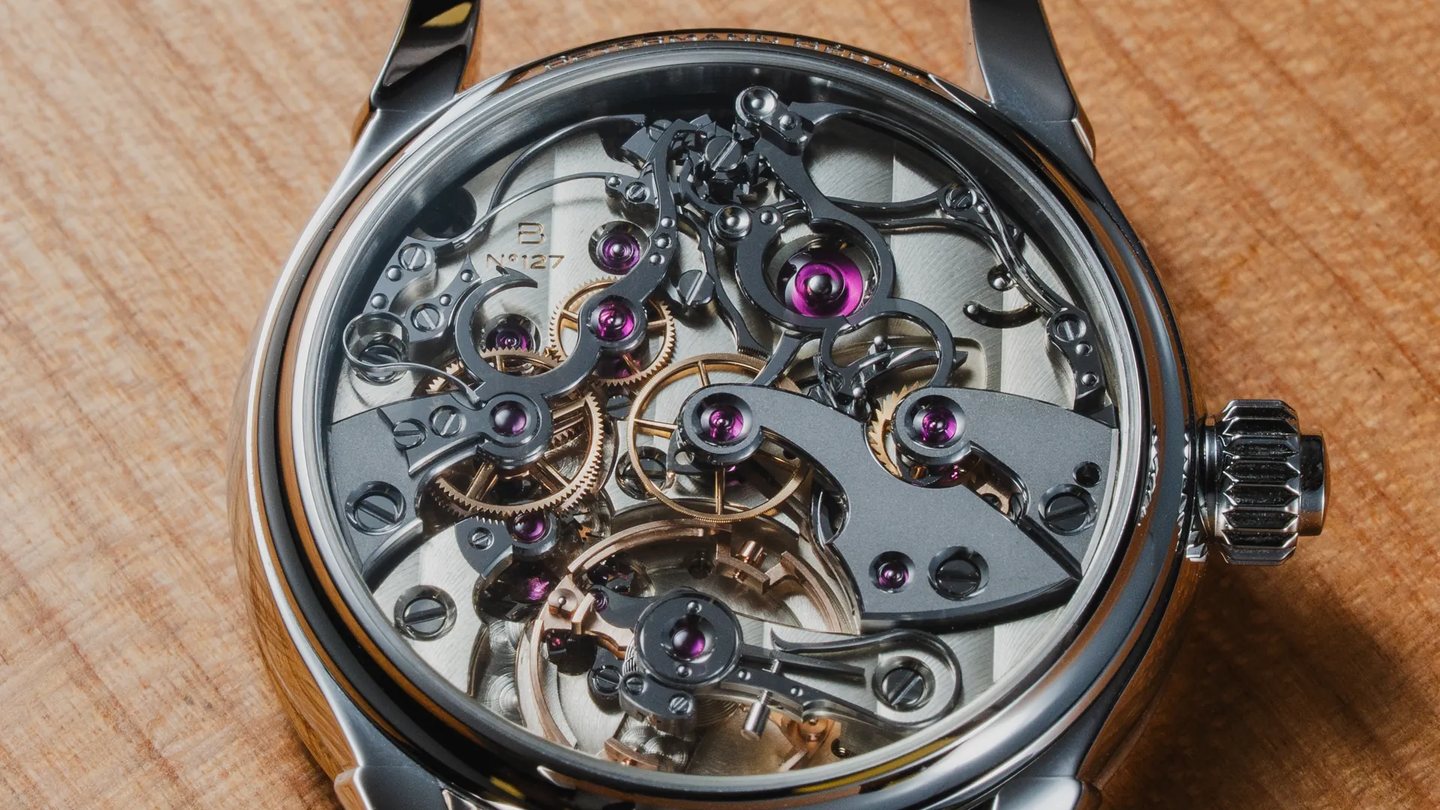
The split-seconds made the name. This is the watch the name lets them build: the chronograph reduced to its essentials, sized like the vintage pieces on their restoration bench, and finished as though the finishing were the complication itself. If you collect independent watchmaking at this level, the 2914 is the one you wear instead of the one you photograph. Twenty collectors get one. Everyone else gets the photographs.


