

DNA variants don’t hit the whole body at once; the same change can switch a gene louder in gut cells and leave liver cells alone. AlphaGenome 2 is DeepMind’s attempt to model that split.
The first version reads a million letters of DNA and forecasts what the sequence wants to do. This one adds the cell itself to the question.
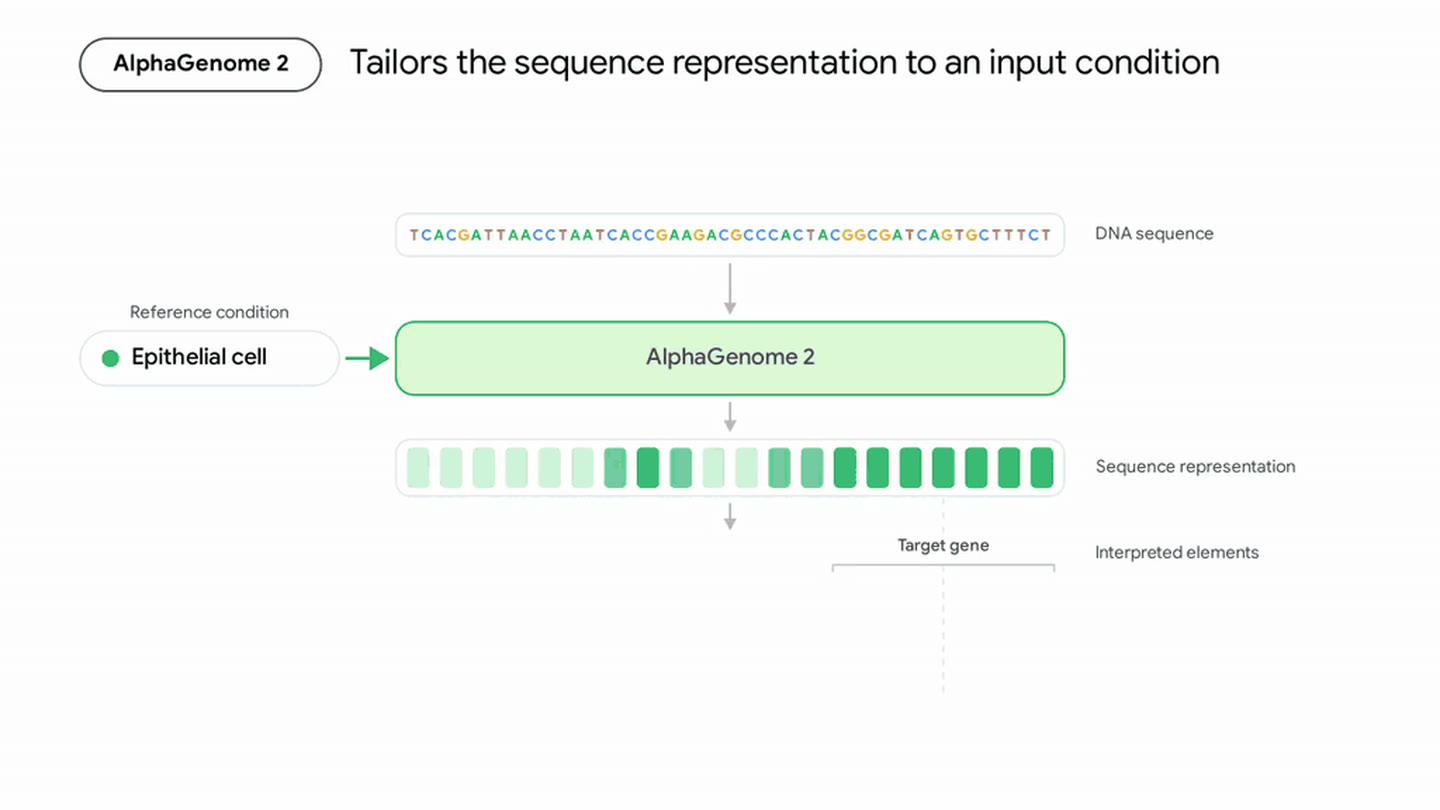
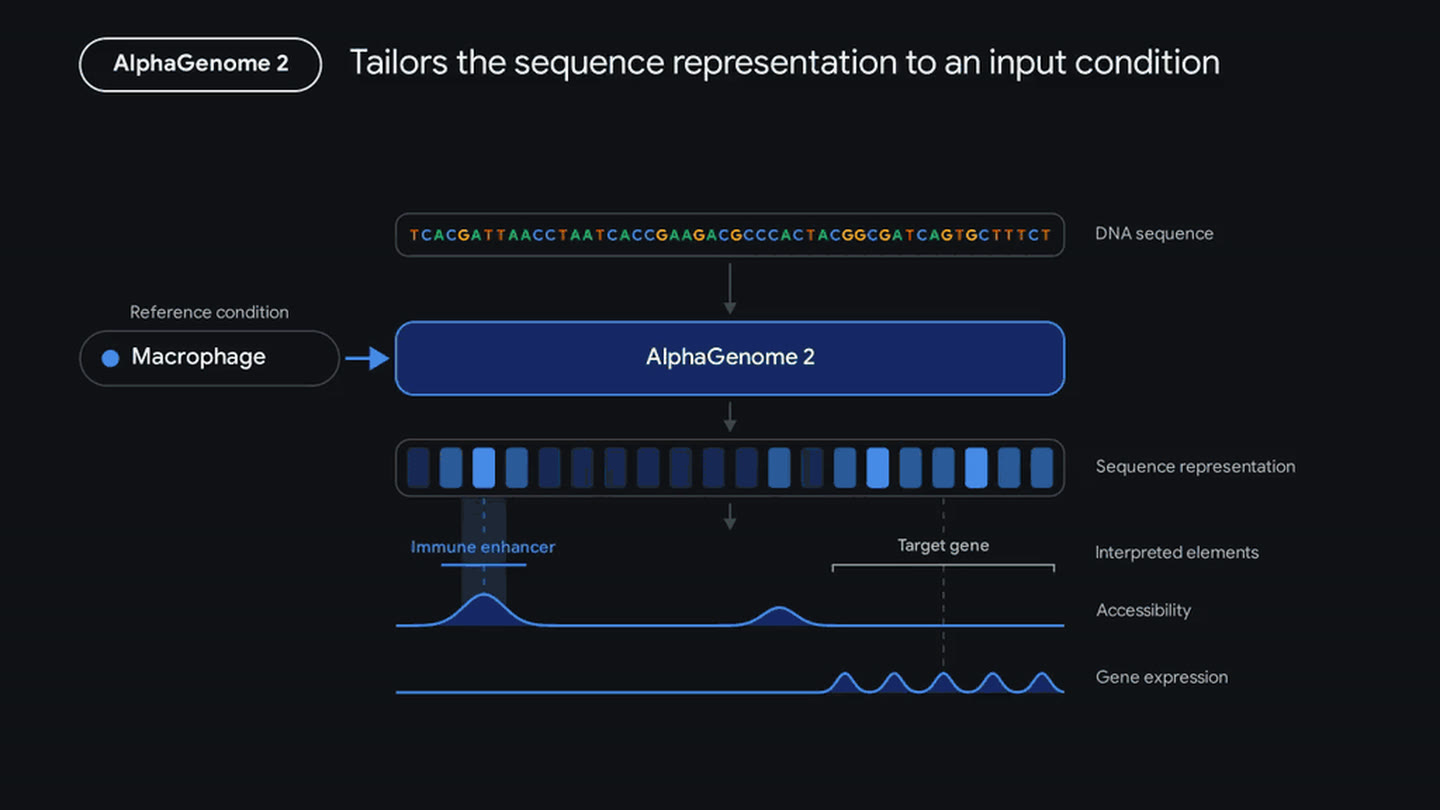
Every forecast now runs inside a named tissue or cell type, so the model answers for macrophages, astrocytes, or muscle fibers instead of an average body.
One condition at a time
One condition now runs through every stage of the forecast, a spot earlier models reached only late, near the readout. AlphaGenome 2 feeds the condition into the DNA reading itself, so context shapes the prediction from the first layer.
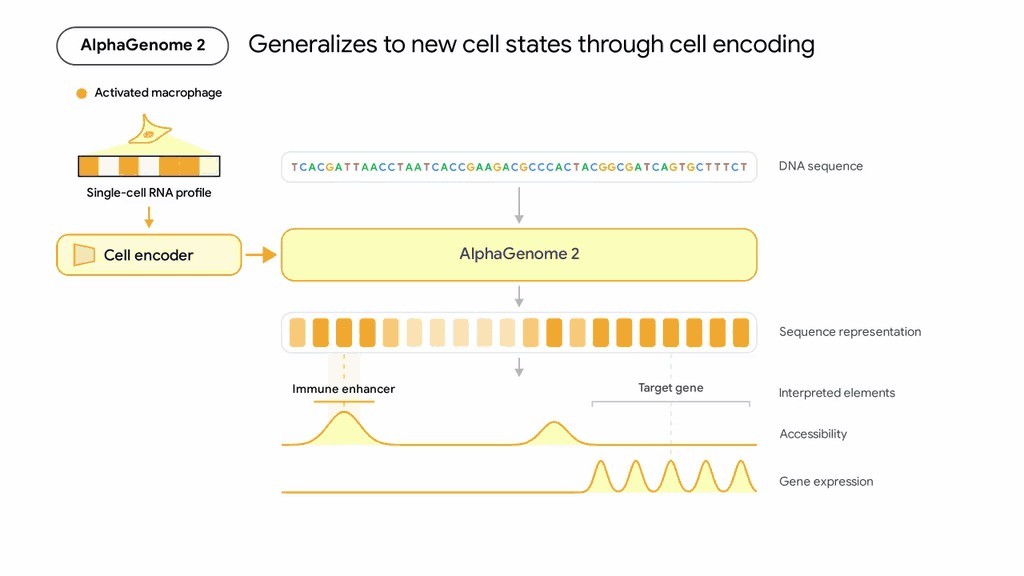
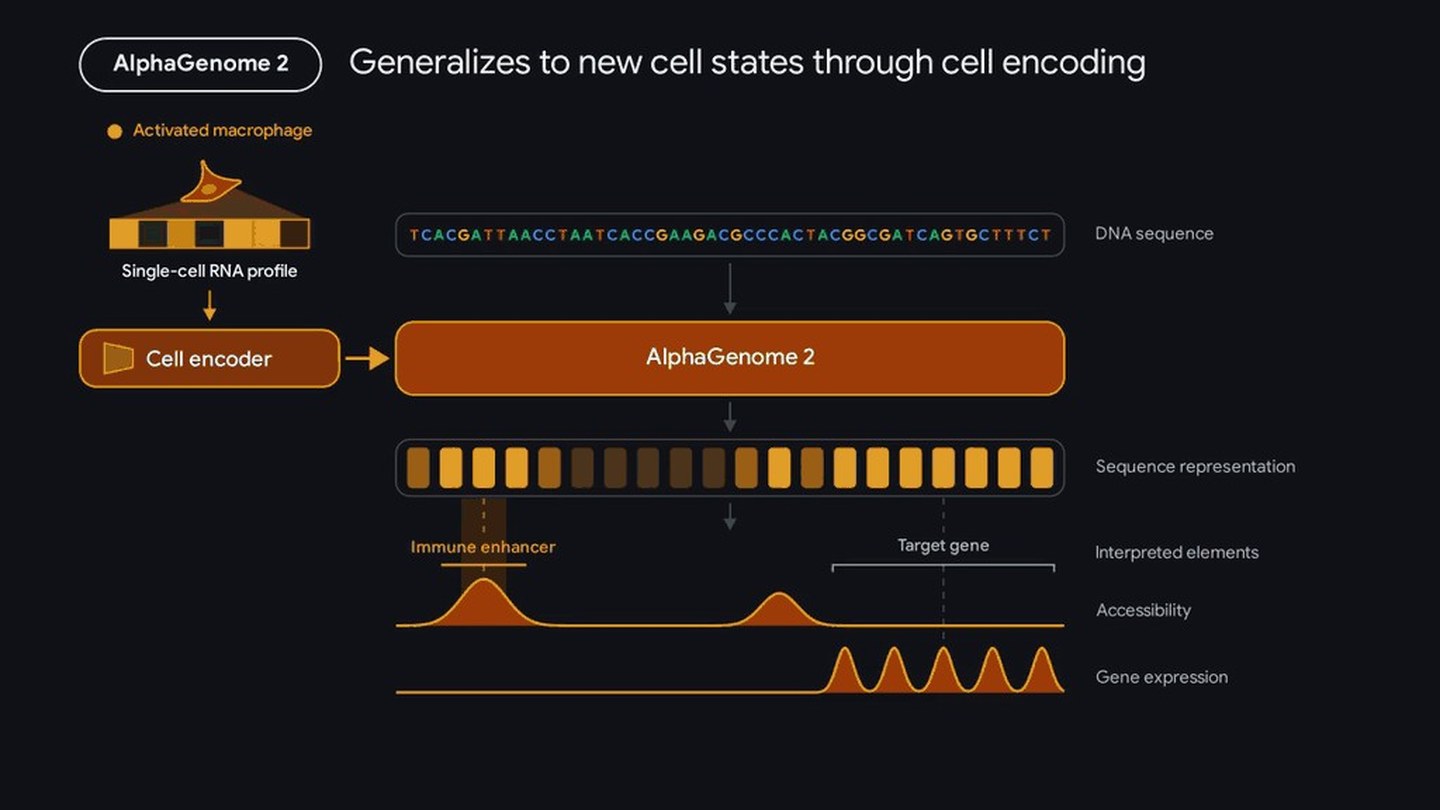
Training pulled in bulk tissue data and single-cell data together. The library runs past 107 million individual cell profiles, drawn from 68 tissues in humans and mice. A new cell encoder compresses someone’s own single-cell snapshot into a cell state. A few dozen cells from a lab dish can steer a forecast, and nothing gets retrained.
The output list grows too: expression, histone marks, and chromatin accessibility carry over from the first model.
DNA methylation joins as a brand-new readout this round.
Twice the causal variants
DeepMind tested the model on TenK10K, a single-cell dataset covering 28 primary immune cell types.
Causal variant calls came in at nearly double the fine-tuned first model. The score reads 30 percent against 16. Directional calls, whether expression rises or falls, landed at 43 percent against 23.
An inflammatory bowel disease result holds up under the new lens.
One variant overactivates the ETS2 gene inside gut macrophages, and only there. The model reproduces that finding from the sequence and the cell state alone.
Height, type 2 diabetes, and hundreds more conditions sit in the precomputed library already, and enhancer-to-gene links in primary cells, like brain astrocytes, come along for the ride.
New cell states, no retraining
A COVID-19 vaccine example shows why the encoder counts.
One severe-COVID variant bites harder inside activated T cells, the state a vaccine creates. The model catches that shift because the encoder can describe a cell state it never trained on.
Behind all of it sits the AlphaGenome Atlas, scored across all 9 billion possible single-letter changes. The Wellcome Sanger Institute is collaborating on the atlas work. Researchers get access today through the AlphaGenome API, free for non-commercial work. Commercial use sits in private preview.
DeepMind is blunt about the boundary: this is research tooling, not a diagnostic, and nothing here is validated for clinical use. AlphaGenome 2 Skills are headed to Google Antigravity, with Gemini 4 integration on the roadmap.

