

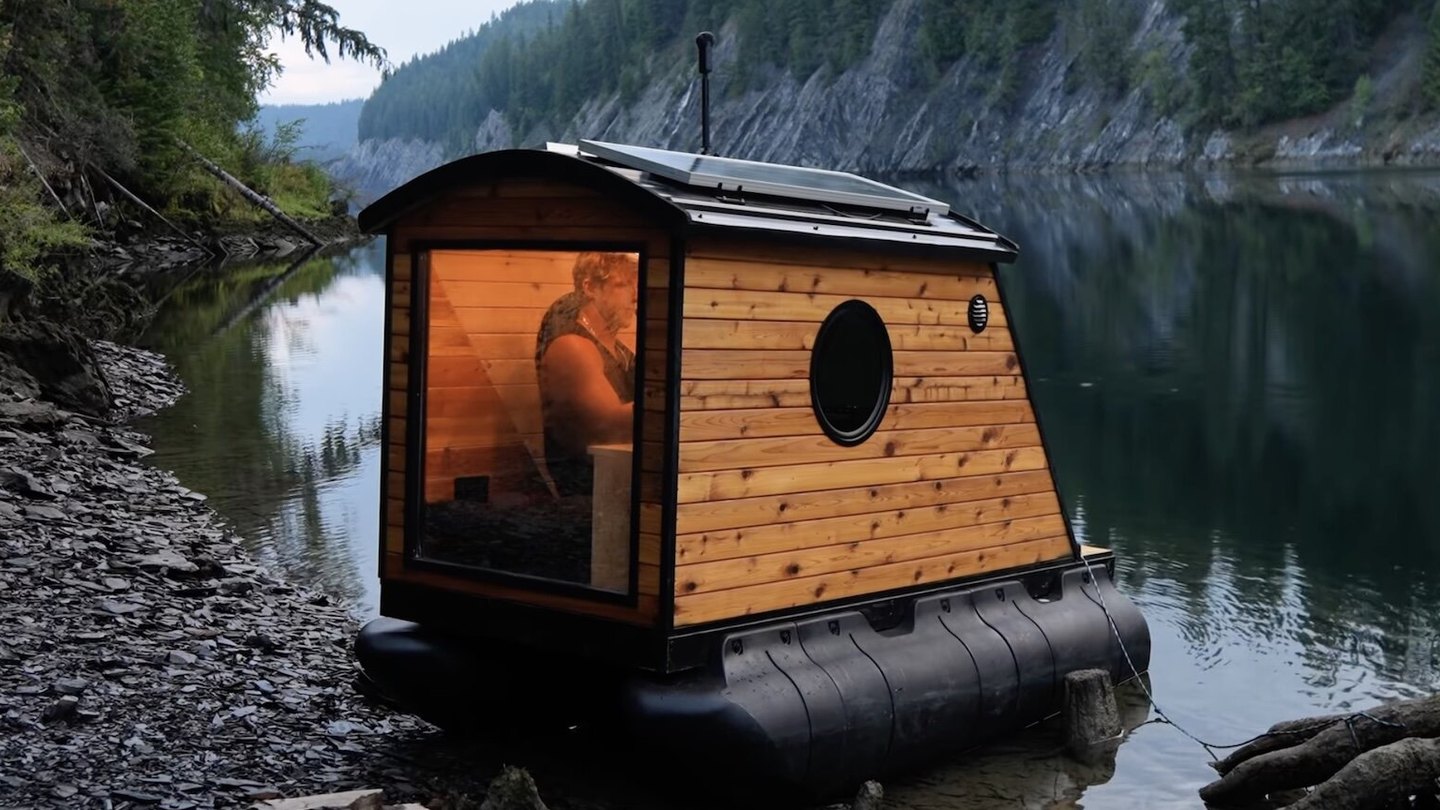
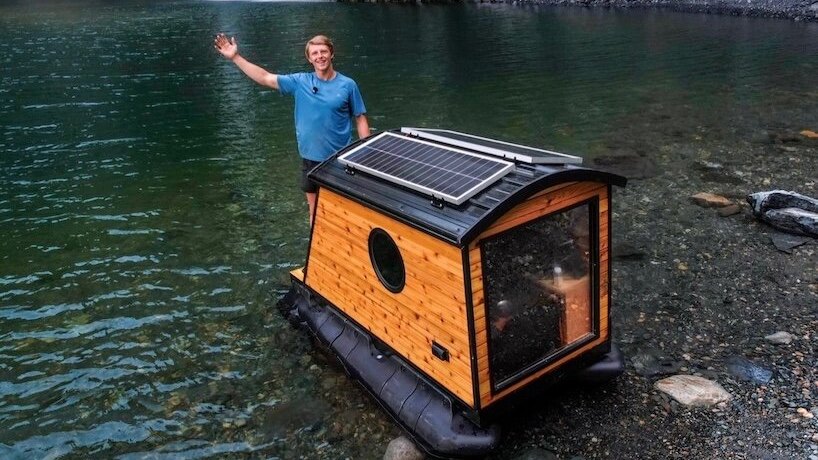
I’d call Tinytanic a houseboat the way I’d call a phone booth a studio apartment, except David Rule actually slept in his and cooked in it. The cedar cabin measures eight feet long and three and a half feet wide.
It still carries a bed, a kitchen counter, a fridge, and running water, and Rule ran it down a Washington river for three days. You sit inside it. Standing isn’t part of the design.
Rule built it after watching fellow builder Zach Fowler’s thirty-five-square-foot floating home. He set out to go smaller without giving up the pieces that make a boat livable for more than an afternoon, at a size most builders would have called finished long before.
A cabin that rides in a pickup bed
The whole vessel covers about twenty-eight square feet on two modular pontoons. Rule sized the cabin so the finished boat loads straight into the bed of a pickup truck, which turns launch day into a loading job.
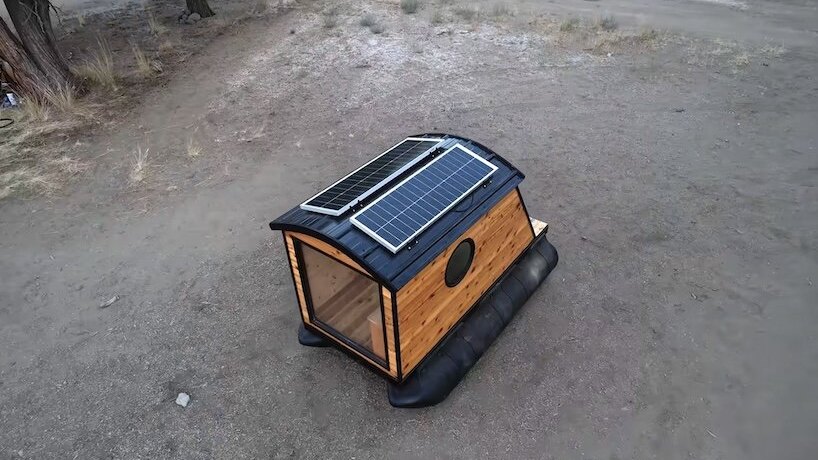
That portability changes how you’d use it. A boat that travels by truck doesn’t need a marina slip, a trailer, or a launch crew waiting at the dock, so your weekend starts at a riverbank instead of a boat ramp line.
I keep coming back to the footprint. Twenty-eight square feet is a walk-in closet, and Rule still divided it into sleeping space, cooking space, and storage.
It launches like camping gear.
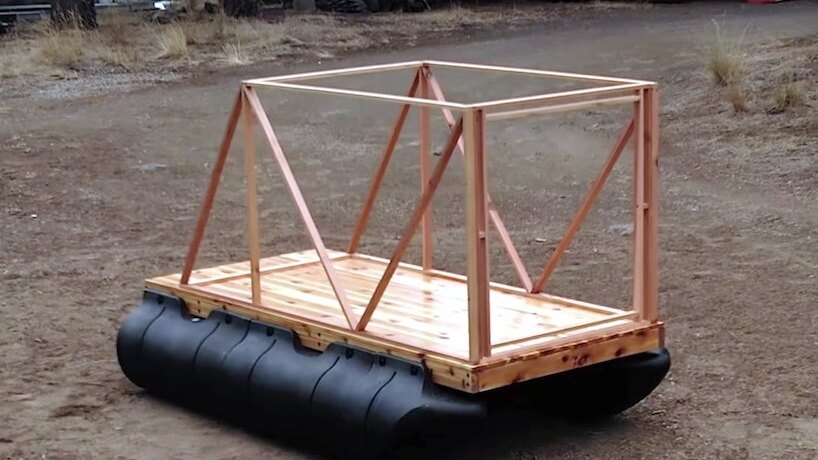
Pontoons first and cedar over the frame
Rule skipped a conventional hull and set a timber frame on the pontoons, wrapping the cabin in cedar and pine. Plywood sits in the structure, and an aluminum roof closes the top.
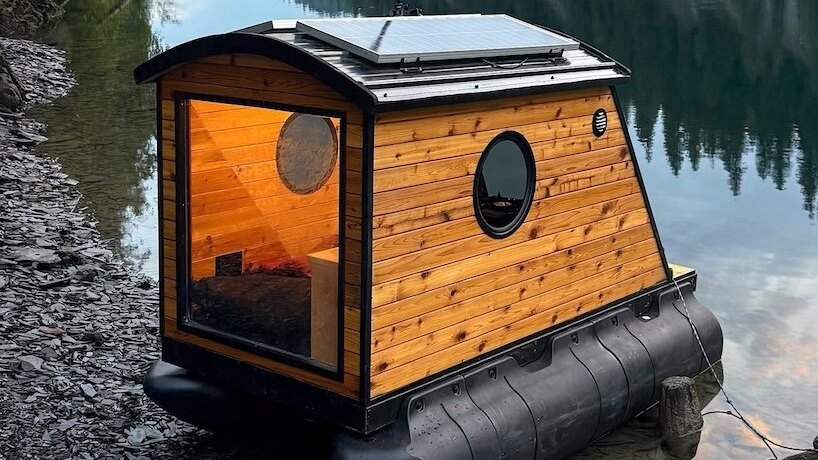
Round porthole windows punch through the wooden walls on both sides. A big transparent panel fills the front, framing the river ahead of you.
A zippered panel borrowed from a camping canopy opens the back onto a small rear deck, and cedar keeps the weight down, which decides everything on two small pontoons when you watch the boat floating level at the shore.
The deck fits one fisherman, comfortably.
Inside you sit and that is the deal
The ceiling sits about forty-two inches high, so you sit upright on the custom sleeping platform or you lie down. Every plan you make inside those walls starts from one of those two positions, meals and mornings included.
A counter runs the kitchen with a refrigerator, a single-burner butane stove, and a sink, while a twelve-volt pump pulls river water through a purification system. Wastewater collects underneath.
Storage compartments tuck into the remaining gaps. The layout works because every object aboard has exactly one home. Anyone who’s packed a family car for a long weekend will recognize that instantly, right down to the last bag finding its corner, even with the bed made up for the night.
Dinner still happens nightly, hot and on time.
Two panels and one battery run the whole boat
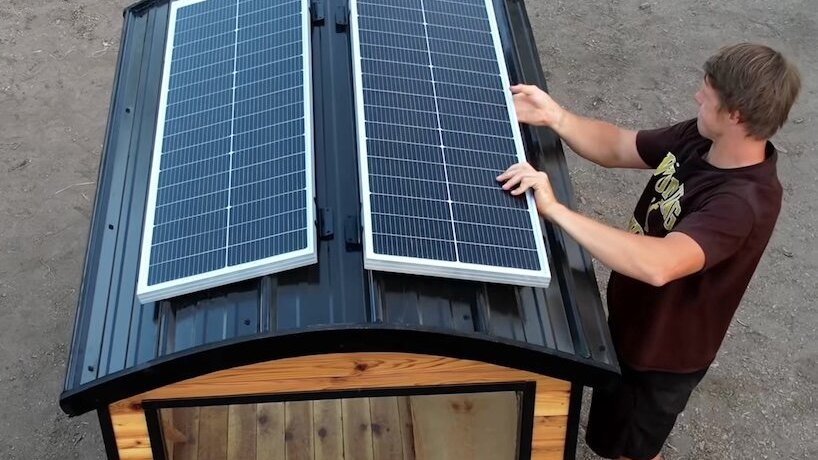
Two 100-watt solar panels sit on the aluminum roof and feed a 100-amp-hour marine lithium battery. That single battery carries the fridge, the LED lighting, the ventilation fan, the charging outlets, and the motor, so every amp gets spent twice in your head before you use it once.
A Minn Kota trolling motor at the stern, rated at thirty pounds of thrust, moves the cabin through calm water at a pace you’d describe as a stroll.
Propulsion comes from a Minn Kota electric trolling motor at the stern rated at thirty pounds of thrust. It moves the light cabin through calm water at a pace you’d describe as a stroll, and downstream current does the rest.
Speed isn’t the pitch here.
Three days on the Pend Oreille River
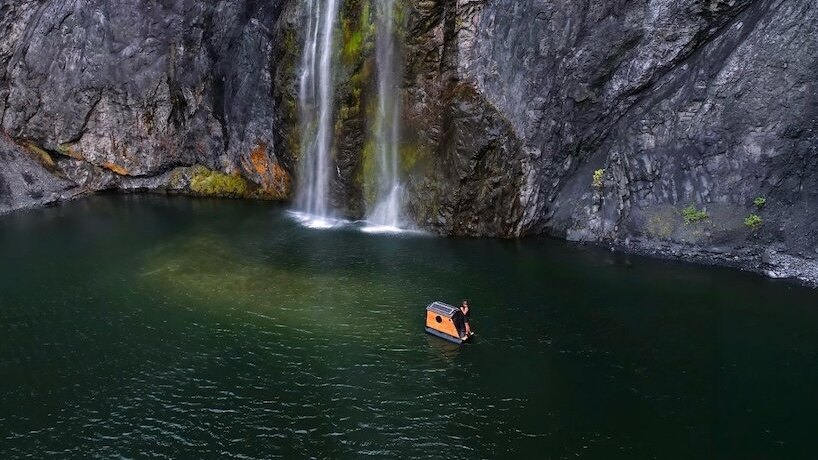
Rule hauled Tinytanic to Washington and ran it down the Pend Oreille River from Metaline Falls toward Peewee Falls. The trip covered twelve miles, and it took three days.
He cooked from the little counter, fished off the rear deck, and slept in the cabin each night. The pontoons stayed stable the whole way, while the zippered rear panel kept the rain out when the weather turned wet on the second day of the run.
Three days is the detail I’d trust, because a single afternoon on flat water proves almost nothing. Three nights of cooking, sleeping, and battery rationing show you exactly where a design bends.
The boat held together fine.
The catch is the ceiling and the clouds
Cloudy stretches cut the solar charging on the trip, and the motor’s steady draw forced Rule to ration battery power. He leaned on the river’s current more than he’d planned for the run downstream, saving the motor for the slow, awkward stretches and watching the gauge like a fuel light on a long drive.
That’s the one drawback, stated plainly. A 100-amp-hour battery and two small panels set a hard ceiling on range, and no clever packing changes the math on a gray day when the roof gives you almost nothing back in the morning.
You won’t cross open water in it. The whole project asks how much home fits into a vessel before space becomes the one thing left out, and Rule answered that one honestly and without any hedging at all.
It’s the only houseboat I know that makes a kayak look roomy, and I’ve seen some tight kayaks in my time.
Build one if you want the smallest possible base for slow river nights and you enjoy solving space problems for fun. Skip it if you need to stand up, cover distance, or carry a second person, because the smarter alternative at that point is a small conventional boat with a cabin you can actually move around in.


