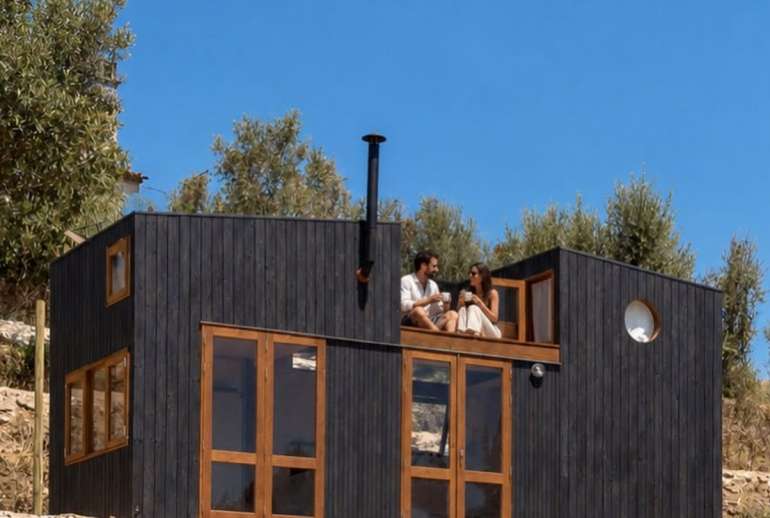

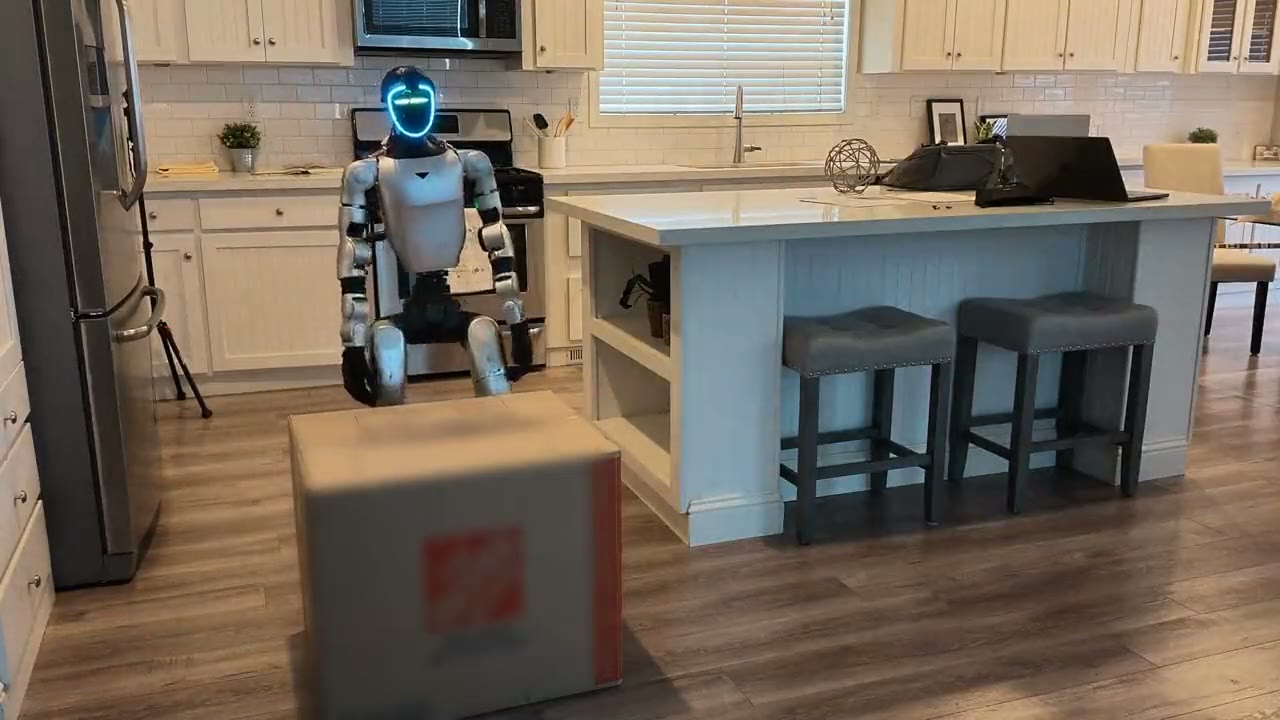
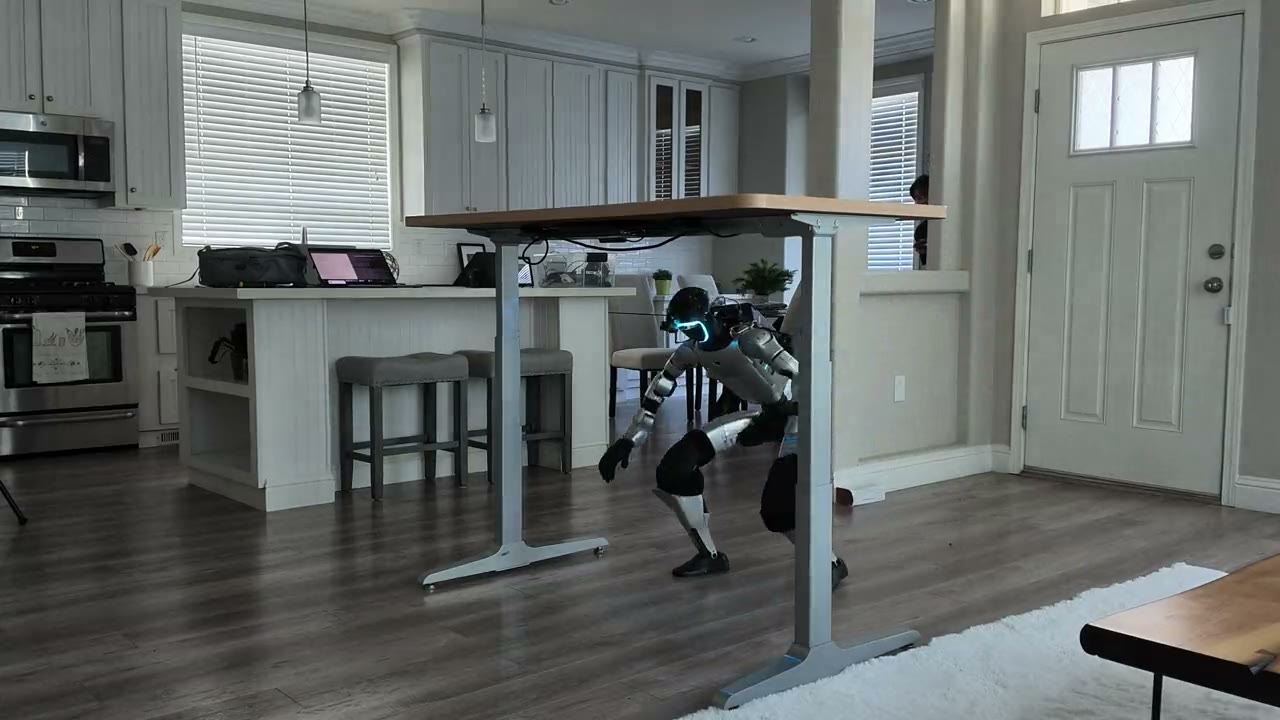
Apple researchers carried a stock humanoid robot into six homes and offices it had never seen, set it down in the middle of the floor, and gave it errands. It found the chair and sat down. It ducked under a standing desk, crawled beneath a low table, sidestepped through a half-open door and pushed a cardboard box across the kitchen tiles.
Nobody drove it, and nobody had shown it those rooms beforehand. Across 360 real-world trials, the robot landed its assigned skill 91 percent of the time.
The homework came first

The system is called HALO, short for Humanoid Autonomy, Learned in simulation, running Onboard, and eight Apple researchers published the work this month. The method is the headline here. Most humanoid teams gather training data by remote control, paying people to puppeteer robots through thousands of slow, supervised repetitions inside real rooms. HALO skips that pipeline almost entirely, and the skip is what makes the result travel beyond one lab’s press release.
A motion model called Kimodo invented the moves instead, generating walks, sits, crouches and crawls from text prompts and a scatter of keyframe poses. A second tool, Infinigen, built the 1,000 practice rooms, split between living rooms, offices and bedrooms, and a physics simulator ran the rehearsals around the clock. The final count came to 162,698 practice runs.
That works out to roughly 300 hours of movement, cooked in 48 hours on 250 high-end graphics chips. Almost no human movement went in.
A public motion-capture library taught the lowest layer how bodies move, and phone videos supplied keyframes for the crawl and the crouch. One recorded box push made the cut as well, mostly to anchor the pushing motion. Everything else is machine-made practice, and the code behind the whole recipe is public, so other labs can rerun it on their own machines instead of starting from zero.
Three brains, three speeds
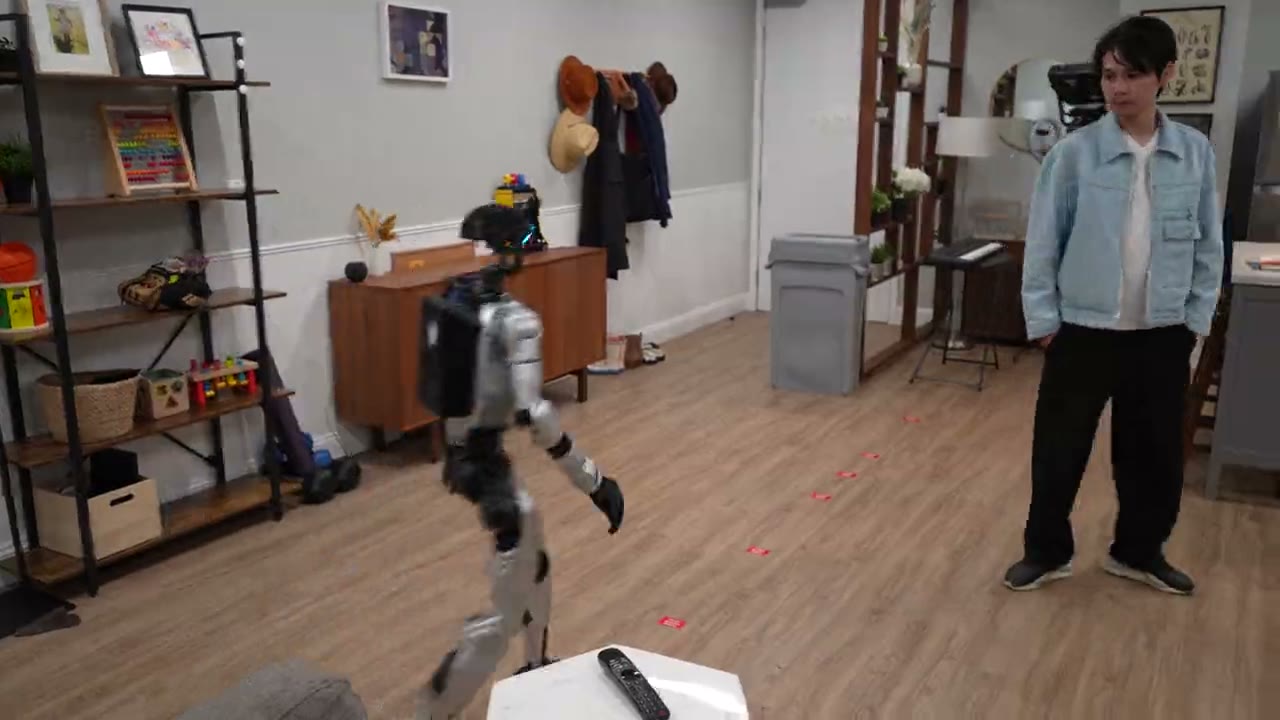
HALO splits the thinking into three layers, and each layer runs at its own pace. The top layer reads the instruction and the camera view roughly every two seconds, then decides what happens next in plain stages. Head to the chair. Turn around. Sit down. The middle layer turns each stage into motion, dreaming up five seconds of movement at a time, three times a second, redrawing the plan as the room shifts around the robot.
The bottom layer is pure reflex, converting the plan into commands for 29 joints fifty times a second, balance included.
The hardware is refreshingly ordinary, which is part of the point. The body is a standard Unitree G1, the research humanoid Unitree lists from $13,500, wearing a wide-angle camera in a printed head mount. The heavier thinking rides in a backpack, a Mac mini with an M4 Pro chip and 64 gigabytes of memory, and no cable ties the machine to a workstation. The balance reflex runs on the graphics chip already built into the robot.
The scorecard
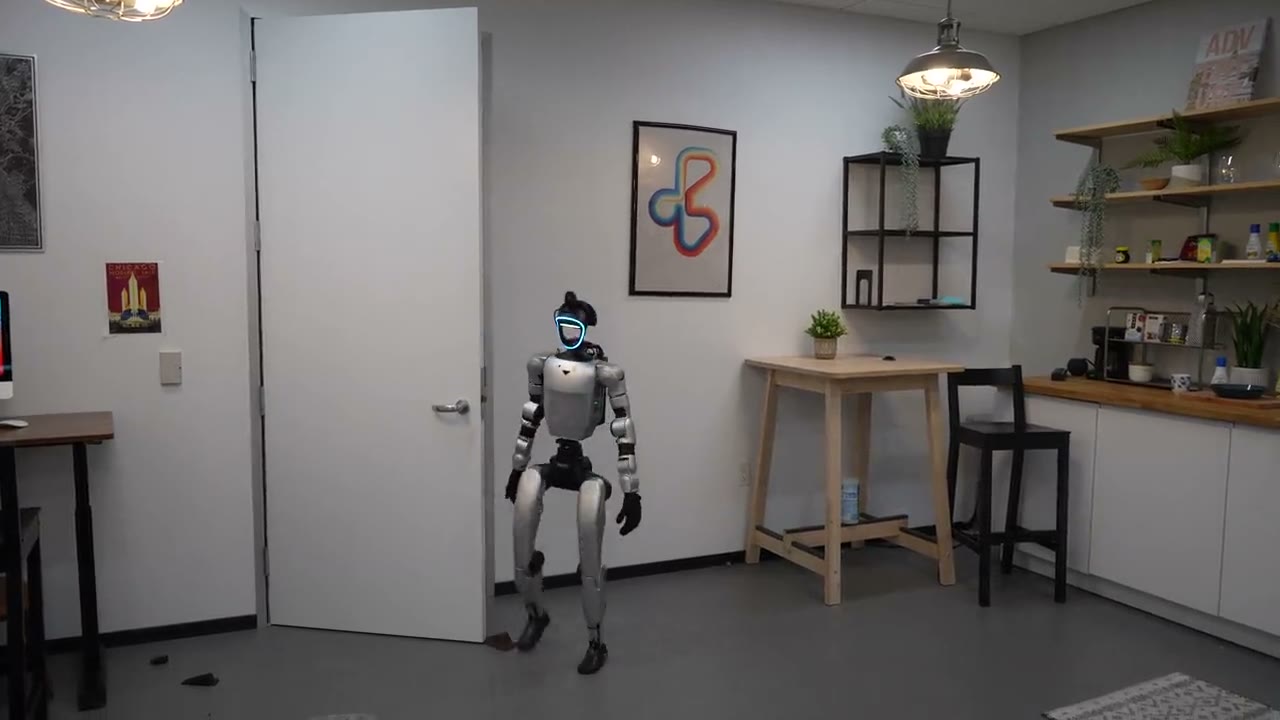
The test card held six skills, ten attempts each, spread across six spaces the robot had never entered before test day. Crouching under a table went ten for ten in the real runs, a clean sweep. The door sidestep landed at 93 percent, walking to a named object at 92, and crawling under a low table at 90. Pushing the box scored 88 percent, and sitting down on a chair was the weakest skill of the six at 85.
The averages matched almost exactly. Ninety-one percent in the simulator, 91 percent out in real rooms.
Chained errands told a different story. Sent through the doorway to fetch up at an object, the robot went ten for ten again. Crouch, walk, then push the box fell apart half the time, and linked skills averaged about 70 percent overall. Single tricks are nearly solved at this point in the research. Errands, the kind a household robot actually gets hired to run, are not.
The control experiments show where the skill came from. Practice inside a single room, and sitting success in simulation drops from 84 percent to 43. Swap the motion generator for a simpler design, and the success rate craters to 19 percent. Blind the balance layer to depth, and the number falls to 74. Variety did the heavy lifting here. One perfect practice room teaches a party trick, while a thousand messy ones teach a skill.
What it cannot do yet
The hands stay empty through all of it. None of the six skills grabs, carries or opens anything, and the robot has no sense of touch at all. Every new skill still needs a person to write the prompts and pose the keyframes. The team skipped any head-to-head score against rival systems, so that 91 percent stands alone, impressive and unbenchmarked. This is a research paper, not a product announcement, and the public code ships without the trained models.
The bottleneck in humanoid robots has been practice time, thousands of supervised hours inside real rooms with real people holding controllers. This team replaced the hours with homework: generated rooms, invented moves and two days of computing. The robot that walked into those six strange rooms had never touched the physical world before that week. It behaved like it had lived there for months.