

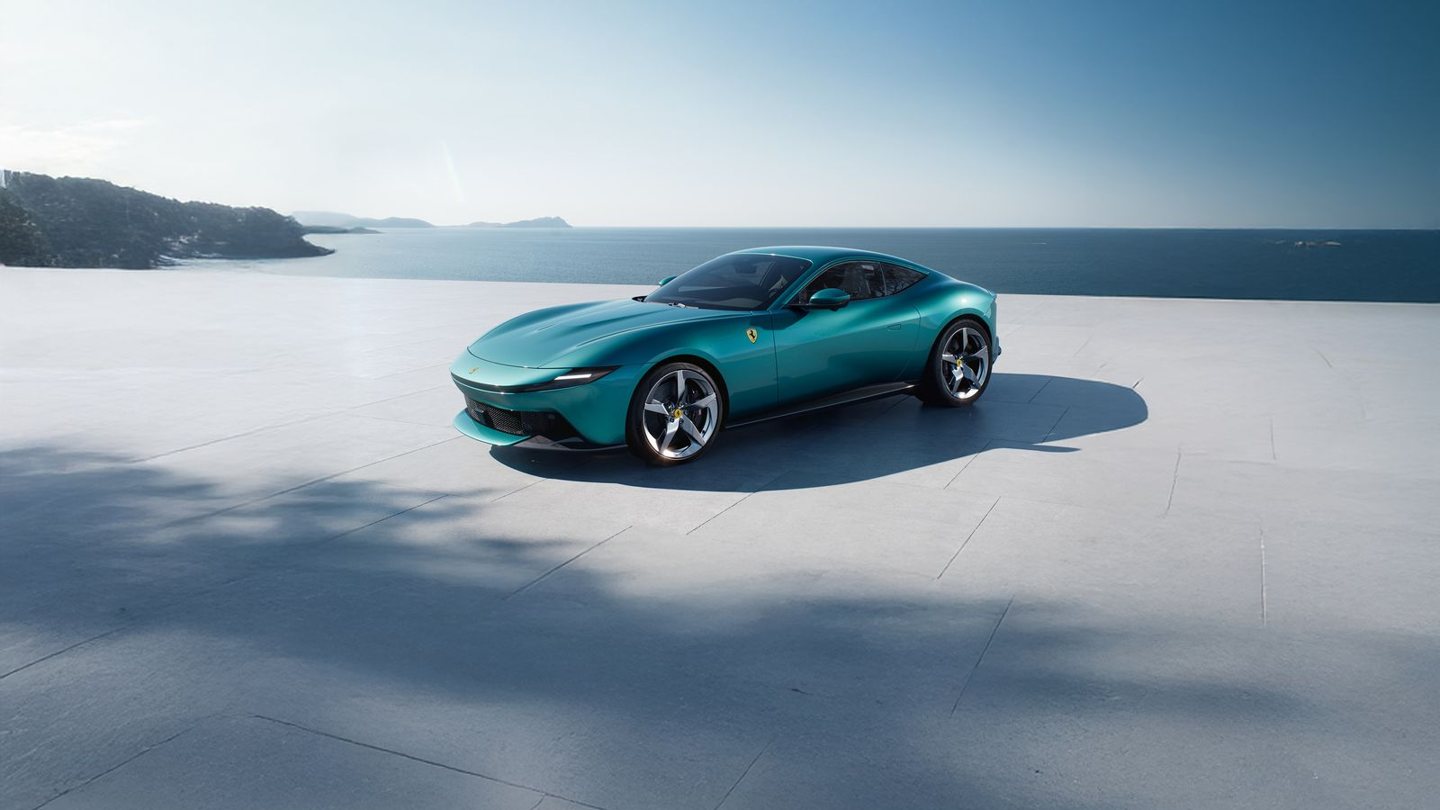
Ferrari’s Amalfi replaces the Roma as the front-mid-engine V8 coupe at the top of the range, and it arrives with more power and a calmer hand. The headline change sits inside the cabin, where physical buttons return to the steering wheel at last.
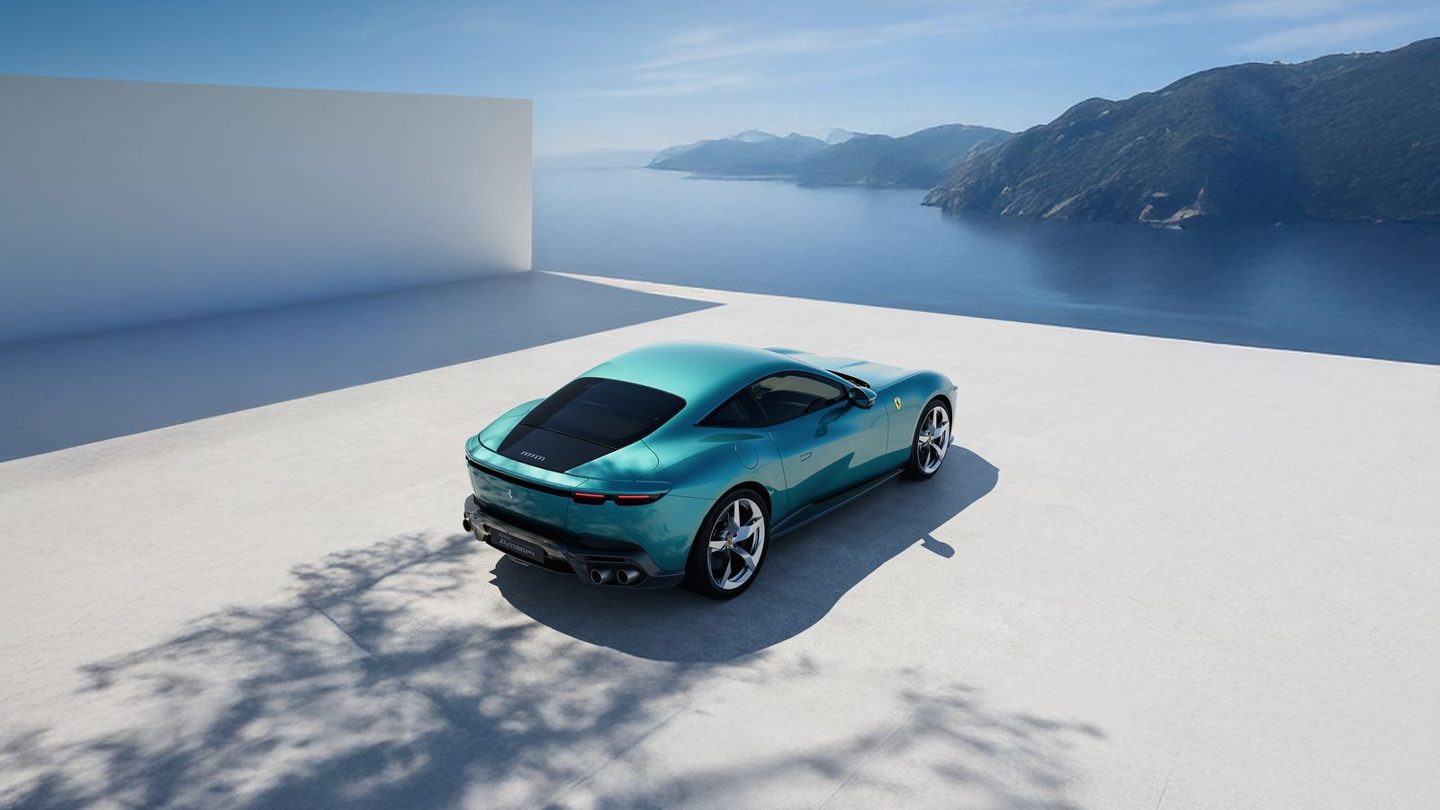
A long hood, a fastback roofline and a clean tail give the coupe its stance, while the launch color, Verde Costiera, pulls the whole shape toward the sea it’s named for, all teal and calm. Nothing on the surface shouts. Every panel changed, yet the car remains a grand tourer first and a supercar second, which is exactly the brief the Roma left behind for its replacement to honor.
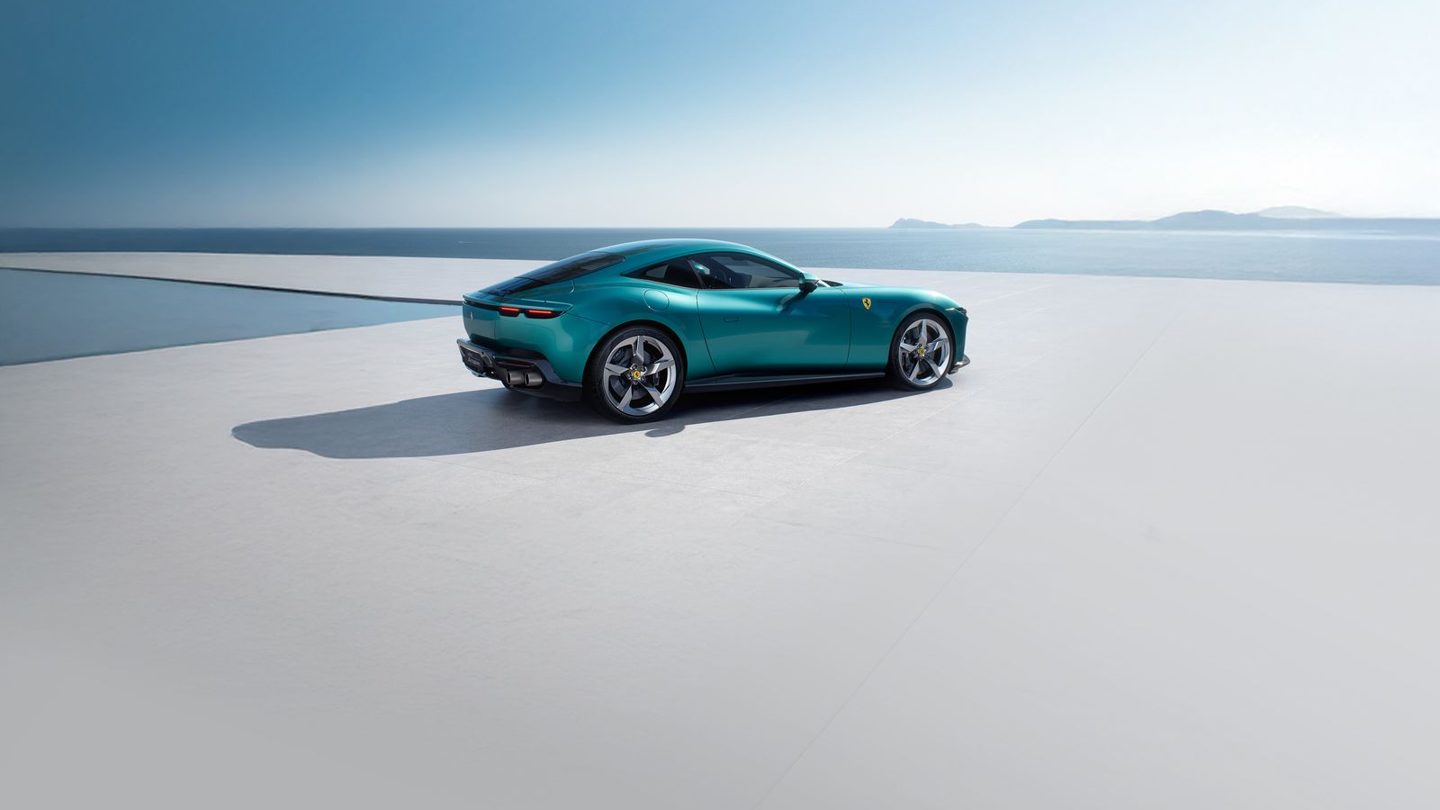
A silhouette drawn with a light hand
At 4,660 mm long and 1,974 mm wide on a 2,670 mm wheelbase, the Amalfi sits low, wide and unhurried, with its detailing hidden in the shutlines and its lamps drawn as slim, calm slits. The vents are carved into the body, never applied.
Behind the front axle sits the engine, and that placement frees the nose, stretches the hood into the car’s longest gesture and sets the cabin back over the rear wheels, where they belong. Weight splits evenly across the axles and the dry weight holds at 1,470 kg, so the proportions come from balance rather than bulk or decoration.
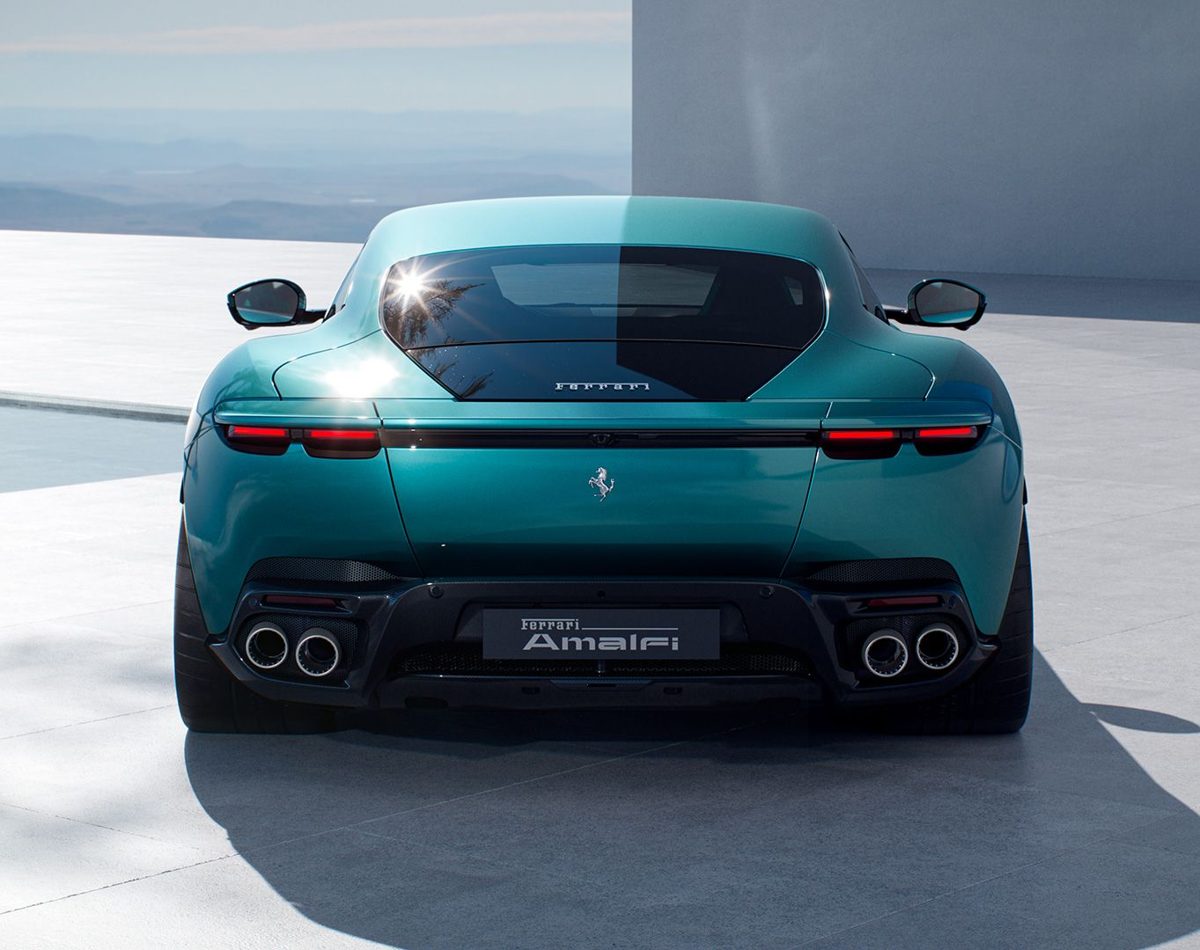
An active rear wing works through three positions and adds up to 110 kg of downforce at 250 km/h in its high-downforce setting. At cruise it stays flush and silent. The tail keeps its clean line until speed asks for help, and then the wing rises to do the unglamorous work of keeping the rear tires planted through fast sweepers and over crests.
Verde Costiera leads a palette built around coastal light, and the launch car wears it over a cabin trimmed in pale leather. The color does quiet work, cooling the surfacing and letting the shoulder line read as one stroke from lamp to lamp. It flatters the car at dusk.
The cabin hands the controls back
Ferrari’s steering wheel trades its touch pads for physical buttons again, a reversal that owners had asked for, patiently, then less patiently, through the whole Roma run and beyond it, in person at every delivery. Your thumbs find real switches for the indicators, the wipers, the phone and the drive modes, and each one answers with a click you’ll feel through gloves.
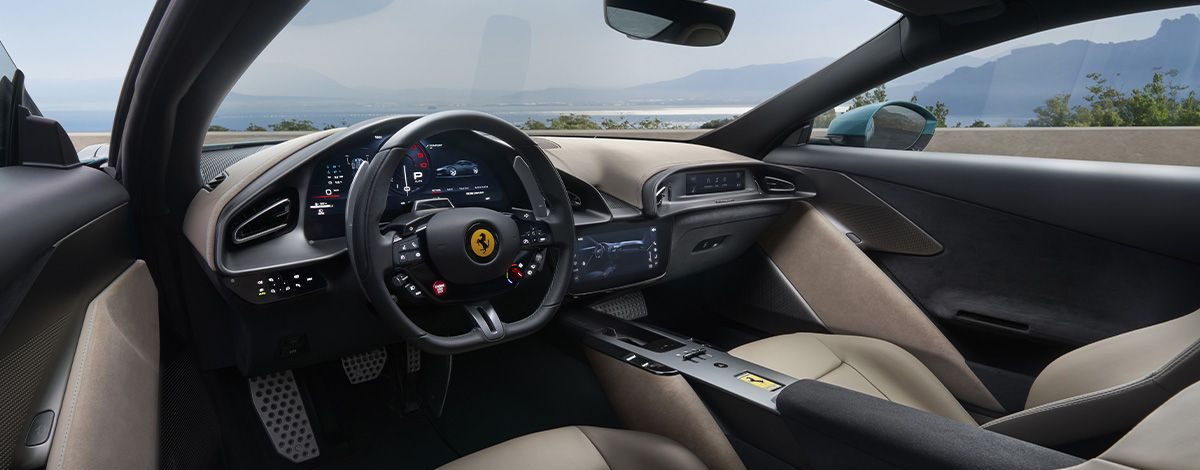
The start button is a button again. Three displays still run the cabin, led by a 15.6-inch cluster ahead of the driver, a 10.25-inch central screen and an 8.8-inch display for the passenger.
The 2+ cabin keeps two small rear seats for short hops and overflow luggage, and the boot behind them swallows 273 liters without complaint. An 80-liter fuel tank stretches the range between stops, suiting the grand touring brief the Roma set and the Amalfi inherits. Pale leather covers the seats, stitched tight and left unadorned.
On the passenger display, speed, revs and navigation data keep the person riding shotgun inside the drive instead of outside it. The gesture is small, and it lands.
A V8 that still sets the pace
The F154 twin-turbo V8 displaces just 3,855 cc and delivers a full 640 cv at 7,500 rpm, with 760 Nm of torque spread from 3,000 to 5,750 rpm. Specific output reaches a remarkable 166 cv per liter, and the redline stops at 7,600 rpm, high for a turbocharged engine. It pulls cleanly and evenly from idle, too.
An 8-speed F1 dual-clutch gearbox drives the rear wheels, and only the rear wheels, every single time. That single choice keeps the steering clean and uncorrupted, the layout classic, the front axle free to do one job well and the whole car true to the front-engine tradition it comes from in Maranello.
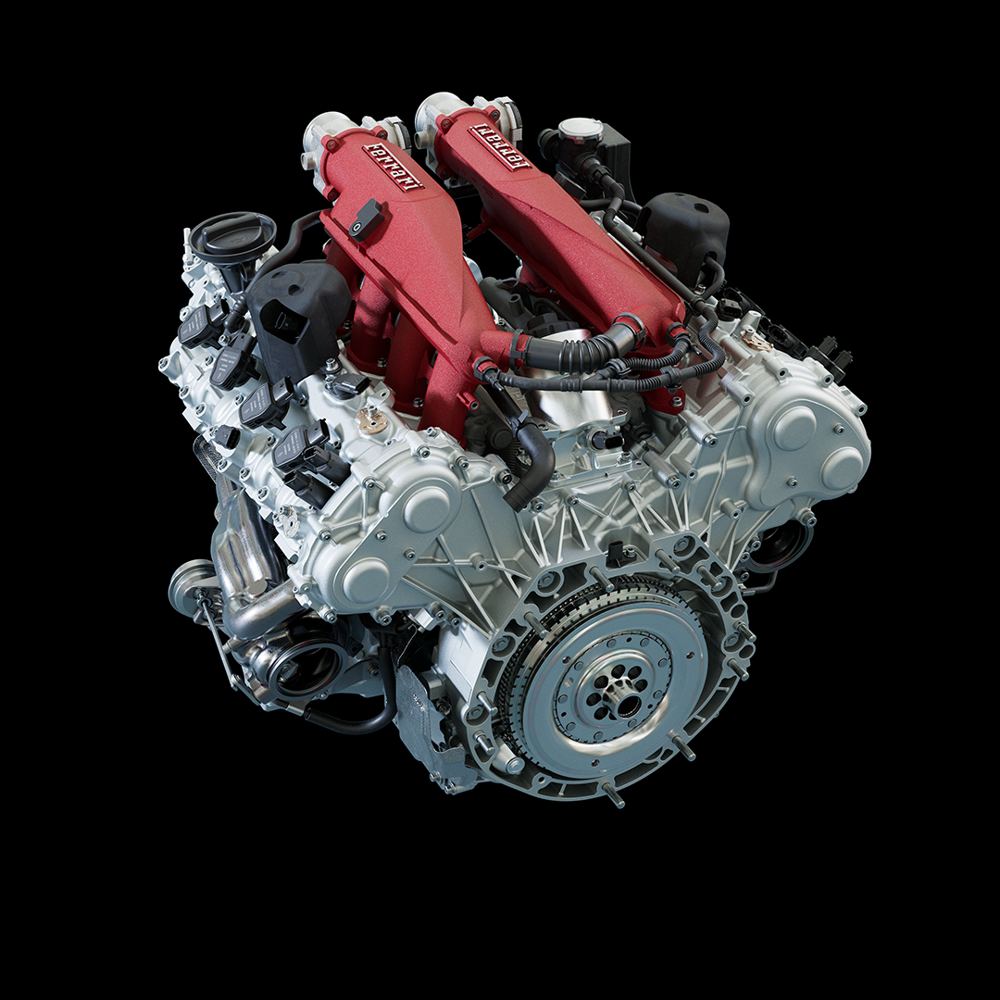
The sprint to 100 km/h takes just 3.3 seconds, 200 km/h arrives in 9.0 seconds, and the top speed holds at 320 km/h. Brake-by-wire with ABS Evo manages the stopping side of the ledger. The figures come quoted at the car’s lightest, on these tires. Tires run 245/35 R20 up front and 285/35 R20 at the rear, sized for grip that doesn’t spoil the ride on broken pavement.
On the road, those numbers become a car that gains speed without any drama at all, the turbos building thrust in one long, even push from rest to redline. Steering stays light at town pace, then weights up as the road opens, the wing wakes, the exhaust clears its throat and the manettino starts earning its place on the wheel at speed.
The entry Ferrari, grown up
Ferrari presented the Amalfi in July 2025, and US pricing stays unpublished for now, deliberately. The first cars will trade on allocation rather than a sticker, which suits a model that opens the range, sets its tone and tells every other Ferrari in the line how to behave when nobody is watching.
What’s clear is that the entry Ferrari no longer needs to apologize for its place in the line, or for anything else. It keeps the V8, sharpens every number that counts and listens to people who’ll drive it daily. That’s a harder trick than adding power.
Order books will fill, because the Amalfi asks for no compromise a Roma owner hasn’t already made. The Roma had a good run. Its replacement earns the name on the tail.


