

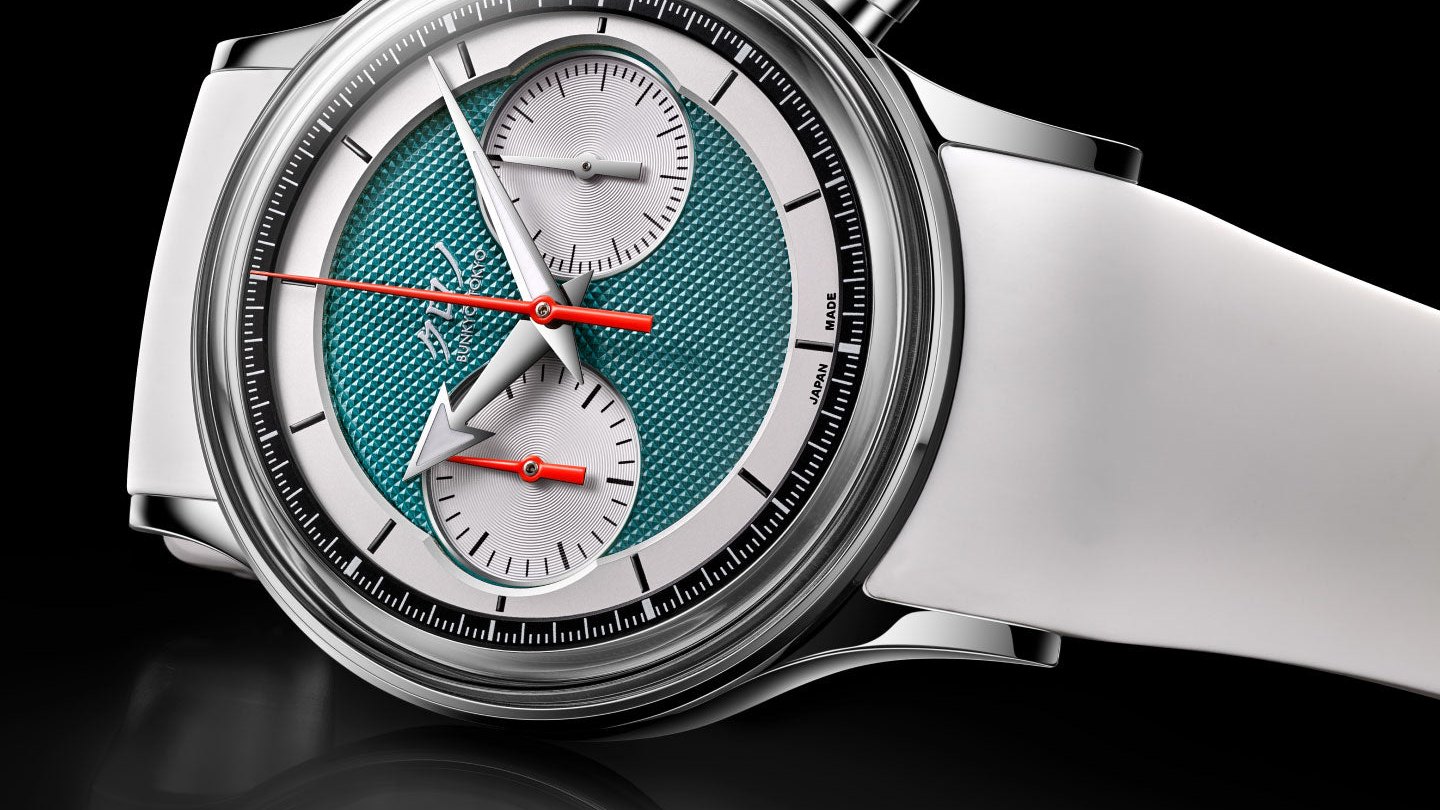
Hajime Asaoka has spent years building Kurono Tokyo on classical proportions, slim cases and dials finished like dress watches. The Structure Chronograph S1 walks away from that formula. It opens a new series called STRUCTURE, and the brief Asaoka set himself was a question: how should a chronograph be designed as a true, uncompromising tool watch?
His answer runs on two words: Functional Elegance.
Everything on the S1 serves a reading. The case grows to 40mm, the subdials grow with it, and the dial stacks in four layers so each hand sits as close as possible to the track it reads against. Legibility drives the design here, and the decoration follows it instead of leading.
Four layers put the chronograph hand right against its track
Parallax is the quiet flaw in most chronographs. The central hand rides high above the dial, so the reading shifts with the angle of your wrist, and a split second at noon becomes a guess at four. Asaoka attacked the gap itself. Four dial layers step the indices and tracks up toward the hands, tier by tier, until the chronograph hand runs with almost no space beneath it.
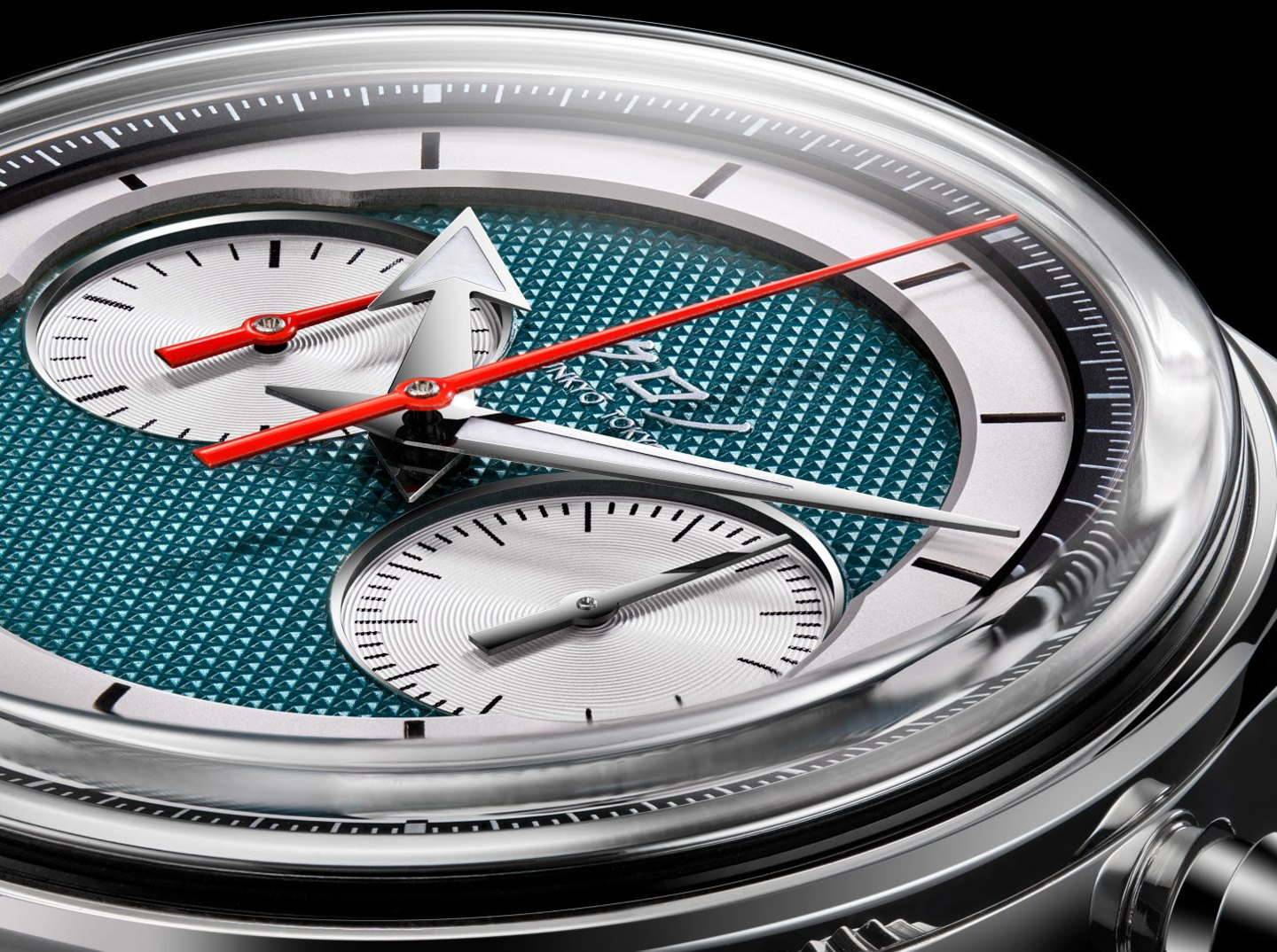
Read it at an angle and the hand still sits on its mark.
The subdials are enlarged to the limit the layout allows, and their counter hands wear the same fluorescent orange as the central chronograph hand, so elapsed time registers as a single system at a glance. Under the hands, the dial center carries a fine pyramid texture that catches light without fighting the tracks printed around it.
Polished steel at 40mm with a rubber strap underneath
The case is 316L stainless steel, high-polished on every surface, and it measures 40mm across with a 50.2mm lug-to-lug span. Thickness runs 13.15mm including the sapphire box crystal that rises over the dial, and the lugs take a 22mm strap.
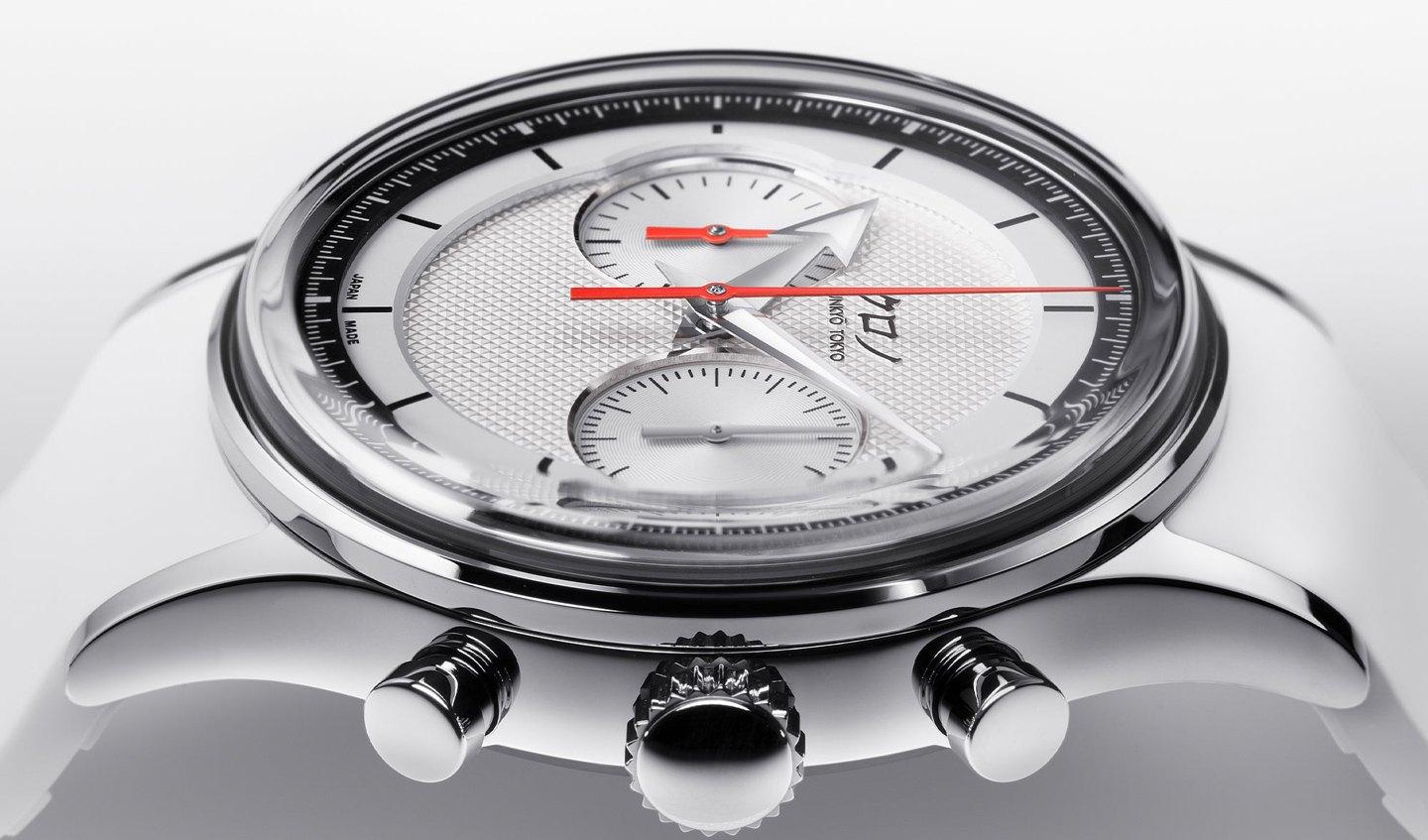
That polish is a deliberate tension. Tool watches usually go brushed and matte. Asaoka polished the S1 like his dress pieces and then fitted a white rubber strap, so the watch reads formal from above and purely functional from the side, where the pushers and crown do the talking.
Water resistance is 3 ATM, the one spec that keeps faith with the dress side of the family.
Teal, Salmon and White carry the same structure
Three dial colors share the S1 layout: Teal, Salmon and White. The structure stays identical across the three, the same layered tracks, the same oversized registers, the same orange handset. Only the textured center changes color, and that single change is enough to separate them completely on the wrist.
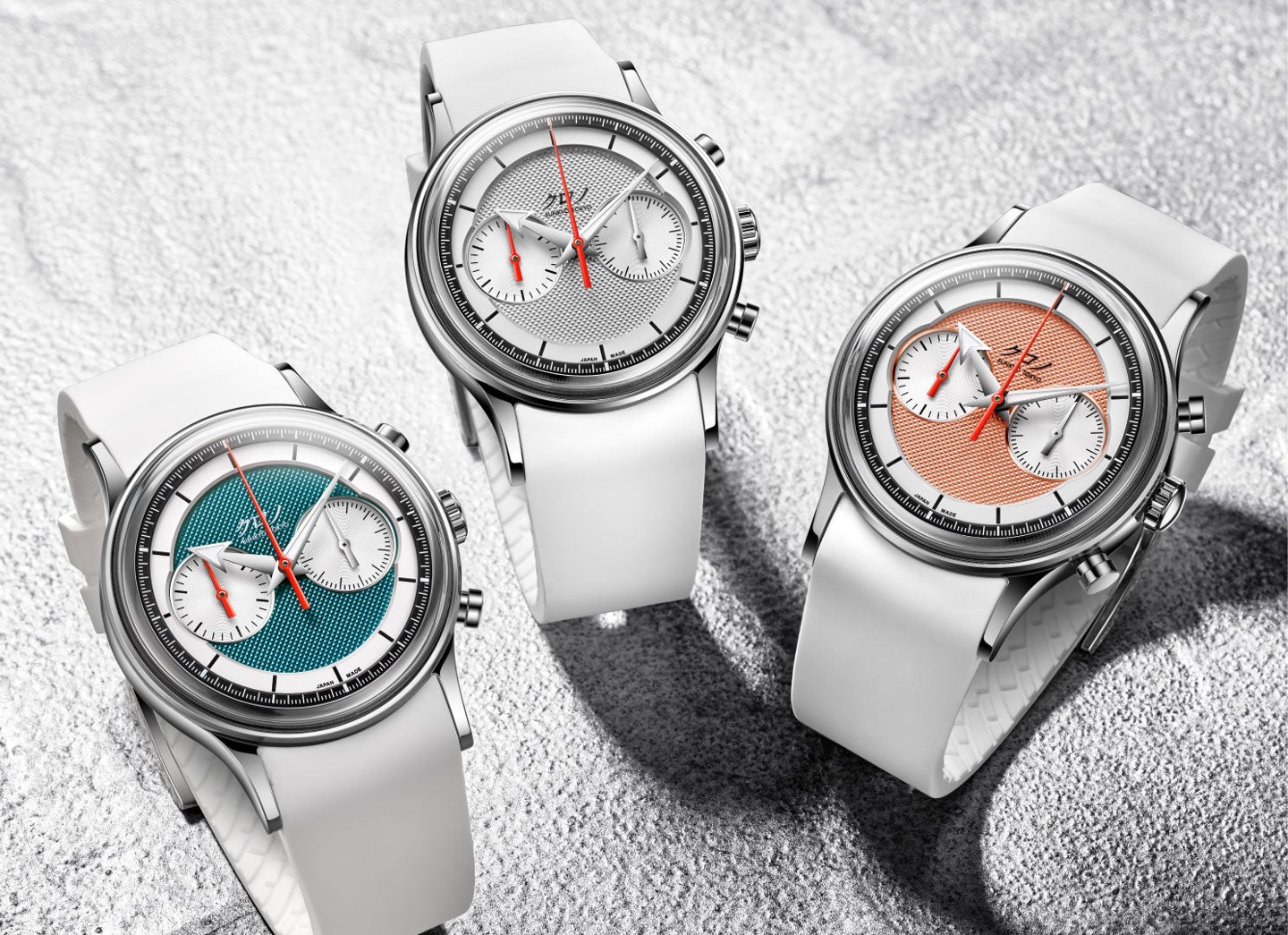
Teal carries the strongest contrast against the orange hands. Salmon warms the whole dial up.
White is the quietest of the three and the closest to Asaoka’s earlier chronographs, though the layout gives it away immediately. The registers sit wider, the chapter ring reads bolder, and the arrow hour hand is larger than anything the earlier 38mm generation carried. Pick by color alone. The watch underneath never changes.
The NE86PWT runs at 28,800 vibrations per hour
Inside sits the NE86PWT, an automatic chronograph movement with 34 jewels, a 28,800 vph beat rate and a power reserve of roughly 45 hours. The high beat isn’t a spec-sheet flourish here. It’s what the dial was built to show off, since a hand sweeping eight times a second deserves a track it can sit directly against.
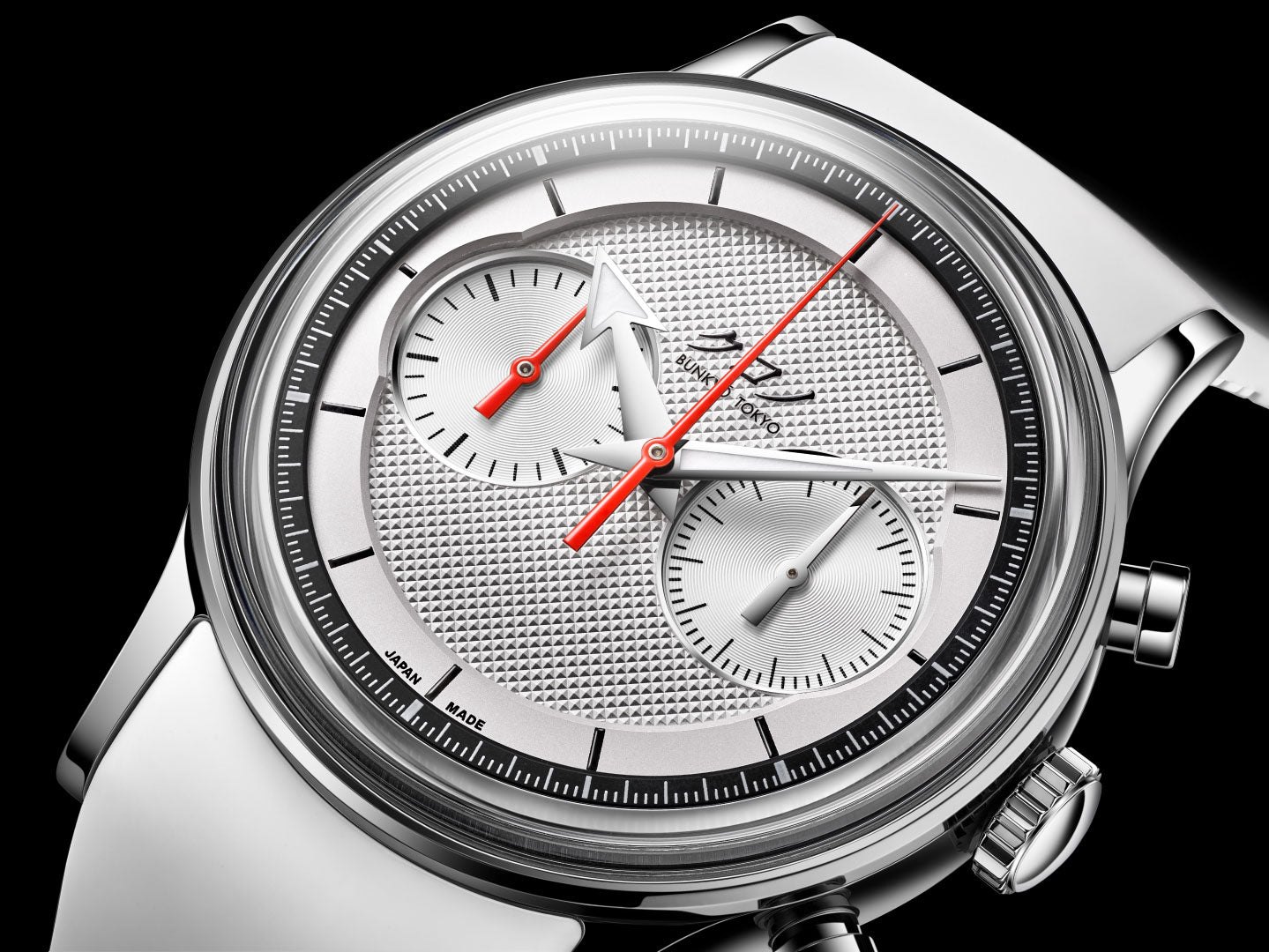
Hours, minutes, seconds and chronograph. Nothing else crowds the dial.
That restraint suits a movement Asaoka has built his chronograph line on for years, refined here into a PWT variant for this watch. No date window cuts into a register, and no extra scale competes with the minute track. The S1 times things. It keeps the rest of the complication calendar out of the frame entirely. The focus stays narrow on purpose, and the movement earns it.
One order window on November 19 and no second run
The S1 sells in a single global online window at kuronotokyo.com, opening Thursday, November 19 at 11:00 PM Japan time, 9:00 AM in New York. The price is $3,690 before VAT and duties, and orders are limited to one watch per customer. US orders also carry the current 10 percent baseline tariff, paid to the delivery carrier when the watch ships.
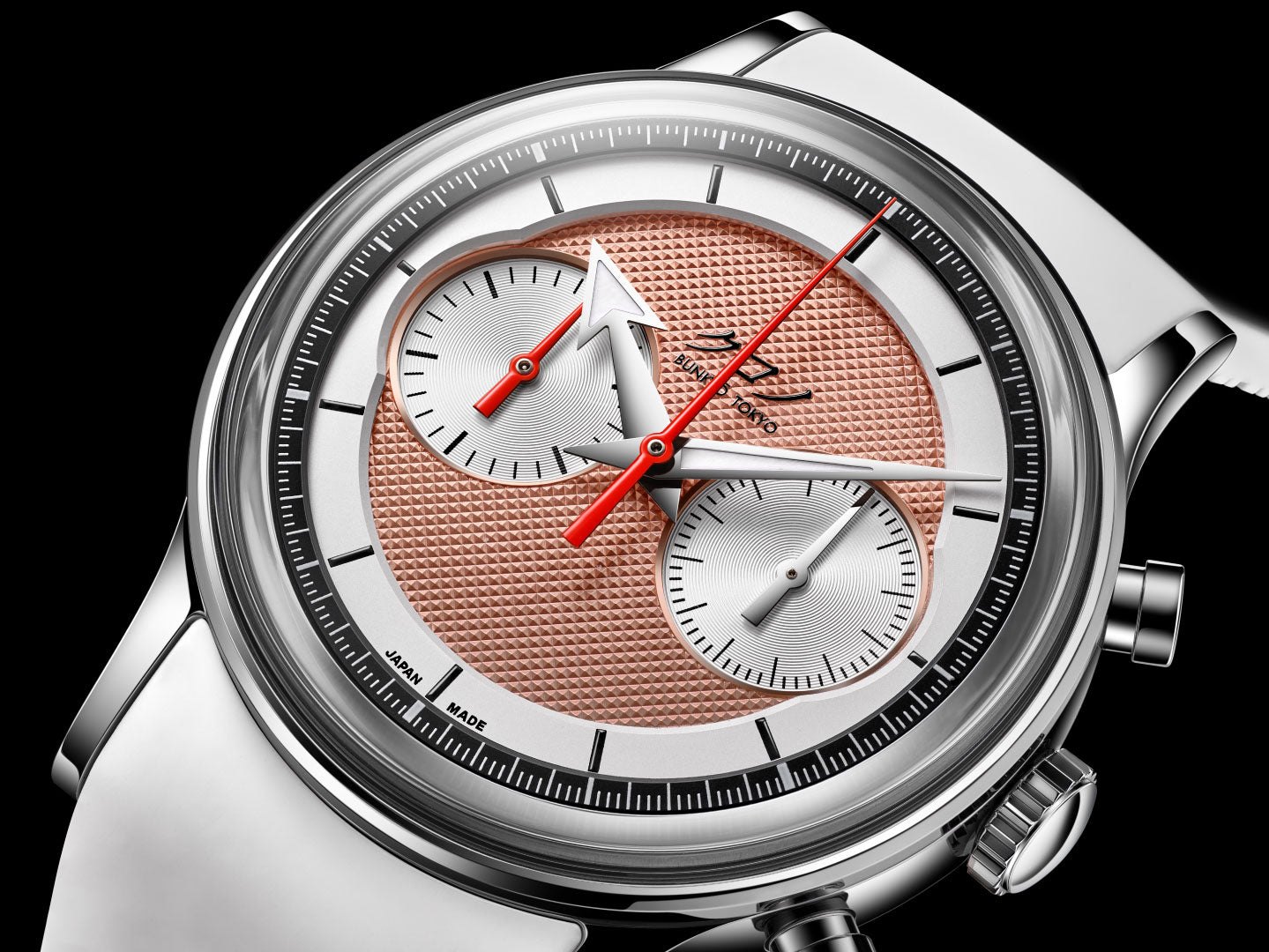
Production is limited and Kurono states plainly that the release will not be repeated. Deliveries follow from mid-December 2026 onward.
Anyone near Tokyo or Shanghai can handle the watch first. Both Kurono salons, Aoyama and Shanghai, hold the S1 on preview through November 19, so the layered dial can be read in person before the window opens. Everyone else gets one window, one watch, and a design that treats a chronograph as an instrument first and an object second.
Kurono built its name on restraint, on watches that whispered. The S1 keeps the restraint and drops the whisper. It’s the loudest thinking Asaoka has put into a Kurono so far, and every decibel goes toward reading elapsed time more clearly.
That trade defines the watch, and at $3,690 it lands well under the Swiss tool chronographs it will be measured against.


