

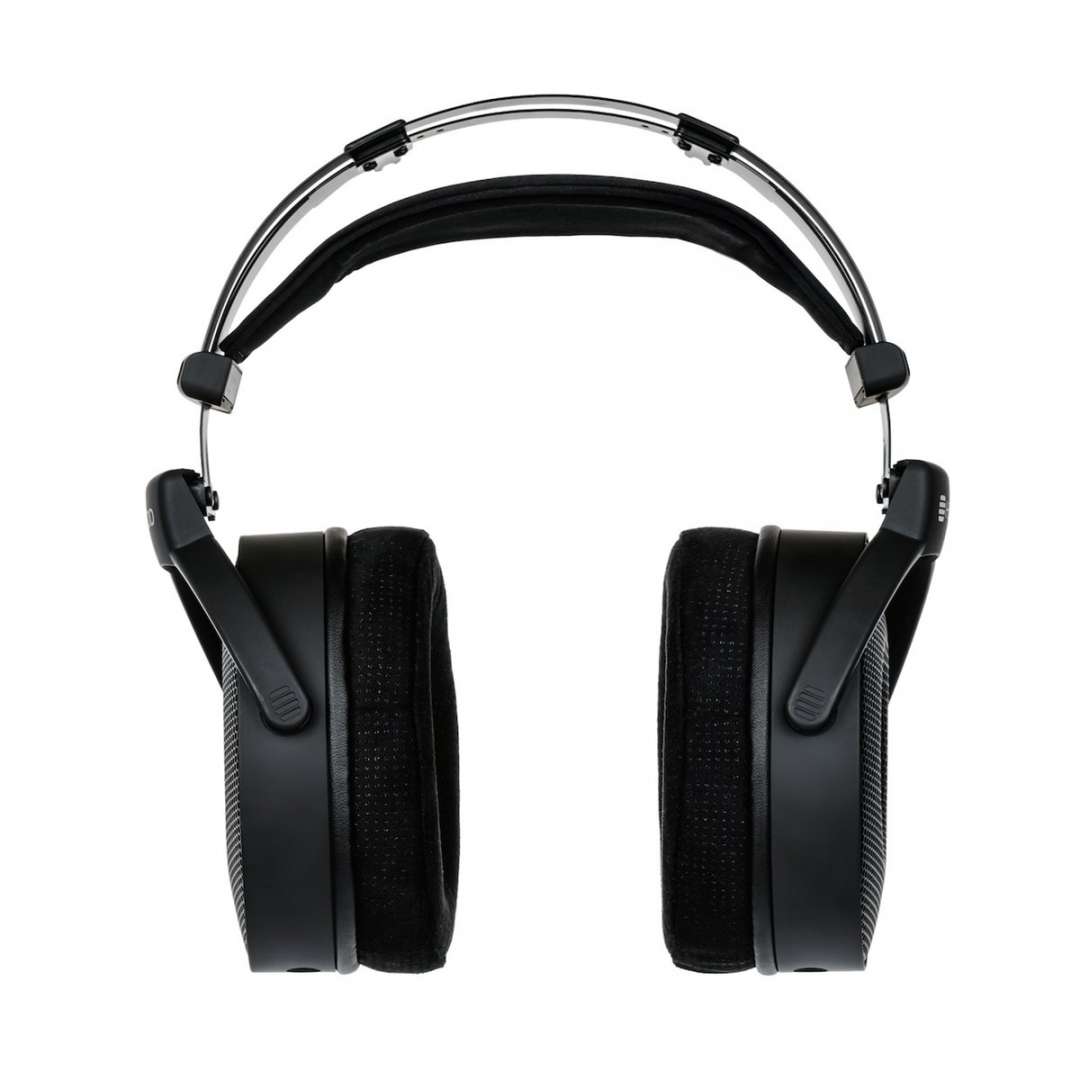
Flagship headphones usually ask you to accept a trade before you’ve heard a note. Open-back designs ask for the clearest one of all.
You get the wide, airy stage, and you hand back the bottom octave, because that’s what open cups have always cost. HEDD Audio’s HEDDphone DX is built around refusing that trade, and it’s the Berlin studio monitor maker’s new flagship at $1,199, aimed at listeners who’ve stopped pretending the missing bass doesn’t bother them.
HEDD says the DX holds full bass output down to 20 Hz, and those notes anchor everything above them. That’s the pedal note under an organ, the fundamental of a synthesizer bass, and the weight of a kick drum recorded in a real room, so a headphone that keeps them changes how complete a recording feels, not just how loud the low end gets, because the foundation stops sounding implied and starts sounding present.
A carbon driver built to move farther
The driver is a new 50 mm unit with a Thin-Ply Carbon Diaphragm. The layup comes from the same engineering culture that builds HEDD’s studio monitors in Berlin, and it shows in how the headphone is put together.
The DX version adds excursion, the distance the diaphragm can travel before its movement stops being clean. More travel means more air moved at low frequencies, where a small driver runs out of room first.
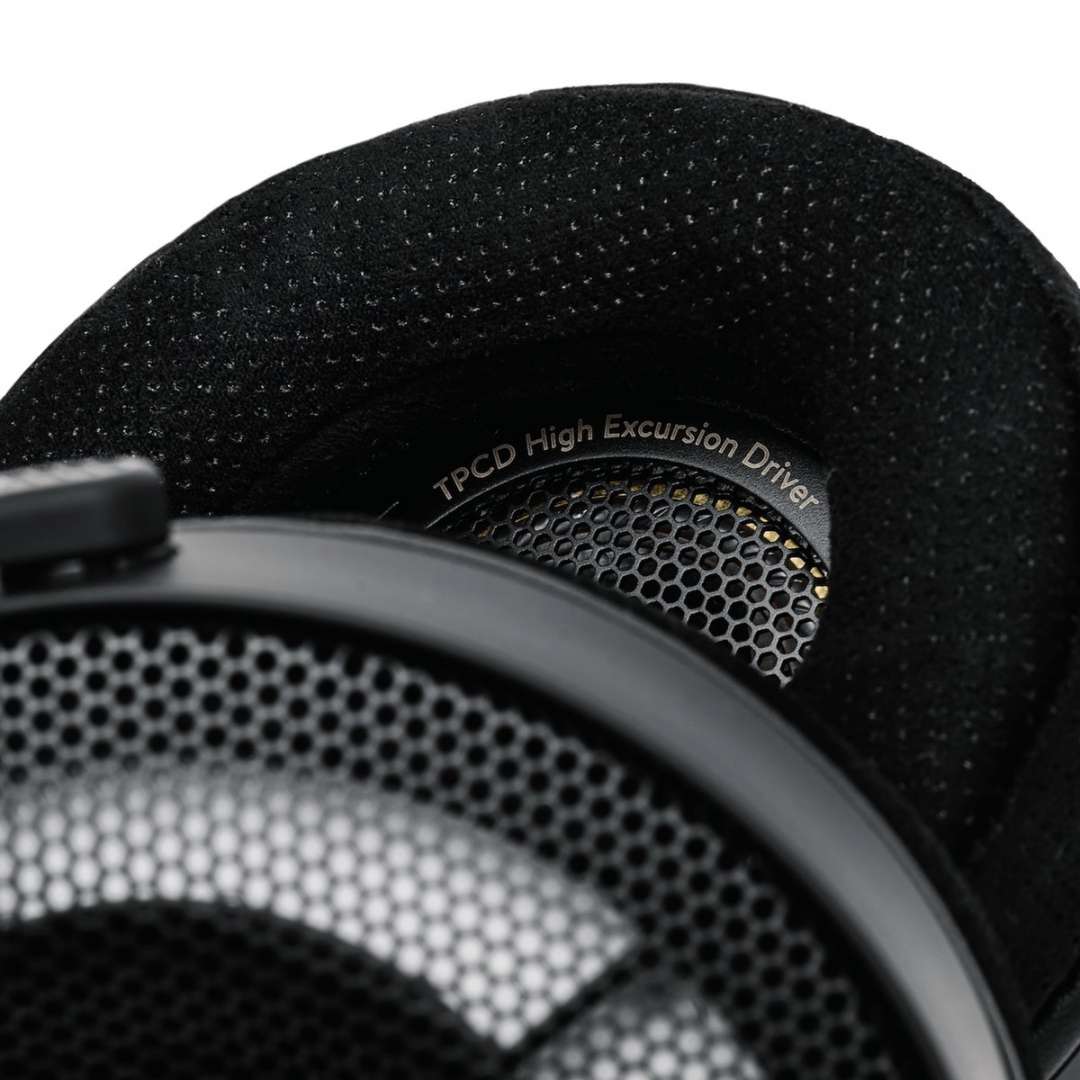
HEDD rates the range at 5 Hz to 40 kHz, with no breakup until 24 kHz. Both figures are the maker’s own, stated plainly because no independent measurement has settled them yet.
Depth alone wouldn’t be enough, because bass that swells over the midrange ruins more recordings than bass that rolls off early, so the tuning has to protect the middle of the music while the bottom does its work. HEDD builds on the D1’s natural midrange instead of starting over, keeping vocal clarity and instrumental texture intact, and the treble gets a refinement pass too, with the soundstage staying wide even under the extra low-end energy.
Built for the whole album, not the first track
At 310 grams, the DX is 40 grams lighter than the D1, and the new suspension headband carries a share of the credit for how that weight feels across a long session. Comfort failures always arrive late in a listen, never in the first five minutes, so a frame you stop noticing is doing real work.
Co-developed with Capra Audio, the headband uses an elastic neoprene band that spreads the load across the head instead of resting it on one narrow strip. Stability improves along with comfort, so the cups stay where they were placed and you stop noticing the frame at all.
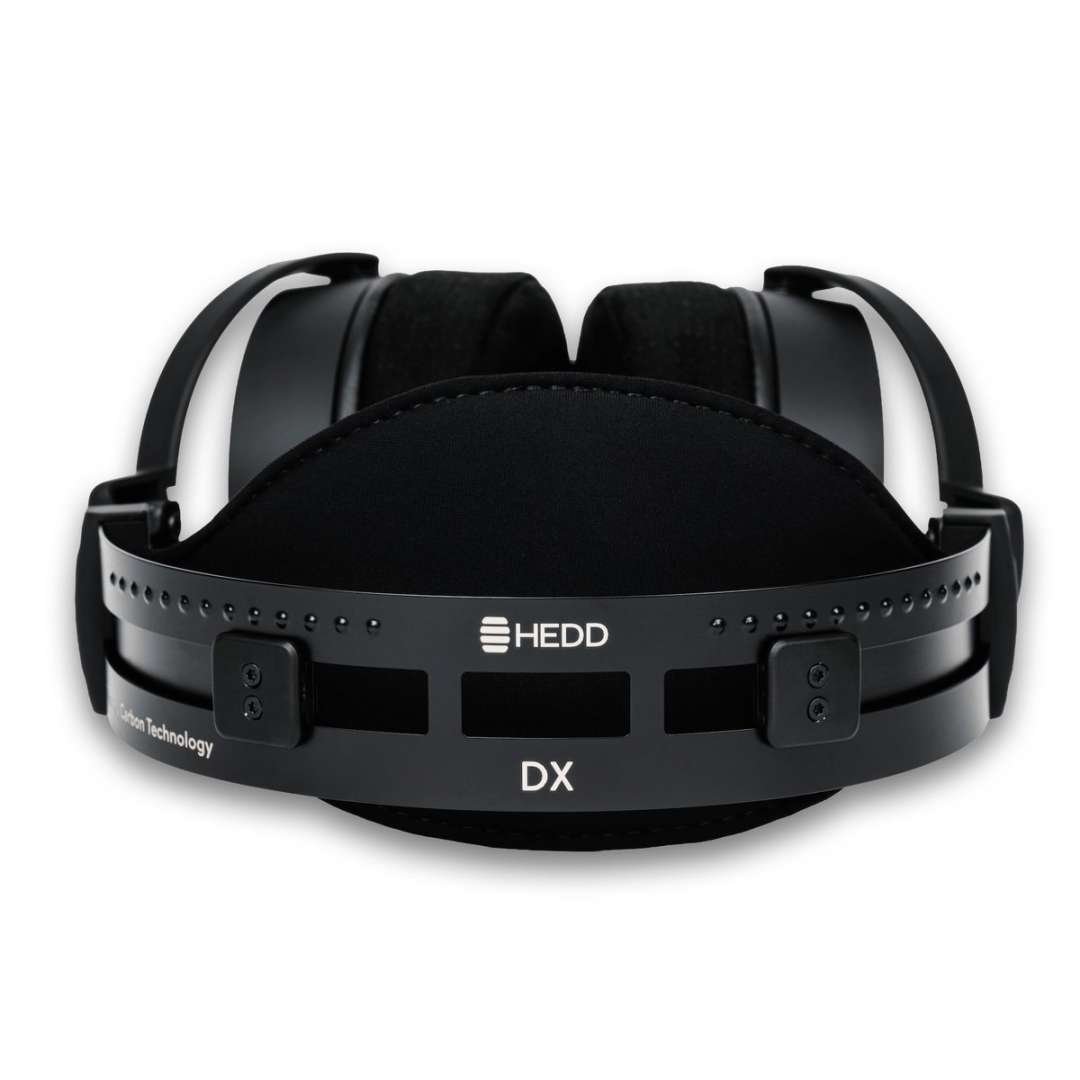
The earpads are perforated velour over memory foam, and they’re removable when they wear. HEDD says every part of the DX can be replaced, which is the right promise at this price, because a flagship should be a repair job away from new rather than a replacement purchase away from it.
Everything’s replaceable, down to the pads. That’s the ownership promise doing quiet work.
The electrical side stays practical too. At 32 ohms with 100 dB sensitivity, the DX runs happily from modest sources, and it still scales when the chain around it improves.
What it keeps from the D1, and what it leaves behind
The D1 proved HEDD’s carbon diaphragm works in a headphone, and our Gadgeteer piece on the HEDDphone DX traces the push upmarket in three places: driver excursion, weight and the headband. The outer grilles are redesigned and the headband carries laser-engraved detailing, so the direction is an evolution with intent, not a reset.
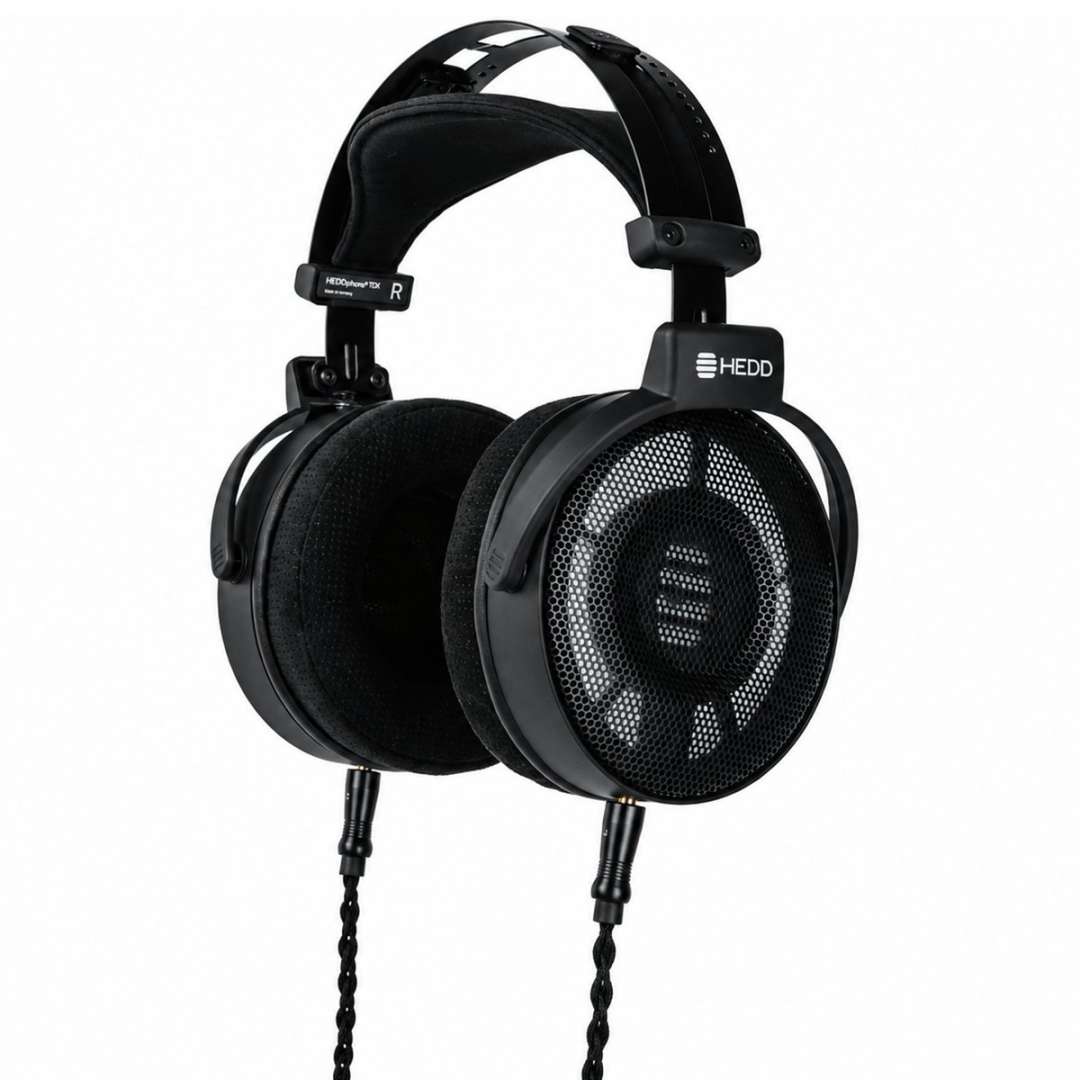
D1 owners aren’t left out of the path either. The new suspension headband also fits the older headphone as a kit priced at $99, and in the box sits a 2.2 meter eight-strand braided OCC balanced cable with a 4.4 mm plug, a 6.3 mm adapter and a double-layer travel case. The cable connects at both earcups with standard 3.5 mm plugs, so replacements never need a proprietary hunt.
The DX is the pick for listeners who love the open-back stage and have stopped accepting the missing floor beneath it. At $1,199 it answers with a carbon driver that moves farther, a frame that weighs less and parts you can replace one at a time. That’s a coherent flagship, not a spec sheet with a logo on it.


