

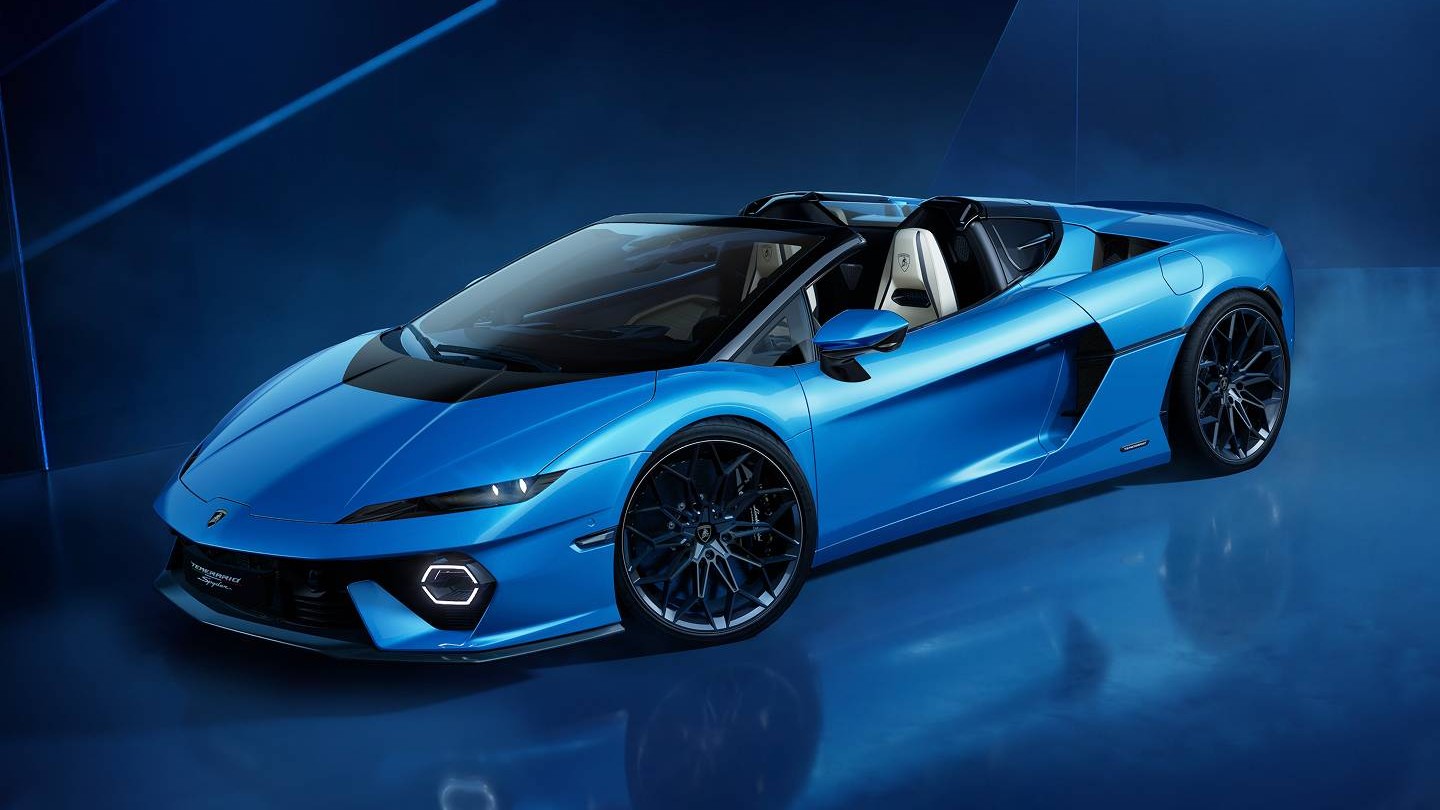
The Temerario Spyder is Lamborghini’s first convertible with a folding hard top, and the roof doesn’t lie flat behind the seats. It stands up. Ten electric actuators park it vertically behind the cabin, so the car’s balance stays exactly where the coupé leaves it.
Centro Stile drew the open car as its own shape rather than a coupé with the roof deleted, keeping the surfaces pure and the silhouette low and continuous. Two streamlined hexagonal cowls rise behind the seats and stretch the cabin line into the tail, and the V8 stays visible under its cover because the design team counts the mechanics as part of the car’s looks.
The roof stands up behind the seats
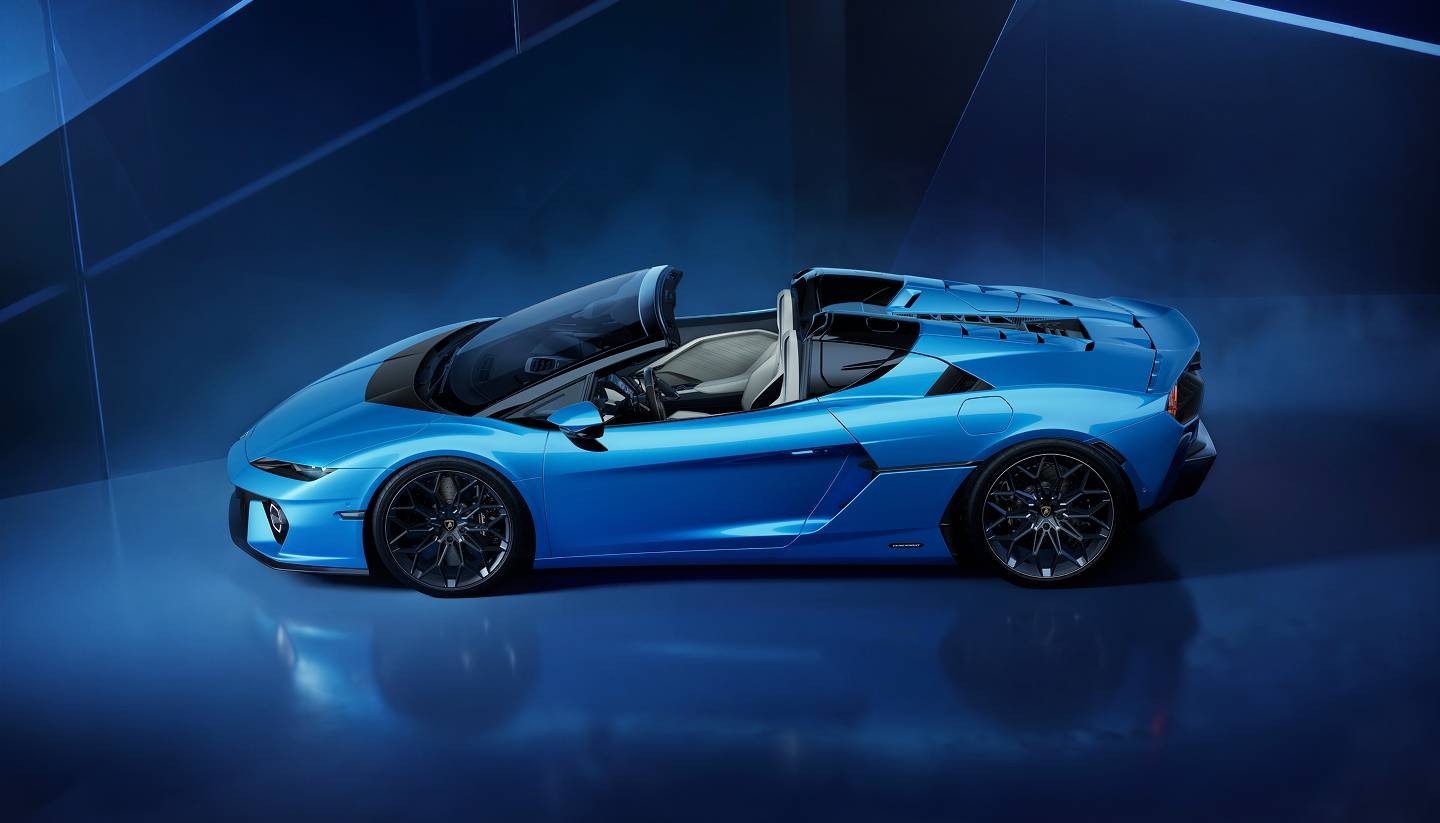
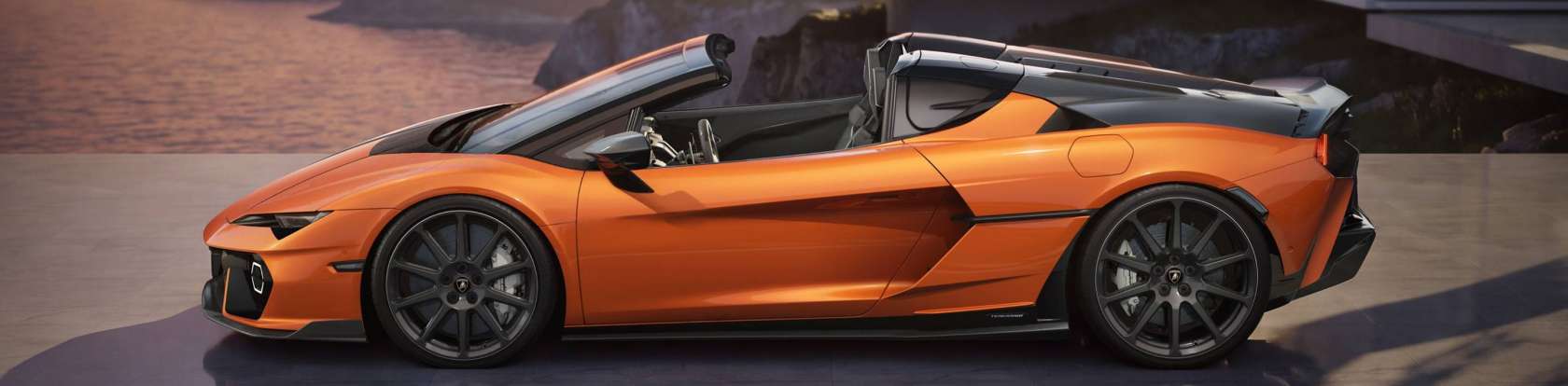
The mechanism runs fully electric, with no hydraulic lines, and the vertical kinematics are patented. Dropping the roof takes 17 seconds, and the car can be moving at up to 31 mph while it happens.
Stowed vertically and low, the roof drops the center of gravity by 3 mm compared with the closed car, and the front-to-rear weight distribution doesn’t move at all. A horizontal layout would have raised that center of gravity and pushed mass rearward, so the vertical stow is a dynamics decision first.
The trade runs in both directions. A fabric top is simpler in concept, and the Huracán Spyder lived happily with one for years, but the hard top brings coupé-grade security, quiet and weather sealing that fabric can’t match. What it asks in return is faith in ten actuators and their small ballet.
A spaceframe that had to get stiffer
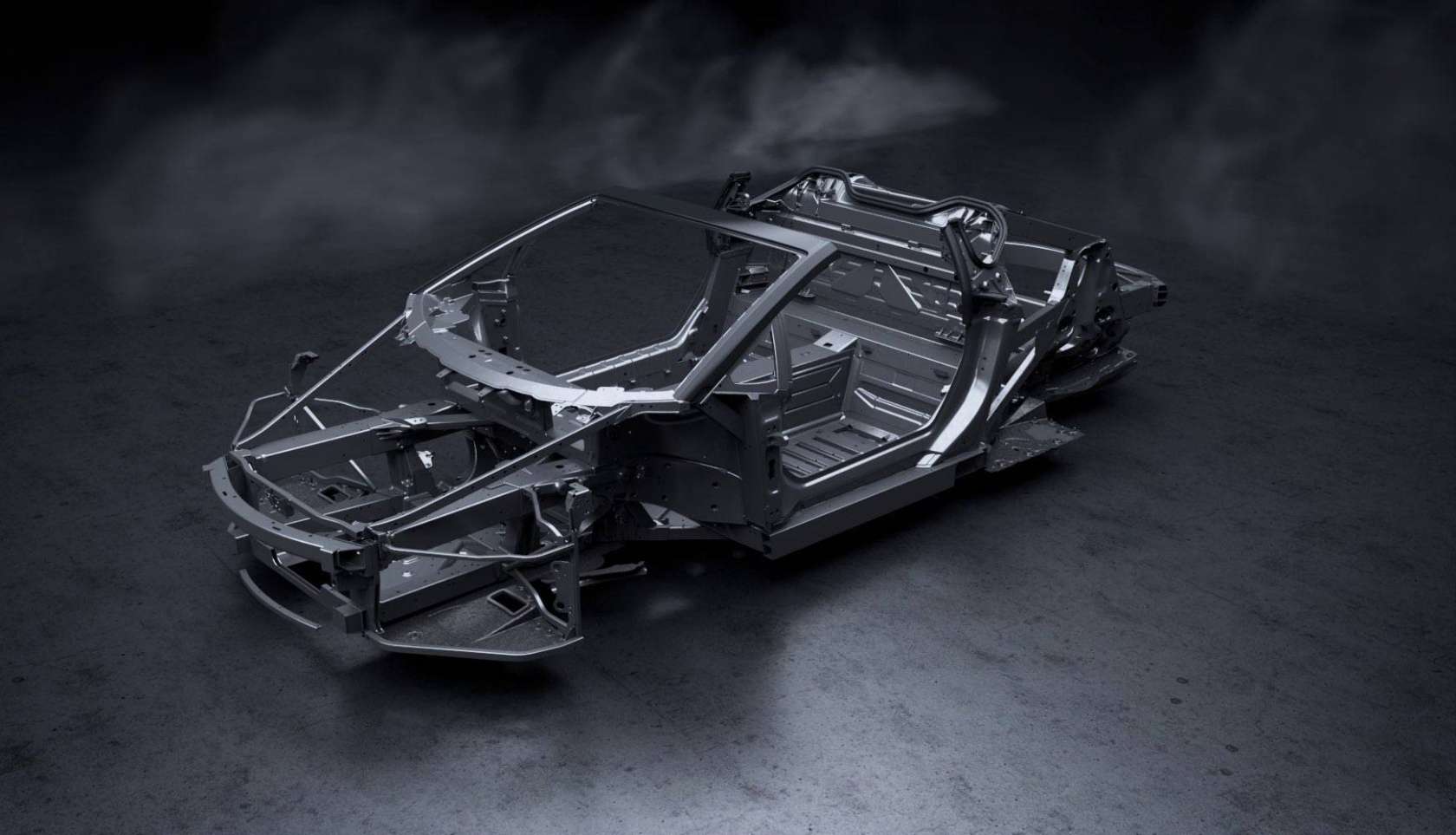
Cutting the roof out of a mid-engine car usually costs stiffness, so the all-aluminum spaceframe underneath the Spyder was reworked to pay that stiffness back with interest. Static torsional rigidity climbs 6% over the Huracán Spyder, dynamic bending stiffness rises 9%, and dynamic torsional rigidity gains another 6%. Those are big numbers for a car that lost its roof and gained a folding one.
The structure gets simpler as it gets stronger: 50% fewer structural components, 80% fewer heat-input welds than the Huracán EVO Spyder’s frame. Fewer parts, fewer welds, tighter tolerances.
907 hp, three motors and a 10,000 rpm redline
The powertrain carries over from the coupé unchanged, which means a 4.0-liter twin-turbo V8 working with three axial-flux electric motors, one at the rear and two driving the front axle. Combined output is 907 hp and 590 lb-ft, with 789 hp of it from the V8 alone. The motors also fill the gaps in the V8’s delivery, so throttle response lands before the turbos are fully awake, and the front axle pulls the car out of slow corners.
Start with the engine. A 180-degree flat-plane crankshaft, titanium connecting rods and 2.5 bar of turbo boost let it rev to 10,000 rpm, or 10,250 rpm with Launch Control engaged. The turbos sit inside the 90-degree V, a hot-V layout that shortens the exhaust path and sharpens response, and the redline belongs to a superbike.
Performance follows the coupé closely: 0 to 62 mph takes 2.8 seconds, 0 to 124 mph takes 7.3 seconds, and the top speed is 213 mph with all four wheels driving. The sprint costs a tenth against the fixed-roof car, the whole price of the open roof at full attack.
Thirteen drive experiences combine Città, Strada, Sport, Corsa and Corsa ESC Off with Recharge, Hybrid and Performance strategies, and Città runs on electric power alone with up to 187 hp, enough for silent city running at road speeds. A three-level Drift Mode manages controlled oversteer, and the adjustable rear window tunes how much of the V8’s fourth-order harmonic reaches the seats. Every combination changes the car’s character, from silent city running to Corsa with the stability control off.
A taller cabin and fifty years of open Lamborghinis
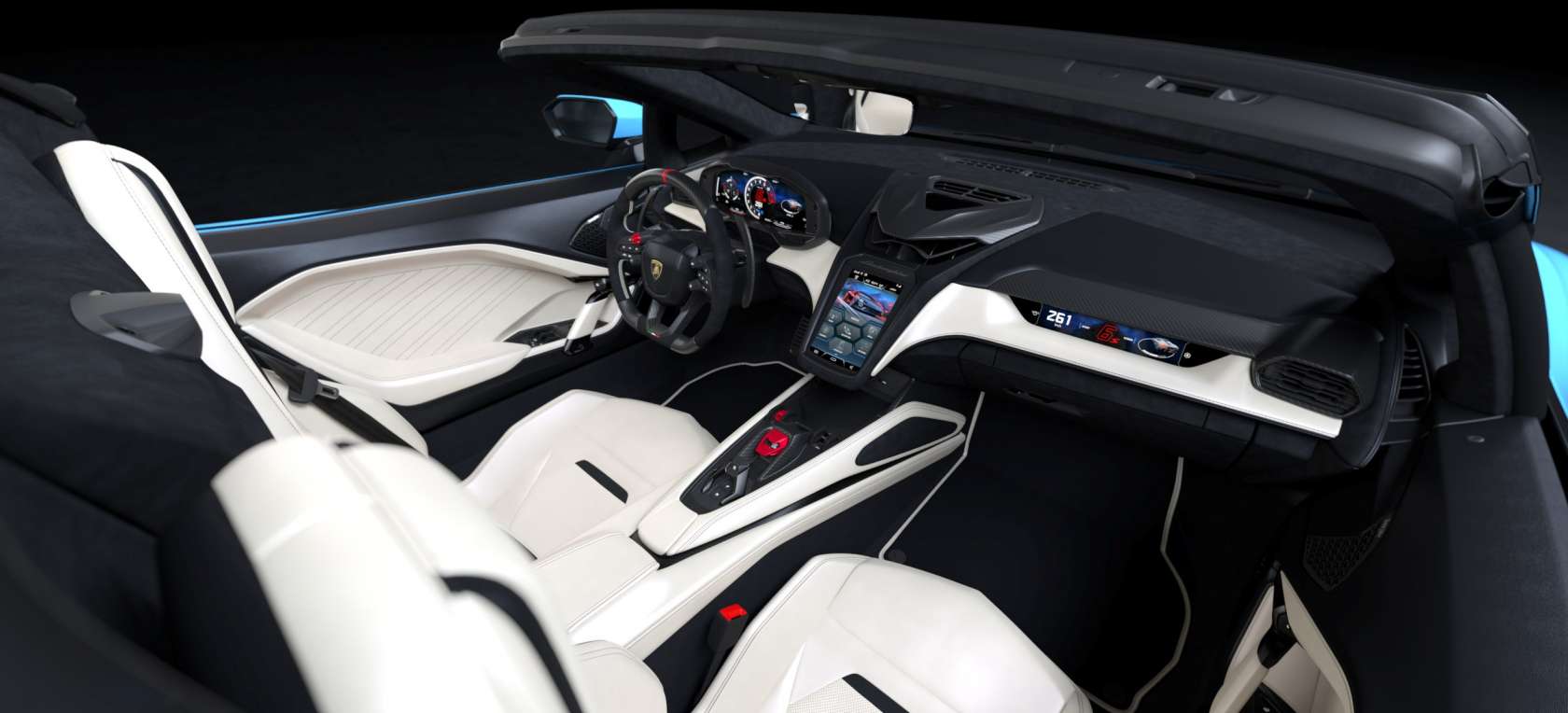
The cabin grows in every direction that counts for actual humans, with 46 mm more legroom, 22 mm more headroom and 9 mm more shoulder and elbow room than the Huracán EVO Spyder offered. Drivers up to 6 feet 7 inches tall fit, and a three-level neck warmer in the seats takes the chill out of roof-down evenings. Suspension tuning also cuts secondary vibrations on rough surfaces by 20% against the old car.
Storage is a 112-liter front trunk. Small numbers, real comfort.
Around 400 exterior shades run through the Ad Personam program. Harlequin finishes, Tricolore liveries and carbon fiber interior plaques carrying the buyer’s name fill the rest of the form. Carbon fiber rims arrive with the Alleggerita package, which trims up to 22 kg through CFRP body and cabin parts.
An Akrapovič titanium exhaust weighing 11.4 kg cuts 12% of the standard system’s weight and finishes in black tailpipes, and the same system is already on the coupé’s options list. Braking is carbon-ceramic, with 410 mm front discs and 10-piston calipers doing the heavy work.
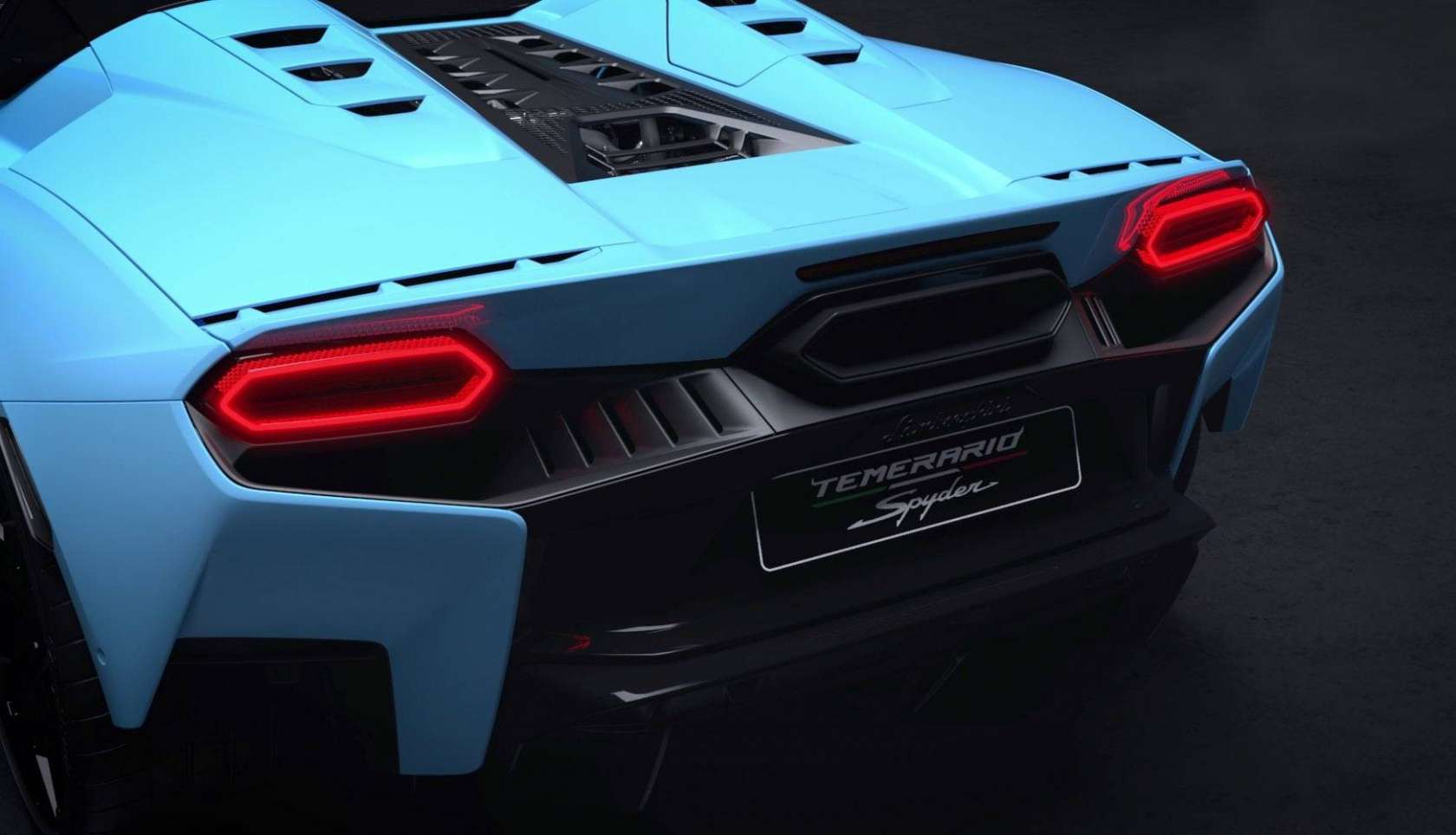
Fifty years separate this car from the 1976 Silhouette, the first open-top Lamborghini built in series, and the line runs through the Jalpa, Diablo Roadster, Gallardo Spyder and Huracán Spyder to get here. Every one of those cars folded fabric or lifted a panel off by hand. This one stands its roof up on ten motors and keeps the engine on show while it does it.
Unveiled in Sant’Agata Bolognese and Los Angeles, the Spyder still has no published price, no delivery date and no open order book, and it carries the maker’s not-yet-on-sale status. The configurator is already live for anyone speccing one early.


