

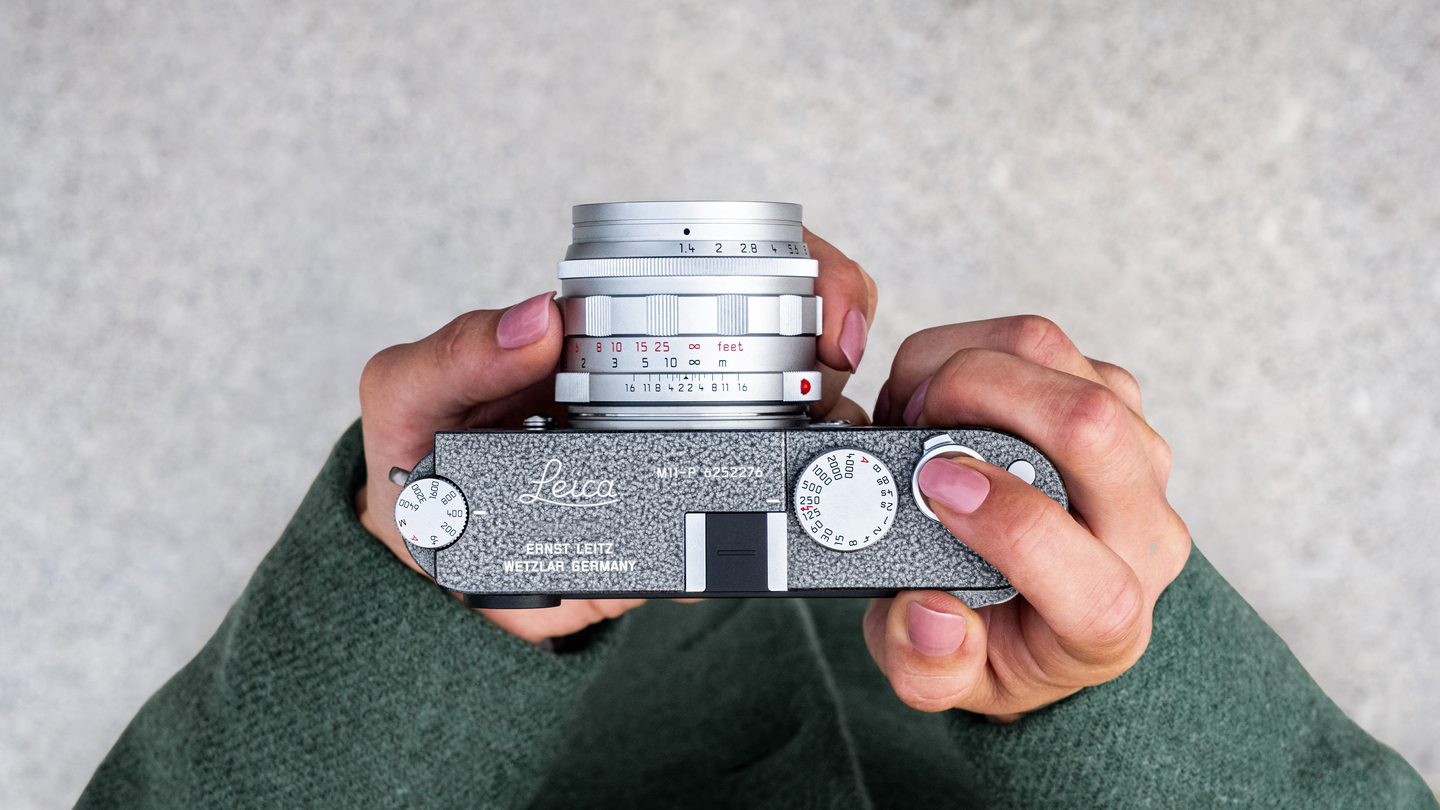
Two M cameras share one finish. The Leica M-A Hammertone runs on film, clockwork and the photographer’s judgment alone, while the M11-P Hammertone signs every digital file it makes at the moment of capture. Permanence, more than novelty, is the real subject here.
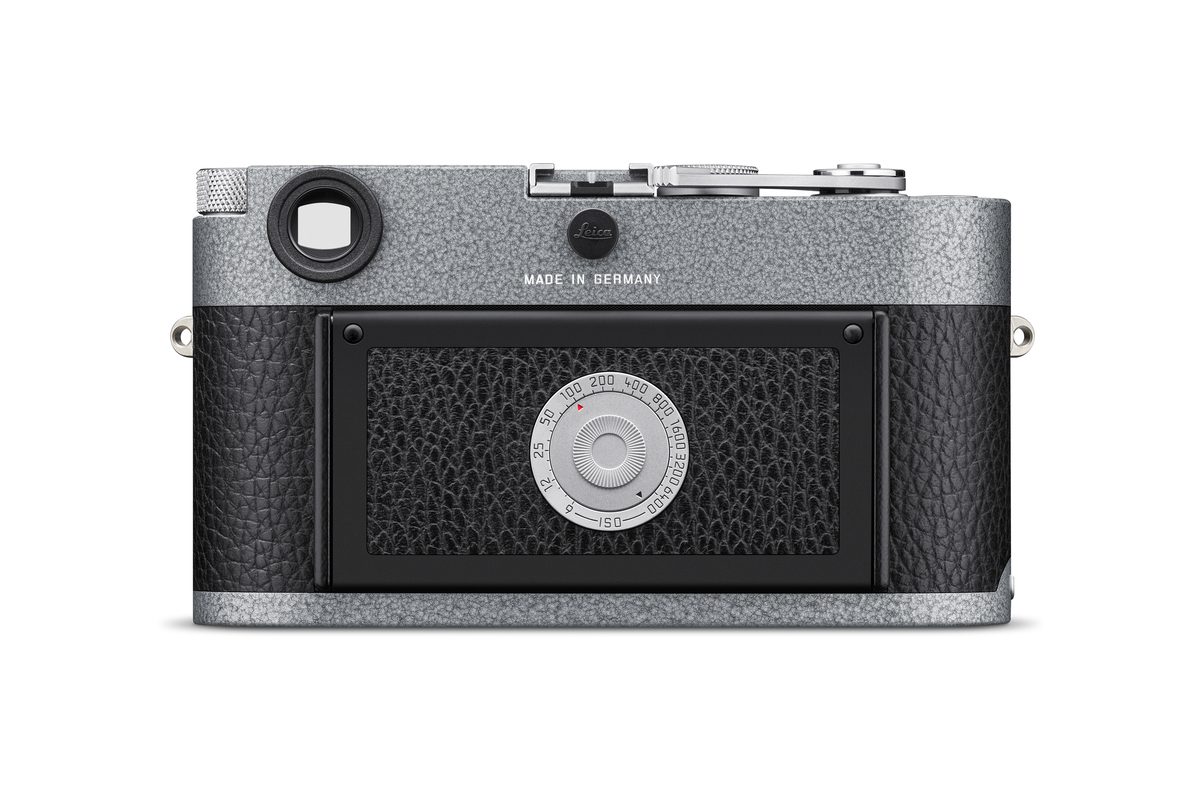
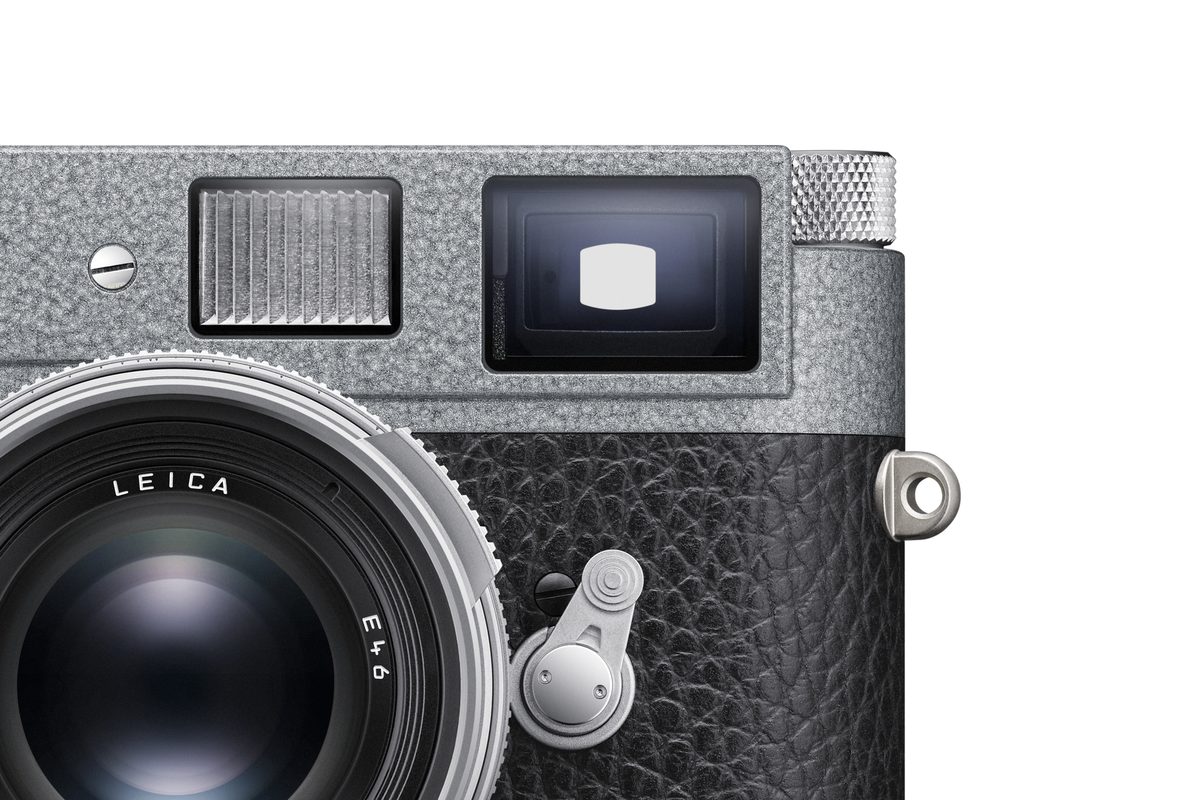
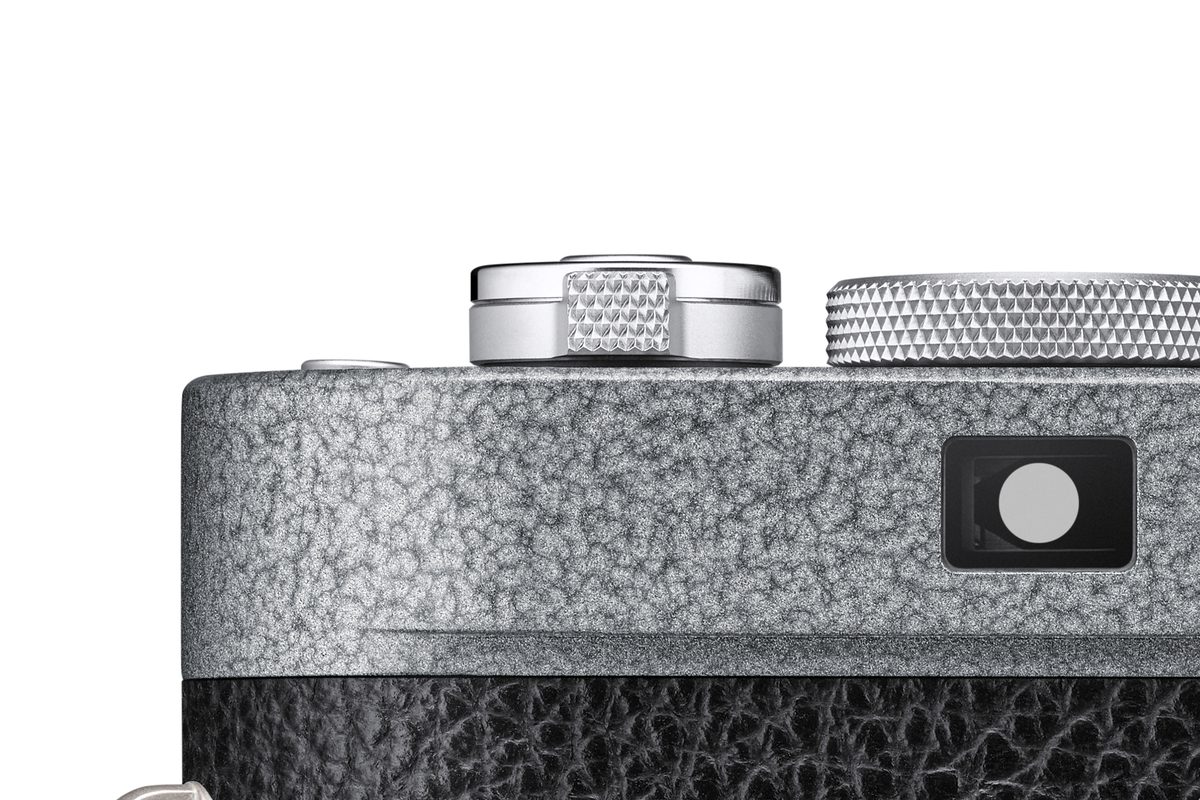
Both bodies wear hammertone paint across solid brass top and base plates, finished above black vulcanite style leatherette with white engravings, cross knurled controls and a shiny silver shutter release plate. Wetzlar’s Manufacture specialists reworked the process by hand.
The texture forms while the paint dries
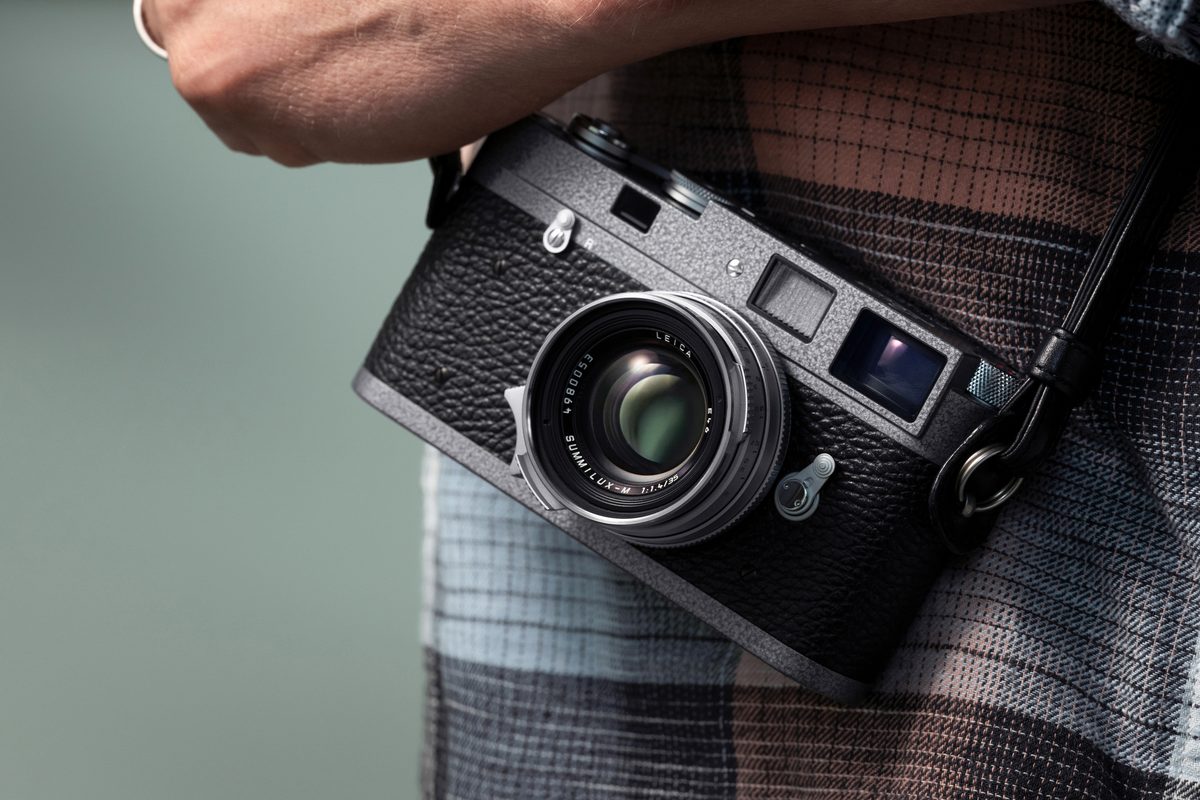
The texture isn’t stamped onto the plates. Metal pigments and special additives shift the surface tension while the lacquer dries, so the dimpled pattern settles wherever that slow chemistry leads on each individual plate. No two cameras leave Wetzlar alike, because the process simply never repeats itself exactly.
Holding an even texture across a full plate takes patience, steady hands and long experience rather than any machinery at all. Display polish was never the goal of this finish.
Leica reworked the process for these editions rather than reviving an old formula unchanged, because modern plates demand a uniform finish across the texture. Specialists at the Wetzlar site handle that work.
A lineage Leica has kept deliberately scarce
Hammertone has marked high quality technical instruments since the 1930s, where the finish came to stand for durability, function and technical clarity in German industrial design. On Leica cameras it stayed rare for decades.
The MD documentation camera for the Leitz Reprovit system carried it early on. A run of just ten Hammertone MD cameras followed in 1964, and later echoes include the 2003 MP LHSA, the 2011 M9 Hammertone and the 2016 M-A Vienna Edition. Collectors still chase the few survivors from that run.
That scarcity was never accidental, since the finish demands meticulous care every time a plate goes through the drying process. Production convenience never entered the calculation at any stage.
Film, clockwork and nothing else
The M-A Hammertone follows the standard M-A specification exactly. It’s a completely mechanical camera dedicated entirely to manual operation, so aperture, the ISO sensitivity of the film loaded and shutter speed all stay under the photographer’s hand. Nothing electronic intervenes between eye and exposure at all.
That discipline defines the exercise, since every single frame records a decision the photographer made unaided, with no meter reading to lean on. Nothing previews, and nothing corrects afterward either.
The exterior stays timeless beside the precision engineered mechanisms inside, and the analog experience arrives in its purest available form. Purity, in this camera, means subtraction above all.
The digital camera signs its work at capture
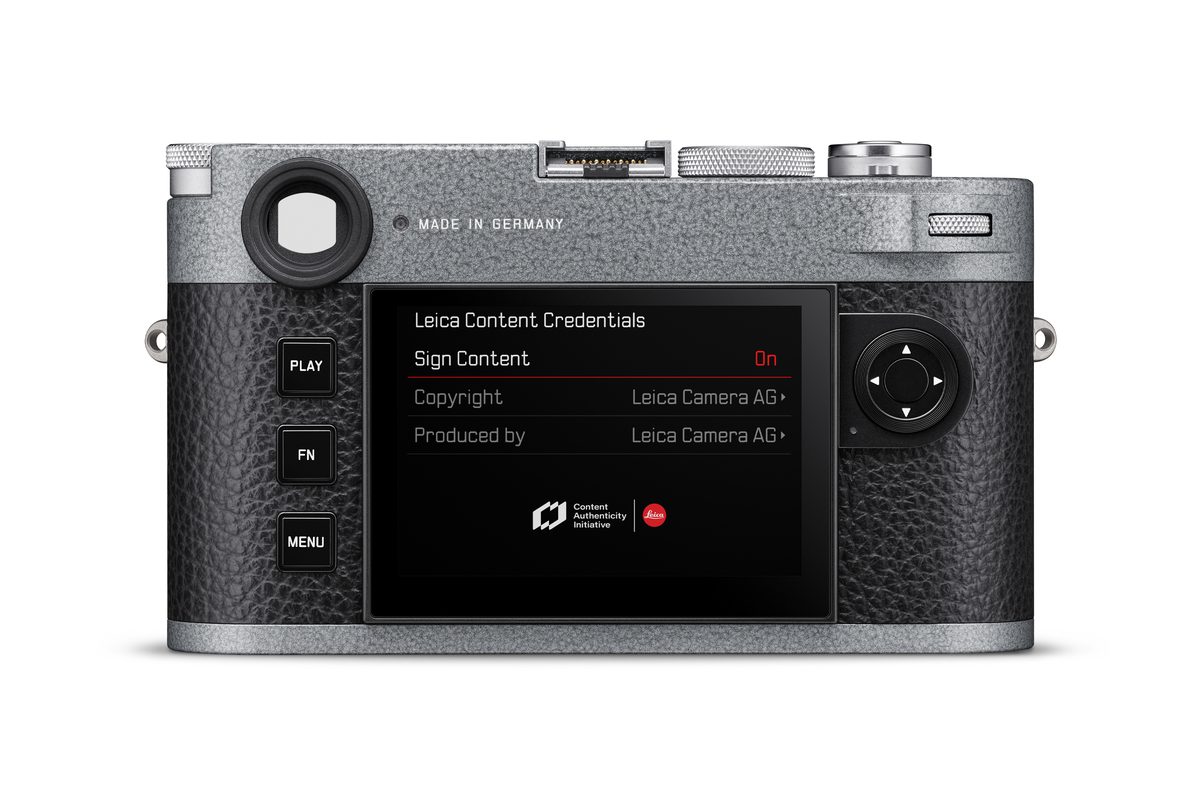
The M11-P Hammertone carries the standard M11-P specification into the same brass and leatherette dress, including a full frame BSI CMOS sensor with Triple Resolution Technology built in. It resolves 60, 36 or 18 megapixels.
Internal memory holds 256 GB before a card ever enters the conversation. A sapphire crystal rear screen resists scratches and carries an anti reflective coating, while Leica Content Credentials give images verifiable proof of authorship, image attributes and editing steps. That provenance record travels with the file.
The edition also adds newly rounded edges on the top and base plates, plus a front screw finished in silver chrome. Its BP-SCL7 battery arrives painted to match. The Leica FOTOS app connects over Bluetooth, Wi-Fi or cable for transfers.
Once enabled, the signing happens at capture, so the proof begins with the file itself rather than with anything added during editing later on. Authorship becomes a verifiable record instead of a claim.
Two prices for one shared surface
Leica’s United States store lists the M-A Hammertone at $8,000 and the M11-P Hammertone at $10,950, a combined $18,950 before any lens joins either body. The premiums buy finish and handwork, not new capability.
Against the standard bodies, the finish adds $1,000 to the M-A and $550 to the M11-P. Both editions reached Leica Stores, the Leica Online Store and authorized dealers worldwide on November 12, 2026, with no edition size announced and no individual numbering. Anyone weighing one should handle the exact body on offer first, since that surface is the purchase itself.
What neither premium buys is mystery about the hardware, since both cameras match their standard counterparts specification for specification. The money goes entirely into surface, handwork and rarity of process.
The M11-P Hammertone makes the stronger case, since its smaller premium also buys the rounded plates, the silver chrome screw and the matching battery inside the box. The M-A answers a different longing entirely. It’s a new film body wearing an old workshop skin, with no electronics to age, and the choice is best settled with the camera in hand.


