

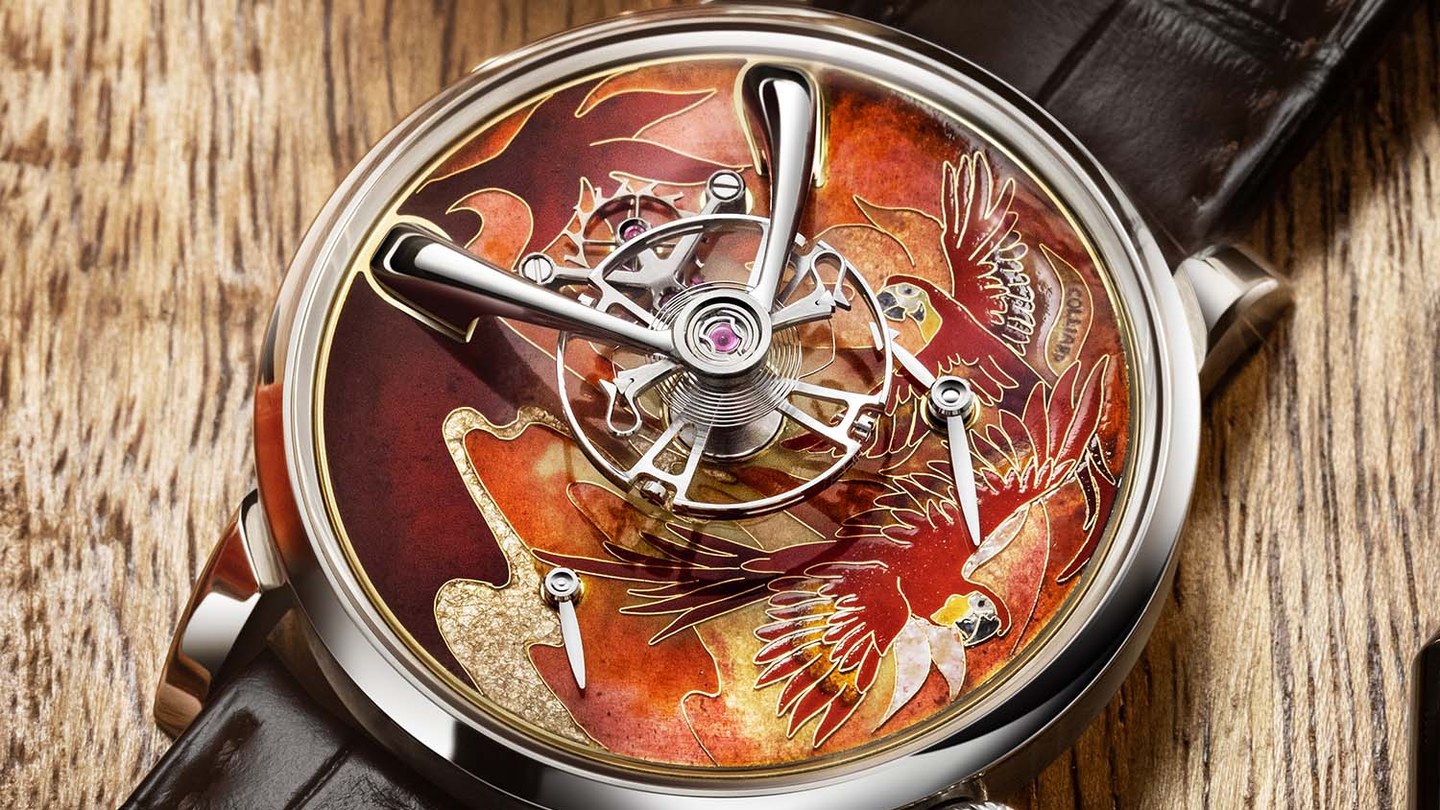
MB&F handed Gabriel Colliard a blank dial and a single instruction: compose what you want. What came back is a jungle in three colors, painted in enamel and fired one dial at a time. The LM101 Gabriel Colliard swaps the model’s two white subdials for full cloisonné dial plates, each signed by the artist, each limited to eight pieces, all inside a 40 mm platinum case, 16.55 mm thick and water resistant to 30 meters.
Three scenes divide the run of 24 watches. A monkey threads blue foliage, two scarlet macaws cross a red sky, and a crocodile waits in green at a swamp’s edge. The price is $131,000 before taxes, and the pace behind it is set by one man’s kiln: Colliard completes roughly one dial a month, so the series runs past two years.
The enamel grabs the eye first. MB&F rebuilt the face to hold it.
The model’s floating white subdials are gone, replaced by longer hands reading directly over the enamel, and the dial plate itself was thinned to take layer after layer of glass. Hours and minutes sit at 2 o’clock, the power reserve at 6, both working under the balance wheel’s arch.

A monkey in blue
Blue is the quietest of the three scenes, and the hardest to read at first glance. The monkey moves through foliage built from dozens of enamel tones, deep cobalt at the rim cooling to pale, near-white blues where the light would land, its tail curling through the leaves at the dial’s right edge. Depth here comes from opacity as much as color, transparent layers laid over opaque ones until the leaves stack.
Above it all, the 14 mm balance spans the dial from 9 to 11 o’clock, floating on its arched bridge.
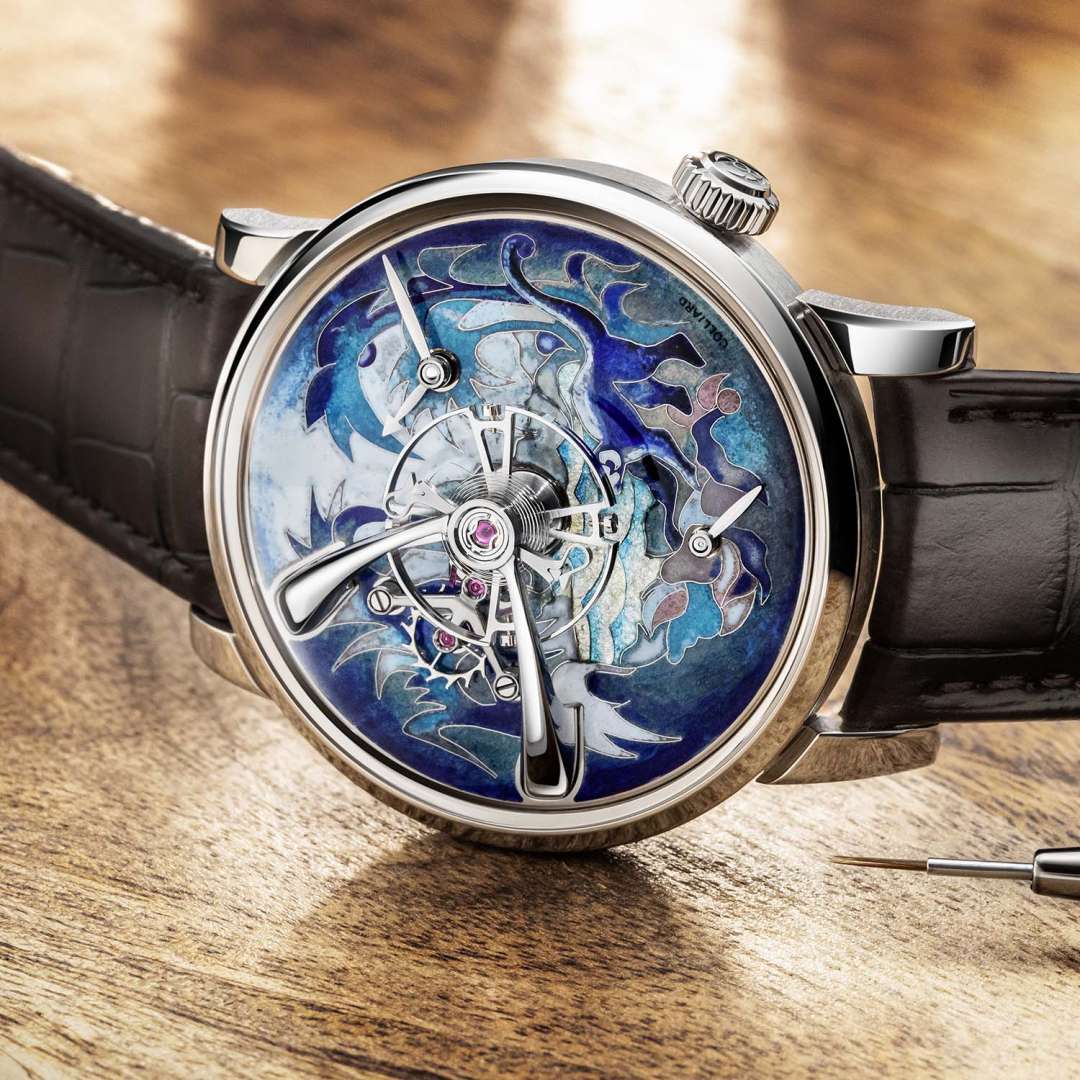
It rewards a loupe more than a glance across the room.
Two macaws in red
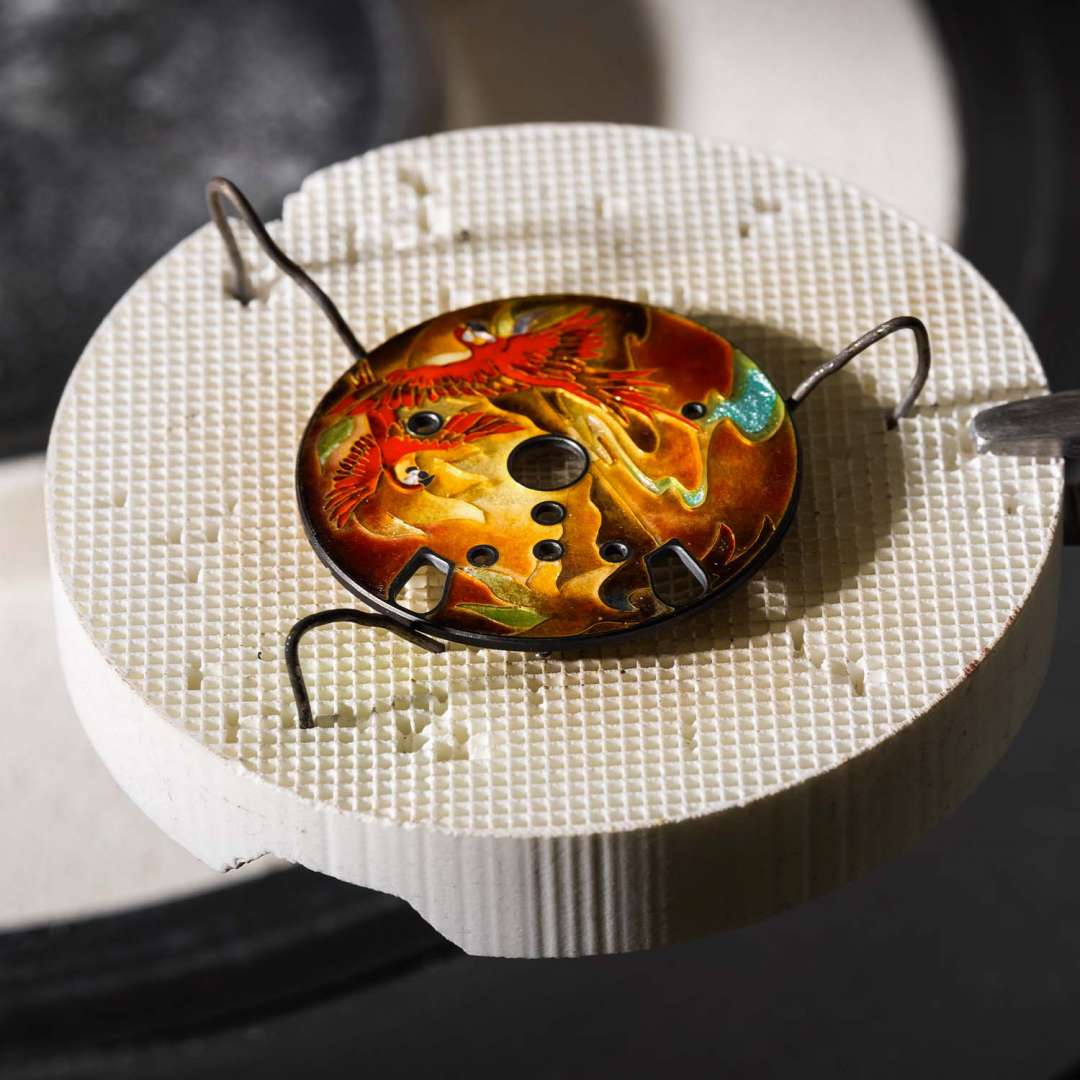
Red is Colliard’s home ground. He has painted scarlet macaws in enamel for years, a 2022 canvas of the two birds among his own pieces, and the LM101 pair flies across a ground running from ember orange to deep wine. Hand-bent gold wire draws the edge of every feather, and the birds carry the hardest contrasts on any of the three dials.
It’s the loudest of the three editions and the fastest to win a room. A wrist doesn’t need two macaws, and that’s rather the point.
Red does the selling here. The other two dials do the seducing.
A crocodile in green
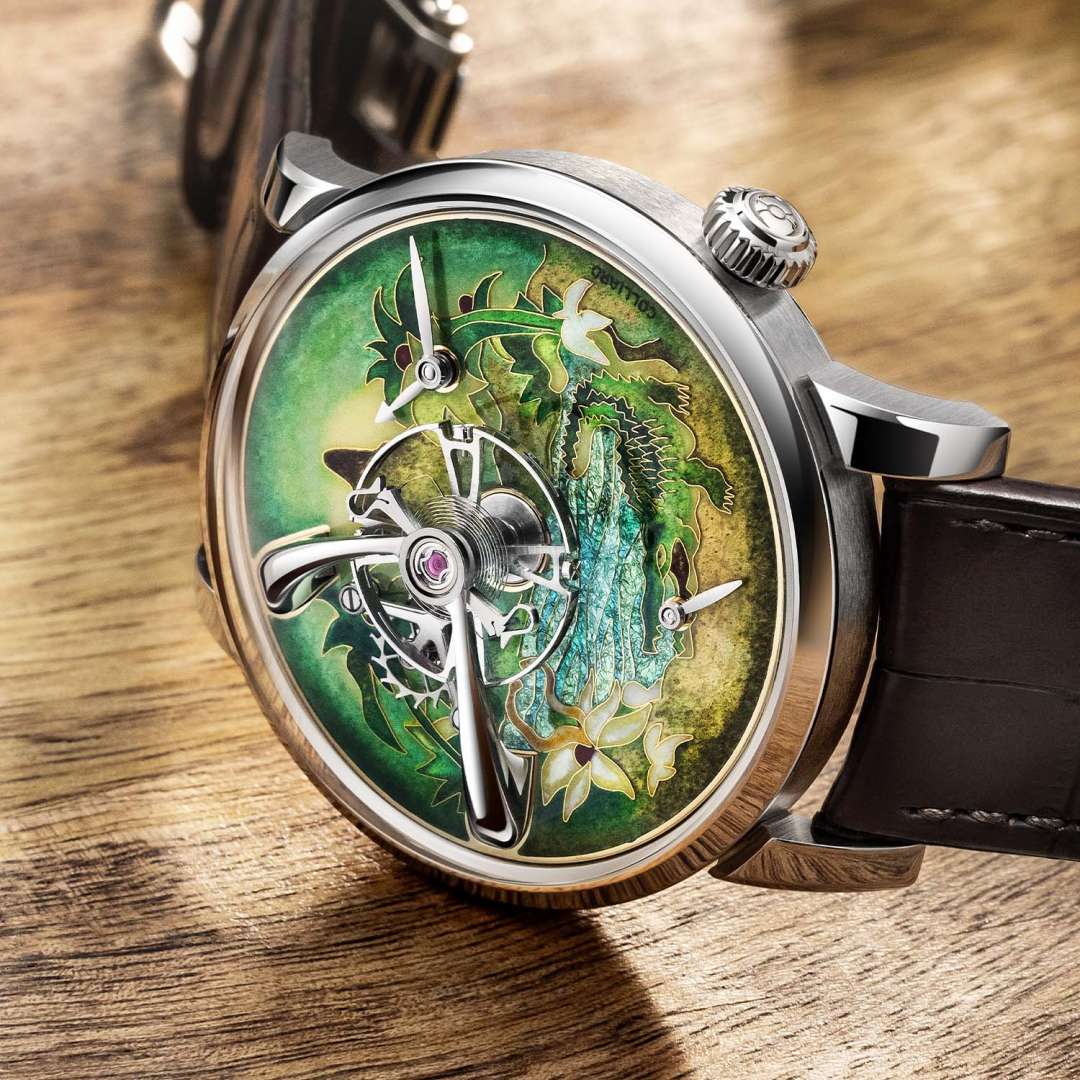
Green hides its animal best. The crocodile runs down the dial’s right side in blue-green scales, every scale its own wired cell, half sunk in the swamp tones around it, white flowers opening along the bottom edge and Colliard’s signature set into the rim.
Find the eye first. The rest of the animal assembles itself around it, and of the three dials this is the one that pays out on the second look, the one a stranger across a table would never decode.
Gold wire, then fire
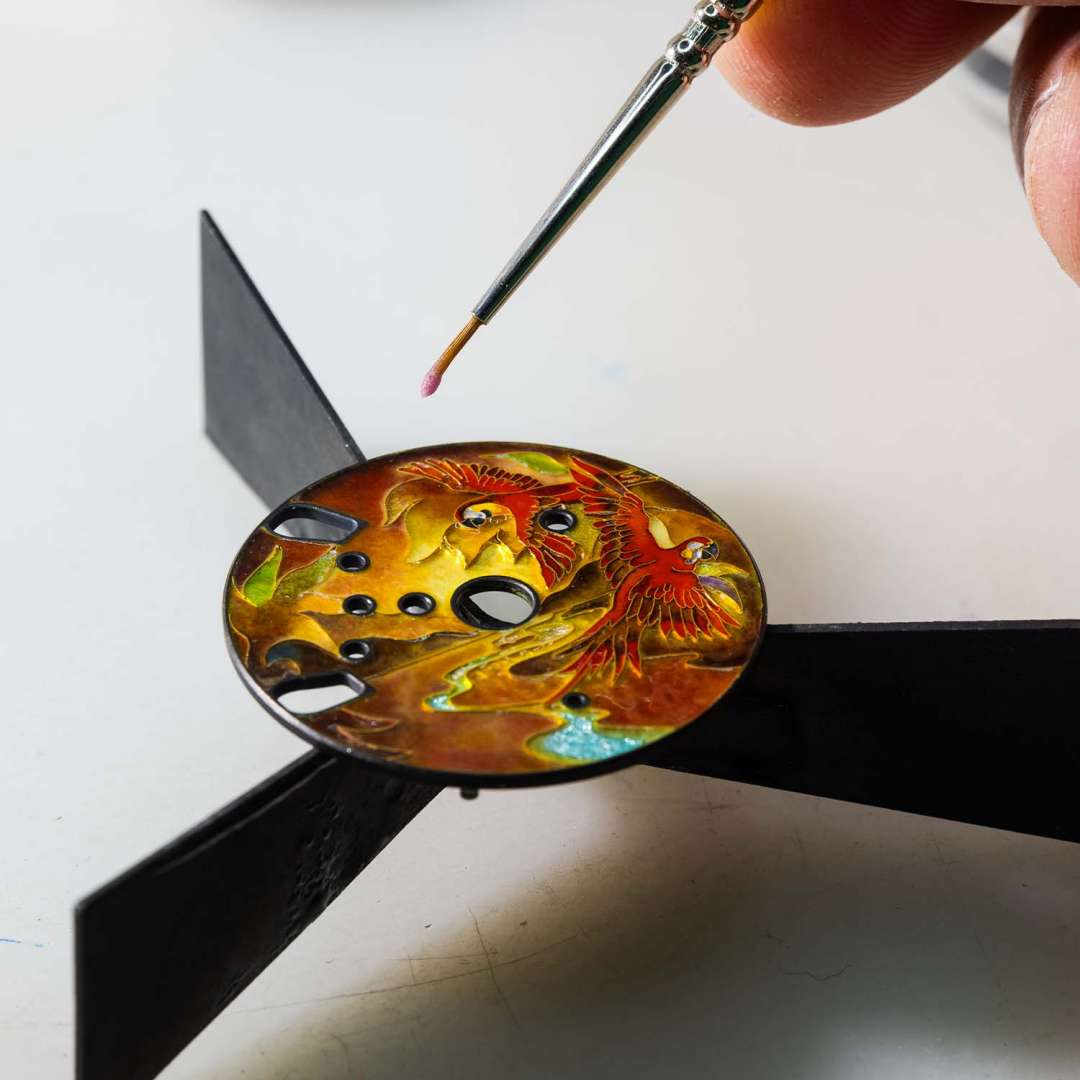
Cloisonné begins as drawing in metal, a technique watchmaking has carried since the 16th century. Colliard bends fine gold wire by hand, stands it on edge to wall off every shape in the scene, then fills the cells with enamel, powdered glass laid in by small brushes in thin layers. The dial goes into a kiln at about 800°C, comes out, cools, takes another layer, and goes back in. Color arrives firing by firing.
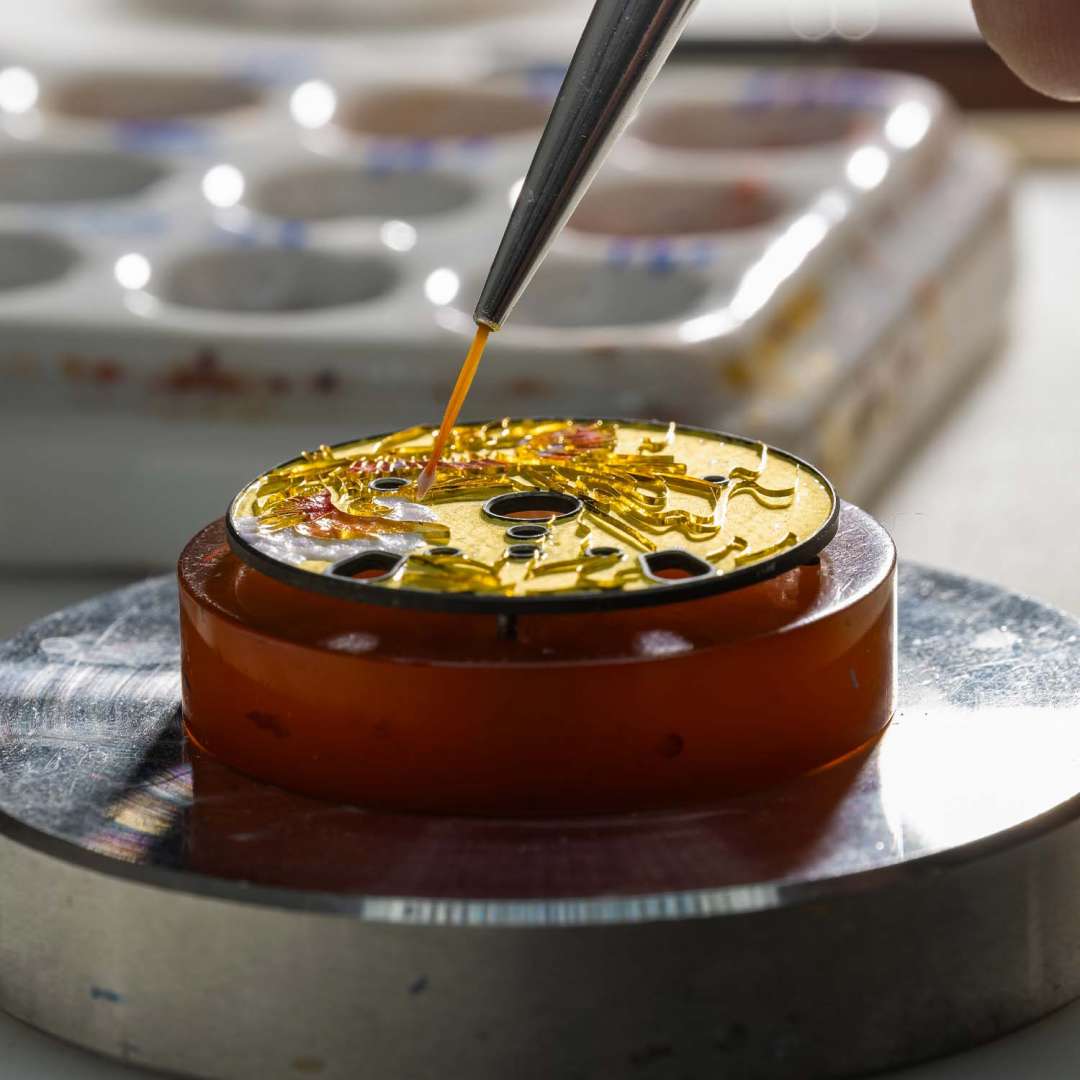
He came to enamel sideways. A fine arts degree in painting from the National University of Córdoba took him to Geneva in 2003, where his first bench job was polishing. A cloisonné course in Limoges followed, then years in specialist workshops and at Patek Philippe before he opened his own atelier. A painter’s eye, a polisher’s patience: the combination is the work.

His first sketches chased the wide palettes of 1950s cloisonné dials. MB&F suggested the opposite, one dominant color per scene, and it raised the difficulty rather than lowering it: without hard contrasts to lean on, separation has to come from tone and transparency alone. Colliard states the craft’s limit plainly. The fire always has the final say, and two dials from one drawing never match.
The engine keeps its side of the bargain
Under the enamel sits the first calibre MB&F ever conceived in house, hand-wound, its finishing specified by Kari Voutilainen: Geneva waves, gold chatons, countersunk blued screws. It runs 231 components and 23 jewels at 18,000 vibrations an hour.
The reserve comes through a sliding-bridle barrel, and the crown sits at 4 o’clock, clear of the wrist. For these editions the reserve climbs from the standard 45 hours to 60, and the 14 mm balance turns under its arched bridge on a Straumann double hairspring, opposed coils breathing against each other.

Flip the watch and the collaboration continues. The barrel’s ratchet wheel wears Colliard’s enamel too, each edition’s colors shrunk into a gear, and Pt 950 stamps the platinum underneath.



Editor’s take
Twenty-four watches, two years, one kiln. The Colliard editions invert the usual limited-edition logic, because the constraint here isn’t a marketing plan, it’s the physics of enamel. Collectors who chase métiers d’art will price that trade instantly, and they’ll queue for it.
At $131,000, you’re paying for the dial and the wait. The platinum LM101 is the frame it hangs in.


