

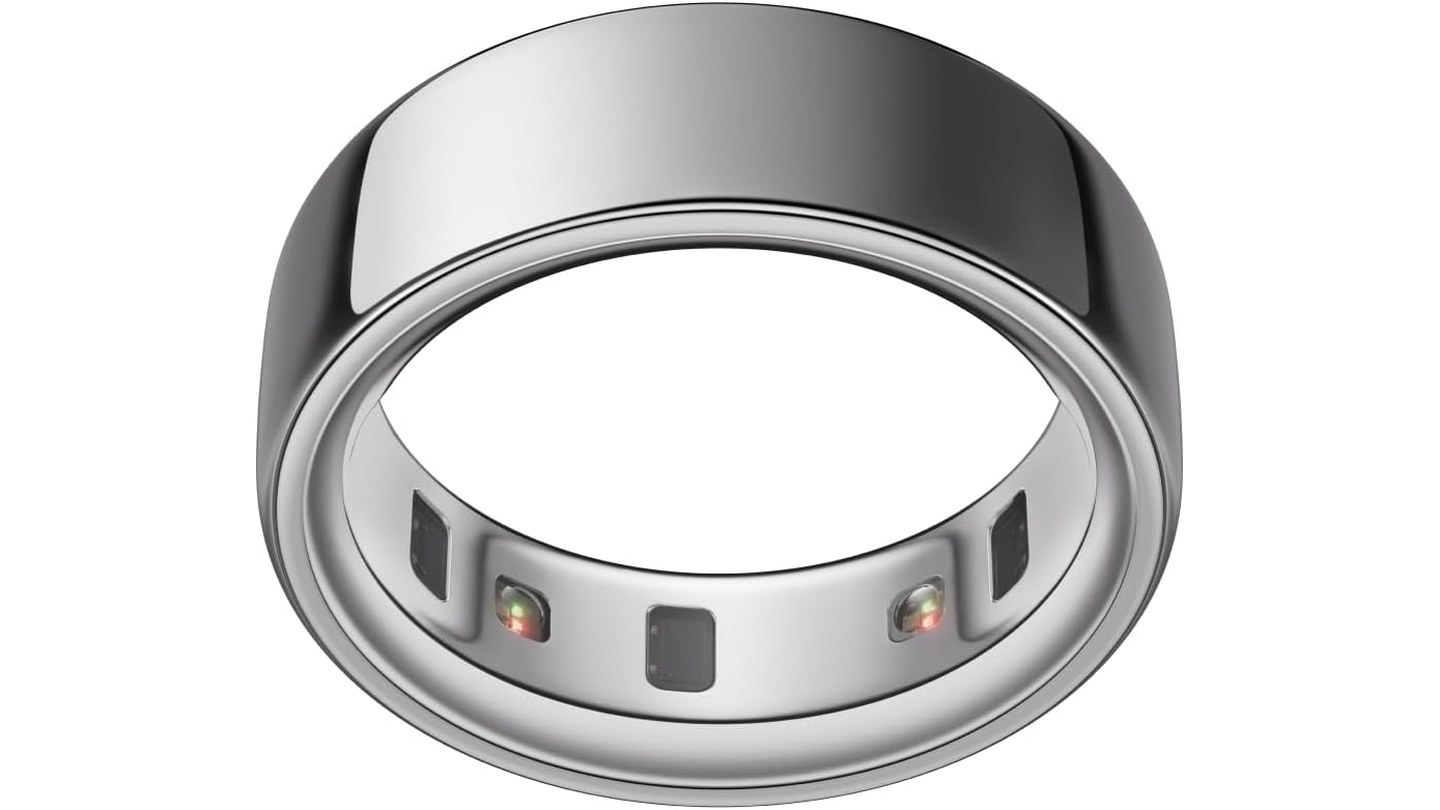
A health tracker you never have to look at has a certain pull. No screen lights up on your wrist at dinner, nothing buzzes during a film, and the data still piles up quietly in the background.
That’s the Oura Ring 4 pitch, and the Silver finish in size 9 is $249 on Amazon right now, $100 under its $349 list price. Oura’s own store still starts the Ring 4 at $349, with pricier finishes running to $499. Ring 5 arrived in May, so this is the previous generation taking its expected price step down, and I’ve always thought the step-down moment is when this category gets interesting.
Titanium, sensors, and nothing to tap
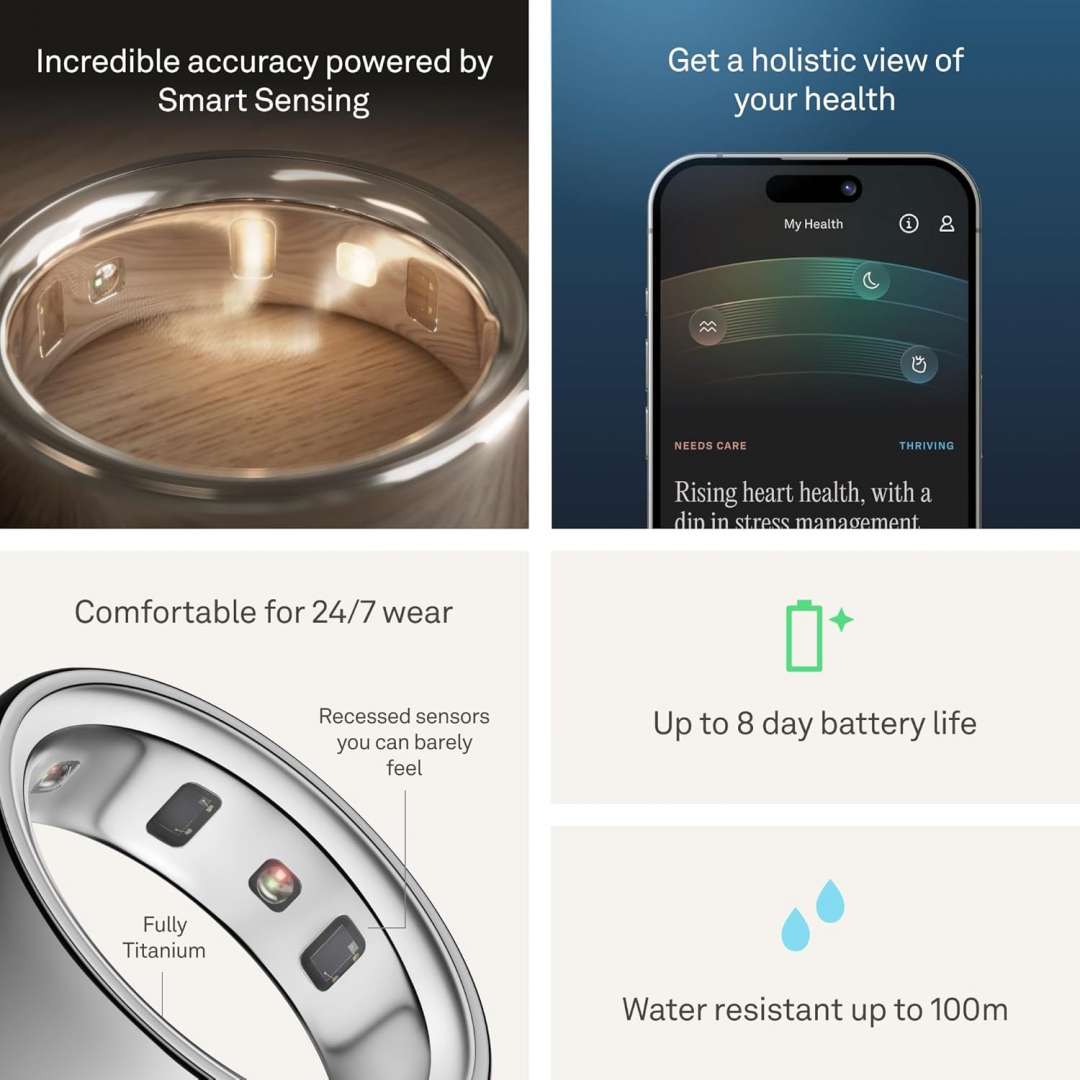
The ring itself is all titanium, inside and out, with the sensors recessed into the inner band so you barely feel them against the finger. I like that restraint. A tracker that disappears tends to stay on, and a tracker that stays on actually collects the whole week, not just the motivated first three days after the box opens.
There’s no display and no vibration motor. Everything it notices waits for you in the app, on your schedule.
In the box you get the ring, its charger, a USB cable, and the quick start materials. Setup runs through the Oura app on iOS or Android, over Bluetooth, and the ring is HSA and FSA eligible, which softens the price further for readers with those accounts.
Fifty-plus metrics, gathered while you ignore it
Oura counts more than 50 health metrics across sleep, activity, stress, heart health, and women’s health, using what the company calls Smart Sensing to keep readings steady as the ring shifts on your finger through the day and night.
Sleep is still the headline act for most owners I talk to. The ring is the one tracker that never feels like sleeping in a watch.
Temperature sensing and heart rate sit underneath the daily scores, and cycle tracking draws on the same temperature signal. None of it asks for your attention in the moment. You wear the ring, you live your day, and the record builds itself in the background, which is exactly how a tracker should behave.
Battery runs up to eight days per charge, and a full charge takes about 80 minutes on the included charger. Water resistance reaches 100 meters with an IP68 rating, so showers, swims, and dish duty need no removal ritual at the sink.
The app turns all of it into three scores you’ll actually check: Readiness in the morning, Sleep after the night, and Activity through the day. Scores beat raw charts for most of us. One number tells you whether today is a push day or a sofa day, and the detail waits underneath for the mornings you want it.
Size yourself first, because Oura sizes run their own way
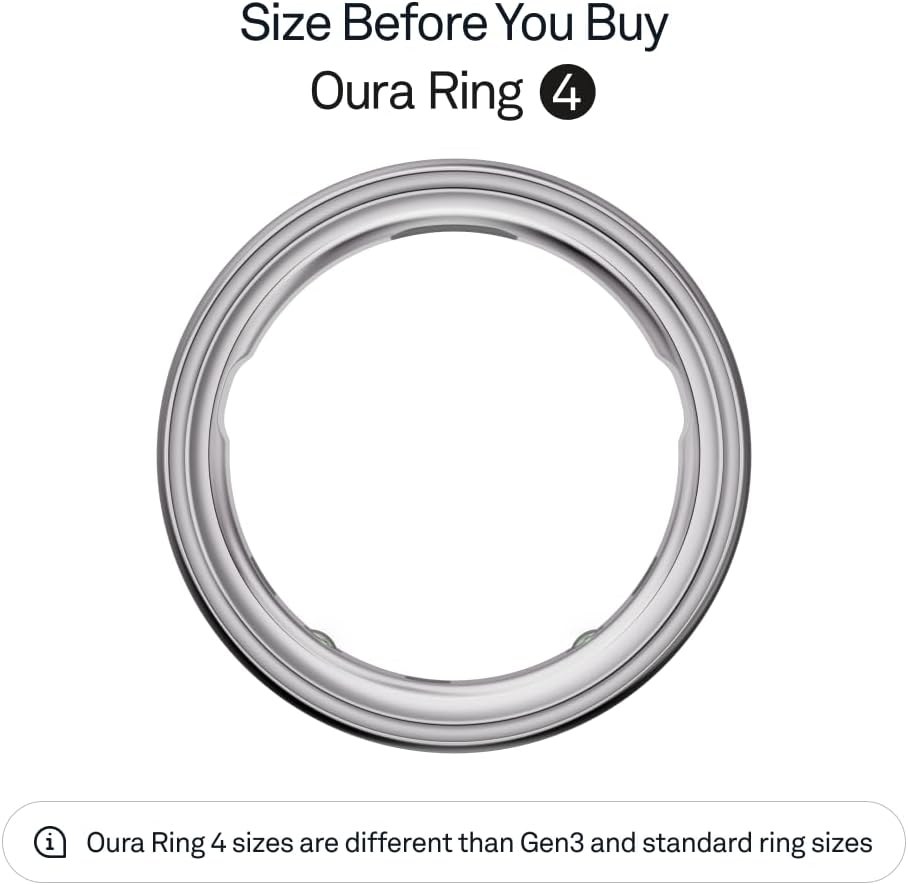
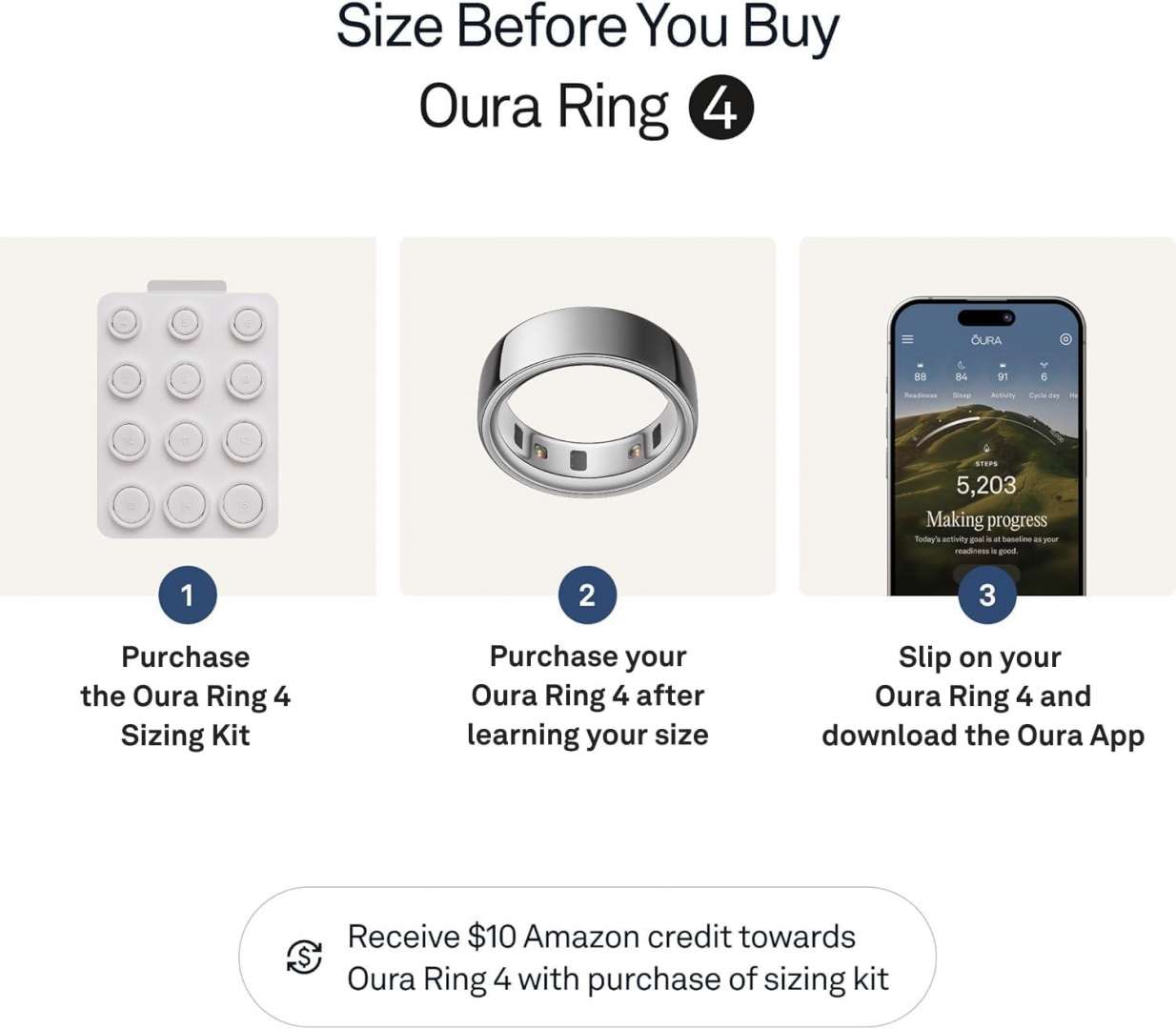
Here’s the one step you can’t skip. Oura uses its own sizing for the Ring 4, and it doesn’t match standard ring sizes or the sizing of the older generation. The company tells buyers to use the Ring 4 Sizing Kit first, wear the plastic sizer for a full day if you can, and only then order. That advice is worth taking before any money moves.
This $249 price is on the Silver ring in size 9. Other sizes and finishes sit on separate listings and can cost more.
A ring that fits loosely reads badly and slides around at night, and a ring that fits tightly is a ring you’ll take off by Thursday. The sizing kit costs a little time up front and saves the return label later, which is a trade I’ll take every time.
The membership math, done out loud
Oura Membership carries the full app experience, and new members get the first month included with the ring. After that it’s $5.99 a month, tied to your Oura account. Run the first year in full and the ring costs $249 plus eleven paid months at $5.99, which comes to $314.89 all in for year one.
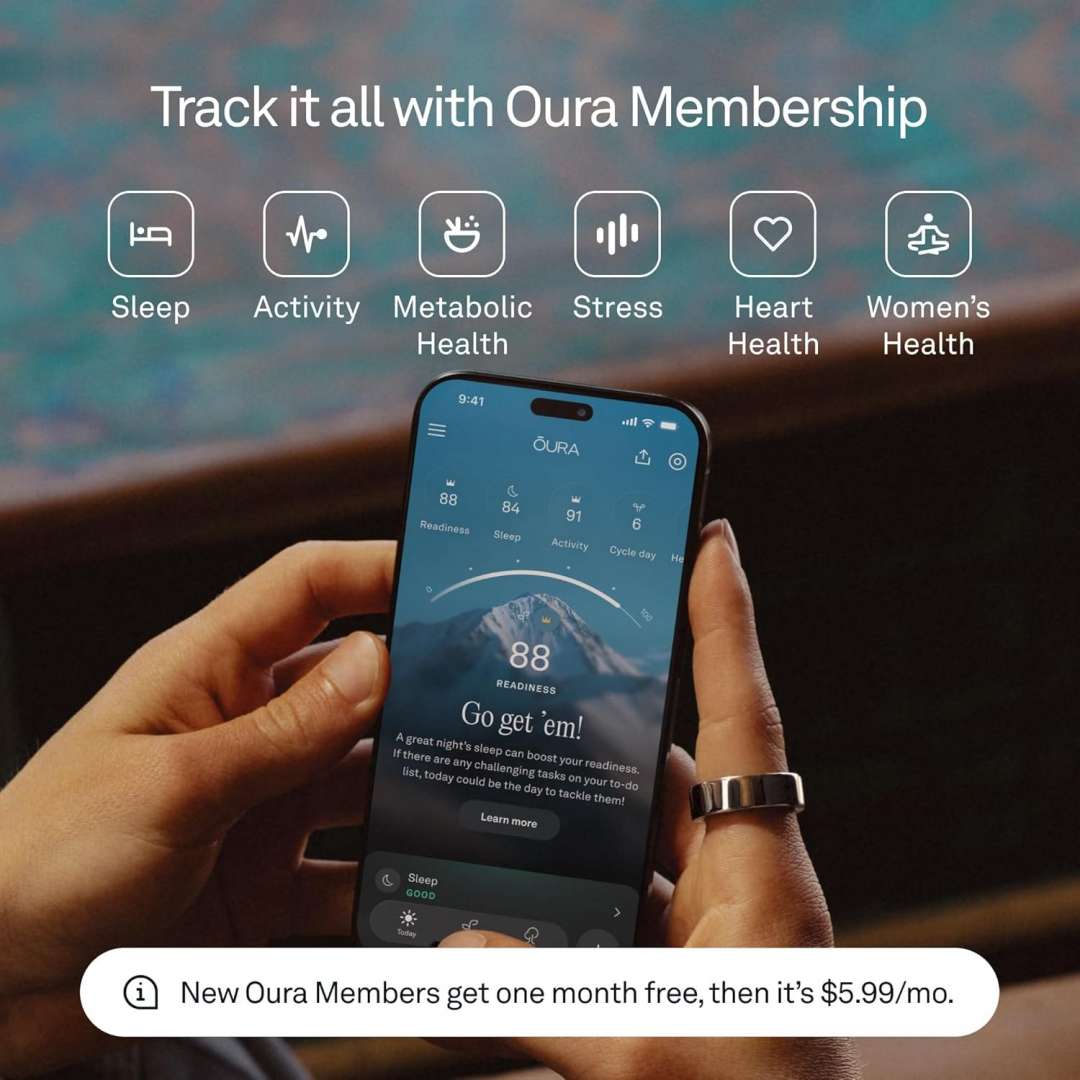
That’s the real comparison to make against a screen-based tracker with no subscription attached. For some readers the quiet ring wins anyway, because the data is deeper and the wearing is easier. For others the monthly fee is the line, and it’s better drawn now, before the box arrives, than discovered in month two.
Either way, the hardware price is the news here. A $100 cut on the titanium ring, from the retailer, while the maker still lists it at $349, is the kind of gap that tends not to sit around for long.
Previous generation, current data, lower price.
At $249 I’d buy the Silver Ring 4 over paying $349 and up for the newest generation, unless its specific upgrades are the ones you’ve been waiting on. You give up nothing in the core tracking, you keep the eight-day battery, and you keep $100 in your pocket. Just size yourself first, and let the quietest tracker you’ve ever owned get to work.


