

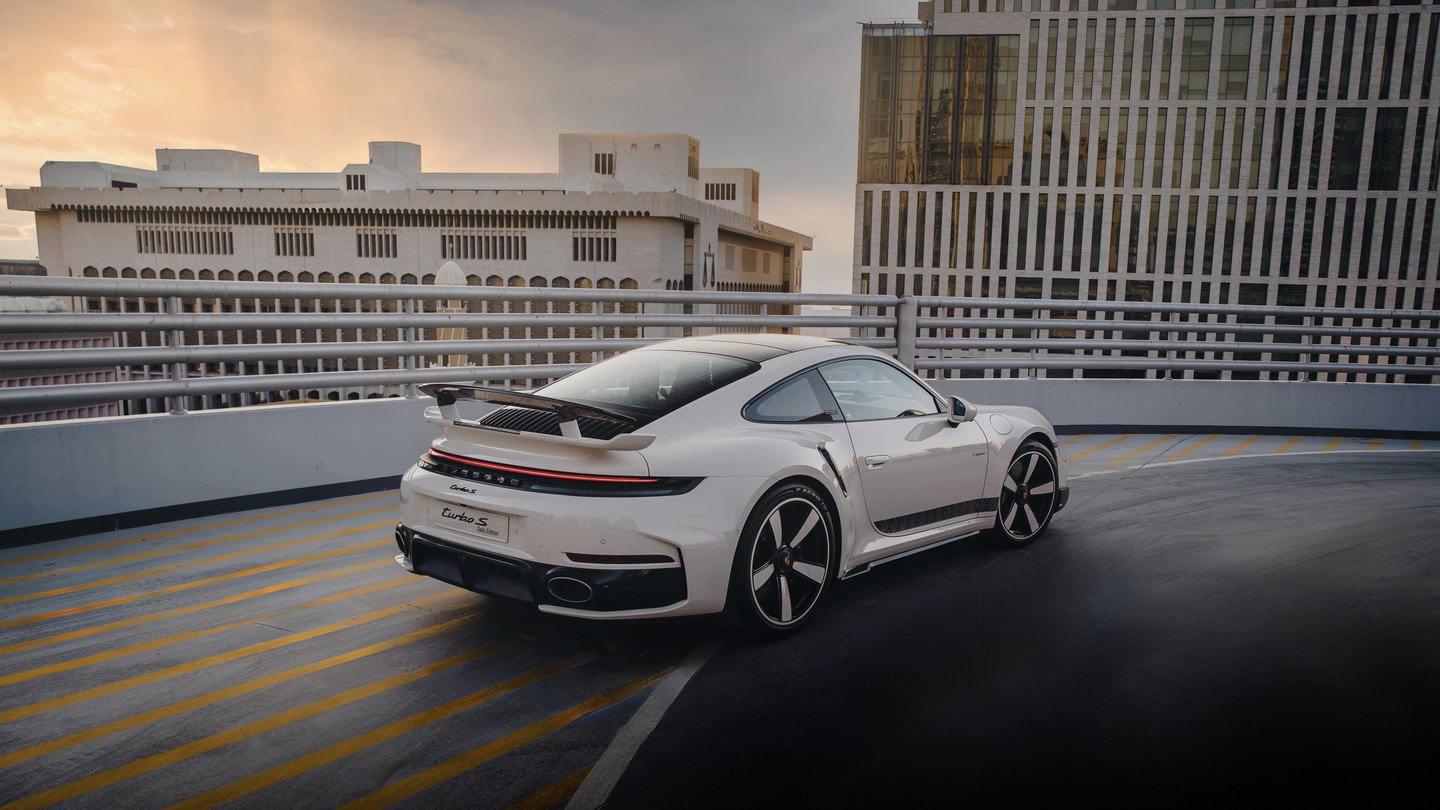
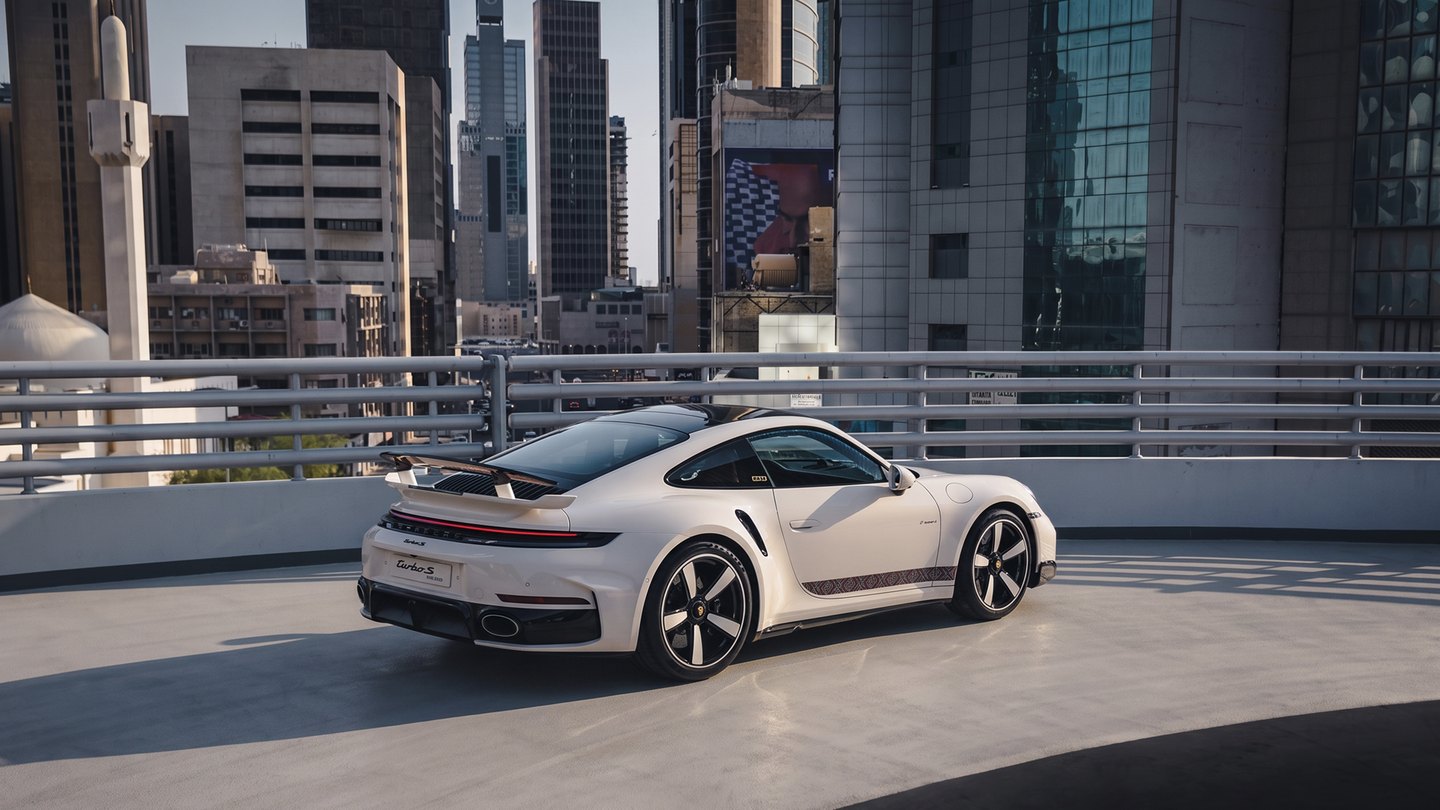
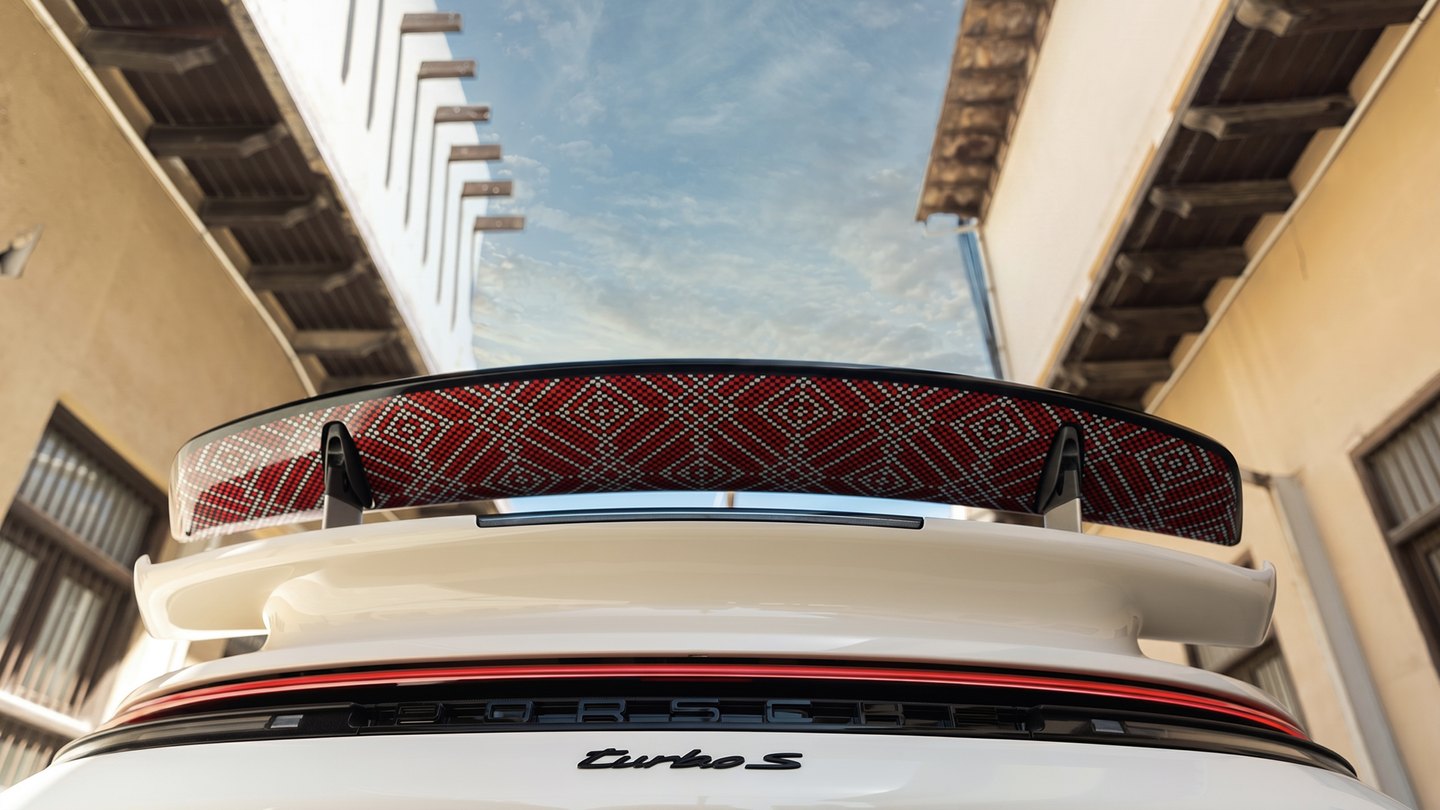
Twenty cars built for one small market, and every one carries a pattern Bedouin weavers have worked into wool for centuries. The 911 Turbo S Sadu Edition is Porsche Exclusive Manufaktur’s tribute to 70 years of Porsche in Kuwait, and the weaving isn’t trim. It sits in the seat fabrics, runs across the bodywork, and wraps the underside of the rear spoiler.
Dubai gets its first public showing outside Kuwait at Icons of Porsche, November 21 and 22. Under the patterns sits the most powerful production 911 ever built.
A loom pattern, read as a body graphic
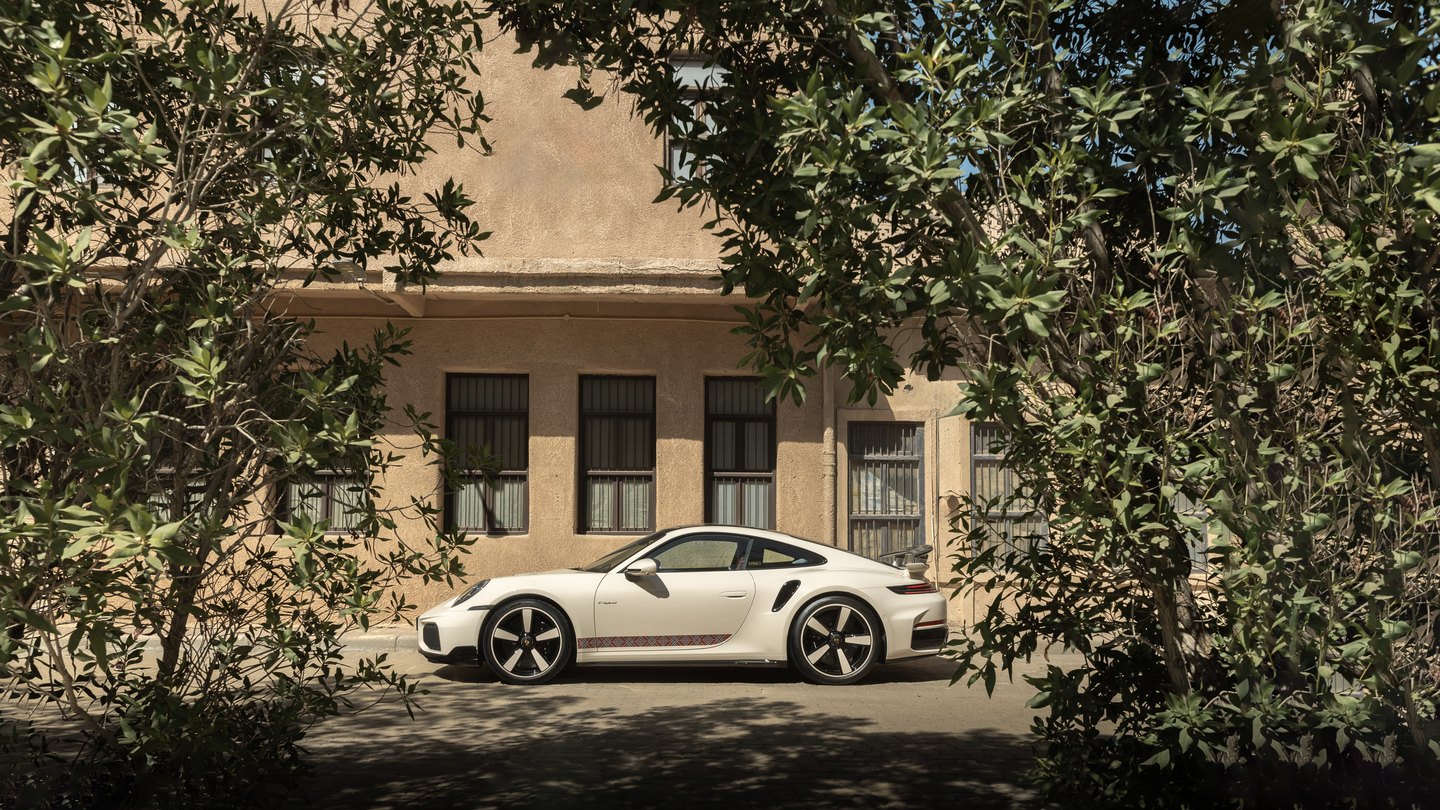
Al Sadu weaving works in narrow horizontal bands, its bold geometric motifs repeating in rhythm down the length of the cloth, black against red against silver in wool dyed deep enough to read across a room. The Exclusive Manufaktur team translated that rhythm onto the car’s doors, as graphic elements in Bordeaux Red, Guards Red, GT Silver, and Black.
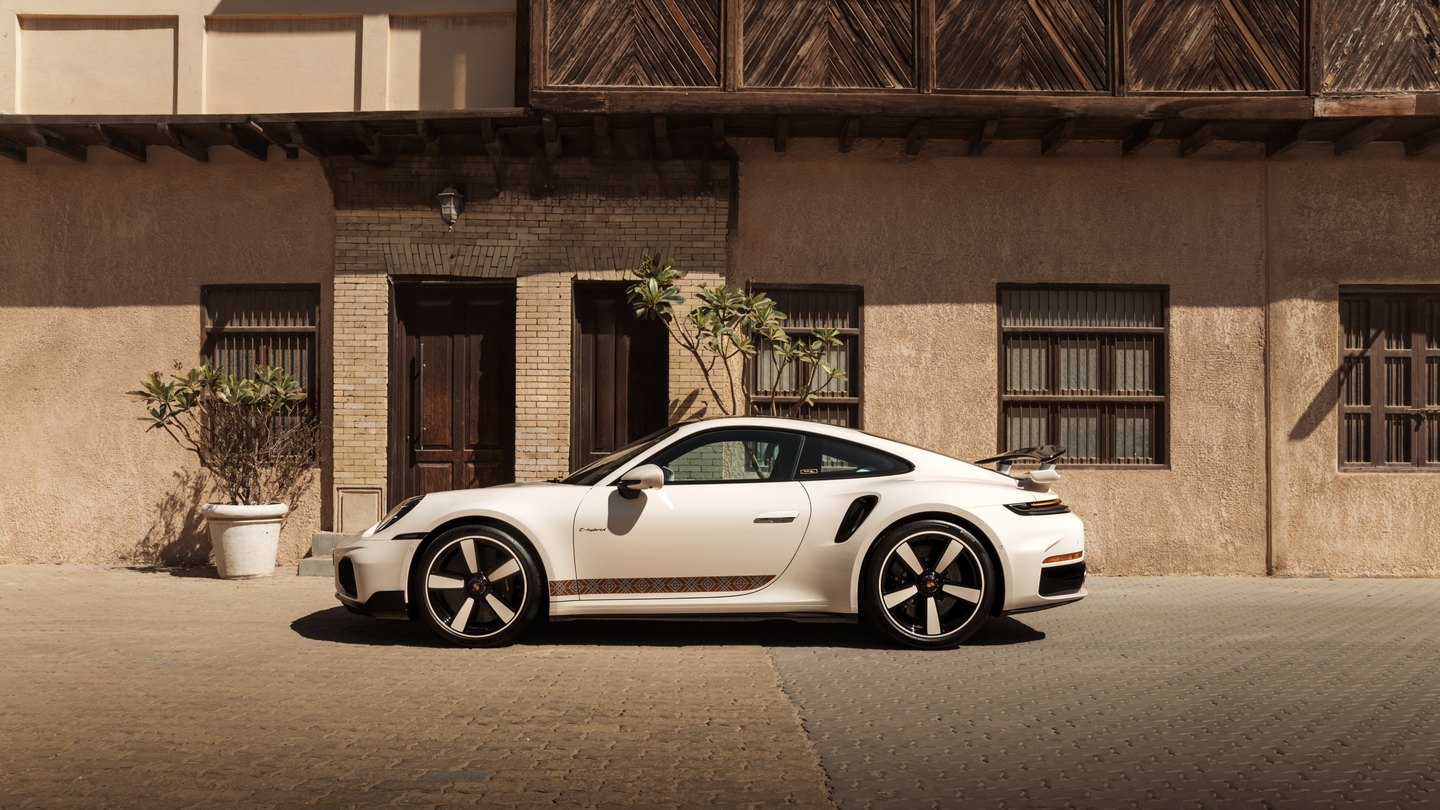
The paint is Cremewhite. Custom 20/21-inch Sport Classic wheels fill the arches, and a specially made edition badge marks the run.
From across the street it’s a white Turbo S. The weaving gives itself away up close.
The craft behind the pattern
Al Sadu is a wool weaving tradition rooted in desert life. In 2020, UNESCO put it on the Representative List of the Intangible Cultural Heritage of Humanity.
AlSadu Society, the organization preserving that heritage, supplied the references, the visual material, and the cultural context, and its weavers’ principles shaped how the motifs were scaled to metal and fabric. The first talks ran inside Porsche’s Middle East and Africa office in January 2022. The proposal landed at Porsche Centre Kuwait in March 2023, and the Society joined the project formally that same month. Its sign-off governed where the motifs could sit, and how big they could run.
The answer came from a house. The patterns lived in the woven walls of the home where Ali Behbehani was born.
There was a rehearsal. Porsche Centre Kuwait and the Society ran a Taycan collaboration in 2024, a smaller project that tested whether a loom pattern could survive translation onto a sports car, and built the road to this one.
Market editions like this are the far end of Exclusive Manufaktur, the program where 98 percent of 911 buyers already pick at least one personal option from a list of roughly a thousand, and where a market’s own story can become a car.
Bordeaux leather and woven seat centers
Inside, the two-tone leather runs Black and Bordeaux Red, with Light Silver accents across the cabin. The seats carry specially developed fabrics woven with Sadu patterns, and each car can be trimmed in Bordeaux Red, Guards Red, GT Silver, or Black. The weave isn’t printed on. The fabrics were developed for these seats, banded in the loom’s own geometry, then cut into the centers.
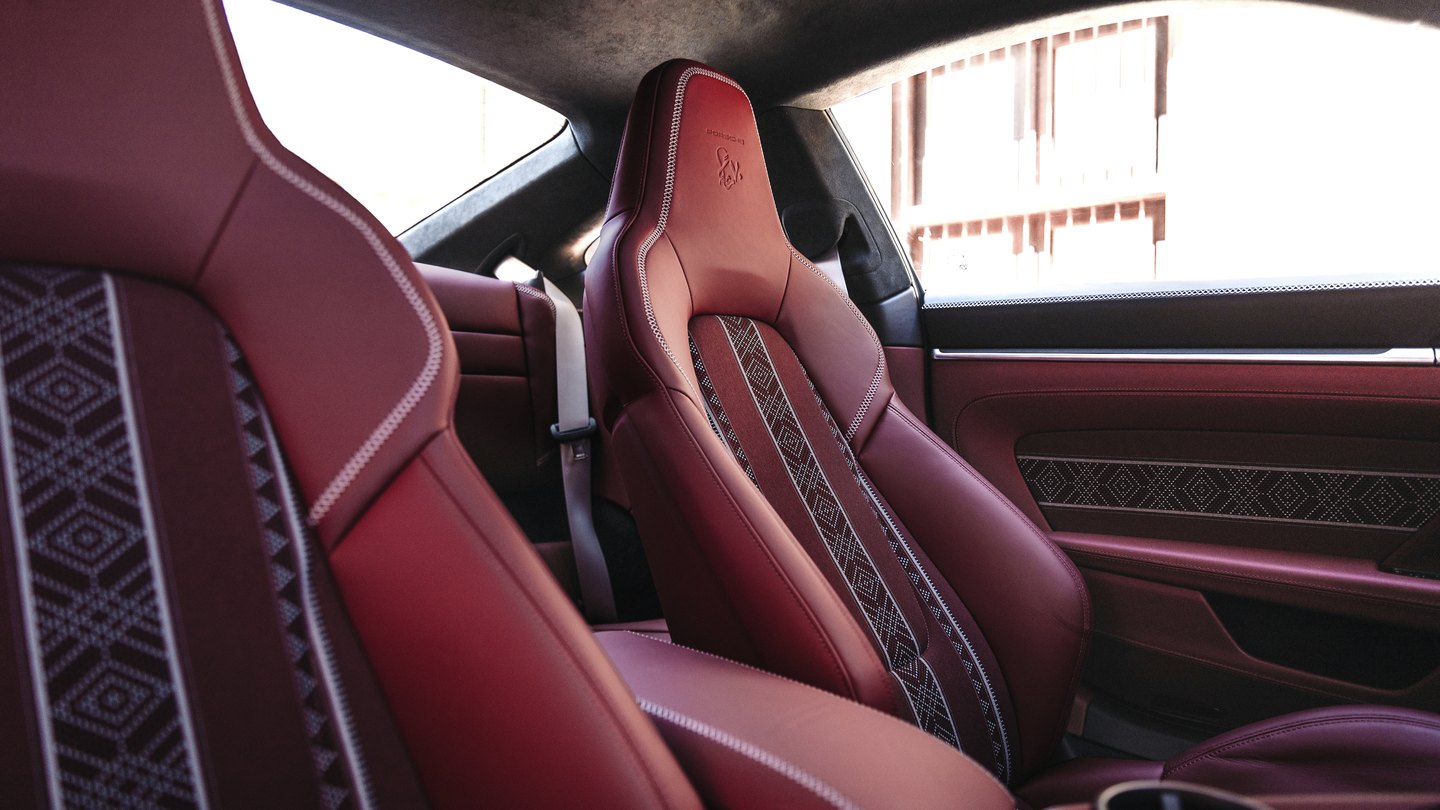
It’s the strongest move in the car. A woven seat center puts the craft under the driver, not just in front of him.
The partnership reaches past the car, too. Porsche Centre Kuwait and the Society are building joint programming around the edition, with Sadu weaving workshops hosted at the dealership and access to heritage sites tied to Al Sadu House. Visitors will learn the structure of the loom and the visual language behind the bands, inside a Porsche showroom, from the people who keep the craft alive.
The flagship underneath hasn’t been touched
Under the patterns, the Sadu Edition keeps the standard Turbo S hardware. A 3.6-liter boxer six works with two electrically assisted turbochargers and a 400-volt T-Hybrid system. Combined output is 711 PS, held on a plateau between 6,500 and 7,000 rpm rather than spiking at a point, and its 800 Nm of torque holds flat from 2,300 to 6,000 rpm.
Porsche quotes the coupe at 2.5 seconds from 0 to 100 km/h, 8.4 seconds to 200 km/h, and a 322 km/h top speed. The Nürburgring number lands harder: 7:03.92 around the Nordschleife in final development drives, roughly 14 seconds under the old car, in a car carrying woven seats.
The T-Hybrid layout first ran in the Carrera GTS in 2024. Here it grows a second eTurbo. The combustion engine alone makes 640 PS and 760 Nm before the hybrid side adds anything, and the electric motor fills the breath the turbos used to take.
The woven seats change none of it. The tribute rides on the flagship for a reason.
The spoiler gives the game away
Turn the car around and the pattern takes over. The rear spoiler’s underside carries the Sadu weave at full scale, red and black geometry stretched across a surface that usually wears body color and shadow. It’s the one panel on the car that works purely as cloth: no cooling story, no downforce claim, just the pattern at full width.
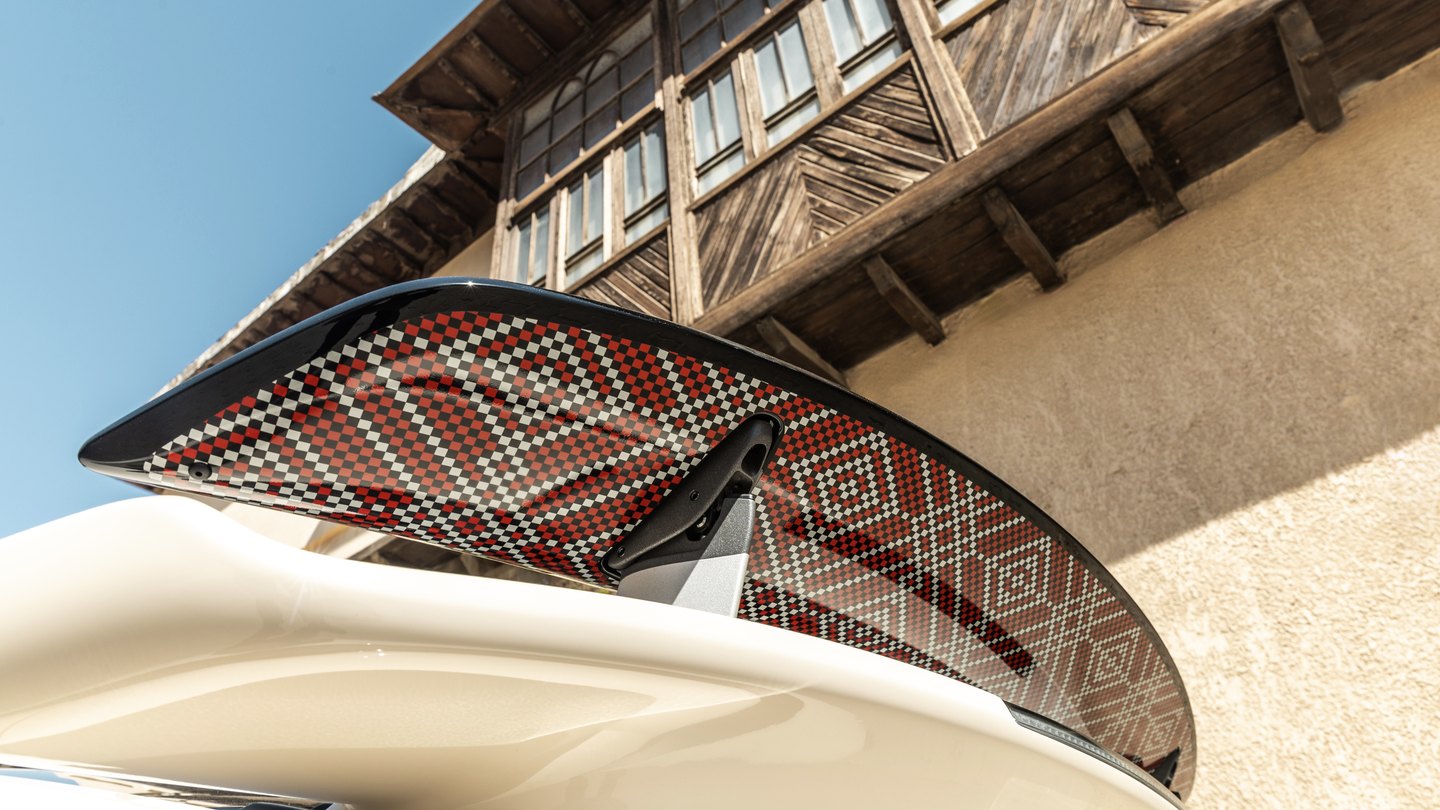
The driver catches it in the mirror each time the spoiler rises on the road out of Kuwait City, a flash of red geometry on a white car. Everyone else at a show reads the weave before the badge, which is the order the weavers would have wanted all along.
From Kuwait’s heritage sites to a Dubai stage
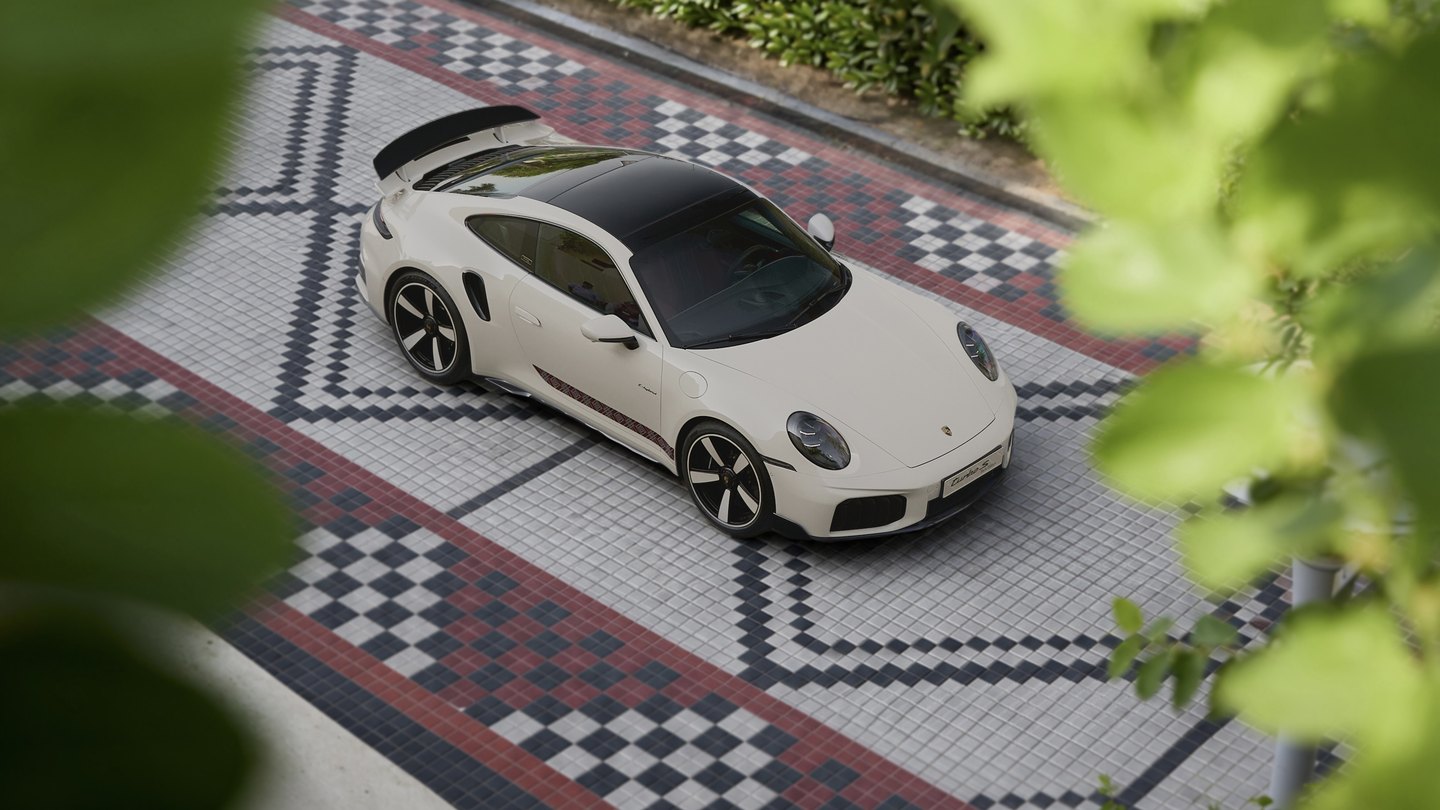
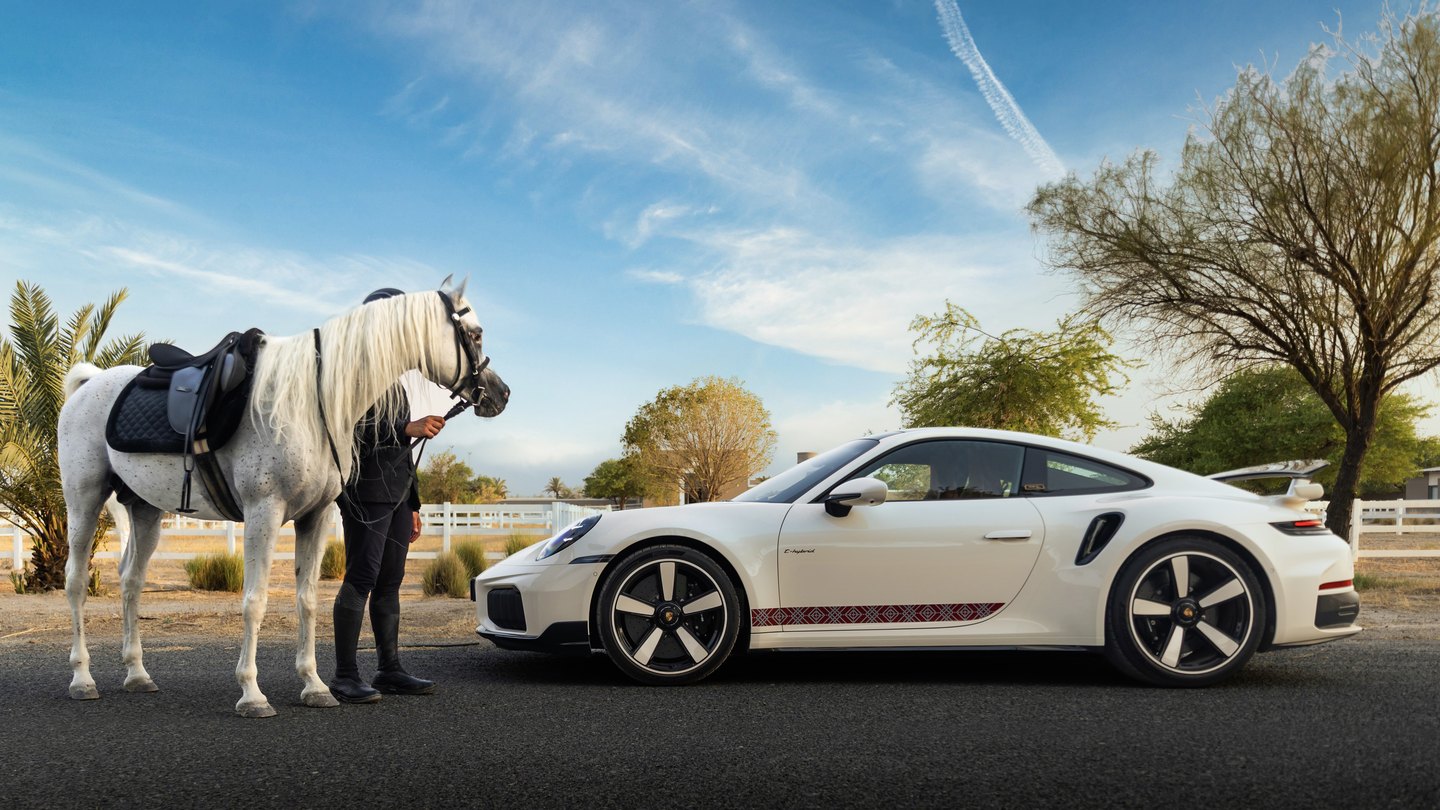
Since its unveiling at the Sheikh Jaber Al Ahmad Cultural Centre, the car has toured the places that fed its design: the Behbehani House Complex, the stalls of Souq Mubarakiyah, AlSadu Street with its patterns rebuilt in colored brick, and Bait Al Arab, the country’s Arabian Horse Centre.
The thread runs back 70 years, to a first 356 and the Behbehani family behind the oldest Porsche market in the region. The tour, in Porsche’s own frames:
Twenty cars, one market, and a pattern older than the automobile, carried at 322 km/h. Dubai gets its look on November 21.


