

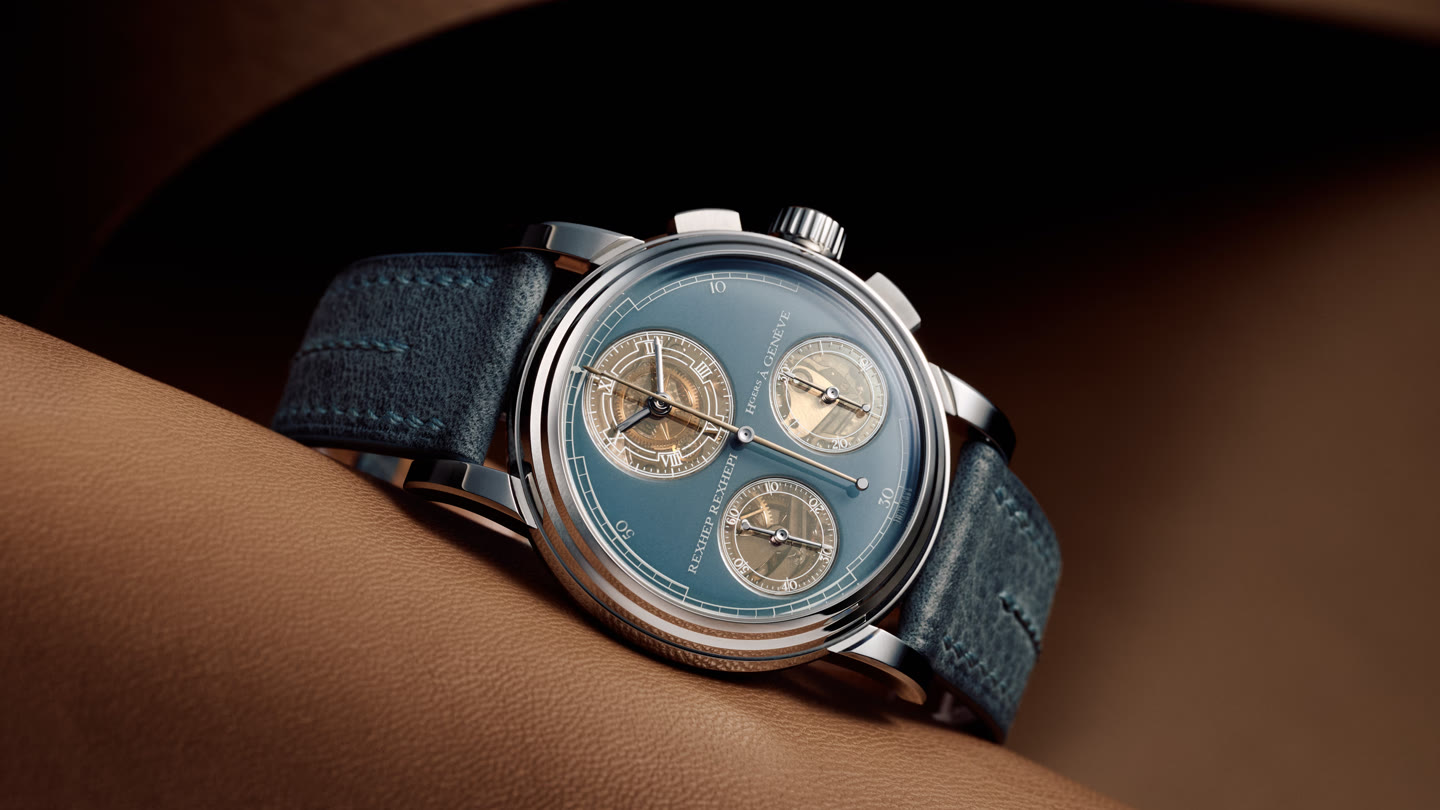
Saturday night at the Bâtiment des Forces Motrices in Geneva usually ends with a big house collecting the big prize, in front of every famous name in Swiss watchmaking. This time the Aiguille d’Or, the top award at the Grand Prix d’Horlogerie de Genève, went to Rexhep Rexhepi, a Kosovo-born independent watchmaker, for a platinum chronograph his small Geneva atelier builds by hand.
The winner is the Chronograph Flyback, reference RRCHF, his first flyback.
The dial does the talking
Start with the dial, because the jury clearly did. It is grand feu enamel in a deep storm blue, fired in the atelier’s own oven. Three smoked sapphire counters sit in the enamel like windows. The hand-finished movement ghosts through from underneath, so the counters read as depth, not decoration.
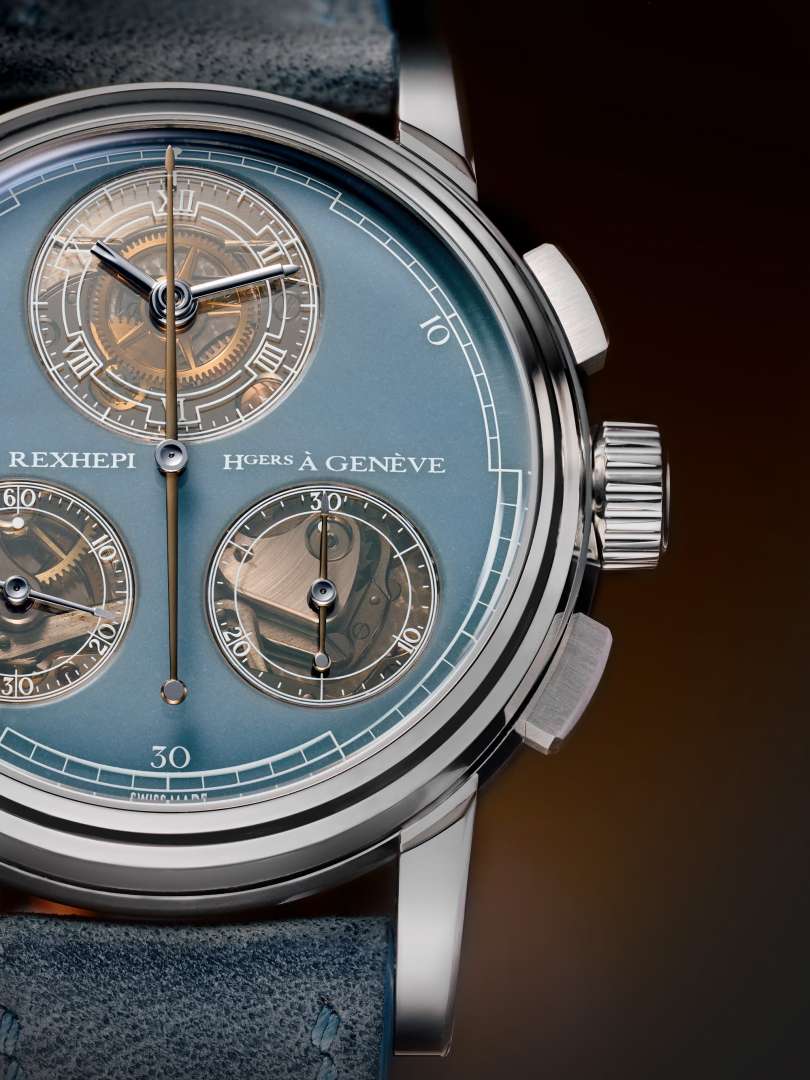
The layout borrows from vintage pocket-watch chronographs. Hours and minutes share a subdial at 12, the minute counter sits at 3, small seconds at 9, and the chronograph seconds hand takes the whole dial for itself.
Sector scales ring the counters, a signature carried over from his Chronomètre Contemporain, and the hands are polished steel, the chronograph pair tempered to straw yellow.
Thin, because the movement had to be
Rexhepi wanted thin, and thin made the architecture decision for him. The calibre is an integrated chronograph, built as one structure, not a module stacked on a base movement, so the platinum case closes over it at 38.8 mm across and just 9.7 mm thick. That puts the watch among the slimmest fully in-house chronographs anywhere, in a size that wears like a dress watch and works like an instrument.
Inside, a column wheel and lateral clutch run the flyback. The minute counter jumps instead of creeping. The balance ticks at 3 Hz, the movement holds 320 components and 30 jewels, and a full wind carries 72 hours of reserve.
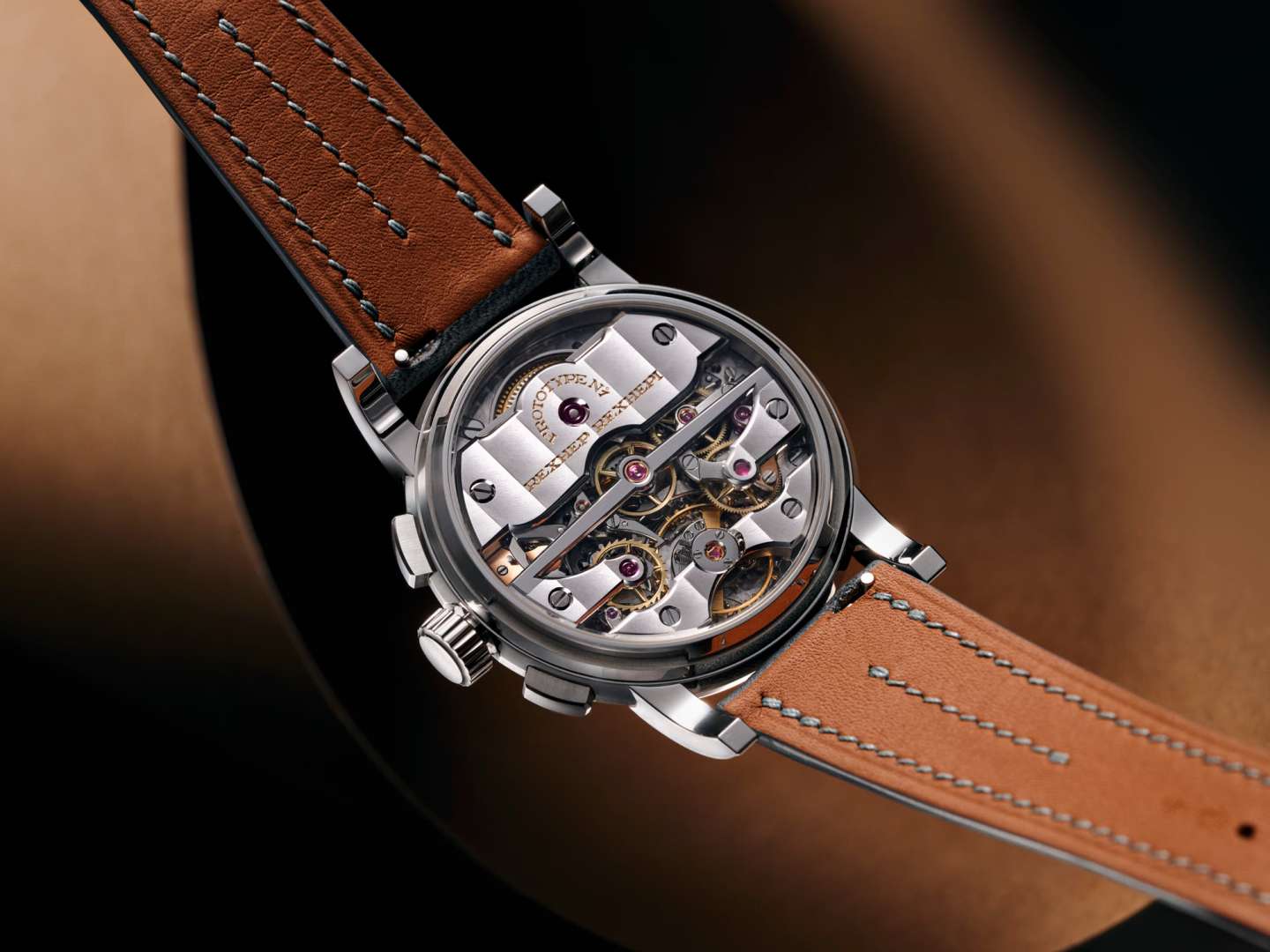
Flip it over and only the chronograph elements are exposed, on an asymmetrical architecture, a working diagram of the complication.
Finished by hand, worn on gray nubuck
The case is platinum, 52 components of it. A double-stepped bezel frames the dial, and the lugs and pushers are beveled hard enough to catch light on their edges. The screw-down back is indexed, so it seats in perfect vertical alignment every time it closes, with sapphire front and back.
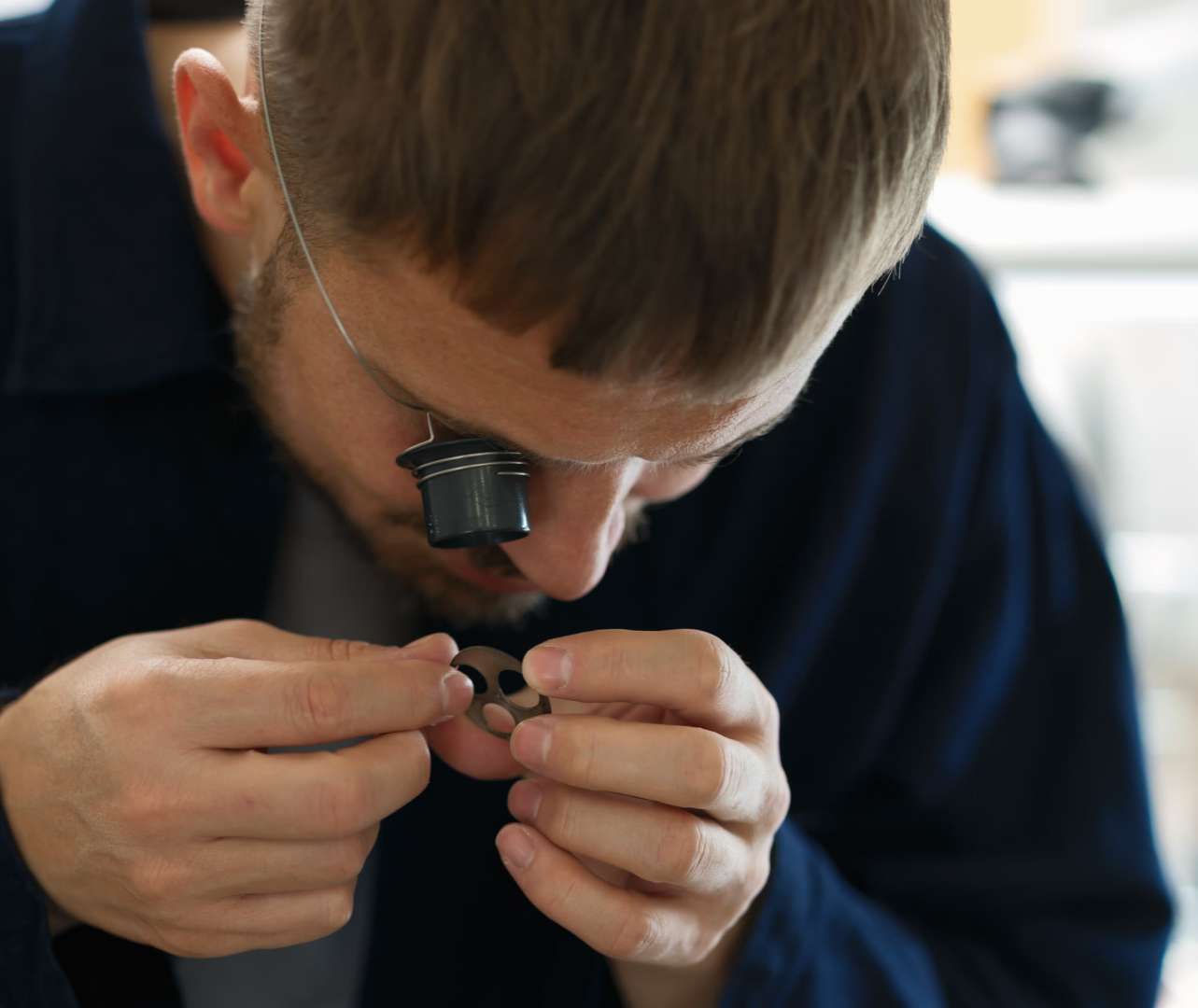
Finishing runs the full classical register: Geneva stripes, inward angles, black polishing, circular graining, hand engraving, all of it worked at a bench under a loupe. The strap is light gray nubuck calfskin, its Norwegian center stitch sewn in-house.
What the jury actually rewarded
Twenty prizes were handed out on the night, chosen from the 84 nominees by a jury working under Wei Koh, with votes from an Academy of more than 1,000 members. Parmigiani Fleurier took the Chronograph Watch Prize, and still the golden hand went to a chronograph, just not one from a house with a marketing department.
A year ago the same prize went to Breguet’s Classique Souscription, a heritage name revived inside a large group, and the room that night belonged to the big houses. This year the golden hand sits with an independent who signs his own name on the dial and finishes his own bridges.
The GPHG entry lists the watch at about $183,000. There is no buy button at the end of that number. Pieces are allocated through the atelier and a short list of partners, the way his watches have always moved. If you want to see one, the winning watches are on show at Geneva’s Musée d’Art et d’Histoire until November 15, then at Watches of Switzerland in Knightsbridge, London, from November 18 to 23.
Editor’s take
I keep coming back to the counters. Three discs of smoked sapphire on a blue enamel field, and underneath them the movement shows through like machinery under ice. The jury had tourbillons and sonneries to choose from on Saturday. It chose the watch whose beauty is mostly finishing, patience and proportion, the things you cannot fake at scale. For an industry that loves a superlative, that is a quietly radical verdict, and it is the right one.


