

Home security spent a decade getting smaller and quieter. Cameras shrank into pebbles, doorbells flattened into buttons, and the whole category learned to disappear into trim and wallpaper.
Ring just walked the other way. Its new Ring Robotics line puts a flying camera and a patrol robot out in the open.
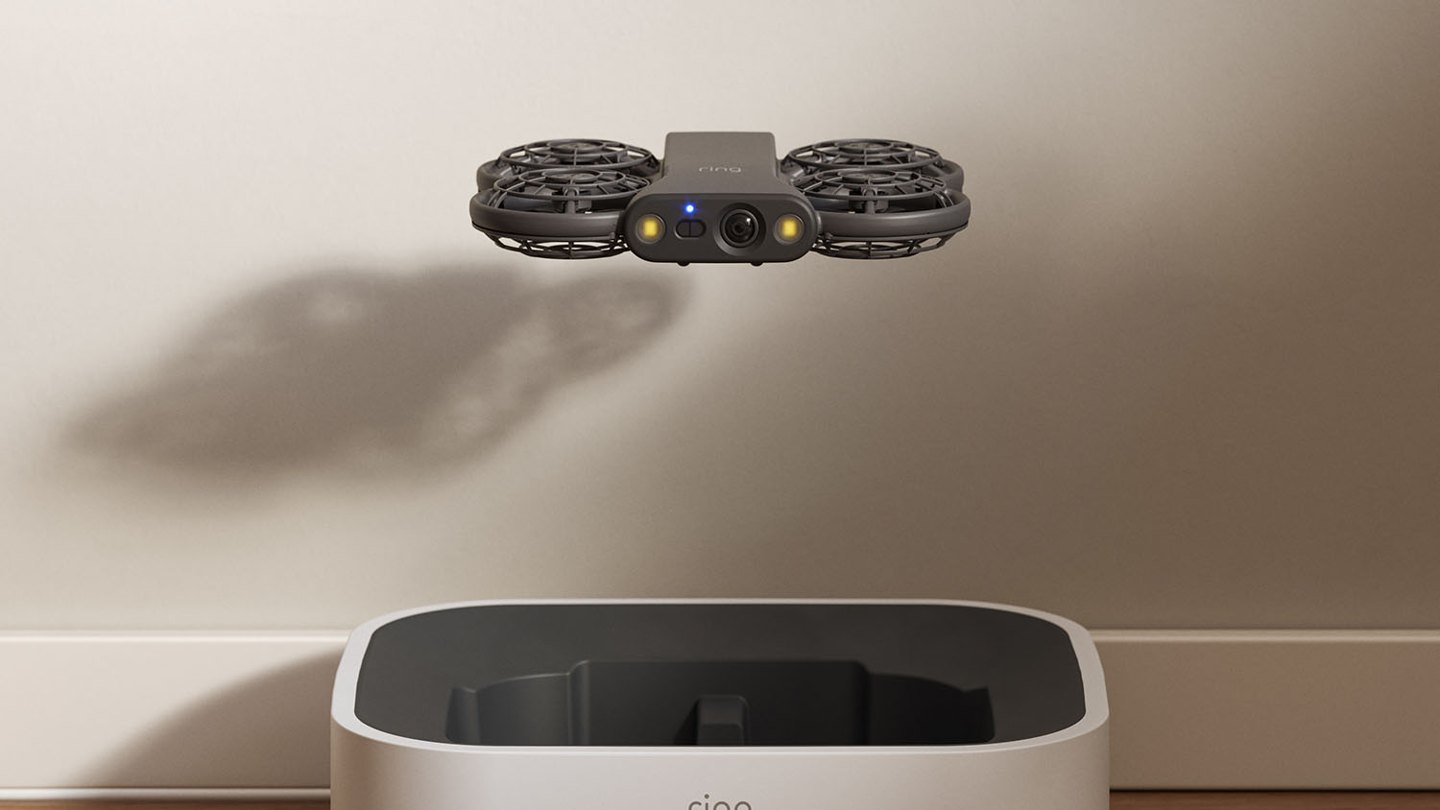
They’re sized like appliances and finished like objects. The pair splits the map. Ring Drone Cam is the home machine, a flying camera that lives in a dock on the floor and patrols the rooms itself. Ring Rover Cam is the business one, a rolling guard with a periscope mast and a light tower. Both run on Ring’s AI Pilot navigation, both record under the company’s strongest encryption, and both are designed, pointedly, to be seen and heard.
A flying camera that lives on the floor
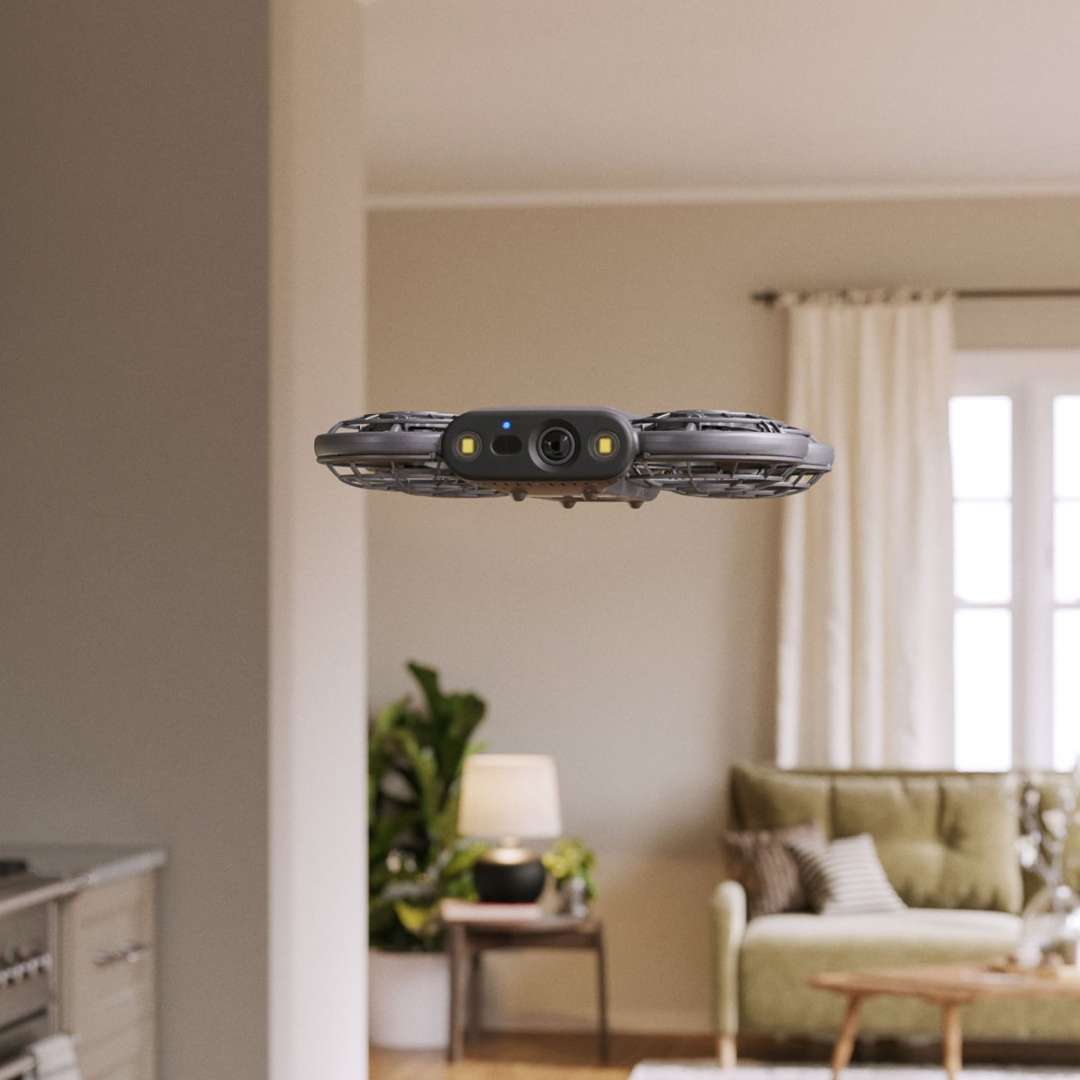
Start with the dock, because the dock is the design decision. Drone Cam spends its life parked in a charging base at floor level, powered down with its camera off. Nothing records. Nothing watches.
It sits there like a small appliance waiting for a job, and waiting is the job. When a flight triggers, it lifts off, runs its route, and comes home to go dark again.
There’s no joystick and no live piloting. You carry the drone through the house once during setup while AI Pilot builds a floor plan and suggests the spots worth checking. From there it flies on a schedule, on demand from the app, or automatically when a Ring camera, sensor, or alarm trips. A 2K camera with a 148-degree view and 360-degree rotation does the looking, with two LED lights for dark rooms and a 1080p camera underneath.
At 165 grams it weighs less than the phone in your pocket, and the battery keeps flights short on purpose. Eight to ten minutes in the air. This is a machine for pointed trips.
Check the stove. Check the back window. Come home. The dock trades eight minutes of charging for every minute flown.
The shape will look familiar if you’ve followed Ring for a while. The company showed a flying home camera in 2020, sold it briefly by invitation, and shelved it. This is that idea rebuilt around a navigation system Ring finally trusts, and the wait isn’t over: Drone Cam hasn’t cleared FCC authorization yet, so the launch runs on an email sign-up until it does.
A patrol robot with a light tower for a face
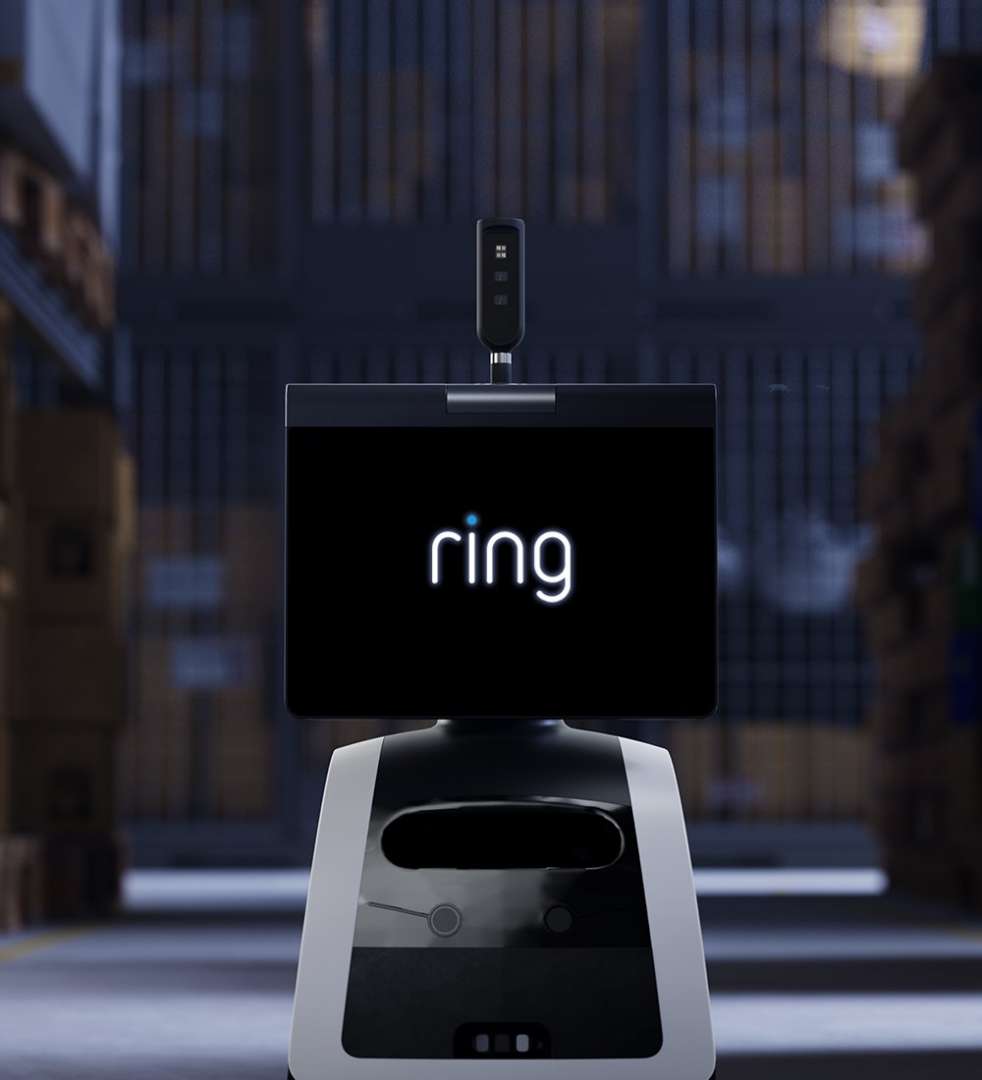
Rover Cam takes the same visibility brief and scales it up to a night shift. It’s a patrol robot for shops, offices, and warehouses, and its signature piece of design is a light tower bright enough to announce the robot’s position across a dark sales floor. The tower, the siren, and the screen that shows when it’s recording all do the same work: nobody in the building wonders whether they’ve been seen.
The working hardware rides on a mast. A periscope camera rises to look over counters and shelving, and you set its height at each stop; the robot remembers. It streams and records in up to 4K the whole time it moves.
On arrival at a patrol point it runs a 360-degree scan, and person detection keeps running even while it’s docked. Sleep Mode retracts the periscope and switches the microphone off when the building wakes up.
The lineage is Amazon’s Astro, the home robot whose business version sold for $2,350 before Amazon discontinued it in 2024. Ring says Astro owners kept naming roving security as the feature they loved most. So Rover keeps that one job and drops the rest of the robot act. One purpose, at less than half the price.
Privacy, drawn as an object
A camera that flies through private rooms has to justify its presence, so Ring made presence the feature.
The drone’s propellers are loud on purpose. The Rover’s tower is impossible to miss.
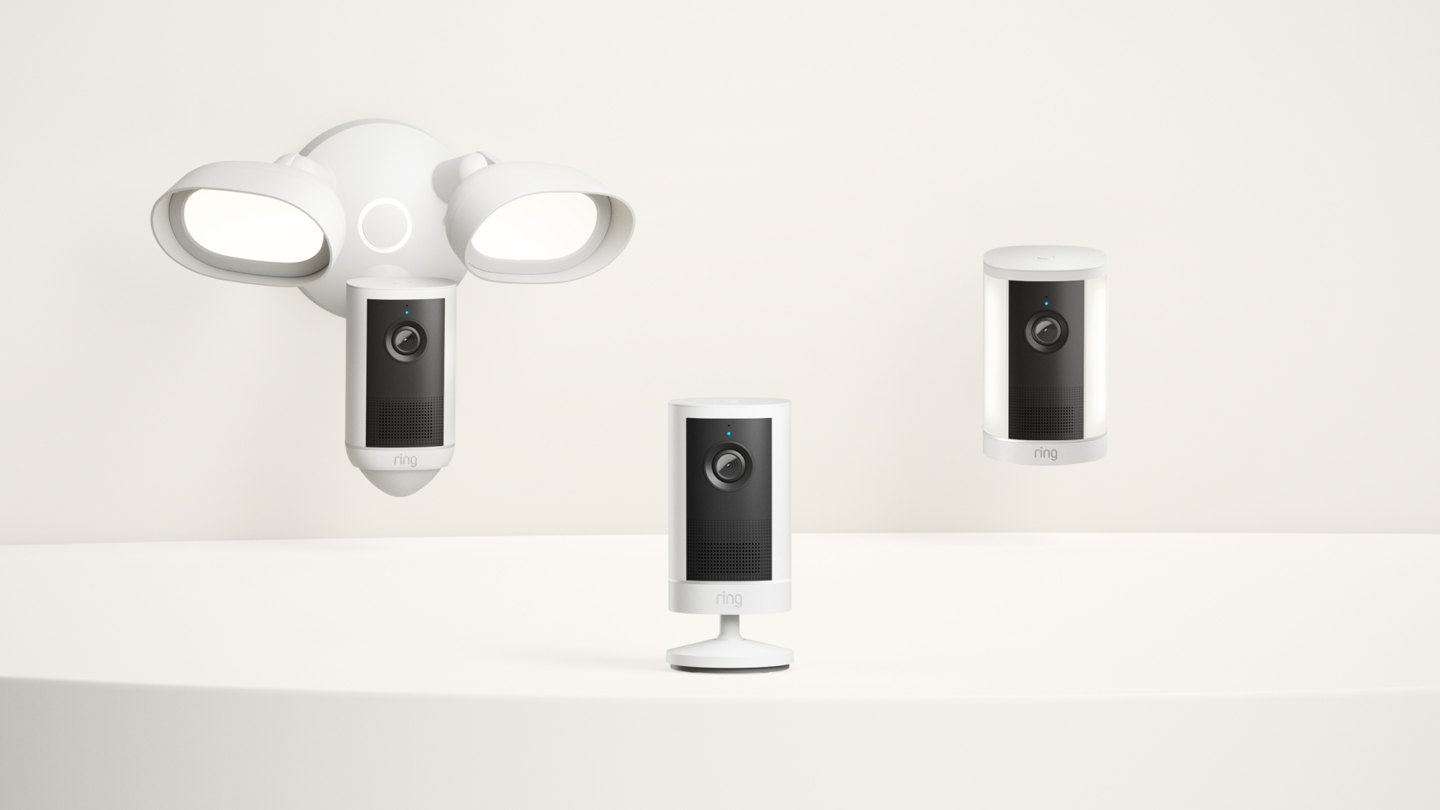
Both machines carry LED indicators, both plug into the wider Ring system and the new Alexa Home Map, and both keep video under Throw Away the Key encryption, Ring’s strongest default. A compatible Ring Protect plan is required to run either one.
It adds up to a different kind of home robot from the ones the industry kept promising. No personality, no conversation, nothing pretending to be company. Two machines with routes, docks, and towers, built to sit in a room like they belong there and to make themselves obvious the moment they start working.
Editor’s take: the bet underneath Ring Robotics is that the next home robot won’t be a companion. It’ll be staff. A machine with a route and a dock and a light on its head, treated like the alarm panel or the thermostat: present, legible, and mostly ignored until it does its one job loudly.
Drone Cam’s wait for FCC authorization pushes the home half of that future to January. The Rover starts work in December, and it might be the one that teaches everyone what a robot in the room actually feels like.

