

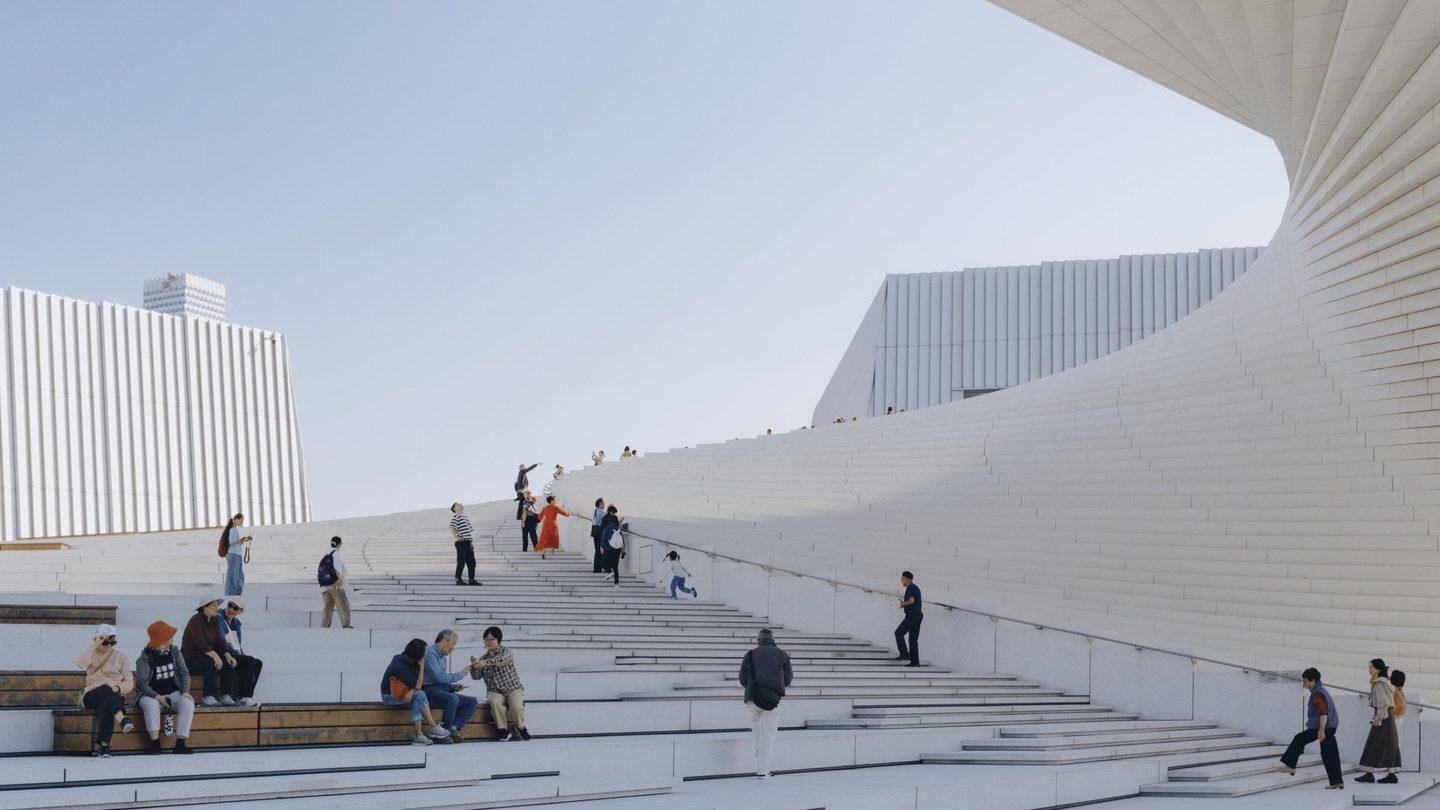
Shanghai’s opera house opened in October with a roof anyone could climb. A barricade now stands at the base of its staircase, and the climb costs 50 yuan. It was the rare cultural building whose best room asked for no ticket at all.
The building is the Shanghai Grand Opera House, designed by Snøhetta on the Huangpu River waterfront, and its white roof carried the design’s promise, a civic room stacked over a performance hall. It opened on October 17, 2026, ten years after Snøhetta won the competition to design it.
The roof is still there. The welcome changed.
The promise was a roof for everyone
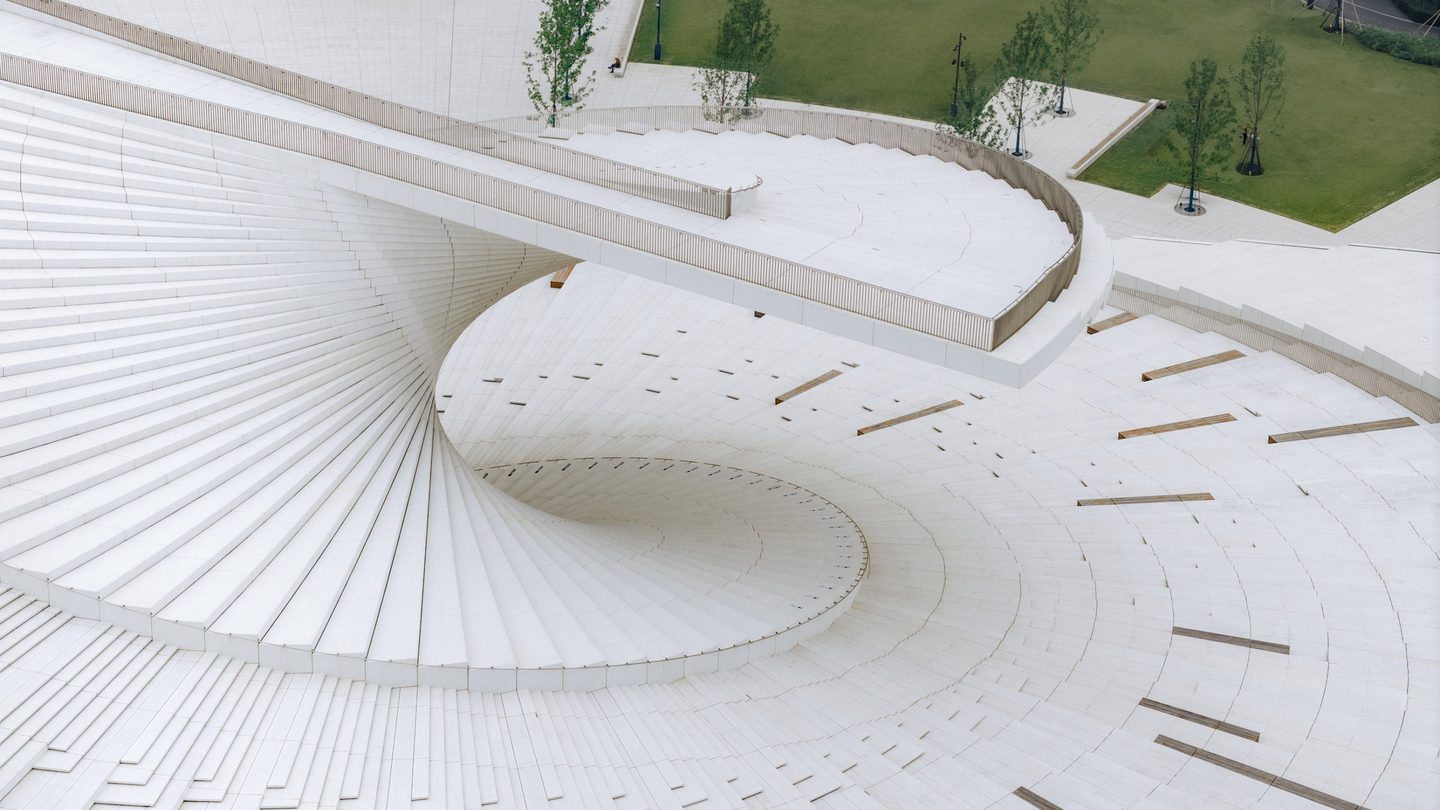
Snøhetta calls the design’s guiding ideas movement, belonging and experience, and the movement is literal: a helical roof rises from the plaza in one continuous sweep. The form evokes an unfolding fan, shaped around the dynamism of dance and the human body.
The staircase cantilevers at its peak and lands on a rooftop that works as a stage, an observation deck and a meeting point. In the studio’s launch material, that roofscape offered 24-hour, year-round community access.
The sweep answers the site itself, responding to the ebb and flow of the river and the pulse of the city around it.
The fan motion doesn’t stop at the roof: it runs through the lobby and the halls, and the building’s logo repeats the open fan. At the opening, co-founder Kjetil Trædal Thorsen said people should be able to enjoy the building without attending a performance, as part of everyday life.
The studio came to Shanghai with form in this genre, having put a walkable roof over Norway’s national opera house years earlier, where a sloping roof invites visitors to walk across the building. Thorsen describes the Shanghai house as designed to promote public ownership of the building for the people of the city.
What changed at the barricade
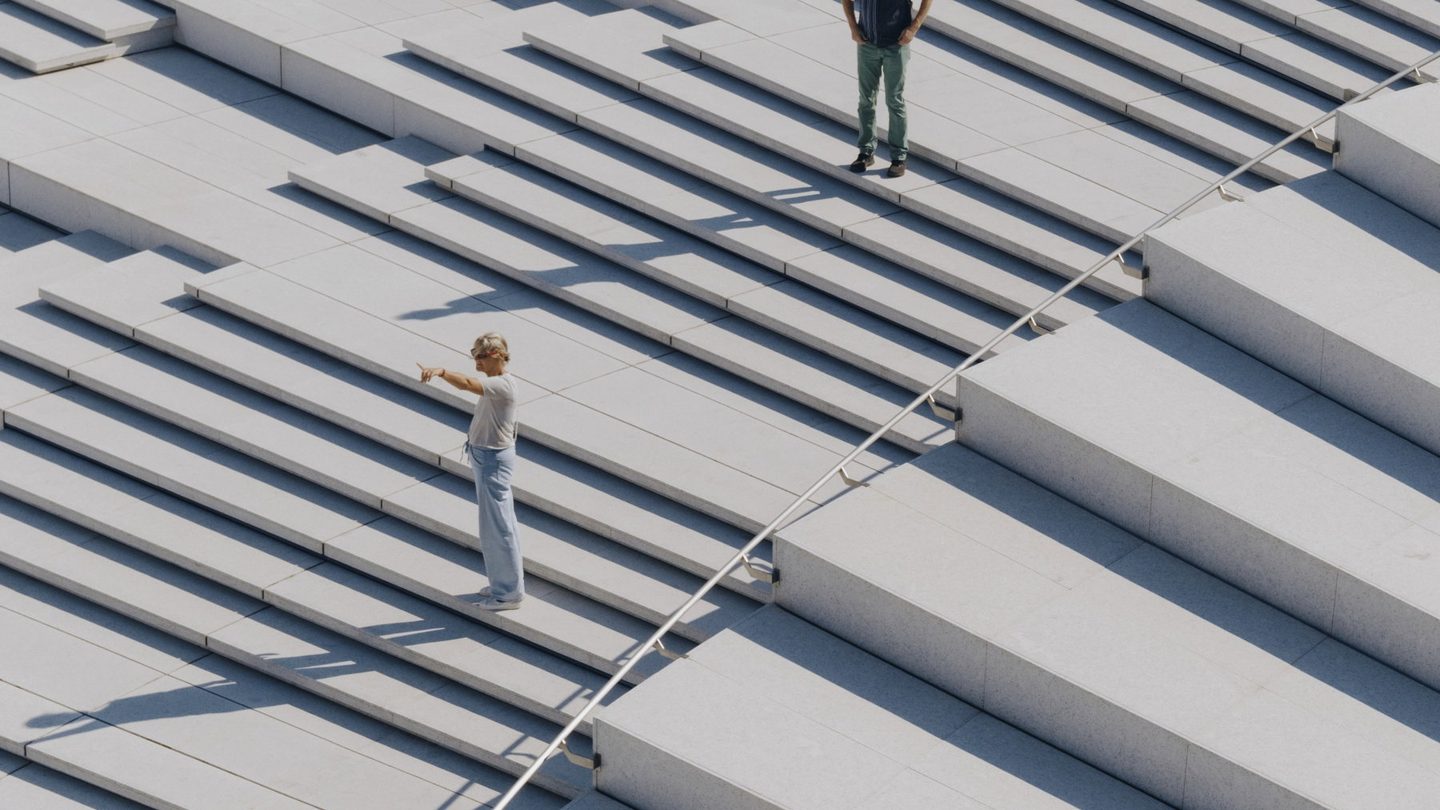
Within weeks of the opening, a temporary barricade appeared between the free ground-level public space and the staircase. Access to the stairs and the rooftop platform now runs on pre-booked tickets at 50 yuan per person, in a daily window from 10:30 in the morning to 2:30 in the afternoon.
A performance ticket doesn’t cover the climb, so concertgoers pay the fee on top of their seats. The fee includes accident insurance, and the four-hour window concentrates the climb into the middle of the day.
Snøhetta’s answer is capacity: public interest has been exceptional, the roof and the public stairs hold limited numbers, and the studio says visitor management is necessary to keep the experience safe. The studio adds that access arrangements will continue to develop as the opera house team learns its visitor patterns.
For the opera house, the math is crowd control on a structure that also works as a grandstand: the same steps that carry visitors up also serve the roof when it hosts open-air events. The barrier is described as temporary, and the arrangements are still developing.
The stated reason is capacity.
Visitors without a booking now stop at the barrier, even if they crossed the city for the climb. The ground-level plaza below it remains open to everyone at no charge.
The building behind the fee
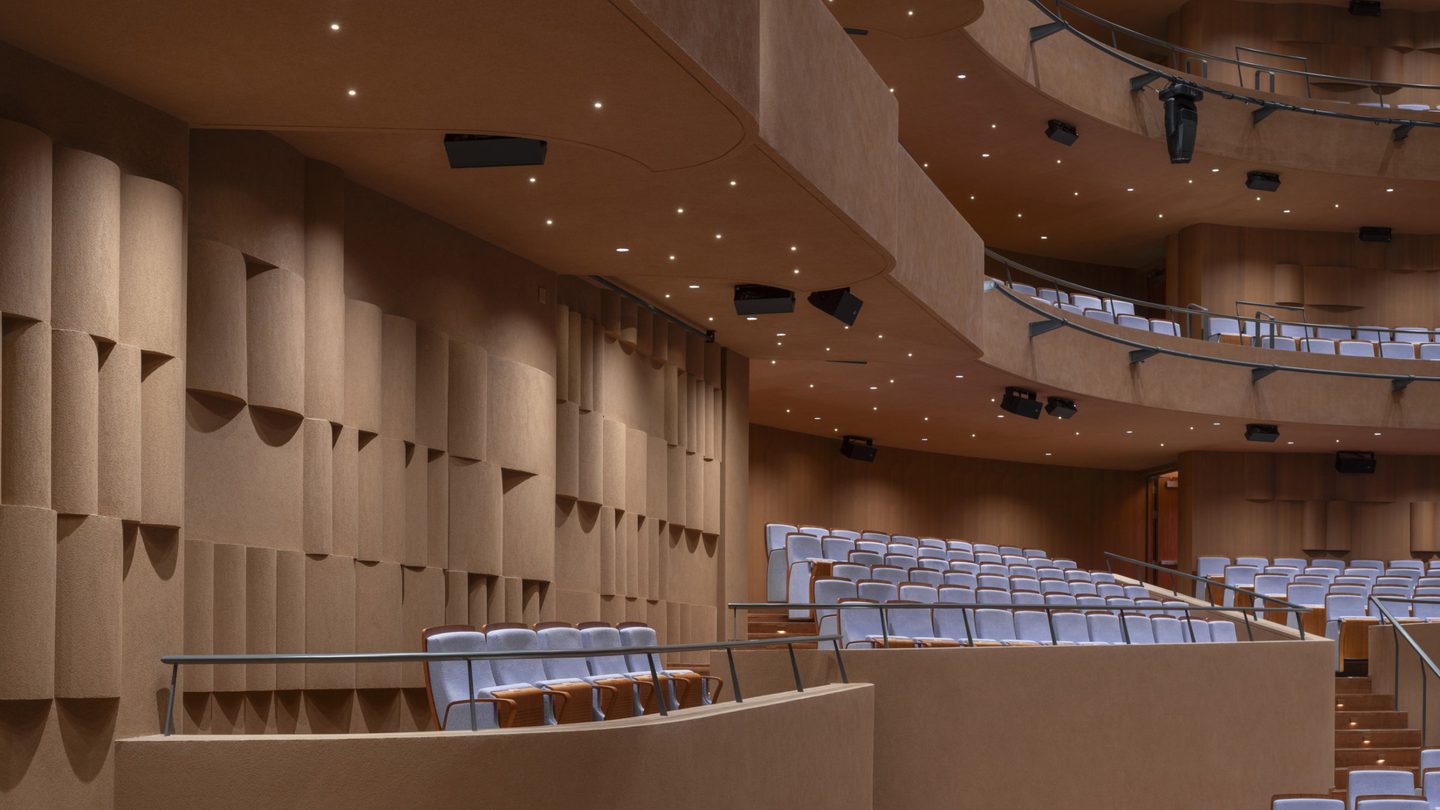
The opera house covers 146,786 square metres on the convex bank of the Huangpu River in the Expo Houtan district. Three auditoriums hold 4,200 seats between them: the 2,000-seat Harmony Hall, the 1,200-seat Soar Theatre and the 1,000-seat Open Stage, its stage and seating flexing for experimental work.
Snøhetta won the international competition in 2016 and was formally commissioned in 2019 as part of a consortium with ECADI, Theatre Projects and Nagata Acoustics. The building brings performance, rehearsal, production, education, exhibition and hospitality under one roof. The same address folds in the unglamorous work, so the company that performs at night also rehearses, builds and teaches by day under the same roof.
Harmony Hall is tuned as the flagship room, with Nagata Acoustics on the sound, while the Open Stage trades fixed rows for adaptable configurations aimed at a new generation of opera goers. Snøhetta frames the building as part of the waterfront’s regeneration, extending the public realm through the Expo Houtan district. The program spans traditional opera and classical music through experimental productions built for new and diverse audiences.
The opening season runs through February 20, 2027, with 82 performances across 47 productions. The halls were the easy part to ticket, and the season will test the draw.
So the visit splits in two, and the tradeoff is the building’s own: the design gives the roof to the city, and the operations now rent it back by the hour. That tension is now the visit.
Go for the free version if the riverfront plaza and the white sweep are enough, because the ground level stays open. Pay the 50 yuan if the roof is the trip, and book the morning window before you go.


