

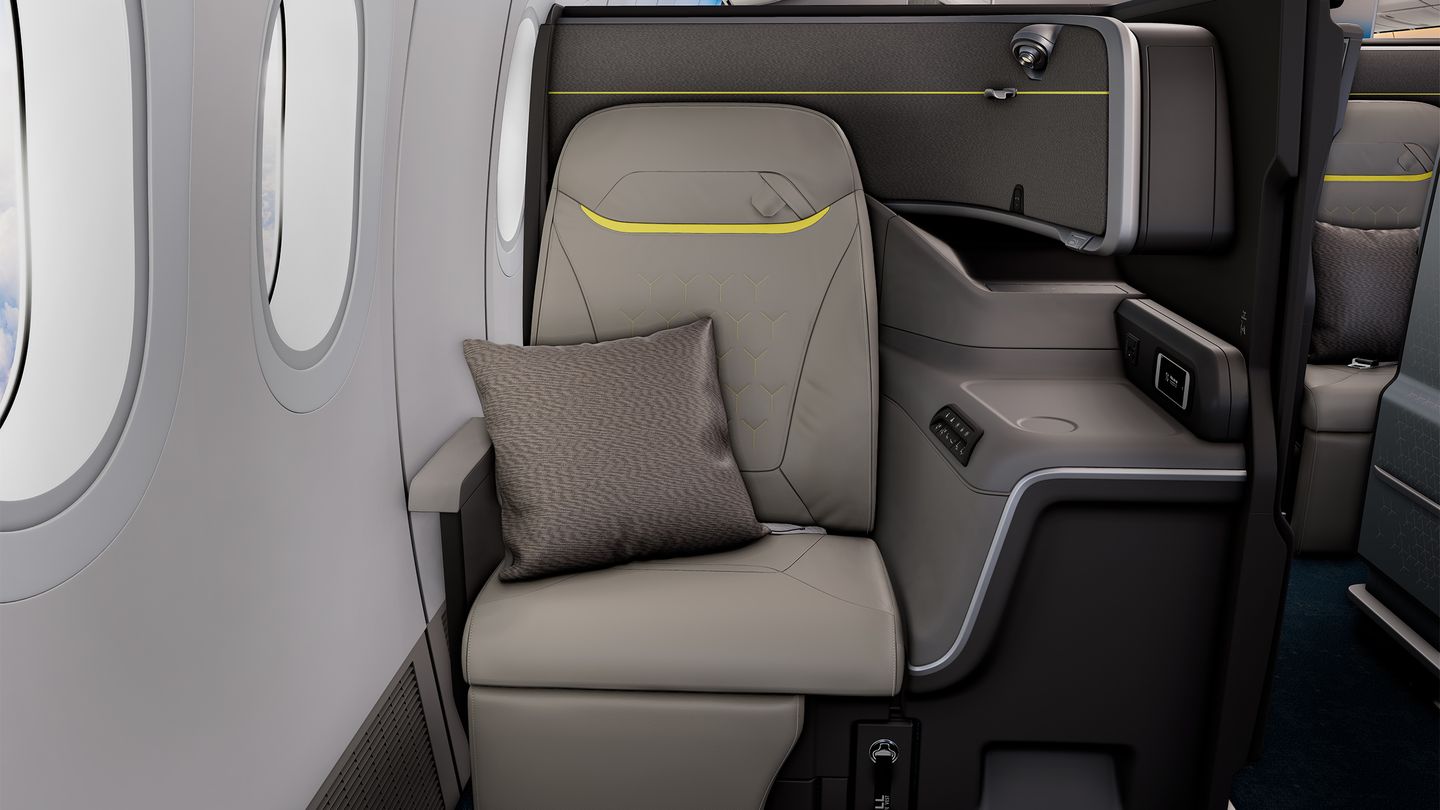
Grey leather, a charcoal shell, and a single stripe of yellow across the headrest. That’s Singapore Airlines’ new business class seat, and the internet has had opinions since the covers came off.
Flyers lined up the comparisons within hours, and none of them were kind. Dental chairs. MRT train seats. Office chairs, IKEA furniture, even the colours of Scoot, the budget airline Singapore Airlines owns. The politer reads called it premium economy wearing better tailoring.
Some of the criticism ran practical. Pale leather shows every scuff, and a cabin this grey photographs cold.
The airline has now answered. It isn’t backing down.
The colours, materials and finishes were carefully selected, the airline says, to create a fresh, contemporary and refined ambience, carried by adjustable LED lighting through the flight. The seat was designed to lift comfort, privacy and functionality together, and Singapore Airlines pointed at the hardware doing that work: full-grain premium leather against your back, a sliding privacy door at every seat, a powered centre divider, a full-flat bed, and a footwell with genuine room inside it.
It also logged what the launch guests kept praising. Privacy, first. Space. The bigger screen, the charging options, the physical seat controls you can work by touch, and centre seats that pair into a companion bed. The airline says it appreciates the feedback on the palette, it’s monitoring the reaction, and it’ll keep refining the seat from what it hears.
Grey and yellow, on purpose
The palette came from Designworks, the BMW Group’s design studio, which led the seat’s colour, materials and finish work around ideas borrowed from car interiors. Julia de Bono, the studio’s chief executive, calls the brief automotive design applied to a cabin, a space built to feel elevated and timeless.
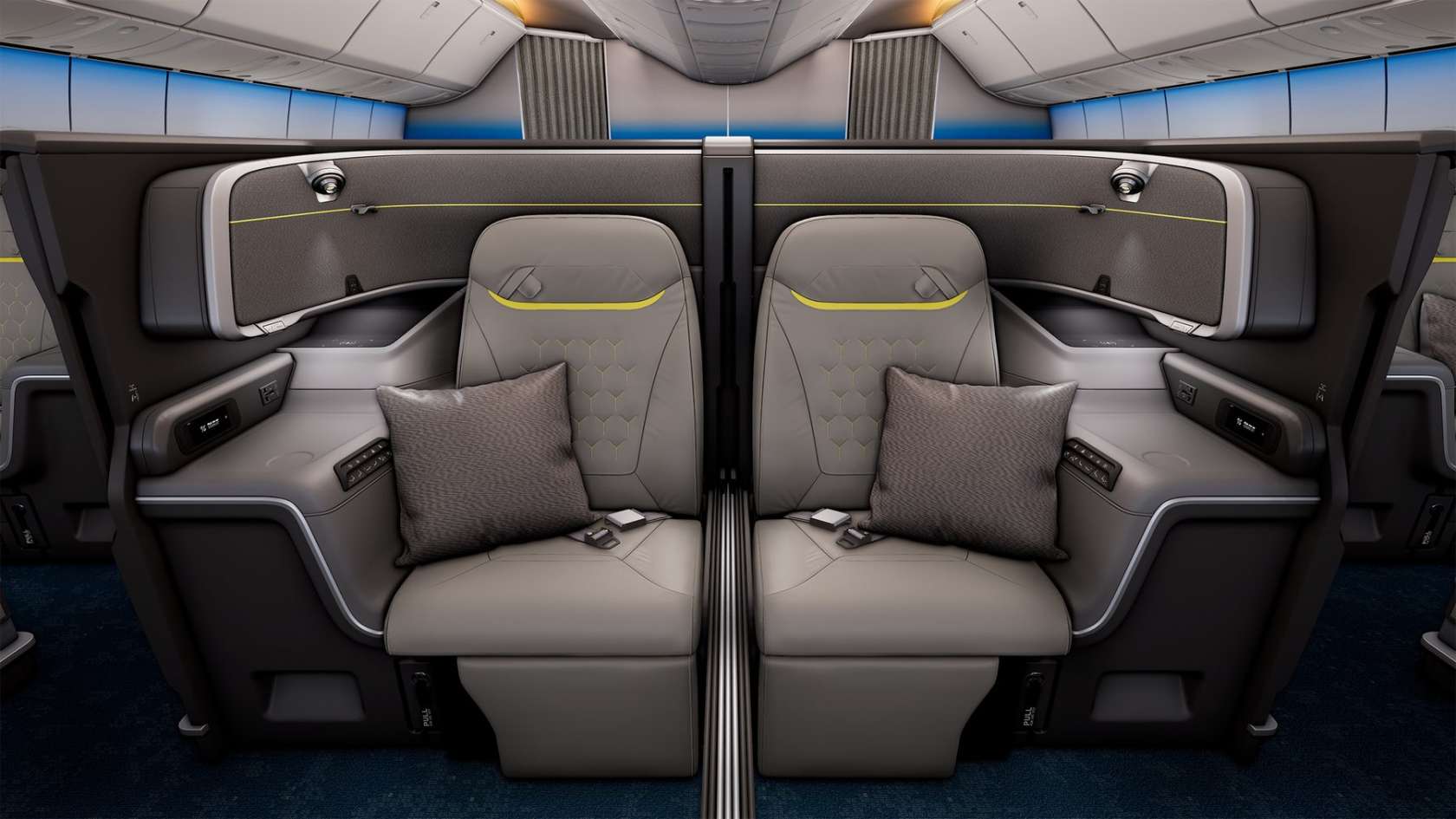
So the cabin runs cool and technical by intent. Mineral grey and silver carry the seat, blue builds through the cabin behind it, and the yellow the studio calls Cool Yellow does the accent work, one bright line against all that grey. The stitched motif marching across the leather takes its cue from a satellite in orbit, which is where the little three-pronged marks on the shell come from.
The design team said it plainly at the reveal: the cabin was meant to carry its own attitude, not blend into the fleet.
The contrast inside the same airplane is the tell. The new First Class suites went warm, all brown and blue with batik worked into the walls and Poltrona Frau leather, a PriestmanGoode cabin that drew almost none of this fire.
Singapore Airlines doesn’t work to a fixed palette across its cabins. Each product gets designed on its own terms, the airline says, held together by the same ambition rather than the same colours. First class got the heritage treatment. Business class got the future the designers sketched, grey, yellow and all.
Under the grey, a bigger seat
Strip the colour argument away and the seat underneath is serious hardware. RECARO built it bespoke for Singapore Airlines, more than 3,500 seats across the whole programme, on a platform with a patented actuation system that moves in silence.
Every seat sits in a 1-2-1 layout with its own aisle access, inside a shell standing 52 inches tall. The pitch runs 50 inches. The bed folds out 79 inches long and up to 24 wide, and the table stows at an angle on purpose, so the footwell stays generous instead of swallowing your feet.
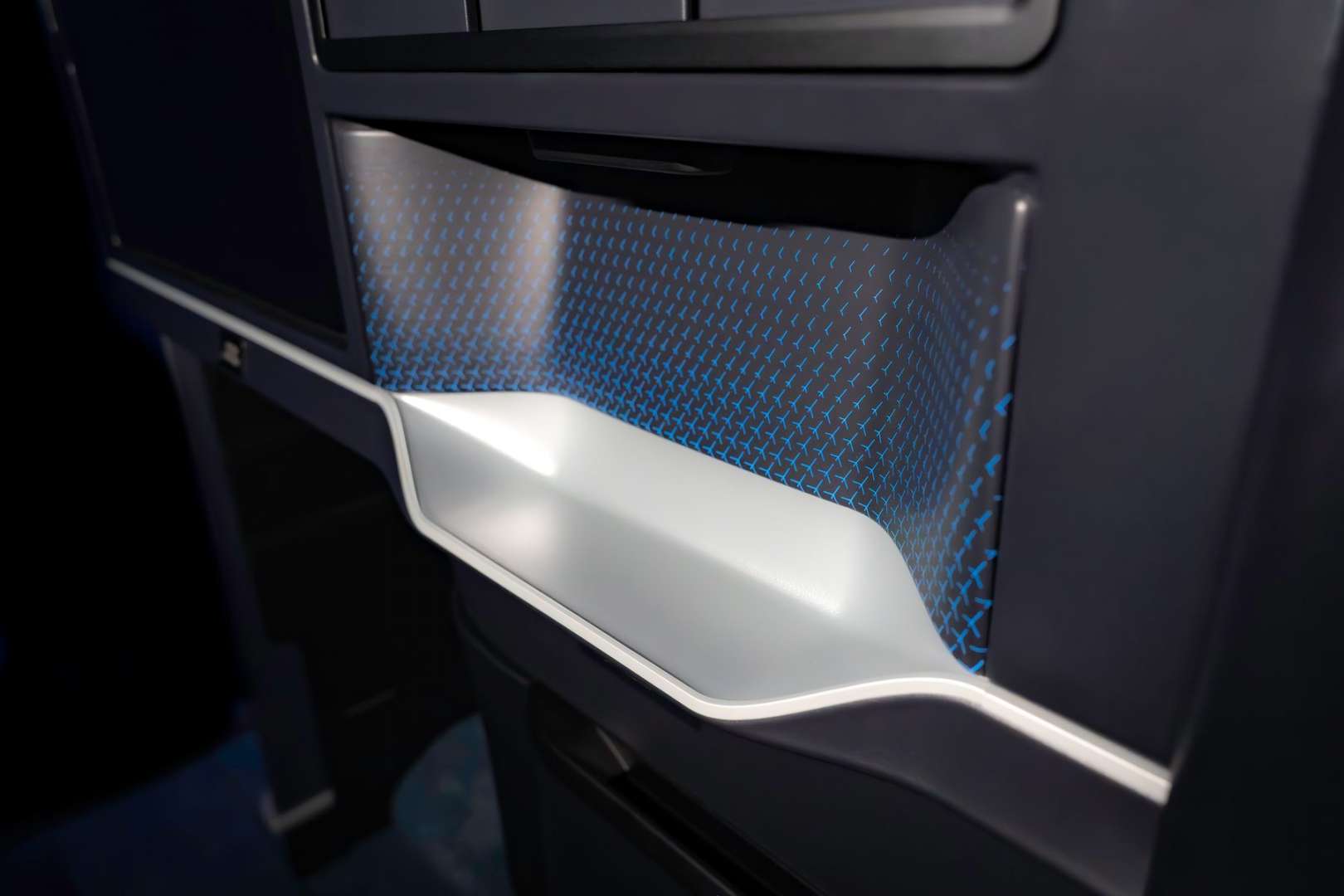
Storage runs deeper than the standard cubby, too. A dedicated laptop slot, room beneath the footwell for a small bag, and an upper compartment with a mirror built in, plus stowage worked into the shell wherever a flat surface offered itself. The small things you reach for mid-flight finally have assigned places.
The screen grows to 22 inches on the A350, a 4K OLED panel, with a 20-inch 4K unit on the Boeing 777-9. Wireless charging sits in the console, joined by two fast-charging USB-C ports and a household outlet on the A350, and your seat positions save themselves for the next flight. The controls stay physical and tactile, the sort your fingers can find in the dark.
The details lean automotive in the small ways. A cocktail tray with its own downwash light, lighting scenes that shift with the cabin, cushions tuned for sitting and sleeping rather than one compromised shape, and door and divider movements quiet enough to sleep through.
Centre pairs get the feature the mockery keeps skipping. The divider drops at a touch, and selected pairs convert into a companion bed, two seats becoming one wide sleeping surface. Couples will book around that.
The rollout starts in the second half of 2027 and runs long. The programme now spans 72 aircraft and more than $1.57 billion, with 41 Airbus A350-900s refitted under the original $860 million slice and the incoming Boeing 777-9 fleet fitted from the factory. The A350 refits are slated to finish by the end of 2030. The A350 version of the seat is still moving through certification, one reason the start sits in 2027 rather than sooner.
By then the grey will look like the cabin that aged best in the fleet, or the most expensive argument Singapore Airlines ever had with its own passengers. The seats start answering in 2027.


