

At one end of November sits a titanium carousel with an enamel hour disc; at the other, an architect’s watercolor inside a 36 mm dial. These five watches share a design brief rather than a price band, and each belongs here for a different reason.
The picks run from hand-built mechanical invention to pure dial design, and the tradeoff cuts both ways. The mechanical pieces ask for money and, in one case, a wait into 2027, while the design-led pieces are ready to wear and cost less than the Freak’s strap, though none of them pretends to be high horology.
Prices run from $220 to $183,550, and the designs share almost nothing else.
1. Ulysse Nardin Freak [S Purple Enamel], the carousel that became the dial
The Freak has never had hands, a dial or a crown, and the [S Purple Enamel] closes the titanium line by turning the hour display into a rotating disc of purple enamel made in-house at Donzé Cadrans.
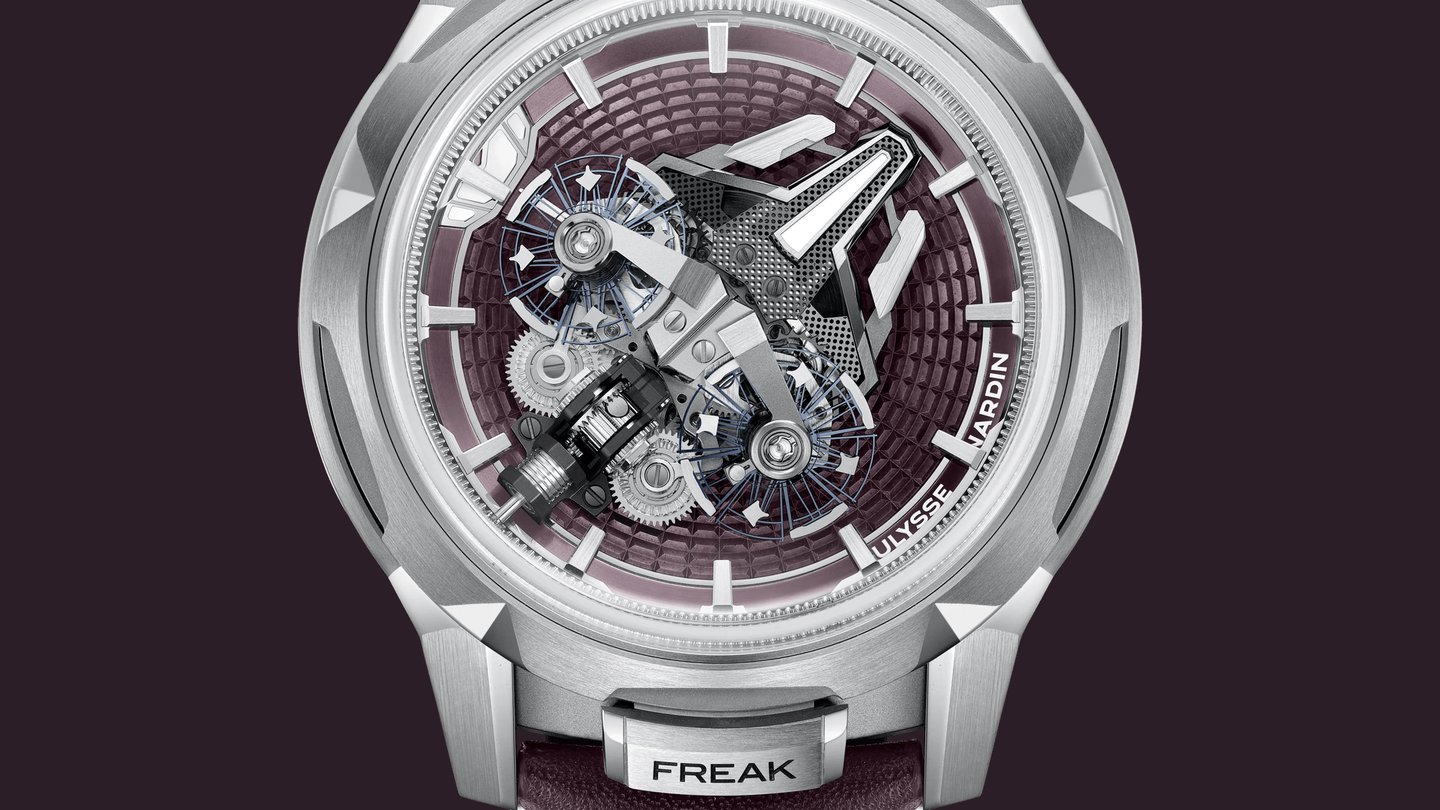
The caliber UN-251 rides on that carousel, 373 parts turning around their own axis once an hour, with two inclined silicon oscillators doing the regulating and 72 hours of reserve. Fifty pieces, and then the titanium Freak [S] story ends.
What we like: the enamel disc is display, decoration and destination at once, and our standalone piece on the Freak [S Purple Enamel] follows the Donzé Cadrans work in full. What we dislike: 45 mm wears big, the run stops at fifty, and the price is the price. Buy it at $183,550 if you collect the Freak line and want its final titanium chapter; everyone else admires it from a safe distance.

2. Horologically Unique HU-02, a 1920s wandering hour rebuilt in naval brass
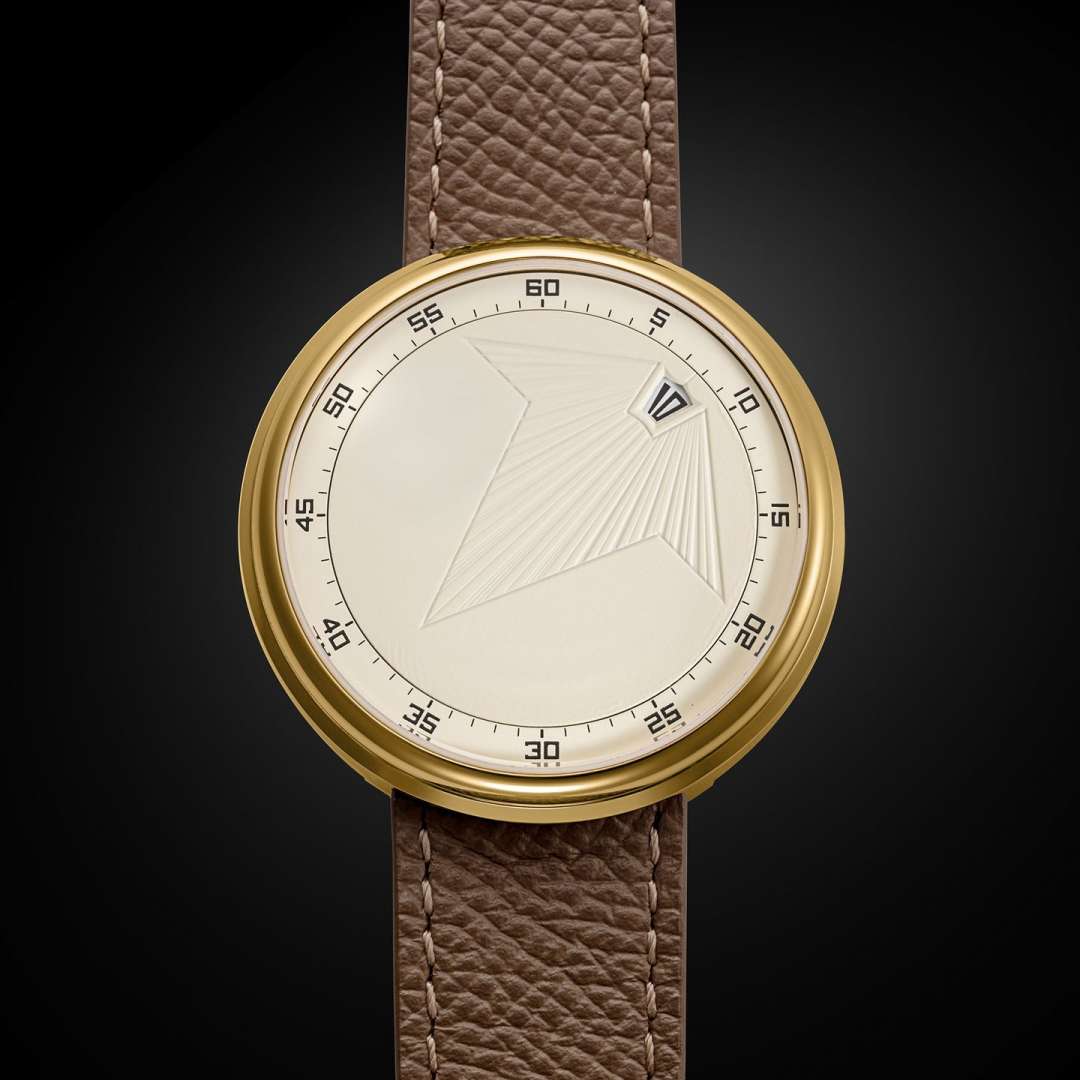
Robert Cart built his Chronoscope in the 1920s, and Horologically Unique has rebuilt the idea as HU-02. The 38 mm naval brass case carries a single arrow that wanders the hours around the dial, while a rotating indicator handles the minutes under a domed sapphire. A modified ETA 2824-2 with the brand’s own wandering hour module powers it, finished with perlage and Côtes de Genève, holding 32 hours of reserve.
It’s a history lesson that tells the time.
What we like: the cream Art Deco guilloche cut into the arrow itself, and brass polished to a mirror shine. What we dislike: delivery is estimated for June to July 2027, and 3 ATM means the watch stays dry. Our earlier piece reads the HU-02 hour by hour. Order it if a wandering hour in brass is the hole in your collection; skip it if the wait kills the appeal.
3. Cauny Holl, an architect’s watercolor cut into a dial
Steven Holl starts his buildings as watercolors, and the Holl turns that habit into a dial: blocks of blue, red, yellow and green stacked three deep in a 36 mm silver-tone case on a steel-mesh bracelet.
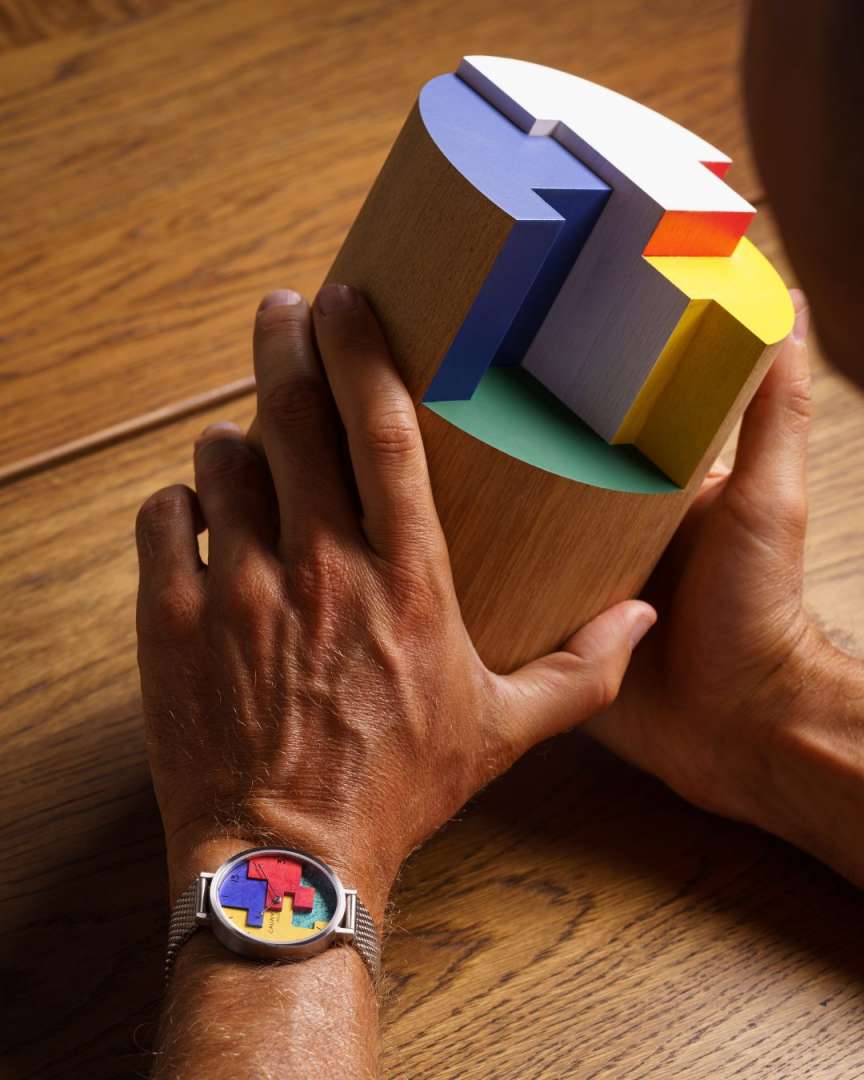
He designed it for Cauny’s Architects of Time series as a tribute to Álvaro Siza, in his own words: ‘Watercolor painting, integral to my design process for architecture, inspires this timepiece.’ It’s a painting first and a watch second.
A Ronda 762 quartz moves two hands under that sapphire, and that’s the whole mechanism. What we like: the dial composition holds up across a room, and our standalone Holl piece covers the Siza tribute in full. What we dislike: two hands means no seconds and no date, and quartz will divide the room it charms. Buy it at $220 if you wear design first; the movement is the compromise you accept.


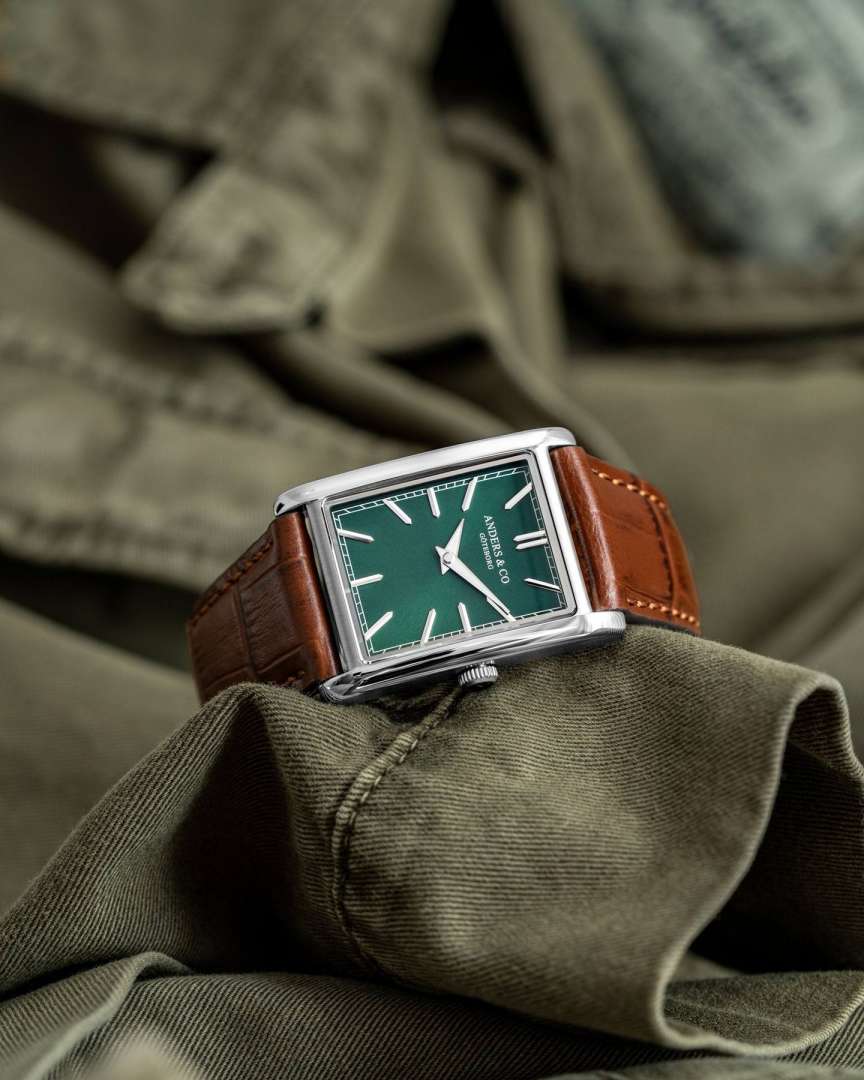
4. Anders & Co AC3 Lago, the rectangle that slips under a cuff
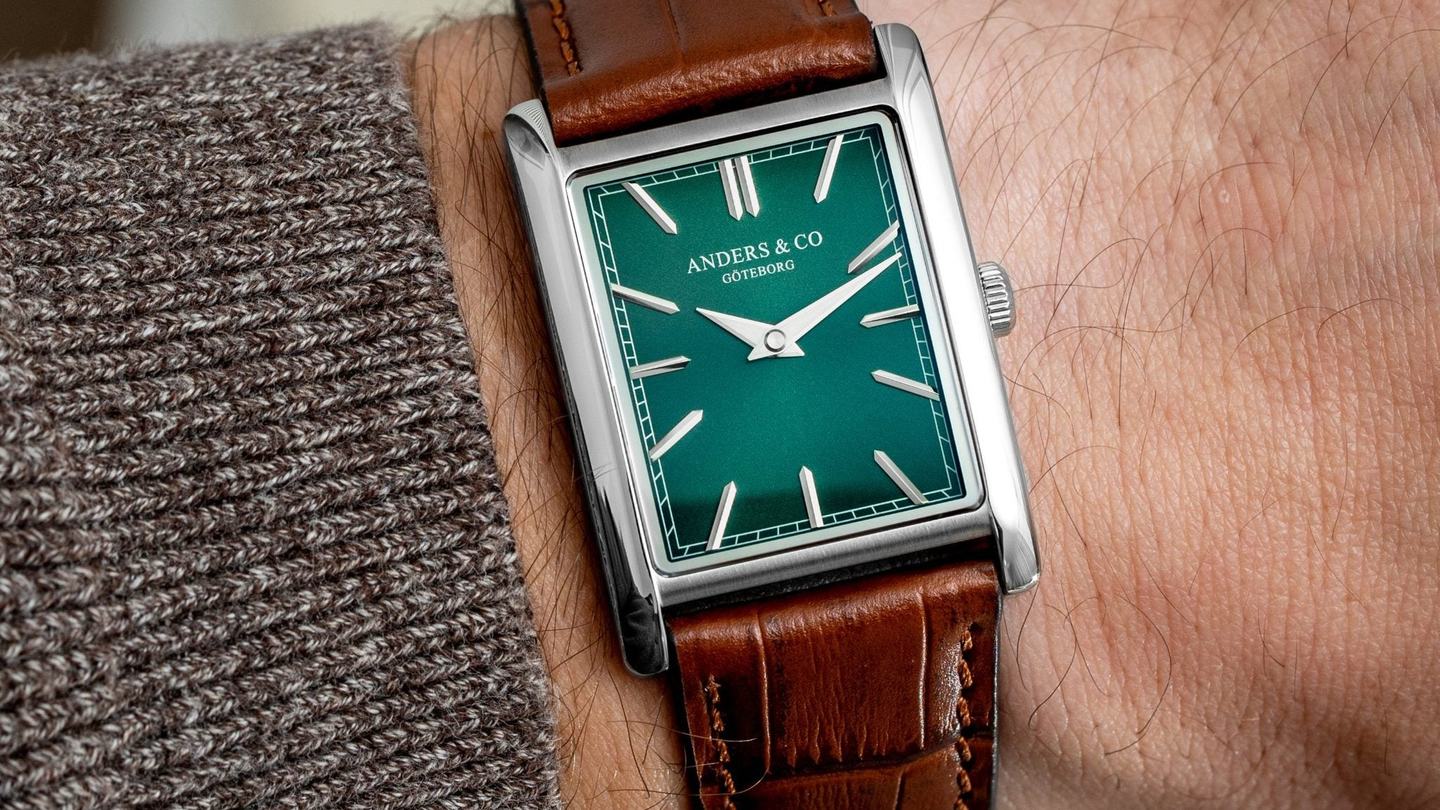
Every young brand eventually tries a rectangle, and Anders & Co’s first attempt lands at 6.30 mm thin, which is where rectangles live or die. The case runs 38.10 mm long and 27.75 mm wide in polished and brushed 316L steel, the forest green sunburst is the deepest of the brand’s five dial colors, and a Miyota 9T22 keeps time under a curved sapphire. It slides under a cuff and disappears.
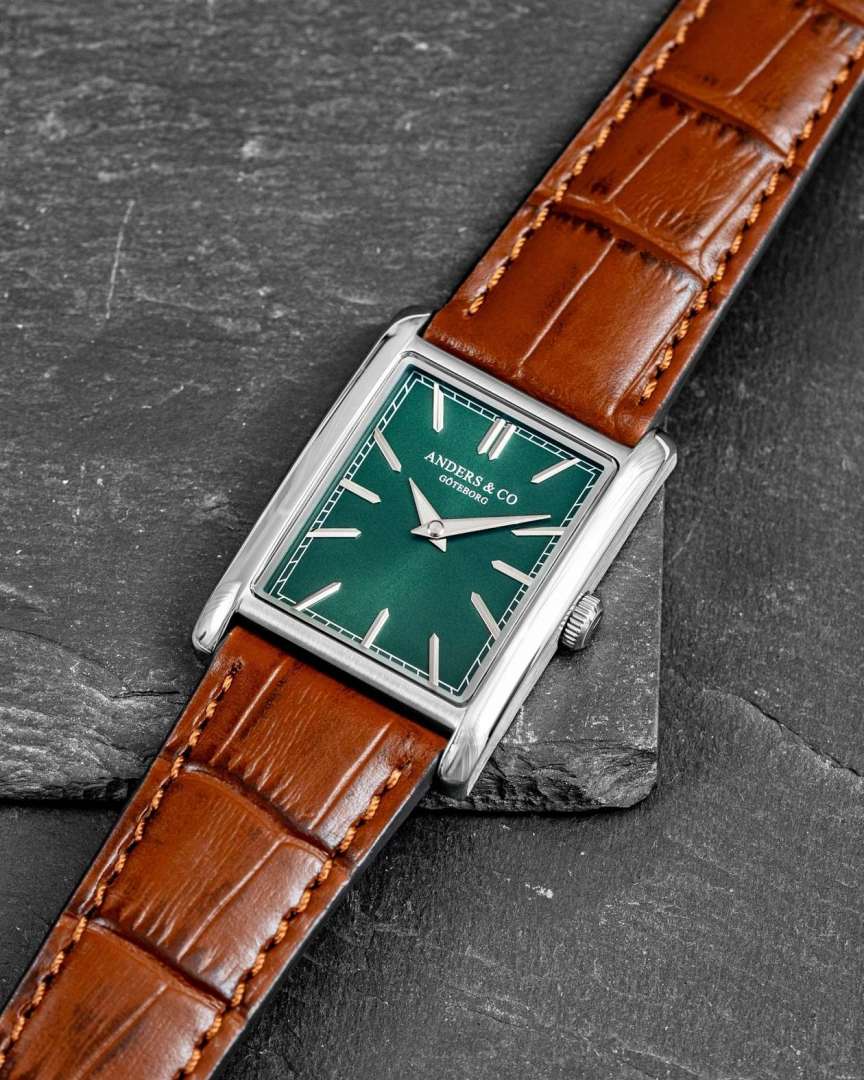
What we like: the case sides are polished and the top brushed, both finished by hand, and the proportions sit closer to a vintage rectangle than a modern slab.
What we dislike: hours and minutes only, and a 22 mm lug width narrows the strap hunt. Buy it at $550 if your rotation lacks a true dress rectangle; skip it if a bare dial feels unfinished.
5. Farer Halley, a hand-painted moon over midnight blue
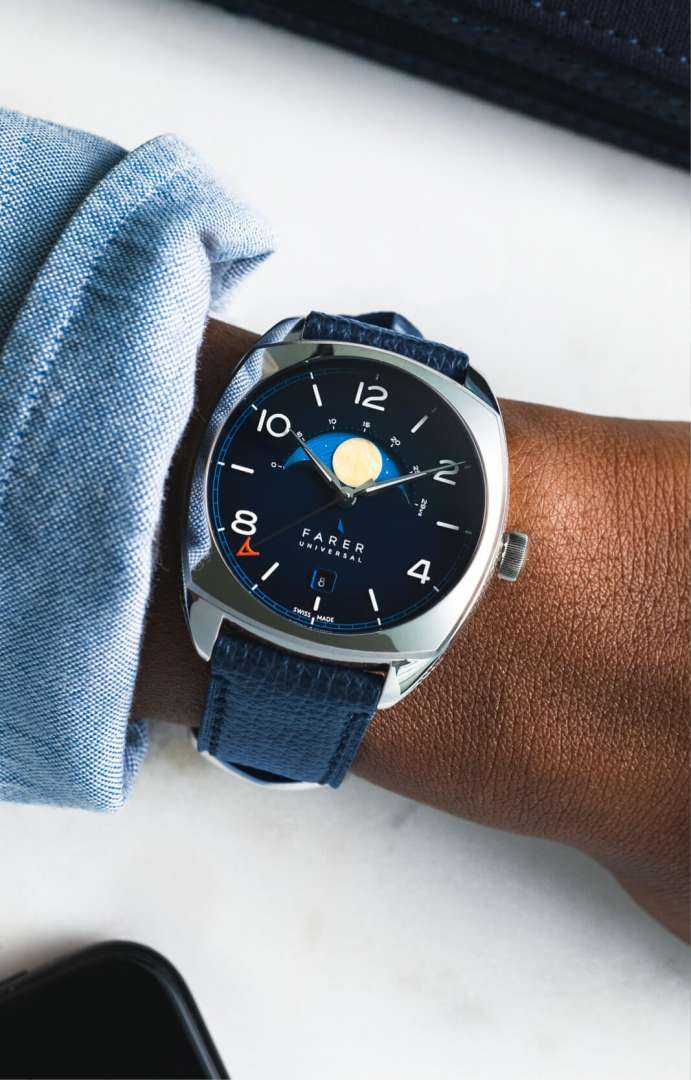
The Halley’s moon is painted by hand in Geneva, a yellow disc of Super-LumiNova crossing a midnight blue gloss dial inside a 38.5 mm cushion case. The Sellita SW288-1 below is hand-wound with about 45 hours of reserve, a quickset date and moonphase, and a bespoke patterned bridge you can inspect through the sapphire case back. It’s the warmest watch on this list.
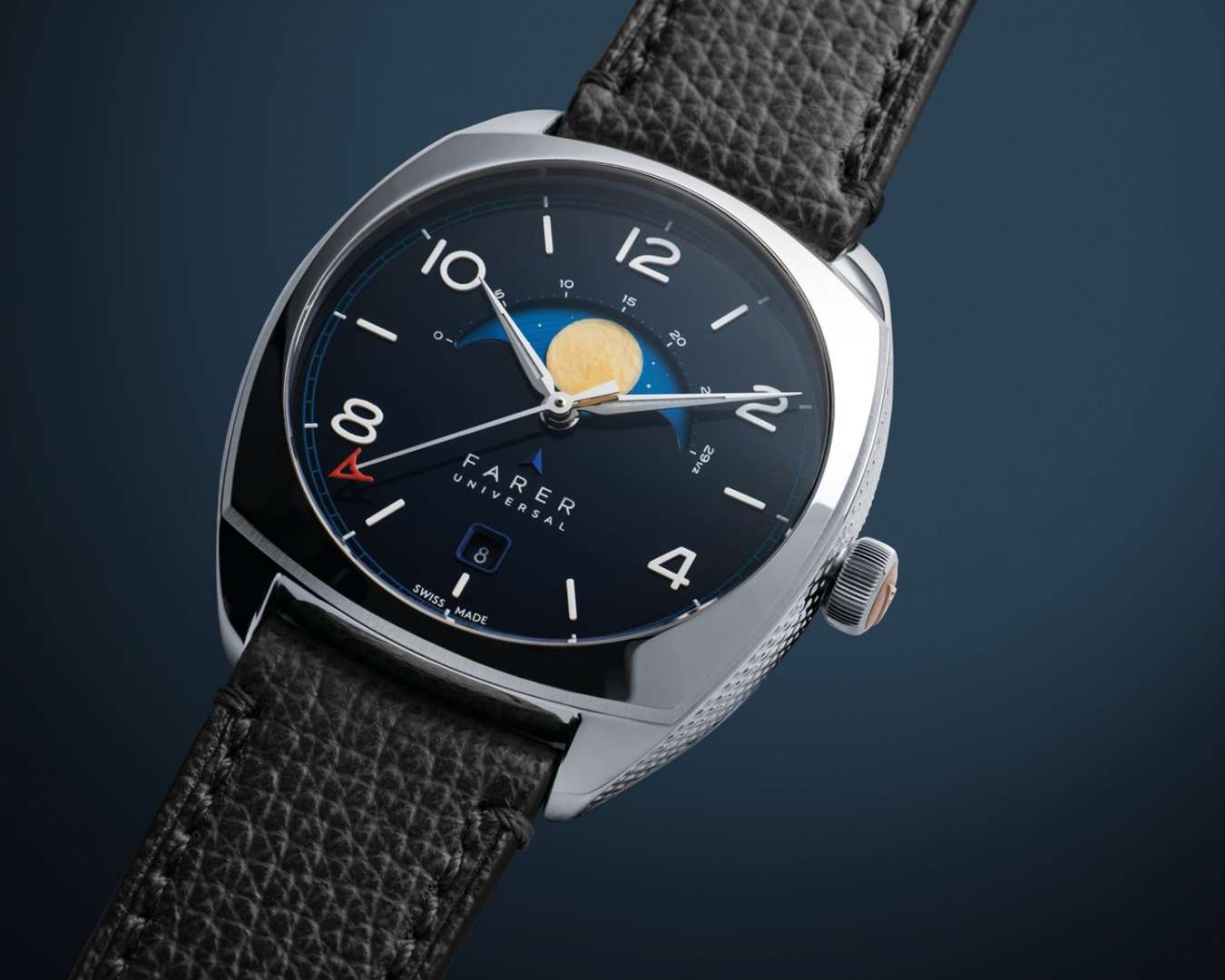
What we like: the disc carries a starry sky with two hand-painted moons, and thirteen strap options run from suede to a Milanese bracelet. What we dislike: winding is manual, so the Halley asks for a morning ritual, and the polished case shows every knock it collects.
Buy it at $2,240 if a moonphase is your complication; it’s the only watch here that asks for a daily ritual.
| Product | Price | Save | Buy |
|---|---|---|---|
| Ulysse Nardin Freak [S Purple Enamel] | $183,550 | Ulysse Nardin | |
| Horologically Unique HU-02 Classic | $3,850 | Horologically Unique | |
| Cauny Holl Silver | $220 | Cauny | |
| Anders & Co AC3 Lago Forest Green | $550 | Anders & Co | |
| Farer Halley | $2,240 | Farer |
Five watches, five different answers to the same November question. The Freak is the money-no-object answer, the HU-02 is the patient one, and the boldest dial of the month sits on the cheapest watch here. Buy the one whose picture you keep reopening.


