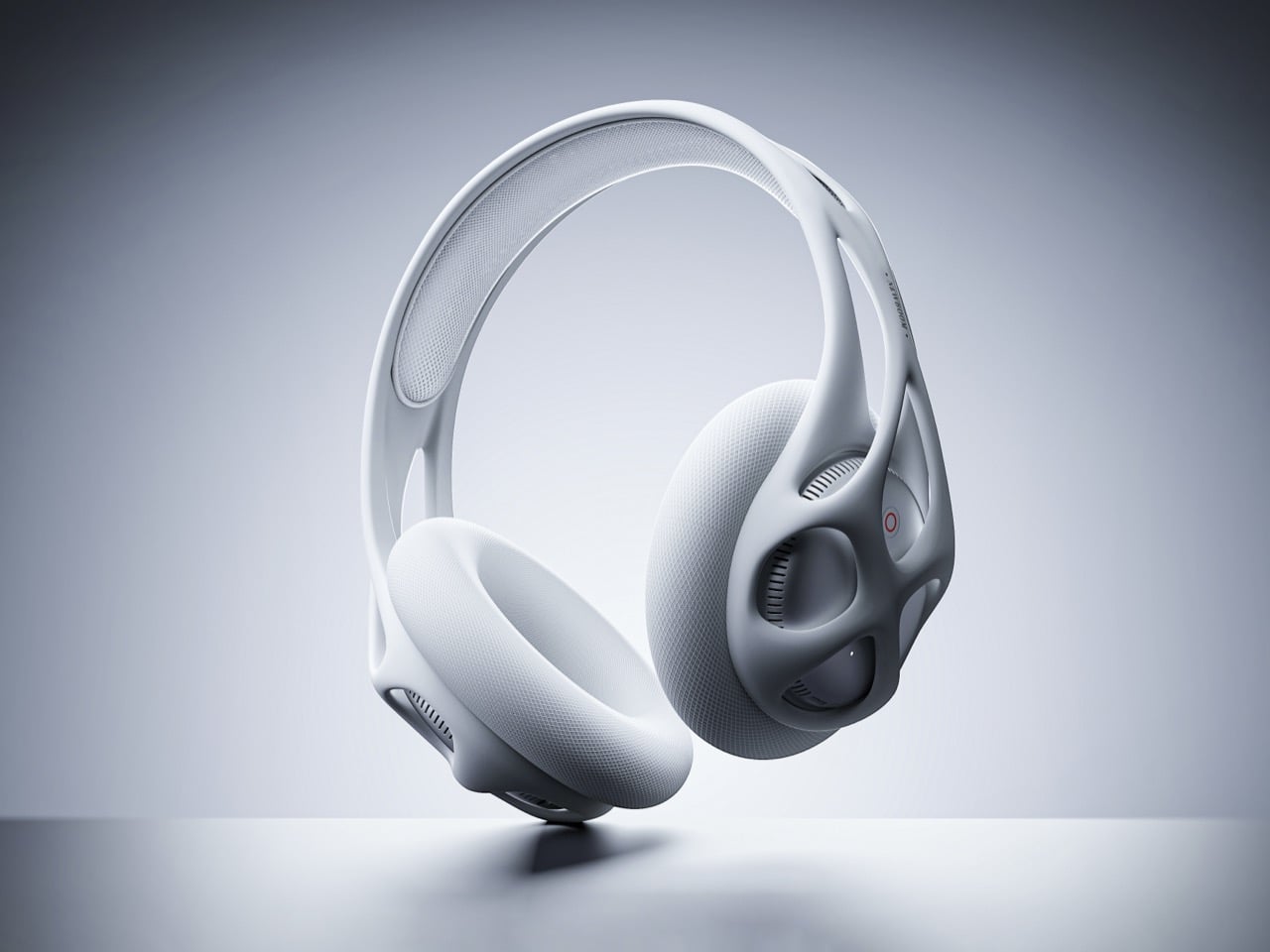
Grow is a concept headset credited to the design studio Why Design, and nobody sketched its frame. Software grew it. The team set the structural requirements, let the program iterate through thousands of variations, tested each one against the loads a headphone frame actually carries, and kept the forms that did the work with the least material they could get away with.
For now that’s all it is: renders. There’s no product, no price, and nothing to order.
Grown, not drawn
Generative design is routine in aerospace and automotive work, where engineers use it to shave grams off brackets and chassis parts. The results usually get buried under conventional styling so nobody has to look at the math. Grow skips the cover-up. The algorithm’s output is the styling.
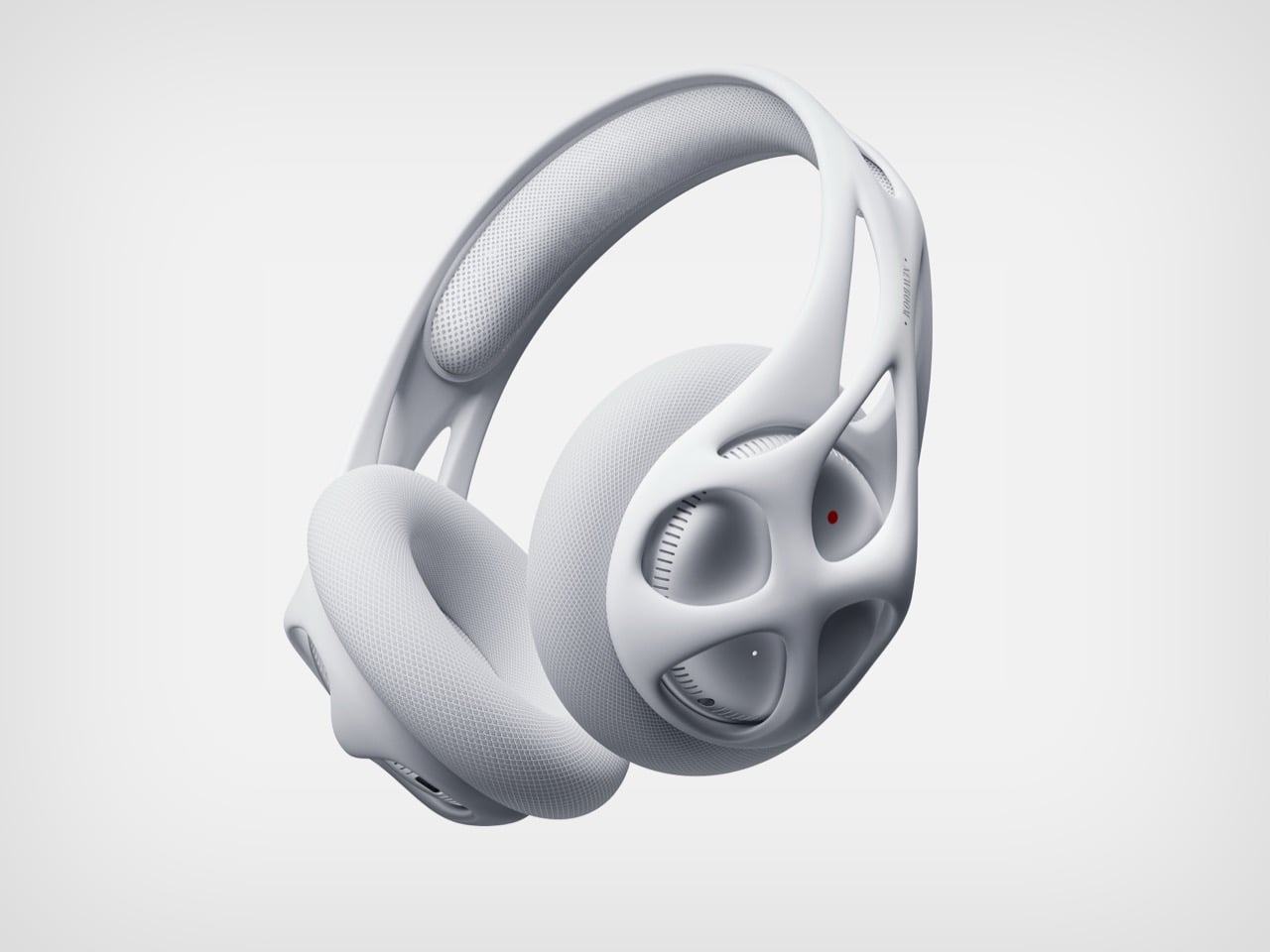
Bone develops the same way, and the resemblance isn’t a styling trick. Living bone reinforces the paths that carry load and lets everything else stay hollow, laying down struts where stress runs and leaving voids where it doesn’t. The headset’s frame follows that map exactly. It thickens around the earcup mounts and the band joints, the places a headphone actually works, and thins across the open spans that carry nothing. The web that results looks grown, not drawn.
The structure stays outside
A normal headband hides its reinforcement under padding. Grow hides nothing: the lattice is the outer surface, and the polished metal shell of each earcup shows through its openings.
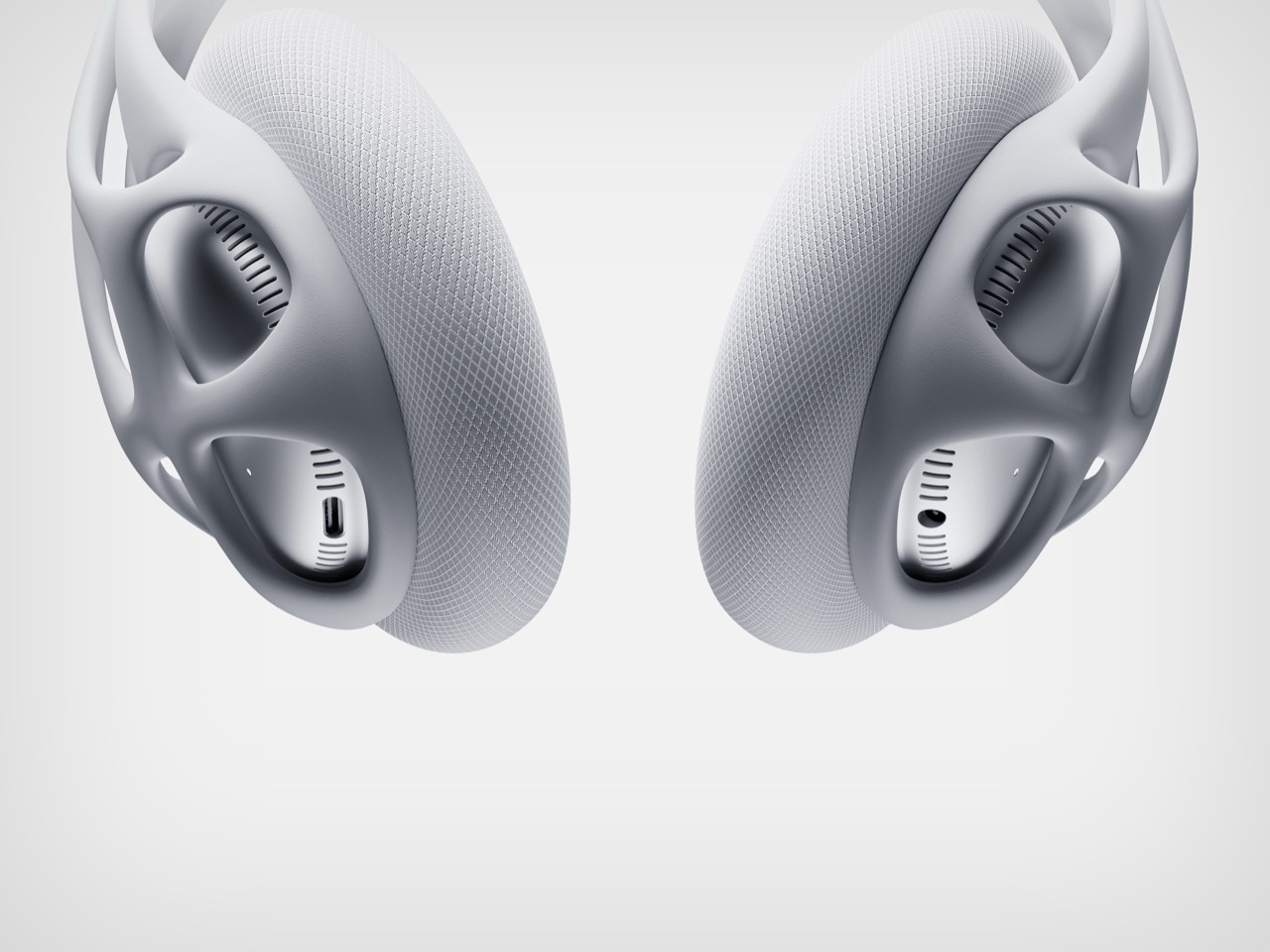
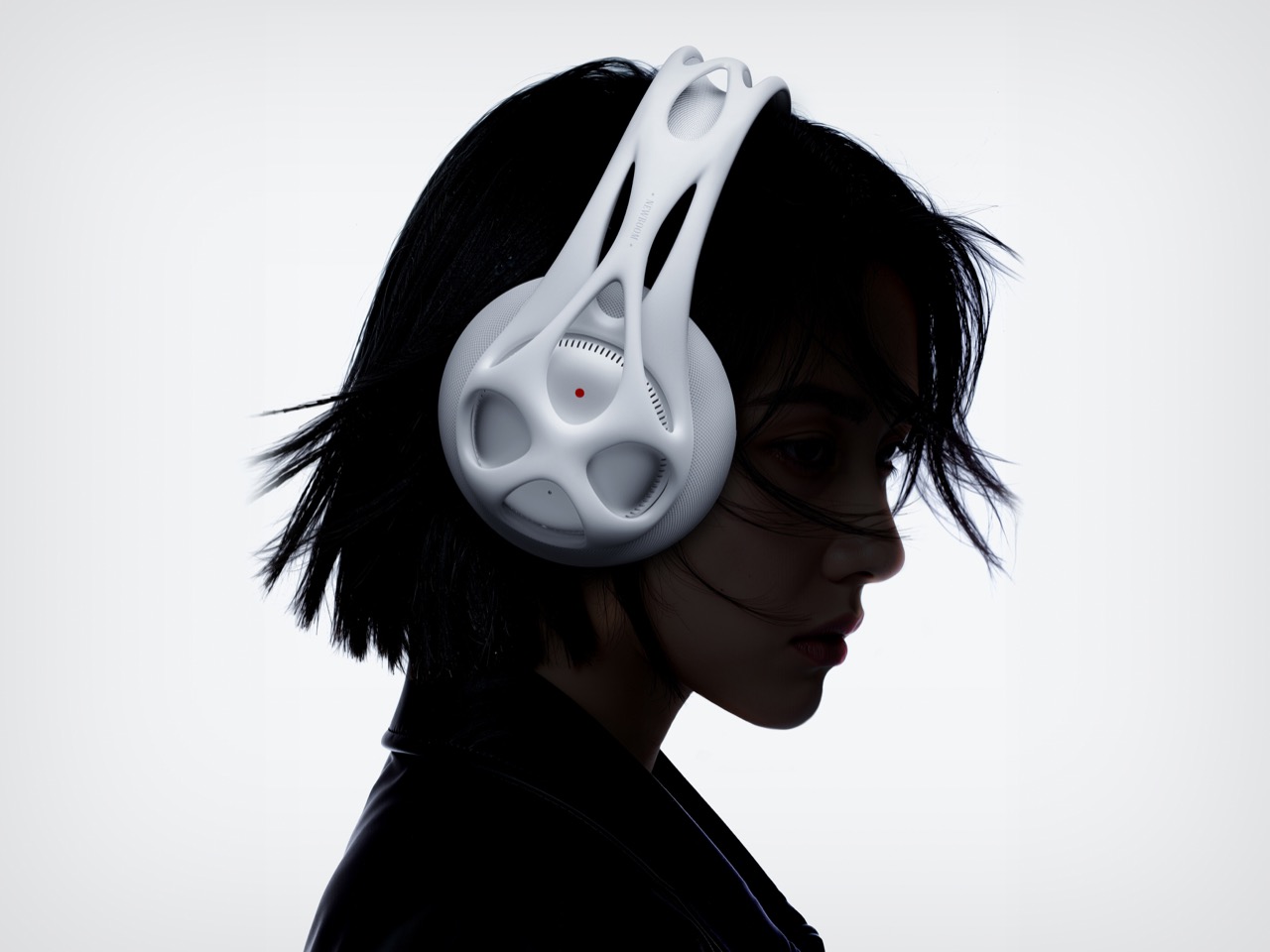
The details reward a closer look. A small red dot marks the right cup. The cushions behind the lattice are deep and wide, wrapped in a tight diamond-woven mesh, and a padded mesh strip runs along the inside of the band where it meets your head. Even the charging port gets absorbed into the composition, sitting low on one cup, half hidden by the frame growing around it.
Design creates new life
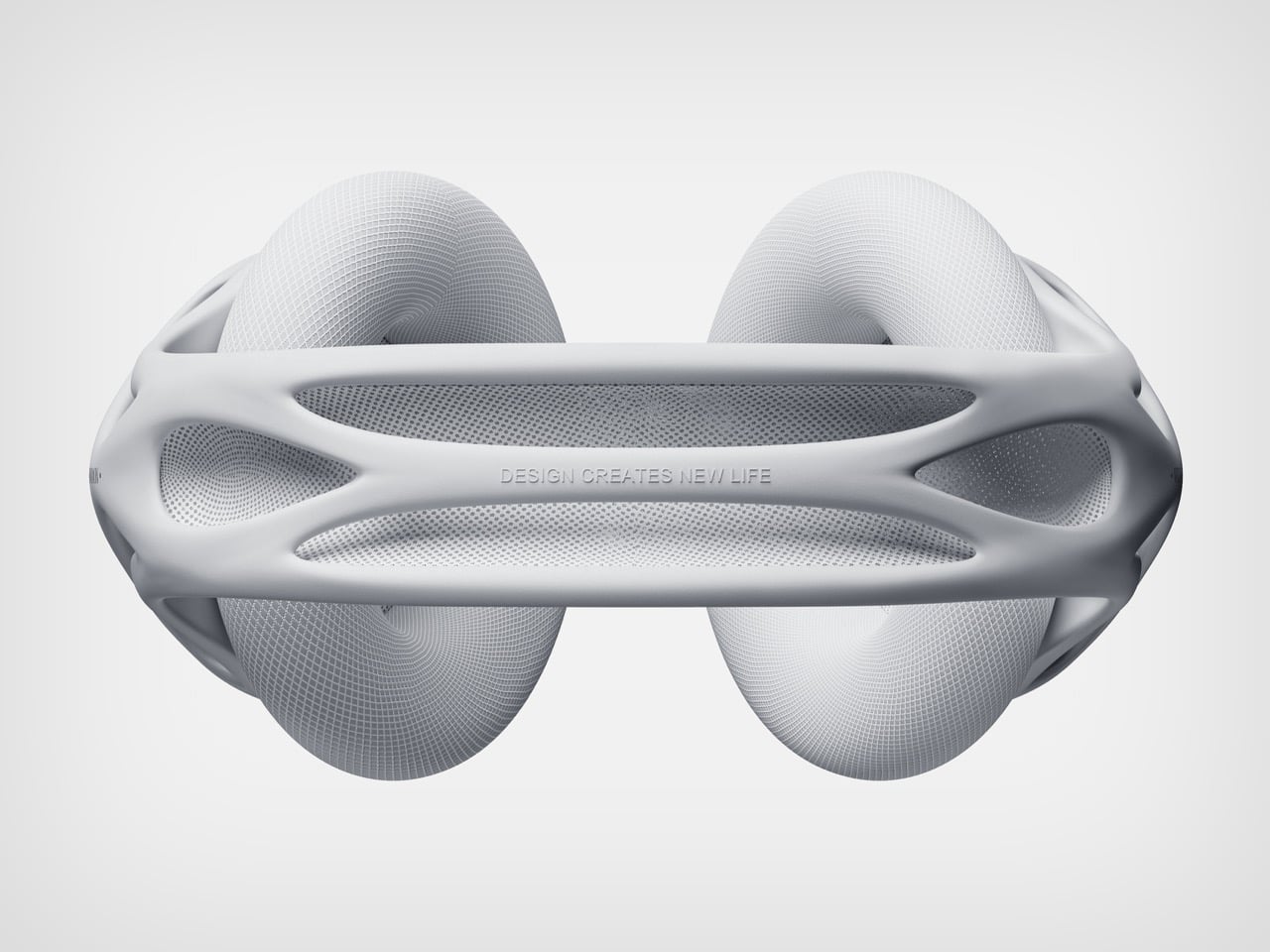
That line is engraved across the top of the headband, and it also serves as the studio’s thesis. From above, the band is one continuous grown form, openings and all, the cushion mesh showing through underneath it, and the frame is symmetrical in a way drawn objects rarely are. From the side, the band’s openings echo the ones in the cups below it.
On a head, the argument lands harder. The lattice stops looking like machinery and starts looking like anatomy: a paler second skull, worn over the first.
Same bones, darker skin
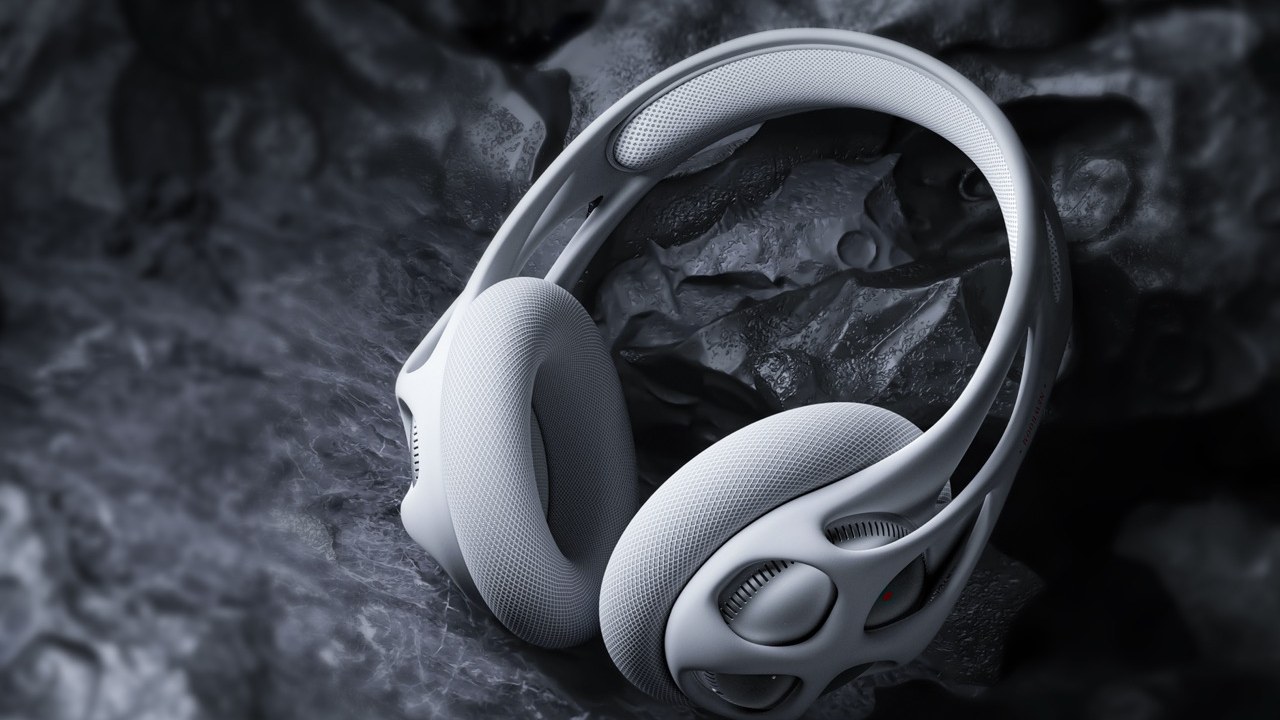
The render set also runs the form in charcoal, and the mood flips with the finish. In white, the bleached finish pushes the object toward fossil, something excavated and cleaned. In dark grey the same lattice turns faintly menacing, less museum specimen and more exoskeleton, and the metal shells sink into shadow behind it.
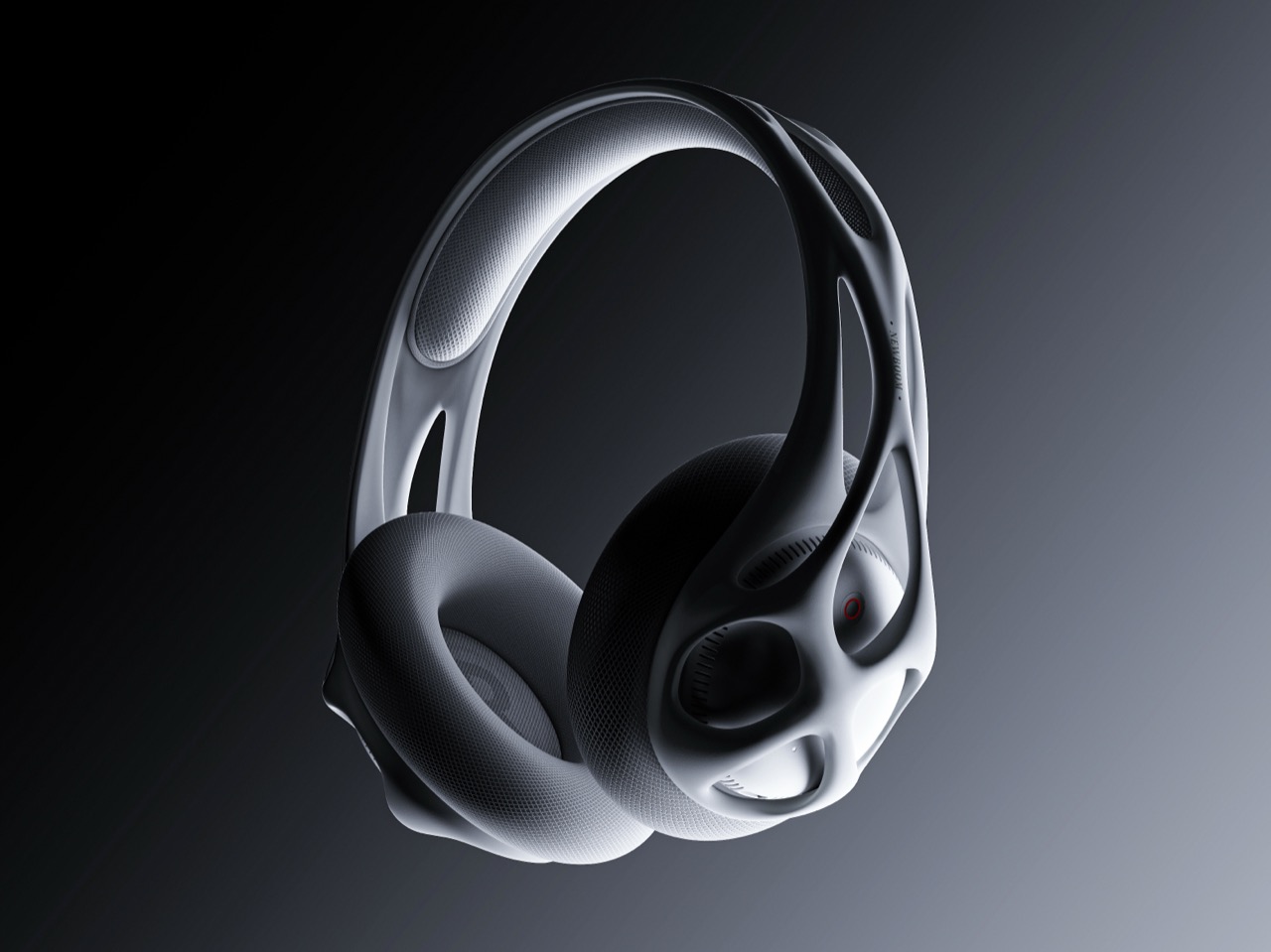
Nothing else changes between the two finishes: same form, same structure, and the color does all of that work on its own. That’s how much of a product’s character is finish.
Editor’s take
As a product, Grow doesn’t exist, and a lattice this open would be brutal to build for daily life: drops, sweat, and years of flexing are unkind to delicate structures, and grown forms don’t come off an injection mold.
None of that dims the idea. Headphone design has sat on the same smooth shells for a decade, one closed curve after another, and Grow shows what happens when the structure stops hiding and becomes the design itself. The bone logic isn’t decoration. It’s the argument, and it’s visible from across the room. If a brand ever finds the nerve to manufacture something like this, the shape of headphones changes with it.