

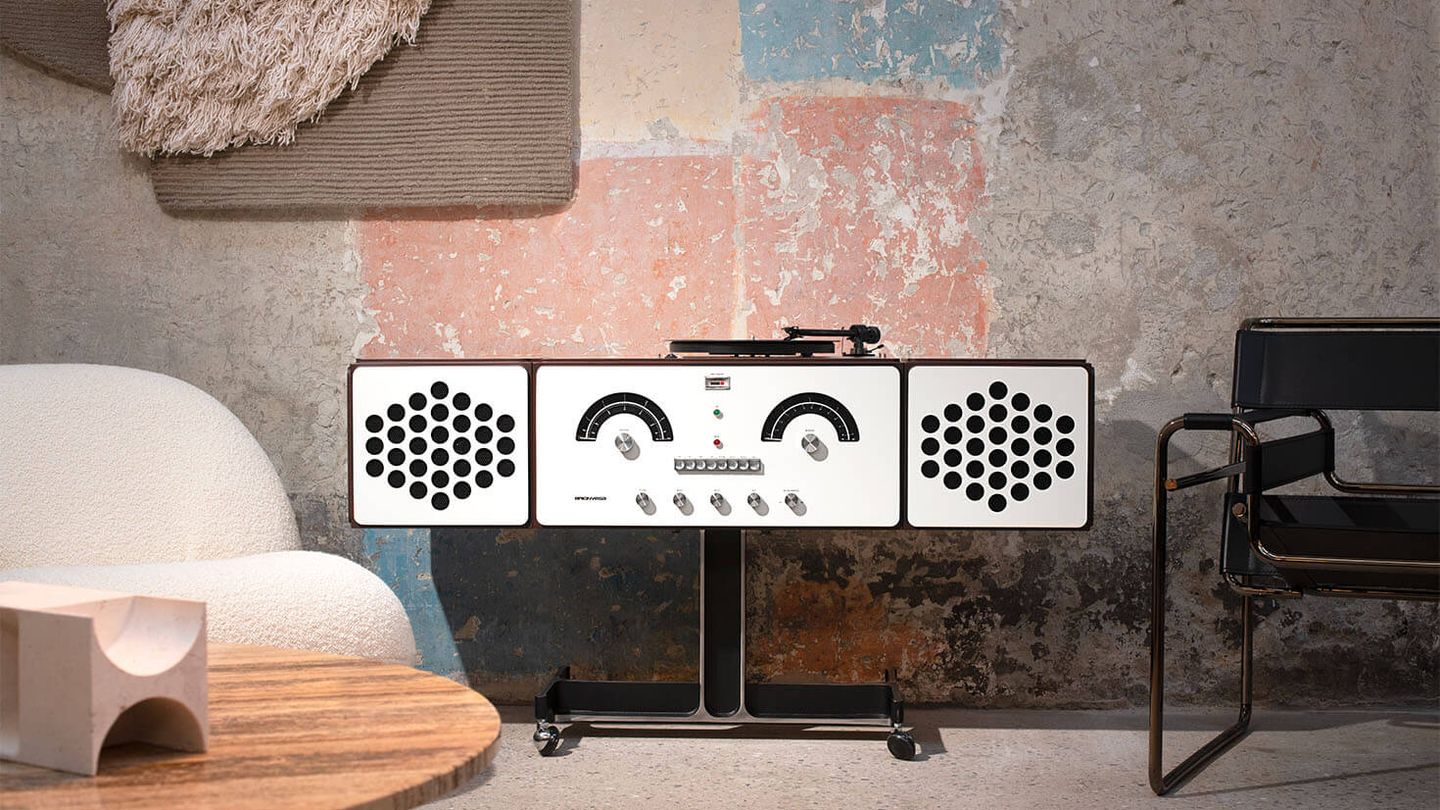
Brionvega’s Radiofonografo rr226 keeps its speakers on hinges and its turntable up top. Its controls sit arranged into a grin, and the console still looks like a small robot that wandered into the living room and decided to stay.
Achille and Pier Giacomo Castiglioni drew the original in 1965.
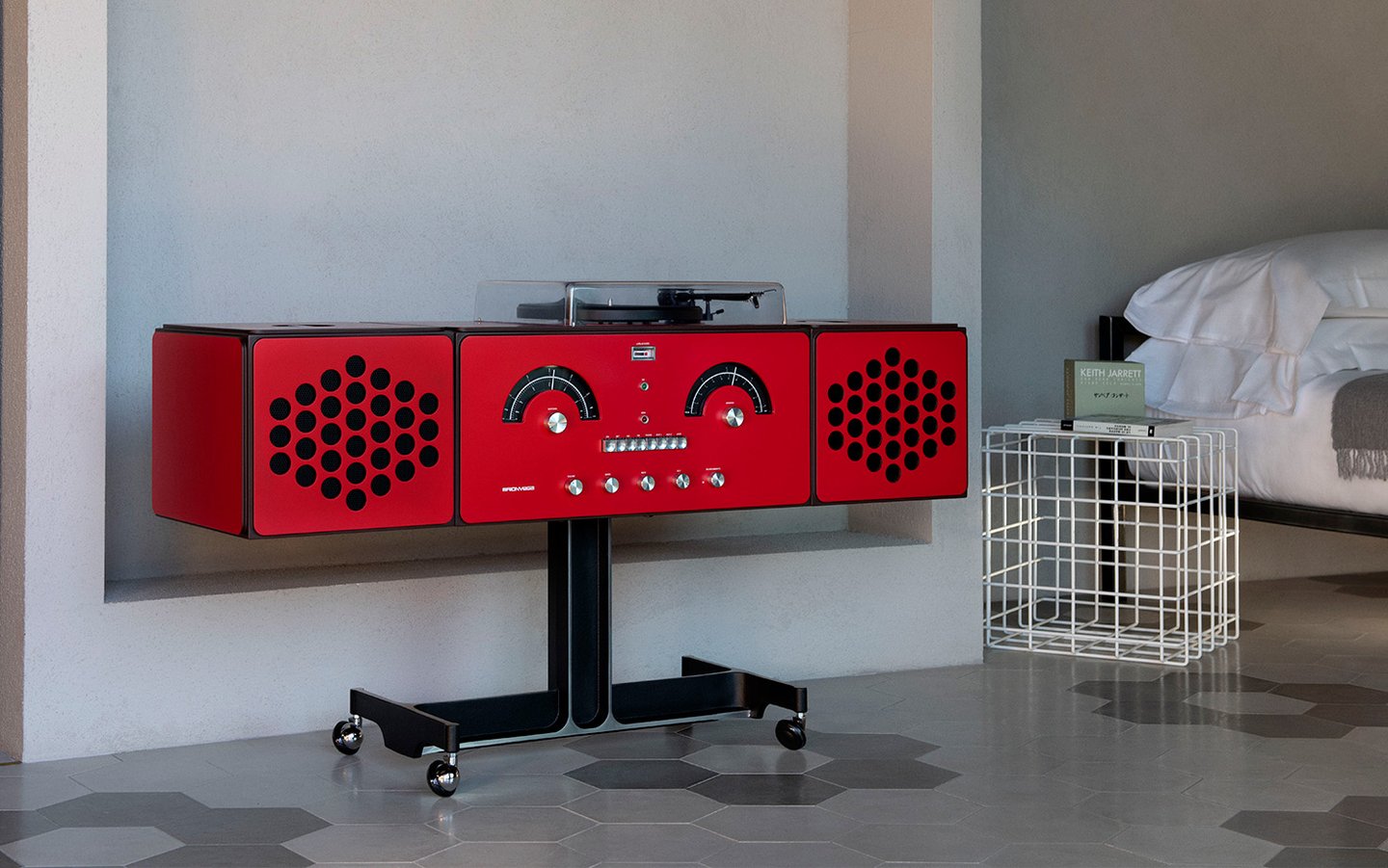
Brionvega still builds the re-edition by hand in Italy, and each unit comes together one at a time, and United States pricing starts at $18,000 for the standard finishes through the MoMA Design Store. Sixty years on, the object hasn’t shrunk into a tribute act, and it remains a working stereo that happens to be furniture. Pricing and production follow furniture logic, not electronics logic, and the finish work gets the patience usually reserved for instruments.
A face made of buttons, dials and two loose speakers
Stand in front of the console and the layout explains its nickname, and two round speakers sit like ears above the control panel, and buttons and potentiometers fill the space below them. Their spacing lands, almost by accident, on a smile.
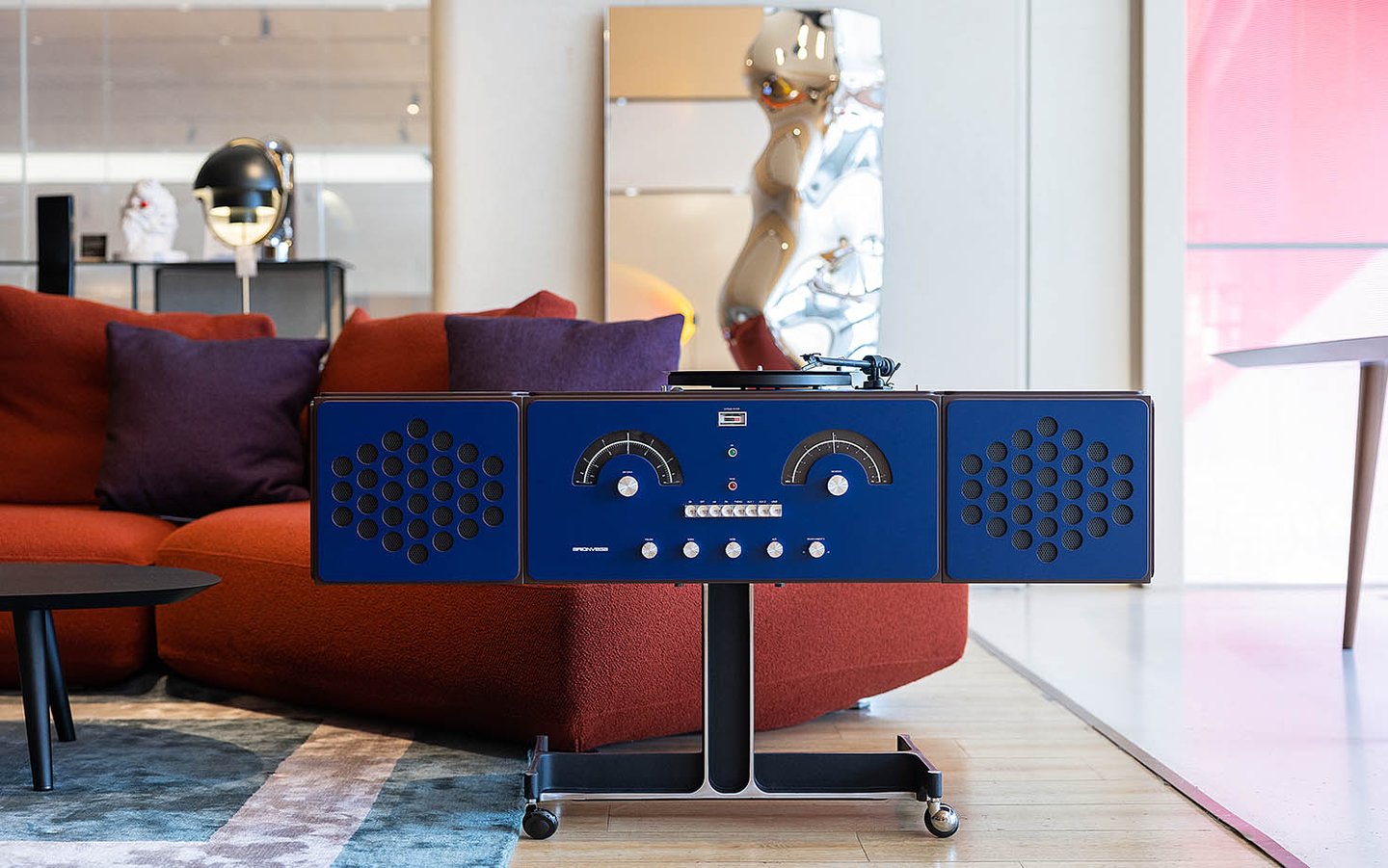
Nothing on that face is decoration for its own sake.
Each speaker detaches from the body, and a listener can park both units on top of the cabinet, and the pair also swings out to the sides. Carried a short distance into the room, the speakers widen the stereo image, and each arrangement changes the sound in ways a fixed soundbar can’t imitate.
Three setups, one object, and the console changes posture the way furniture does, and that habit separates it from every sealed box that followed. Stereo equipment turned black, rectangular and shy in the decades after 1965, and this piece never did.
Under the speakers, the main body carries the turntable on its top surface, and radio controls sit on the front panel. A metal pedestal with castors holds the whole assembly, and the console rolls toward a wall when the room needs space, and it rolls back out when the evening needs music.
Vinyl, radio and a dongle inside the same cabinet
Sound duties fall to a Pro-Ject turntable with an Ortofon stylus, and an AM/FM tuner and line inputs cover external sources, and a headphone output sits on the cabinet. So does a connection for an external subwoofer.
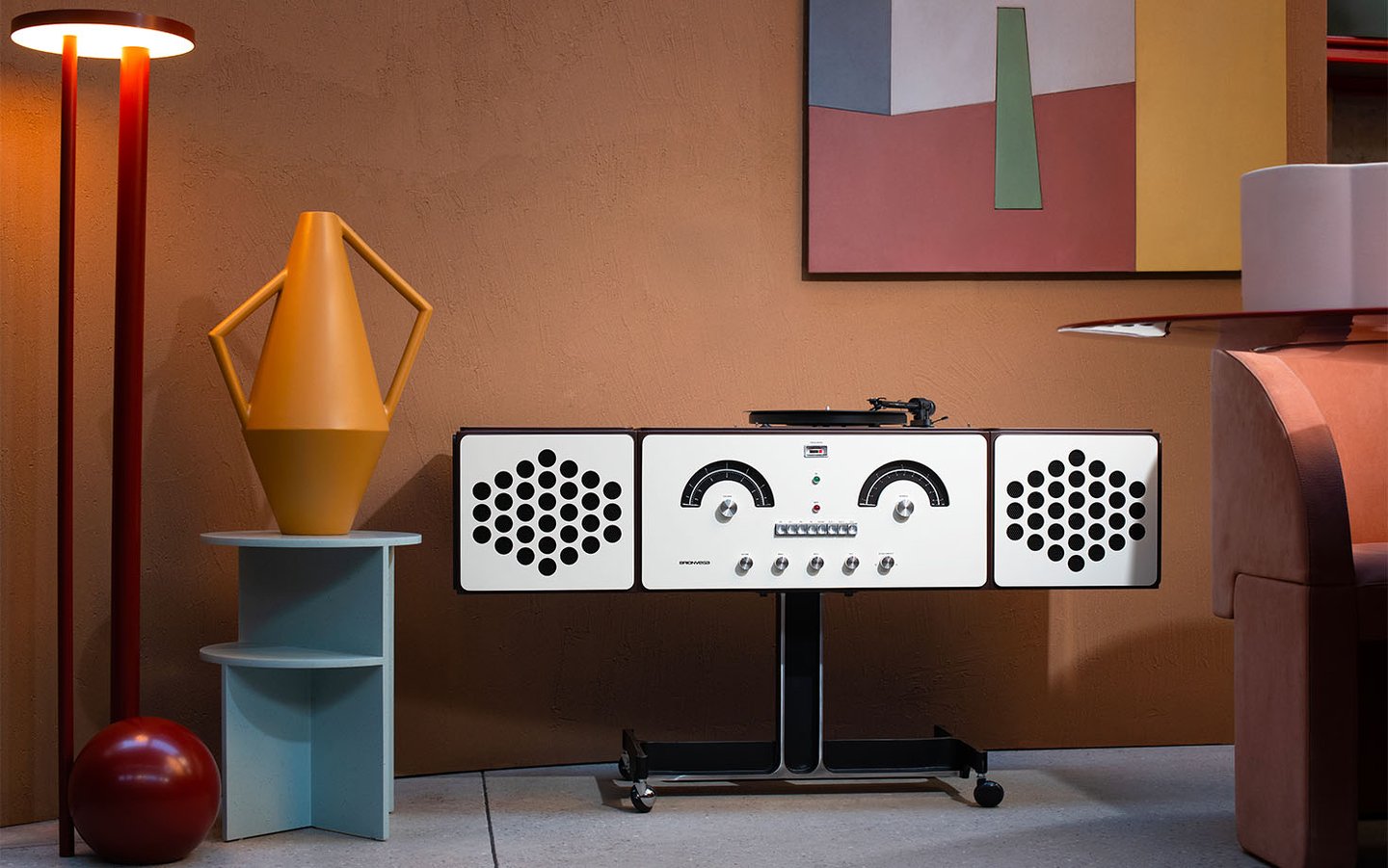
Bluetooth arrives through an external dongle. Brionvega includes that dongle with orders placed through its own website, and streaming plugs into the console rather than replacing anything inside it, and the 1965 architecture survives another format shift intact.
Wood does acoustic work here. Brionvega credits the cabinet’s timber and its sanding for the warm character of the sound. Two-way compression speakers carry that brief into rooms far larger than a typical 1965 apartment, and records sit at the center of the hierarchy, and radio fills the background hours. A phone joins through the dongle when the shelf runs dry.
Cast, milled and varnished by hand in Italy
Production mixes machine precision with bench work, and most electronics gave that mix up years ago. Buttons, potentiometers and the shells of the main body come off numerically controlled milling machines, and the pedestal follows a different route. Sand-casting and molding shape it as a single piece through five successive processes.
After machining, hands take over.
Artisans sand the wooden panels by hand, and components go together one by one at the bench, and the same hands finish the pedestal and apply the silk-screen printing. Every part of the console gets hand-varnished before a unit can leave, and the company’s sound professionals supervise the whole sequence.
Each unit ships with a certificate of quality and authenticity, and the certificate also confirms fidelity to the original project, and that pairing defines the trade at the center of the piece. Output stays small, and grain, finish and fit vary slightly from console to console. David Bowie kept a special version at home, and a stereo that behaves like furniture tends to get inherited, not replaced.
Five finishes and one green anniversary detour
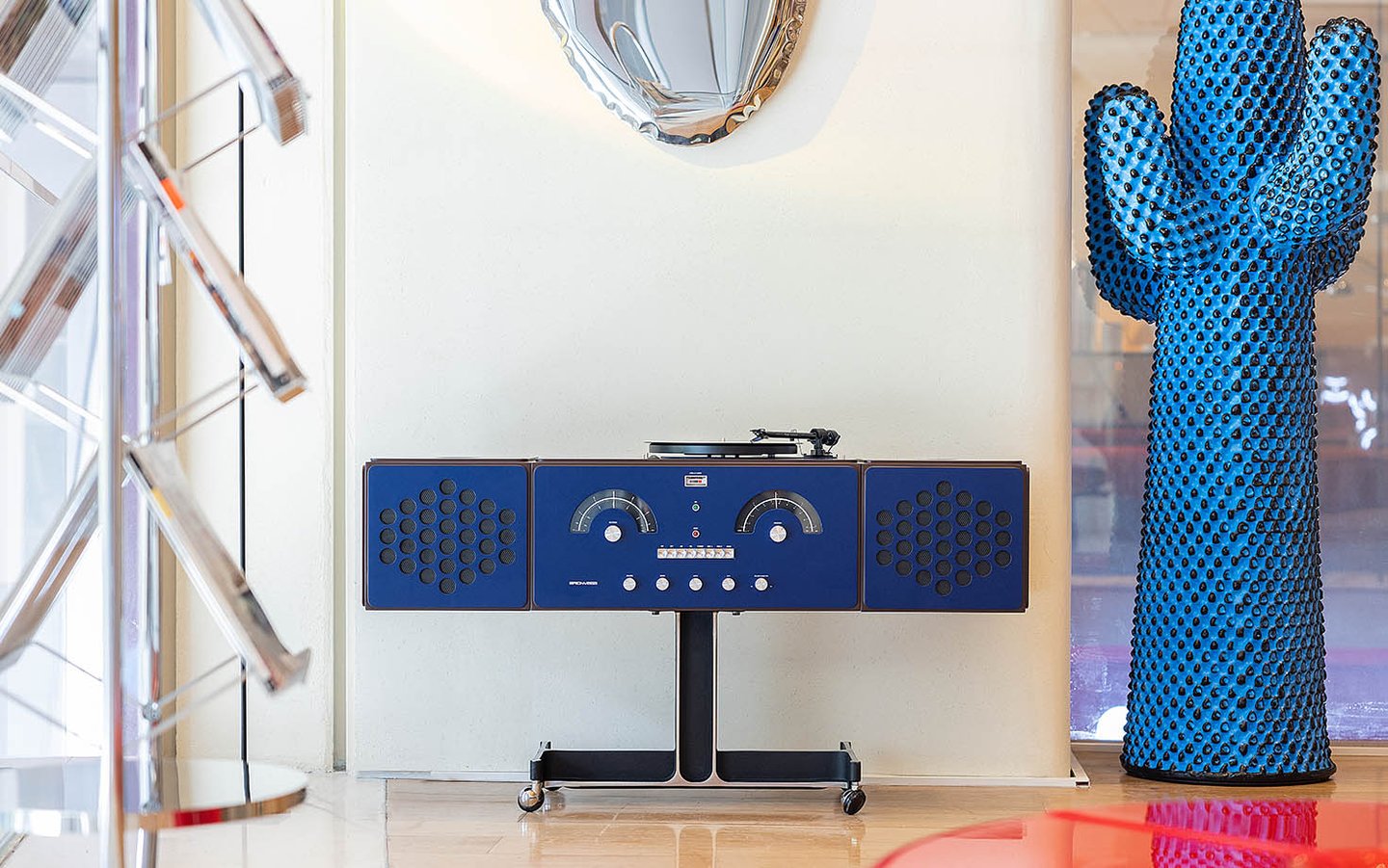
Standard finishes run to white, red, orange, blue and ciliegio.
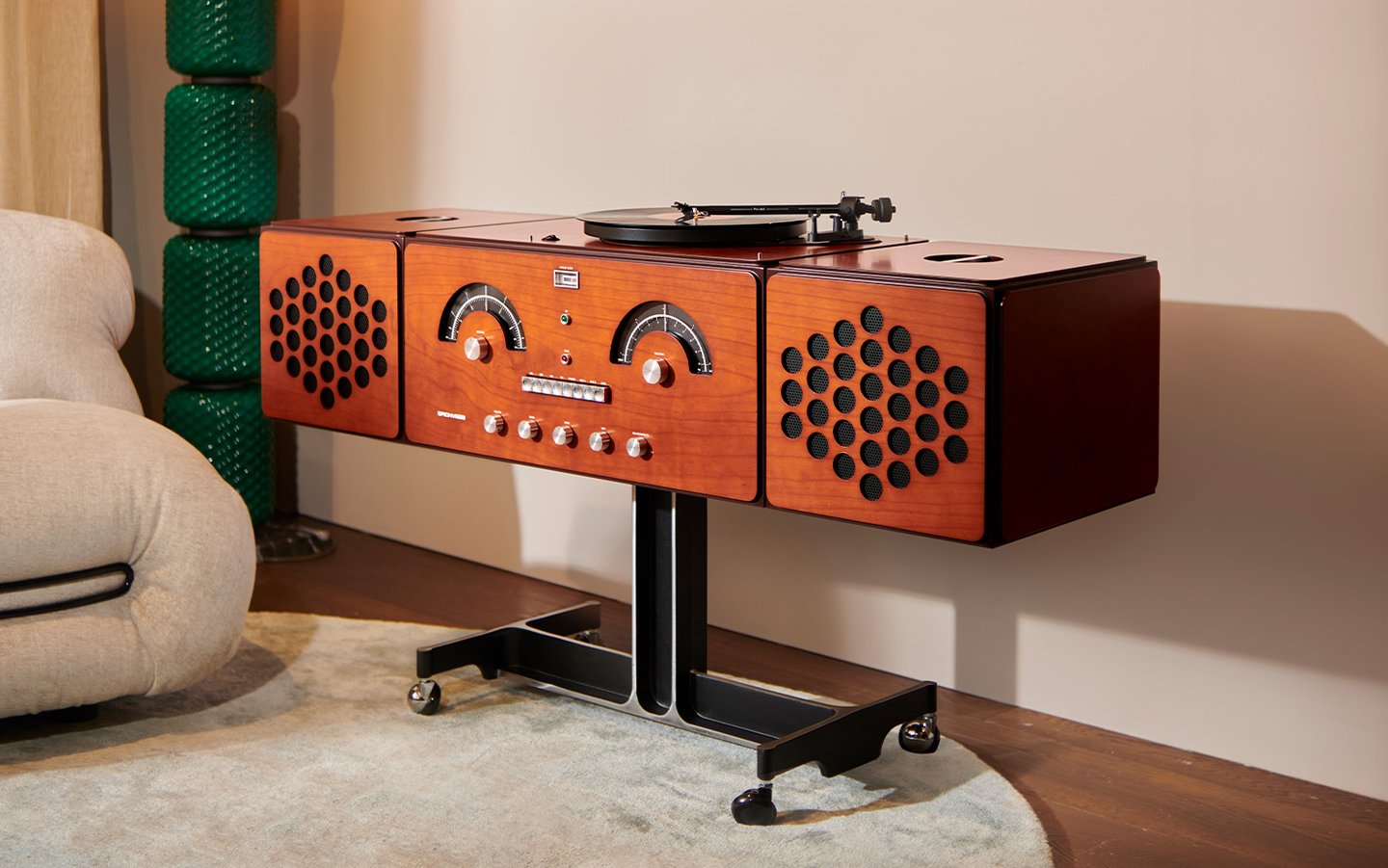
Lacquer choice changes the read of the whole object, and gallery white lets the silhouette carry the room, and blue leans closer to sculpture. The cherry tone warms the cabinet against pale walls and light floors.
For the design’s sixtieth year, a green anniversary edition joined the range in a numbered run. The edition extends the color story without touching the architecture underneath it, and the cabinet stayed put, and the pedestal stayed put. The speaker arrangement stayed exactly where the Castiglioni brothers left it in 1965.
Skip it if a soundbar already covers your listening. Buy the Radiofonografo at $18,000 in a standard finish if the living room needs one object with two jobs, and it plays records, and it also starts conversations. Nothing else on the market holds both jobs at once.
Ownership runs on ritual rather than convenience, and a record gets chosen, carried over and set down before the room hears anything. Castors, hinged speakers and a smiling panel turn that small ceremony into the reason for buying it, and streaming hides its machinery. This machine displays its machinery and asks the room to gather around it.


