

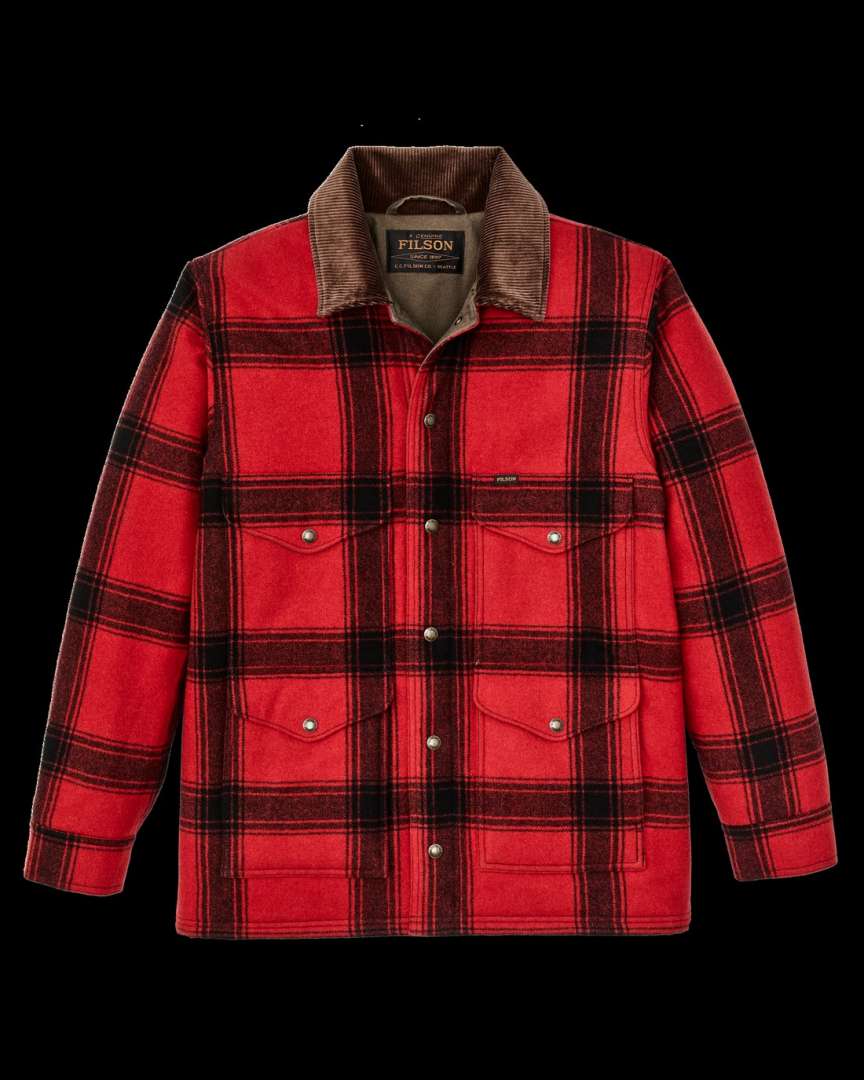
The Filson Spokane in the photo looks like vintage workwear, right down to the brown corduroy collar sitting square above four snapped flap pockets across the chest on a gray morning. It hides insulation inside.
That coat is the Filson Spokane Insulated Cruiser Jacket, built on the Cruiser pattern Filson patented in 1914 for timber cruisers working cold wet woods. The pattern stayed famous. Crews lived in wool shells like this one through long wet seasons, layered over shirts and sweaters, and the shape barely changed for a century of hard use in the woods.
Gadgeteer covered the Spokane sale first, with the full sale details laid out. The design story under that cut deserves a slower look.
Three layers where the original carried one
The shell is an 8 oz wool blend, 80% wool and 20% nylon, dense and scratchy in the hand like proper workwear should feel. The nylon adds toughness. Longtime Filson fans expect exactly that rough feel, since the brand built its name on fabrics that shrug off brush, bark and rough daily use outdoors today. Under the shell sits a lightweight polyester insulation layer that holds heat without puffing the coat into a ski jacket silhouette.
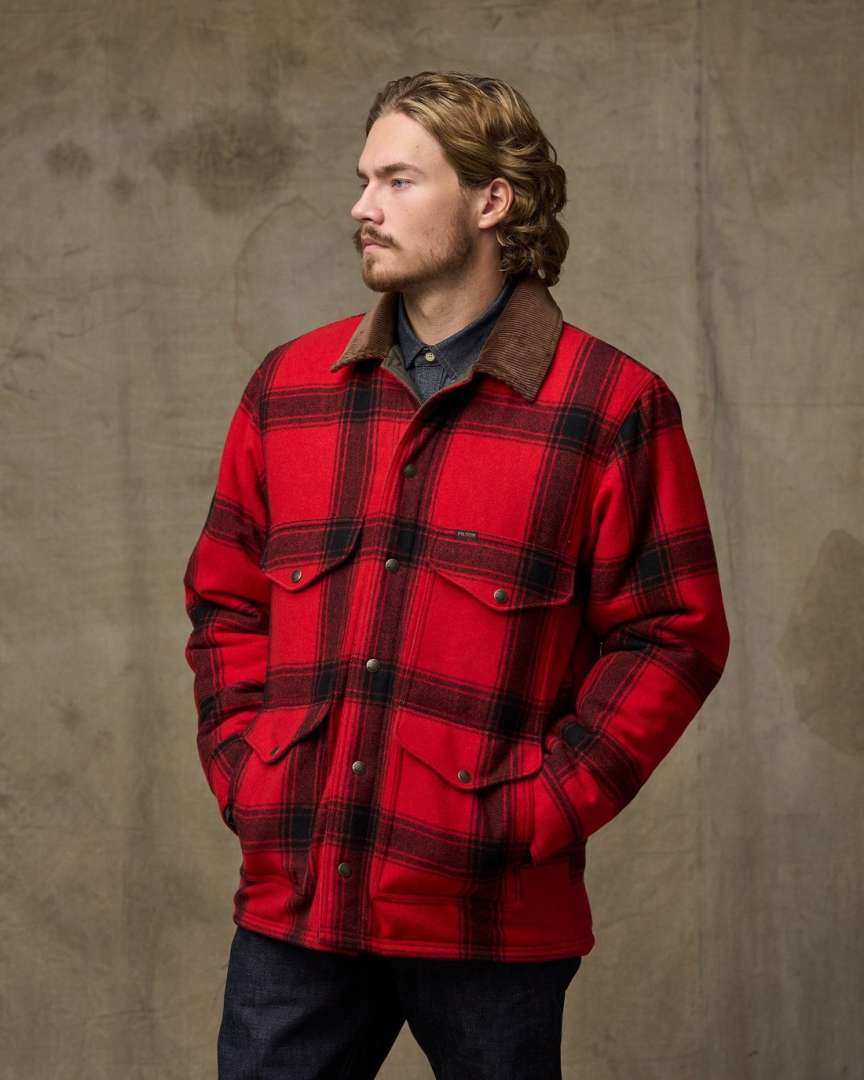
It dries quickly too. A damp coat hung up overnight feels dry again by morning, ready for another gray commute across town. That speed counts after a wet walk home through steady rain, when tomorrow starts early and the coat needs to work again without any fuss at all.
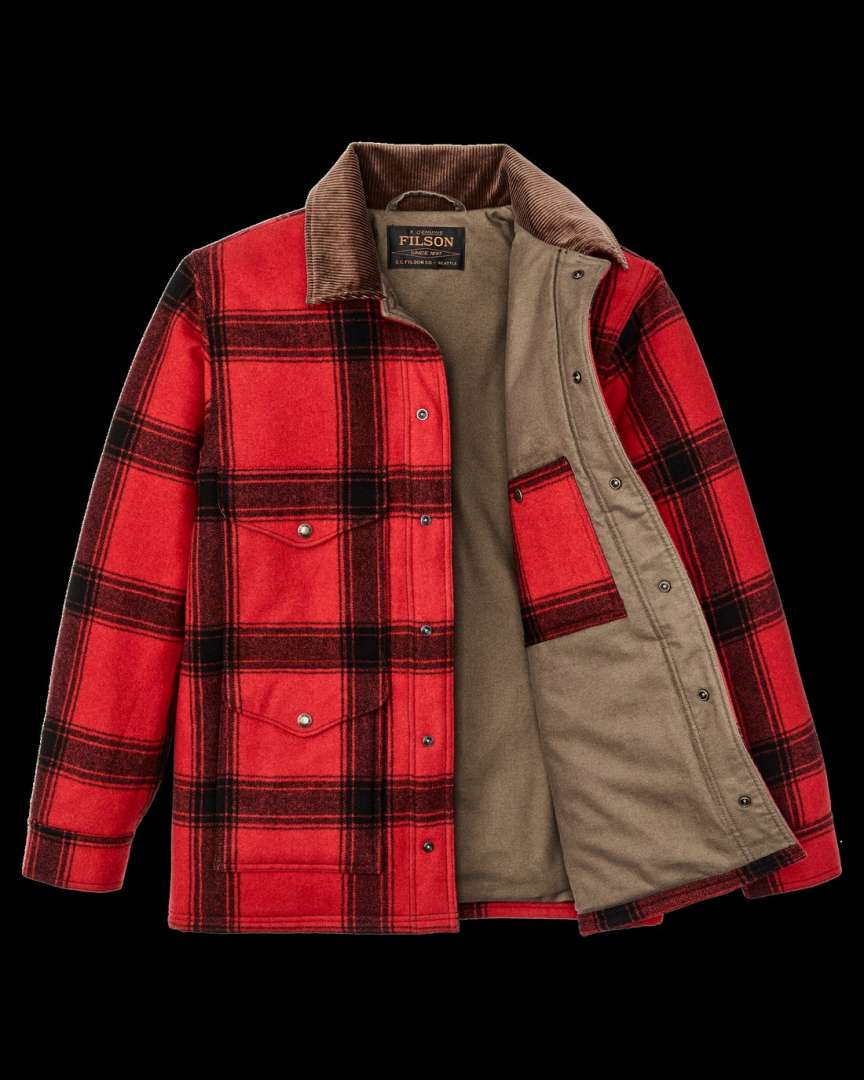
The torso lining is Alaskan Guide flannel, a brushed cotton Filson used on shirts for more than 30 years, soft against a tee or a thin thermal layer underneath. Sleeves get smooth polyester instead, so a hoodie slides through without bunching at the elbows during a rushed morning out the door. The scratchy wool never touches skin anywhere. That small comfort decision shows up every single time the coat goes on.
I like the restraint here. Nothing reads like a tech jacket chasing trends, and every added layer solves a plain cold weather problem the original pattern left to extra sweaters, guesswork and tolerance on site.
Pockets that still think like a work coat
Four flapped pockets run down the front, two at the chest and two at the waist, each closing with its own snap for small gear. An interior chest pocket hides against the flannel lining, tucked where a phone stays warmer through a long cold walk across town. Brown cotton corduroy trims the collar and cuffs, warming the red plaid without softening the work coat attitude that made the Cruiser famous at all.
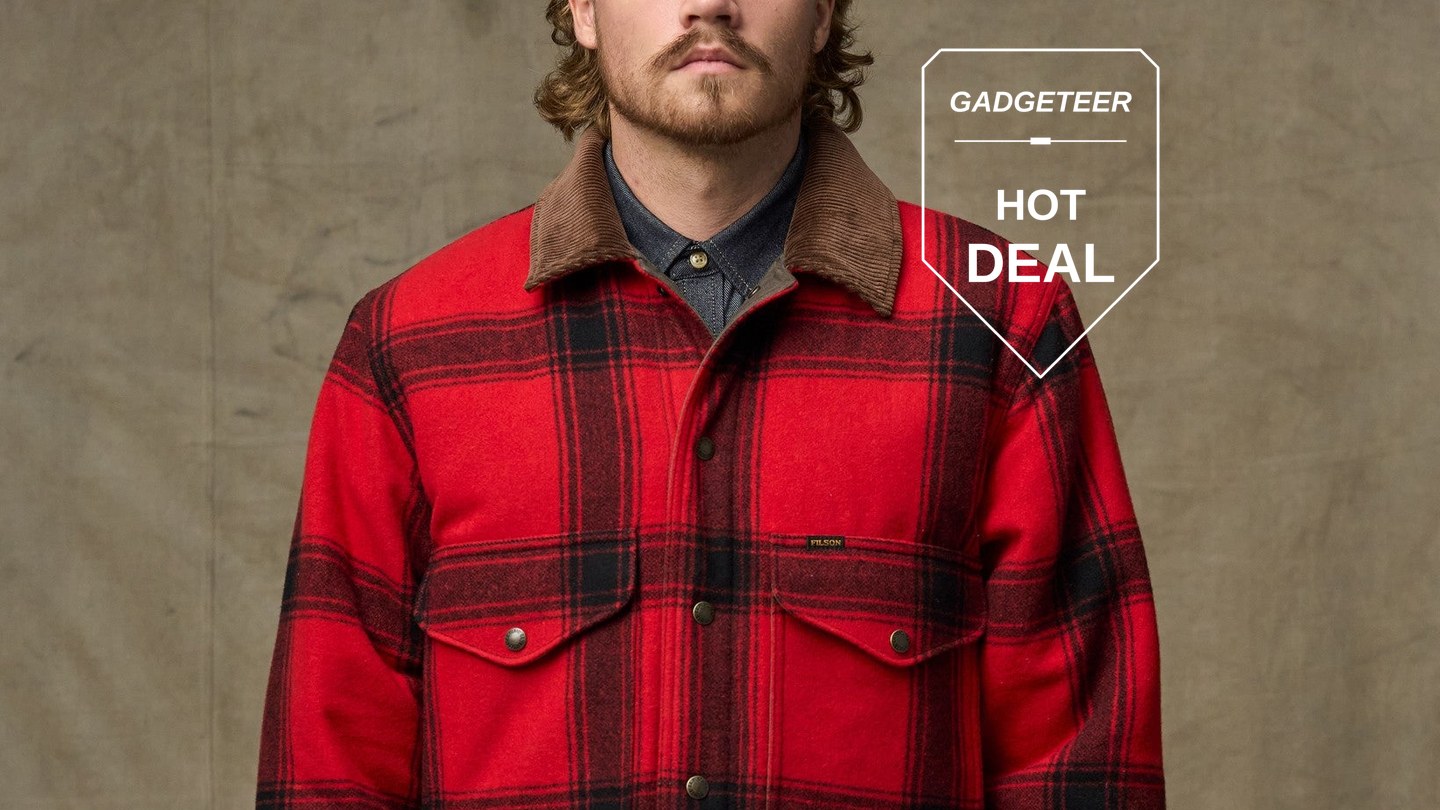
The front snaps shut too, and the bottom pockets open at the side as well for cold hands. That side opening is the detail you notice first once temperatures drop below freezing on a weekday commute across town.
Snaps win with gloves. The old back map pocket from the 1914 original is gone, traded for a cleaner back panel. That trade suits city wear. Few commuters carry paper maps, and the back keeps the plaid unbroken.
The price, the sizes and the one catch
At Filson, the Red Black Windowpane colorway runs $224.50 against a $449 list price, exactly half off the regular tag. Charcoal Ombre costs the same.
That money buys a wool shell, real insulation and flannel lining. Sizes still on the rack. XS, S, M and XL remain, while L, 2XL and 3XL are gone.
Sizes moved fast here. The catch is dry clean only care, a real cost that adds up over years for anyone used to tossing jackets into a home wash cycle after muddy weekends in the yard.
This one’s for anyone who loves the Cruiser look and wants real warmth built behind the wool, without stacking a second coat underneath it. I’d pick red plaid first. It’s the deepest cut on the board and it photographs like a vintage find from a thrift rack downtown. Budget for the dry cleaning like boot resoling, planned and occasional, and the 1914 pattern finally works as a true winter coat for daily wear.

