

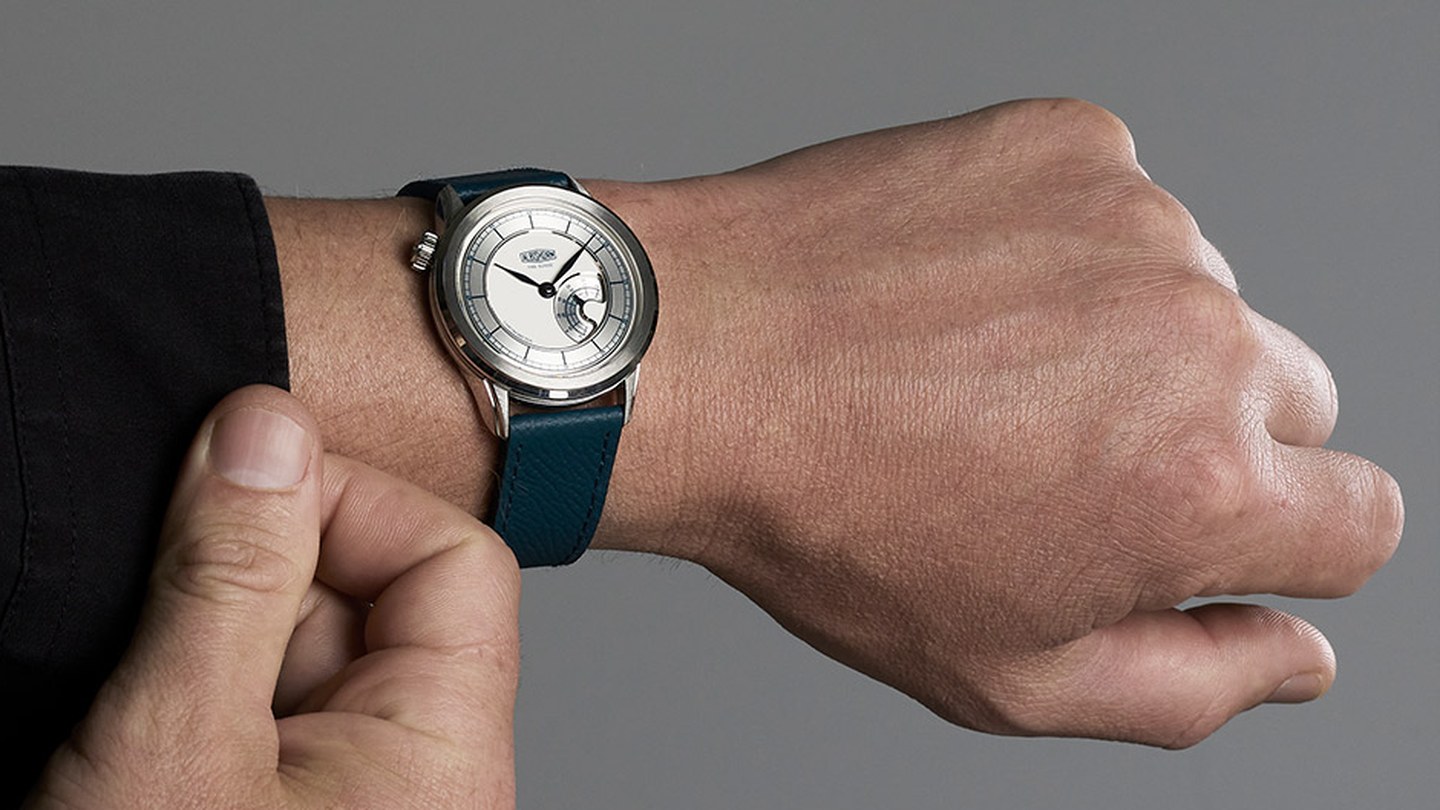
Most vintage-inspired watches copy a real watch from the past, then spend their marketing explaining the connection. Albishorn skips that step entirely. The Swiss brand invents the past instead, designing watches that could have existed but never did, complete with imaginary owners and imaginary briefs. The Voisin Aérosport is its first dress watch: a 38 mm hand-wound chronometer imagined as a commission for Gabriel Voisin, aviation pioneer turned car designer.
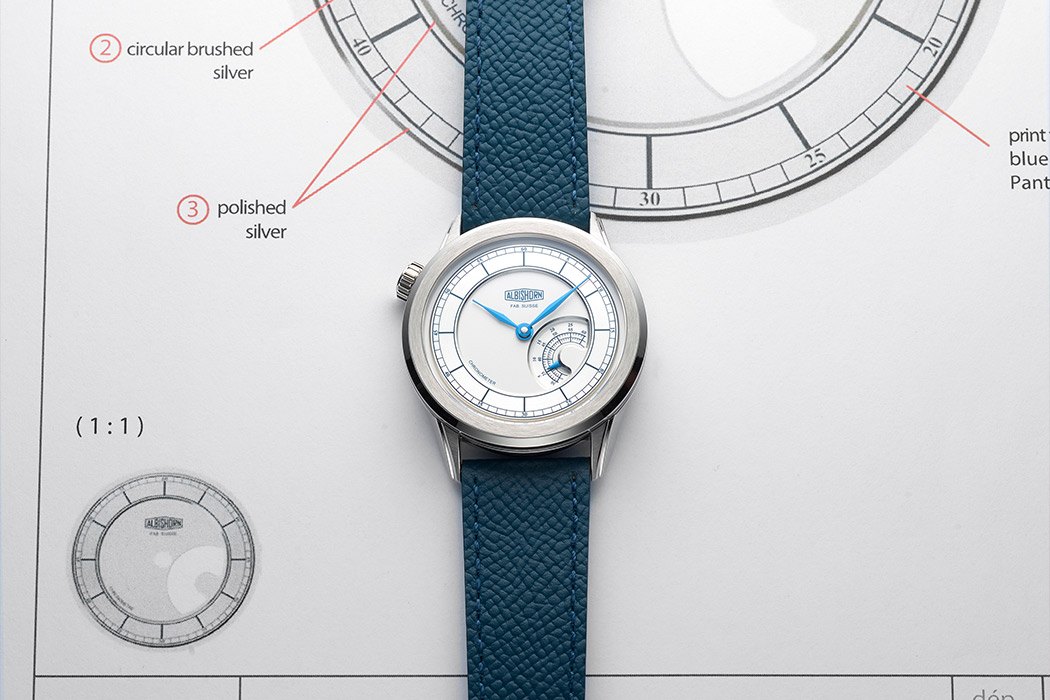
Nothing about it is a reissue, because there’s simply nothing to reissue. What you get instead, in their place, is a three-layer sector dial under anti-reflective sapphire, a stepped steel case built from contrasting finishes. A crown parked at ten o’clock, where no crown belongs, and a choice of two dial colours completes it. Production runs to 99 pieces per colour, each hand-wound and COSC-certified, sold only through Albishorn’s own site at $4,204.
A commission from a man who never placed it
Gabriel Voisin started with gliders in 1903, then built aircraft with his brother Charles. In January 1908, Henri Farman flew a one-kilometre closed circuit at Issy-les-Moulineaux in a Voisin biplane, winning the Deutsch-Archdeacon prize. Charles died in a car accident in 1912. Gabriel kept building planes through the First World War, then turned the same engineering brain to cars.
The Avions Voisin cars were unlike anything else on French roads. The C28 Aérosport pushed that thinking furthest.
The conceit is simple and wonderful: what would a watch from that world look like, if Voisin had ordered one for himself? So the brand designed the watch he never commissioned. No car shapes pasted onto the dial, no steering-wheel rotors, nothing literal. The watch borrows the culture: geometry, proportion, and structure doing the decorating, a very Art Deco way to think.
The dial is built in storeys
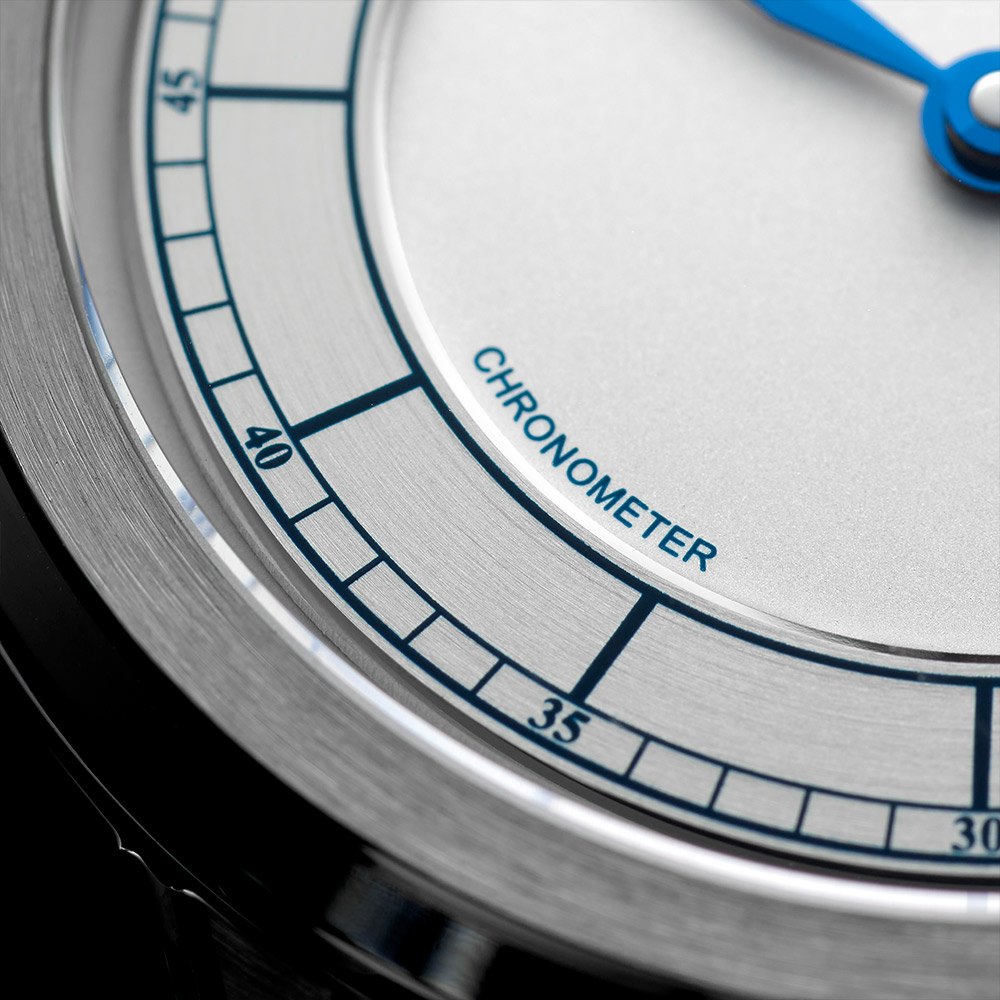
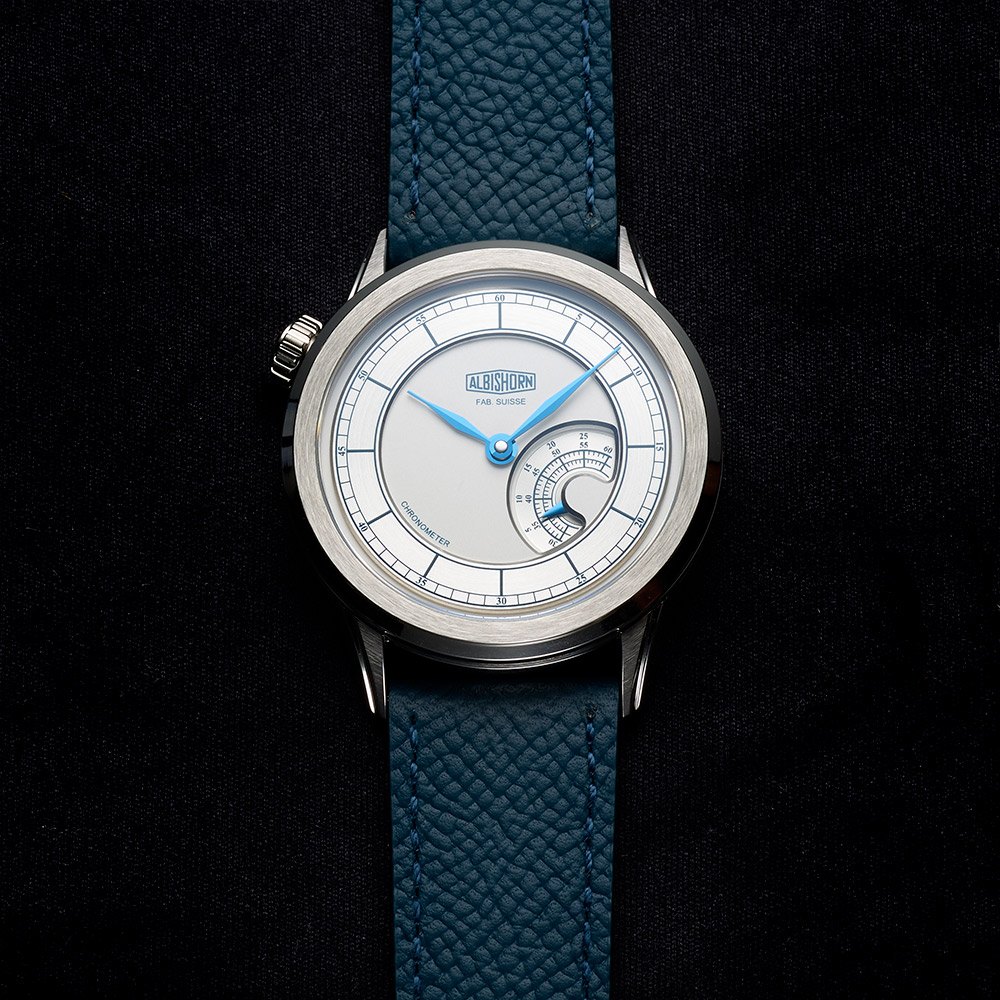
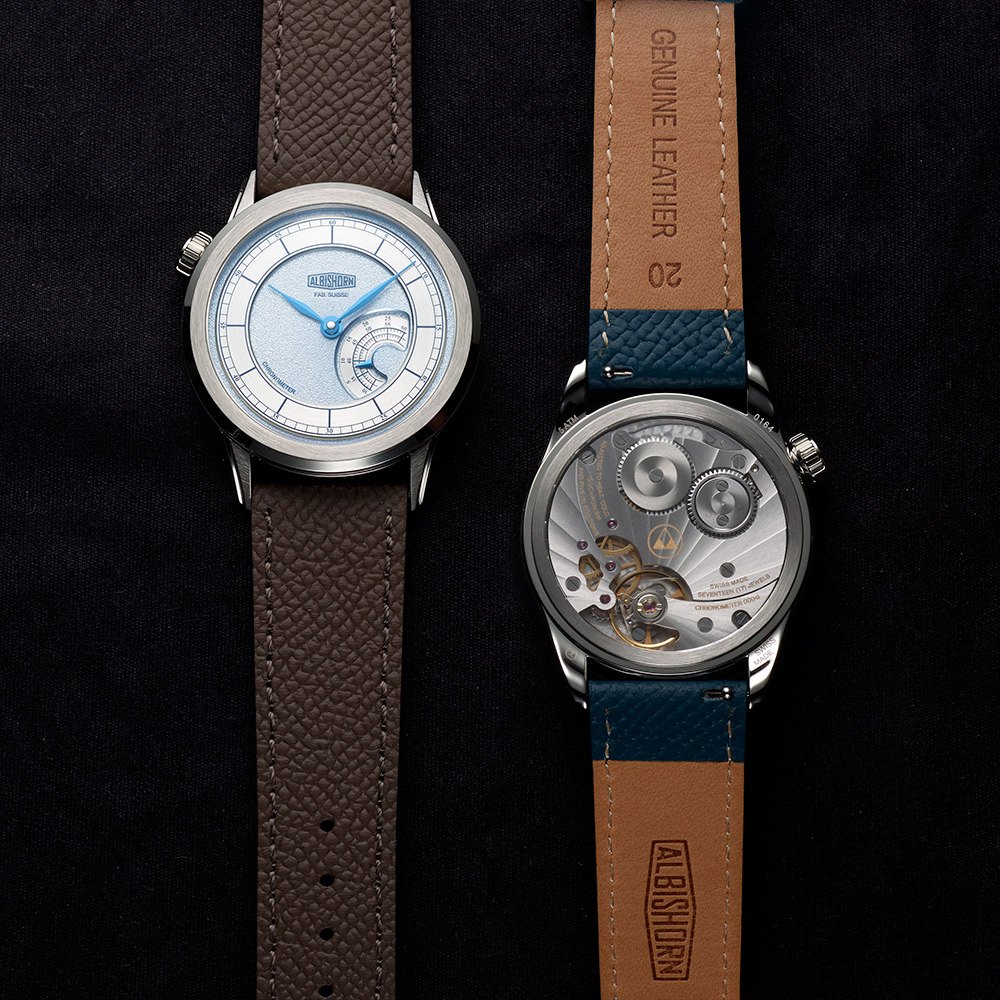
Look at the face from an angle and the construction shows itself, because the dial is a small building. It stacks three elements. A satin-brushed chapter ring with polished edges carries the hours and minutes. Below it sits the main dial in silver opaline. Lowest of all, a snailed sector at four o’clock runs the seconds across a 180-degree scale, sunk into its own well.
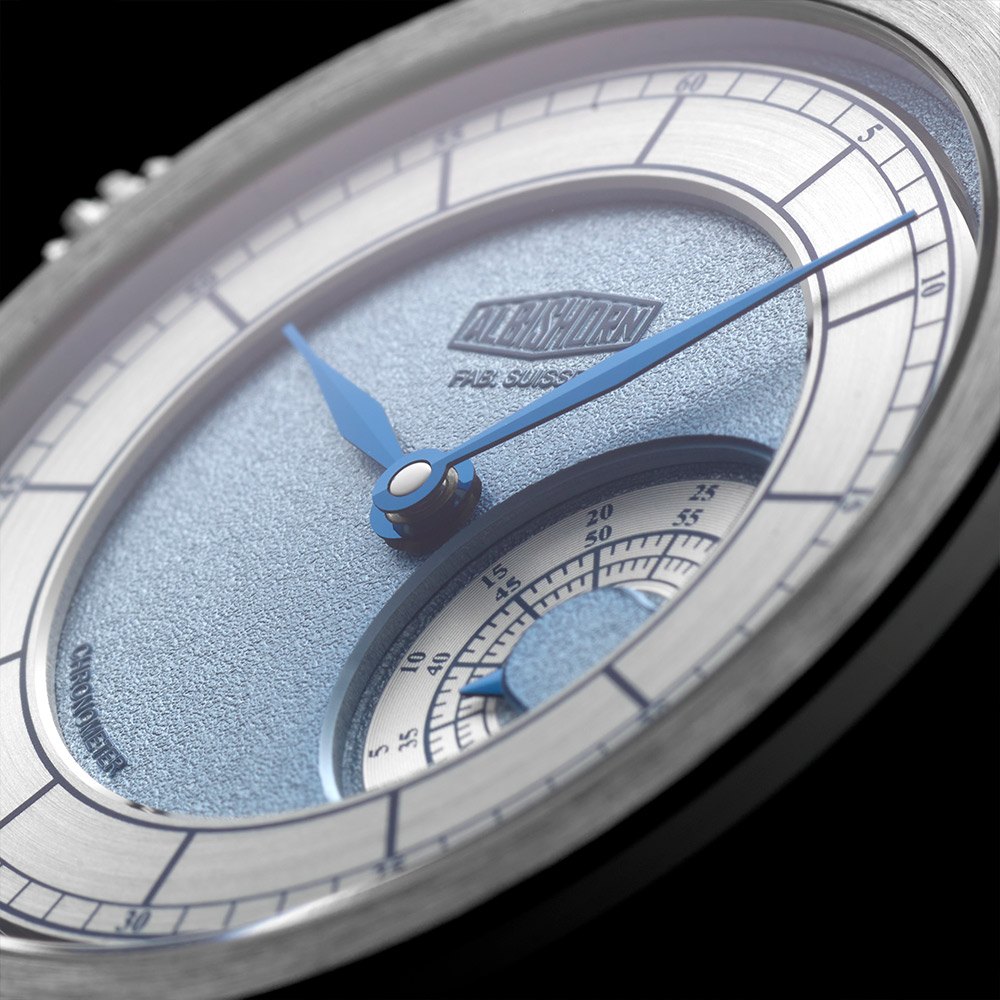
The blued hands sweep over blue printing, and the seconds get a sunken room of their own instead of a printed subdial. Clean from across a room. Better up close.
Both sapphires, front and back, carry anti-reflective coating in multiple layers, the front crystal on both of its sides, so the levels stay visible instead of washing out behind reflections. Albishorn says the crystal nearly disappears.
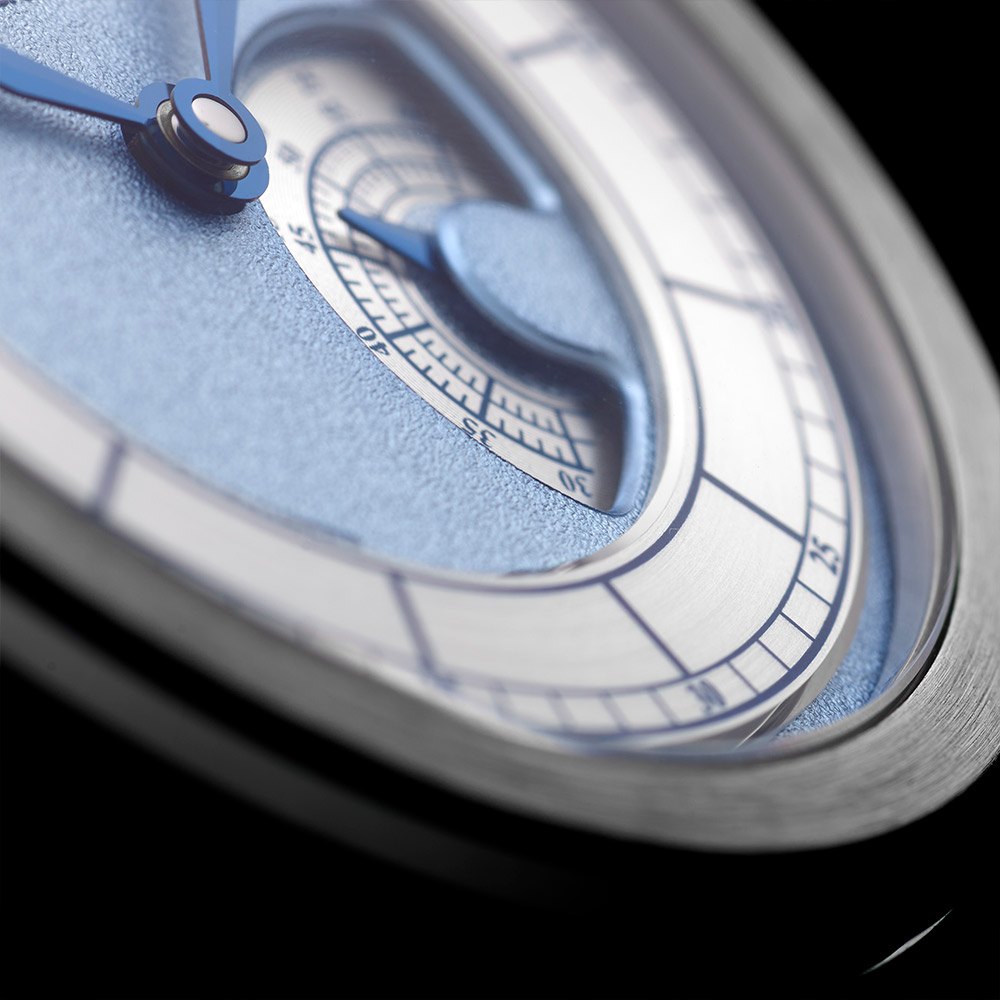
A case built from steps
The case follows the same architectural logic, and it’s where the budget visibly went. The bezel steps down in two levels, its upper surface circular-grained, the lower step angled and mirror-polished. A circular-grained ring interrupts the caseband. The lugs step twice as well, with satin finishing across their tops. Add chamfered, polished edges everywhere the case changes direction, and the whole 38 mm adds up to one stacked composition.
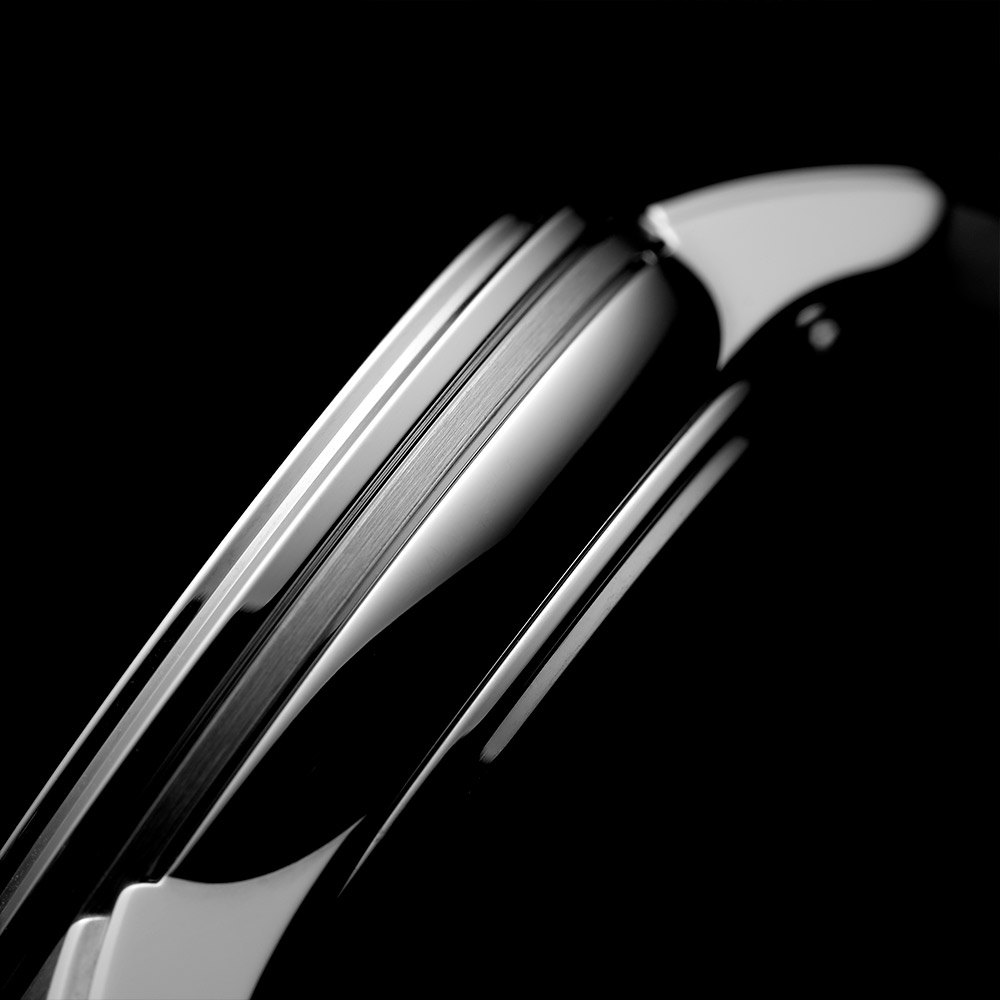
Then there’s the crown, at ten o’clock, where no crown is supposed to sit. It breaks the watch’s symmetry on purpose.
On a watch this classical, that single odd decision is the detail people ask about first. The dimensions underneath stay period-correct: 38 mm across, 45.2 mm lug to lug, 20 mm between the lugs, 9.6 mm thick including the sapphires, and 50 metres of water resistance. It wears like a vintage dress watch because it’s sized like one, slim enough to slide under a cuff. That is 1930s sizing kept true, not theatre.
Silver opaline, or ice blue
The Classic keeps the original scheme, and it’s the formal one: a silver opaline centre with blue printing and blued hands. The layout reads almost like a 1930s instrument dial that wandered onto a wrist. It sits happily with a cuff and a jacket, then rewards a second look with all that layered construction hiding under the calm surface. If the imaginary brief appeals most, this is the colour to pick.
The Ice Blue swaps that centre for a grained, frozen blue, and the watch’s whole temperature changes with it. Same layout, different mood.
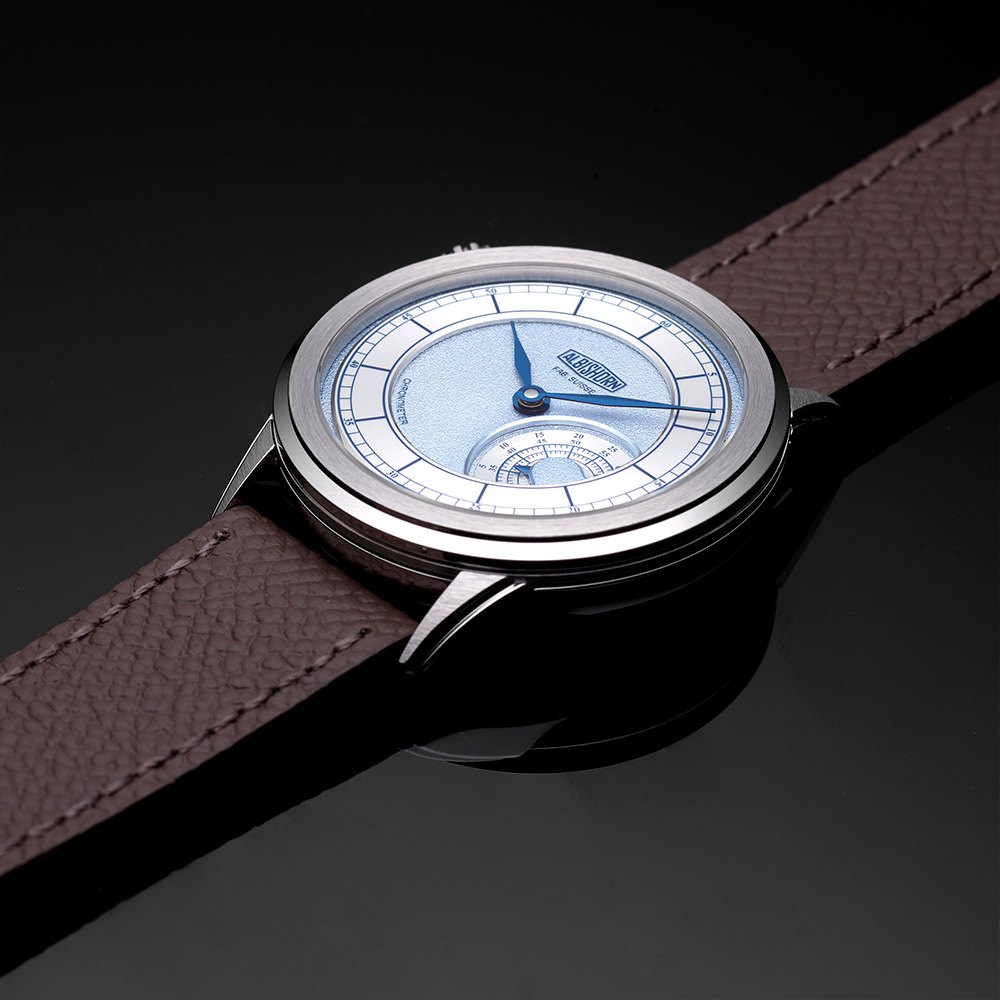
Both versions ship with two calf leather straps, in petrol blue and taupe, on signed buckles. The straps count for more than usual here: they change the watch’s personality. The taupe warms everything up and leans vintage, while the petrol blue leans into the aviation story. Two straps, two moods, and the watch wears differently on each.
Wound by hand, finished where nobody looks
Inside is the ALB04 M, a hand-wound calibre Albishorn developed with Manufacture AMT around this exact dial layout, which is why the seconds could live at four o’clock in their own sector. It measures a full 30 mm across, beats at 4 Hz, and runs for roughly 60 hours on a wind. A stop-seconds device lets you set it precisely, and the whole movement is COSC-certified. The balance sits exposed at the back.
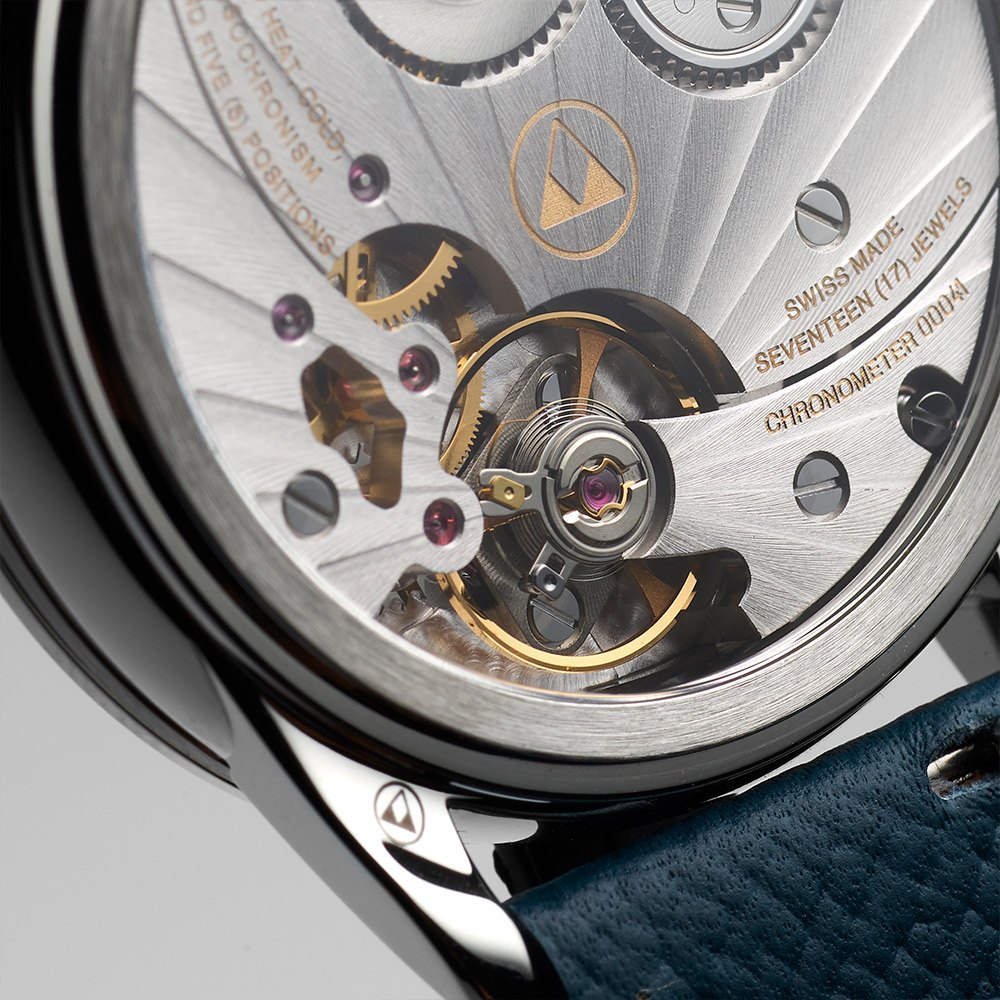
Flip it over, though, and the finishing backs the price up. Winding it each morning is part of the concept, a daily interaction with a mechanical object, the way its imaginary owner would have known it.
Radiating Côtes de Genève cross the bridges, and the winding wheels carry double colimaçon. The mainplate wears perlage even in the areas hidden beneath the dial, the sort of invisible effort you either respect immediately or not at all. Polished screw heads, gold-toned engraving, and the exposed balance finish the view.
Retro watches usually ask you to admire a copy. This one asks you to play along with an invention, and the build quality makes the game easy to join. At $4,204, ordered from Albishorn, it suits anyone who wants the vintage dress-watch feeling without the vintage watch gamble. Three years of production for 198 watches total means most people reading this will never see one in the metal, which is part of the appeal and part of the frustration.
My pick is the Ice Blue on taupe, crown at ten, seconds in their own little sector. Strange, thoughtful, capped at 99 per colour.

