

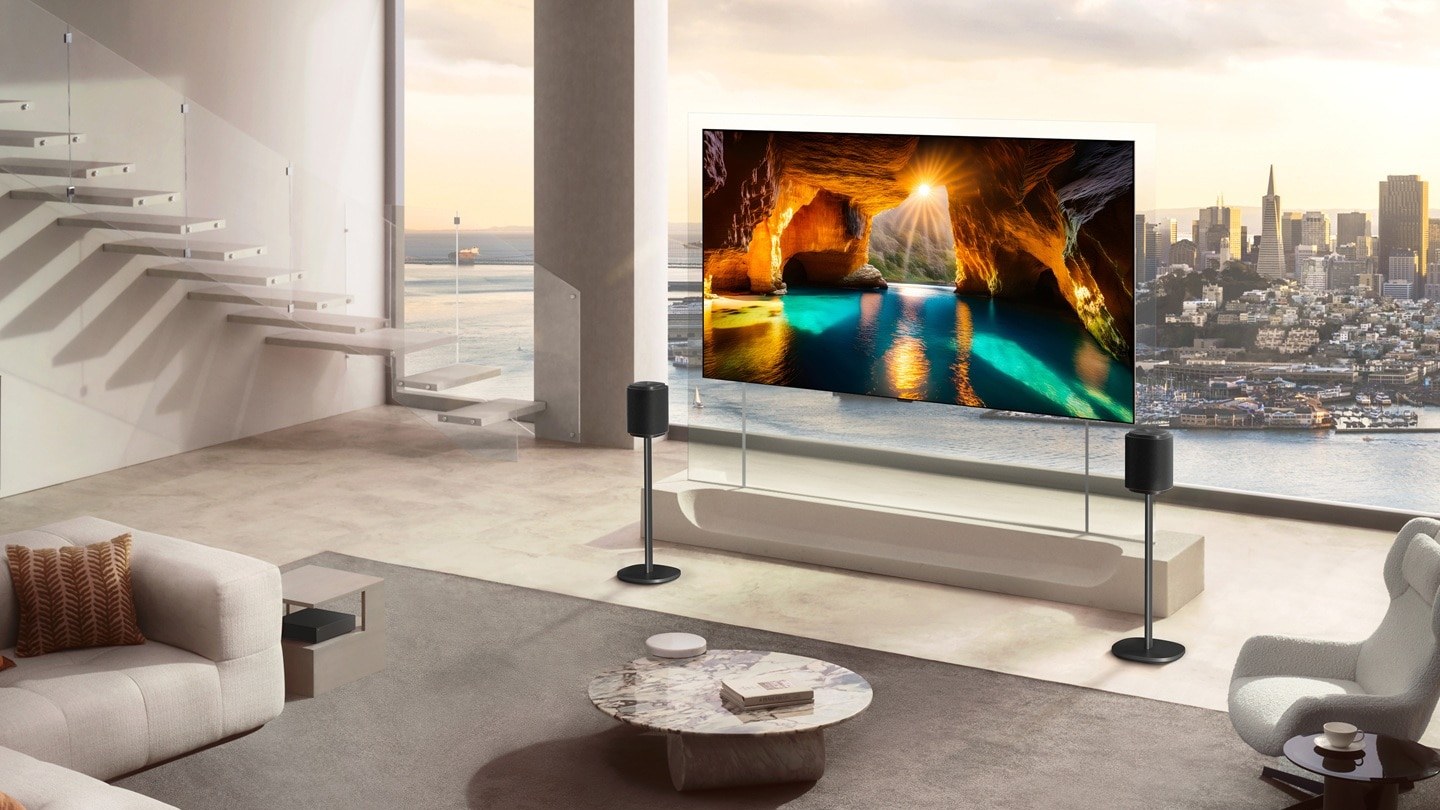
Most TVs walk into a room and start negotiating. They want a console beneath them, a soundbar in front of them, a shallow trench of cable managed into submission behind them, and a wall chosen for its proximity to the equipment rack rather than its light. LG’s Wallpaper line has spent a decade refusing that negotiation outright, and the newest entry, the LG OLED evo AI W7, just collected a CES 2027 Innovation Award in Video Displays for the refusal.
The award is the headline, but the design is the story: a next-generation wireless Wallpaper TV, slimmed across every component it carries, built to sit on a wall so quietly that the room gets to be the room again.
Three generations into the same argument, the brief has only sharpened.
A screen that behaves like a wall finish
LG applied its ultra-slim technology to every component this time: the panel, the main board and, most tellingly, the speakers. Speakers are where thin televisions usually cheat. The sound gets pushed into a separate bar parked under the screen, and the furniture plan quietly absorbs the compromise, one more object to arrange a room around. Slim the speakers into the panel’s own depth and that object disappears too. What’s left is a single flat plane against the wall, with nothing hanging off it and nothing stacked beneath it.
Architects obsess over what a surface shows and what it hides. A conventional TV shows everything: its depth, its vents, the footprint of its stand worn into the credenza. The W7 is designed to blend into the space where it’s installed, which is the polite phrasing of a better idea.
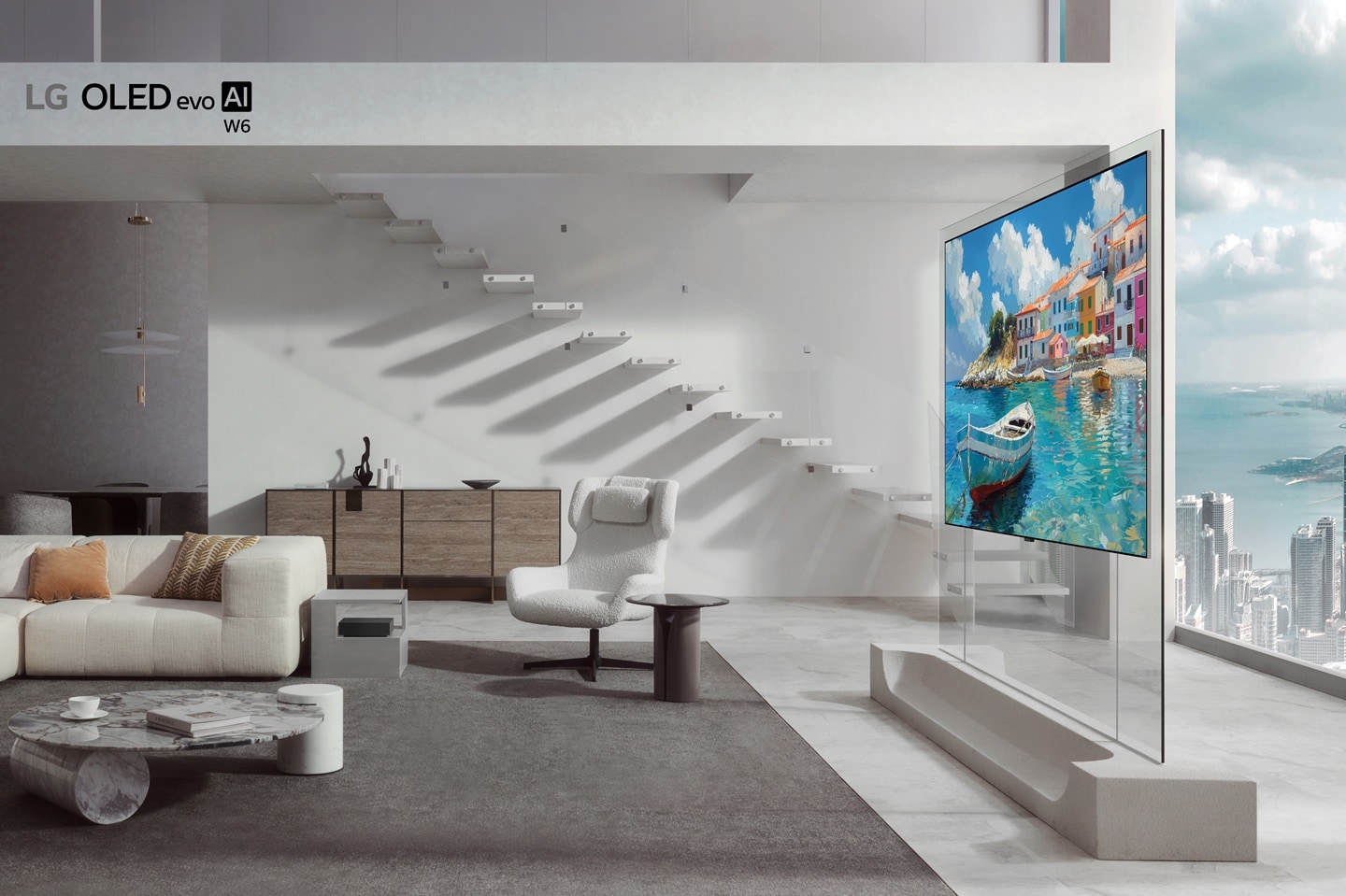
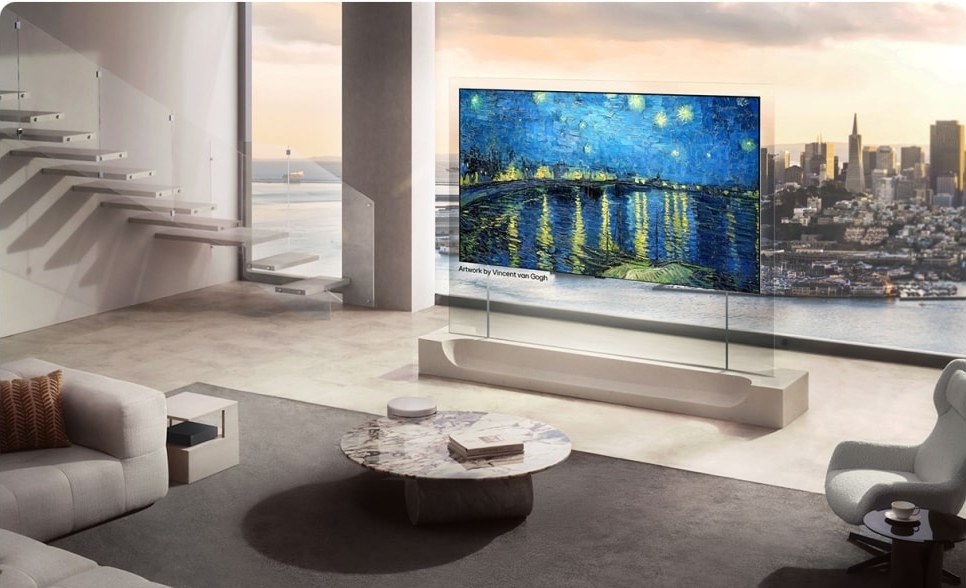
Off, it’s a finish. On, it’s a picture. Nothing in between asks for your attention.
The box leaves, and the room opens up
Every connection lives in a separate Zero Connect box, and the link between that box and the screen is wireless. LG says the system transmits video and audio without loss or delay, and its own lab testing rates the picture as visually lossless. Your players, consoles and streamers plug into the box, the way sources always have. The box itself sits wherever boxes belong: inside a cabinet, on a shelf, across the room, out of the composition entirely.
Because the screen carries no inputs of its own, it also carries no obligations. No port dictates its height, no cable dictates its wall, and no installer has to thread a bundle of HDMI through your plaster to reach it.
So the TV wall stops being the wall nearest the rack. It becomes the wall with the right light, the right sightlines, the one the architect wanted from the start.
What we don’t have yet is the install math. LG is holding the W7’s sizes, panel depth and pricing until January 4, and those are the numbers that decide which walls it can truly take over, and what it will cost to do it. One limit is already visible, though. The wireless link covers picture and sound between the box and the screen, and the panel still needs its power. Even a disappearing act has a plug.
Ten years of chasing the disappearing TV
LG introduced the Wallpaper design in 2017, a panel so thin it mounted nearly flush and looked like a poster that happened to play video. It was the rare television people photographed from the side, just to prove the profile was real. Then the line went quiet, the way concept-flagships do, before returning at CES 2026 as the W6: nine millimeters thin in class terms, and carrying the wireless connection box the original never had. The W7 is the third pass at the same idea, and the most conservative one. It changes the least about the silhouette, because the silhouette was never the problem.
Each pass removes something. 2017 removed the depth. 2026 removed the cable. The W7 works on the one component you can’t slim with a better hinge: LG’s latest agentic AI runs inside it, built to understand what you need and shape the experience around it. The intelligence went into the software, because the hardware had nowhere left to hide it.
Where it goes from here
The W7 steps out in public at CES 2027 in Las Vegas this January, with full details landing January 4, days before the show opens.
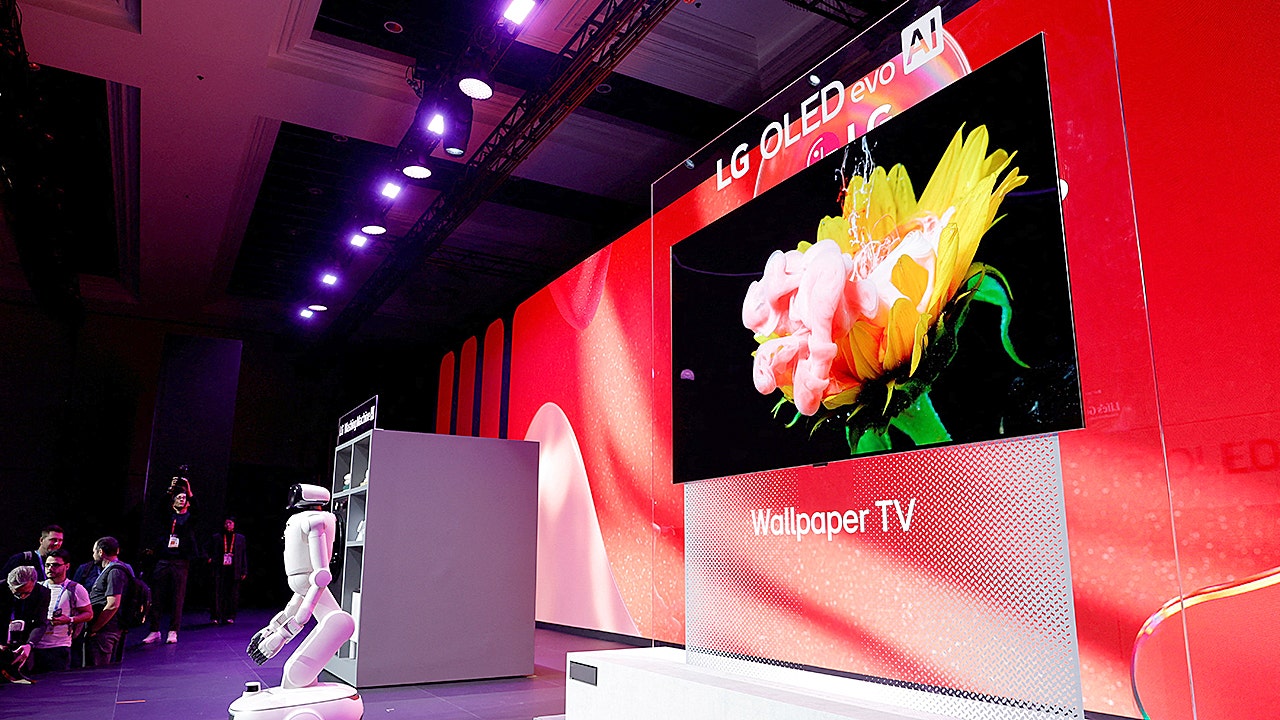
It arrives in strong company: LG’s transparent SIGNATURE OLED T6 took Best of Innovation in Art Tech, the fifth straight year an LG OLED has carried the program’s top honor. I’ll judge the W7 by how the room feels at seven in the morning, screen off.

Editor’s take
Here’s my read on the Wallpaper idea after a decade of watching it evolve: it’s the only television designed by subtraction, and subtraction is the hardest discipline in any room I’ve ever worked on. Adding is easy. Any manufacturer can bolt on a feature, a mode, a brighter number for the box. LG keeps taking things away instead (depth, then cables, then presence itself) and asking whether what remains is better. Mostly, what remains is better.
A wall that goes back to being a wall is worth more to a home than a brighter spec sheet, and if the W7’s AI learns to stay as quiet as its panel does, this is the first TV I’d specify the way I’d specify a finish, not an appliance.

