

Noble Audio’s Paladin is a $3,500 in-ear monitor that dresses its twelve drivers in silver chainmail. The resin shells carry a woven finish modeled on interlocking rings, and the tuning underneath aims at neutral rather than spectacle.
Armor first, then the drivers
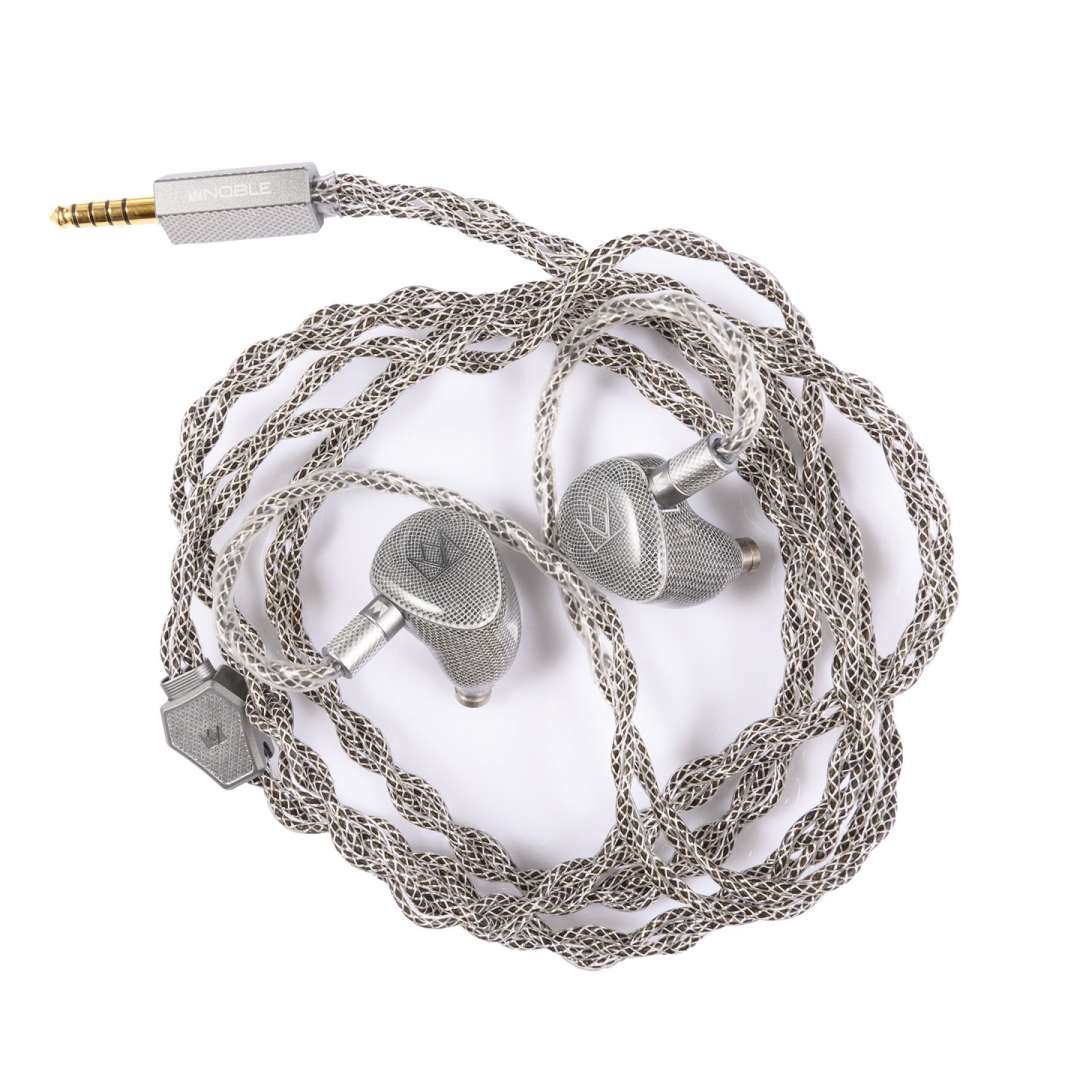
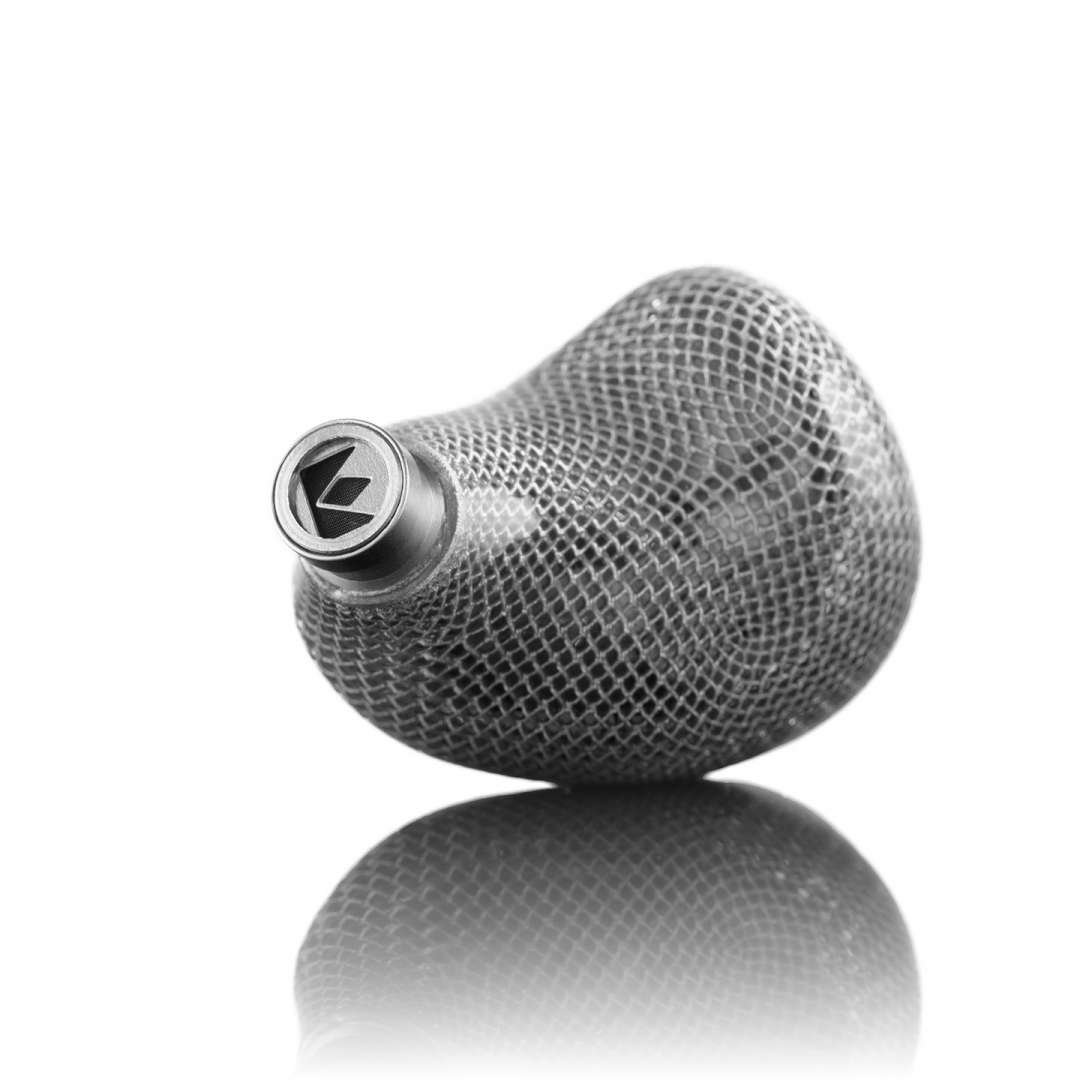
The weave runs across the faceplates and around the curves of the shell, so the pattern holds from every angle a listener picks the earpieces up. The Noble emblem sits at the center of each faceplate, set into the silver like a crest on a shield. It looks like jewelry. Most flagship IEMs ship in plain black resin, and Paladin’s finish moves it into display territory before a note plays, while the name reaches back to the armored champions of medieval legend. Noble previewed the design at CanJam Dallas, and the production shells keep the weave fine enough to read as fabric at a distance.
Noble built its name on handcrafted customs and faceplates cut from materials most makers won’t touch, and the weave continues that line in a metal register. Buyers in this tier expect the object to hold up its end of the price before the music starts, and Noble has always sold to that expectation.
Three driver families, one crossover
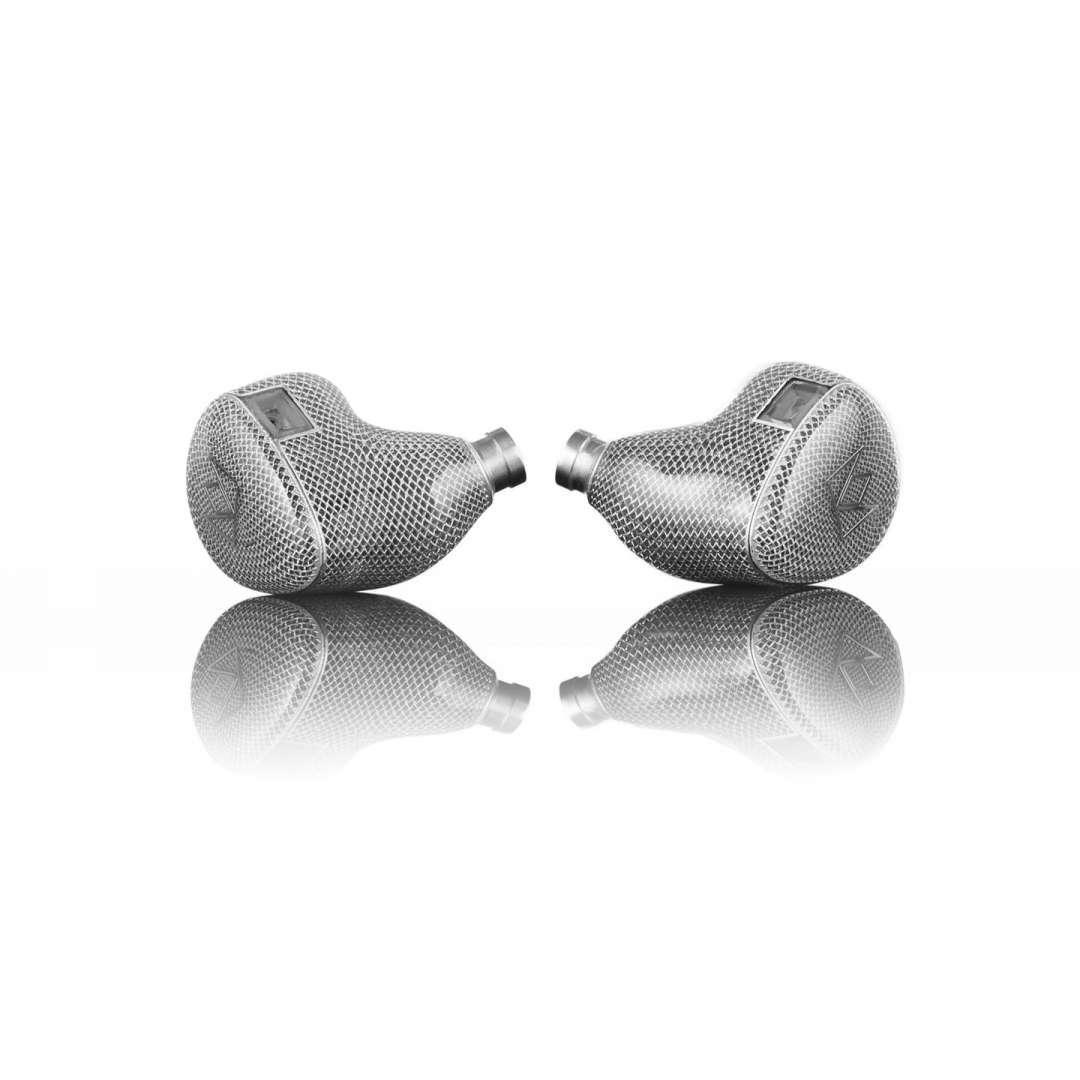
Each earpiece holds eight balanced armature drivers, two Sonion bone-conduction drivers and two Super-Magnetic planar drivers, twelve in total. Three technologies share the work. A multi-way passive crossover divides the range among the three families, handing the armatures the mids and highs they handle fastest, while the planar pair takes its own slice of the top end. The bone-conduction pair works against the ear itself, adding physical weight to the low end that air-conducted drivers alone don’t produce. Noble rates the response at 12 Hz to 45 kHz, with impedance of 21 ohms and sensitivity of 117 dB SPL/mW, so a phone dongle drives Paladin as easily as a desktop amp.
Bone conduction usually belongs to sport headphones that leave the canal open for traffic awareness. Here it serves texture instead, a tactile layer under the bass that listeners feel as much as hear, which is a rare assignment for the technology in a reference tuning. In a sealed flagship, the same drivers stop serving awareness and start serving the recording itself, which is the trade Paladin is built on.
The cable is a materials list

Noble built the cable for this model rather than pulling one off the shelf, a 1.3-meter Litz Type 4S with 3D shielding. Its conductors mix 5N OCC silver, palladium-plated 4N silver, a gold-silver-copper-palladium alloy and silver-plated copper strands, a recipe closer to jewelry wire than to a pack-in lead. The details run deep. The cable detaches on standard 0.78 mm two-pin connectors and ends in a 4.4 mm balanced plug, a leather pouch carries the set, and an integrated stainless steel wax guard at each nozzle protects the drivers and wipes clean instead of needing replacement filters.
What the flagship money buys
Orders are open now at $3,500 in the US, £3,199 in the UK and €3,749 in Europe, with stock expected to ship in early December. Buyers pay for the finish and the driver count in equal measure, and the neutral tuning asks them to value balance over bass theatrics.
The box keeps the presentation plain by flagship standards: the earpieces, the custom cable, a leather pouch, ear tips, a warranty card and a sticker. Nothing in the presentation asks for a display shelf, which makes the shells’ finish carry the whole ceremony. The pouch does the carrying work in daily use, leather instead of the molded plastic cases that usually ship at this level.
Paladin is the flagship to buy for listeners who want a reference tuning they can also look at, at $3,500. The chainmail isn’t a garnish on a lesser product, since the tribrid array underneath it is the most complex configuration Noble has put in a universal shell.


